A pool cleaner hose that twists can kink, limit the cleaner's movement, or pull the unit off its usual route. The twist may come from the hose's shape, its setup, or the way the cleaner moves through the pool, so the pattern matters.
Start by identifying your cleaner type and noting where the twist forms. Then check the hose and the pool's normal circulation before changing any equipment settings.
The twist pattern offers useful clues
A hose that curls into a loop near the cleaner behaves differently from one that develops a twist along its full length. Look at the hose while the cleaner runs, then note where the twist appears and whether it gets tighter as the cycle continues.
Note when and where twisting starts
If the twist appears in the same spot each cycle, record which hose section or connection is nearest. If it shifts around, watch whether the cleaner repeatedly follows the same route, turns sharply, or gets caught near steps, corners, or fittings.
Also note how long the cleaner runs before the hose tangles. A twist that develops right away calls for a different inspection than one that builds after several passes. These observations help you describe the issue clearly without assuming that one part is at fault.
Watch the cleaner's path
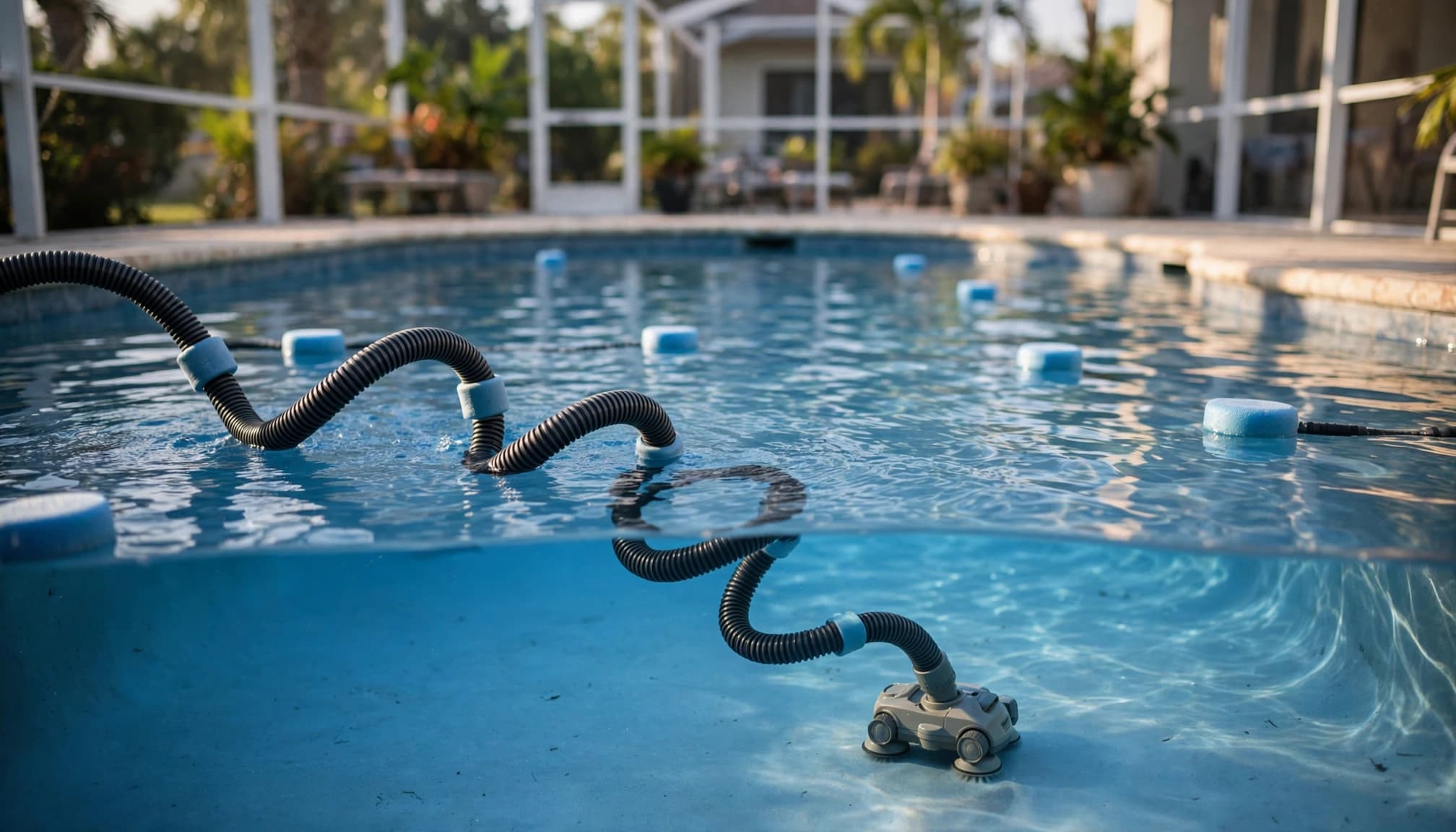
A cleaner may pause, reverse direction, or turn repeatedly as it works. Write down what you see and where it happens. Pool shape, steps, benches, and other features can affect the route, so mention any area where the hose catches or bunches.
Identify whether the cleaner is suction-side or pressure-side
The cleaner type determines how it connects to the pool and which equipment observations are relevant. Check the cleaner's label or manual if you're unsure. A suction-side cleaner connects to the pool's suction system, while a pressure-side model uses a return-side connection.
Suction-side cleaners
A suction-side cleaner draws water through its hose and sends debris into the pool's filtration system. Its operation depends on the pool's suction path and the cleaner's required flow. If the cleaner moves unusually fast, stalls, or stops covering the pool, note those changes alongside the hose twist.
Keep the pool's normal circulation setup in mind. A change in pump operation, valve position, or flow can affect what the cleaner does, but a hose twist alone doesn't identify which component needs attention.
Pressure-side cleaners
A pressure-side cleaner receives water through a return line, sometimes with a dedicated booster pump. Its hose and fittings differ from those on suction-side models, and the manufacturer's instructions determine the correct setup.
Note whether the cleaner runs differently than usual and whether the hose remains connected and clear of obstacles. Don't adjust a pressure regulator, valve, or pump setting by guesswork. Use the instructions for your specific cleaner and pool equipment.
Troubleshoot in a deliberate order
A careful sequence helps you gather useful information without making several changes at once. Turn off the pump before handling the cleaner or hose. Follow the manufacturer's safety instructions before disconnecting any pressure-side equipment.
Record the setup before changing it
Start with a short observation of a normal cleaning cycle. Note the cleaner type, where the hose twists, when it starts, and whether the cleaner's route changes. A photo of the hose sections and connections can also help you compare the setup with the manual.
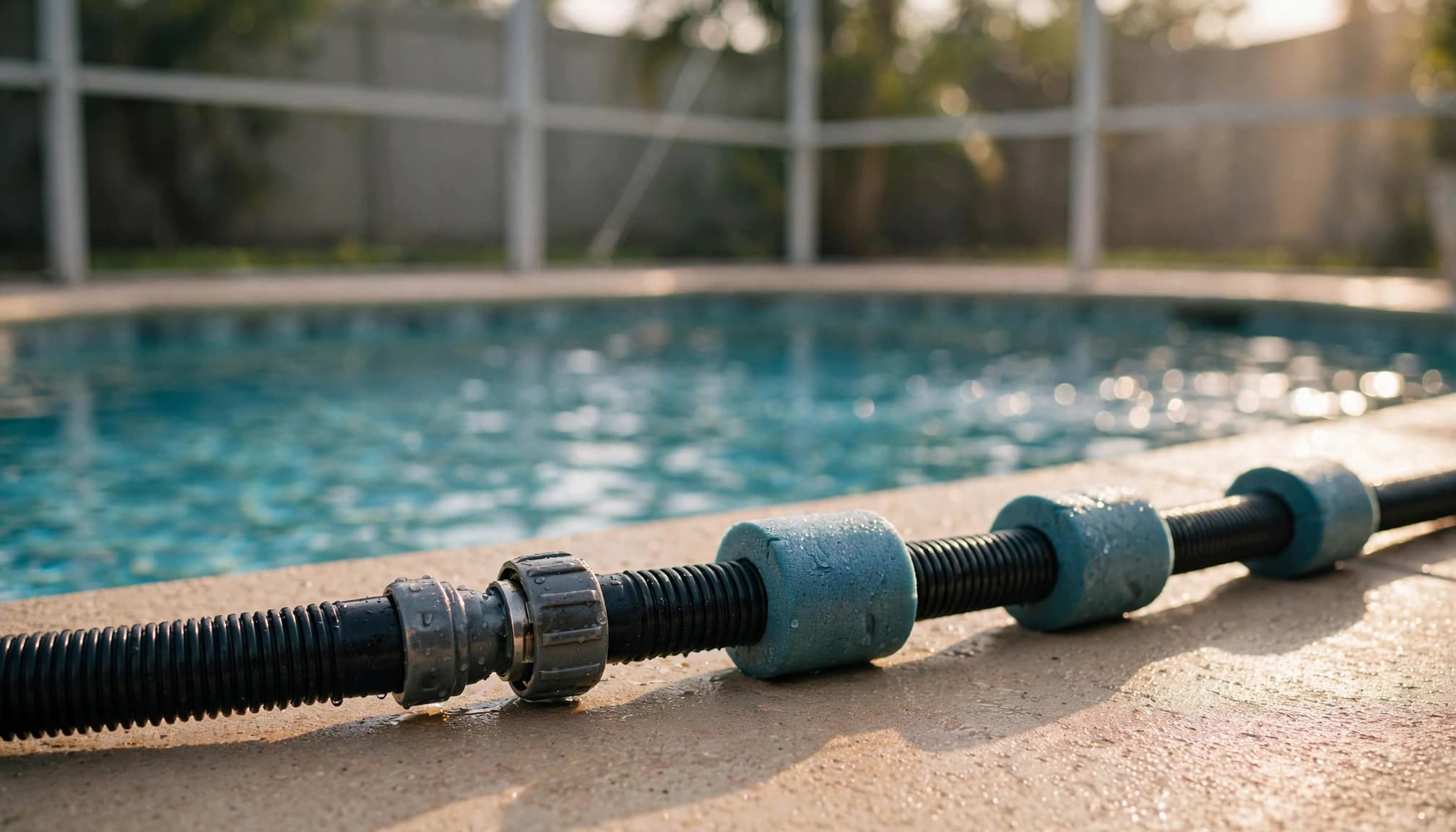
Next, look over the visible hose length and connections. Check whether the hose sits in a tight curl when laid out, whether sections are connected in the intended order, and whether the swivel connection moves as the manufacturer describes. Note the location of floats rather than moving them at random.
Change one thing at a time
Compare the hose length and float arrangement with the cleaner's manual. Cleaner models don't all use the same hose sections, float spacing, or connection sequence. If the setup differs, make only the adjustment specified for your model, then run another cycle and observe the result.
If the twist continues, return to the previous setup before testing another adjustment. Changing several parts at once makes it harder to tell what affected the cleaner's movement.
Check pool circulation alongside the hose
The pool's water movement provides useful context, especially for a suction-side cleaner. Look at the return jets while the pump runs and note whether water appears to move steadily. Weak or uneven return flow, bubbles at the returns, or a pump that struggles deserves attention apart from the hose.
Check that the pool water level is around the middle of the skimmer opening. A low level can allow the skimmer to draw air and interrupt flow to the pump. With the pump off, inspect the skimmer and pump baskets for debris, and confirm that valves remain in their normal circulation positions.
Filter pressure can add context, too. Compare the reading with the clean-filter baseline for your pool rather than relying on a number from another system. The filter manual gives the appropriate cleaning guidance. If circulation looks abnormal or the pump loses prime, stop treating the hose as the only issue and have the pool equipment assessed.
Prevent tangles during use and storage
Use the hose layout specified in the cleaner manual, including the correct sections, connection order, and float positions. Keep the hose clear of ladders, toys, and other pool items before starting a cycle. After the cleaner runs, check whether the hose has settled into a tight coil or remains twisted.
For storage, avoid winding the hose into small, tight loops. Lay it loosely in broad curves, or store it in the arrangement recommended by the manufacturer. Keep it out of prolonged direct sun when it's not in use, since outdoor exposure can wear pool equipment over time.
If a hose has been stored coiled, lay it out before reconnecting it and note whether it keeps that shape. Don't use a heat gun, boiling water, or another heat source to reshape it. Follow the product instructions for any method of loosening a stored hose.
Know when a hose or swivel may need replacement
A hose with a split, leak, crushed section, or connector that no longer stays secure may need replacement. Likewise, a swivel that binds, catches, or won't move as intended may not be functioning properly. Compare the part with the manufacturer's inspection and replacement guidance, since connections vary by cleaner.
If the hose and swivel appear intact but the cleaner still twists or moves poorly, the issue may involve the cleaner or pool equipment. Replacing a sound hose won't correct a circulation problem. For broader repair decisions, see our guide to pool equipment repair versus replacement.
If the cleaner problem is part of a larger circulation or equipment concern, Get a Free Estimate for an on-site pool consultation.
When another cleaning system may fit better
A portable hose cleaner isn't the only way to handle pool debris. If hose-related upkeep remains frustrating, compare the cleaner with other options before changing equipment. Pool design, plumbing, and the type of debris you need to remove all matter.
For a new pool or a larger renovation, an in-floor system may be worth discussing with your pool contractor. Our guide to in-floor pool cleaning systems covers questions to consider before choosing that approach. It's a different system, so it won't be a direct fix for a portable cleaner's hose.
Key takeaways
The location and timing of a twist can help narrow down what to inspect. Identify whether the cleaner is suction-side or pressure-side, compare its setup with the manufacturer's instructions, and observe pool circulation before changing settings.
Keep hose storage loose and follow the model-specific guidance for connections and floats. Replace damaged parts when inspection shows they no longer work as intended, and consider the pool's wider equipment when symptoms extend beyond the cleaner.
Frequently asked questions
Can I keep running the cleaner if its hose is twisted?
Stop the cycle if the hose is sharply kinked, the cleaner can't move freely, or water flow appears disrupted. Turn off the pump before untangling or inspecting the hose. A mild curve that doesn't affect movement may be less urgent, but follow the cleaner's instructions.
Should I adjust the pool pump to stop the hose from twisting?
Don't change pump speed or valve positions based on the hose twist alone. Cleaner requirements vary, and the correct flow depends on the model and pool setup. Check the manual and observe circulation before making any equipment changes.
Can I use one hose setup for different cleaner models?
No single arrangement applies to every cleaner. Hose sections, floats, and connections vary by model and by cleaner type. Use the instructions for the specific unit rather than copying another pool's setup.
Keep the whole system in view
A twisted hose is a visible symptom, but it doesn't identify a single fault. Observe the cleaner's route, inspect its setup against the manual, and look at pool circulation before replacing parts or adjusting equipment. That measured approach helps you address the cleaner without overlooking a wider pool-system issue.