Weak pool waterfall flow usually comes down to a circulation problem: the pump isn't getting enough water, or water can't reach the feature as it should. Low water, a misplaced valve, and debris-filled baskets are good places to start.
You don't need to diagnose the plumbing before checking the basics. Work through the system in order, and pay attention to whether the pool's return jets are weak too. Those observations can help you narrow down the problem and decide when it's time to call for help.
Start by Looking at the Waterfall and Return Jets
A waterfall may lose flow gradually, producing a thinner sheet of water or an uneven stream. It may also stop altogether while the rest of the pool appears to run normally.
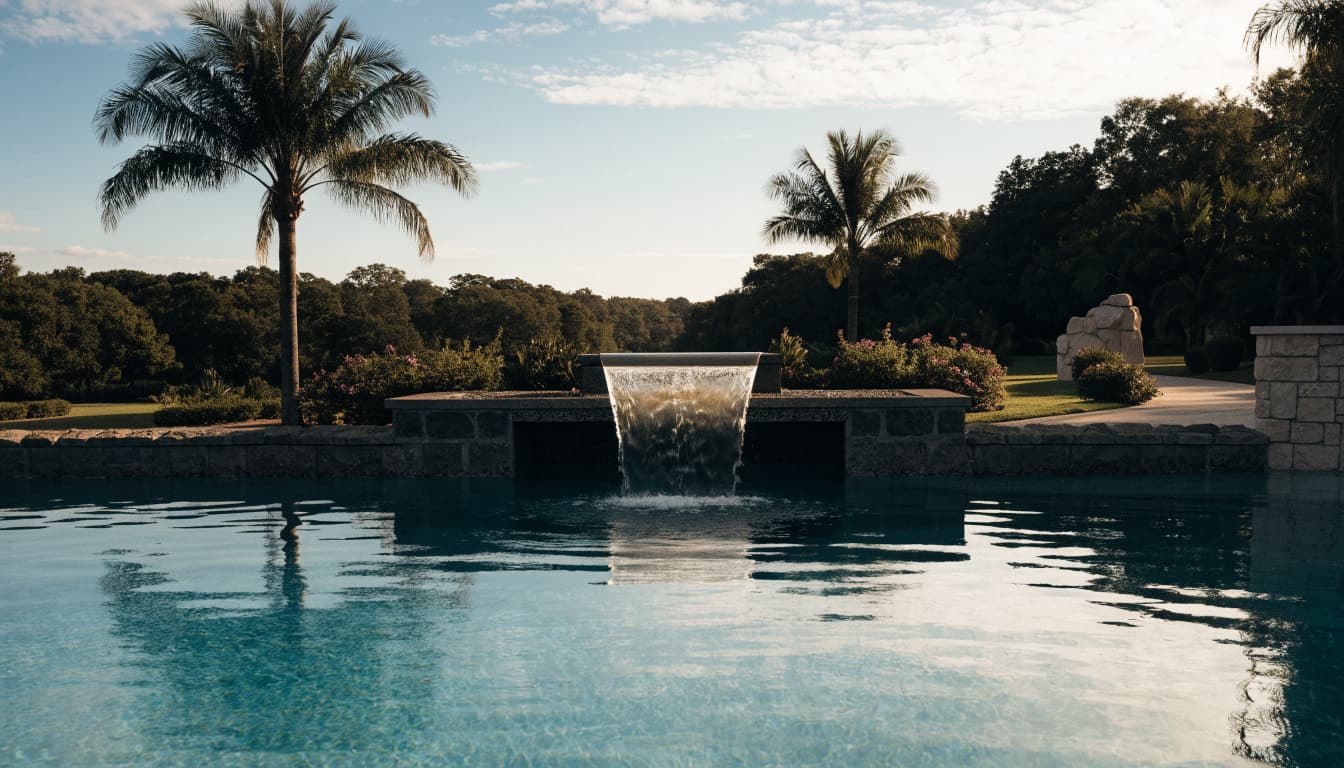
Before changing anything, look at the pool's return jets. If they're weak along with the waterfall, start with the water supply, pump, baskets, and filter. If the jets look normal and only the waterfall is weak, the feature's valve, operating mode, or plumbing may need attention.
Also note when the problem happens. A waterfall that works during one part of the day but fades later may be affected by a pump schedule or automated valve setting. A sudden change after windy weather can point you toward debris.
Check the Water Level and Pump Operation
Keep the skimmer supplied with water
The pool water should generally sit around the middle of the skimmer opening. If it drops too low, the skimmer can draw air into the circulation system. The pump may lose its prime, and the waterfall can weaken or stop.
Add water if the level is low, then watch it over the following days. Evaporation and splashout can lower the level, but repeated or unusually fast water loss deserves a professional inspection.
Don't restart an empty pump while the water level is too low. A pump needs water moving through it to operate as intended.
Look at the pump and its schedule
Make sure the pump serving the waterfall is running. Some water features use the main circulation pump, while others have a separate pump. A timer, automation setting, or feature mode may have turned the relevant pump off.
If you have a variable-speed pump, compare the waterfall's performance at its usual feature setting with its performance during a lower-speed filtration period. Lower speed can reduce the flow available to the waterfall.
A pump that hums without starting, makes a grinding sound, or repeatedly loses prime needs more attention. Turn it off and arrange service rather than letting it run dry or strain.
Review the Waterfall Valve Settings
A valve may direct water toward the waterfall, the pool returns, or both. If someone changed the setting during cleaning or spa use, less water may be reaching the feature.
Look at the valve handles and any labels on the equipment pad. If you're familiar with the normal positions, return the system to its usual pool and waterfall settings. Open the feature line gradually and watch the waterfall, return jets, and filter pressure.
Keep enough flow through the rest of the circulation system. A connected spa can also require coordinated suction and return settings, so avoid guessing if the plumbing is unfamiliar. Our guide to pool valve positions and safe water flow explains how common valve arrangements work.
Automated valves can move on a schedule. If the waterfall changes at the same time each day, review the feature mode and pump schedule together. Don't force a stiff handle or move a filter's multiport valve while the pump is running.
Empty the Baskets and Inspect the Filter
Leaves and other debris can restrict water before it reaches the pump. A dirty filter can restrict flow farther along the system. Both are worth checking before assuming the waterfall line is blocked.
Clear the skimmer and pump baskets
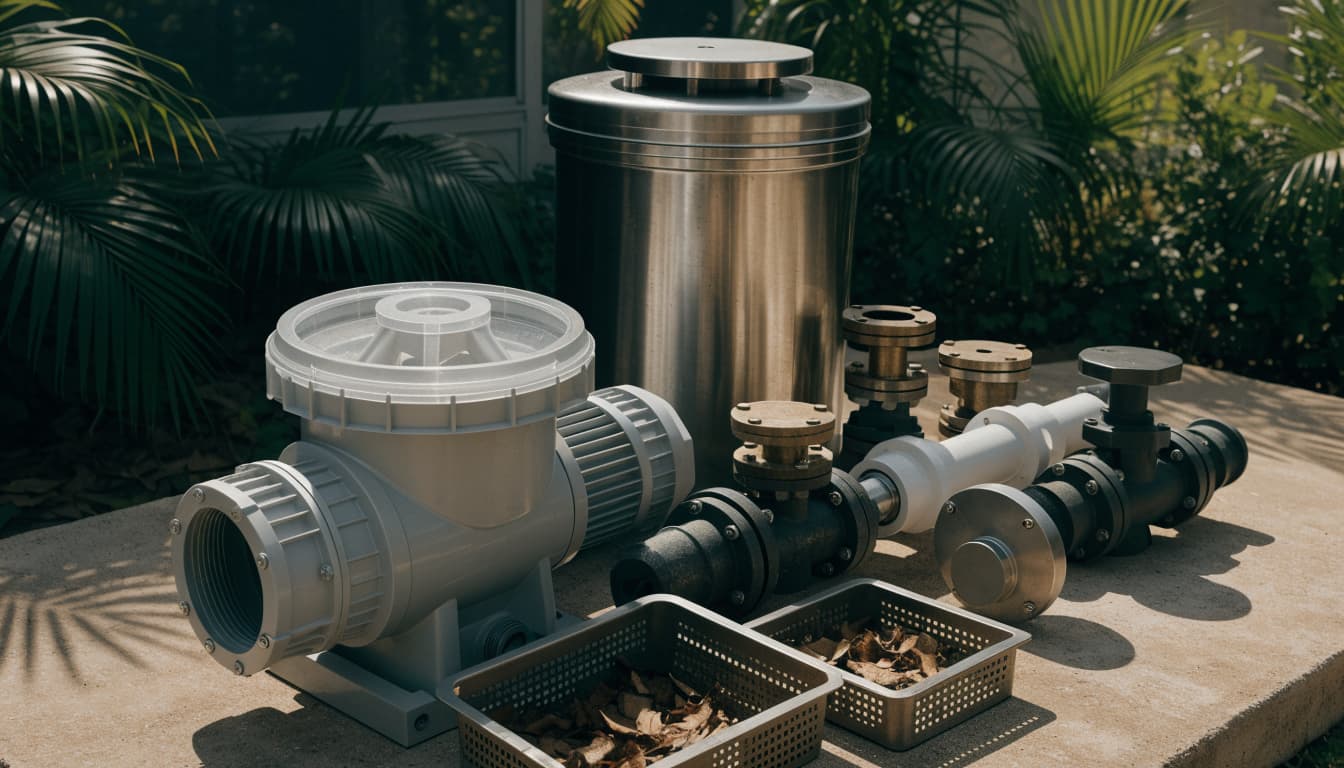
Turn off power to the pump at the breaker before opening the pump basket. Relieve system pressure according to the equipment instructions, then remove debris from the skimmer and pump baskets.
Inspect each basket for cracks or distortion before putting it back. A damaged basket may allow debris to pass toward the pump impeller. After windy weather, landscaping work, or construction, baskets can fill quickly, so inspect them again as needed.
Compare filter pressure with its clean reading
Look at the filter pressure gauge while the system runs under its normal settings. A reading above the filter's usual clean pressure can indicate that the filter needs cleaning. Compare readings at the same pump speed and valve setting because operating changes can affect pressure.
Clean a cartridge filter or backwash a sand or diatomaceous earth filter according to its equipment instructions. Always turn the pump off before changing a multiport valve setting. Never open a pressurized filter tank.
If pressure remains high after proper cleaning, a restriction or damaged filter component may need professional attention. Our guide to pool filter maintenance and sand replacement covers more signs of filter trouble.
Look for Air Leaks on the Suction Side
Air in the pump basket or bubbles coming from the return jets can point to low water or a suction-side air leak. The suction side is the section of plumbing that carries water toward the pump.
A leak there doesn't always leave a puddle. While the pump runs, a loose fitting or worn seal can draw air into the system instead.
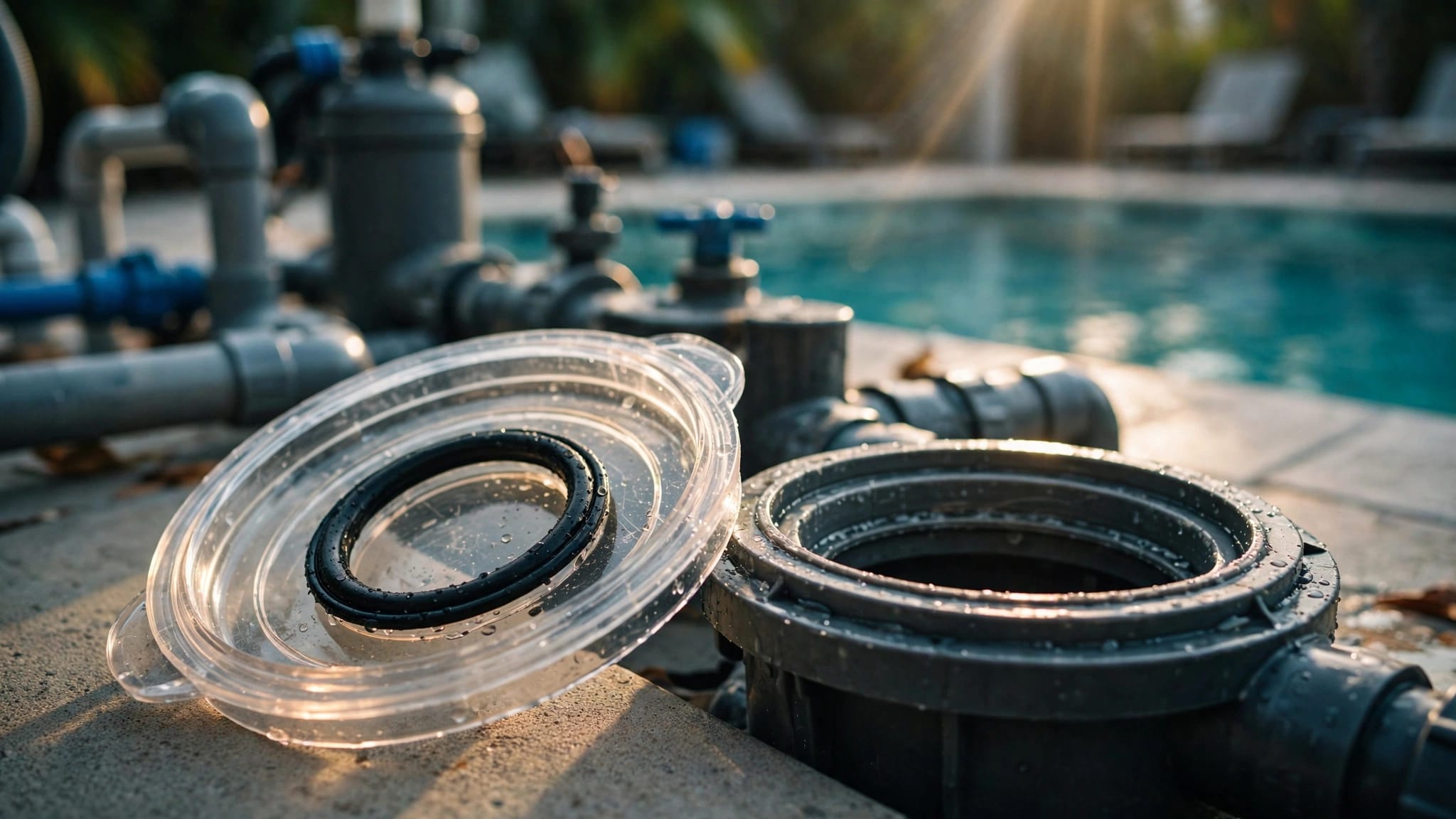
With the pump off and pressure relieved, inspect the pump lid and its O-ring. Dirt, a flattened seal, or a cracked lid can prevent a good seal. Clean the sealing surfaces and use only lubricant approved for the equipment if the seal needs it.
Also look for visible damage around drain plugs, unions, and suction valves. Don't force fittings or attempt to repair cracked plumbing under pressure.
If the pump repeatedly loses prime after shutdown, or the basket keeps filling with air, stop the pump and arrange an inspection. Our article on why a pool pump loses prime covers other possible causes.
Consider a Blocked Pump Impeller
The impeller moves water through the pump. Debris that gets past a damaged or poorly seated basket can collect there and reduce flow, even when the basket itself looks clean.
A blocked impeller is one possible cause when the pump runs but the waterfall and pool returns remain weak. Low filter pressure can accompany a suction or impeller restriction, although a gauge reading alone doesn't identify the cause.
Turn off the pump if flow remains poor after the basic checks. Never put your hand near the impeller while the equipment has power. Because access depends on the pump design and may require disassembly, have a pool professional inspect and clear it if you suspect a blockage.
Examine the Waterfall Line and Spillway
If the pump appears to move water normally and the pool returns are strong, the restriction may be closer to the waterfall. The feature can have its own valve, plumbing line, and spillway opening.
Look for visible debris or buildup
Inspect the spillway for leaves and other material that could interrupt the sheet of water. Scale can also collect around splash areas and narrow openings.
Avoid forcing tools into the opening or using aggressive chemicals on the feature. A pool professional can assess buildup that isn't easily accessible, especially when the waterfall is part of a finished wall or decorative surface.
Consider hidden plumbing restrictions
A partially closed or damaged valve, debris in a line, or a plumbing problem can reduce flow to the feature. A raised waterfall also needs equipment and plumbing suited to its operating demands.
If the waterfall has always been weak, particularly since an equipment change or renovation, the system may need a closer design review. A larger pump isn't automatically the answer. As our guide to pool pump sizing for water features explains, pump capacity and plumbing have to work together.
Restore Flow and Watch the System
After clearing accessible debris and correcting familiar settings, restore the system to its normal operating configuration. If you opened the pump basket, replace it and secure the lid with its seal seated properly.
For a pump that needs priming, fill the pump basket housing with clean water before replacing the lid. Make sure the needed suction and return paths are open. Follow the equipment's startup and air-relief instructions, then watch the pump basket and return jets.
A steady water level in the basket and normal return flow are encouraging signs. The waterfall should also return to its usual appearance once the system is operating in the feature's normal mode.
If the basket keeps filling with air or the pump won't maintain prime, turn it off. Repeated restarts won't fix a suction leak or blockage. Note the symptoms you observed so a professional has a useful starting point.
Know When to Call a Pool Professional
Routine basket cleaning and familiar valve adjustments are reasonable homeowner tasks. Other symptoms call for an experienced pool professional, particularly when the cause remains hidden.
Arrange an inspection if the pump repeatedly loses prime, the filter pressure remains abnormal after cleaning, or the waterfall stays weak while other returns work normally. A professional can inspect the equipment and determine whether the feature line needs further testing.
Stop the system and seek help if you see a cracked filter housing, a damaged clamp, or pressure approaching the maximum marked on the equipment. Electrical damage or flooded equipment also requires qualified help before a restart.
A persistent flow problem can be worth discussing during a larger pool renovation. At Back Bay Pools, we can review your goals for the pool and its water features during an on-site consultation. Get a Free Estimate if you're planning renovation work.
Keep Waterfall Flow Consistent
A weak waterfall often responds to a basic circulation fix, such as restoring the water level, clearing a basket, or returning a valve to its usual position. Start there before assuming the feature needs major work.
If those checks don't restore steady flow , avoid repeated adjustments or restarts. A professional inspection can identify the restriction and help protect the rest of the pool equipment.