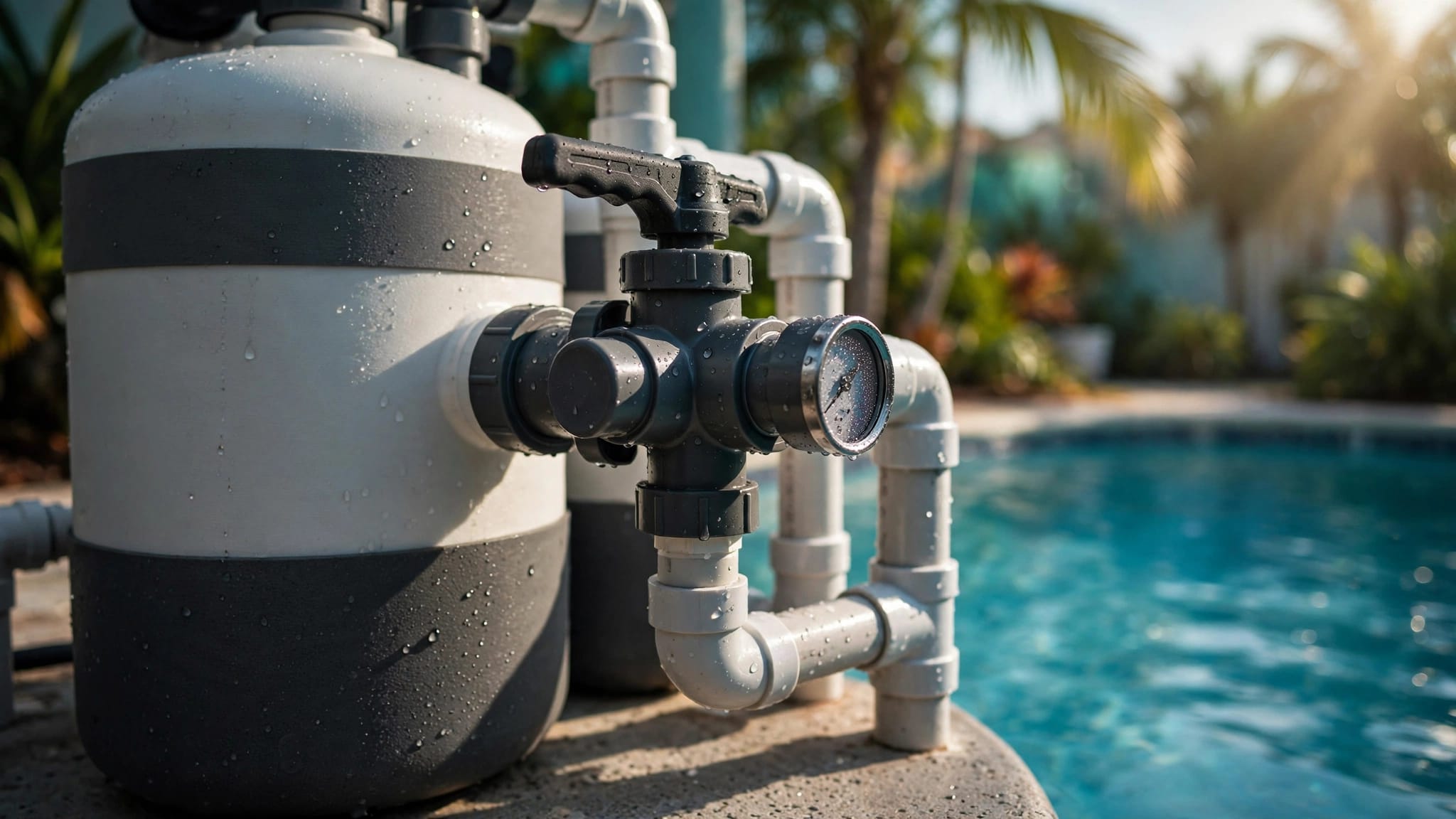
A sand filter can keep a Florida pool clear for years, but its filter media doesn't last forever. Most homeowners should plan pool filter sand replacement every five to seven years , although weather, pool use, water chemistry, and maintenance can shorten or extend that range.
Replacing the sand too early wastes money, while waiting too long can leave the water cloudy and put extra strain on the pump. The right timing depends on more than the calendar, so start with the filter's pressure, water clarity, and overall performance.
How Often Should You Replace Pool Filter Sand in Florida?
For most residential pools, filter sand lasts about five to seven years . A well-maintained system with light use may reach seven to ten years, while a pool exposed to heavy debris, frequent swimming, or repeated algae problems may need new sand closer to the three-to-five-year mark.
| Pool conditions | Typical sand replacement range |
|---|---|
| Light use and consistent maintenance | 7 to 10 years |
| Average residential use | 5 to 7 years |
| Heavy use, debris, or recurring algae | 3 to 5 years |
| Damaged laterals or poor filtration | Replace or inspect sooner |
These ranges are planning guidelines, not fixed rules. The filter manufacturer may recommend a different interval, and the condition of the sand matters more than its age alone.
Sand filters clean water as it passes through a bed of specially graded filter sand. Dirt and suspended particles collect between the grains. Backwashing reverses the water flow and sends much of that debris to waste, but it doesn't restore worn filter media.
Over time, the grains become less effective. Oils, minerals, sunscreen, algae, and fine debris can also build up inside the filter. The sand may clump, channel, or allow particles to pass back into the pool.
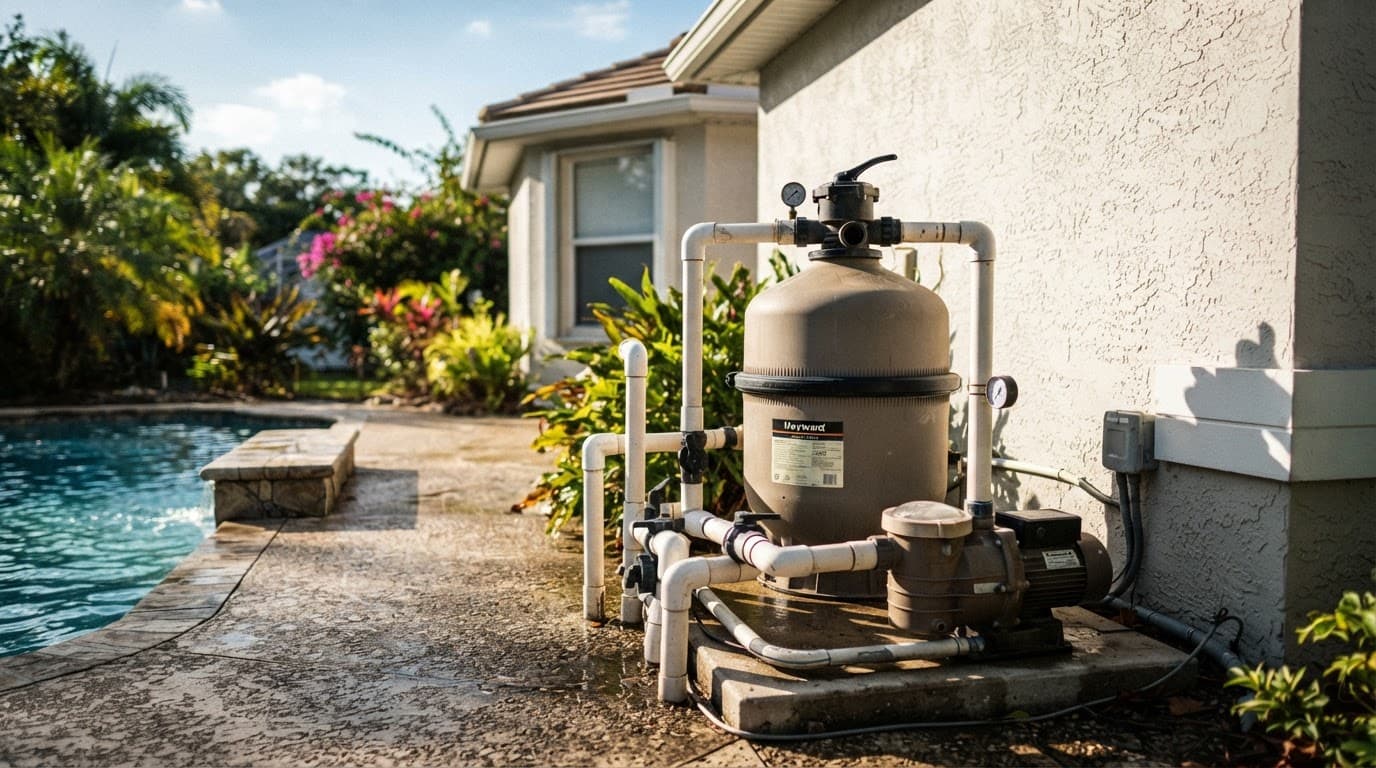
Florida's warm climate makes regular filtration especially important. Homeowners in Cape Coral and nearby communities often run their pools throughout the year, so the filter may handle a larger workload than one serving a pool used only during summer.
Why Florida Conditions Can Shorten Sand Life
Florida pools face a steady flow of outdoor debris. Heavy rain washes pollen, soil, leaves, and organic material into the water. Tropical storms can add even more debris, while wind carries dust and plant matter into screened and unscreened pool areas.
A screen enclosure helps reduce the load, but it can't block everything. Fine dust and pollen can still pass through the enclosure. Homes near canals, lakes, or open lots may also collect more organic debris than homes in tightly developed neighborhoods.
Pool use affects the filter as well. More swimmers bring sunscreen, body oils, hair, and other contaminants into the water. A busy family pool or a pool used for frequent gatherings may require more backwashing and place more demand on the sand bed.
Water chemistry also matters. Poor sanitizer levels can allow algae to grow. When the filter catches algae, the material can clog the sand and increase pressure. High calcium levels or improper pH can contribute to scale on filter components, reducing water flow and filtration efficiency.
Backwashing too often creates its own problems. Each cycle uses water and can disturb the sand bed. Backwashing too rarely allows debris to accumulate and may force the pump to work against higher resistance. Follow the filter manufacturer's instructions, and record the clean pressure after each major service.
Homeowners planning a renovation should also look at the entire circulation system. A worn pool finish, outdated plumbing, or an incorrectly sized filter can make the system seem less effective. This guide to comparing cartridge versus sand pool filters can help when a pool upgrade includes equipment changes.
Signs You Need Pool Filter Sand Replacement
The calendar can suggest when to inspect the sand, but performance problems provide stronger evidence. A filter that needs frequent backwashing or struggles to clear ordinary debris may have exhausted media.
Watch for these warning signs:
- The pool stays cloudy after normal filtration and balanced chemistry.
- Fine dust or dirt returns through the pool's return jets.
- Filter pressure rises quickly after backwashing.
- The filter needs backwashing more often than it used to.
- Water flow through the return jets drops without a plumbing or pump problem.
- The sand feels muddy, clumped, greasy, or unusually hard when inspected.
- The filter has not held clean water even after correcting chemistry and circulation.
Cloudy water doesn't automatically mean the sand needs replacement. A dirty skimmer basket, clogged pump basket, poor circulation, low sanitizer, or damaged pump lid can create similar symptoms. Test the water before ordering media, and check that valves are in the correct positions.
A pressure gauge provides a useful baseline. Record the pressure when the filter is clean and running normally. Many systems call for backwashing when pressure rises about 8 to 10 pounds per square inch above that starting point, but the equipment manual should take priority.
Sand replacement is more likely when poor filtration continues after proper backwashing, balanced chemistry, and basic equipment checks.
Water returning from the jets is another important clue. If you see a steady stream of sand in the pool, the problem may involve cracked laterals or a damaged standpipe rather than old sand alone. Replacing the media without repairing those parts won't solve the issue.
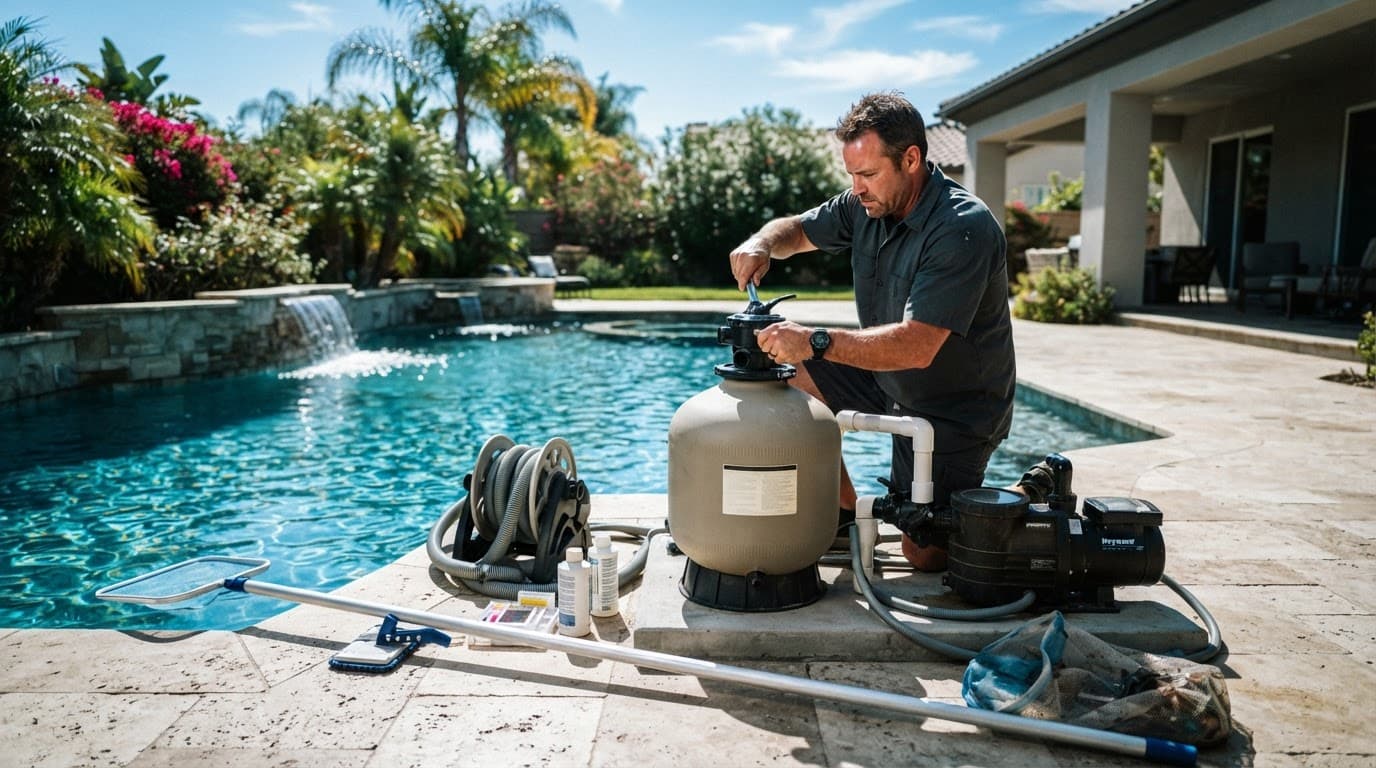
What Happens During a Sand Change?
A sand change begins with shutting off the pump and releasing pressure from the filter tank. A technician then removes the multiport valve or top assembly, depending on the filter design, and exposes the old media.
The old sand usually comes out with a scoop or a wet vacuum. This step requires care because the filter's laterals and standpipe sit inside the tank. Cracking a lateral during removal can send new sand into the pool after the system starts again.
Before adding new media, the technician inspects the internal parts. Broken laterals, a damaged hub, worn gaskets, and a faulty valve may need attention. The tank should also be checked for cracks or leaks.
The filter is partly filled with water before the new media goes in. Water cushions the laterals and helps prevent damage as the sand settles. The replacement media must match the filter manufacturer's specifications, including the correct grade and amount.
Most residential sand filters use specially graded pool filter sand, often labeled #20 silica sand. The correct grain size matters. Play sand, masonry sand, and unapproved substitutes can restrict flow or pass through the laterals.
After filling the tank, the system is reassembled and started in the backwash position. The technician then runs a rinse cycle before returning the valve to filtration. This removes loose dust from the new sand and helps prevent that material from entering the pool.
A proper service also includes checking for leaks, confirming normal pressure, and watching the return water. The work may look straightforward, but the tank can be heavy, and a mistake around the valve or internal assembly can create a larger repair.
Should You Replace the Sand or the Entire Filter?
Old sand doesn't automatically mean the entire filter needs replacement. In many cases, the tank remains sound while the media and a few internal parts need service.
Filter replacement becomes more reasonable when the tank has cracks, the valve leaks repeatedly, or the laterals keep failing. A system that cannot maintain normal pressure after proper repairs may also be nearing the end of its useful life.
The filter must match the pool's circulation needs. A new pool, added water features, or a larger pump can change the amount of water the system needs to process. Replacing equipment without checking flow rates may create poor filtration or unnecessary pressure.
The same review makes sense during pool resurfacing or a larger renovation. If plumbing is open or equipment is being updated, replacing old sand and inspecting the filter internals can prevent another service visit soon after the project.
Back Bay Pools' guide on when to repair or replace pool equipment covers the signs that point toward service, component replacement, or a new system. The decision should account for the tank's condition, repair history, performance, and fit for the pool.
How to Make Pool Filter Sand Last Longer
Good routine care can help you reach the upper end of the normal replacement range. Start by keeping leaves and debris out of the water with regular skimming and an intact screen enclosure. Repair torn screens when they allow excessive debris into the pool.
Maintain sanitizer and pH levels according to your pool professional's recommendations. Balanced water reduces algae growth and limits scale inside the circulation system. During periods of heavy rain, check the chemistry after the water level is restored.
Clean the pump and skimmer baskets before they become packed with debris. Brush the walls and floor so the filter can capture suspended particles instead of allowing dirt to remain in corners. Vacuum when needed, especially after storms or landscaping work.
Backwash when the pressure reaches the correct threshold, not according to a random weekly schedule. Always complete the rinse cycle afterward. Keep a simple log of pressure readings, backwash dates, water tests, and repairs. A change in the pattern often reveals a filter problem before the pool becomes visibly cloudy.
If sand replacement is due, choose the media listed for your filter model. Don't mix products unless the manufacturer specifically allows it. After service, run the system and confirm that the water remains clear, the pressure is stable, and no sand appears at the returns.
For homeowners preparing a new pool, renovation, or equipment update in Cape Coral, a professional assessment can confirm whether the existing filter is sized correctly. You can Get a Free Estimate for an on-site consultation with Back Bay Pools.
Conclusion
Most Florida homeowners should plan on pool filter sand replacement every five to seven years , then adjust that schedule based on pool use, debris, chemistry, and filter performance. Cloudy water, rising pressure, frequent backwashing, or sand returning through the jets can justify an inspection sooner.
Replacing only the media is often enough when the tank and internal parts remain healthy. However, damaged laterals, repeated leaks, or an undersized system may call for broader equipment work. Regular cleaning, balanced water, and a pressure log help keep the filter working efficiently and make the next replacement easier to time.