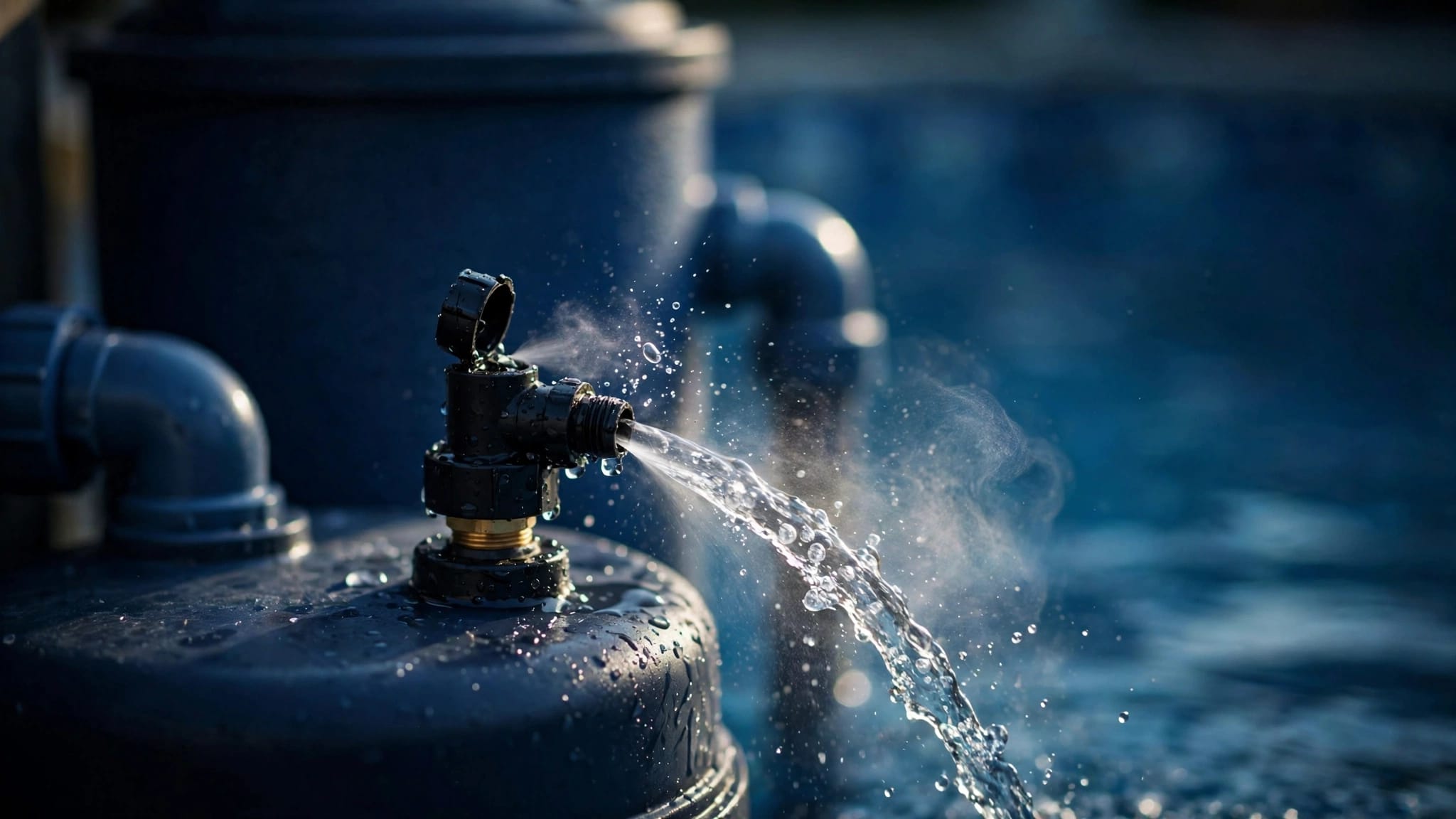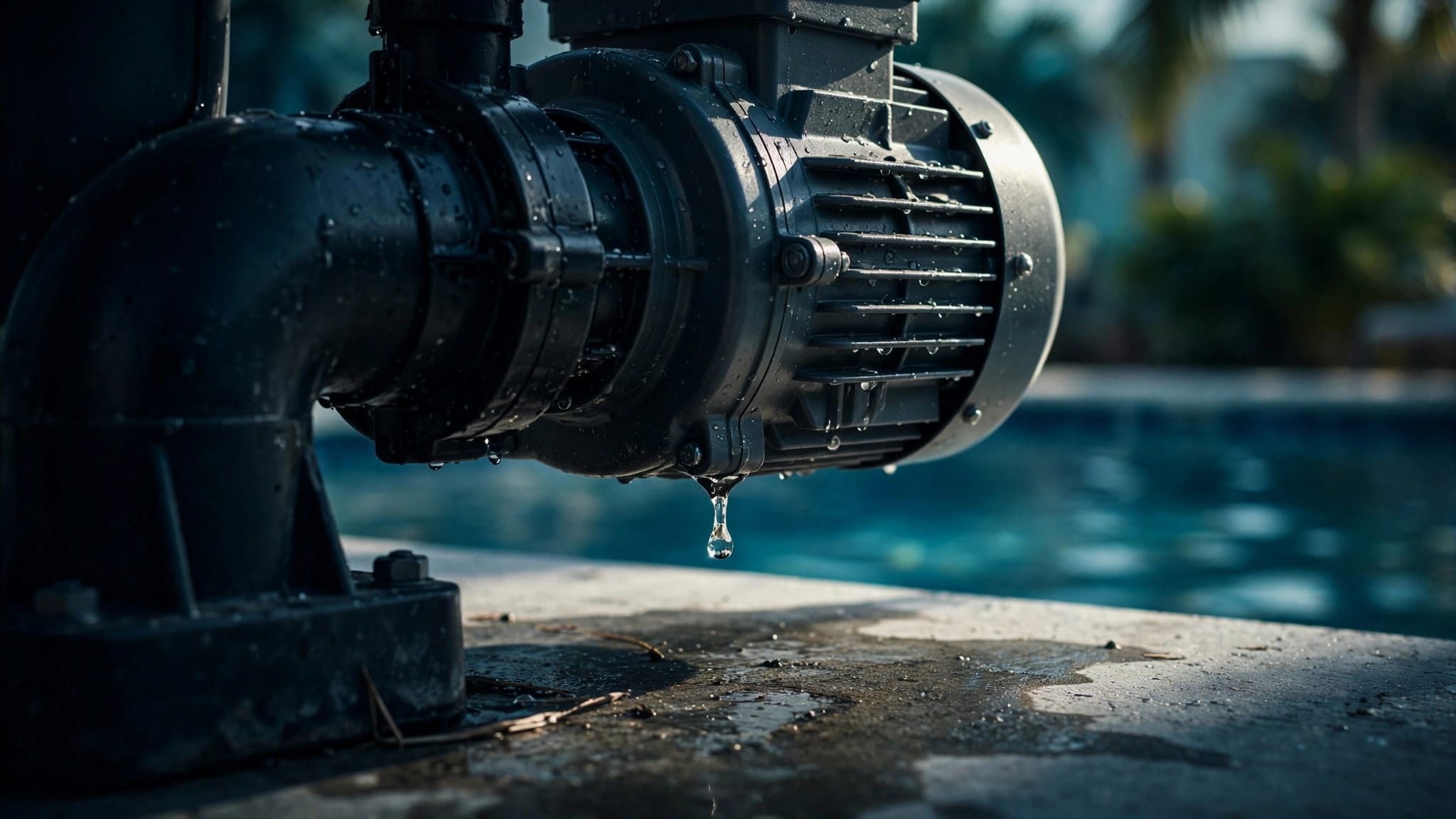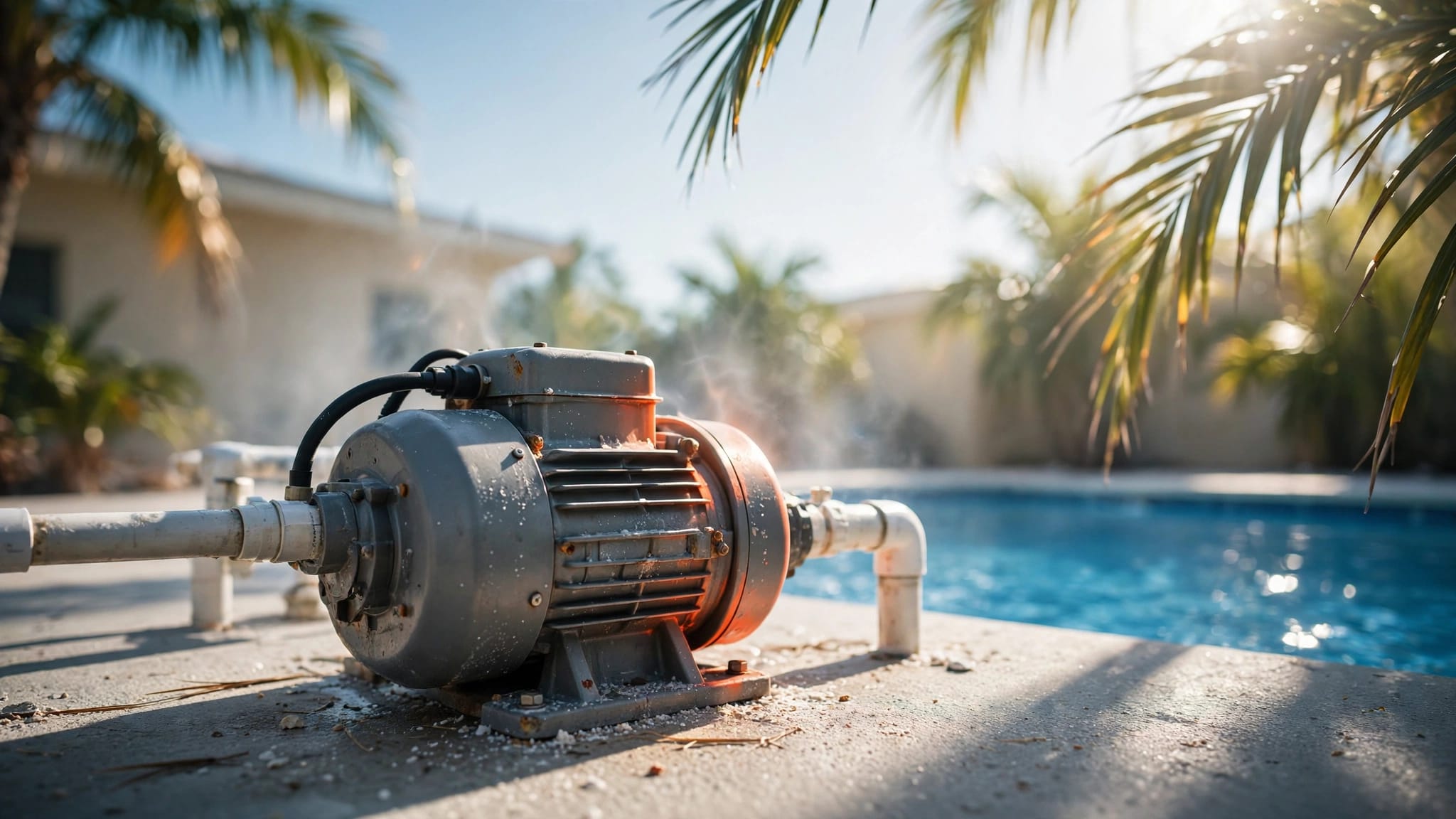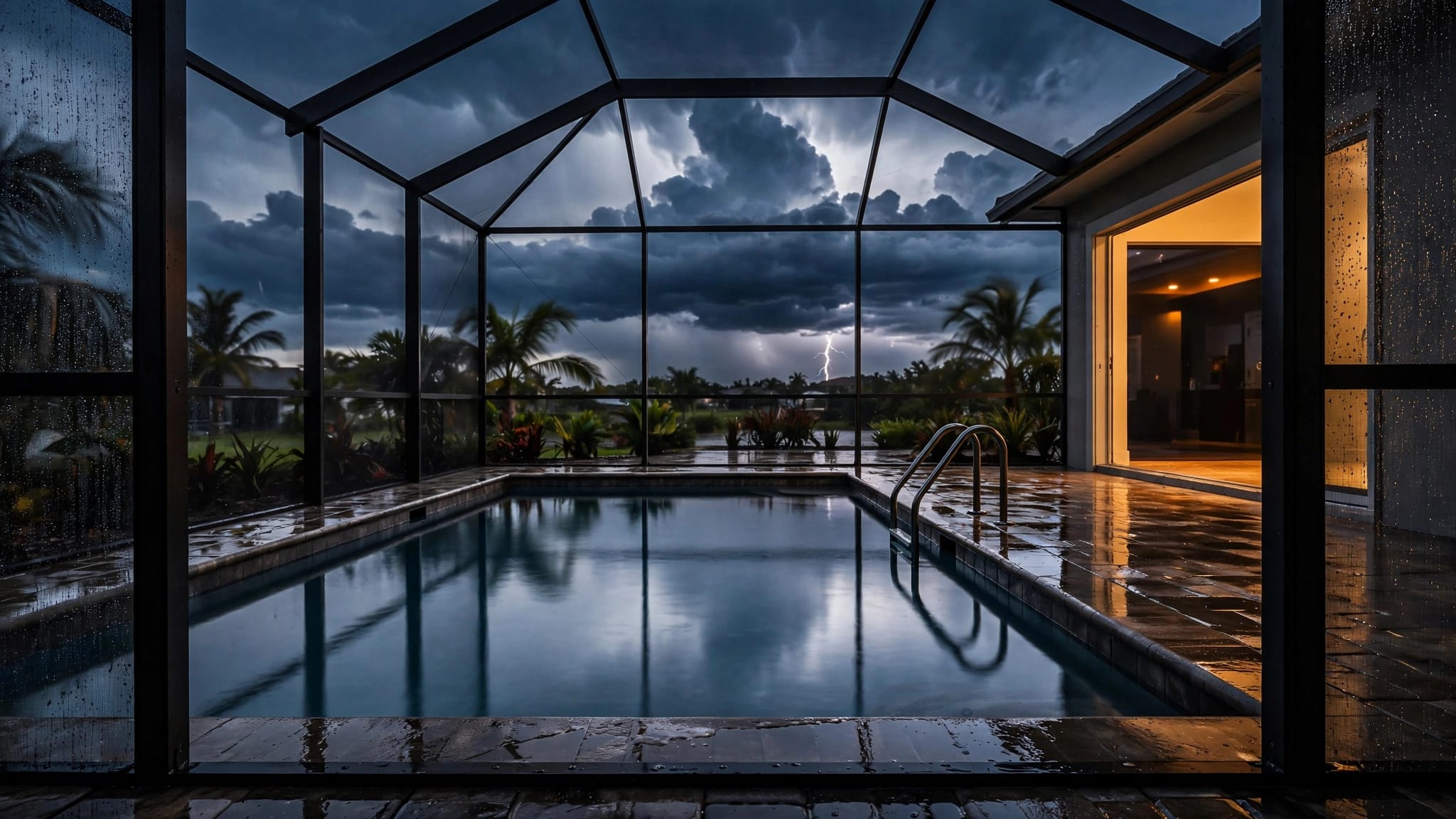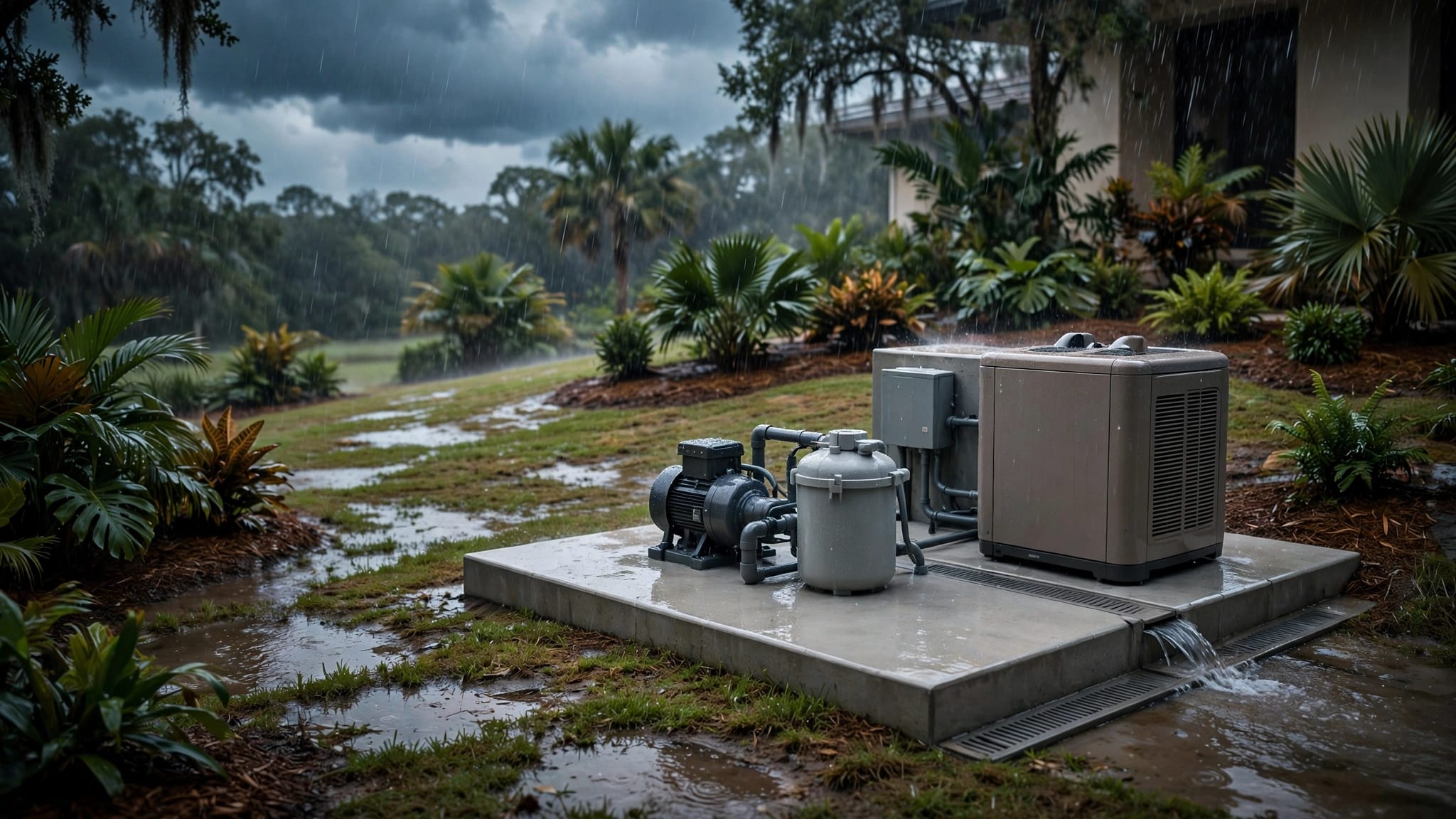
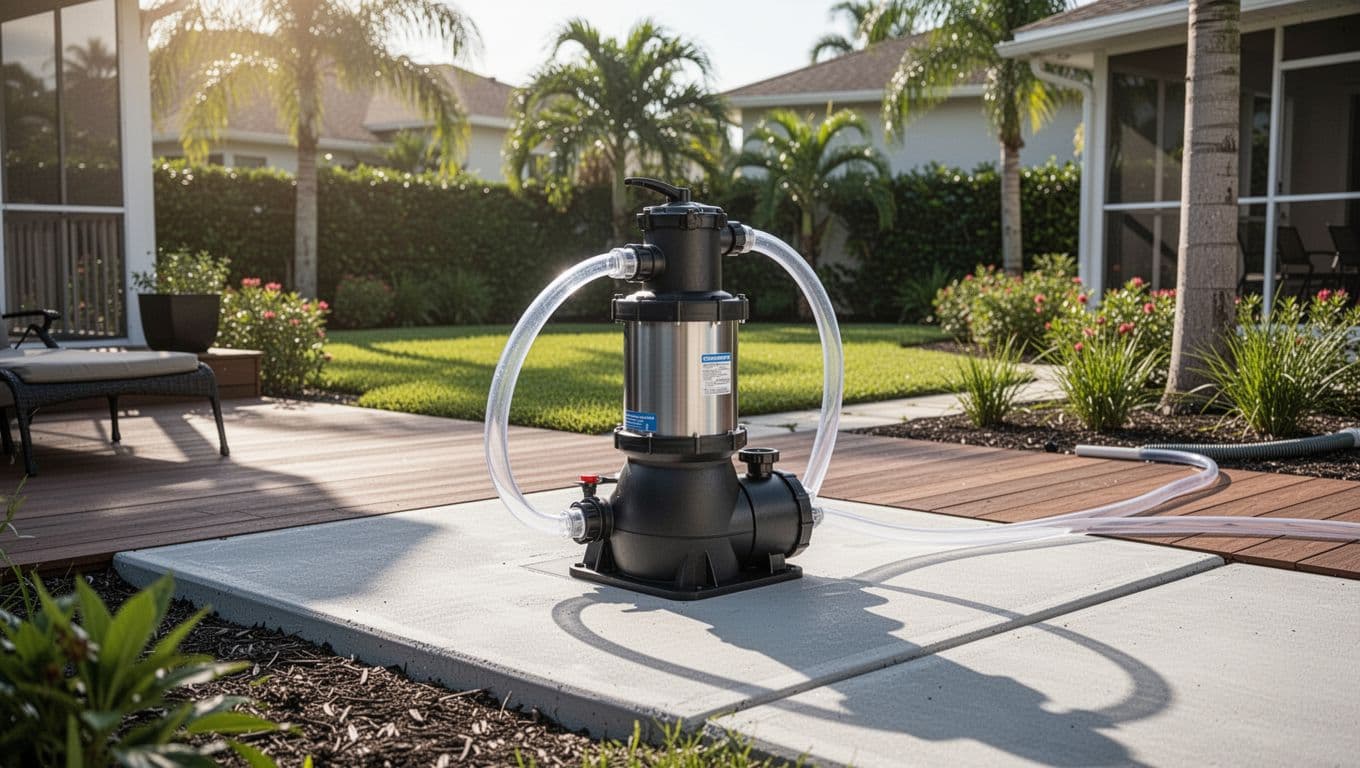
When a pool pump loses prime , water stops filling the clear strainer basket, circulation weakens, and the motor may run with little water around the impeller. That can damage the pump quickly. In Cape Coral, heat, evaporation, storm debris, outdoor equipment pads, and aging plumbing can all contribute to prime loss.
Prime loss usually points to one of three problems: air entering the suction line, water draining backward, or restricted water flow. Finding the pattern is more useful than repeatedly pouring water into the basket. Start with what prime means and what normal operation should look like.
What Pool Pump Prime Means
A primed pump has water filling its strainer housing and flowing continuously through the circulation system. The impeller needs that water to move water from the pool, through the filter, and back through the return jets.
During a normal startup, the pump basket may contain a small air pocket for a moment. Within a short time, water should fill most of the housing, and the return jets should produce a steady flow. The pump should also run without loud rattling, grinding, or a constant stream of bubbles.
If the basket drains after the pump shuts off, the plumbing may be allowing water to flow backward. If the basket stays partially empty while the pump runs, air may be entering through the suction side. A clogged line or low water level can also starve the pump.
A pump that runs dry can overheat the shaft seal and damage internal components, so turn it off when the basket will not refill.
Why a pool pump loses prime in Cape Coral
Air leaks on the suction side
The most common cause is an air leak before the pump. This includes the pipe between the skimmer, main drain, valves, and pump inlet. Because this section operates under suction, it can pull in air without leaving an obvious water leak.
Several small components can create the problem:
- A flattened, dirty, or cracked pump lid O-ring may prevent the clear lid from sealing.
- Loose drain plugs, unions, or threaded fittings can draw air into the housing.
- A partially closed or worn valve can restrict flow and create turbulence.
- Cracked PVC near the equipment pad may admit air as the pump runs.
Cape Coral's outdoor equipment areas face intense sun, rain, and humidity. Over time, seals become less flexible, fittings loosen, and plastic components age. A pump that loses prime after every shutdown often has a sealing or backflow problem rather than a motor problem.
Low water or a skimmer that pulls air
Pool water drops through evaporation, splashout, filter cleaning, and small plumbing leaks. Florida's heat can lower the water level faster than many homeowners expect, especially when the pool receives regular use.
Keep the water around the middle of the skimmer opening, unless your equipment manufacturer gives different instructions. When the level falls too low, the skimmer can form a vortex and pull air into the suction line. The pump basket may then fill with bubbles or empty completely.
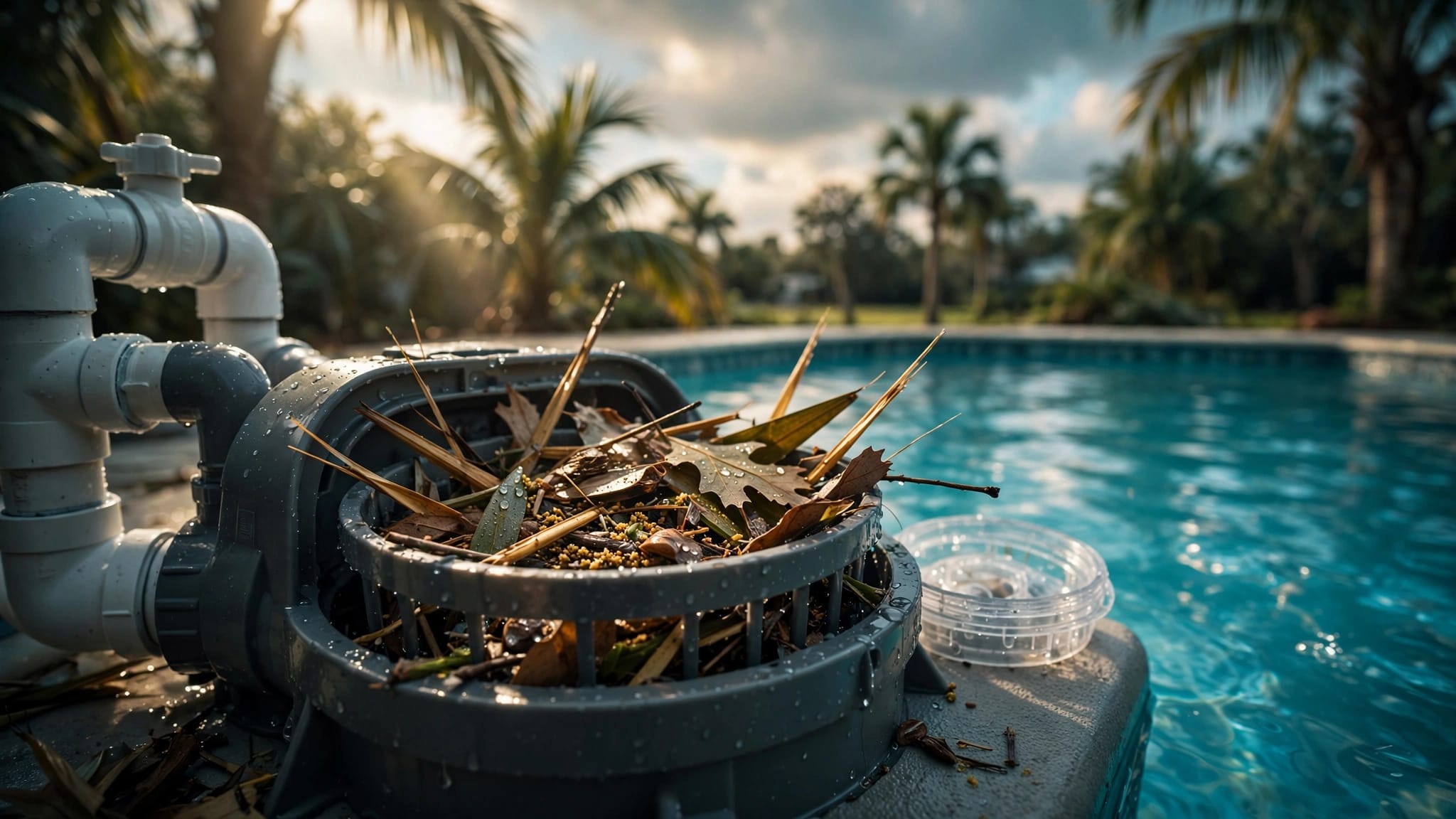
Heavy rain creates a different issue. A storm can blow leaves, palm material, and dirt into the pool. A torn screen panel can increase that debris load. Once the skimmer basket or pump basket fills, the pump receives less water and may lose prime.
Clogged baskets, impellers, and plumbing
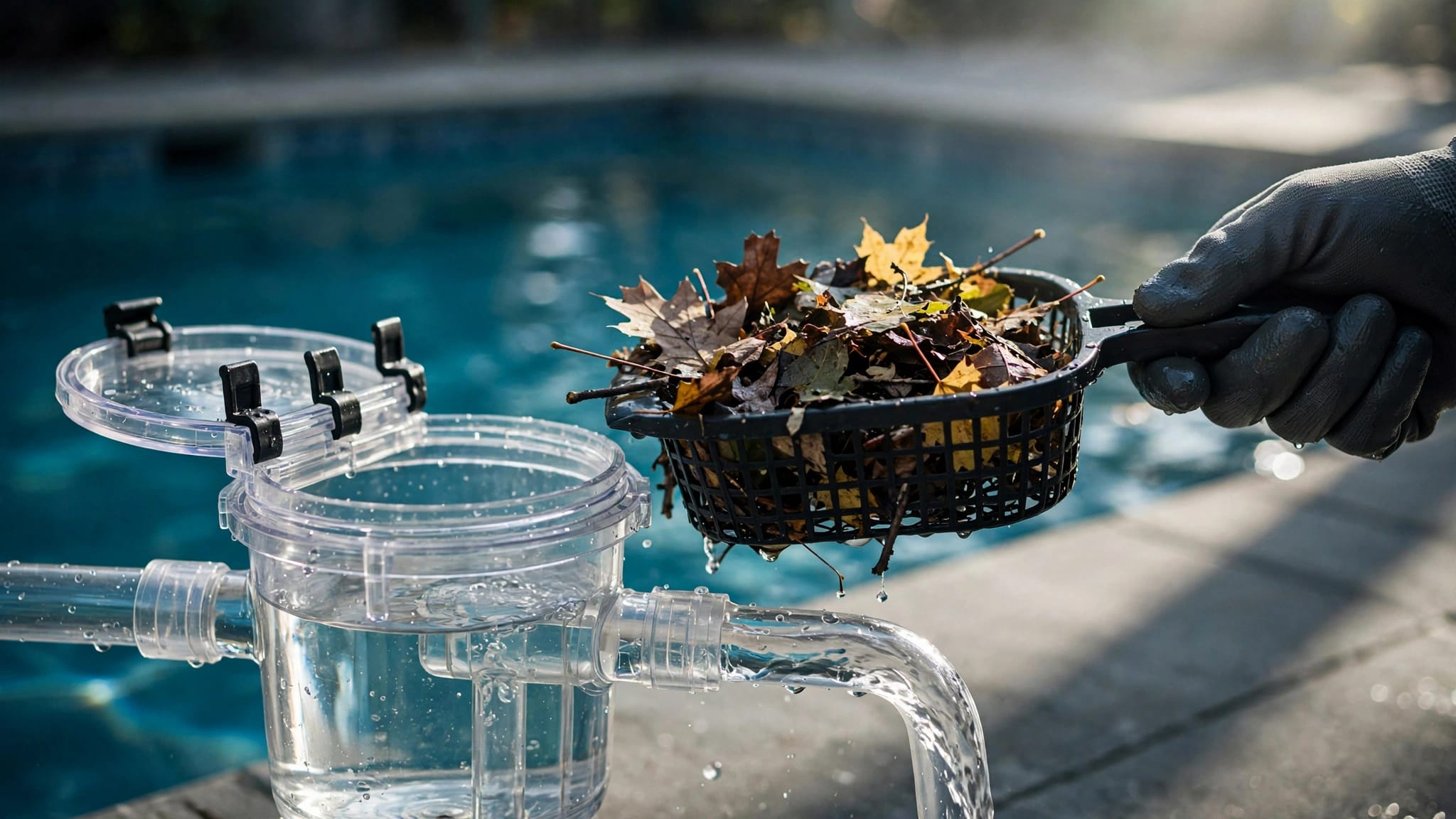
A full skimmer basket is easy to spot, but debris can also collect inside the pump basket or behind the impeller. Small palm fibers, grass, and fine leaves may pass through a damaged basket and pack into the impeller vanes.
Restricted flow can also occur inside the suction line. A stuck skimmer flap, blocked drain cover, or object lodged in the pipe can reduce the amount of water reaching the pump. The equipment may sound normal at first, yet the basket level continues to fall.
A dirty filter usually isn't the first cause of a lost prime. It raises filter pressure and lowers return flow. Severe restriction can make an existing suction problem more noticeable, especially when the pump is already struggling to receive enough water.
Pump location, valves, and aging plumbing
The pump's position affects how easily it can stay full of water. A pump installed well above the pool water level depends on airtight plumbing and proper priming. Any small leak can allow the water column to drain when the pump stops.
Older pools may also have brittle valves, worn check valves, undersized suction lines, or long pipe runs. A failing check valve, when one is installed, can let water drain back toward the pool and leave the pump housing empty after shutdown.
Renovation work often exposes these issues. Replacing a surface or updating a deck won't correct a damaged suction line, poorly placed valve, or aging equipment pad unless the plumbing receives a separate inspection.
How to narrow down the cause
The timing of the problem provides useful information. Watch what happens immediately after the pump starts and after it shuts off.
| What you notice | Likely area to inspect | Useful clue |
|---|---|---|
| The basket empties after every shutdown | Lid seal, drain plugs, suction plumbing, or check valve | Prime disappears while the system sits |
| Bubbles remain under the clear lid | Low water, skimmer vortex, air leak, or loose fitting | Air enters while the pump operates |
| The pump basket fills with debris | Skimmer basket, pump basket, or impeller | Flow improves briefly after cleaning |
| Return flow is weak and filter pressure is high | Filter or return-side restriction | The pump may still stay full of water |
| Prime disappears after a power outage | Drain-back, air leak, or startup setting | The pump may not reprime on its own |
| Prime fails when speed changes | Pump schedule or low-speed setting | The issue follows a programmed speed |
A variable-speed pump may run at several settings during the day. If it holds prime at high speed but loses it after switching to a lower setting, the schedule, suction restriction, or system design needs attention. The pump may be demanding more water than the plumbing can supply at that setting.
Also check the pressure gauge and return jets. Low pressure with air in the basket points toward the suction side. High pressure with a full basket points more toward the filter or return plumbing.
Safe checks you can perform
Turn off the pump at the breaker before opening the lid or removing a basket. Never place hands near the impeller while the equipment has power.
Use this order to avoid overlooking a simple cause:
- Check the pool water level and confirm that the skimmer opening stays fully supplied with water.
- Empty the skimmer and pump baskets, then inspect both for cracks or distortion.
- Examine the pump lid and O-ring. Clean the sealing surfaces and apply a manufacturer-approved pool lubricant if the O-ring looks dry.
- Confirm that the needed suction and return valves are open. Don't operate the pump with every suction valve closed.
- Fill the pump basket with clean water, replace the lid firmly, and start the pump.
- If your filter has an air relief valve, open it carefully until water flows steadily, then close it according to the equipment instructions.
Watch the basket for several minutes. A steady water level and strong return flow indicate that the pump has regained prime. If the basket keeps filling with air, turn the pump off and stop repeating the process.
Repeated priming can hide a leak while the motor continues to run dry. It also doesn't repair a cracked pipe, damaged seal, blocked impeller, or failed valve. Those problems require testing at the equipment pad and, sometimes, pressure or vacuum testing of the plumbing.
Preventing repeated prime loss
Good routine maintenance reduces the conditions that cause prime problems. Empty baskets before storms and after windy weather. Cape Coral's screened enclosures reduce debris, but they don't stop every leaf, palm strand, or bit of roof material from reaching the water.
Inspect the clear pump lid each time you clean the basket. Look for a loose fit, clouding, hairline cracks, or an O-ring that has flattened. Keep the lid clean and avoid using petroleum products on pool equipment seals.
Maintain the correct water level during hot weather and after heavy swimming activity. If the level falls unusually fast, have the pool checked for a leak rather than treating the pump symptoms.
A clean filter also helps the system maintain proper flow. Follow the filter manufacturer's cleaning instructions, and pay attention to pressure changes. A sudden rise above the normal clean-filter reading is more useful than a single pressure number.
During a pool renovation or new installation, ask the contractor to review the full circulation design. The inspection should include suction-line sizing, equipment elevation, valve placement, pump selection, filter capacity, and access for future service. An energy-efficient pump and properly matched filter can lower operating costs, but the equipment still needs correct plumbing.
Back Bay Pools discusses energy-efficient pump and filtration choices in its pool maintenance and installation FAQ, which can help homeowners prepare questions before an installation or renovation.
When to repair the pump or replace equipment
A single worn O-ring, loose union, clogged impeller, or damaged basket often has a straightforward repair. Replacement becomes more practical when the pump has several problems, consumes excessive electricity, makes persistent noise, or repeatedly loses prime after repairs.
The same decision applies to the surrounding equipment. A new pump cannot correct a cracked suction line or an undersized pipe. Replacing a filter won't solve air entering through a pump lid. The components must work together, so diagnosis should come before purchasing parts.
Back Bay Pools' guide to pool equipment repair or replacement covers situations where an isolated repair makes sense and when older equipment may cost more to maintain.
If prime loss keeps returning, an on-site inspection can identify the source before it damages the motor. Homeowners planning a renovation, resurfacing project, or new screened pool can also include equipment and plumbing evaluation in their project discussion. Get a Free Estimate to schedule an on-site consultation with Back Bay Pools.
Keep Prime Loss From Becoming a Pattern
A pool pump loses prime because water isn't reaching the impeller continuously. In Cape Coral, low water levels, storm debris, worn seals, air leaks, blocked flow, and aging plumbing are common places to look.
Check the water level and baskets first, then inspect the pump lid, valves, and filter pressure. If the basket won't stay full, stop running the pump and have the suction system tested. Finding the first point where air enters or water drains away is the step that turns a repeating nuisance into a lasting repair.