Pool equipment rarely fails all at once. A pump starts making noise, a heater needs a second repair, or the filter stops holding pressure the way it used to. The hard part is knowing when pool equipment repair is the smart move and when you are spending money on a system that is already wearing out.
The right choice depends on age, cost, safety, and how well the equipment still performs. A simple fix can buy years of service, but a tired unit can keep draining your wallet with repeat visits and higher utility bills. The sections below make the decision easier.
Key Takeaways
- Repair makes sense for isolated parts, newer equipment, and problems that are easy to diagnose.
- Replace when the same unit keeps failing, uses too much power, or shows rust, cracks, or leaks.
- If a repair costs about half as much as a new unit, replacement usually makes more sense.
- Electrical, gas, and complex mechanical issues should get a professional inspection before you decide.
Start With Age, Cost, and Reliability
Age matters, but age alone does not tell the whole story. A well-kept pump or filter can last longer than a newer one that sat in harsh conditions or had a bad installation. What matters more is how often the equipment fails and whether the fix solves the real problem.
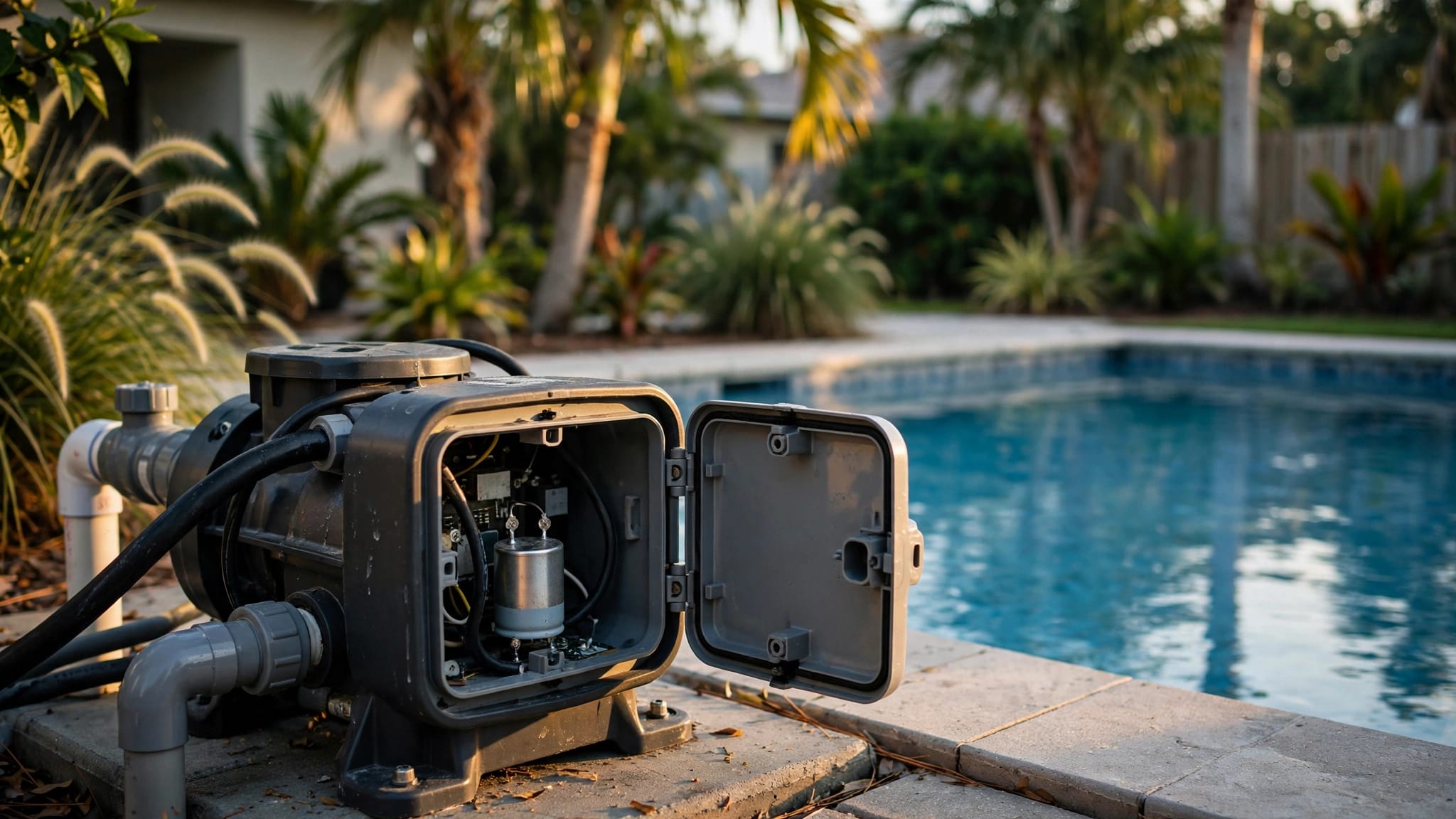
Pool equipment repair usually makes sense when the failure is isolated. A bad capacitor, worn seal, clogged impeller, cracked lid O-ring, or faulty sensor can often be fixed without touching the rest of the system. If the unit starts normally, runs smoothly, and the repair restores normal performance, that is usually a good sign.
Replacement starts to make more sense when the same issue keeps coming back. A unit that has already needed several visits is telling you something. So is a system that runs, but does its job poorly.
The simplest rule of thumb is easy to remember:
If one repair costs about half the price of a replacement, and the equipment is already old or inefficient, replacement is usually the better spend.
A quick side-by-side look helps when the choice is not obvious.
| Situation | Repair usually makes sense | Replacement usually makes sense |
|---|---|---|
| First small failure | Yes | No |
| Minor part like a seal or sensor | Yes | No |
| Repeated breakdowns | No | Yes |
| Cracks, rust, or corrosion | No | Yes |
| High power use | Maybe | Yes |
| Safety-related failure | Only after inspection | Yes |
The pattern is simple. If the fix is small and the equipment is otherwise solid, repair is fine. If the equipment is weak, inefficient, or hard to trust, replacement is the safer bet.
Pool Pumps and Motors Wear Out in Predictable Ways
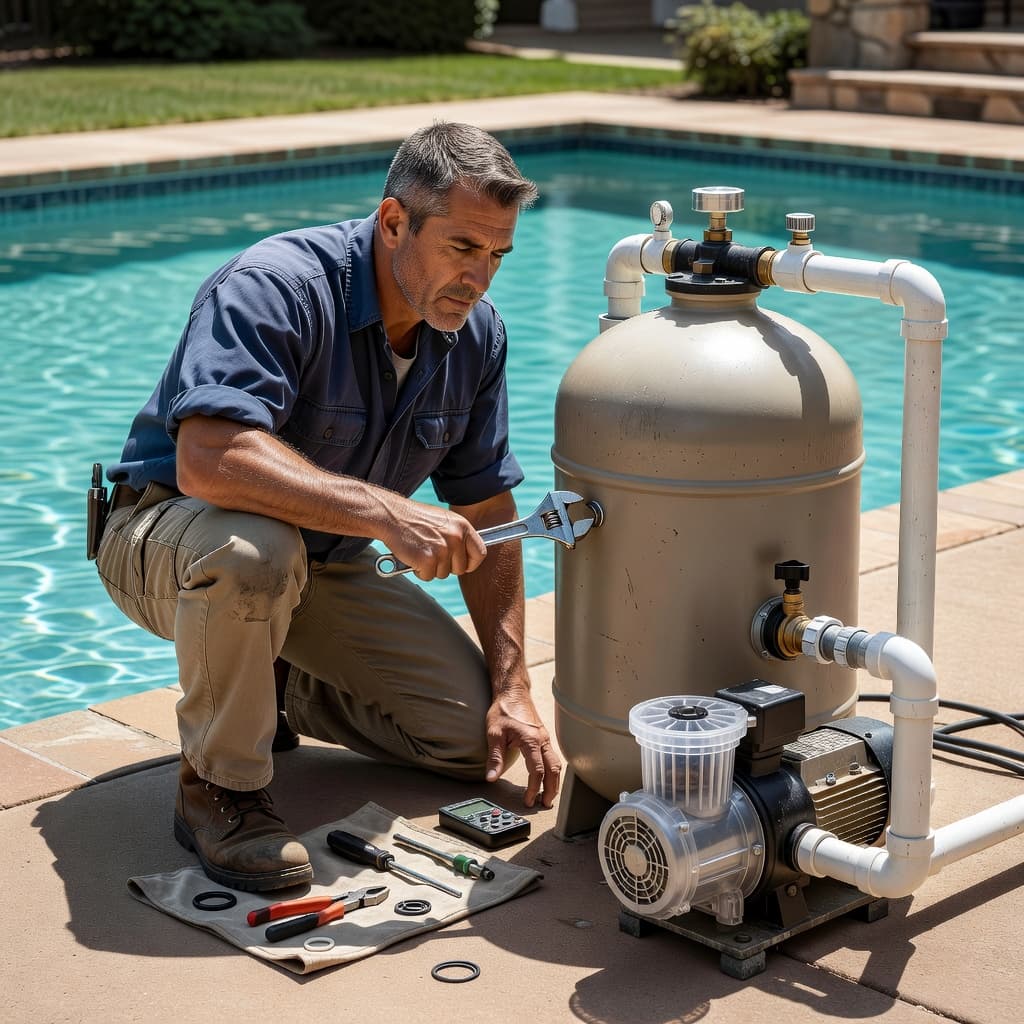
The pump is the heart of circulation, so pump problems show up fast. A noisy basket lid, a leaking shaft seal, a weak motor start, or a clogged impeller often points to a repairable issue. If the pump still primes well and the motor is otherwise healthy, pool equipment repair is often the right call.
Seal kits, impeller cleaning, capacitor replacement, and union repairs are common fixes. These jobs usually make sense when the pump housing is intact and the motor has not been overheating. A pump that hums, struggles to start, or needs a push to run may still be worth saving if the problem is minor and isolated.
Replacement becomes smarter when the motor trips breakers, runs hot, or sounds like grinding metal. Chronic leaks around the shaft are another warning sign. Once water damage reaches the motor bearings or windings, repairs get expensive fast.
Energy use matters here too. Older single-speed pumps often cost far more to run than newer variable-speed models. If you are already paying for a major repair on an older pump, a replacement may pay off in lower power bills and better day-to-day reliability.
A pump that has crossed the 8- to 12-year mark and needs repeated attention deserves a hard look. If it is loud, inefficient, and unreliable, another repair may only delay the next failure.
Filters, Heaters, and Plumbing Parts Need Different Judgments
Filters
Filters often repair well because many problems are small. A dirty cartridge, a bad pressure gauge, a worn O-ring, or a leaking multi-port valve can usually be fixed without replacing the whole unit. Cleaning or replacing the element is normal maintenance, not a sign of a dying filter.
Replacement makes more sense when the tank cracks, the internals break again and again, or the filter still cannot hold pressure after proper service. Sand filters, cartridge filters, and DE filters all have parts that wear out, but the tank itself should not need constant attention. If it does, the body may be at the end of its life.
Heaters
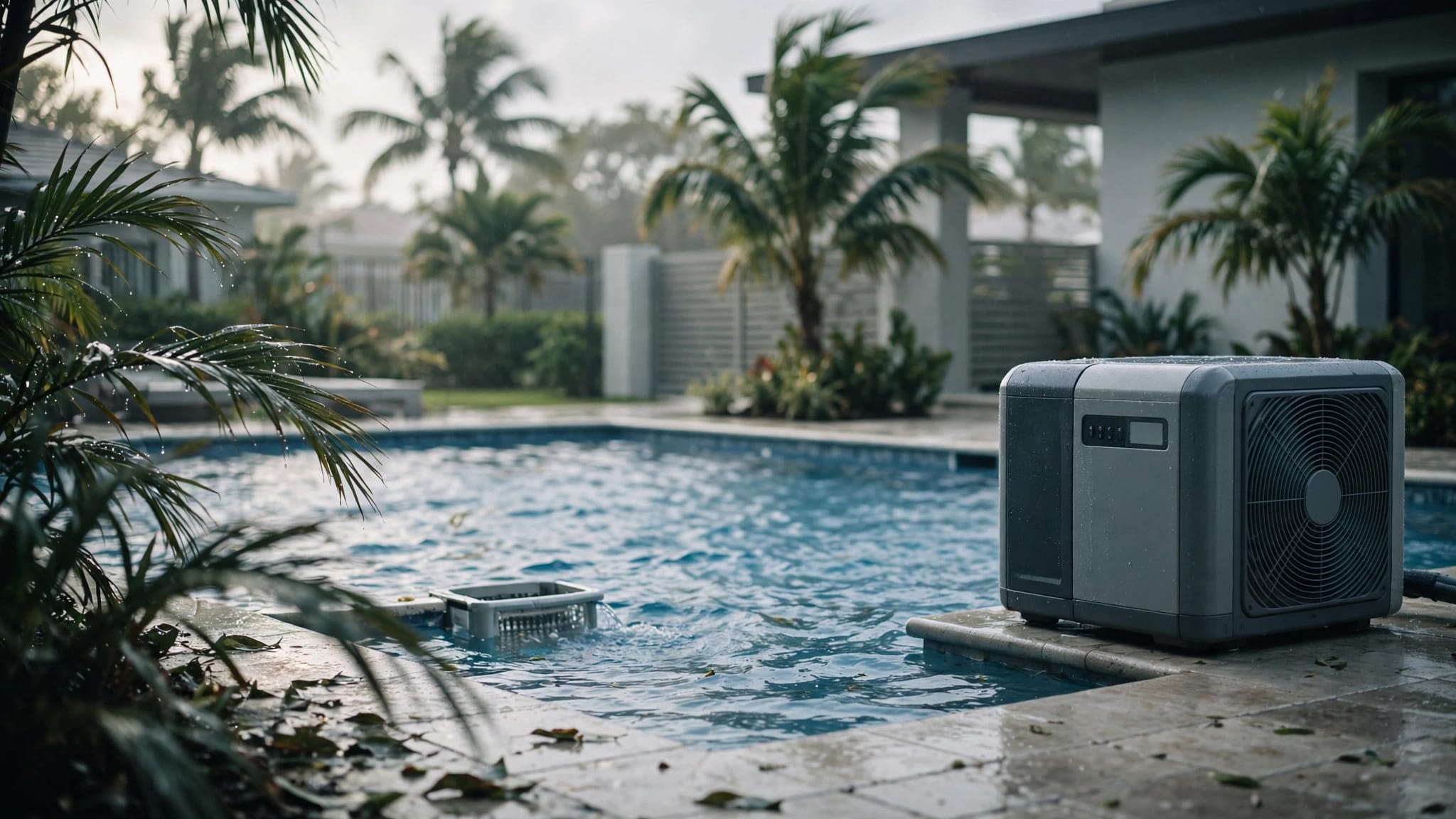
Heaters are different because heat, gas, and electrical parts all have to work together. A failed igniter, pressure switch, thermistor, or flame sensor can often be repaired. That is especially true if the heater is newer and the rest of the cabinet is in good shape.
Replacement starts to make more sense when rust has spread through the cabinet, the heat exchanger leaks, or the unit keeps short cycling. Repeated ignition failures are another warning sign. Gas-fired heater issues deserve a professional inspection every time, because combustion problems are not a guess-and-fix job.
Plumbing and Valves
Valves, unions, check valves, and fittings are usually repair friendly. A stuck valve handle, a loose union, or a small suction leak can often be corrected without major work. Pool equipment repair is a good investment here when the pipe layout is sound and the problem is easy to isolate.
Underground leaks, brittle PVC, or a long list of patched fittings are different. At that point, the plumbing itself may be the problem. If pressure keeps dropping or air keeps getting into the system, a deeper fix often saves more money than chasing one small repair after another.
Salt Systems, Automation, and Electrical Controls
Salt systems, timers, and control boards can be tricky because a small electrical fault can affect the whole pool. A worn salt cell, dirty flow switch, blown fuse, failed relay, or weak sensor is often repairable. If the panel is still supported and the rest of the system is healthy, fixing the part that failed can be the right move.
Replacement becomes better when the salt cell is past its service life and cleaning no longer helps. Corroded terminals, burnt circuit boards, and repeated error codes are also strong signals. If the control panel is obsolete or difficult to source parts for, repairs can turn into a chain of delays.
Automation systems deserve special attention because they control pumps, lighting, heaters, and sanitizers. When the failure is a simple board or sensor, repair is reasonable. When the system keeps losing communication or random commands appear, replacement may be cheaper than repeated troubleshooting.
Electrical problems should never be treated casually. If you see melted wiring, tripped breakers, burning smells, or water near electrical components, stop there and call a professional. That is not a weekend fix.
Energy Efficiency and Safety Can Tip the Scale
A cheap repair is not always the cheapest decision. Older equipment often uses more electricity, burns more gas, and needs more attention. Even if it still works, it may cost more to own than a newer unit over the course of a season or two.
That matters most with pumps and heaters. A tired pump may still move water, but it can do so at a much higher operating cost. A heater with poor combustion or a weak heat exchanger can waste fuel while struggling to keep up. If you are already dealing with a major repair, compare the cost of another fix against the savings a new unit may bring.
Reliability matters too. A pool should not feel like a waiting game. If the equipment fails right before a vacation, a holiday, or the hottest week of summer, that inconvenience has value. Replacement often wins when the old unit is unpredictable, even if it is technically repairable.
If you're comparing a major repair with a new pump, heater, or control upgrade, Get a Free Estimate so you can compare both paths with real numbers, not guesses.
Conclusion
The best choice usually comes down to a few plain questions. Is the problem small and isolated? Is the equipment still efficient? Has the same issue come back more than once?
When the answer is yes to the first question and no to the others, repair often makes sense. When the equipment is old, unreliable, or expensive to run, replacement is usually the better long-term move. For electrical, gas, or complex mechanical issues, bring in a professional before making the call.