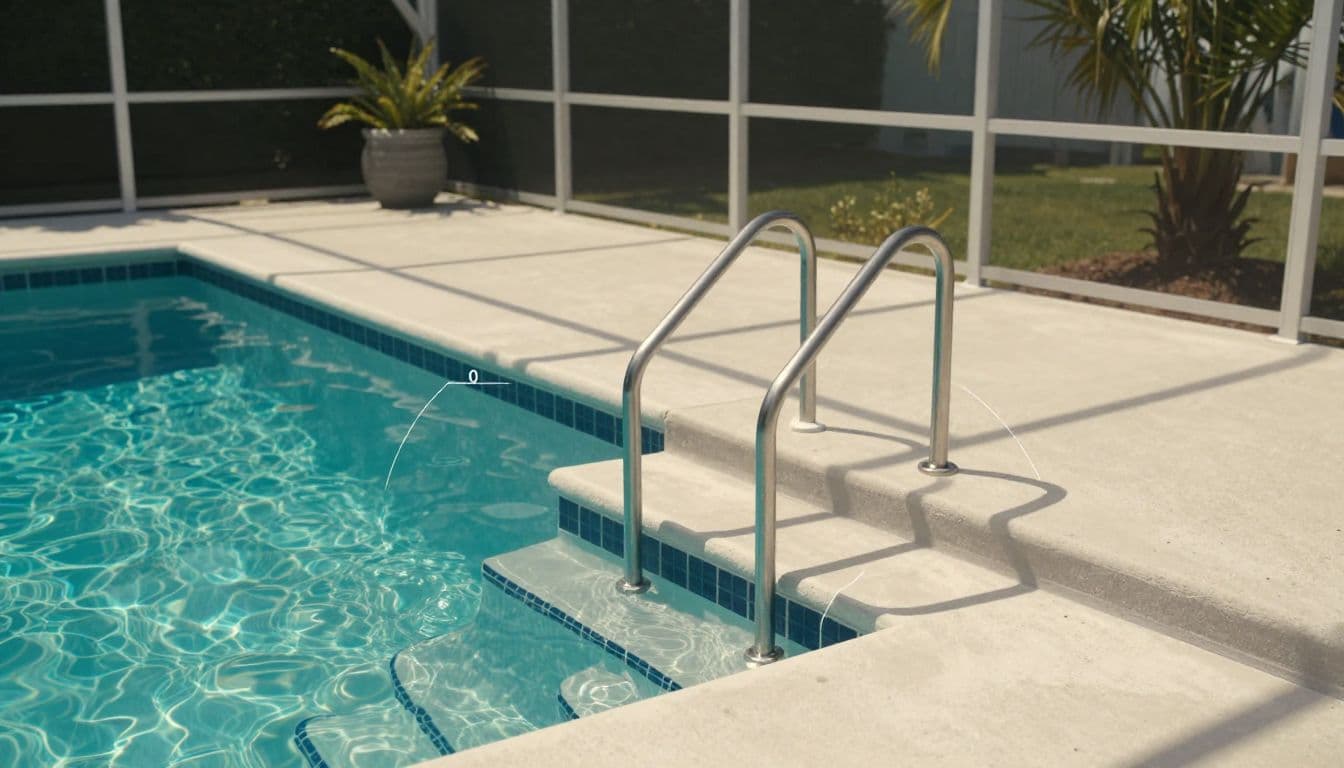
Pool steps are often the easiest way into a backyard pool, but wet feet and changing water depth can make the first and last steps uncertain. Good pool handrail placement gives swimmers a stable point to hold without blocking the steps or crowding the deck.
In Cape Coral, the right location also has to work with sun, salt air, pool chemicals, screened enclosure framing, and the deck already around the pool. The safest plan aligns the rail with the step path, provides secure support, and keeps the hardware easy to see. Start with the stair shape and surrounding deck before choosing a rail style.
Why Handrail Location Matters at Cape Coral Pool Steps
A handrail should make entering and leaving the pool feel natural. It also needs to stay clear of normal foot traffic and remain visible during daytime and evening use.
Support the natural entry and exit path
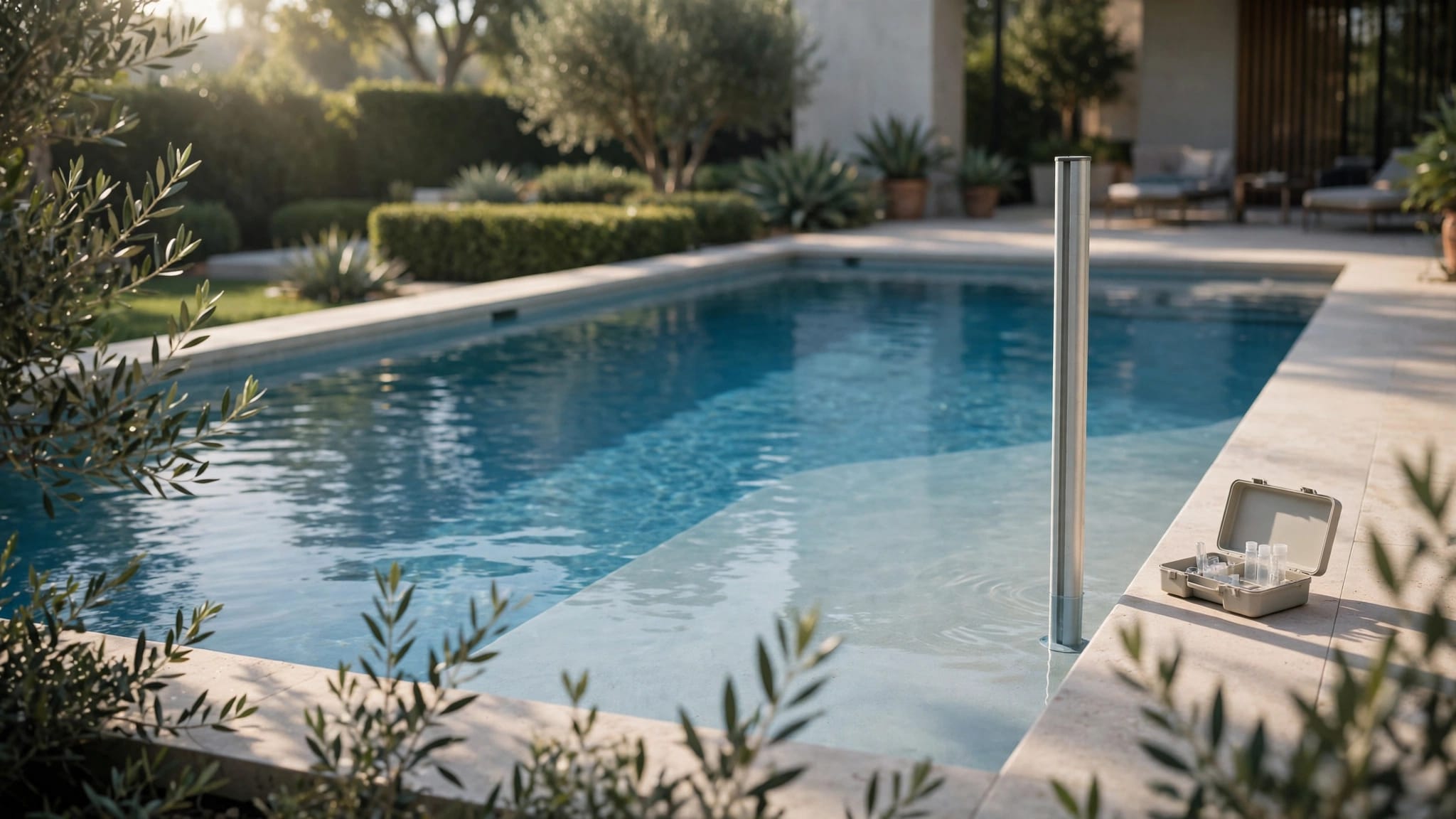
Place the rail where a swimmer can reach it before stepping onto the first submerged tread. The same handhold should remain useful while the person climbs out of the water.
On broad entry steps, align the rail with the main walking path instead of placing it at the far edge. A centered rail may suit one primary access point. A side-mounted or figure-four rail may work better for wider stairs or swimmers who want support on either side.
The handgrip shouldn't force anyone to twist around a raised wall, light, umbrella sleeve, or patio furniture. If older adults, children, or anyone with limited balance uses the pool, review the reach from the deck and the water, not only the rail's appearance from the patio.
The choice of stair shape matters too. Compare Cape Coral pool steps and built-in benches before finalizing the location.
Keep the steps and sightlines open
Keep the rail outside the main walking line on the deck and away from usable tread surfaces. A well-positioned handrail helps a swimmer focus on footing. A poorly placed one creates another obstacle to walk around.
Visibility matters from the house, patio, and seating areas. Avoid a position hidden behind a raised spa wall, tall planter, or enclosure post. Step or deck lighting can also make the rail and tread edges easier to see after sunset. Place fixtures so they don't shine into swimmers' eyes or leave the handrail in shadow.
Plan pool handrail placement around the steps
Florida Building Code provisions and Florida health inspection guidance address pool-step handrails. The references commonly used for pool projects call for handrails at pool stairs and secure anchoring in the pool deck and bottom step. They also address figure-four rails, which need secure deck anchorage and an extension above the bottom step.
Florida provisions commonly referenced for pool handrails place the rail or grabrail within a 28 to 40 inch vertical range above the step edge and deck. The exact reference point can depend on the stair configuration, so the approved plan and current local requirements should control the final installation.
Accessible pool entries and facilities subject to accessibility rules can have additional handrail and clear-width requirements. A typical private, single-family pool isn't automatically subject to every ADA provision. Ask the contractor which Florida and local requirements apply to your project.
Check the deck before drilling
A rail anchor needs a sound mounting surface. Cracked concrete, loose pavers, hollow areas, or deteriorated deck material can compromise the installation.
Before drilling, the contractor should inspect the deck thickness, finish, structural support, and the area below the proposed anchors. The bottom-step connection also needs careful planning. During a renovation, old sleeves or anchors may not match the new rail, step shape, or interior finish.
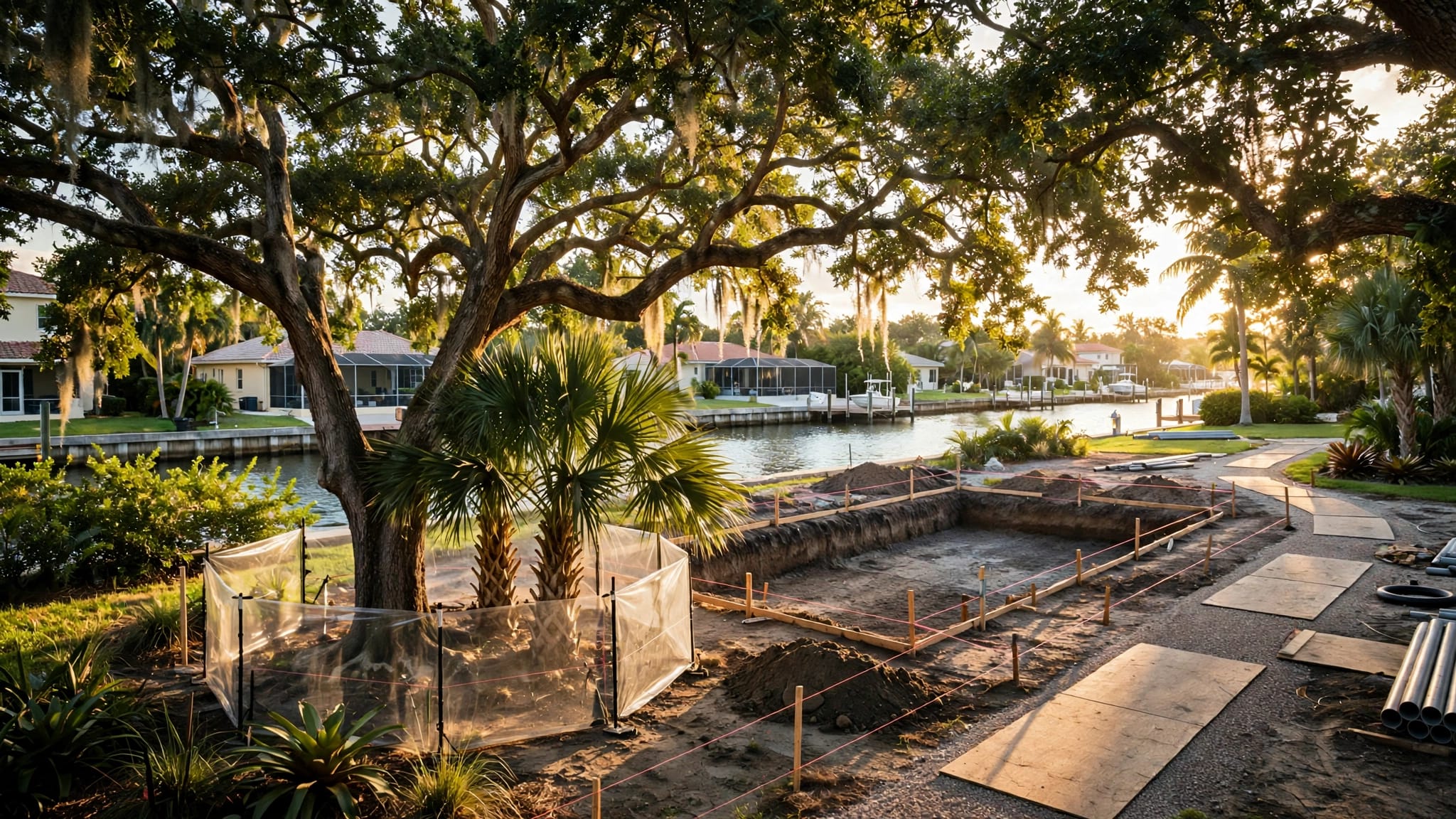
If you are replacing the deck, coordinate the anchors before the final surface goes in. That approach avoids cutting into new concrete or tile and helps the rail sit flat without creating a raised trip point.
Coordinate the screened enclosure
A pool cage changes the usable space around the stairs. The rail shouldn't interfere with a screen door, door swing, enclosure post, panel replacement, or routine deck cleaning.
Cape Coral's permit guidance changed effective March 1, 2026. The city treats screen enclosures as pool safety barriers, and a separate safety-barrier permit is required for applicable fences and screen enclosures. Approval of the pool permit doesn't automatically approve the barrier.
Show the handrail, deck, screen frame, and door location on the same site plan whenever possible. For enclosure work, review the details of pool screen enclosure installation in Cape Coral before construction begins.
Choose Materials for Cape Coral Pool Conditions
Cape Coral pool hardware faces rain, humidity, chlorinated water, intense sun, and salt air in waterfront locations. Material selection affects both appearance and long-term reliability.
Prioritize corrosion-resistant hardware
Stainless steel is a common choice for pool handrails because it offers a clean appearance and resists corrosion when the proper grade and care match the setting. The rail, anchor sockets, bolts, washers, and other hardware should work together.
Salt exposure can be harder on metal components than a sheltered inland installation. Ask about the manufacturer's recommended alloy, finish, cleaning routine, and compatibility with your pool chemistry. A polished surface may look attractive, but the fasteners and concealed anchor components matter just as much.
Don't mix incompatible metals without confirming that the connection is suitable for a wet, salty environment. Your contractor can specify the rail and anchoring system as one installation rather than treating the handrail as a separate accessory.
Match the rail to existing decking
A new handrail should fit the deck's color, texture, coping, and traffic pattern. Its base shouldn't cover a damaged area that needs repair or sit where water collects.
For older pools, inspect the surrounding concrete before selecting the rail. A renovation may require deck repair, anchor replacement, tile work, or changes to the step profile. If the pool is already being remodeled, coordinate the rail with the broader Cape Coral pool remodeling and resurfacing plan.
Pool Handrail Placement Checklist
Before approving the installation, walk through these points with your pool contractor:
- Mark the first submerged step, last exit step, and the natural walking path.
- Confirm that the rail remains visible from the house and primary seating areas.
- Keep the handgrip clear of step surfaces, raised walls, lights, furniture, and enclosure posts.
- Verify secure support in the deck and the bottom step where the approved design requires it.
- Confirm the proposed height and clearances against current Florida and Cape Coral requirements.
- Specify corrosion-resistant rail materials, anchors, and compatible fasteners.
- Check that the rail doesn't interfere with screen doors, enclosure work, drainage, or deck maintenance.
- Inspect existing concrete and old anchors before reusing any mounting location.
A qualified contractor should review the pool shell, step geometry, deck condition, enclosure layout, and permit path during one site visit. For an on-site consultation, Get a Free Estimate before choosing the final rail position.
Conclusion
The best pool handrail placement supports the way people actually enter and leave the water. It keeps the steps open, preserves clear sightlines, fits the existing deck, and holds up to Cape Coral's wet and coastal conditions.
Florida code references provide an important starting point, but the approved design must account for the specific stairs, anchors, enclosure, deck, and current local rules. A site review before drilling can prevent unsafe positioning, damaged finishes, and permit delays.