A filter that looks large enough for your pool can still be the wrong choice. Pool filter sizing must account for the pump's actual flow, plumbing, turnover goal, filter type, and the manufacturer's specifications.
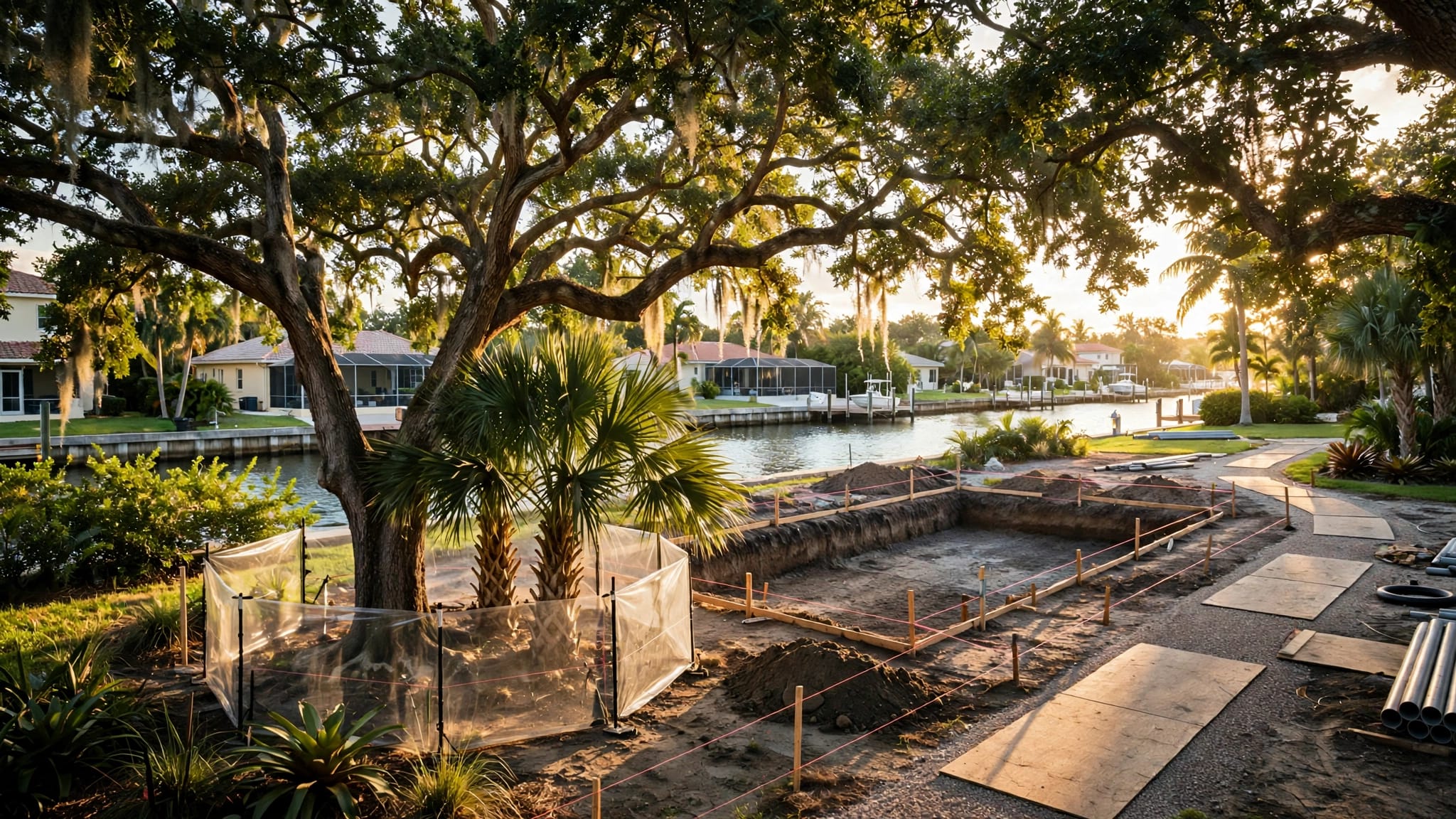
Pool gallons give you a useful starting point, but they don't tell you how water moves through the entire circulation system. That matters when you're building a pool, replacing old equipment, or renovating a Cape Coral backyard. Start with the pool volume, then connect that number to the pump and filter ratings.
How pool filter sizing works
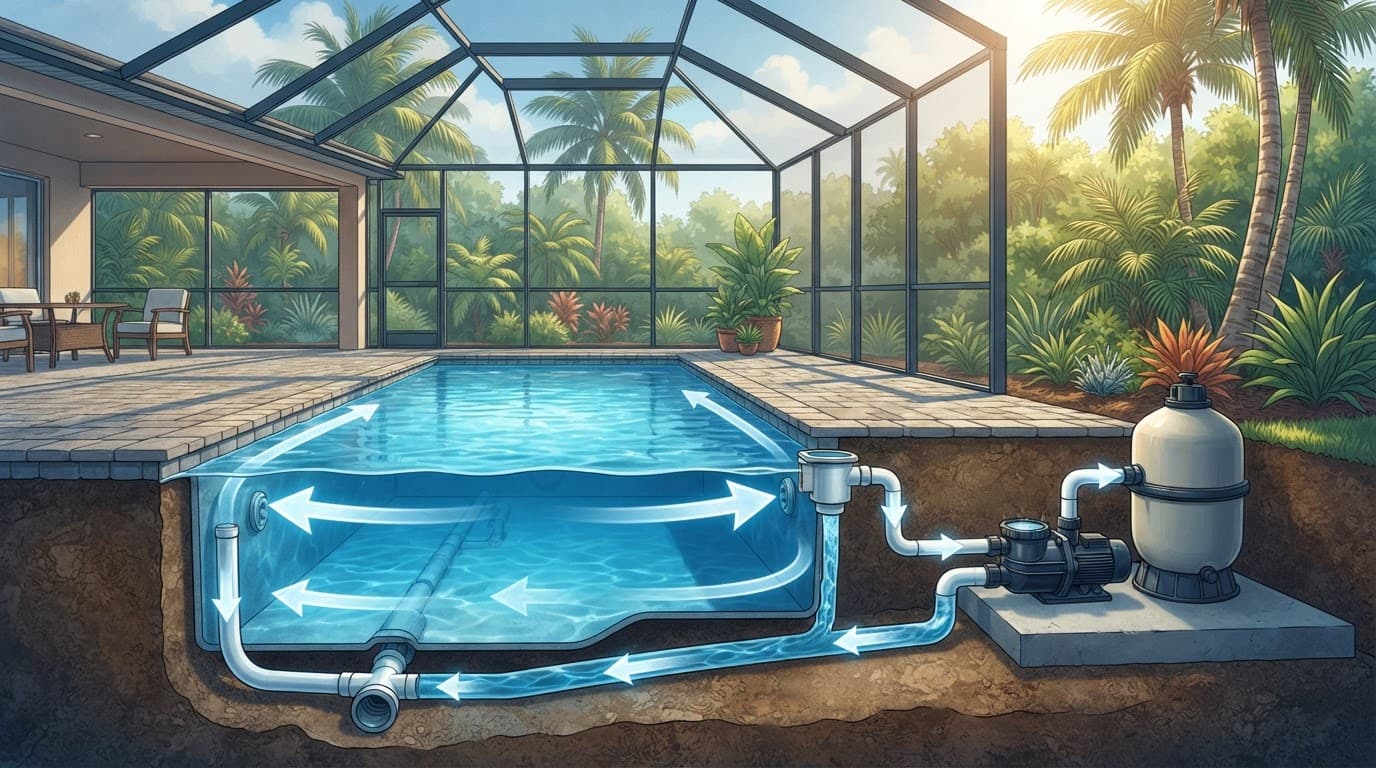
A swimming pool system has one job: move water through the skimmer and drains, clean it through the filter, and return it to the pool. Each part must work within a compatible flow range.
Start with pool volume and turnover
Calculate the pool's approximate water volume before comparing filters. For a rectangular pool, use this formula:
Length x width x average depth x 7.5 = gallons
For example, a pool measuring 15 feet by 30 feet with an average depth of 4.5 feet holds about 15,188 gallons.
Many residential systems use an eight-hour turnover target as a planning starting point. An eight-hour turnover means the system should circulate the pool's full volume once during 480 minutes.
For the example pool:
15,188 gallons / 480 minutes = about 31.6 gallons per minute
That figure is the required average flow for the turnover target. It isn't automatically the pump's setting, and it doesn't identify the correct filter by itself. A professional may select a different target based on the design, equipment, features, and applicable requirements.
Freeform pools require an estimate based on several measured sections. A pool builder can calculate the volume more accurately from the plans or construction drawings.
Match the filter to the pump and plumbing
The pump's horsepower number doesn't tell you its actual flow. A pump may move different amounts of water depending on pipe diameter, pipe length, fittings, elevation changes, valves, heater resistance, and other equipment.
The total resistance in the system is often described as total dynamic head, or TDH. As resistance rises, the pump's flow changes. That is why the filter, pump, and plumbing need to be evaluated together.
The filter's design flow should accommodate the pump's expected operating flow. The pump also shouldn't push water beyond the filter's maximum rated flow. Manufacturer data takes priority over a general rule based on pool size.
A filter can be large enough for the pool yet poorly matched to the pump. The complete hydraulic system determines whether circulation works as planned.
For a deeper look at the pump side of the calculation, review this guide to pool pump sizing for Cape Coral homes.
Calculate the target flow before choosing equipment
The turnover formula helps you establish a design target. The next step is comparing that target with the equipment's published ratings.
Use a simple flow formula
Convert the desired turnover time into minutes, then divide the pool volume by that number.
- A six-hour turnover uses 360 minutes.
- An eight-hour turnover uses 480 minutes.
- A ten-hour turnover uses 600 minutes.
For a 20,000-gallon pool with an eight-hour target:
20,000 / 480 = 41.7 gallons per minute
The pump must produce roughly that flow at the system's actual TDH. A pump rated at a particular flow under ideal conditions may deliver less once connected to the pool's plumbing and equipment.
This calculation is useful when reviewing a proposal or replacing equipment. It also helps you spot a mismatch, such as a filter rated for a much lower flow than the circulation system requires.
Check the filter's published capacity
Filter manufacturers usually list a maximum flow rate and may also provide a recommended design flow. Those numbers vary by filter type and model. Two filters with similar tank sizes can have different internal designs and ratings.
For cartridge filters, the specifications often include the effective filtration area in square feet. Larger cartridge area usually gives the filter more surface area for collecting debris, but the pump still needs to provide the correct circulation rate.
Sand and DE filters also have model-specific flow ratings. Their capacity depends on the tank, internal components, media, and installation. Use the exact model documentation instead of comparing tank height or appearance.
A larger filter can reduce pressure and extend the time between cleanings when the system is designed correctly. However, an oversized filter won't fix an undersized pump or restrictive plumbing. The pool may still miss its circulation target if the pump cannot deliver enough water.
Choose the filter type before the filter size
The best filter type depends on how you use the pool, how much maintenance you prefer, and whether the equipment pad has practical space for cleaning or backwashing.
Cartridge filters suit many residential pools
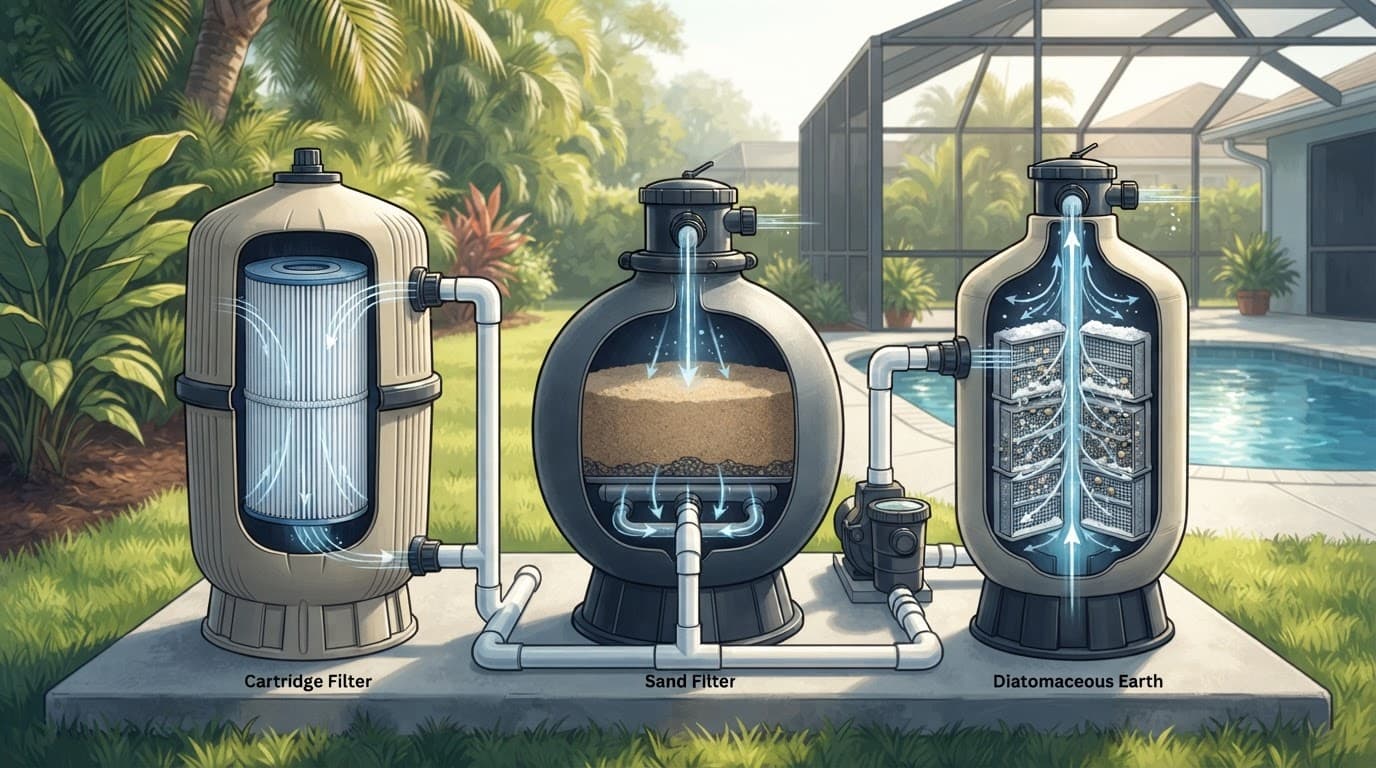
Cartridge filters use pleated material to trap debris. When the pressure rises, you remove the cartridge and rinse it with a hose. The system doesn't need a backwash cycle, so it uses less water during routine cleaning.
Cartridge filters are often a practical choice for homeowners who want a simple setup and don't have a convenient place to discharge backwash water. Their filter area is measured in square feet, and the correct size depends on the manufacturer's flow rating.
A larger cartridge can mean less frequent cleaning, especially when trees, landscaping, or heavy pool use add debris. Still, the cartridge must fit the tank, and the pump must stay within the filter's rated range.
Sand filters offer straightforward maintenance
Sand filters pass pool water through specially graded filter media. Cleaning usually involves backwashing the tank, then rinsing it before returning the system to normal filtration.
This design can be convenient for homeowners who prefer a simple cleaning process. It does require water and an approved discharge location. Backwashing also moves water and contaminants out of the pool system, so the installation must account for drainage.
Sand filters have specific flow requirements. A smaller tank may create more resistance or require more frequent cleaning, while a larger tank may need a pump that can meet its operating needs. Follow the tank manufacturer's instructions for media type, quantity, and flow.
DE filters provide fine filtration
Diatomaceous earth, or DE, filters use a powder coating over internal grids to capture very small particles. They can produce exceptionally clear water, but they require more involved maintenance.
After backwashing or cleaning, the system needs the correct amount of fresh DE powder. The filter grids also need inspection and cleaning when the pressure or water quality indicates a problem.
DE filters can work well for homeowners who accept the added maintenance. Their flow rating, grid area, and required DE amount must match the exact model. A pool professional should handle the setup when the existing equipment or plumbing has several unknowns.
Cape Coral conditions that affect filter performance
Cape Coral homeowners often operate pools in outdoor environments with screened enclosures, tropical landscaping, heavy rain, and long periods of warm weather. Those conditions affect maintenance and equipment placement, although they don't create a separate filter-sizing formula.
A screen enclosure reduces debris, but it doesn't eliminate it
A pool cage can keep out much of the larger debris, yet wind-driven leaves, dust, insects, and rainwater can still reach the pool. Nearby palms and other landscaping may also increase the amount of material collected by the filter.
A screen enclosure should be considered when planning maintenance access, equipment placement, and cleaning frequency. It shouldn't be used to justify a filter that falls below the pump's requirements.
If your enclosure needs repair or replacement during a pool project, compare the options for screen enclosure and rescreening services. The filter pad should remain accessible after the cage work is complete.
Salt systems, storms, and renovations require a system review
A salt chlorine generator doesn't automatically change the filter's required flow rate. However, saltwater equipment and outdoor metal components need materials and connections suited to the installation. Your contractor should verify compatibility when replacing the pump, filter, heater, or chlorination equipment.
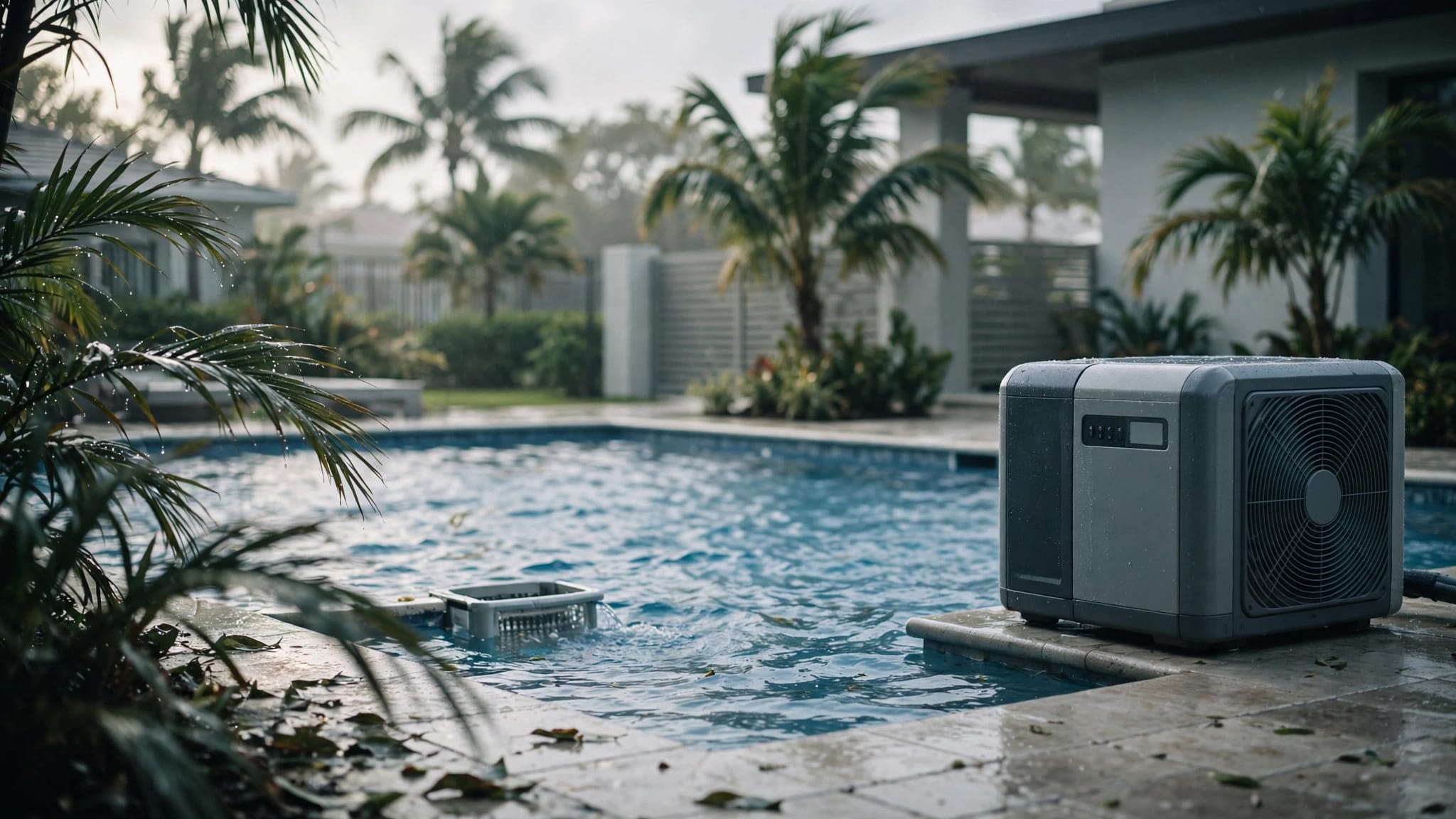
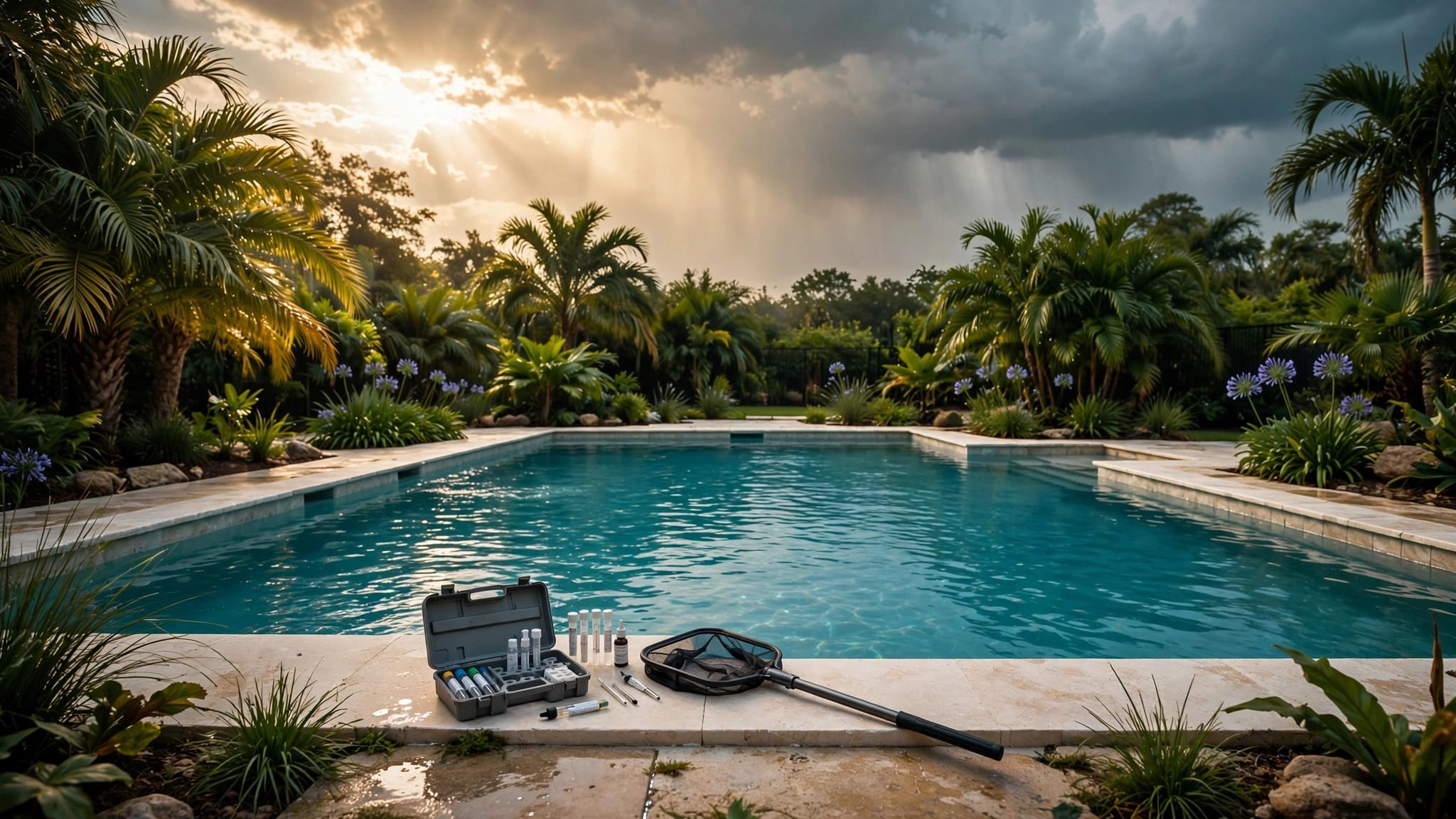
Storms can bring extra rainwater and debris into the pool. After a major weather event, the filter may load faster than usual, even when it was sized correctly. Monitor the pressure gauge and clean the filter according to the manufacturer's instructions.
Renovations are another time to review sizing. Adding a spa, heater, water feature, automation system, or extra returns can change flow resistance. Resurfacing alone may not change the hydraulic design, but equipment replacement during the same project can.
For projects that include a finish, deck, or equipment update, review the available Cape Coral pool renovations and resurfacing services and ask for the equipment changes to be listed clearly.
How homeowners can check a proposed filter size
You don't need to calculate every plumbing detail to ask useful questions. A clear proposal should show how the selected equipment fits the pool's circulation plan.
Read the equipment specifications
Ask for the filter make, model, filtration area or tank size, design flow, and maximum flow. Then request the pump's performance information at the estimated TDH, rather than relying on horsepower alone.
Your proposal should also identify the pipe sizes, heater, salt system, valves, and water features that affect flow. If the project includes a spa spillover or water feature, ask whether the pump can meet those feature requirements while maintaining pool circulation.
Keep the installation and operating manuals after the work is complete. They provide the correct cleaning steps, media requirements, pressure limits, and replacement parts for your specific equipment.
Watch pressure and cleaning patterns
Record the filter pressure after the system is clean and running normally. That reading gives you a useful baseline. Many manufacturers recommend cleaning when pressure rises 8 to 10 psi above the clean starting pressure, but your filter manual takes priority.
A filter may be undersized or poorly matched when pressure rises quickly, water returns slowly, the pump struggles to maintain flow, or cleaning becomes unusually frequent. Dirty baskets, blocked skimmers, closed valves, and air leaks can cause similar symptoms, so don't replace the filter based on pressure alone.
A licensed pool professional should review the system before major equipment changes, plumbing modifications, or new water features. Professional help is also appropriate when the filter model is unknown, the equipment pad floods, electrical components need work, or the system has persistent pressure and flow problems.
If you're planning a new pool or a larger renovation, Get a Free Estimate for an on-site review of the pool design, equipment pad, plumbing, and available space.
Conclusion
Good pool filter sizing starts with gallons and turnover, then accounts for the pump's real operating flow, plumbing resistance, filter type, and manufacturer ratings. Cape Coral conditions may increase debris and maintenance demands, but a screen enclosure or warm climate doesn't replace a proper hydraulic calculation.
When you're comparing equipment, ask for the model numbers and flow data. The right filter is the one that fits the complete circulation system, remains accessible for maintenance, and supports the way your household uses the pool.