A broken pool drain grate can turn a small Florida remodel into a safety and permitting question. Pool drain cover replacement isn't always a simple hardware swap, especially when the existing sump, plumbing, or suction layout is old.
Homeowners planning resurfacing, tile work, deck updates, or a full renovation should treat the drain as part of the pool's safety system. The right replacement must match the system, fit the approved opening, and meet current requirements that apply to the project and location.
What Pool Drain Cover Replacement Rules Cover
Florida requirements depend on the pool type, the project scope, and the local authority having jurisdiction (AHJ). That authority may be a city or county building department, a county health department, or another local pool regulator.
Florida Statutes section 514.0315 addresses anti-entrapment protections for public swimming pools and spas. It references ASME/ANSI A112.19.8, or a successor standard, for compliant anti-entrapment systems and devices. However, that statute doesn't automatically answer every question about a private residential pool.
Public-pool rules don't answer every residential question
For certain public pools built before January 1, 1993, Florida law addresses older systems with a single main drain that isn't an unblockable drain. Those pools may need an additional anti-entrapment feature, such as a safety vacuum release system, suction-limiting vent, gravity drainage system, automatic pump shut-off, or another qualifying device.
Those rules are important background, but a private homeowner shouldn't assume that a public-pool provision applies word-for-word to a residence. Residential work may fall under the current Florida Building Code, local permitting rules, product certification requirements, or a combination of these. The AHJ should confirm the rule that applies.
Know which job you're scheduling
The difference between a cover-only replacement and a system modification affects the paperwork and inspection process.
| Project scope | Typical work involved | What to verify |
|---|---|---|
| Cover-only replacement | Replace an existing grate without changing the outlet or plumbing | Certification, flow rating, fit, installation, permit or form |
| System modification | Change drains, piping, sump, hydraulics, or pool structure | Plans, permits, engineering documents, inspections |
A pool drain cover replacement may qualify as a limited job when the existing outlet remains suitable and the new cover can be installed according to the manufacturer's instructions. If the replacement cannot be completed as a simple swap, Florida Department of Health technical guidance points toward a modification permit and engineering documents.
Why a New Cover May Not Fix the Whole Problem
The visible grate is only one part of a suction outlet assembly. Behind it may be a frame, sump, fasteners, connected piping, valves, and pump equipment that all affect safety.
Match the cover to the pool's hydraulic data
A cover isn't suitable merely because it has the same shape or diameter as the old one. Its certification, model, flow rating, open area, and mounting pattern need review.
Lee County's Main Drain Cover Replacement Form asks for details such as the replacement cover's model number, flow rating, open area in square inches, and the pool's flow rate. Those details show why a contractor needs more information than a tape measure.
The pool's circulation rate may have changed since the original installation. A new pump, additional water feature, heater, spa connection, or altered plumbing can affect the flow through the drain. Therefore, the contractor should compare the replacement cover's rating with the actual system design and operating flow.
Inspect the outlet, fasteners, and connected system
A damaged cover may hide a cracked or deteriorated sump. Corroded screws, stripped mounting points, an improper frame, or damaged surrounding concrete can also prevent a secure installation.
The system may need a broader review if the pool has:
- One older main drain with no clear secondary protection
- A missing, loose, cracked, or heavily worn cover
- An outlet that doesn't match the existing frame
- Plumbing or pump equipment that has been changed
- A drain location or sump that no longer fits the planned remodel
A single drain isn't automatically a violation in every private pool. Still, it deserves a system-level review when its age, condition, or layout is unclear.
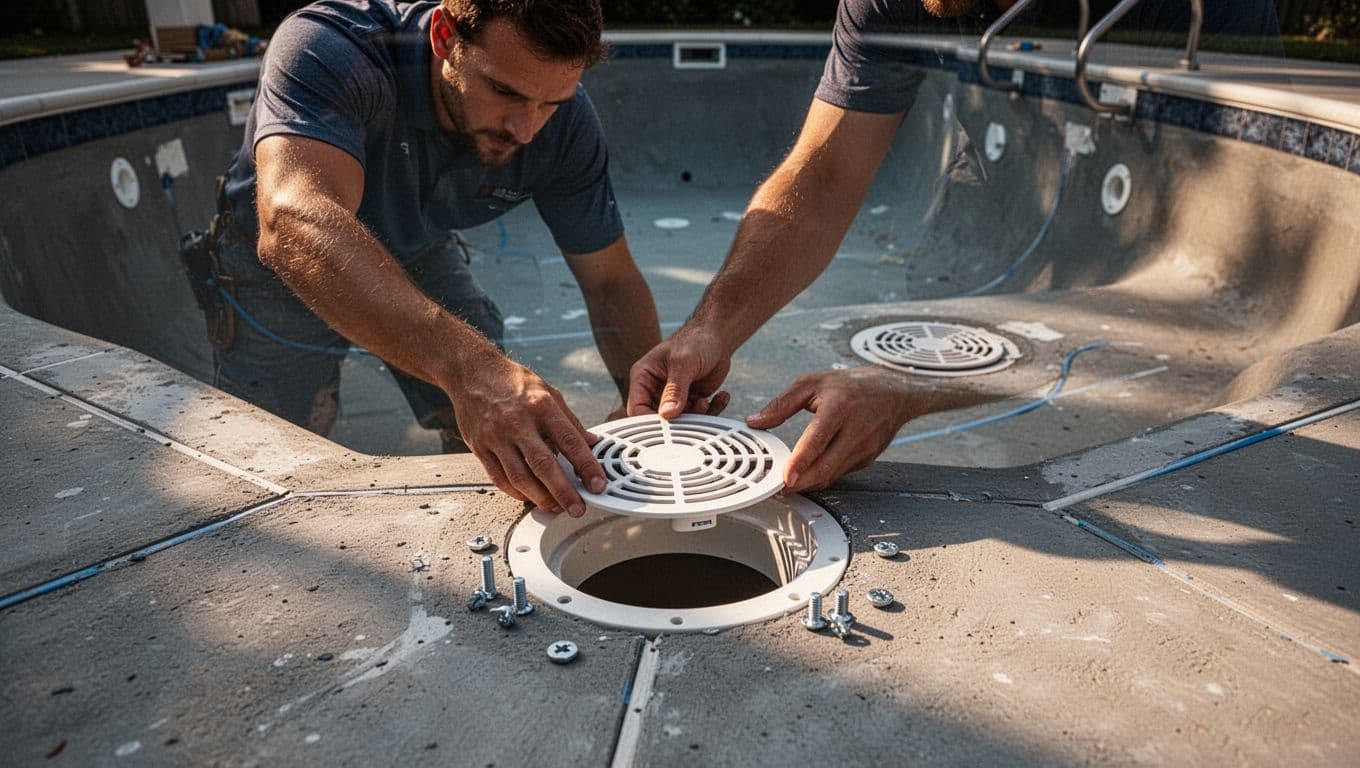
Replacing the grate won't correct undersized piping, a damaged sump, unsuitable fasteners, or a circulation design that needs modification. The cover and the parts below it should be evaluated together.
Permits, Inspections, and Documentation in Florida
Florida doesn't have one simple answer for every residential pool drain project. Local offices may classify the same work differently, so homeowners should confirm the process before draining the pool or ordering parts.
Ask the correct authority before work begins
Start by describing the project in plain terms:
- The pool is residential or public
- The existing drain cover is damaged or being replaced during a remodel
- The outlet location will stay the same, or it will change
- The plumbing, pump, or circulation equipment will stay the same, or it will change
- The pool will also receive resurfacing, structural repairs, deck work, or new equipment
In Cape Coral, ask the applicable city permitting or building office whether the work requires a pool permit or inspection. If health-department documentation applies, contact Lee County's environmental health office as well. A contractor can help identify the right office, but the AHJ gives the final local answer.
Some Florida jurisdictions treat a main drain grate replacement as permit work. Others may use a limited submittal or replacement form for a simple installation. For a broader explanation of local project scope, review these Cape Coral pool remodeling permits before approving a proposal.
Keep the technical records
Ask for a copy of the cover documentation and the installation records. Depending on the local process, the file may need to include:
- The cover manufacturer and model number
- ASME/ANSI certification or other required product documentation
- Flow rating and open-area information
- The pool's measured or documented flow rate
- The existing permit number, if the local form requests it
- A contractor-signed statement for a simple replacement
- Engineering documents when the job becomes a modification
- Permit and inspection records
Florida Department of Health technical guidance describes a contractor-signed statement for a simple drain-grate replacement in regulated settings. The statement confirms that the existing cover was replaced with an ASME/ANSI-certified cover and installed according to the manufacturer's instructions. That process doesn't remove the need to check local requirements for a residential project.
How Drain Work Fits Into a Larger Pool Remodel
A drain cover often comes up during resurfacing or renovation because the pool is already empty and accessible. That timing can reduce duplicated labor, but it also makes the project scope more important.
Review the pool before ordering a part
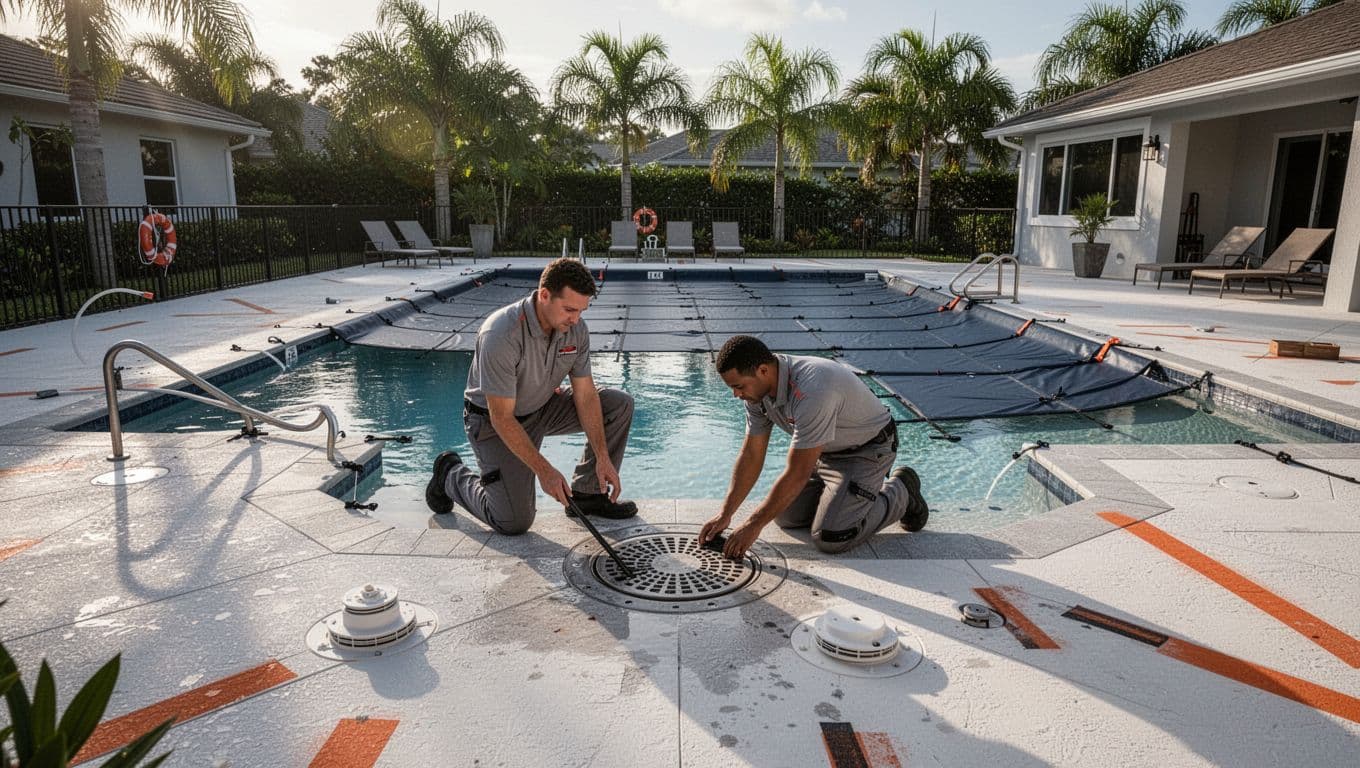
The contractor should inspect the drain before selecting a replacement. That review may include the cover dimensions, frame, screw pattern, sump condition, pipe connection, outlet configuration, and equipment flow.
Ask the contractor to photograph the existing assembly and identify any unknowns in the written proposal. A clear record helps prevent a crew from discovering a mismatch after the pool has been drained.
If the drain is damaged or the layout needs to change, the project may require concrete removal, plumbing work, engineering review, and inspection. Those items belong in the scope before work starts.
Coordinate the drain with surface and structural work
Resurfacing changes the pool interior finish, but it doesn't automatically correct drain-system problems. New plaster, quartz, or pebble can't make an unsuitable cover safe.
If the pool needs more than a grate swap, coordinate the work with the full renovation plan. Drain repairs may need to happen before interior finishing, while deck or tile work may affect access around the outlet. A contractor experienced in Cape Coral pool renovations and resurfacing can review the drain alongside the pool shell and finish.
Also ask whether planned equipment changes will affect flow. A larger pump, added water feature, spa, or new suction line may change the information needed to select and approve the cover.
Questions to Ask Before Scheduling Pool Drain Cover Replacement
A written proposal should answer these questions before the crew starts:
- Is this a like-for-like cover replacement, or does the outlet, sump, plumbing, or circulation system need modification?
- Which Florida office is the AHJ for this work, and has that office confirmed whether a permit, form, or inspection is required?
- What certification applies to the replacement cover, and can you provide the model and product documentation?
- What are the cover's flow rating and open area, and how do they compare with the pool's actual flow rate?
- Will you inspect the sump, frame, mounting screws, and surrounding pool structure before installation?
- Does the existing pool have one drain, multiple drains, or another anti-entrapment arrangement?
- Who will submit the permit or replacement paperwork, pay the fees, and schedule any required inspection?
- What happens if the old frame, sump, or plumbing cannot accept the planned cover?
- Will the proposal list drain work separately from resurfacing, tile, deck, equipment, and screen-enclosure work?
- What documents will I receive when the work is complete?
Don't accept a quote that only says "replace drain cover" without identifying the part, installation method, and possible hidden conditions. The lowest price may exclude the permit, inspection, system testing, or repairs needed below the grate.
For a project in Cape Coral, you can Get a Free Estimate and ask for an on-site review of the drain, pool finish, equipment, and planned renovation scope.
Conclusion
Pool drain cover replacement is a focused safety task, but the cover doesn't work alone. Florida homeowners need to confirm the applicable code, certification, permit process, and inspection requirements with the local AHJ before scheduling the job.
A careful contractor will match the cover to the pool's flow, inspect the outlet assembly, document the installation, and identify when a simple replacement has become a larger system modification. That preparation helps keep a pool remodel safe, properly documented, and ready for the next stage of Florida outdoor living.