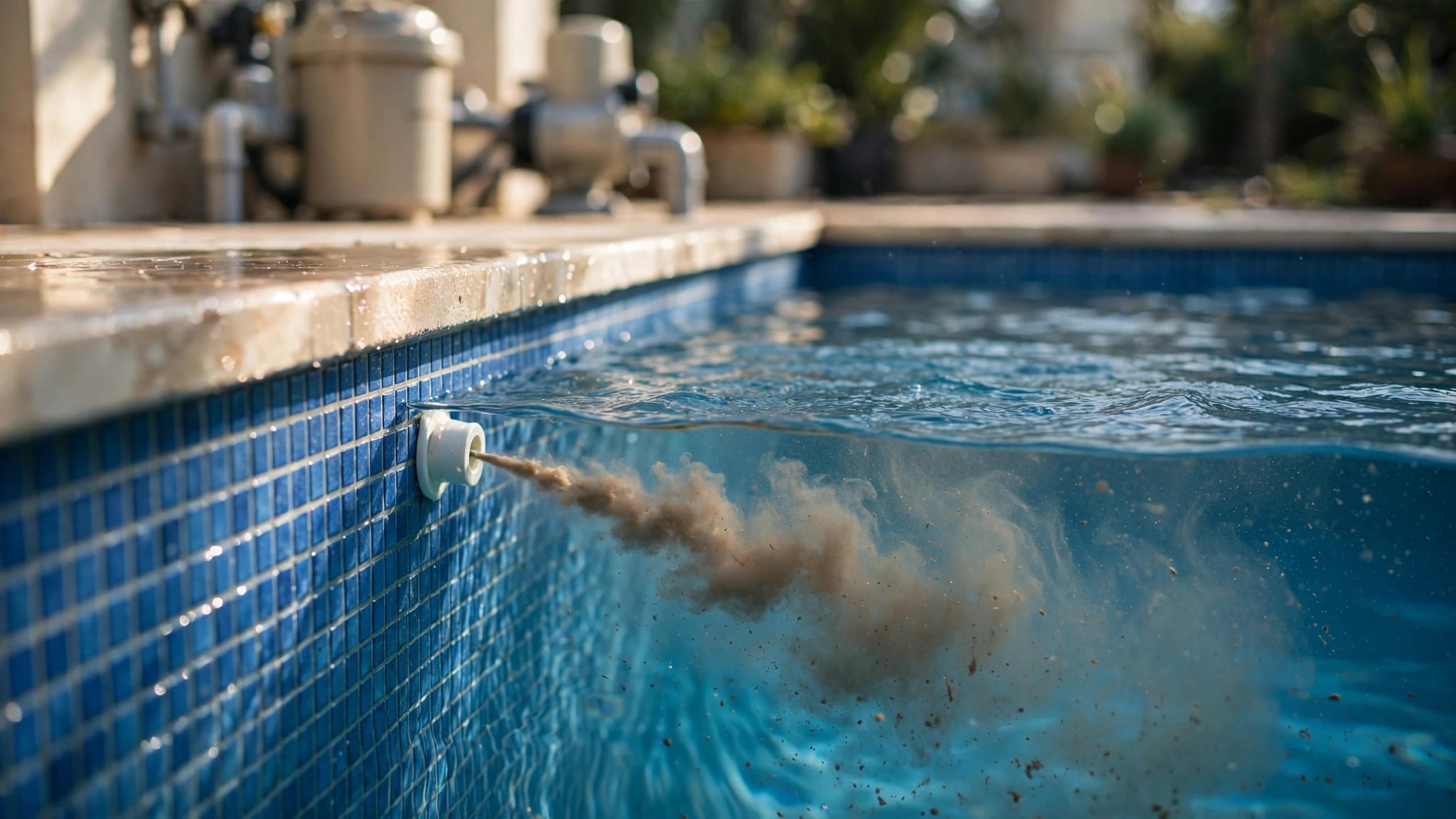
A pool can look perfectly calm while the equipment pad is working hard behind the scenes. Knowing your pool valve positions helps you keep water moving where it should, whether you are filtering, vacuuming, draining, or sending water to a spa.
The right setting protects your pump and filter, while the wrong one can restrict flow or create damaging pressure. Start with the equipment you have, follow its manual, and make every adjustment with the pump off.
Start by Mapping Your Pool's Water Path
Pool plumbing has two sides. The suction side pulls water from the pool to the pump. The return side sends filtered water back through the wall fittings, spa jets, water features, or other outlets.
Most residential pools pull water through a skimmer, a main drain, or both. The skimmer catches floating debris near the surface. The main drain pulls water from the bottom, though its plumbing route may not be obvious from the deck.
Follow the pipes before moving a handle
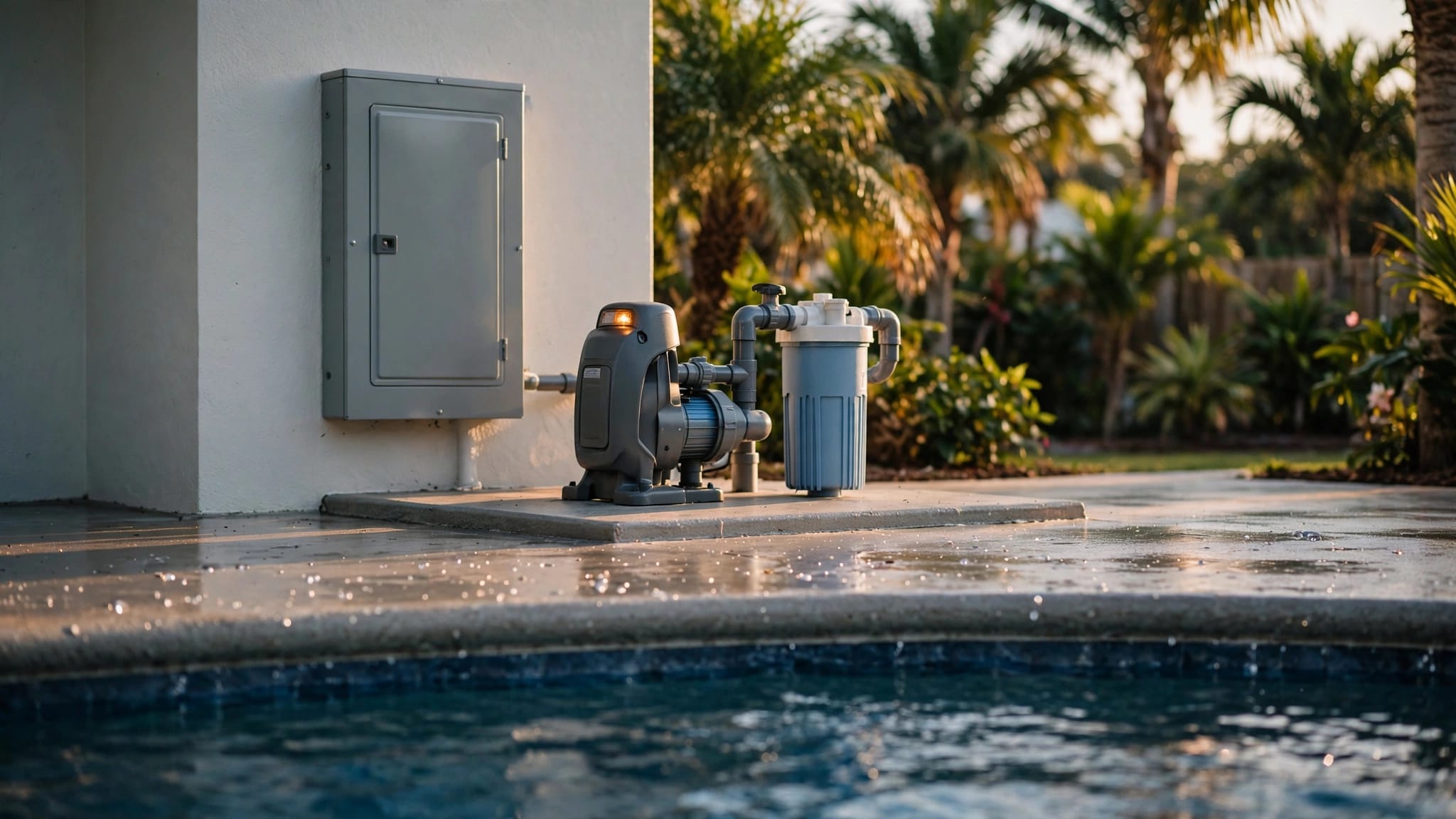
Stand at the equipment pad with the pump off. Trace each pipe as far as you can. Pipes entering the front of the pump are suction lines. Pipes leaving the filter and heater are return lines.
A marker or weatherproof tag can help after you identify each line. However, do not assume another pool uses the same arrangement. Plumbing layouts vary, especially after a renovation, equipment replacement, or spa addition.
For a new build, it helps to plan pool plumbing upgrades before construction so future features have dedicated lines and accessible valves.
Know the equipment that controls flow
A pump creates suction and pushes water through the system. The filter catches fine debris. Valves direct the water, isolate equipment, or choose between two plumbing paths.
| Component | What it does | What to watch for |
|---|---|---|
| Pump | Pulls and pushes pool water | Air bubbles, leaks, loss of prime |
| Filter | Removes dirt and debris | Rising pressure and weak returns |
| Multiport valve | Changes filter-related functions | Handle setting and pump status |
| Diverter valve | Opens, closes, or blends plumbing lines | Which pipe is restricted |
| Pressure gauge | Shows resistance inside the filter | Pressure above the clean baseline |
Write down your clean filter pressure after the system runs normally. That number gives you a useful reference later.
Pool Valve Positions on a Multiport Valve
A multiport valve is usually mounted on top of, or beside, a sand filter. Its handle selects a complete water route through or around the filter. The labels on the valve are more important than the handle's direction.
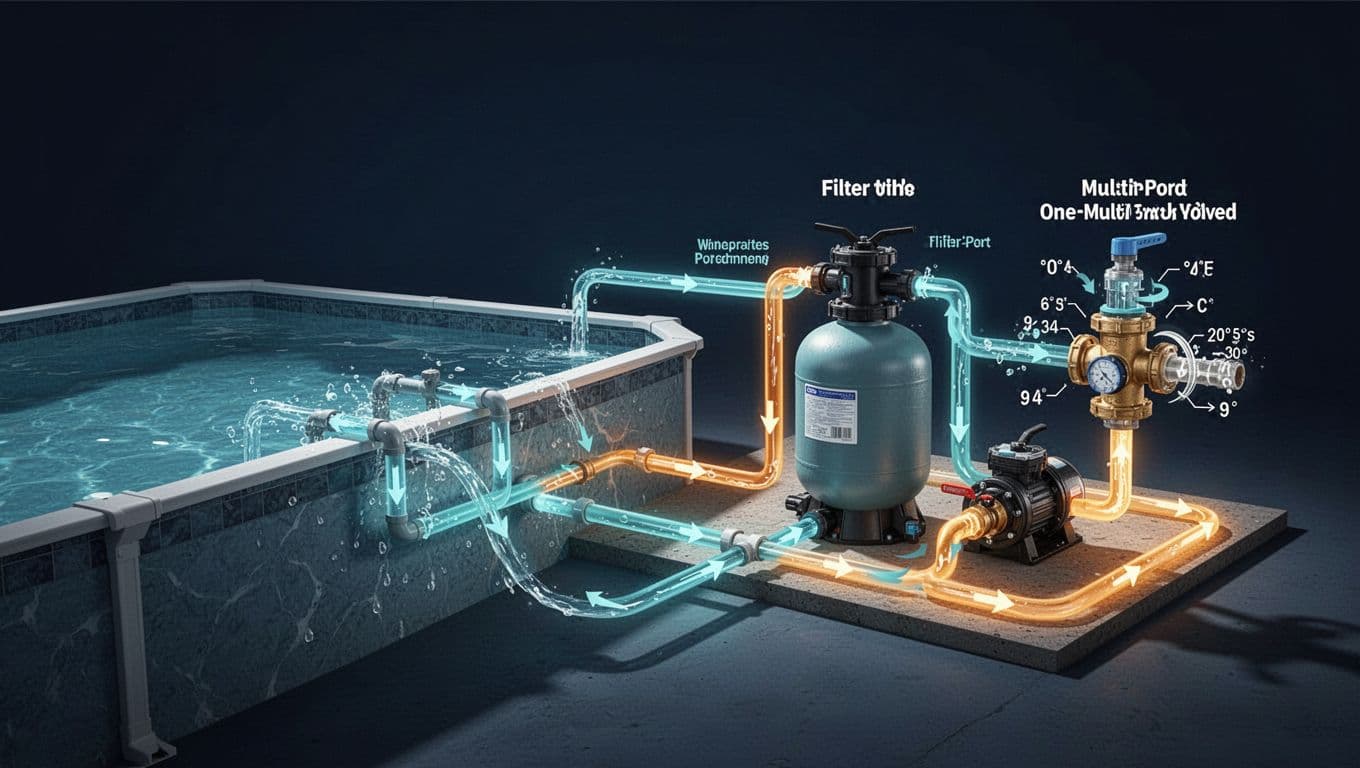
Turn the pump off before moving the multiport handle. Wait until the motor stops, then press the handle down and rotate it to the selected setting. Moving it while water is under pressure can damage the internal gasket, often called a spider gasket.
Filter and recirculate settings
Filter is the everyday setting. Water travels from the pump through the filter and returns to the pool. Keep the multiport valve on Filter during routine circulation, heating, and most manual vacuuming.
Recirculate bypasses the filter. Water still moves through the pump and returns to the pool, but debris does not pass through filter media. This position can help circulate water when you are treating a problem that could clog a dirty filter, but follow your chemical product directions.
Backwash, rinse, waste, and closed
Use these settings for short, task-specific jobs:
| Setting | Where the water goes | When to use it |
|---|---|---|
| Backwash | Backward through the filter and out the waste line | To clean a sand or DE filter |
| Rinse | Forward through the filter and out the waste line | Immediately after backwashing |
| Waste | Bypasses the filter and exits the waste line | To lower water or remove heavy debris |
| Closed | Stops water flow through the valve | Only with the pump off |
| Winter | Relieves internal pressure on some models | Only if your manual calls for it |
Backwash removes trapped debris by reversing flow through the filter. Then run Rinse briefly so loose debris does not return to the pool when you switch back to Filter.
Never run the pump with a multiport valve set to Closed. Water has nowhere to go, and pressure can damage the pump, filter, plumbing, or valve.
Some valves use "Drain" instead of "Waste," and some do not have a Winter setting. Your owner's manual has the final word.
Diverter Valves Control Individual Pool Lines
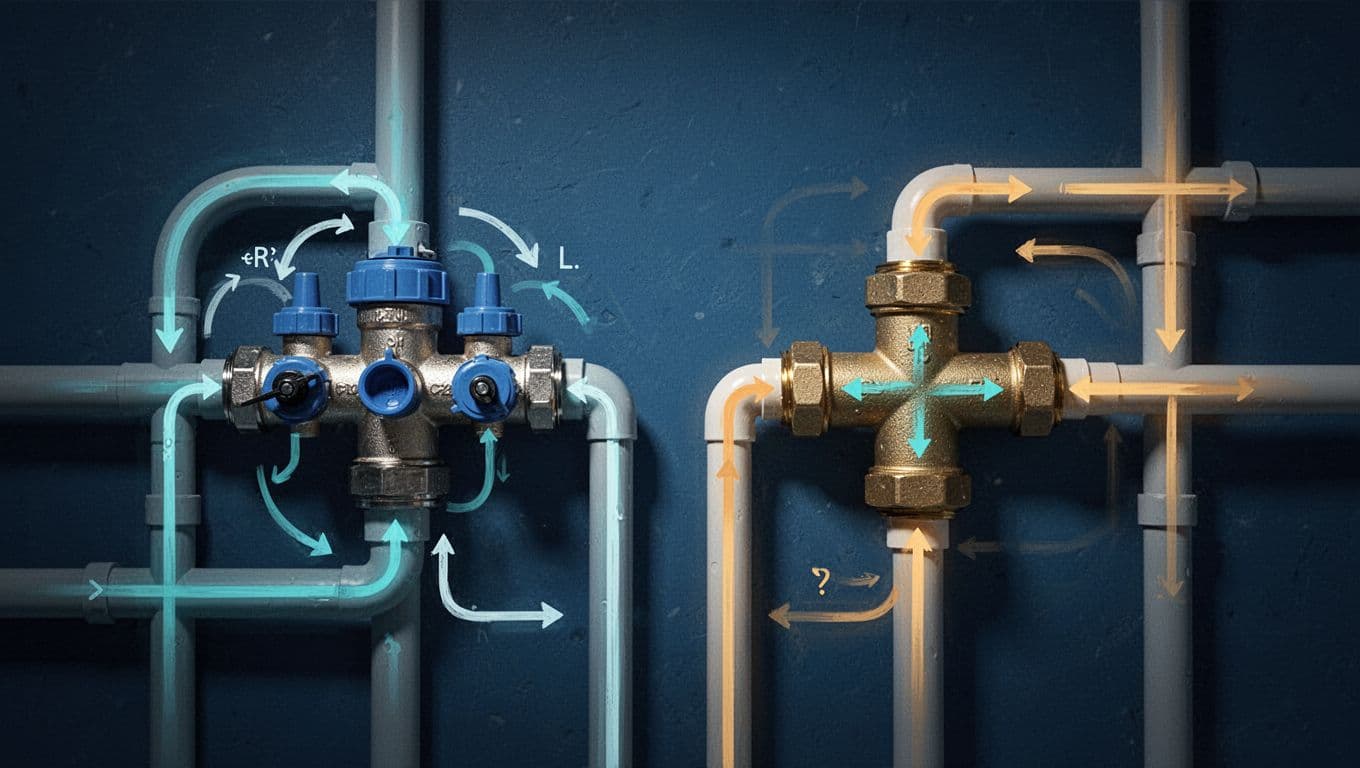
A diverter valve does a different job than a multiport valve. It does not select filter functions. Instead, it controls which suction or return pipe carries water.
A two-way diverter valve opens or closes one line. A three-way diverter valve can send water through either of two lines, or divide flow between them. You might find one near the pump for skimmer and main-drain control, plus another after the filter for pool returns and spa returns.
Read the valve, not the guesswork
Many diverter valves have an "OFF" mark molded into the handle or lid. On those models, that marker points toward the port being blocked. Still, designs differ by manufacturer and installer.
Do not rely on a rule such as "handle parallel means open" for every valve. That shortcut can be wrong on a three-way valve. Instead, inspect the valve markings, trace the pipes, and verify the configuration in your equipment manual.
Common diverter configurations
A suction-side diverter may favor the skimmer for surface cleanup or blend skimmer and main-drain flow during normal circulation. Closing the skimmer line completely can cause trouble if the water level falls below the skimmer opening.
On the return side, a diverter may route water to pool jets, a raised spa, bubblers, or a waterfall. Restricting a water feature can increase flow at the main returns. However, avoid closing too many return paths at once because pressure can climb quickly.
If a valve position is unclear, make a small adjustment with the pump off. Restart the system and watch the pool's return flow before making another change.
Move Valves Safely and Watch the System
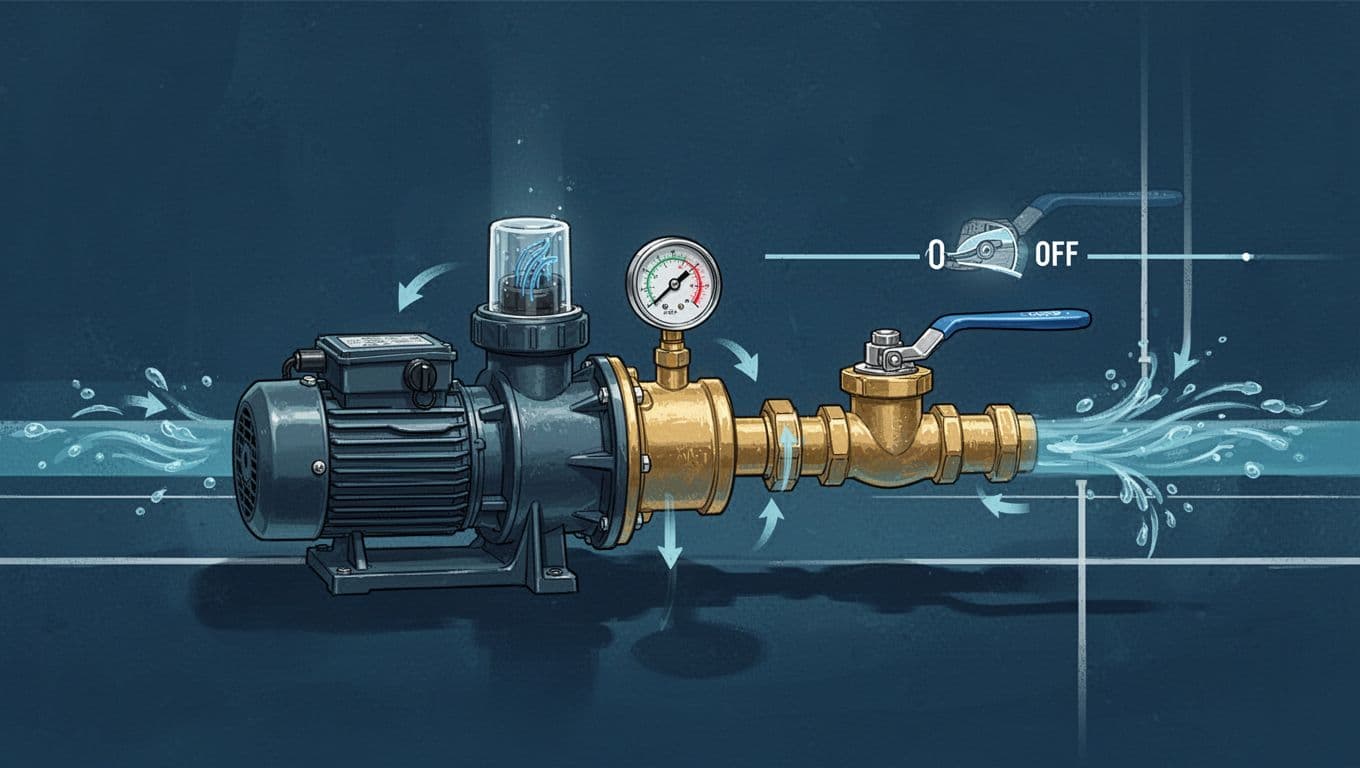
Valve adjustments should be deliberate. A pump can lose prime when a suction line closes too far, and a blocked return can send pressure upward in seconds.
Use a safe adjustment routine
Follow this sequence every time:
- Turn off the pump at the timer, breaker, or automation control.
- Wait until water stops moving through the equipment.
- Move one valve handle to the intended position.
- Confirm the multiport valve is not set to Closed.
- Restart the pump and stay nearby for several minutes.
- Check flow, pressure, water level, and the pump basket for air.
Never force a stuck handle. A brittle valve lid, worn gasket, or seized diverter can break under pressure. Call a pool professional if the handle will not move normally.
Watch pressure, flow, and water level
A working system should have steady water returning to the pool. The pressure gauge should remain close to the clean baseline you recorded. A sudden rise may point to a dirty filter, a closed return, or a blocked line.
Meanwhile, keep the water level around the middle of the skimmer opening. If water drops too low, the skimmer can pull air into the pump. Turn the pump off if you see a large air pocket in the pump basket, hear a strained motor, or lose return flow.
Match the Valve Setting to the Job
Pool valve positions make more sense when you connect them to the task at hand. Routine filtering needs open suction and return paths. Draining and backwashing need closer attention because water leaves the pool.
Daily circulation and vacuuming
For daily operation, use the multiport valve's Filter setting. Leave enough suction flow through the skimmer to capture leaves and surface debris. On pools with a main drain, a balanced setting often keeps circulation steadier.
Manual vacuuming usually works best on Filter when dirt is light. If a large amount of dead algae or fine debris sits on the floor, Waste may prevent the material from loading the filter. Watch the water level closely because Waste sends pool water out of the system.
Spa mode and water features
A connected spa often needs a matched valve setup. The suction valve draws from the spa, while the return valve sends water back to the spa jets. If only one valve changes, the spa may drain into the pool or the pump may pull in air.
Waterfalls, deck jets, and bubblers may have their own return valve. Open that line gradually. Then check that the primary return jets still have enough flow and that filter pressure stays normal.
Automation systems can move motorized valves on a schedule. Even then, you should know the manual positions before a power outage or service visit.
Valve Problems That Point to a Larger Repair
A valve is not always the source of poor circulation. A dirty filter, blocked skimmer basket, clogged pump basket, low water level, or suction leak can create similar symptoms.
Leaking around a multiport handle may mean the internal spider gasket has worn out. Water escaping from a diverter valve lid can point to a damaged seal or O-ring. A valve that drips only while the pump runs deserves attention before it worsens.
Renovations are a good time to simplify plumbing
Older equipment pads can have crowded pipes, fading labels, and valves that are hard to reach. A pool renovation gives homeowners a chance to replace worn valves, add unions for easier service, relocate equipment, or prepare plumbing for a future heater or water feature.
Pool renovation and resurfacing projects can also include equipment updates that make routine care less confusing. Clear access matters, especially when storms, debris, and heavy use put more demand on a Florida pool system.
If you are building a pool, upgrading equipment, or dealing with recurring circulation issues, Get a Free Estimate for an on-site consultation.
A Clear Valve Setup Keeps Your Pool Running Well
The safest approach is simple: identify each pipe, use the labels on your own equipment, and turn the pump off before every adjustment. Multiport valves choose filtration functions, while diverter valves direct water between plumbing lines.
Watch the gauge, return flow, and water level after any change. With a basic map of your pool valve positions , you can make routine adjustments with more confidence and recognize when the system needs professional attention.