A pool excavation can cross buried lines that aren't visible from the yard. 811 utility locates help identify participating public utilities before digging, but they don't cover every underground system on your property. Contact 811 before pool excavation, follow your local one-call center's instructions and waiting period, and arrange a private locate for lines that aren't included.
For a Florida project, Sunshine 811 requires at least two full business days' notice before digging. Your pool contractor may handle the ticket when they're doing the excavation, but you should still discuss private lines and site boundaries before machinery arrives.
Key Takeaways
- Contact 811 before excavation and follow the rules and waiting period for your state or local one-call center.
- In Florida, Sunshine 811 asks for at least two full business days before digging. The day you submit the request, weekends, and holidays don't count.
- Public utility locates generally don't include private lines such as irrigation, landscape lighting, and connections to outbuildings.
- Don't dig until all required utility responses are complete. Protect the markings, and request a new locate if the marks expire, are disturbed, or the work area changes.
Why Utility Locates Matter Before a Pool Dig
An excavator removes soil quickly, and a buried line can be struck before anyone sees it. A damaged electrical, water, gas, sewer, or communications line can create a safety risk, interrupt service, and delay the pool project.
A locate request gives participating utility companies a chance to mark their underground facilities in the proposed work area. Sunshine 811 coordinates the request, but it doesn't locate or mark the lines itself. The member utilities or their locators respond.
A public locate is only one part of site planning. A survey helps establish property lines, easements, and existing features, while utility marks indicate approximate locations of participating public facilities. Neither one confirms every private line or answers questions about soil and groundwater.
Plan the Pool Excavation Area
Define the full scope of work
The locate request needs to describe where excavation will occur. For a new pool, consider the planned pool shell, deck work, equipment area, drainage changes, and access route. Renovation work may also require digging for plumbing, lighting, equipment relocation, or structural repairs.
Tell your contractor if the project scope changes after the ticket is submitted. A request covers only the area described in its locate instructions. Work outside that boundary may need another ticket before digging there.

Identify existing features before marking the site
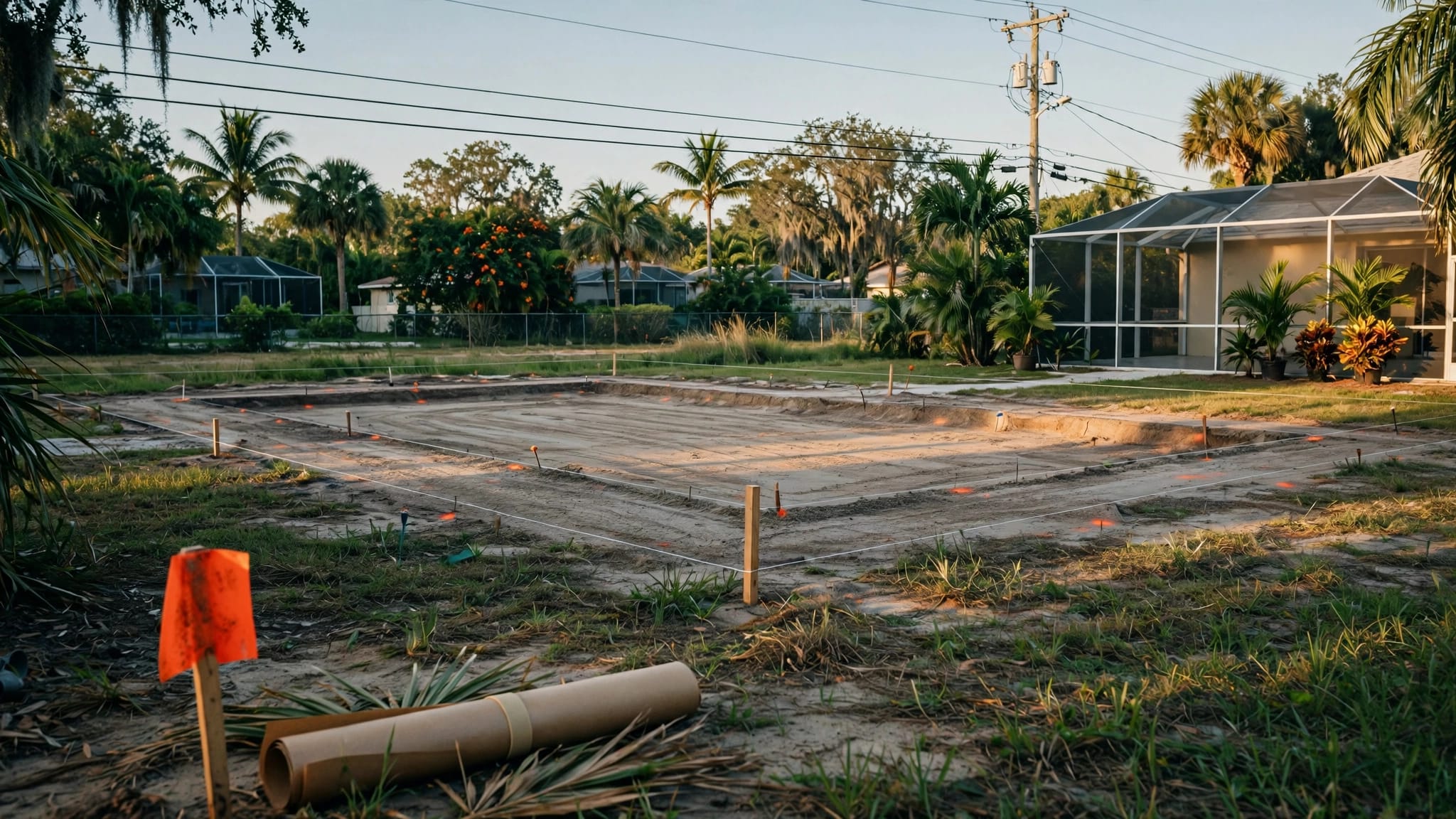
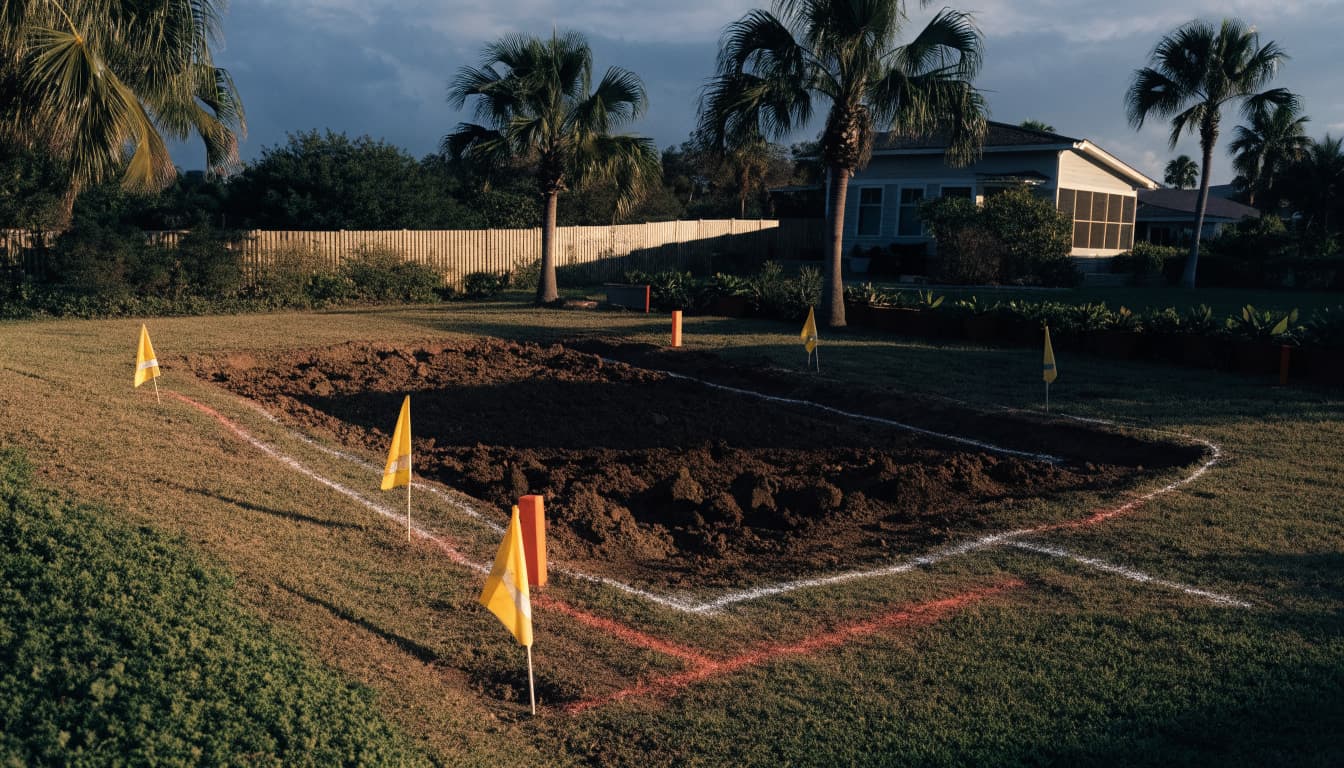
Walk the yard with your contractor and point out patios, fences, trees, service equipment, drainage features, and any visible utility access points. If the work is limited to part of the property, Sunshine 811 instructs requesters to outline the proposed excavation area with white paint or white flags.
A current site plan can help keep the pool layout and locate description consistent. For a Cape Coral project, review what to include in a pool engineering plan and survey requirements for Cape Coral pools. These planning documents serve different purposes from a utility ticket.
Request 811 Utility Locates in Florida
Decide who will submit the ticket
When a pool contractor performs the excavation, Sunshine 811 says the contractor is responsible for obtaining the locate ticket. Ask who will submit it and make sure the request describes the actual excavation area and project schedule.
Florida homeowners can also submit a ticket for work at their own address through Sunshine 811's online system or by calling 811. Ticket submission is free. You'll need the job address, project type, expected timeline, a clear description of the area to be excavated, and contact details for the person or company doing the work.
Allow the required time, then wait for responses
For Sunshine 811 in Florida, submit the request at least two full business days before digging . The day of the request doesn't count, and neither do weekends or holidays. This is a Florida timing rule, not a universal deadline; other states and local one-call centers may set different requirements.
After a ticket is created, the requester receives a ticket number and a list of notified member companies. Wait until every required utility response is complete before excavation begins. A submitted ticket alone doesn't mean every utility has responded or that the yard is clear.
Read the Marks and Keep the Work Safe
Treat marks as approximate locations
Utility marks show approximate facility locations, not a guaranteed exact route or depth. Keep the marks visible and protect them from foot traffic, equipment, soil piles, irrigation, and other site activity. Take photos before work starts, but don't treat a photo as a substitute for markings on the ground.
If the excavation approaches a marked facility, tell the crew before digging continues. In Florida, the tolerance zone extends 24 inches from each outer edge of the marked facility. State law calls for increased care in this zone and recognizes methods such as hand digging, potholing, soft digging, or vacuum excavation.
Stop if a required response is missing
Before the first machine moves, the contractor should know which utilities responded and where their markings are. If a response is incomplete, or a mark is unclear, pause the affected work and follow the one-call center's instructions. Don't assume an unmarked area means there are no buried utilities.
Arrange a Private Locate for Lines 811 Doesn't Mark
Point out private systems
Public utility marking usually doesn't cover privately owned lines beyond a utility's service point. These can include some pool plumbing and electrical connections, irrigation pipes, landscape-lighting wires, drain lines, septic components, and lines serving an outbuilding.
Tell your contractor about systems you know are in the yard, including sprinkler pipes and low-voltage lighting. When private lines may cross the dig area, arrange a qualified private locator. The contractor can coordinate the work, but don't assume the public ticket includes every private system.
Make the yard's history part of the plan
Mention past construction, removed patios or structures, known buried debris, and any lines added after the home was built. Irrigation is easy to overlook because parts may be hidden beneath lawn, pavers, or planting beds. Before work begins, discuss which sprinkler zones will be shut off and whether heads or lines need to move.
When new lines will run beneath a future deck or walkway, plan their route before concrete or hardscape goes in. A serviceable path can make later repairs easier and help prevent unnecessary cutting or excavation.
Keep the Ticket Current When Plans Change
Track expiration and changes
A Sunshine 811 ticket is valid for 30 calendar days. If the schedule moves beyond that period, the ticket may need renewal before excavation. Plan the request around the expected dig date, rather than submitting it far ahead of construction.
A change to the excavation footprint also matters. If the pool, deck, equipment trench, or access path shifts beyond the area described in the ticket, the revised area needs appropriate coverage before digging. Work plans should match the locate request, not rely on an old ticket for a new layout.
Request a new locate when marks are lost
Stop work if markings are disturbed, destroyed, or no longer reasonably visible. Sunshine 811 instructs users to contact its call center for a new ticket, using the existing ticket number when marks are lost. Follow the applicable local process if the ticket has expired or the work area has changed.
Keep the ticket number, utility responses, and photos with the project records. These details help the homeowner and contractor keep track of the locate status as the schedule and site conditions change.
Coordinate Utility Locates With Pool Planning
Utility locating fits alongside permits, surveys, access planning, and soil evaluation, but it doesn't replace any of them. In Cape Coral, permit requirements depend on the type and scope of pool work, so review Cape Coral pool permit requirements as part of the broader project plan.
Before excavation, confirm who handles the permit, who obtains the locate ticket, and who coordinates any private locating. Also discuss where equipment will enter, where excavated soil will go, and which landscaping or hardscape features need protection. If you're planning a new pool, renovation, or resurfacing project, Get a Free Estimate to schedule an onsite consultation.
FAQ About 811 Before Pool Excavation
Is calling 811 enough to start digging?
No. A request starts the process, but the excavation should wait until all required utility responses are complete and the site is marked. Follow the waiting period and instructions from the one-call center for your location.
Does 811 locate sprinkler lines and pool plumbing?
Usually, public utility tickets don't include privately owned lines such as irrigation, landscape lighting, or some pool connections. Tell the contractor what you know about private systems and arrange a qualified private locate where needed.
Who files the ticket when a pool contractor is digging?
Sunshine 811 says the contractor is responsible for obtaining the ticket when the contractor performs the excavation. The homeowner should still discuss the ticket's boundaries, timing, and private lines with the project team.
What if the crew can't see the markings?
Pause digging in the affected area. If markings have been disturbed or are no longer visible, contact the one-call center and request a new locate according to its instructions.
Make the Locate Part of the Dig Plan
An 811 ticket helps identify participating public utilities, while private locating fills gaps the public request doesn't cover. Plan the full excavation area, allow the required notice period, wait for all responses, and protect the markings throughout the work.
Before the excavator arrives, make sure the ticket still matches the project and that private systems have been addressed. Clear information before the dig helps the crew work with fewer avoidable surprises.