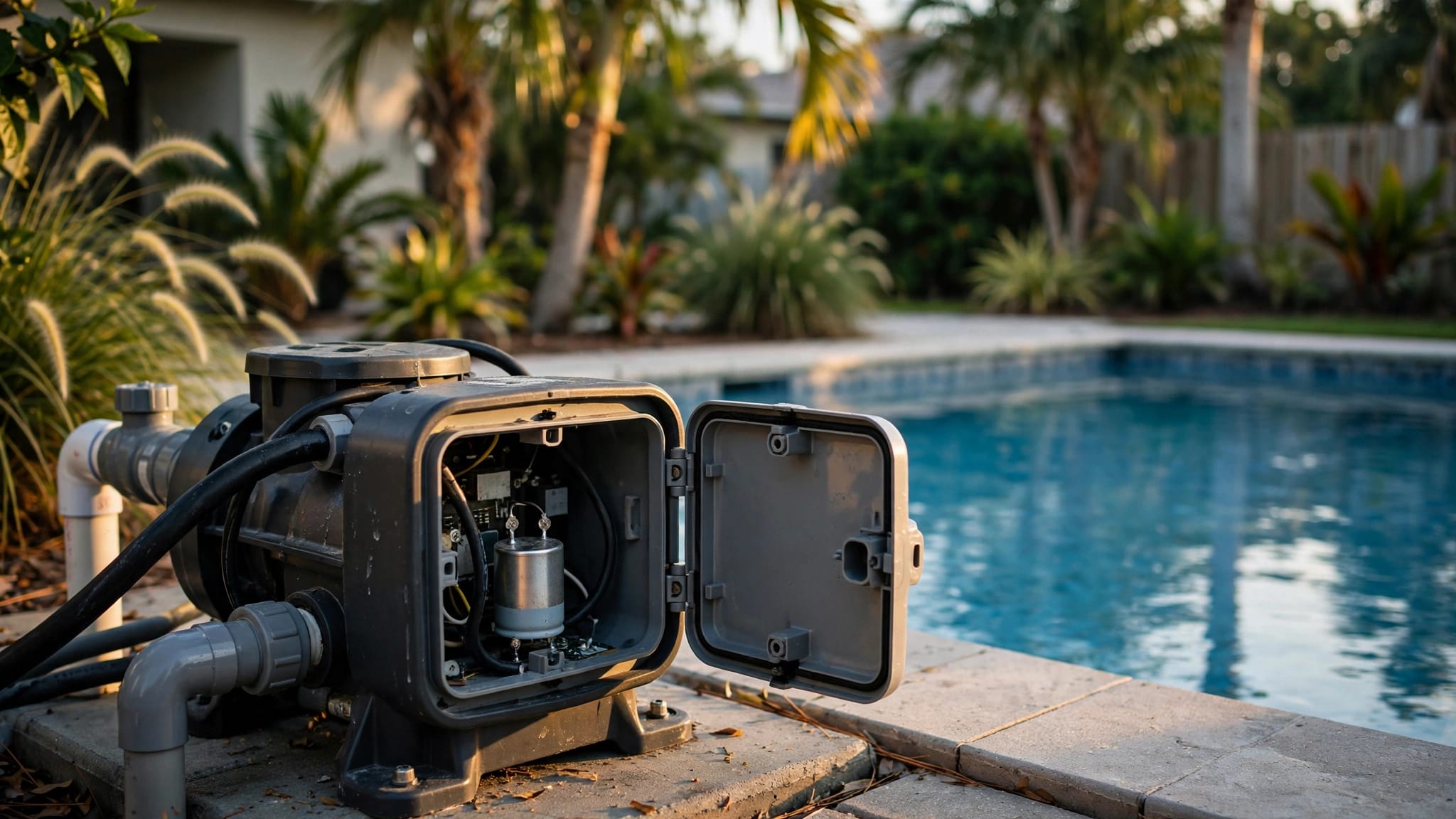
A stopped pool pump can feel like an urgent maintenance problem, but electrical safety comes first. When your pool pump breaker trips, leave the pump out of service rather than trying to keep it running.
Your safest checks are hands-off observations , not electrical testing. Repeated trips, burning smells, unusual heat, buzzing, visible damage, or water near electrical components require a licensed electrician.
Start by recognizing the warning signs, then gather only the information you can safely observe.
Key Takeaways
- Stop using the pump and call a licensed electrician if trips repeat or electrical warning signs appear.
- Keep electrical panels, motor covers, and control enclosures closed. Don't touch wiring, bypass protection, or work on energized equipment.
- Never restart equipment that has been submerged, even after the surrounding area dries.
- Photos, existing error messages, and the timing of a shutdown can help professionals investigate without another test run.
What to Do When Your Pool Pump Breaker Trips
Your first priority is preventing another attempt to operate questionable equipment. Clear pool water doesn't make an electrical problem safe, and maintaining circulation doesn't justify repeated restarts.
Stop at These Warning Signs
Call a licensed electrician if the breaker trips repeatedly or you notice a burning smell, buzzing, unusual heat, scorched surfaces, damaged conduit, exposed wiring, or water near electrical components.
Don't touch the pump, outlet, or enclosure to find out whether it's hot. Report heat you already noticed during ordinary use, along with visible discoloration or melting.
If you see smoke, sparks, or fire, move away and call 911. Don't approach the equipment to operate a switch.
Keep People Away From the Equipment
Keep children, pets, and anyone maintaining the pool away from the affected area. If an electrical hazard is suspected, keep the pool unused until a licensed electrician evaluates it.
Leave a tripped breaker alone. Don't ask a family member or caretaker to reset it while you watch the pump.
Also, don't step into standing water to reach a switch or disconnect. If stopping equipment requires approaching wet or damaged electrical components, stay back and contact a professional.
Safe Visual Checks Before Calling for Help
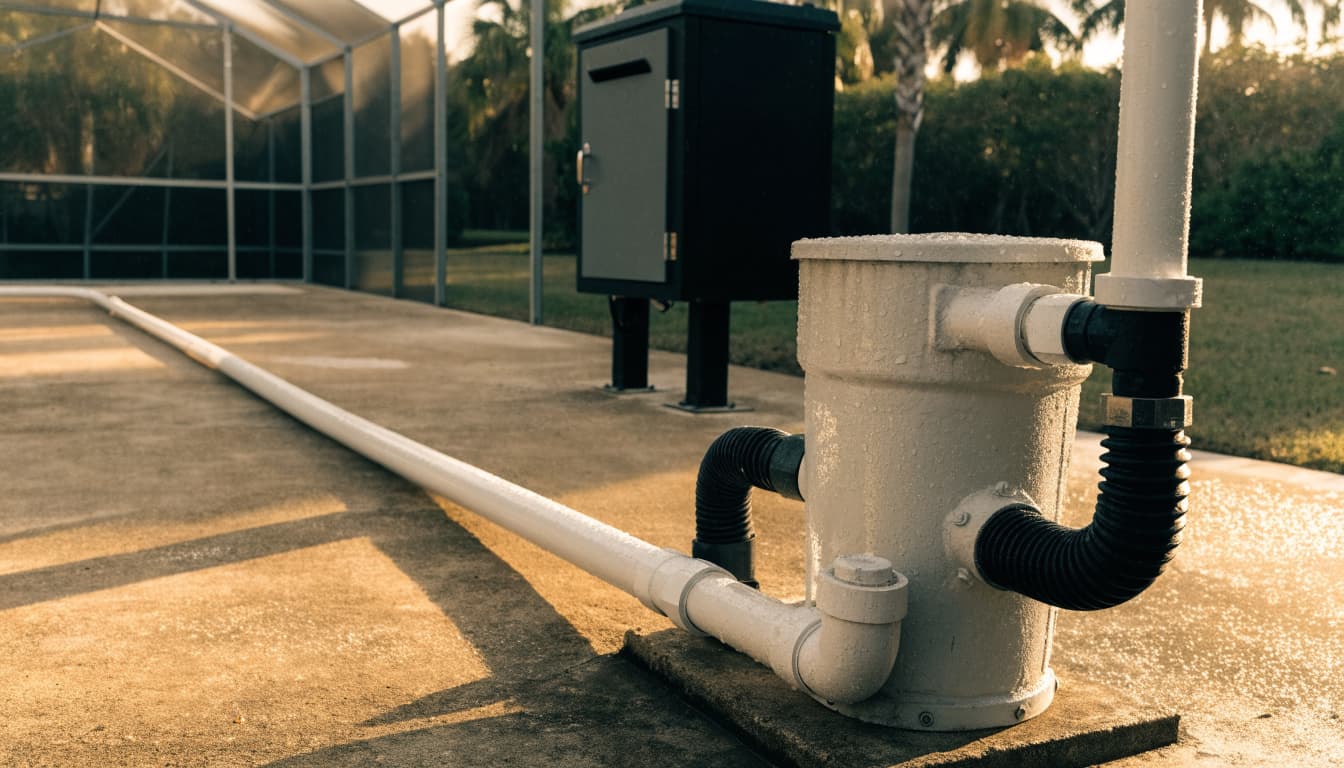
Observe from a dry, stable location without touching equipment. If reaching the pad requires walking through water, crossing storm debris, or approaching damaged wiring, skip the inspection.
Look for Water and Physical Damage
Notice puddles, dripping plumbing, cracked housings, displaced equipment, or a broken enclosure cover. After a storm, look for filter tanks that have shifted and pipes that appear pulled away from fittings.
You don't need to identify the source of a leak before calling. A photograph taken from a safe distance can show its location without bringing you closer.
Our guide to pool pump seal leak symptoms explains why water near motors and electrical components requires caution.
Observe Debris and Visible Conditions
From outside the equipment area, note leaves piled around the pump, objects leaning against equipment, or vegetation obscuring the pad. Don't reach behind the motor or remove covers to look deeper.
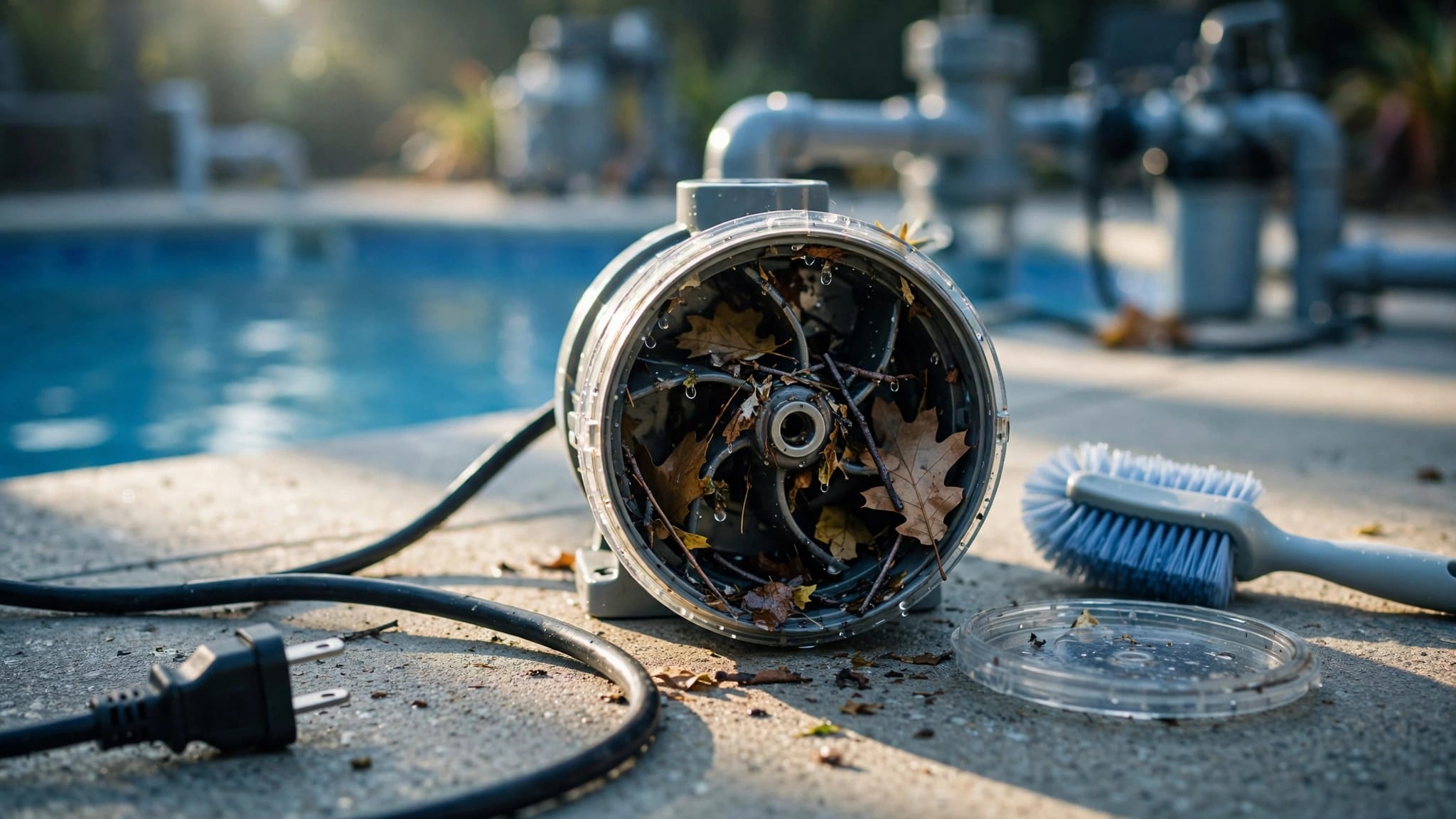
If the clear pump lid is visible, you can report what you see through it. Leave the lid closed, and don't open the filter or operate valves.
Also, record cracked plastic, flaking paint, rust, or damaged conduit visible from your position. These observations help describe the equipment's condition; they don't establish why the breaker tripped.
Record the Trip Pattern Without Recreating It
The timing of a shutdown can help a professional investigate. However, don't restart the pump to reproduce the problem .
Use what you already witnessed. Note whether the shutdown happened at the scheduled start, during an existing run, or after a power outage. If you didn't see it happen, say that rather than guessing.
These details are useful to include in your service request:
| Existing observation | What to record |
|---|---|
| Shutdown during a scheduled cycle | Approximate time and whether the pump had been running |
| Recent storm or outage | When it occurred relative to the shutdown |
| Visible water or damage | Location and a safe-distance photo |
| Existing display message | Exact wording or a photo, only if safely visible |
The goal is a clear history, not a homeowner diagnosis.
If your automation app already contains a notification, save it without issuing a new start command. Don't change pump speeds, schedules, or operating modes to test different conditions.
Repeated pool pump breaker trips need professional evaluation. A pattern alone doesn't identify the component that needs attention or establish whether replacing the pump would solve the problem.
Storms, Flooding, and Coastal Exposure

Cape Coral homeowners need to account for outdoor exposure when describing an equipment problem. Storm history, standing water, and visible corrosion are useful information, but none proves the cause of a trip.
Treat Flood Exposure as a Separate Hazard
Never restart a motor or control system that sat in floodwater. Water receding doesn't establish that the equipment is safe, and a motor turning on doesn't clear it for use.
Wind-driven rain can also wet electrical components without flooding the entire yard. Don't open a cabinet to look for moisture.
A dry equipment pad doesn't establish that previously submerged motors, controls, or wiring are safe to energize.
Our post-hurricane pool inspection checklist covers broader storm damage, including shifted equipment and damaged plumbing.
Note Drainage and Corrosion Concerns
From a safe location, notice whether the pad sits below surrounding ground or whether runoff collects beside it. Leaves blocking a nearby drainage path and gutter discharge aimed toward equipment are also worth documenting.
For recurring water accumulation, our pool equipment pad drainage guidance addresses planning to keep water away.
Coastal moisture and salt exposure can contribute to corrosion. Report rust bleeding, pitted metal, or flaking finishes, but don't scrape, sand, spray, or dismantle electrical enclosures. Hidden corrosion belongs in a professional assessment.
Electrical Checks Homeowners Should Leave Alone
A visual check ends at the outside of the equipment. Electrical troubleshooting requires training, suitable test equipment, and safe isolation of the system.
Leave Panels and Protection Devices Closed
Don't open an electrical panel, remove its protective cover, touch wiring, or probe terminals. Leave breaker replacement, circuit testing, and ground-fault circuit interrupter (GFCI) evaluation to a licensed electrician.
Never bypass a breaker or GFCI device to make the pump run. Changing protection without evaluating the complete circuit creates a safety concern.
An exterior label can help identify equipment, but it doesn't establish that wiring or protection is correct. Similarly, the pump's age alone doesn't determine the repair.
Leave Motor Covers and Capacitors Alone
Turning the pump off through an app, timer, or control panel doesn't isolate its electrical supply. Treat equipment as potentially energized until a qualified professional handles the shutdown and evaluation.
Some pump motors contain capacitors that can retain a dangerous charge after power is disconnected. Removing power doesn't make those terminals safe to touch.
Our pool pump electrical safety guidance explains that stored-charge hazard. Don't remove a motor cover or attempt a capacitor test, even if you've watched a repair video or replaced similar parts elsewhere.
Prepare for the Professional Visit
A useful service request separates observations from assumptions. Describe what happened, what you noticed, and whether storms, outages, or flooding preceded the problem.
Give the Electrician a Clear History
Share photos taken from a safe location, any existing display message, and the approximate shutdown time. Mention repeated trips, odors, buzzing, visible damage, water exposure, and any recent equipment work you know about.
A pump make and model can help if they're already in your records. Don't approach unsafe equipment just to read a label.
If someone cares for your pool while you're away, give them the same boundary: document safely, keep people away, and don't attempt restarts. Let the electrician know if equipment may still follow an automatic schedule.
Separate Electrical Repairs From Pool Upgrades
A licensed electrician handles circuit protection, wiring, grounding, and bonding concerns. Our guide to pool electrical and bonding work explains how these systems fit into construction and renovation.
Pool equipment replacement, drainage improvements, and renovation planning may also need attention after the electrical hazard is addressed. Resurfacing won't correct an electrical fault, so separate those project needs.
For equipment upgrades or flood-prevention planning in Cape Coral, Get a Free Estimate to schedule our on-site consultation. An estimate doesn't replace the licensed electrician's evaluation of repeated trips or other electrical warning signs.
Common Questions About a Tripping Pool Pump Breaker
Can I Keep Resetting the Breaker Until the Pump Runs?
Don't keep resetting it. Leave the pump out of service and arrange professional evaluation, especially when trips repeat.
A successful restart doesn't establish that the equipment is safe. Don't use another start attempt to decide whether calling an electrician is necessary.
Is It Safe Once the Equipment Looks Dry?
Appearance alone doesn't establish electrical safety. Equipment that sat in floodwater needs professional inspection before restarting.
Likewise, don't open an enclosure to see whether its interior has dried. Tell the professional where water reached and whether the equipment was submerged.
Should I Call an Electrician or a Pool Contractor?
Call a licensed electrician for repeated breaker trips, burning smells, unusual heat, buzzing, damaged wiring, or water near electrical components.
A pool contractor can address related equipment, plumbing, drainage, or renovation needs. When both types of work are necessary, identify the electrical safety issue first.
Keep the Pump Off Until the Problem Is Evaluated
When a pool pump breaker trips, the useful homeowner response is safe observation . Document what you already know without touching electrical components or trying another run.
Keep the equipment out of service when warning signs appear, and call a licensed electrician. Restoring circulation comes after the system is safe, not before.