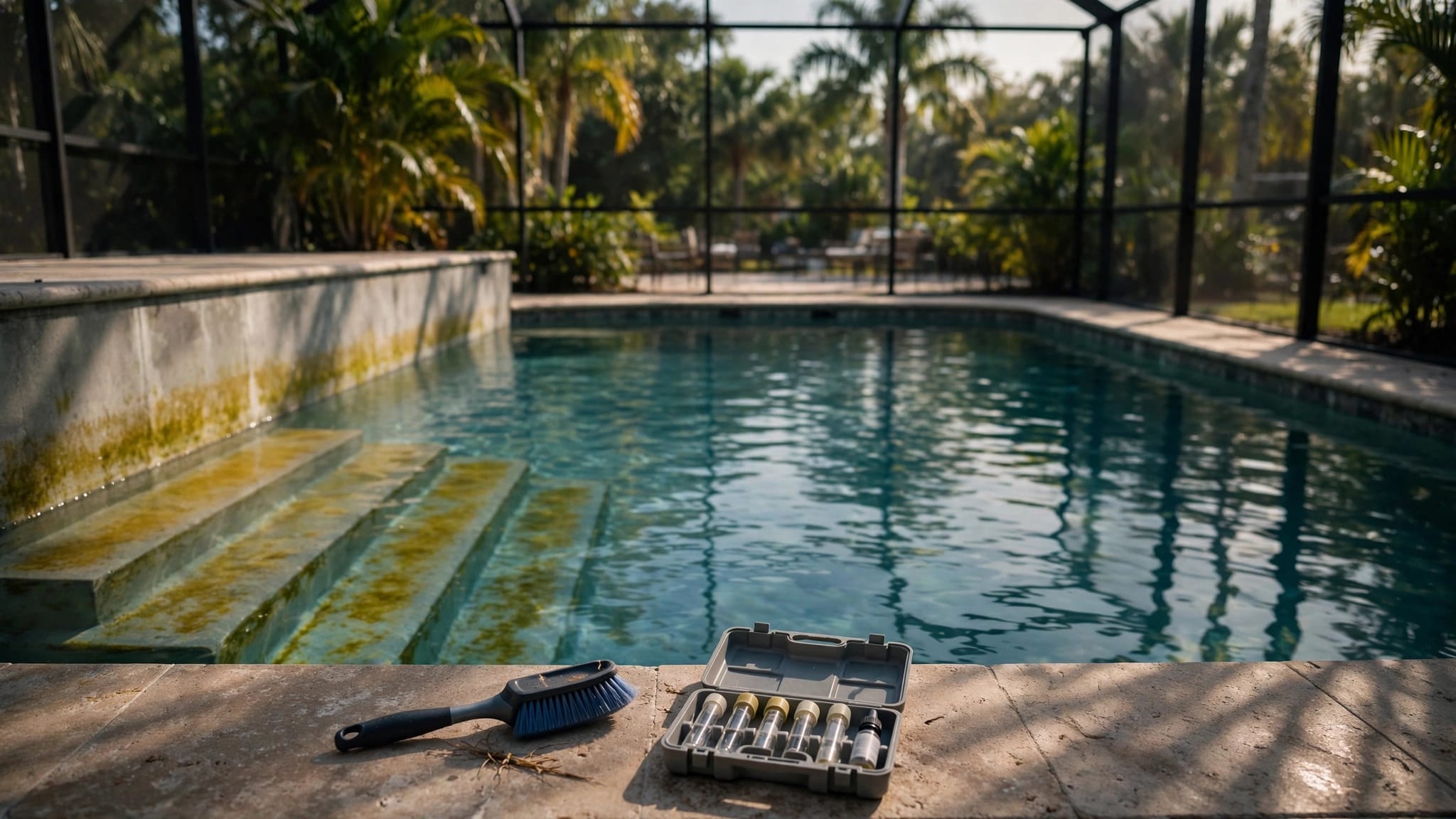
A hurricane can damage a pool without leaving an obvious crack or collapsed screen. Floodwater, hidden electrical problems, loose pavers, and saltwater contamination may create risks after the storm has passed.
A careful post-hurricane pool inspection starts with safety, not cleanup. Keep people away from the pool until you check the surrounding area, shut down unsafe equipment, and confirm the water and structure are ready for use.
Key Takeaways
- Stay away from submerged equipment, damaged wiring, gas lines, and unstable structures.
- Photograph storm damage before moving debris or starting repairs.
- Inspect the pool shell, deck, screen enclosure, drains, skimmers, and equipment pad.
- Have a qualified professional check electrical systems, structural cracks, submerged equipment, and major enclosure damage.
- Avoid swimming until the water has been tested, treated, and cleared for safe use.
Start With Safety Before You Touch the Pool
Southwest Florida storms can leave behind more than windblown branches. Standing water may hide broken glass, exposed wires, sharp metal, displaced pavers, or damaged pool fittings. Floodwater can also carry bacteria and other contaminants into the pool.
Begin the inspection from a dry, stable area. Look across the yard and pool deck before stepping closer. If the property has standing water near the electrical panel, pump, heater, lights, or other powered equipment, keep away and call a qualified electrician or pool professional.
Turn off power only if you can do so from a dry location without touching wet equipment or damaged wiring. If the breaker panel is wet, cracked, exposed, or surrounded by floodwater, don't open it. Wait for a licensed professional or the utility company to make the area safe.
Watch for these immediate hazards:
- Downed power lines, sparking wires, damaged outlets, or submerged electrical equipment
- A strong gas odor, damaged gas lines, or a pool heater that has shifted
- Large cracks in the deck, retaining walls, steps, or surrounding structures
- A leaning screen enclosure, loose roof panels, or unstable posts
- Floodwater around the home, equipment pad, or electrical service
Leave the property if you smell gas or see active electrical danger. Don't operate a pump, heater, light, salt system, or automation panel that was submerged. Water can damage internal components even when the equipment looks intact.
Pets and children should stay out of the area during the first inspection. Wear sturdy shoes and gloves when conditions are safe, but protective clothing doesn't make contaminated water safe to enter.
If electrical equipment was submerged, assume it needs professional evaluation before you restore power. Drying the outside doesn't prove the internal components are safe.
Inspect the Pool, Deck, and Screen Enclosure
Once the area is safe, document the condition before cleaning. Take wide photos of the entire backyard, then capture close images of damage to the pool, deck, equipment, fence, landscaping, and screen enclosure. Include the date in your records and keep copies of any contractor invoices or emergency service reports.
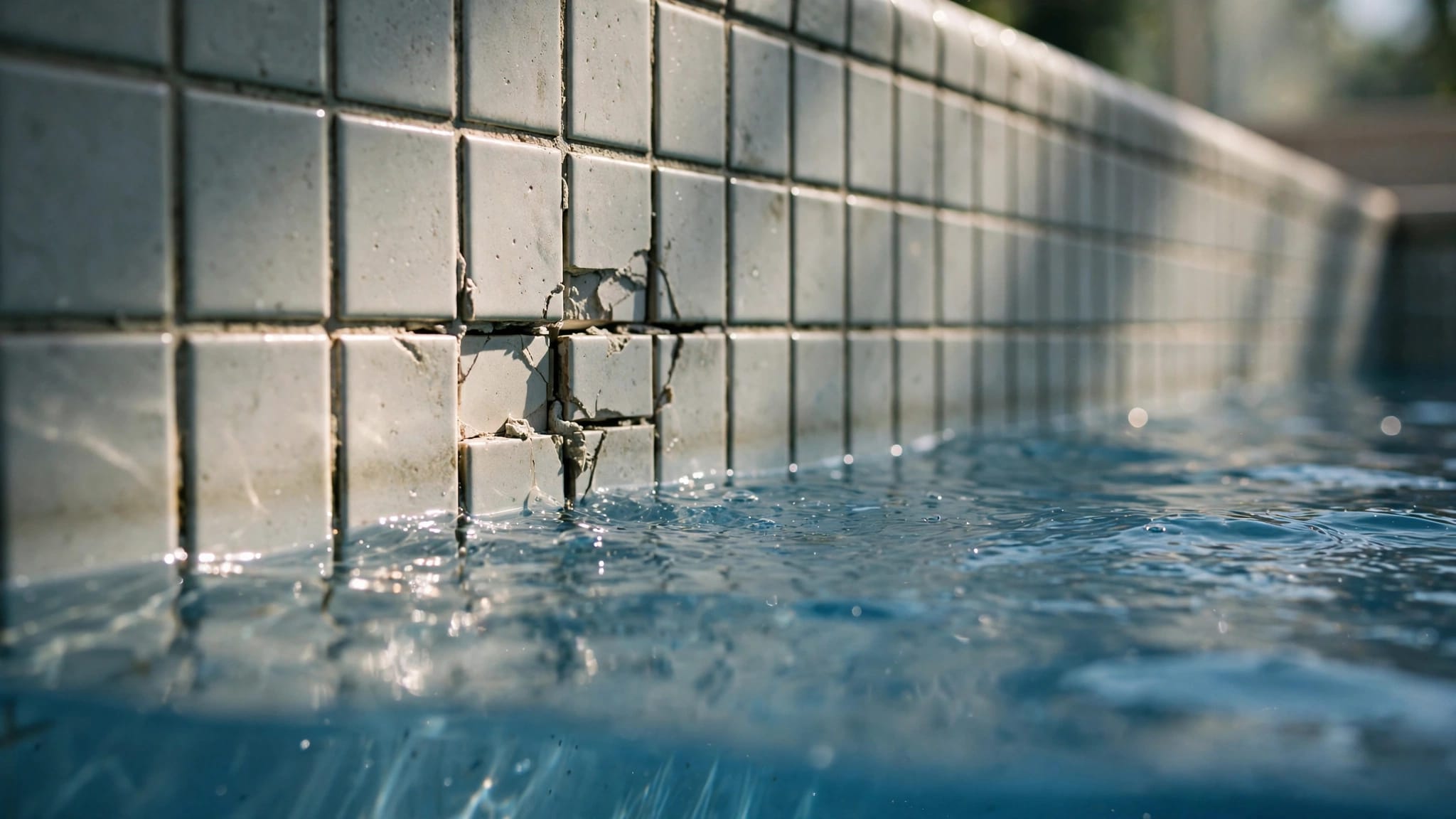
A storm can move heavy objects across the deck and damage the pool without breaking the shell. Look for fresh cracks, raised sections, missing tile, loose coping, and areas that feel unstable. Never walk on a deck section that has shifted or opened.
Check the pool shell for:
- New cracks in the walls, floor, steps, or attached spa
- Separation around fittings, returns, lights, skimmers, or drains
- Missing or displaced waterline tile
- Unusual water loss after rain and debris removal
- Soil movement, sinkholes, or washout around the pool
Some hairline marks may be surface defects, but a widening crack, a crack with water movement, or a change in the pool's shape needs professional review. Don't patch a structural crack before someone identifies its cause.
Storm surge and heavy rain can also push sand, soil, and debris into the yard. Check whether erosion has exposed plumbing, shifted the equipment pad, or left the pool deck unsupported. In coastal and canal-side areas, saltwater exposure can affect metal components and accelerate corrosion.
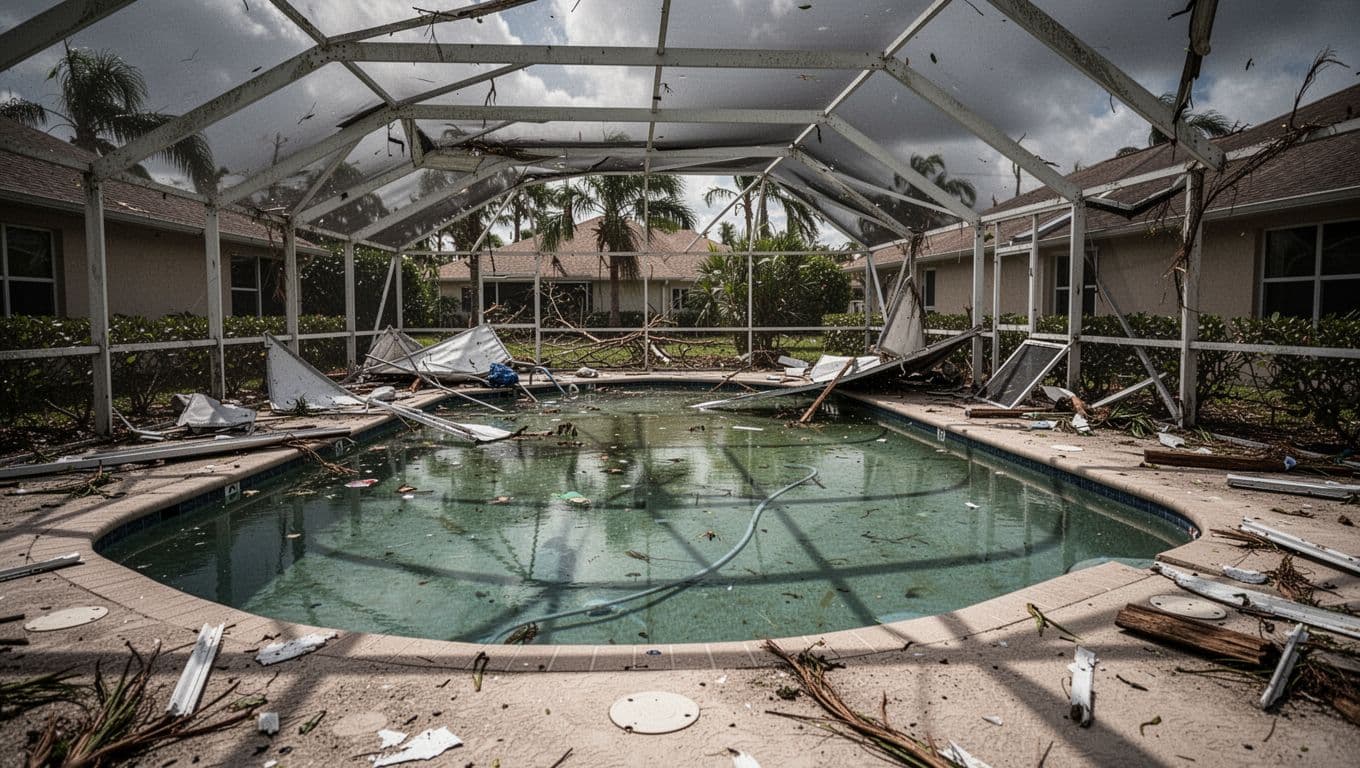
Screen enclosures need a separate inspection. Look for bent or missing panels, torn mesh, loose fasteners, damaged kick plates, and posts that have pulled away from the deck. A cage that appears upright may still have weakened connections. Keep clear of sagging roof sections until a screen enclosure professional checks them.
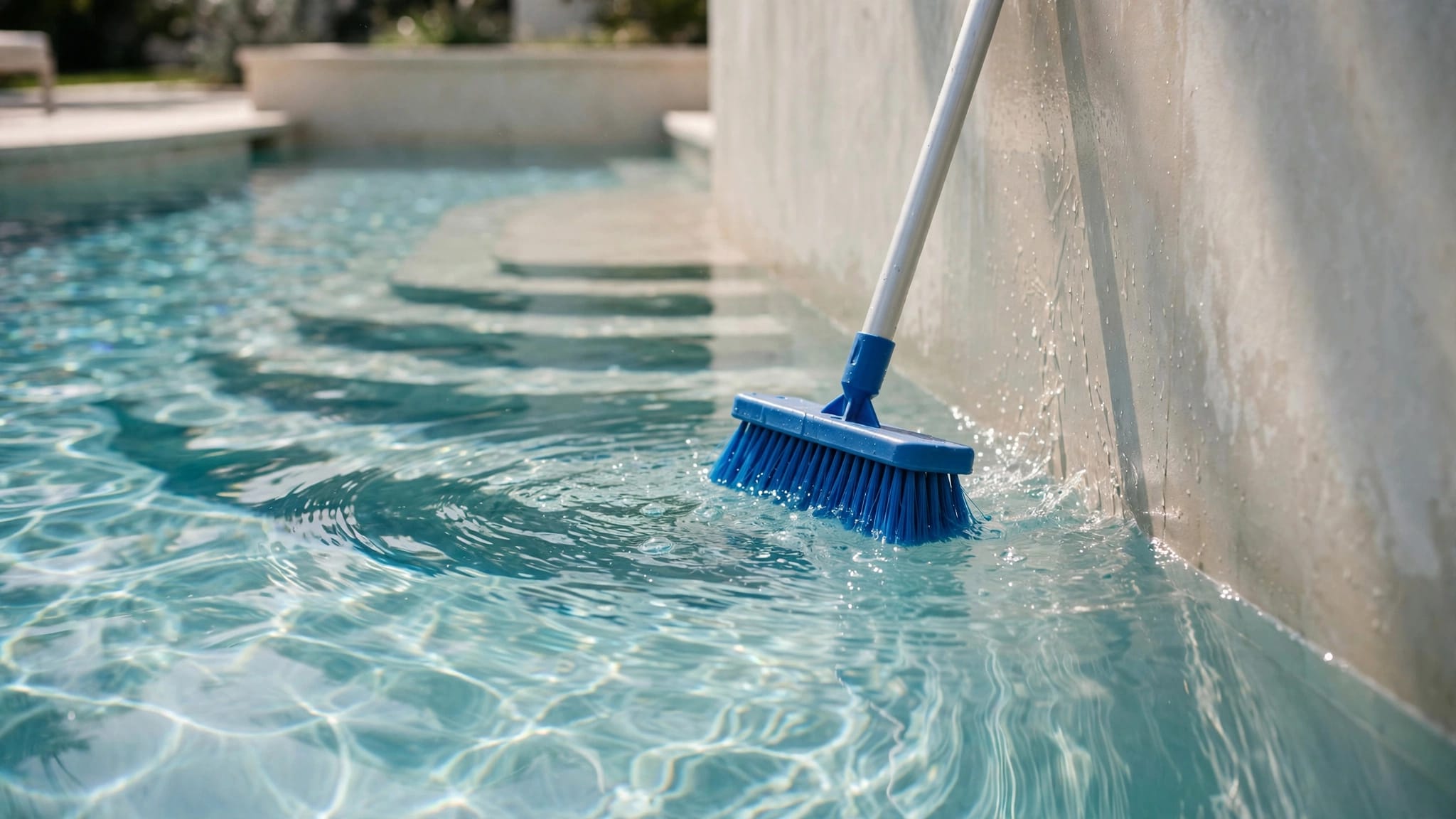
Remove only loose debris that you can safely reach from solid ground. Use a pool net for leaves and small floating items after electrical hazards have been cleared. Don't enter the pool to retrieve a large branch, metal object, or submerged furniture.
Homeowners can photograph damage and remove light, accessible debris. Structural repairs, deck lifting, screen cage repairs, and pool shell work belong with qualified contractors. Back Bay Pools provides professional swimming pool services for homeowners who need pool repairs, renovations, resurfacing, or screen enclosure work after a storm.
Check Pumps, Filters, Heaters, and Pool Plumbing
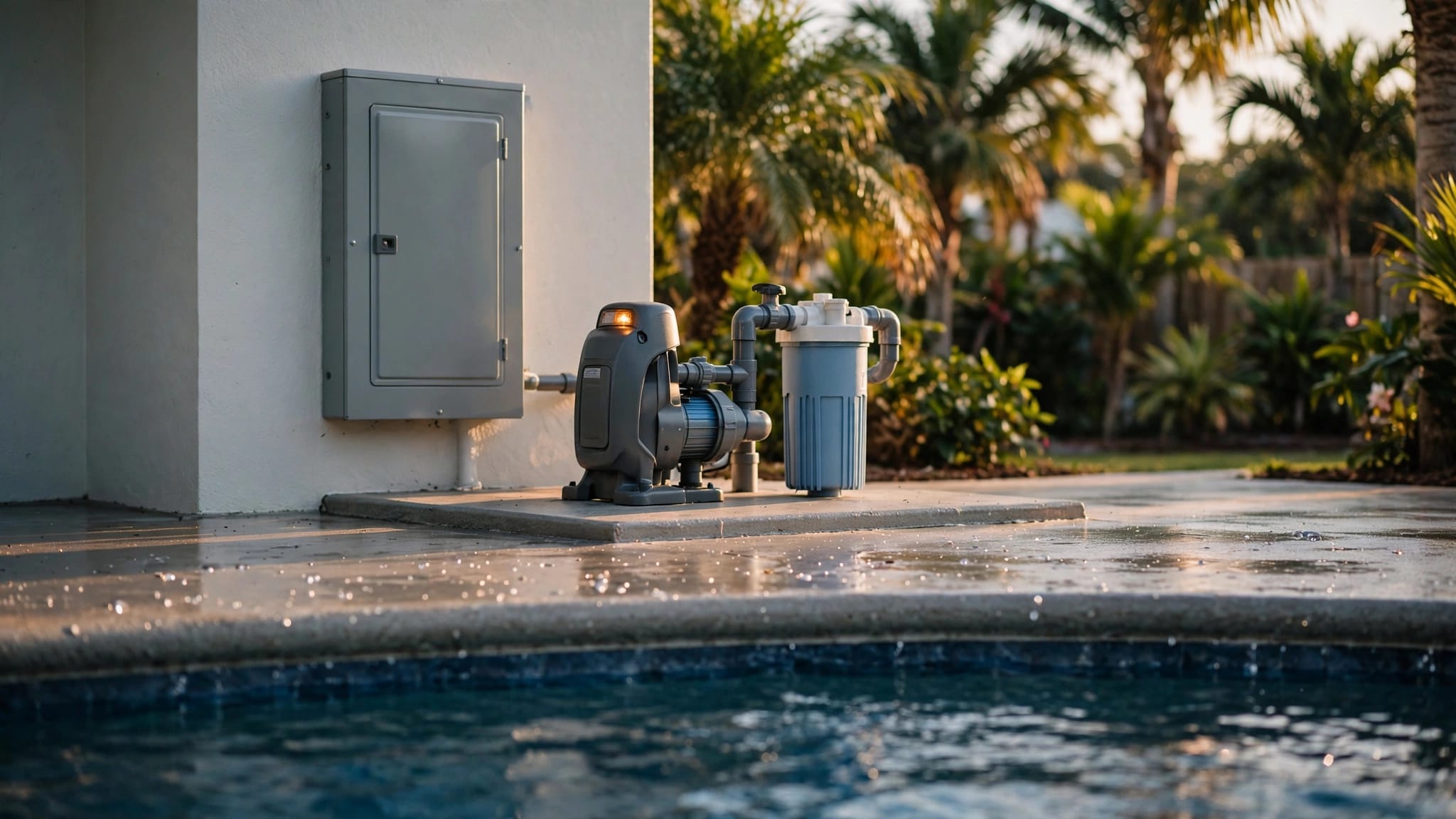
The equipment pad often shows storm damage first. Wind can move debris into the pump basket or fan housing, while floodwater can contaminate motors, controls, heaters, and chemical systems.
Before opening or touching equipment, confirm that power is off and the area is dry. Don't remove a pump lid while the system is energized. Never restart equipment that sat in floodwater, even if the motor turns on. A qualified technician should inspect, test, and approve submerged components.
Look over the equipment pad for shifted tanks, cracked plumbing, broken valves, loose unions, damaged pressure gauges, and exposed wires. Check whether the filter tank has moved or whether pipes have pulled away from fittings. A small leak can become a serious problem when the pump starts.
Inspect these components carefully:
- Pump housing, motor, lid, basket, and nearby wiring
- Filter tank, pressure gauge, air relief valve, and connections
- Salt chlorine generator, automation controls, and chemical feeders
- Pool heater, gas line, venting, and electrical disconnect
- Suction and return plumbing, valves, skimmer lines, and cleaner connections
Homeowners can take photos, note visible damage, and identify equipment that was underwater. A professional should handle electrical testing, gas equipment, pressure testing, plumbing repairs, and replacement decisions.
If the pump and filter stayed dry, they may still need cleaning before operation. Remove leaves from the basket only after power is off. Don't force a stuck valve or use a damaged pressure gauge. When the system is cleared to run, monitor it for leaks, unusual sounds, low flow, or rapidly rising filter pressure.
Storm debris can clog skimmers and main drains. Keep the water level high enough to protect the pool finish and skimmer system, but don't add water if the pool is overflowing or the yard has flooded. A professional can determine whether draining is safe. Lowering a pool after heavy rain can create hydrostatic pressure problems, especially when the surrounding ground remains saturated.
Test the Water Before Swimming
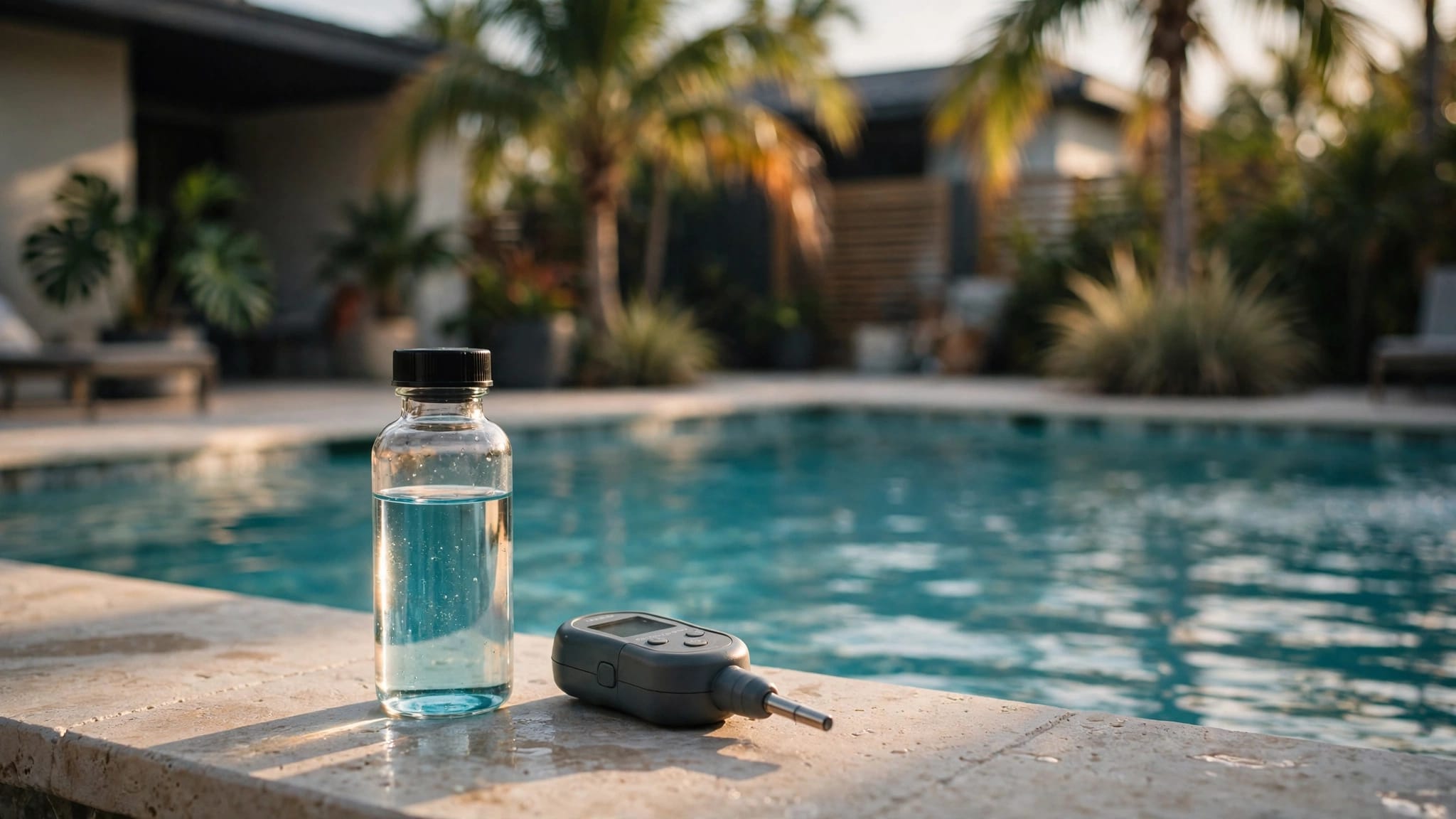
Pool water often looks worse after a hurricane, but appearance alone doesn't tell you whether it's safe. Rain dilutes chemicals, debris adds organic material, and floodwater can introduce contaminants. Saltwater intrusion may also affect the pool's chemistry and metal components.
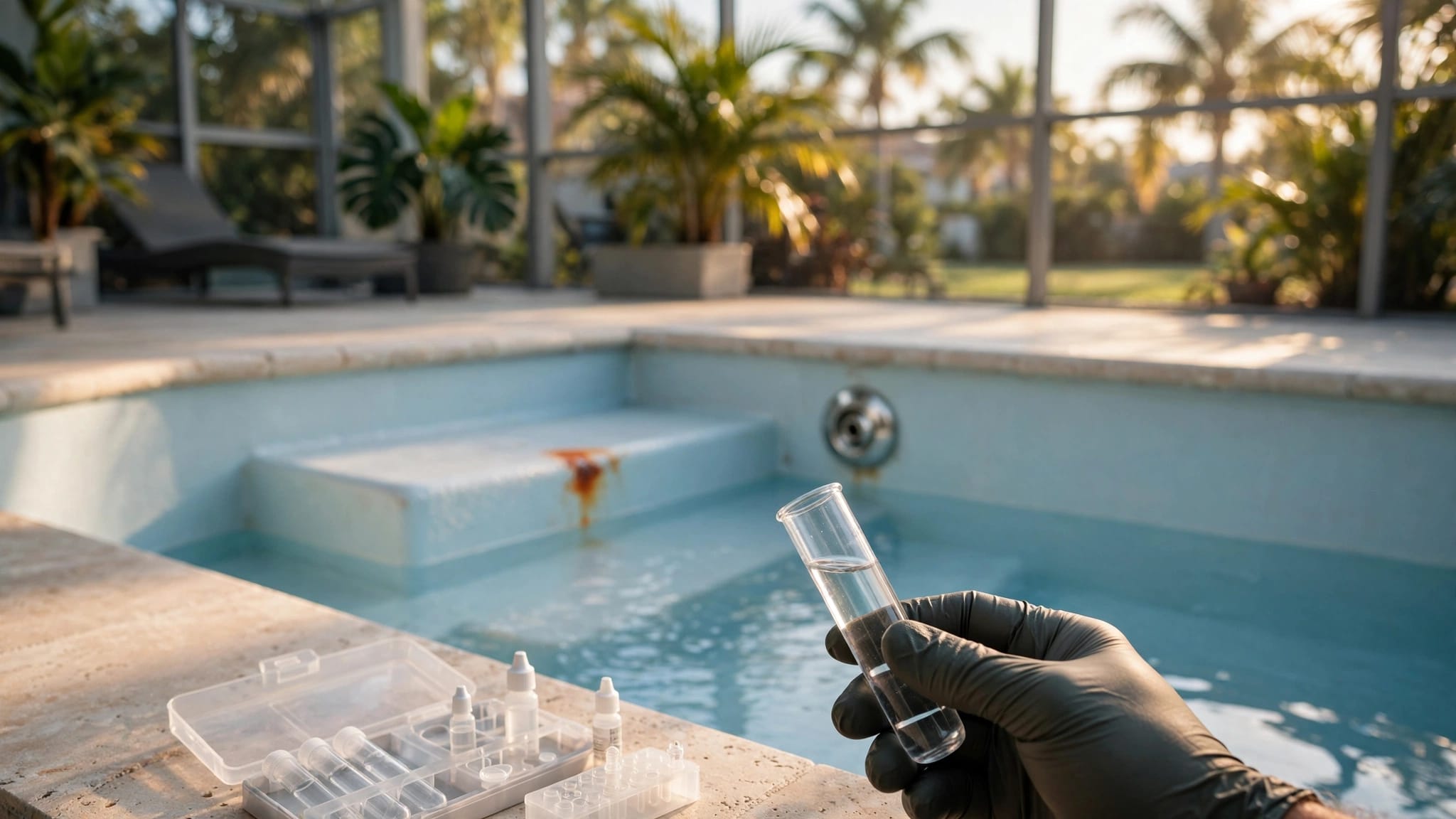
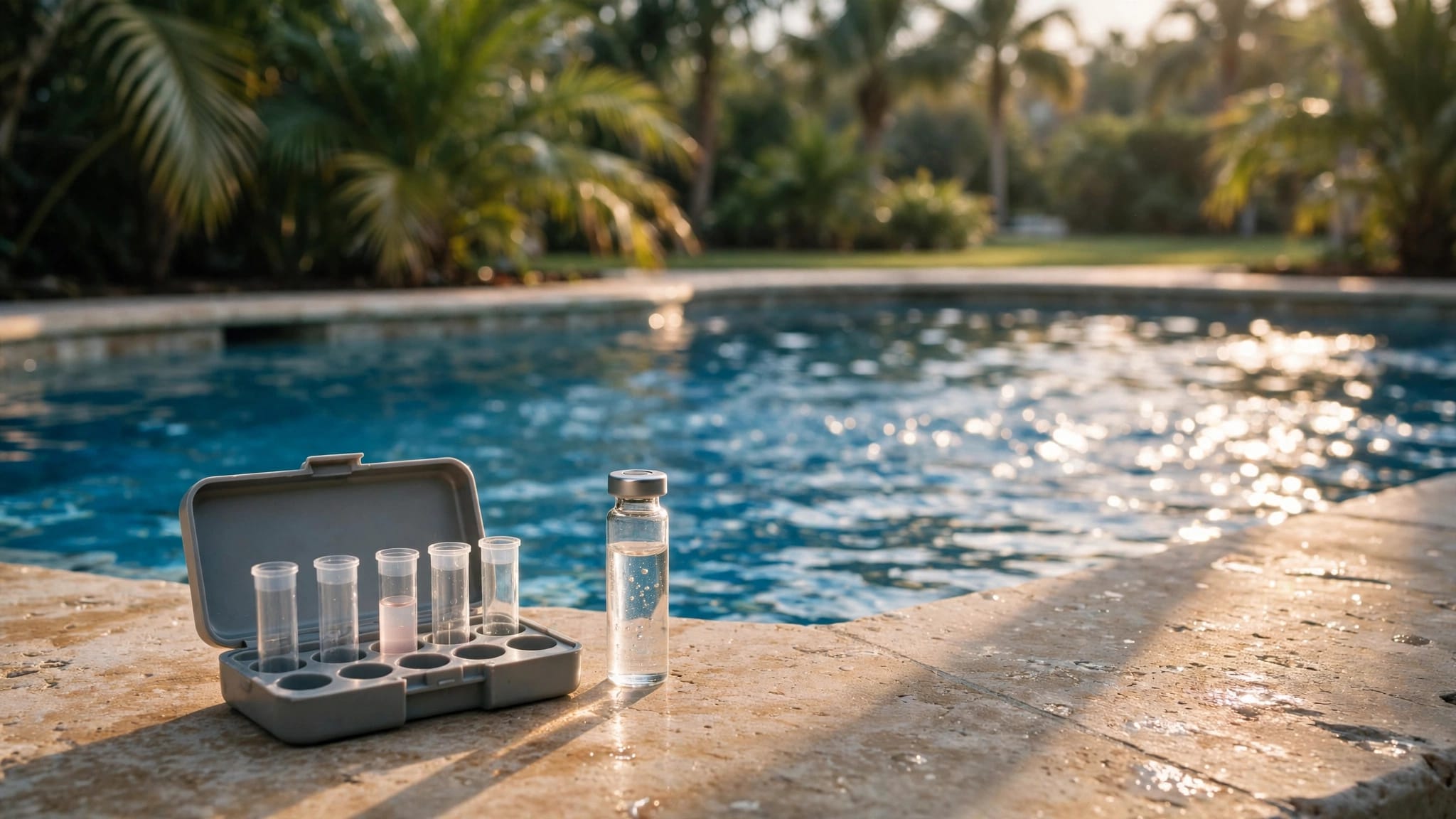
Don't pour in large amounts of chlorine or other chemicals without testing. A pool professional can test the water and recommend treatment based on the actual readings. The testing should cover sanitizer, pH, alkalinity, calcium hardness, and salt level when a salt system is installed.
Keep swimmers out until:
- The pool has no visible debris, broken glass, or damaged equipment
- The water has been tested and treated
- The circulation and filtration system operate safely
- The pool finish, steps, drains, and fittings show no dangerous damage
- A professional has addressed contamination or major storm damage
Avoid mixing pool chemicals, and never combine chlorine products with acids. Store containers away from floodwater and inspect them for damaged labels, leaks, swollen packaging, or corrosion. If chemicals contacted floodwater, don't handle them casually. Contact a qualified pool service or hazardous-material professional for safe disposal guidance.
Cloudy water can also hide a damaged drain cover, loose light niche, or sharp debris. Use adequate lighting from outside the pool to inspect what you can see. Don't enter murky water to investigate an unknown object or suspected structural problem.
After the pool is safe to use, continue checking the water and equipment over the next several days. Heavy rain and cleanup can cause readings to change. Keep a written record of test results, treatments, repairs, and equipment replacements for your insurance file.
Know When to Call a Pool Professional
A homeowner can handle documentation, visual checks, and light debris removal when the area is dry and free of hazards. Some conditions require professional help before any cleanup continues.
Call a qualified pool contractor, electrician, gas technician, or structural professional when you find:
- Submerged pumps, heaters, lights, panels, motors, or control equipment
- Exposed, damaged, or corroded wiring
- Gas odors or damage near a pool heater
- Cracks in the shell, deck, retaining wall, or attached spa
- Water loss that continues after the storm
- A shifted equipment pad, filter tank, or underground plumbing
- Bent enclosure posts, unstable framing, or roof damage
- Floodwater contamination or chemicals damaged by water
Ask the professional to document the condition, identify unsafe equipment, and separate emergency repairs from cosmetic work. That distinction helps you make sound decisions when the pool also needs resurfacing, tile replacement, deck repairs, or a screen rescreen.
Your photos and notes can support an insurance claim, but don't remove damaged equipment or discard broken parts before documenting them. Follow your insurance company's instructions for inspections and temporary repairs. Keep receipts for tarps, cleanup, pump-out services, testing, and approved repairs.
When the storm damage is extensive, you may need more than a basic repair. A local contractor can evaluate whether the pool needs renovation or resurfacing after the structure is cleared. If you need an on-site assessment in Cape Coral, Get a Free Estimate from Back Bay Pools.
Conclusion
A post-hurricane pool inspection should move in a careful order: make the area safe, document damage, inspect the structure and enclosure, evaluate equipment, and test the water before swimming.
The most important decision is knowing when to stop. Submerged electrical equipment, gas hazards, structural movement, and contaminated water require qualified professionals. Once those risks are addressed, your pool can return to being a safe part of your Southwest Florida home.