A new Cape Coral home gives you a rare chance to plan the pool as part of the property, not as an afterthought. The question is whether the pool should go in before the house is complete or after you move in.
Both options can work. Your lot, builder agreement, access, drainage plan, permit schedule, and preferred screen enclosure will determine which choice creates fewer delays and added costs. Start by understanding what each timeline requires.
Key Takeaways
- Building the pool before home construction ends can preserve equipment access and reduce damage to finished landscaping.
- Waiting until after closing gives you more control over the design, budget, finishes, and contractor selection.
- Cape Coral lots may require careful planning for easements, utilities, drainage, groundwater, seawalls, and access.
- Your builder, pool contractor, and local permitting officials must confirm the schedule before work begins.
- A written site plan should show the home, pool, deck, screen enclosure, equipment, fences, utilities, and final grades.
Why Pool Timing Matters in Cape Coral
Pool construction depends on more than the shape of the backyard. The proposed pool must fit around the home footprint, property lines, utility routes, drainage features, easements, and required setbacks. A canal lot may also involve seawall conditions or access limits that affect equipment placement and excavation.
Cape Coral's wet conditions can affect digging and dewatering. Heavy rain may slow excavation, concrete work, deck installation, and final grading. Your pool contractor should review soil and groundwater conditions before promising a schedule.
Access is another major concern. Excavators, concrete trucks, cranes, and delivery vehicles need a clear route to the backyard. Once a new home has finished walls, landscaping, irrigation, a driveway, and a screen enclosure, moving large equipment becomes harder. Some properties have limited side-yard access, so the pool contractor needs to inspect the route early.
The home builder also controls much of the construction sequence. A pool company may not be allowed on the site until the builder releases the lot or completes certain stages. Ask who is responsible for coordinating permits, inspections, underground utilities, grading, and damage caused by overlapping work.
| Planning concern | Before the home is complete | After you move in |
|---|---|---|
| Equipment access | Usually easier, depending on site control | May require narrow access or removal of obstacles |
| Landscaping risk | Lower if landscaping has not been installed | Finished plants, irrigation, and sod need protection |
| Design changes | Must fit the builder's approved plans | More freedom to adjust the backyard layout |
| Scheduling | Requires coordination among multiple contractors | You control the pool contractor's start date |
| Daily disruption | Construction overlaps with home construction | Your yard and access remain under construction |
The right answer depends on the whole property plan, not simply on which option sounds faster.
Building the Pool Before the New Home Is Finished
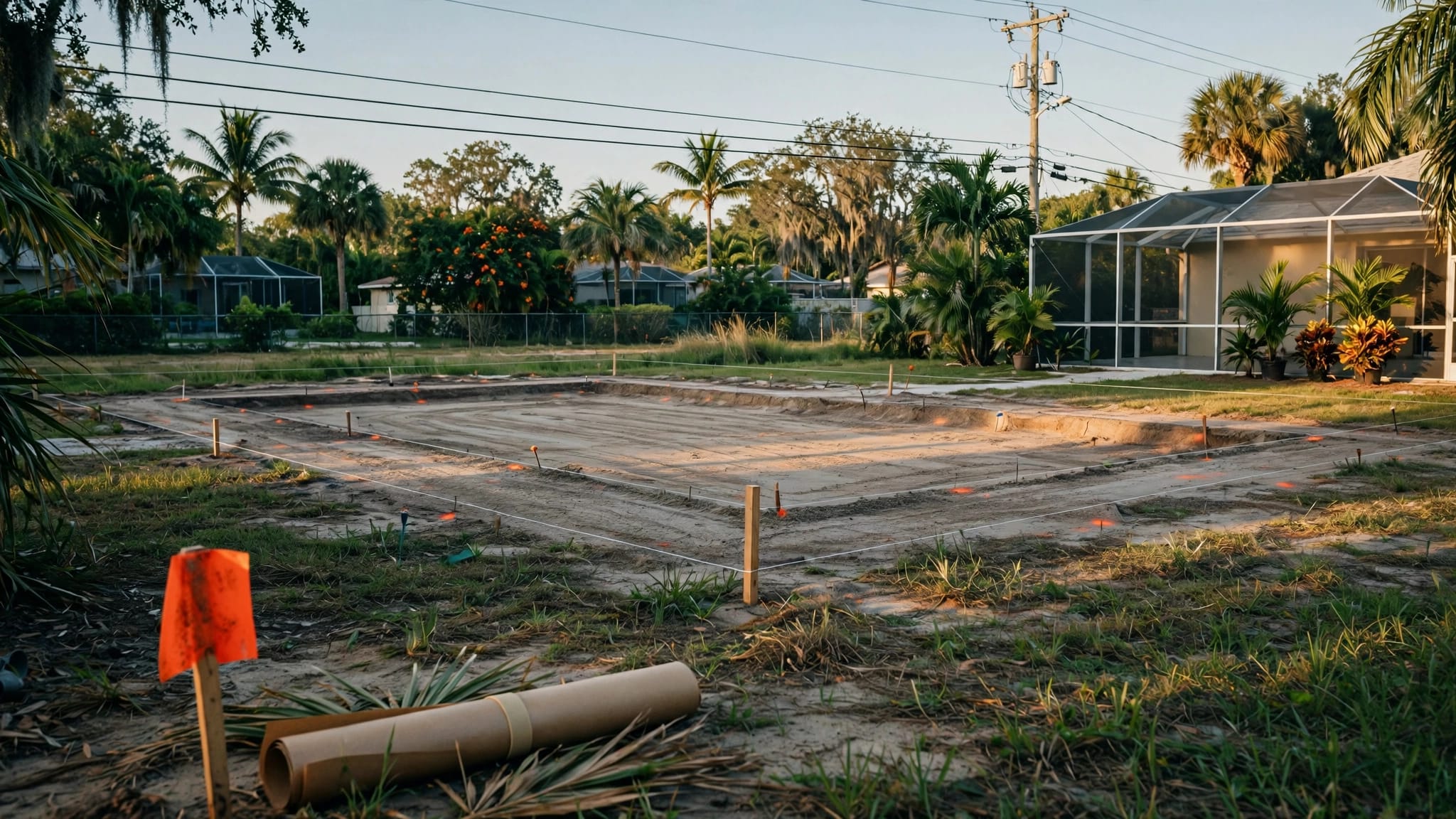
A pre-construction pool can make sense when the builder and pool contractor coordinate from the beginning. The pool shell, plumbing, electrical work, deck, and screen enclosure can be planned alongside the home and its finished grades. However, "before the home" does not always mean excavating before the foundation. The builder may require the house to reach a certain stage first.
The main advantage is access. Heavy equipment can reach the backyard before the driveway, landscaping, irrigation, or completed structures create obstacles. Crews may also have more room to stage materials and remove soil. That can reduce the risk of damaging new sod, pavers, plants, or exterior finishes.
Early planning also helps the pool shape fit the home. You can align the pool with sliding doors, outdoor living areas, covered lanais, and the future screen enclosure. The builder can reserve space for plumbing and electrical connections instead of forcing changes after the house is complete.
Still, this option requires close coordination. A home builder may have strict rules about outside contractors, insurance, working hours, access, inspections, and site cleanup. Get those rules in writing before signing a pool contract. Confirm who will install or approve sleeves, stub-outs, gas lines, electrical conduits, and drainage connections.
Your pool contractor should review the builder's site plan, not rely on a rough sketch. The plan should show the pool's location, deck dimensions, equipment pad, screen enclosure, property lines, easements, and utility routes. Any change to the pool layout can affect the home inspection, final grading, certificate of occupancy, or closing schedule.
A pool can be planned early, but the construction schedule must belong to the builder, pool contractor, and permitting process together.
Ask whether the pool will be included in the home's overall construction documents or handled under a separate permit. Requirements vary by project, so verify the process with the builder and the City of Cape Coral or other responsible authority before work starts.
Waiting Until After Closing to Build the Pool
Building after the home is complete gives you more control. You can live in the house, study how sunlight moves across the yard, see where water collects after rain, and decide how you actually use the outdoor space. You can also compare pool finishes, lighting, automation, screen enclosure styles, and deck materials without rushing to match the builder's schedule.
This timing works well for buyers who want to protect their closing date. If a pool project runs late, it won't necessarily delay the home purchase. You can also choose a contractor independently instead of accepting a builder's preferred pool package.
The tradeoff is construction access. A completed home usually has a finished driveway, sod, irrigation, landscaping, fencing, and possibly a screen enclosure. Crews must protect those features or remove and replace some of them. Narrow side access can limit equipment choices and increase labor.
After closing, confirm the location of underground utilities before excavation. The pool contractor also needs to account for the home's foundation, septic features if present, irrigation lines, electrical service, gas service, and drainage system. Do not assume a backyard is empty because it appears unfinished.
Waiting may also affect your total budget. You could pay separately for temporary fencing, sod replacement, irrigation repairs, access mats, deck removal, or landscape restoration. These costs aren't automatic, but your written estimate should state whether they are included.
The benefit is greater design freedom. You might choose a smaller pool that leaves room for a dining area, or a larger deck that connects to the lanai. You can also schedule a future screen enclosure or rescreening project after selecting the pool's final elevation and deck layout.
Before signing, ask how the company handles permits, inspections, engineering, dewatering, electrical bonding, pool barriers, and cleanup. Request a site visit rather than relying only on photographs. A local contractor familiar with Cape Coral properties can identify access and drainage concerns before they become change orders.
How to Choose the Better Construction Schedule
Start with the lot, not the calendar. Review the new home's site plan and identify the pool area, utility corridors, easements, drainage paths, and equipment location. If the yard has limited access, early construction may be easier. If the layout is still changing, waiting may prevent expensive revisions.
Next, compare the responsibilities of each contractor. The builder may handle the home, lanai, rough grading, and utility connections. The pool contractor may handle excavation, the shell, plumbing, equipment, deck, waterline tile, interior finish, and enclosure coordination. Your agreement should state where one scope ends and the other begins.
Pay close attention to the following points:
- Who obtains each permit and schedules each inspection?
- Who confirms the pool location against property lines and easements?
- Who protects the foundation, finished walls, driveway, and irrigation?
- Who supplies temporary power, water, fencing, and site access?
- Who completes final grading around the pool and home?
- Who pays if an undisclosed utility or access problem causes a delay?
Budget for the complete outdoor project, not only the pool shell. Include the deck, screen enclosure, equipment pad, pumps, filter, heater, lighting, automation, safety barrier, electrical work, landscaping repairs, and any needed drainage work. Pool financing may be available, but compare the full project cost and payment terms before committing.
When you want an on-site review of the property and project scope, you can Get a Free Estimate before choosing a construction date.
A Practical Timeline for New Cape Coral Buyers
Begin planning while the home design is still under review. Share the builder's lot plan with the pool contractor and ask for a preliminary pool layout. This is the time to identify access problems, equipment locations, screen dimensions, and conflicts with utilities or easements.
Before excavation, get the final design and written scope approved. Confirm the pool's dimensions, depth, finish, deck, water features, equipment, electrical requirements, and enclosure plan. The builder should also confirm when the pool company can enter the property.
During construction, keep one updated site plan. Changes to the home, lanai, grading, driveway, or utility locations should reach every contractor. Even a small shift can affect the pool shell or screen enclosure.
After the pool work, allow time for inspections, interior finish, startup, water balancing, deck curing, and enclosure completion. Don't schedule major landscaping or outdoor furniture until crews finish moving equipment and the final grades are accepted.
If you wait until after closing, use the first weeks to verify drainage and access. Then schedule the pool contractor's site visit, finalize the design, and confirm the permit path. A clear sequence protects your new home and gives the pool work a defined starting point.
Conclusion
Building a pool before your Cape Coral home is finished can simplify access and site coordination, especially on a tight lot. Waiting until after closing gives you more design control and keeps the pool schedule separate from the home purchase.
The best choice depends on the builder's rules, the property's access, the drainage and utility plan, and the pool contractor's schedule. Treat the pool, screen enclosure, deck, and home as one coordinated project, and confirm every responsibility before excavation begins.