Florida glass panels can solve a real backyard problem, but they also change how a pool cage feels every day. Homeowners use them to block splashing, grass clippings, and prying eyes, yet the same panels can reduce airflow and add upkeep in damp corners.
If you're weighing an upgrade for a screen enclosure, the right choice depends on more than privacy alone. Yard layout, sun exposure, pets, and how often you use the pool all matter. Here's a clear look at where Florida glass panels help and where they fall short.
Understanding Florida Glass Panels
Florida glass is a laminated fiberglass panel used in the lower sections of many pool cages and lanais. It replaces standard screen in the spots that get the most splash, debris, and visibility from nearby neighbors.
Most homeowners use it in a targeted way, not across the whole enclosure. That keeps the top sections open for light and breeze while the lower band does the hard work. In other words, it acts like a shield where you need one, without turning the cage into a solid wall.
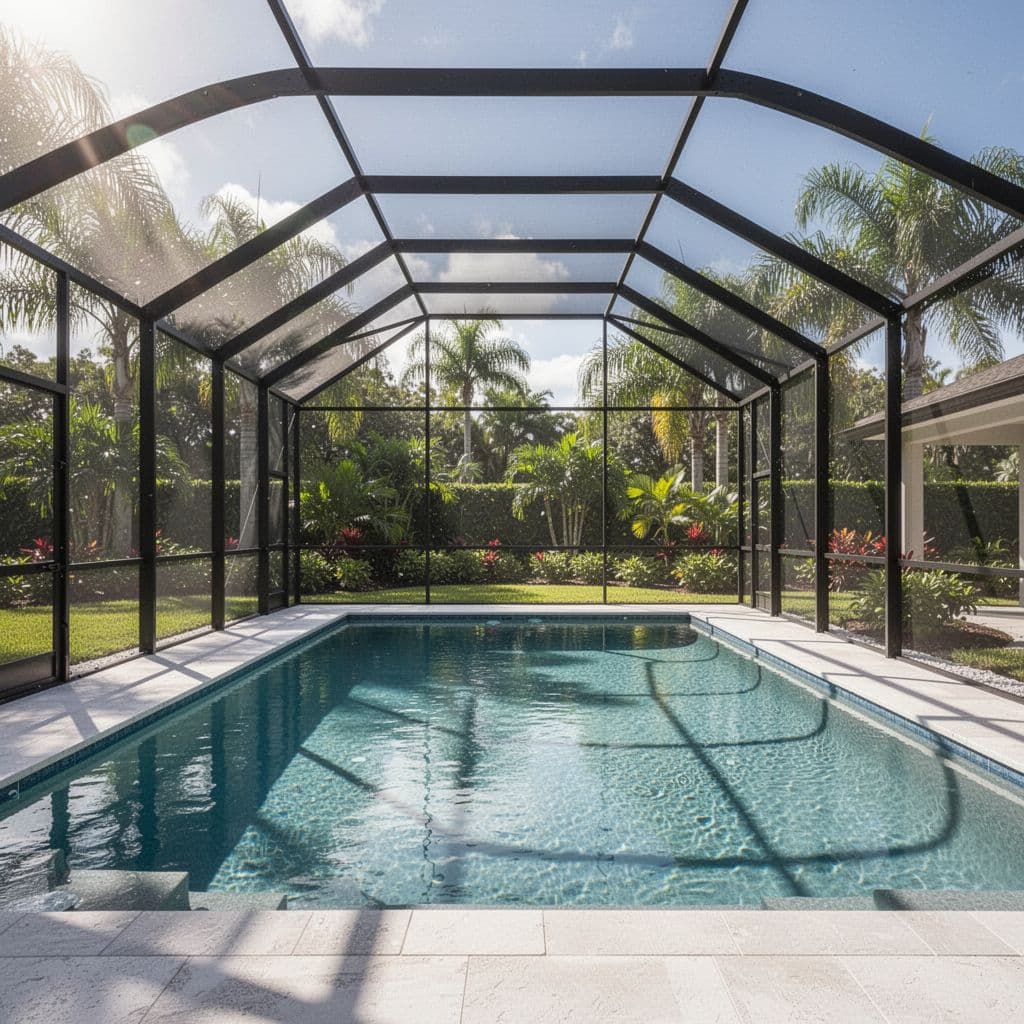
On many projects, the panels sit along the bottom row of the cage, near landscaping, patios, or property lines. That placement matters, because the lower section is usually where privacy, splash control, and wear become the biggest issues.
Why Homeowners Choose Them for Pool Cages
The biggest selling point is obvious, privacy . If your pool sits close to a neighbor's window or a busy street, Florida glass panels can make the backyard feel calmer without adding a tall fence around everything.
They also help with the everyday mess that comes with Florida yards. Grass clippings, mulch, irrigation spray, and low-angle sun can all make a pool area feel harder to maintain than it should. By covering the lower portion of the enclosure, the panels reduce some of that constant cleanup.
A quick comparison helps show the tradeoffs in plain terms.
| Benefit | What it means in daily use |
|---|---|
| More privacy | Lowers visibility from neighbors and street-level views |
| Less debris | Helps block grass clippings, mulch, and splash near the base |
| Less glare | Cuts harsh sunlight where it hits low in the day |
| Cleaner look | Gives the lower enclosure a more finished appearance |
The practical win is that you get targeted coverage. You don't lose the open feel of the entire cage, but you do gain a buffer where the enclosure gets the most abuse.
That setup also works well around active yards. If lawn service crews cut close to the fence line, or if kids and pets tend to press against the lower screen, Florida glass can reduce some of the wear that starts in those spots.
For homeowners planning a full build or major remodel, professional pool screen enclosure installation matters because the frame layout, door placement, and panel mix all affect the final result. A good layout keeps the enclosure practical, not cramped.
The Tradeoffs You Should Not Ignore
Florida glass panels are useful, but they are not a perfect fit for every cage. The first tradeoff is airflow. Since the lower section is no longer open screen, air movement drops near the base of the enclosure. On still summer days, that can make the space feel a little heavier.
They also change the look of the cage. Some homeowners like the cleaner, more private appearance. Others prefer the open, lighter feel of standard mesh all around. If your yard is small or shaded, the panels can make the enclosure feel more enclosed than you'd like.
Moisture is another thing to think about. In a damp yard, or in areas where sprinkler water hits the cage often, dirt and mildew can show up faster on solid lower panels than on open mesh. That doesn't mean they're hard to care for, but it does mean they need regular cleaning.
Florida glass works best as a targeted upgrade, not as a blanket replacement for every screen in the enclosure.
The panels can also cost more than basic mesh in the lower sections. That difference may be small on a modest cage, but it adds up on larger enclosures with more square footage. If you're combining the upgrade with a rescreen, the material mix matters just as much as the labor.
For homeowners already comparing mesh types, screen enclosure mesh and rescreening options can help you think through the whole enclosure, not just the lower band. That matters because the best choice often comes from the full layout, not one panel type alone.
What They Mean for Cost and Maintenance
Pricing for Florida glass panels varies by enclosure size, installer, and material choice. A small lower-panel replacement is one thing. A full lower-band upgrade on a large cage is another. Labor also changes the number, especially if the frame needs adjustments or the project includes doors, trims, or matching repair work.
A lot of homeowners focus on the material price first. That makes sense, but it does not tell the whole story. The placement of the panels can change how much sunlight enters the pool area, how much airflow you keep, and how much cleaning the enclosure needs over time.
Maintenance is straightforward, though it should not be ignored. Mild soap, water, and a soft cloth usually handle routine cleaning. It also helps to trim landscaping away from the base of the cage and keep irrigation from spraying the panels all day. That simple habit cuts down on streaks, buildup, and mildew.
If you live near the coast or in a high-humidity part of Florida, pay attention to how the lower section dries after rain. A panel that stays wet too long will gather grime faster. That is one reason local climate matters so much when choosing materials for a pool cage.
If you want pricing for your own setup, Get a Free Estimate and compare panel placement, enclosure size, and material choices before you decide.
When They Are the Right Choice
Florida glass panels make the most sense when you want privacy in one part of the cage and airflow everywhere else. They are a strong fit for homes with neighbors close by, yards that throw a lot of grass clippings, and pools that sit near a patio where splash control matters.
They are also a smart choice when the lower portion of the enclosure gets the most contact. Pets, toys, and lawn equipment often create wear near the bottom edge first. A solid lower band can help that area look better for longer.
A few situations make them less appealing. If your main goal is maximum airflow, full visibility, or the lightest possible enclosure look, standard screen may be the better match. The same goes for a shaded yard that already holds moisture. In those spaces, solid lower panels can feel heavier than you want.
Before choosing, think through these questions:
- Do you want privacy from the street or a neighbor's yard?
- Does your pool area catch a lot of grass, mulch, or sprinkler spray?
- Do you mind a slightly more enclosed look?
- Would you rather spend more on comfort and cleanup, or keep the enclosure fully open?
Those answers usually point in the right direction.
Conclusion
Florida glass panels are a practical upgrade when privacy, debris control, and curb appeal matter more than maximum airflow. They work best as part of a balanced enclosure, with solid lower coverage and open upper screening.
The smartest choice is the one that fits your yard, your habits, and your maintenance tolerance. If you keep those three things in mind, the right pool cage layout becomes much easier to see.