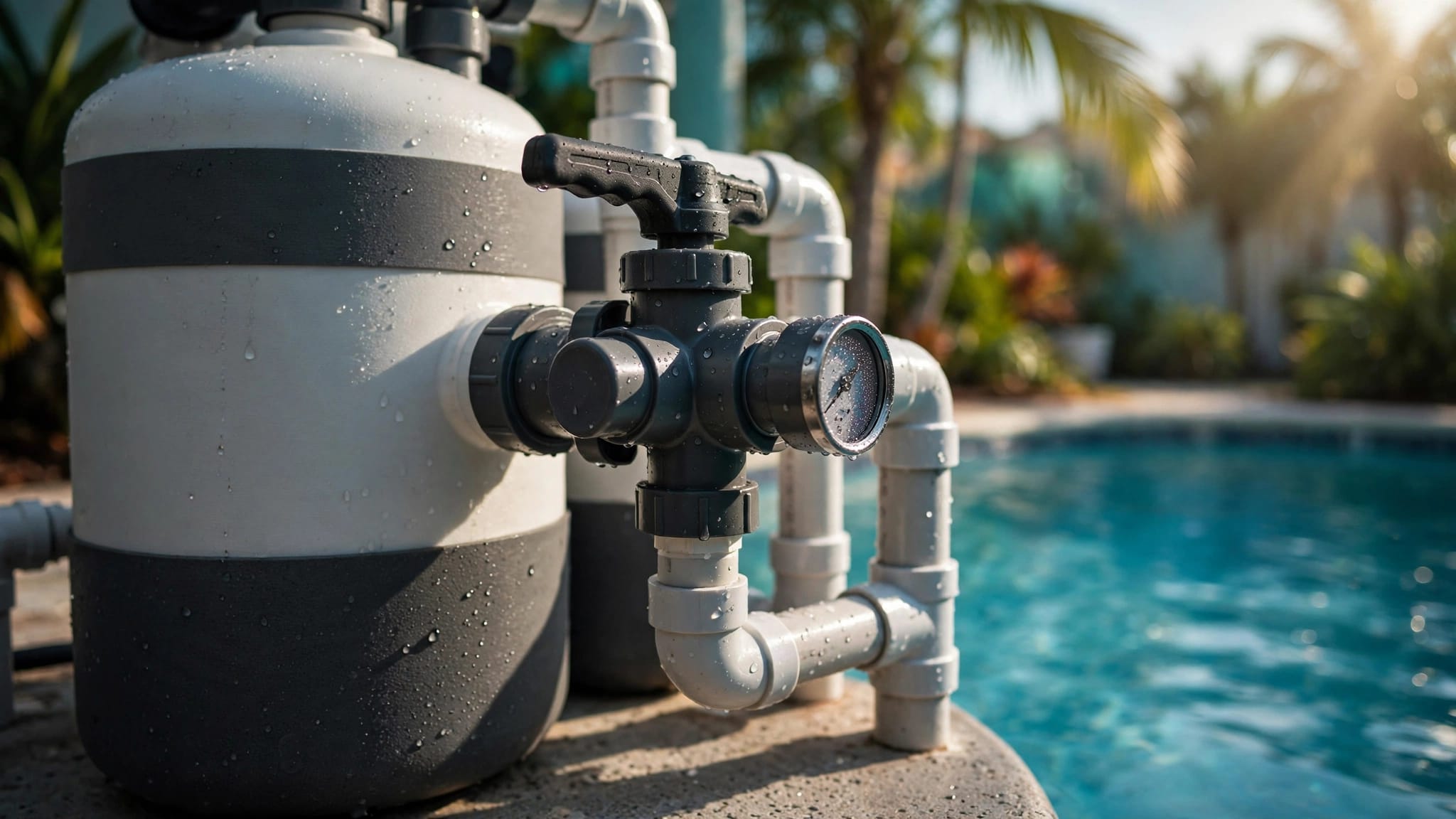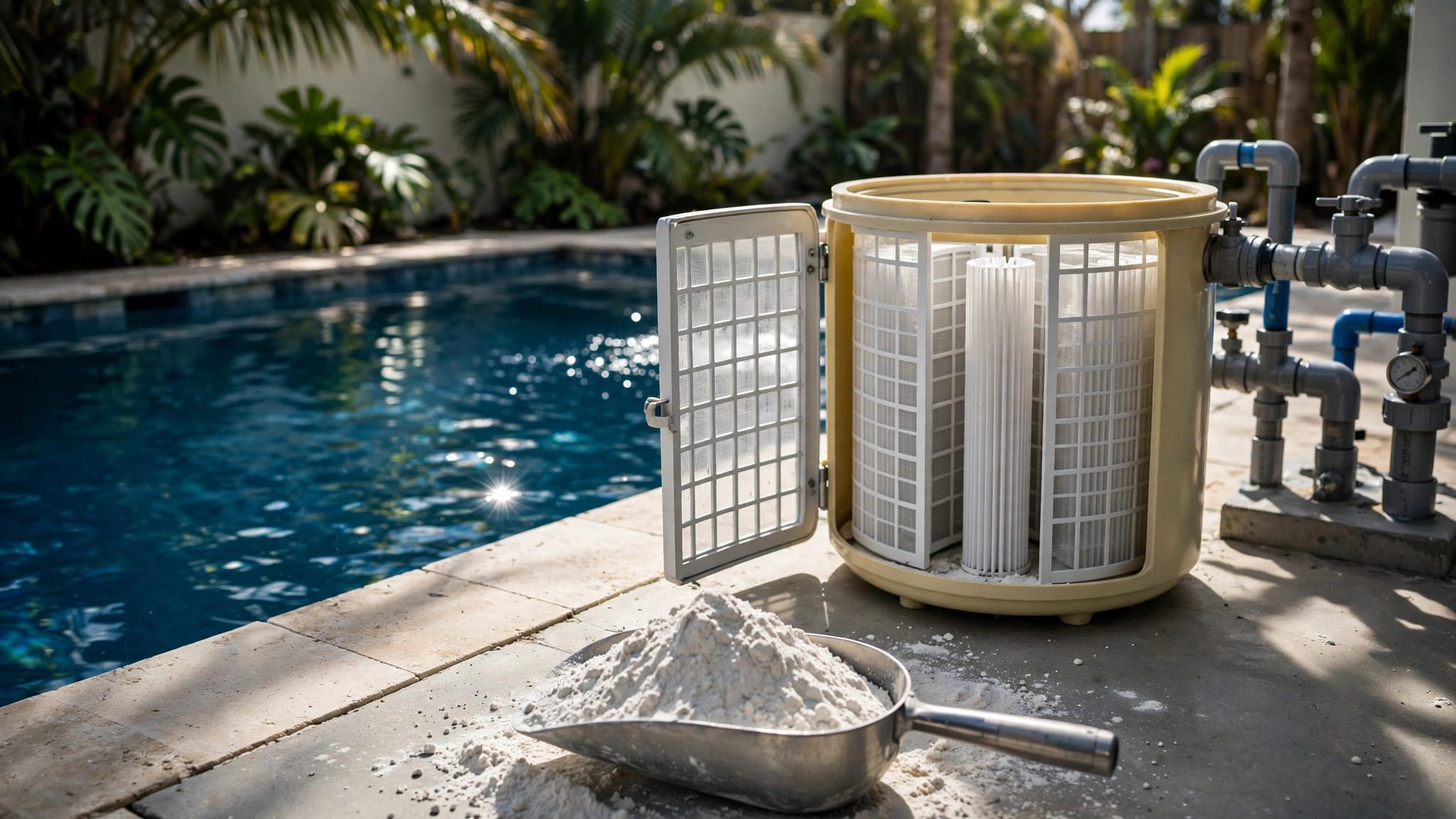
A wet pump pad can turn a heavy Florida rainstorm into a repair bill. Good pool equipment pad drainage keeps water away from motors, filters, heaters, automation systems, and electrical connections without sending runoff toward your home or a neighbor's property.
The right solution starts with the entire yard, not one drain. Grading, roof runoff, screen enclosure design, soil conditions, service access, and local requirements all affect the final layout. Here is how to protect pool equipment during installation, renovation, and everyday maintenance.
Why water around the equipment pad causes problems
Pool equipment combines water, electricity, moving parts, and pressurized plumbing. Standing water around the motor or control box can damage components, create corrosion, and make routine service unsafe. Floodwater also may carry debris that blocks drains, damages wiring, or enters equipment housings.
A pad can look dry on a clear afternoon and still collect water during a downpour. Low spots, settled soil, blocked deck drains, and runoff from a roof or patio can send water toward the equipment area faster than the ground can absorb it.
Separate stormwater from equipment access
The pump, filter, heater, valves, and electrical equipment need clear working space. Landscaping, gravel, or a drainage feature should not block the technician's route or force someone to stand in a wet area while servicing the system.
Keep the pump lid, filter tank, unions, valves, and electrical equipment reachable. A crowded pad also makes it harder to see small leaks before they become larger problems. Equipment should have the airflow and manufacturer clearances it requires, especially around heaters and electrical components.
Trace every source of runoff
Inspect more than the pool deck. Check roof gutters, downspouts, patio covers, irrigation, screen enclosure panels, raised planting beds, and the grade between the home and pad.
A screen enclosure changes how rain reaches the deck and surrounding soil. During a new build or enclosure project, review pool enclosure drainage and site measurements with the rest of the layout.
The goal is simple: collect or redirect water before it reaches the pad, then discharge it at an approved location that does not harm a structure, easement, seawall, or neighboring lot.
Start with grading and the equipment pad
Grading is usually the first drainage question because every other feature depends on how water moves across the property. The finished surface should guide rainwater away from the house and equipment area, while avoiding concentrated flow toward a neighbor.
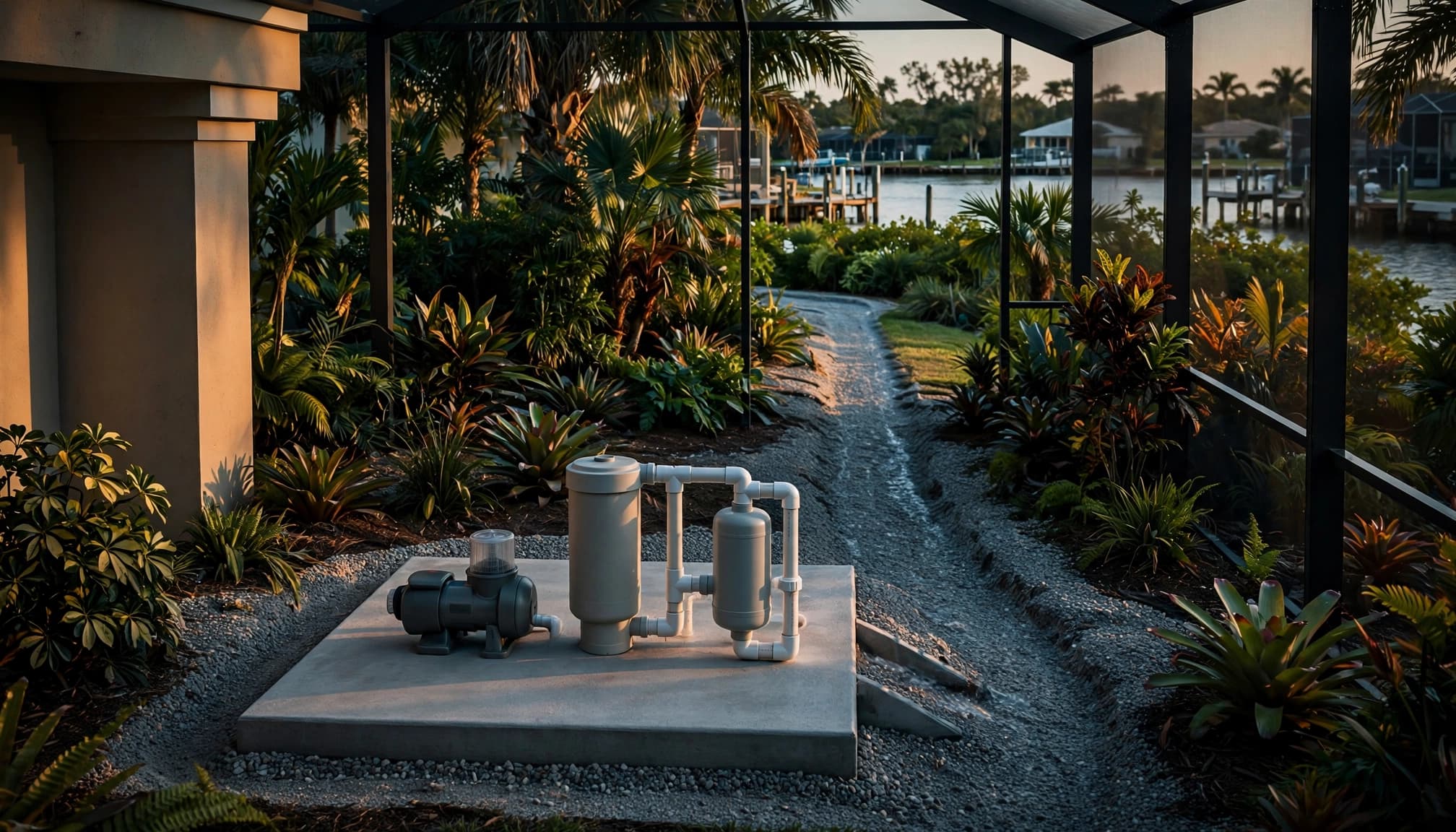
A solid, well-planned pad can help keep components above shallow surface runoff. The exact elevation and construction depend on the lot, flood conditions, equipment, and approved plans. There is no universal pad height that fits every Cape Coral property.
Plan the pad with service space
Leave enough room to remove a pump lid, open a filter, reach valves, replace equipment, and inspect connections. Future changes also matter. A new heater, salt system, automation component, or larger pump may need more space than the current setup.
Straight plumbing routes can simplify future work, while unions and isolation valves can make equipment removal easier. Pipe routing should also avoid areas where water collects. A pad that stays dry but has poor access still creates problems for homeowners and service technicians.
Reviewing pool plumbing and equipment plans early helps coordinate pipe routes, equipment locations, deck drains, enclosure footings, and electrical connections.
Coordinate the pad with the backyard
The best location is not always the closest spot to the pool. Noise, windows, seating areas, walkways, property lines, seawalls, and canal frontage can all affect placement.
Screen enclosure posts and doors need consideration too. A pad that works before a cage is installed may become difficult to reach afterward. Planning the pool, deck, enclosure, and equipment area together can prevent expensive changes later.
Back Bay Pools' guidance on pool equipment placement in Cape Coral covers service routes and enclosure conflicts that are easy to miss during early planning.
Compare drainage solutions for pool equipment pads
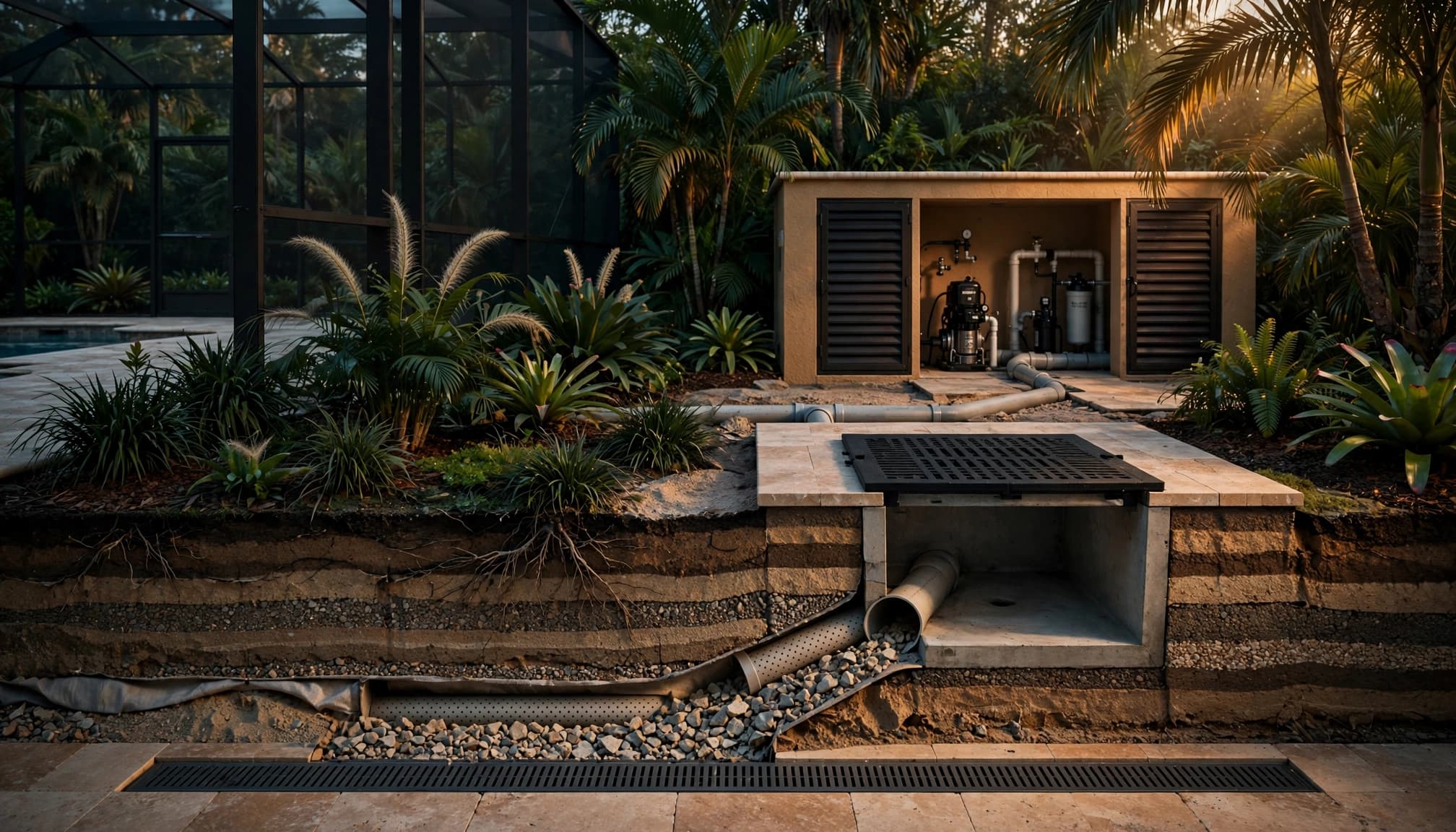
Different properties need different combinations of surface drainage, collection, and discharge. Use the options below as a planning comparison, not as a one-size-fits-all installation recipe.
| Solution | Best use | Important limitation |
|---|---|---|
| Proper grading | Moves shallow surface water away from the pad | Cannot solve every saturated or flat site |
| Gravel border | Reduces splash and keeps the pad edge cleaner | Does not replace a designed outlet |
| Catch basin | Collects water at a low point | Needs a suitable pipe route and regular cleaning |
| Channel drain | Intercepts broad surface flow along a deck or walkway | Must be set correctly and kept free of debris |
| French drain | Collects subsurface or shallow groundwater | Requires suitable soil, depth, and discharge planning |
| Sump system | Handles water that cannot drain by gravity | Needs power, maintenance, and professional design |
| Rain cover | Limits direct rain and falling debris | Cannot correct runoff flowing across the ground |
The main takeaway is that a drain only works when the collected water has a safe place to go. Sending it toward the house, equipment pad, septic components, seawall, or neighboring property creates a new problem.
Channel drains and catch basins
A channel drain can intercept water moving across a deck or along the edge of an equipment area. A catch basin can collect water at a low point before it reaches the pump. Both options need the correct elevation, stable installation, and a planned outlet.
Keep grates and basins clear of leaves, mulch, palm debris, and sediment. A blocked grate can make a properly installed system useless during the storm when it matters most.
French drains and sump systems
A French drain may help where water moves through shallow soil or collects below the surface. It needs a suitable discharge route and enough capacity for the site's conditions. Sandy soil, groundwater, existing utilities, and flood conditions can change whether this approach works.
A sump system can be useful when gravity drainage is not practical. It also adds a pump, electrical requirements, maintenance, and a possible failure point during an outage. Use a licensed contractor to design the system, especially near pool equipment and powered connections.
Account for Cape Coral site conditions
Cape Coral properties can have narrow side yards, waterfront edges, seawalls, screen enclosures, and high groundwater. These conditions affect how quickly water leaves the surface and whether subsurface drainage will work as expected.
A drainage design should also account for the finished deck, pool shell, home, easements, septic components, utilities, and property boundaries. A solution that works on one lot may be unsuitable on the next.
High water tables need professional review
A high water table can affect excavation, soil moisture, deck drainage, and long-term water movement around the pool area. During construction, crews may need a dewatering plan. After construction, the finished design still needs to keep rainwater from sitting around the equipment pad.
Read about Cape Coral high water table pool construction when planning a new pool or major renovation. Groundwater conditions can influence the pool, deck, equipment location, and drainage features together.
Protect the home and neighboring property
Never solve a wet pad by pointing a downspout, drain outlet, or sump discharge toward a foundation, fence, seawall, sidewalk, or neighboring yard. Concentrated water can erode soil, flood another property, or undermine hardscape.
Waterfront properties require extra care around seawalls and limited drainage routes. Flood-prone lots may also need a review of equipment elevations and applicable flood requirements. Your contractor, landscaper, or engineer should confirm the proper discharge approach before work begins.
Keep the pad dry through routine maintenance
Drainage systems need attention after installation. Homeowners can handle simple inspections, but avoid altering drain covers, electrical connections, valves, or buried lines without professional guidance.
Clear leaves and debris from deck drains, channel grates, catch basins, gutters, and downspouts. Watch the pad during and after heavy rain. A new puddle, soil washout, slow-draining basin, or recurring wet spot can reveal a grading or blockage problem.
Inspect the clear pump lid when cleaning the basket. Look for cracks, clouding, a poor seal, or a flattened O-ring. Keep the correct pool water level, since low water can cause the pump to pull air and lose prime. Follow the filter manufacturer's cleaning instructions and pay attention to pressure changes compared with the normal clean-filter reading.
Prepare equipment before severe weather
When a major storm is approaching, stop the pump, heater, and automation according to the equipment instructions. If power must be shut off, use the breaker only from a dry, safe location. Never open a wet panel or touch damaged wiring.
Remove testing kits, tools, toys, hose reels, extension cords, and loose items from around the pad. Close equipment doors and use only manufacturer-approved covers. A cover should protect equipment from debris without blocking required ventilation or trapping moisture.
Do not restart equipment that sat in floodwater. Wait until the area is dry and have a pool professional or electrician inspect the system when water reached motors, controls, wiring, or electrical connections.
A rain cover can reduce direct exposure, but it cannot compensate for water flowing across the ground toward the equipment.
Know when to call a professional
Routine maintenance includes clearing debris, checking visible drainage points, monitoring puddles, and keeping the equipment area accessible. Larger changes belong with qualified professionals.
Call a pool contractor when you need to move the pad, change plumbing, add equipment, coordinate drainage with a pool renovation, or plan a new deck or screen enclosure. A landscaper or drainage contractor may handle grading, catch basins, channel drains, French drains, and approved discharge routes.
Ask the appropriate local authority about permits before changing buried drainage, plumbing, electrical connections, or site grades. Pool equipment and plumbing permits may apply when a project changes pumps, heaters, piping, drains, or power connections. Requirements depend on the project and jurisdiction.
Use a licensed electrician for bonding, grounding, GFCI protection, breaker work, conduit, control panels, and equipment connections. Frequent breaker trips, warm outlets, exposed wiring, flickering lights, or floodwater near electrical equipment require immediate professional attention.
If your pool needs a coordinated review of grading, equipment location, drainage, or enclosure planning, you can Get a Free Estimate for an on-site consultation.
Pool equipment pad drainage FAQ
Should I put gravel around the pump pad?
Gravel can reduce splash and keep the slab edge cleaner, but it does not create a complete drainage system. If water has nowhere to go, gravel may become saturated or allow water to remain near the pad. Use it as part of a broader site plan when appropriate.
Is a French drain always the best solution?
No. A French drain may not perform well when groundwater is high, the soil stays saturated, or there is no approved discharge point. A contractor should review grades, utilities, soil, property boundaries, and local requirements before recommending one.
Can I install a rain cover over the equipment?
A properly selected cover can limit direct rain and debris. It must not block ventilation, trap heat, interfere with service access, or hold moisture against the equipment. Follow the equipment and cover manufacturer's instructions.
What should I do if water reaches the pump or control box?
Stay away from wet electrical equipment. Do not open the panel, test the motor, or reset breakers while standing in water. If you can safely shut off power from a dry location, do so, then call a qualified pool professional or electrician.
Can a pool renovation fix a wet equipment pad?
Often, a renovation creates a good opportunity to review the pad, deck grades, plumbing, enclosure, and drainage together. Resurfacing alone may not correct runoff or equipment placement. Moving the pad or changing drainage may require additional design review and permits.
Conclusion
Reliable pool equipment pad drainage starts with the whole property. Grade water away from the home and pad, intercept runoff where needed, maintain clear collection points, and provide a safe discharge route that does not affect a neighbor.
Gravel, covers, channel drains, catch basins, French drains, and sump systems each have a place, but none replaces site-specific planning. Keep routine maintenance simple, and bring in a pool contractor, drainage professional, or electrician when the work involves buried systems, equipment relocation, floodwater, or electrical connections.