A pool can look clean while a worn or misused valve creates pressure, flow, or leak problems behind the scenes. Pool multiport valve maintenance helps Cape Coral homeowners protect circulation equipment, reduce unnecessary water loss, and spot trouble before it damages the filter system.
The safest approach is simple: learn what each setting does, record your normal pressure, and turn off the pump before changing any valve position. The steps below focus on routine homeowner checks and explain when a repair needs professional attention.
What the Multiport Valve Does
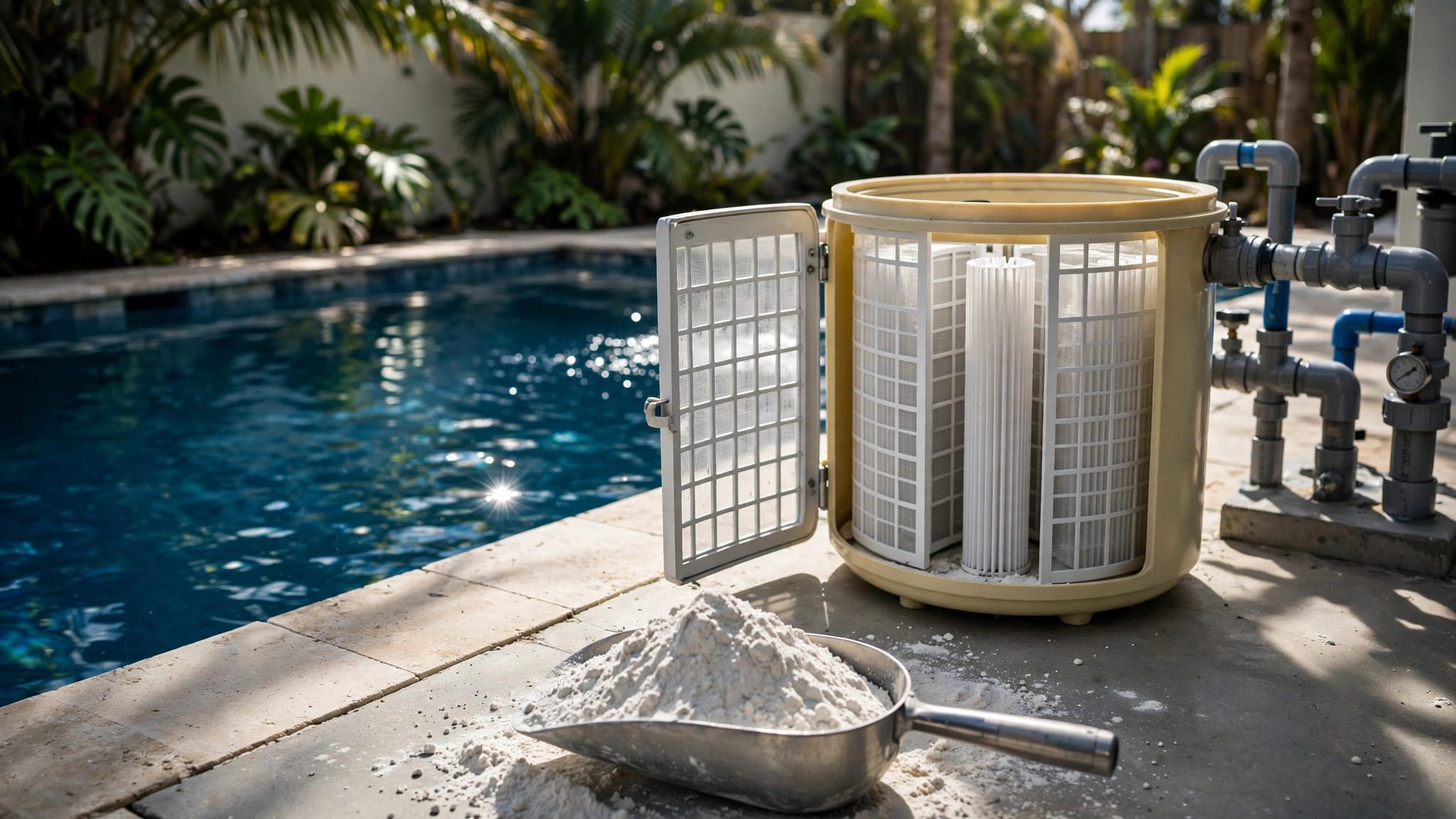
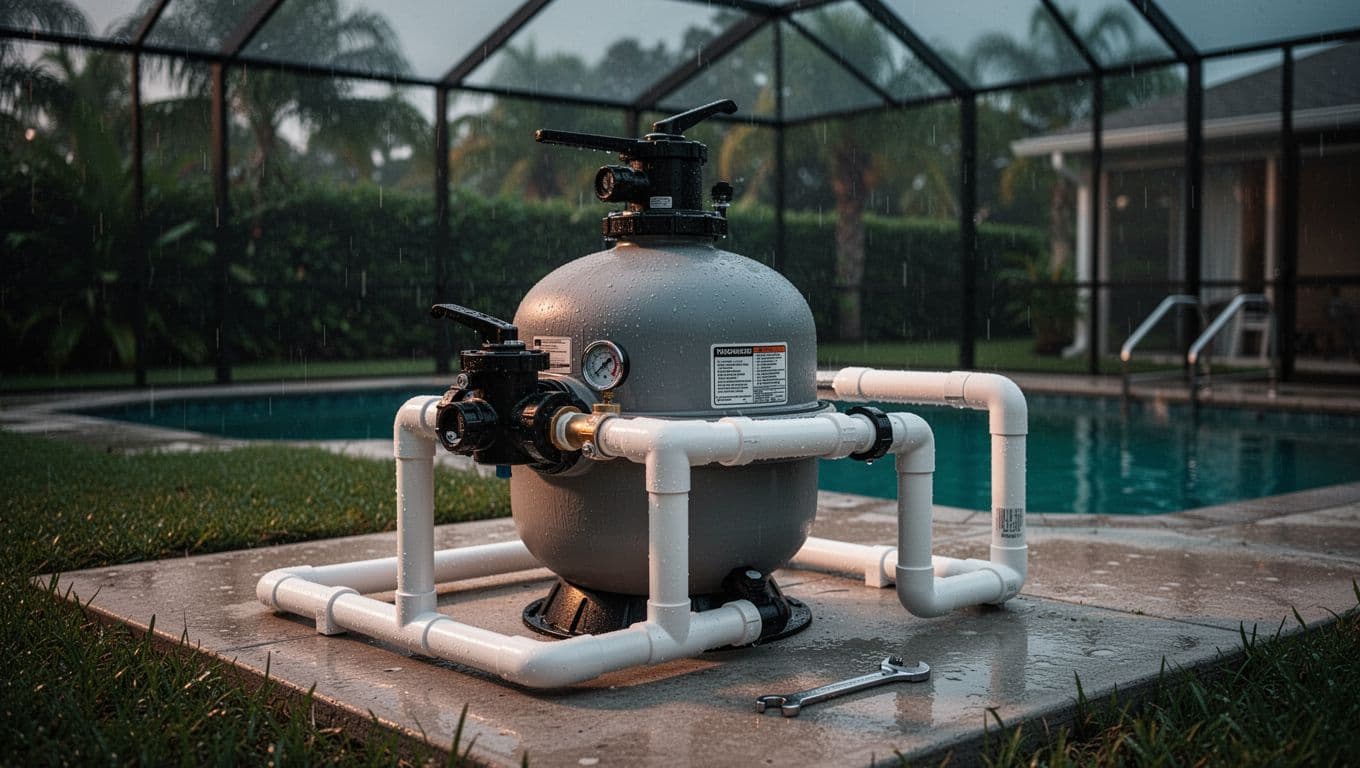
A multiport valve is usually mounted on or beside a sand filter. It directs water through different routes for everyday filtration, backwashing, rinsing, waste removal, or recirculation.
Your system may use different labels or a different valve design, so always compare the handle positions with the equipment label and owner's manual.
Identify the valve and surrounding equipment
The pump pulls water from the pool and pushes it toward the filter. The filter removes dirt from the water, while the multiport valve selects the route water takes through or around that filter.
A pressure gauge shows resistance inside the filter system. The clean reading you see after normal circulation gives you a useful baseline. Write it down near the equipment pad or in your pool records.
You may also see separate diverter valves. These control individual plumbing lines, such as the skimmer, main drain, spa, or water features. They don't perform the same job as a multiport valve.
Understand the common settings
Many multiport valves include settings such as FILTER, BACKWASH, RINSE, WASTE, RECIRCULATE, and CLOSED. Some models use DRAIN instead of WASTE, and some don't include every position.
- FILTER sends water through the filter for normal circulation.
- BACKWASH reverses flow through sand or DE filter media and sends dirty water to waste.
- RINSE sends water forward through the filter and out the waste line after backwashing.
- WASTE bypasses the filter and sends water out of the pool system.
- RECIRCULATE returns water to the pool without passing it through the filter.
- CLOSED stops water movement and should never run with the pump operating.
Never move the handle while the pump is running. Turn the pump off, wait for the motor and water movement to stop, then press and rotate the handle.
A Safe Maintenance Routine
Routine pool multiport valve maintenance starts with observation. Homeowners can inspect the equipment, monitor pressure, and follow the manufacturer's cleaning sequence. They shouldn't force a handle, open a pressurized tank, or guess at an unfamiliar setting.
Inspect before changing anything
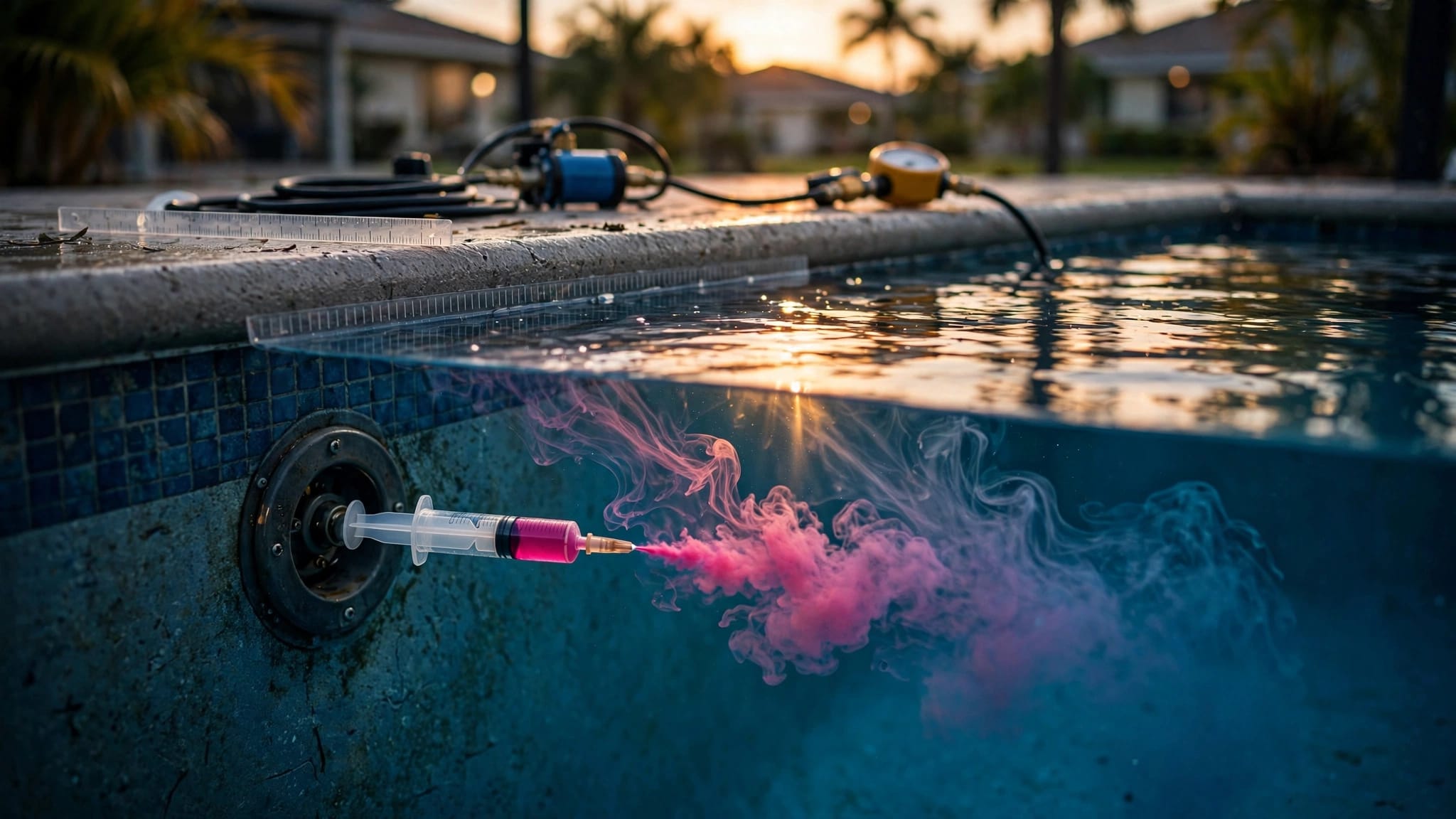
Look around the valve, filter tank, pump, and connected PVC pipes. Watch for dripping water, air bubbles in the pump basket, cracked fittings, loose unions, or water spraying from a hose connection.
Check the valve handle for normal movement without forcing it. A stiff handle can point to a damaged internal gasket, brittle valve parts, or pressure that hasn't been released.
Keep electrical connections dry. Don't handle the pump, timer, or controls with wet hands. If water reaches electrical equipment, the pump trips repeatedly, or you smell burning insulation, stop using the affected equipment and arrange an evaluation by a qualified electrician.
Backwash only when the system indicates a need
A rising pressure reading or weaker return flow can indicate that a sand or DE filter has collected debris. Use the manufacturer's service range above your clean baseline rather than following a fixed calendar schedule.
Before backwashing, confirm that your filter supports that process. Cartridge filters don't use a backwash setting. They require cartridge removal and cleaning according to the equipment instructions.
Secure the waste hose, keep the discharge away from foundations and neighboring property, and check local requirements for pool water or DE discharge. Turn off the pump before selecting BACKWASH. After the cycle, stop the pump again before selecting RINSE or returning the valve to FILTER.
Don't backwash repeatedly without finding the cause of fast pressure buildup. A blocked line, incorrect pump speed, undersized filter, valve problem, or damaged internal component may need inspection.
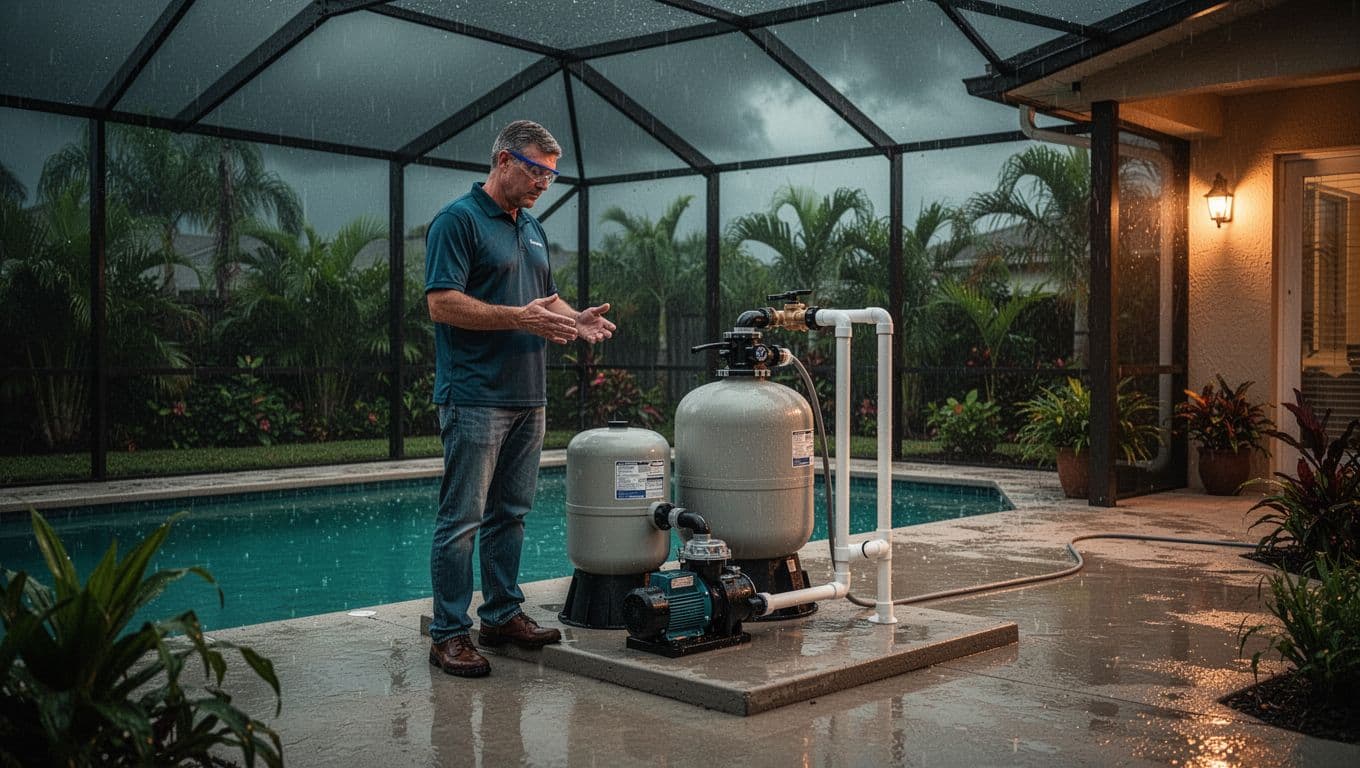
Use Pressure and Flow as Early Warning Signs
Pressure and return flow often reveal a problem before water becomes visibly cloudy. Check the gauge after the system has circulated normally, then compare future readings with your clean baseline.
A pressure increase may mean the filter needs cleaning, but it can also point to a closed return, blocked plumbing, pump-speed change, or internal damage. If pressure rises again soon after cleaning, repeated backwashing may hide the real issue.
Reduced return flow deserves attention too. First check the water level, skimmer basket, pump basket, and visible valves. Keep the pool water around the middle of the skimmer opening so the pump doesn't draw air.
Turn off the pump if you see a large air pocket in the pump basket, hear a strained motor, lose return flow, or notice unusual sounds from the filter tank. Never open a filter tank until the pump is off, pressure has been released according to the manual, and the gauge reads zero.
A pressure number has meaning only when you know the system's normal clean baseline.
Cape Coral Conditions Around the Equipment Pad
Cape Coral's heat, humidity, heavy rain, salt exposure, and year-round pool use can increase wear on outdoor equipment. A screened enclosure reduces leaves and insects, but fine dust and wind-driven debris can still reach the water and filter.
Watch for humidity and salt-related damage
Saltwater systems still need corrosion checks. Humid air and salt exposure can affect pump motors, heater cabinets, light niches, ladder anchors, screen fasteners, gate hardware, bonding lugs, and metal parts near the deck.
Look for white crusting, rust stains, pitted metal, flaking paint, green marks near copper, seized screws, and brittle plastic or rubber seals. Heat also speeds wear on O-rings, pump lids, timers, motors, and door hardware.
Corrosion hidden inside an equipment enclosure or beneath a deck connection needs specialist review. Don't remove bonding components or alter electrical connections as a DIY project.
Inspect after heavy rain and storms
Sudden rain can dilute pool water, lower the level after overflow, and carry debris into the skimmer. Wind can move branches or loose screen material near the equipment pad. After a storm, check the waste line, pump basket, filter area, and enclosure for visible damage.
If a screen is torn or the frame has loose hardware, pool cage rescreening services can help limit debris and insects that add to routine cleaning.
Routine Maintenance Versus Professional Repairs
Homeowners can perform visual checks and follow a clear equipment manual. Repairs require more caution because the valve connects pressurized plumbing to the pool's circulation and filtration system.
Signs the valve needs an evaluation
Call a pool professional if the handle won't move normally, water leaks from the valve body, the system sends water to the wrong outlet, or pressure stays abnormal after cleaning the baskets and filter as directed.
A valve that leaks internally may allow water to bypass the filter or flow toward waste when it should return to the pool. Replacing an internal gasket or valve assembly requires the correct part and a pressure-free system.
Don't glue over a leaking connection, force a seized handle, or open the filter tank while pressure remains. Those shortcuts can turn a small repair into damaged plumbing or a serious safety hazard.
For broader equipment concerns, Back Bay Pools provides Cape Coral pool services for homeowners who need an onsite assessment.
Know when electrical help is required
A multiport valve is mechanical, but the surrounding equipment often includes a pump motor, timer, heater, salt system, or automation controls. Water intrusion, repeated breaker trips, exposed wiring, or burning odors are electrical concerns.
Turn off power as directed by the equipment instructions and keep clear of damaged components. A qualified electrician should evaluate unsafe electrical conditions before anyone resumes operation.
When Valve Problems Point to Larger Pool Work
A valve issue doesn't always explain every pool problem. Rough surfaces, leaks, deck damage, outdated plumbing, or a deteriorating enclosure may need separate work.
Separate filtration problems from surface wear
A pool with stains, rough areas, cracks, or a fading interior may need more than filter maintenance. Pool resurfacing refreshes the interior finish, with options that include plaster, quartz, and pebble.
The expected service life depends on the finish and pool conditions. A Cape Coral guide describes resurfacing timelines of about seven to 15 years, while project schedules vary by scope and repairs.
If the equipment pad and pool finish both need attention, review pool interior refinishing and renovation as separate project work. Valve maintenance won't repair a leaking shell or worn pool surface.
Plan inspections during renovations
A renovation or resurfacing project is a practical time to review the full equipment pad. The contractor can document the valve type, plumbing route, filter condition, pump connections, and access around the system.
Cape Coral resurfacing prices for most homes are commonly described in the range of $6,000 to $15,000, with larger or more damaged projects costing more. Those figures apply to resurfacing, not routine valve maintenance. Use this guide to resurfacing an existing pool when deciding whether surface work belongs in a broader renovation plan.
Key Takeaways for Cape Coral Homeowners
- Record the clean pressure reading after normal circulation.
- Turn off the pump before every multiport handle change.
- Never run the pump with the valve set to CLOSED.
- Confirm whether your system uses a sand, DE, or cartridge filter.
- Backwash only when pressure or flow indicates that cleaning is needed.
- Keep waste discharge away from foundations, neighbors, and restricted drainage areas.
- Inspect for corrosion, cracked plastic, loose fittings, and storm damage.
- Stop and request professional help when the handle sticks, pressure behaves strangely, or electrical equipment gets wet.
Multiport Valve Maintenance FAQ
How often should I move the multiport valve?
Move it only when a specific task requires another water route, such as backwashing or rinsing. Frequent unnecessary movement adds wear and can create mistakes. Always shut off the pump first.
Can I backwash whenever the water looks cloudy?
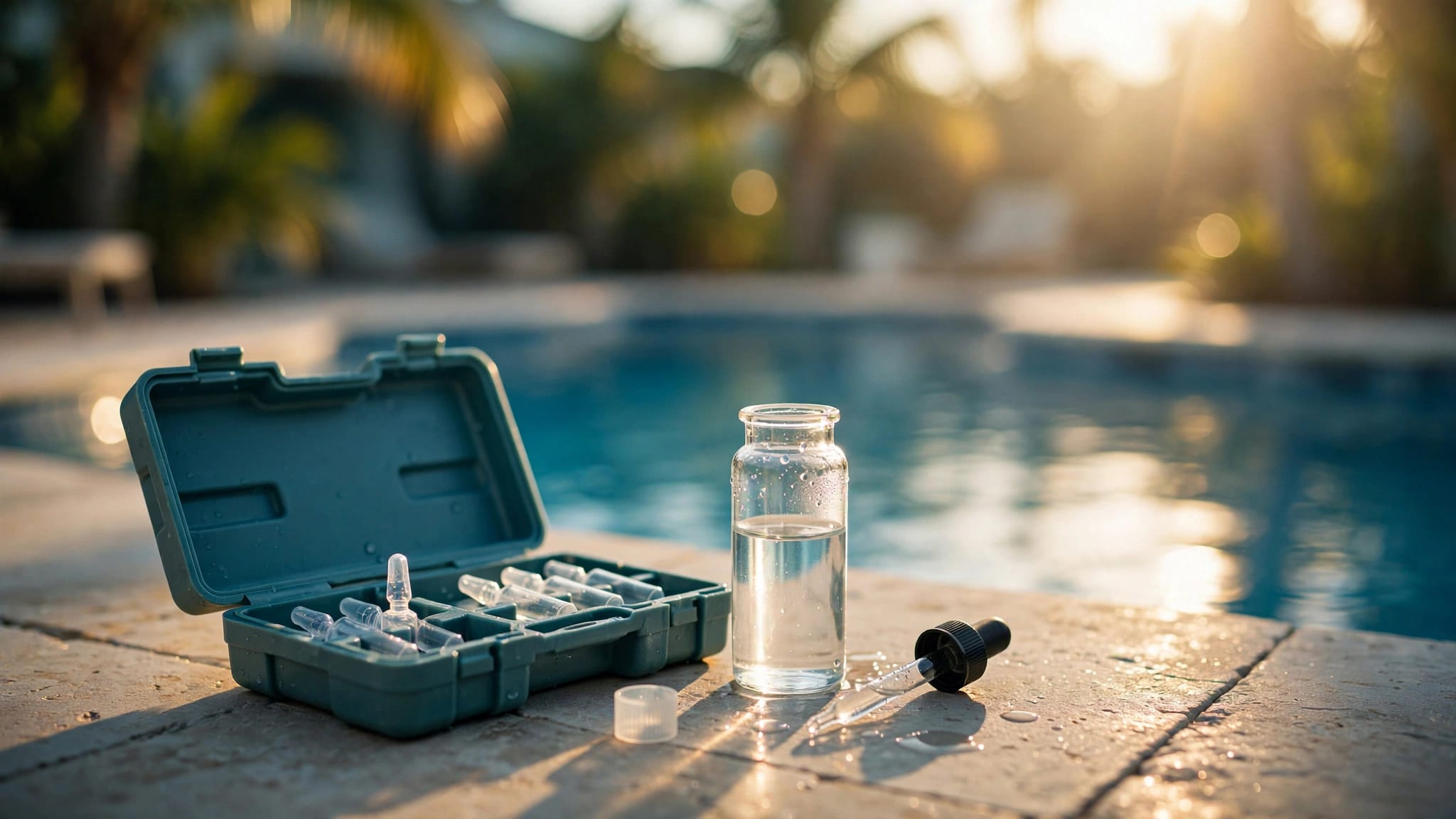
Cloudy water doesn't automatically mean the filter needs backwashing. Test the water, inspect baskets, check the pressure gauge, and follow the filter manufacturer's instructions. Backwashing too often wastes water and may reduce filtration performance.
What if my valve has no RINSE setting?
Some valves don't include every position. Follow the sequence in the owner's manual instead of copying instructions for another model. Never invent a setting or force the handle.
When should I call a professional?
Request an evaluation when the valve leaks, the handle sticks, pressure rises rapidly, return flow drops, or the system loses prime. Electrical damage, concealed corrosion, and filter-tank work also require qualified help. You can Get a Free Estimate for an onsite consultation.
Conclusion
Good pool multiport valve maintenance depends on safe valve changes, pressure awareness, and regular visual inspections. Cape Coral's heat, humidity, storms, and salt exposure make those checks more important around the equipment pad.
Handle routine cleaning according to the equipment manual, but leave pressurized, electrical, corroded, or uncertain repairs to qualified professionals. A few careful minutes after heavy rain or unusual pressure can protect the pump, filter, and the pool your family uses all year.