A dirty DE filter can raise pressure, weaken return flow, and leave a Florida pool looking dull after rain or heavy use. If you need to clean DE pool filter grids safely, start with the equipment manual, not a guessed schedule or familiar valve position.
Diatomaceous earth filters require more care than cartridge systems because cleaning can remove the filter powder coating. You may need to backwash, rinse the internal grids, inspect the tank, and add the correct amount of fresh pool-grade DE. The process begins with safe shutdown and ends only after normal filtration returns.
Prepare Before Opening the DE Filter
A few minutes of preparation can prevent pressure-related injuries and equipment damage. Set aside enough time to complete the cleaning, recharge the filter, and check for leaks before swimming.
Shut down the system completely
Turn off the pump before changing any valve setting. Never move a multiport valve while the pump is running. If your system uses a push-pull valve or another design, follow the position and shutdown sequence listed by the manufacturer.
Relieve all pressure through the filter's pressure-relief procedure. The pressure gauge should read zero before you loosen the tank clamp or open the housing. Pressurized pool equipment can release water and components with considerable force.
Keep children away from the equipment pad. Also keep electrical connections dry, and don't handle the pump or controls with wet hands.
Gather the right supplies
Your exact supplies depend on the filter model and the type of cleaning. Most homeowners need a garden hose with a gentle spray, a clean work surface, replacement O-rings if the manual recommends them, and the correct pool-grade DE powder.
Wear eye protection and gloves. Avoid breathing dry DE powder, and use the respiratory protection listed on the product label. Never replace DE with garden lime, cement powder, or another powder.
Before shutting down, record the clean pressure if you already have a normal baseline. Many systems use an increase of about 8 to 10 psi as a cleaning reference, but the filter manual controls.
A Safe Way to Clean DE Pool Filter Media
The exact steps vary by model, valve type, and internal design. Some DE filters can be backwashed, while others require a different cleaning method. Confirm the instructions for your equipment before removing the tank lid.
Open the tank and rinse the grids
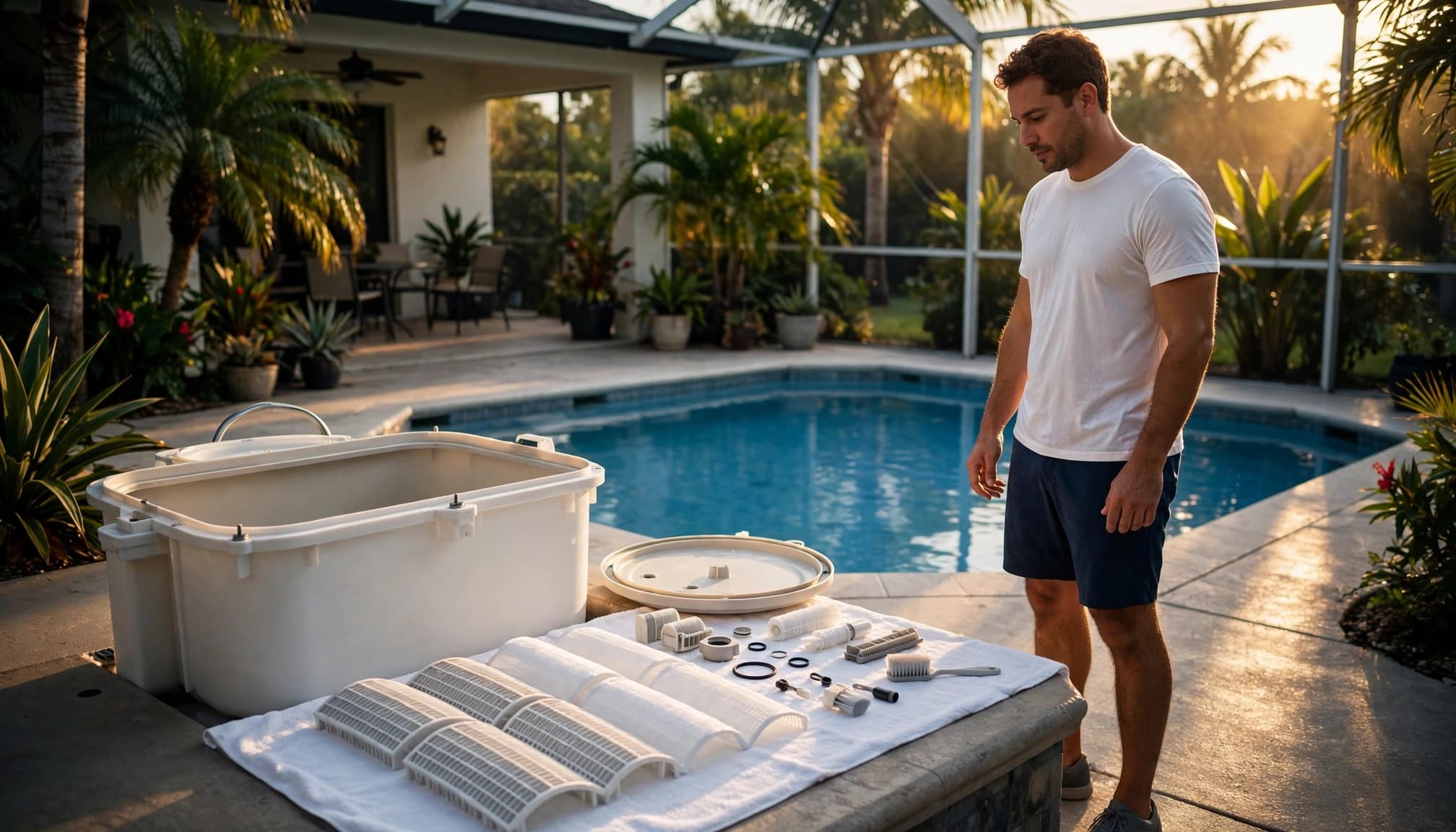
After the pump is off and pressure is released, open the tank according to the manufacturer's instructions. Take note of how the grids, manifold, air-relief assembly, and other parts fit together. A quick photo can help you remember the arrangement.
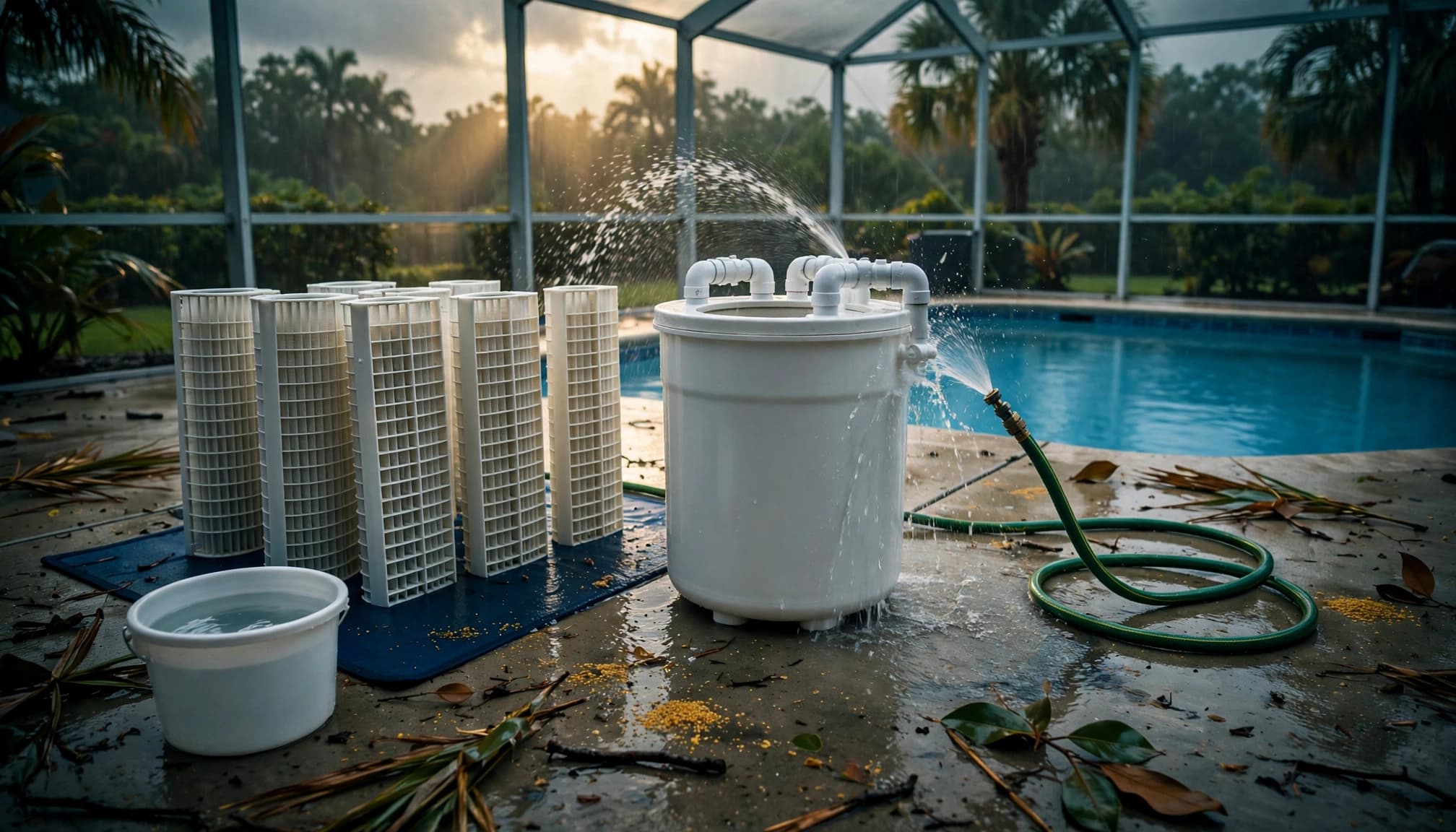
Remove the internal grids carefully. Rinse each one with a gentle stream of clean water. Avoid forcing the nozzle directly against the fabric, bending the grids, or scrubbing with a stiff brush. Excessive pressure can damage the filtering material.
Inspect the grids for tears, broken supports, damaged end caps, or heavy buildup that remains after rinsing. Check the tank O-ring, clamp, manifold, and air-relief parts as well. Replace damaged components instead of reinstalling them.
Reassemble and recharge the filter
Reinstall the grids in their original position. Clean and lubricate the tank O-ring only if the manufacturer permits the product and procedure. Tighten the clamp exactly as directed, then confirm that the drain plug, pressure gauge, and fittings are secure.
Place the valve in FILTER only after the pump is off. Restart the system according to the manual, then add the precise amount of fresh DE powder required for your filter. Many systems add DE through the skimmer while the pump runs, but use that method only when the manual specifically allows it.
Don't guess the quantity. Too little DE can reduce filtration, while too much can restrict flow and increase pressure.
Backwashing Versus a Full DE Filter Cleaning
Backwashing and a full teardown are related, but they aren't the same task. Backwashing reverses water flow through the filter and sends collected dirt and used DE to waste. A teardown involves opening the tank, removing the internal parts, and rinsing or inspecting the grids.
Use backwashing for routine filter loading
Watch the pressure gauge and compare it with the clean baseline. A rising reading, weaker return flow, or the manufacturer's recommended service range can indicate that the filter needs cleaning.
Turn off the pump before setting a multiport valve to BACKWASH or moving a push-pull valve to its marked position. Secure the discharge hose and keep the waste path clear. Restart the pump and monitor the sight glass or discharge water. Follow the manufacturer's time or visual instructions, and stop if the hose shifts or the pressure behaves unexpectedly.
If your system has a RINSE setting, turn off the pump before selecting it. Run the rinse cycle for the time listed in the manual, then return the valve to FILTER with the pump off. Add fresh DE after the backwash.
Choose a teardown when backwashing isn't enough
A full cleaning may be necessary when pressure rises quickly after backwashing, the grids remain coated with dirt, or the pool has experienced algae or heavy contamination. It can also help when the system shows poor flow despite clean baskets and normal water levels.
During a teardown, inspect the grids, manifold, tank O-ring, clamp, pressure gauge, and air-relief assembly. Repeated backwashing without inspection can hide a damaged part, plumbing problem, undersized system, or valve issue.
Backwashing also removes pool water. Frequent cycles can lower the water level and increase refill needs, so manage discharge carefully and follow current local guidance for used DE and backwash material.
Adjust DE Filter Care for Florida Conditions
Florida pools often operate year-round. Heat, heavy rain, pollen, algae, tropical landscaping, and frequent swimming can load the filter faster than a fixed calendar suggests.
Check the system after rain and heavy use
A storm can wash leaves, soil, pollen, and organic material toward the pool. Heavy rain may also raise the water level and dilute chemicals. After weather clears, remove visible debris, empty the skimmer and pump baskets with the pump off, and check the water level.
Warm conditions can support algae growth when sanitizer or circulation falls behind. Cloudy or green water may load a DE filter quickly, but pressure measures flow resistance, not water chemistry. Test the water and correct sanitation or circulation problems instead of adding DE powder based on cloudy water alone.
Busy weekends create another kind of load. Sunscreen, body oils, hair, and other swimmer contaminants can collect in the filter. A pressure log helps you see whether the system needs cleaning sooner after periods of frequent use.
Don't assume a screen enclosure blocks everything
A pool cage keeps out much of the larger debris, but fine pollen, dust, insects, and rainwater can still reach the pool. Palms and other nearby landscaping can add more material.
Back Bay Pools provides pool screen enclosure and rescreening services for homeowners who need to reduce debris and insect problems around the pool. Even with a well-maintained enclosure, inspect the equipment after storms and rinse screens when salt spray or dusty winds leave buildup.
Keep leaves and organic debris out of the water when possible. Less debris entering the pool means less material reaching the filter.
Check the System After Cleaning
The cleaning cycle isn't complete when the tank is closed. You still need to confirm normal filtration, steady circulation, and a dry equipment pad.
Compare pressure and return flow
After restarting the pump, compare the gauge with the clean pressure you recorded earlier. The reading should move closer to its normal range. Return jets should produce steady flow without unusual bursts of air.
Open the air-relief valve briefly if your filter has one, and close it when water flows steadily. Inspect the tank clamp, fittings, valve, drain, and nearby plumbing for leaks. Stop the system if you hear unusual sounds, see spraying water, or notice pressure behaving unexpectedly.
If the pressure climbs soon after a complete cleaning, check the pump basket, skimmer basket, water level, valves, and return lines. Persistent problems may point to an equipment or plumbing issue rather than dirty DE grids.
Dispose of used DE carefully
Used DE and backwash residue should not go into a storm drain, onto the ground, or into household trash without checking current guidance. Contact the City of Cape Coral, Lee County, your waste provider, or a qualified pool professional for disposal instructions that apply to your property.
Frequent backwashing also sends pool water and DE residue to waste. Consider water use and drainage before repeating the cycle several times.
If your filter keeps clogging, leaking, or operating outside its normal pressure range, Get a Free Estimate for an on-site review of the pool, equipment area, screen enclosure, and maintenance priorities.
Key Takeaways
- Turn off the pump and release all pressure before changing a valve or opening the tank.
- Follow the filter manufacturer's instructions for backwashing, teardown, valve positions, and DE quantity.
- Rinse grids gently, inspect internal parts, and replace damaged components.
- Recharge the filter with the correct amount of fresh pool-grade DE after backwashing or deep cleaning.
- Adjust maintenance after heavy rain, pollen, algae treatment, storms, or frequent pool use.
- Check the pressure gauge, return flow, water chemistry, and equipment pad after service.
- Handle used DE and backwash water according to current local disposal guidance.
Frequently Asked Questions
How often should I clean a DE pool filter in Florida?
Use pressure and filter performance instead of a random weekly schedule. Record the pressure when the filter is clean and operating normally. Follow the manufacturer's cleaning range when pressure rises above that baseline.
Florida weather may shorten the time between cleanings. Inspect the system sooner after heavy rain, an algae problem, a storm, or several days of heavy pool use. A fixed interval cannot account for every pool's debris load, circulation schedule, and equipment condition.
Do I add DE after every backwash?
Yes, a DE filter normally needs fresh powder after backwashing because the used charge leaves with the collected dirt. Add the quantity listed for your exact filter model. Use a skimmer only when the manual permits that method.
Skipping the recharge can reduce filtration and allow the system to operate without the coating its grids require.
Can I clean DE grids with a pressure washer?
Avoid high-pressure cleaning unless the manufacturer specifically approves it. A forceful spray can damage the grid fabric, bend supports, or push debris deeper into the material. Use a gentle garden-hose spray and keep the nozzle at a safe distance.
Are DE filters a good fit for Cape Coral pools?
DE filters can produce exceptionally clear water because the powder captures very small particles. They may suit homeowners who value fine filtration and can manage pressure checks, cleaning, fresh powder, water use, and proper disposal.
Cartridge filters may fit homeowners who want a simpler routine, while sand systems use a different backwash process. During a renovation or equipment upgrade, compare your maintenance habits with the filter's required care. Back Bay Pools also discusses cartridge versus sand pool filters when homeowners are reviewing filtration options.
Conclusion
A clean DE filter depends on more than rinsing the tank. Shut down the pump safely, release pressure, follow the model-specific instructions, inspect the grids, and restore the correct DE charge before returning to normal filtration.
Florida conditions make pressure checks especially useful. Rain, pollen, algae, landscaping debris, and year-round swimming can change how quickly the filter loads. With consistent monitoring and careful cleaning, your DE filter can support clear, well-circulated pool water without guesswork.