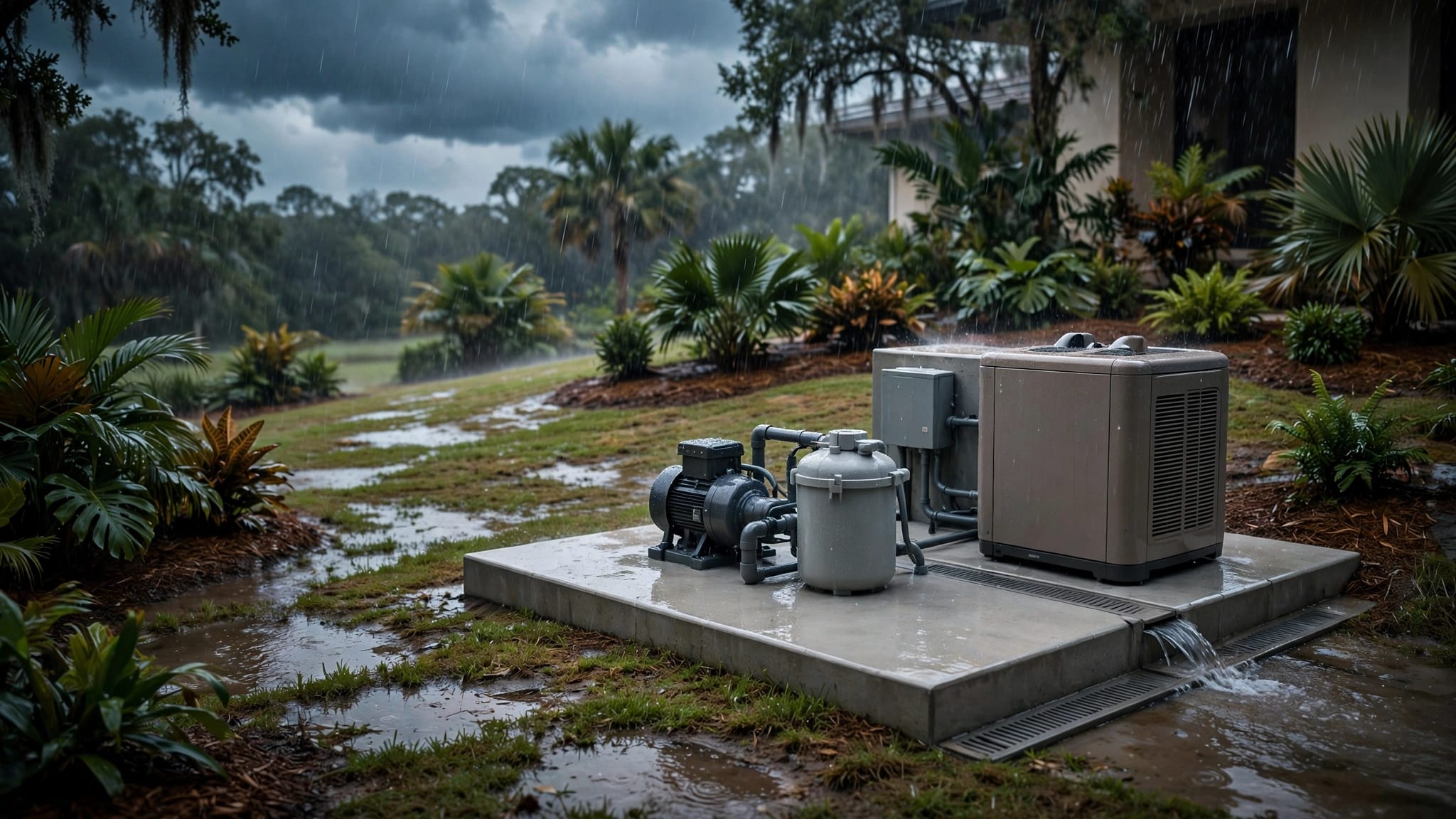
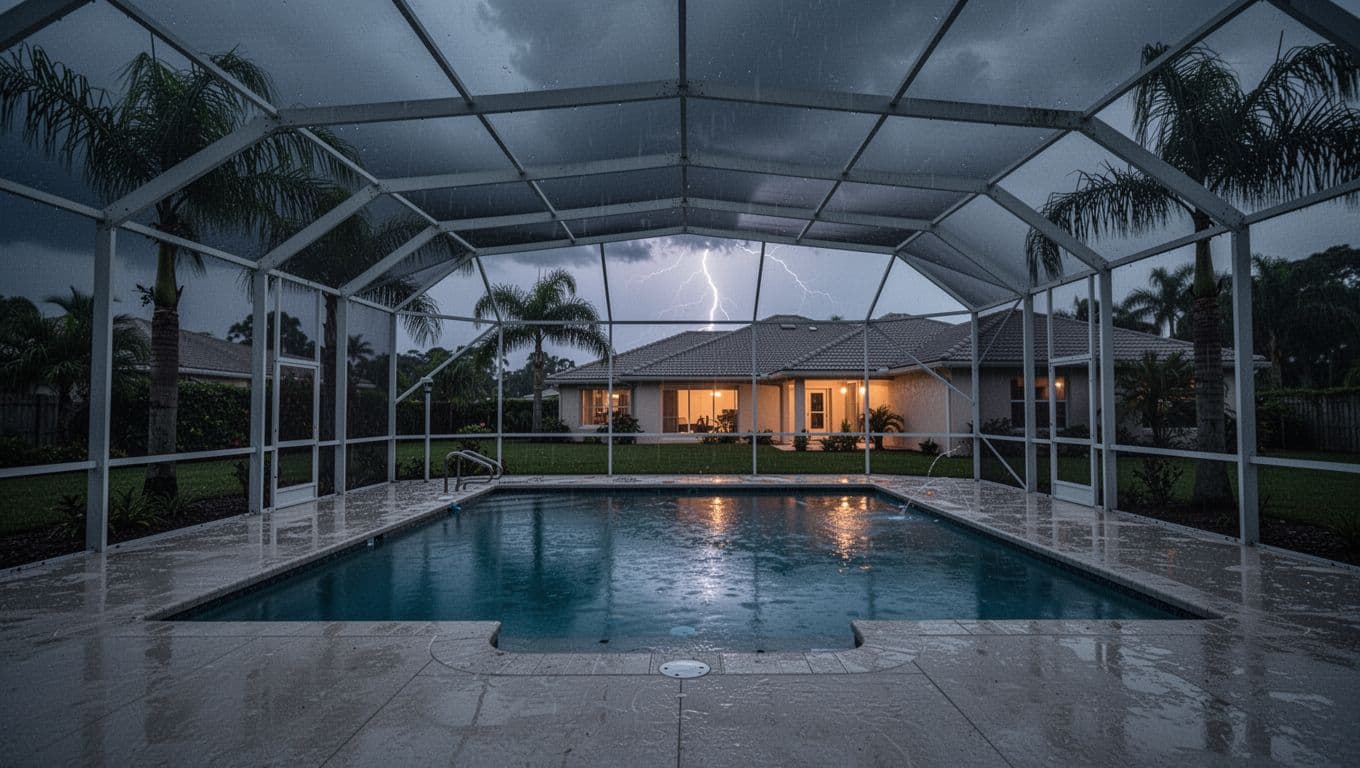
Lightning can reach a Cape Coral backyard before heavy rain arrives, so pool lightning safety starts the moment thunder is possible. If you see lightning or hear thunder, swimmers should leave the pool immediately and move indoors.
Water, wet concrete, metal rails, ladders, screen frames, and pool equipment can all create added danger during a storm. Use the simple rules below to protect your family, respond to suspected damage, and know when professional help is needed.
Why Pool Lightning Safety Matters in Cape Coral
Cape Coral and Lee County experience frequent summer thunderstorms. Lightning can strike several miles from the heaviest rain, and a backyard may still look calm when the storm is already close enough to pose a risk.
Florida storms can arrive before the rain
The National Weather Service advises leaving the water at the first sound of thunder or sight of lightning. You don't need to wait for rain, strong wind, or a nearby strike.
A flash-to-thunder count of 30 seconds or less means the storm is close enough to require shelter under the traditional 30-30 rule. However, counting between flashes and thunder shouldn't delay anyone who already sees lightning or hears thunder. The safest response is immediate.
The pool deck is part of the hazard
Getting out of the water is only the first step. During a thunderstorm, swimmers should leave the entire pool deck and avoid nearby conductive objects, including:
- Wet concrete and standing water
- Metal fences, handrails, ladders, and diving boards
- Pool lights, pumps, heaters, and control panels
- Screen enclosure framing
- Open patios, gazebos, and covered outdoor areas
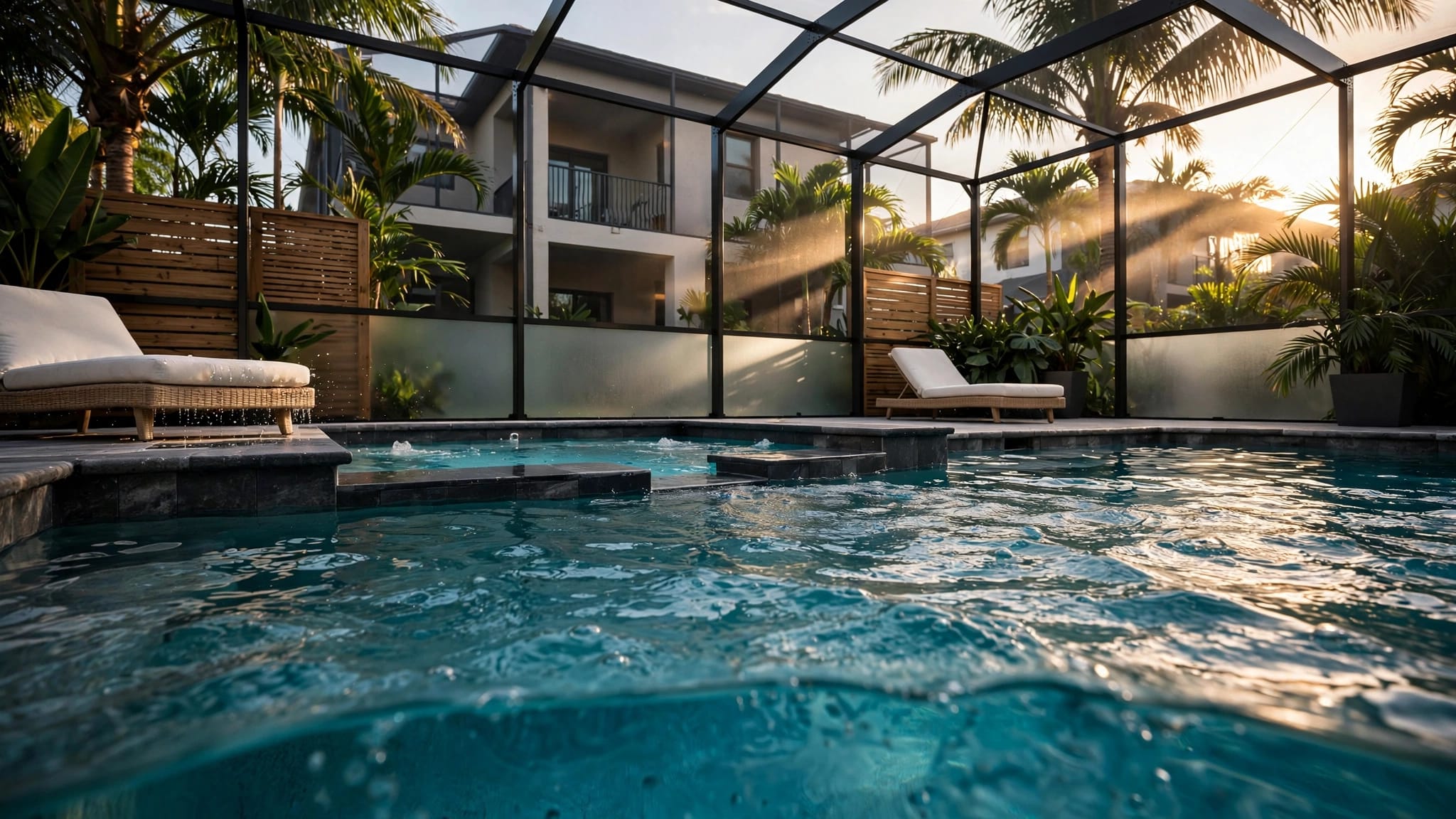
A screen enclosure can help keep insects and debris out, but it isn't a lightning shelter. Homeowners planning pool screen enclosure installation should treat the enclosure as part of the outdoor area during storms and move everyone into a substantial enclosed building.
What to Do When You Hear Thunder or See Lightning
A clear household response prevents hesitation. Everyone who uses the pool should know where to go before the next storm arrives.
Leave the water and deck immediately
As soon as thunder is audible or lightning is visible, tell every swimmer to exit the pool. Move away from the water, deck furniture, enclosure frame, outdoor shower, fence, and equipment pad.
Don't stop to collect toys, close umbrellas, cover furniture, or check the pool pump. Those tasks can wait until the storm passes. Children should stay with an adult while everyone moves inside.
If someone is already in the yard, direct them toward the house without running near fences, trees, or metal structures. Avoid isolated trees and open sections of the property.
Choose substantial indoor shelter
The safest shelter is a fully enclosed home or another substantial building with walls, a roof, and closed windows and doors. A hard-topped, fully enclosed vehicle is another suitable option.
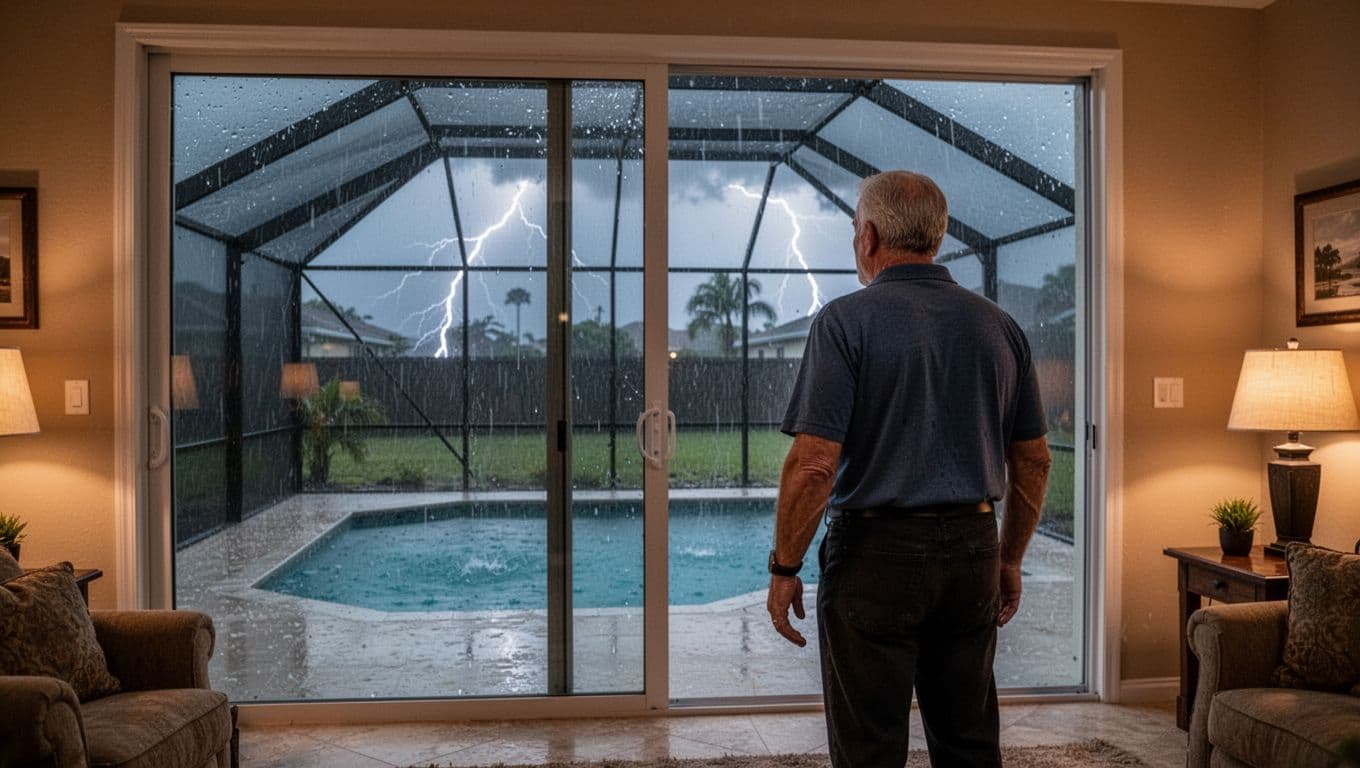
A covered patio, open garage, carport, gazebo, lanai, or pool cage doesn't provide the same protection. Once indoors, stay away from open doors and windows. Keep people away from the pool deck until the storm has passed.
The Centers for Disease Control and Prevention also recommends avoiding contact with water and plumbing during a thunderstorm. That means postponing showers, baths, dishwashing, and handwashing until the storm is over.
How Long to Wait Before Swimming Again
Leaving early protects swimmers during the storm. Waiting long enough afterward protects them from lightning that remains nearby.
Use the 30-30 rule as a warning
The 30-30 rule uses the time between seeing a lightning flash and hearing its thunder. If the interval is 30 seconds or less, seek shelter immediately.
The second part of the rule is more useful for pool owners: wait at least 30 minutes after the last thunder or lightning before returning outdoors. This applies even when the sky begins to brighten or rain stops.
You don't need to stand outside and monitor the storm. Remain inside while thunder or lightning continues, then wait through the full 30-minute period after the last observed activity.
Reset the clock after new activity
Any new thunder or lightning restarts the waiting period. For example, if the storm seems quiet for 25 minutes and thunder sounds again, begin a new 30-minute wait.
The same rule applies to swimming, pool cleaning, outdoor furniture work, and equipment checks. A dry deck doesn't mean the area is ready for use if lightning was recently present.
Water, Plumbing, and Pool-Equipment Precautions
Lightning safety includes more than the swimmer. Pool water, plumbing, electrical systems, and metal components can all remain concerns during a storm.
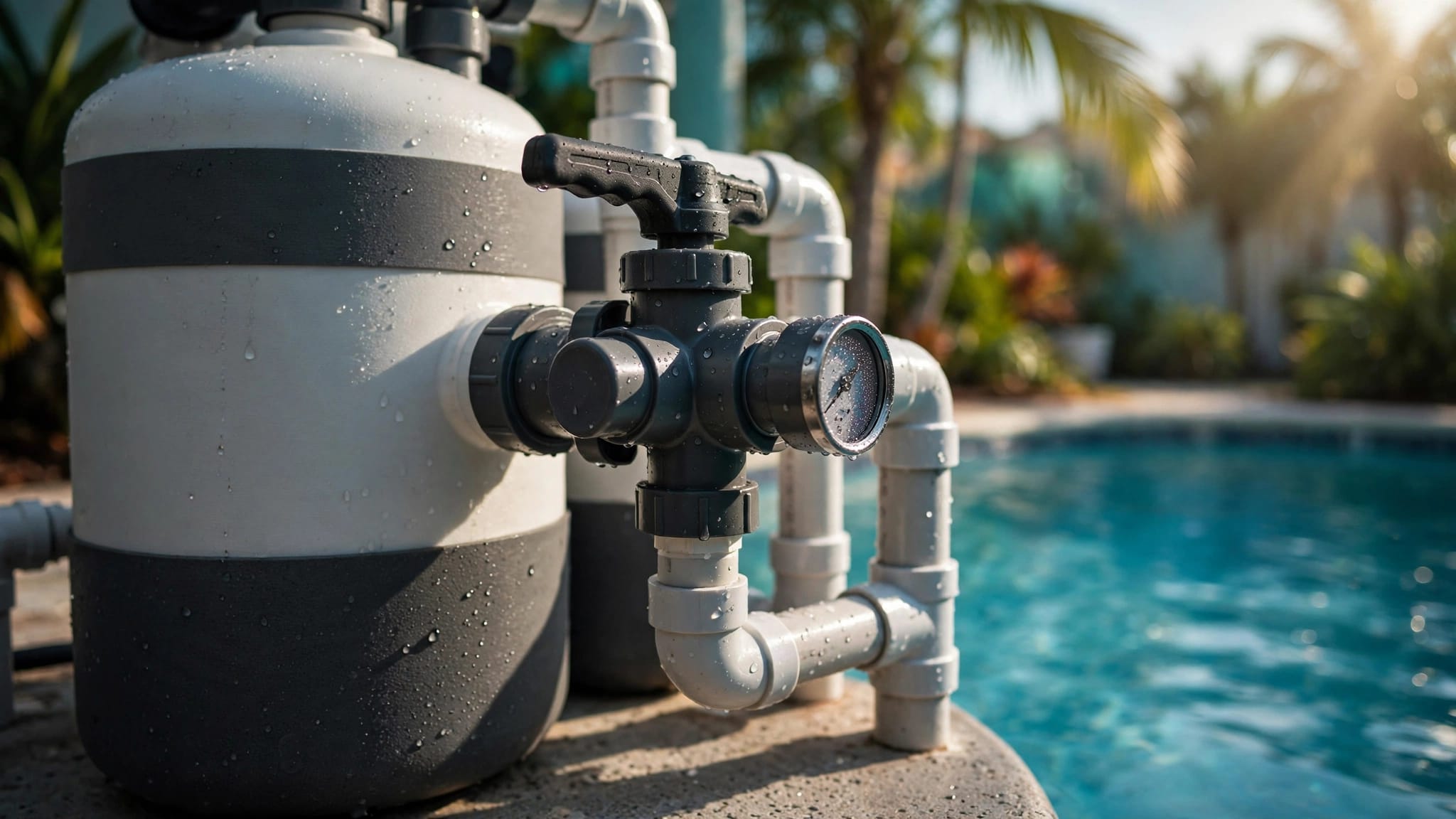
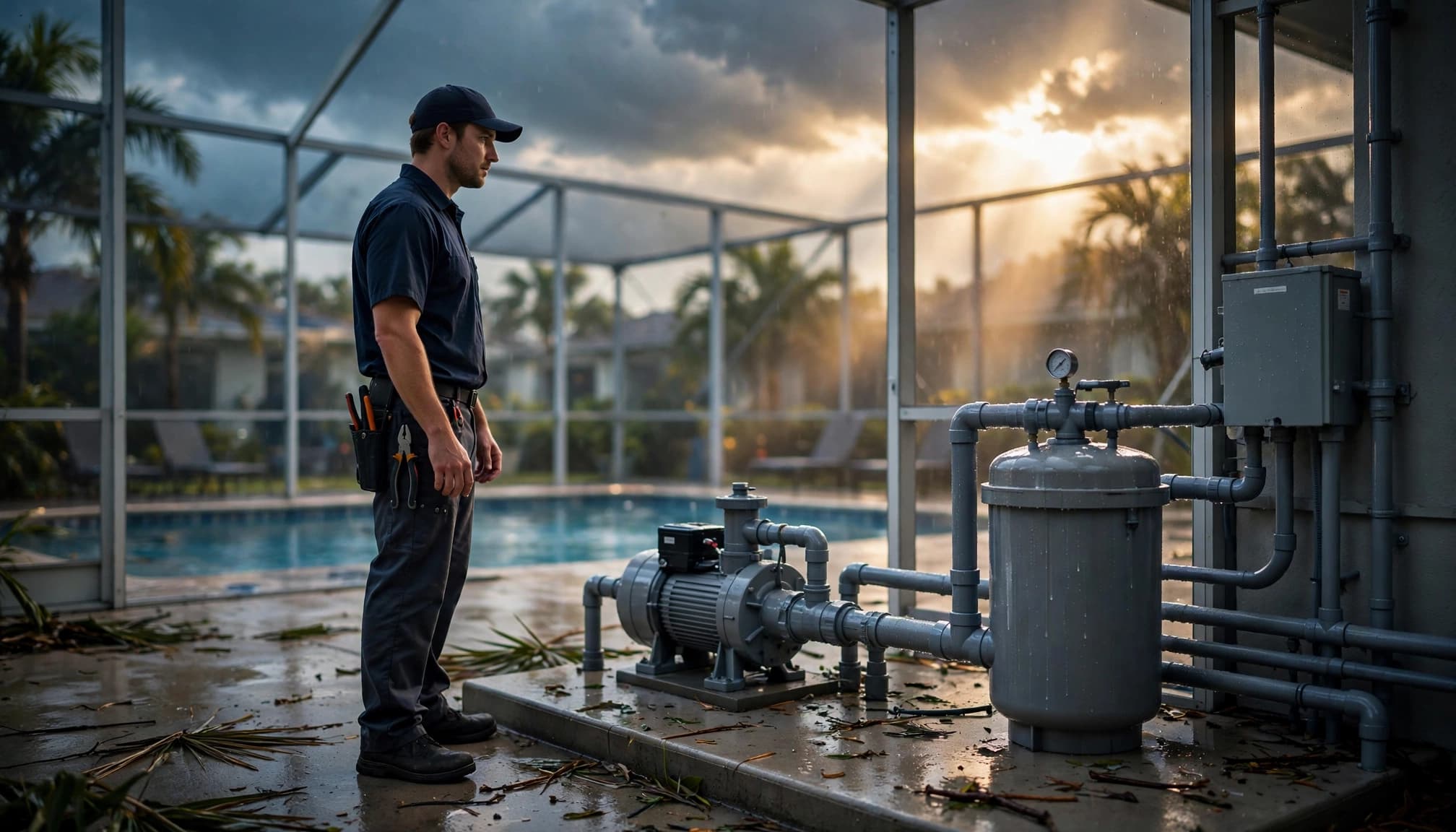
Keep away from pumps, heaters, salt systems, automation panels, timers, pool lights, and electrical panels while thunder or lightning is active. Don't open a panel, remove a pump lid, reset a breaker, or test a motor during wet conditions.
If the storm causes a power outage, don't repeatedly reset breakers. A caretaker can take photos from a dry, safe location, but should keep everyone away from the equipment pad until a qualified professional can assess the situation.
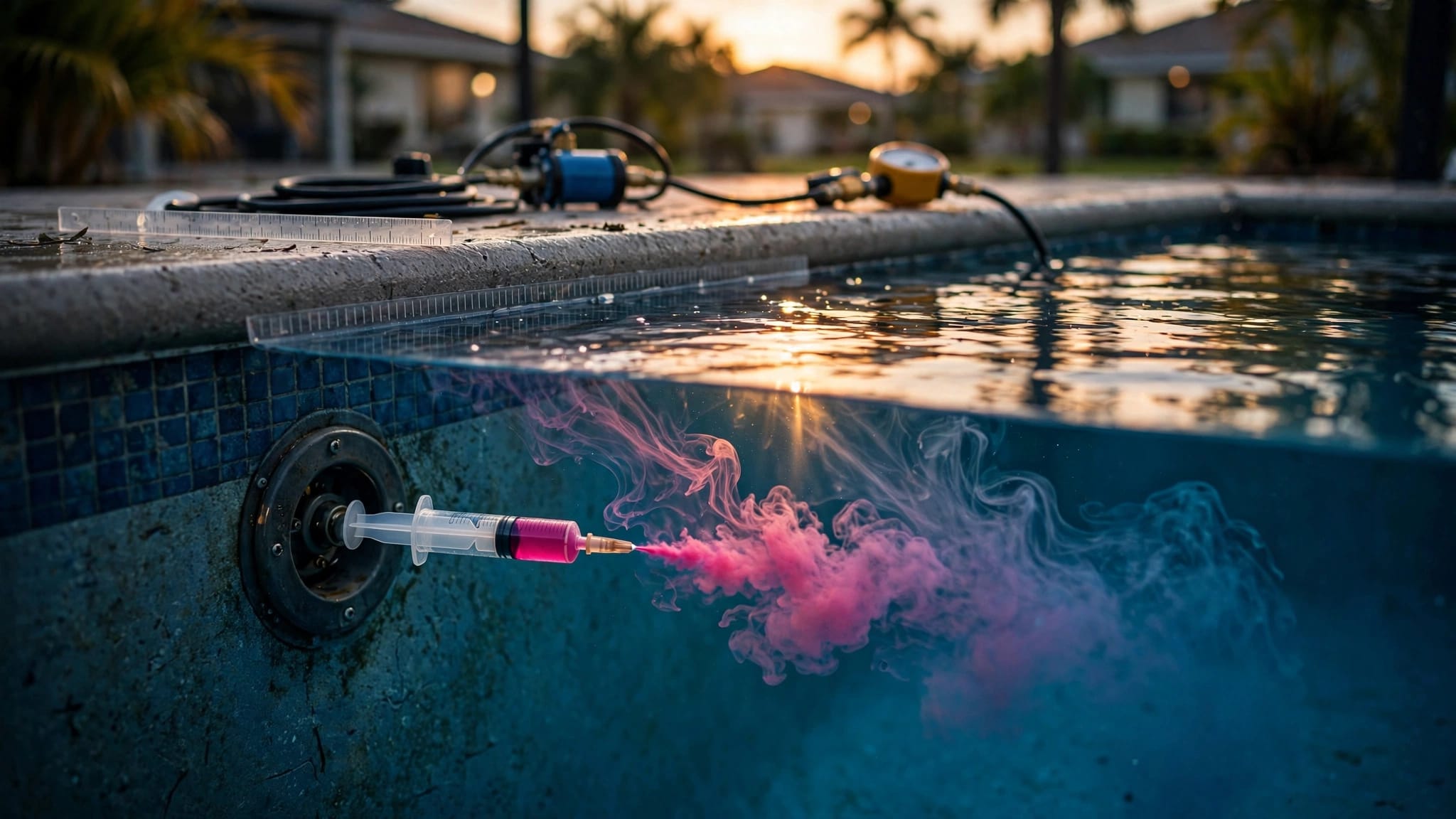
Heavy rain can also raise water above the skimmer opening, dilute chemicals, and carry debris or runoff into the pool. Once the weather clears, make a visual check from a safe area. Cloudy water, a persistent leak, unusual equipment sounds, or electrical problems require professional attention before anyone swims.
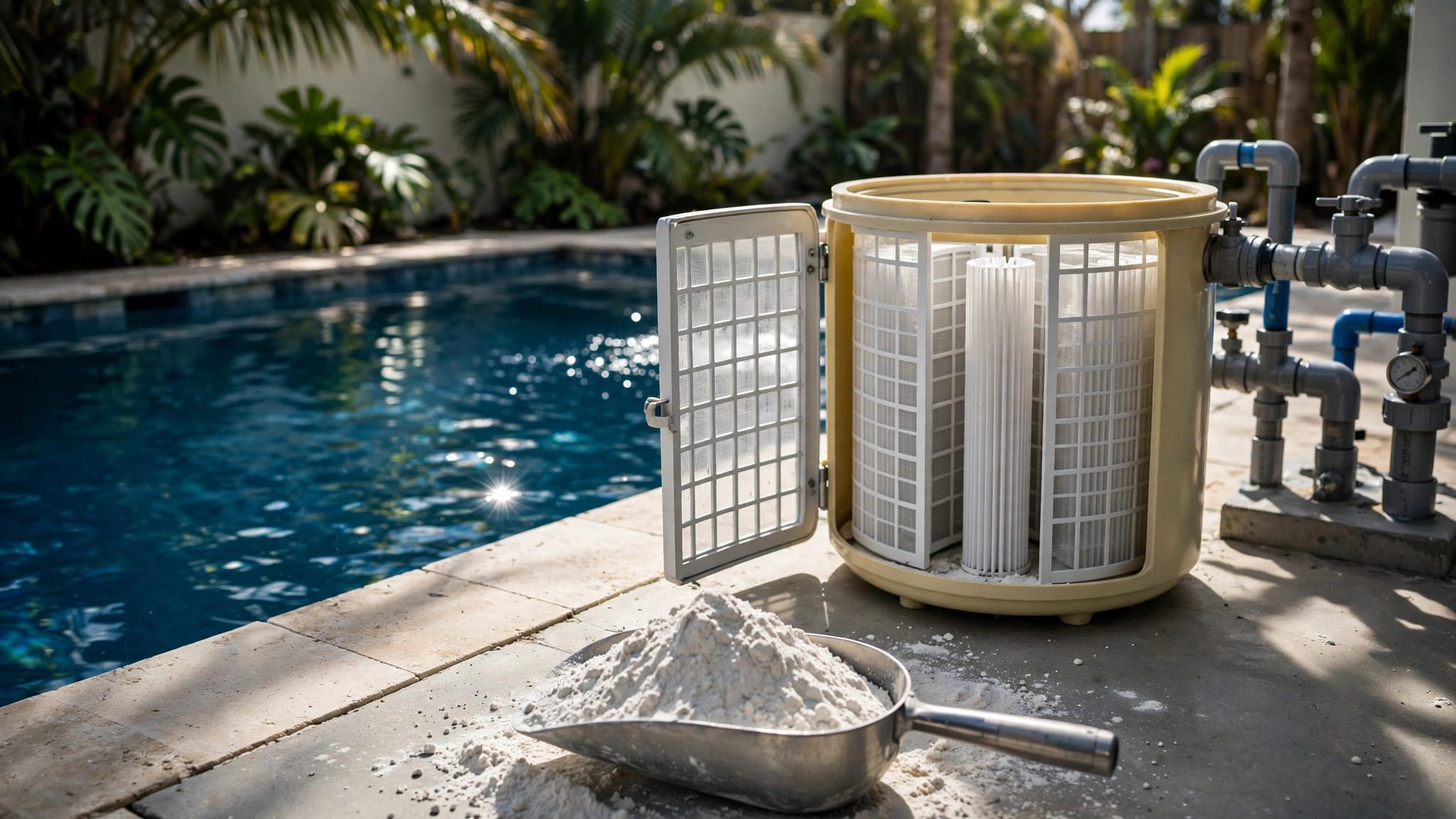
After severe weather, a pool may need testing and treatment before use. Homeowners should avoid chemical adjustments they aren't trained to make, especially when the water may contain floodwater or unknown contamination.
What to Do After Suspected Lightning Damage
Lightning damage isn't always visible. A motor may appear intact while internal components, wiring, controls, or connected equipment have been affected.
Respond to injuries first
If someone is struck, call 911 immediately. A lightning victim doesn't retain an electrical charge, so another person can safely provide aid after the strike.
If the person isn't breathing and you are trained to do so, begin rescue breaths and follow the emergency dispatcher's instructions. Check for other injured people only when you can do so without entering an unsafe area.
Keep everyone else away from the pool, deck, damaged enclosure, fallen wires, and equipment pad until emergency responders or qualified professionals make the area safe.
Know when to request an inspection
Stop using the pool and arrange a professional inspection when you notice:
- Tripped breakers that won't reset normally
- Burning smells, scorch marks, exposed wiring, or damaged panels
- Pool lights or controls that behave unusually
- A pump, heater, or automation system that won't start correctly
- Cracked plumbing, broken valves, or water loss
- Damage to the pool shell, deck, coping, or attached spa
- Bent screen posts, unstable framing, or roof damage
- Floodwater near electrical equipment
- A pump, heater, motor, or control box that was submerged
Don't switch on equipment that sat in floodwater, even if it looks dry. Don't open a wet or damaged electrical panel. A licensed electrician may need to evaluate the electrical system, while a qualified pool contractor can inspect pool equipment, plumbing, surfaces, and the enclosure.
A post-storm assessment can also separate a repair from a larger renovation. If cracks, worn surfaces, or damaged coping need attention, Cape Coral pool renovations may address several related problems during one project.
Cape Coral Pool Lightning Safety Checklist
Keep this short checklist where family members and pool guests can see it:
- Leave the pool immediately when anyone sees lightning or hears thunder.
- Move off the deck and away from wet concrete, metal fixtures, fences, and equipment.
- Go inside a substantial enclosed building or a hard-topped, fully enclosed vehicle.
- Stay away from water and plumbing while thunder or lightning continues.
- Wait at least 30 minutes after the last thunder or lightning.
- Restart the waiting period after any new thunder or lightning.
- Don't reset breakers or touch pool equipment during wet conditions.
- After the storm, look from a dry, stable location before approaching the pool.
- Keep people away from floodwater, exposed wiring, damaged screens, and submerged equipment.
- Photograph visible damage from a safe distance and contact qualified professionals.
This checklist also helps a trusted caretaker manage the property when you are away. The caretaker can watch for high water, leaks, cloudy water, damaged screens, and equipment concerns without attempting electrical repairs or structural work.
Key Takeaways for Pool Owners
The most important pool lightning safety rule is simple: thunder means get out and go inside . A screen enclosure, covered patio, or dry-looking deck doesn't provide adequate protection.
Wait 30 minutes after the last thunder or lightning before returning outdoors. If equipment, wiring, plumbing, the pool surface, or the enclosure looks damaged, keep the pool closed and arrange a qualified inspection.
Routine storm checks also help protect larger pool investments. Homeowners planning new pool construction in Cape Coral can discuss equipment placement, drainage, decking, and enclosure design with safety and storm response in mind.
Pool Lightning Safety FAQ
Is it safe to swim when lightning is nearby but it isn't raining?
No. Lightning can strike before rain reaches your property. Leave the pool when you see lightning or hear thunder, even if the water and deck look calm.
Does a pool screen enclosure protect swimmers from lightning?
No. A screen enclosure is an outdoor structure, not a substantial enclosed building. Leave the enclosure and move into the house or another suitable shelter.
Can I stay under a covered patio during a storm?
No. Covered patios, open garages, carports, gazebos, and similar areas don't provide the protection of a fully enclosed building. Move inside and close the windows and doors.
How long should I wait after the storm?
Wait at least 30 minutes after the last observed thunder or lightning. If either returns, start the 30-minute period again.
Should I turn off the pool pump when lightning starts?
Don't approach or operate equipment during active lightning and wet conditions. If you have a planned storm shutdown procedure, follow the manufacturer's and utility guidance from a dry, safe location. After suspected damage, don't repeatedly reset breakers or restart equipment that may be wet or submerged.
Can I use the pool after lightning if the water looks clear?
Clear water doesn't confirm that the equipment, wiring, plumbing, or pool structure is safe. Inspect from a safe location, keep swimmers away from the area, and arrange professional help when you see damage or unusual operation.
A Safer Response to Florida Storms
Cape Coral pool owners don't need to predict exactly where lightning will strike. They need a clear response that starts with leaving the water and deck at the first thunder or lightning.
Move everyone into proper shelter, wait the full 30 minutes after the storm's last activity, and treat damaged or wet equipment as a professional inspection issue. If you need help evaluating storm-related pool, surface, or enclosure concerns, Get a Free Estimate for an onsite consultation with Back Bay Pools.