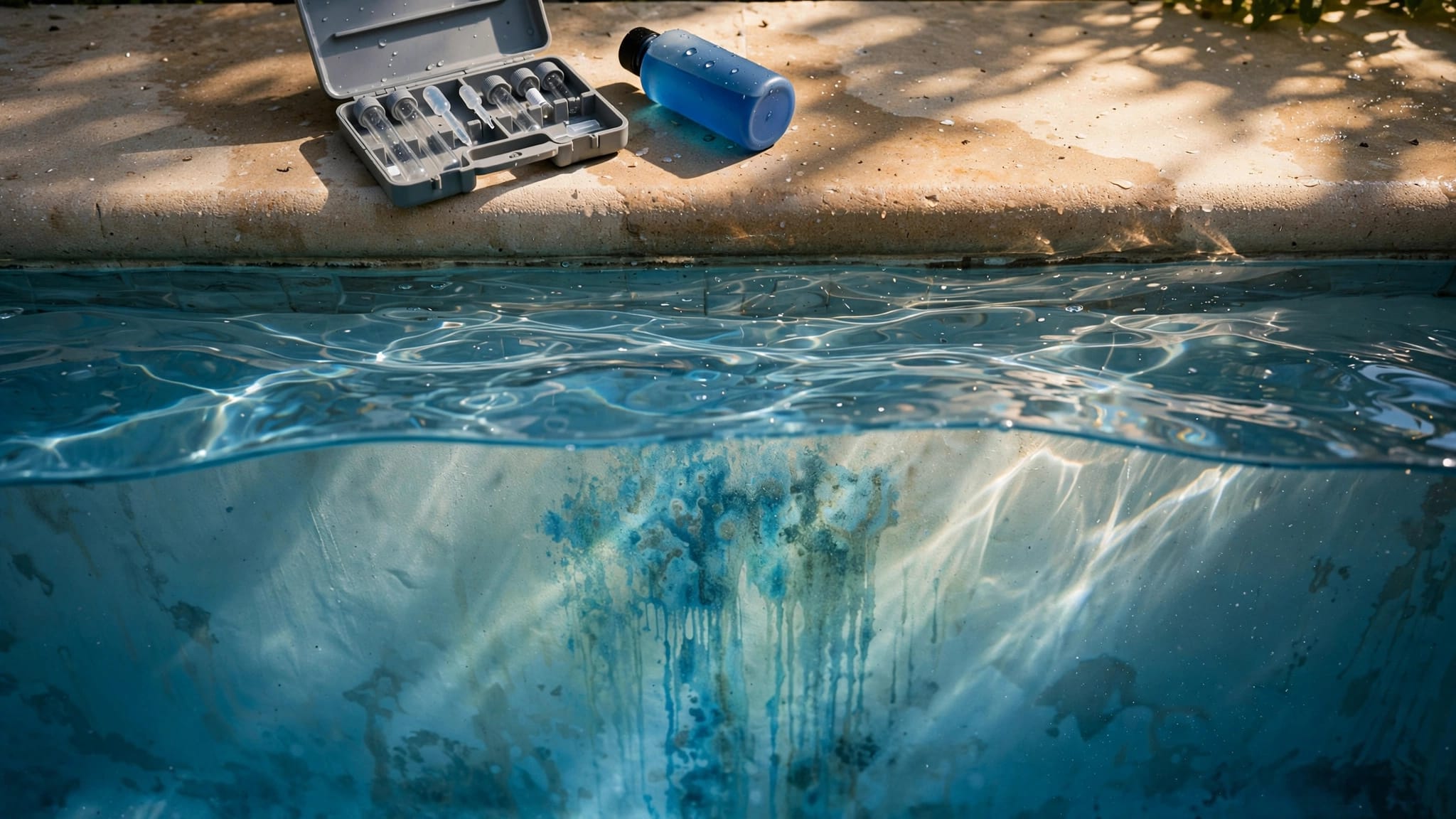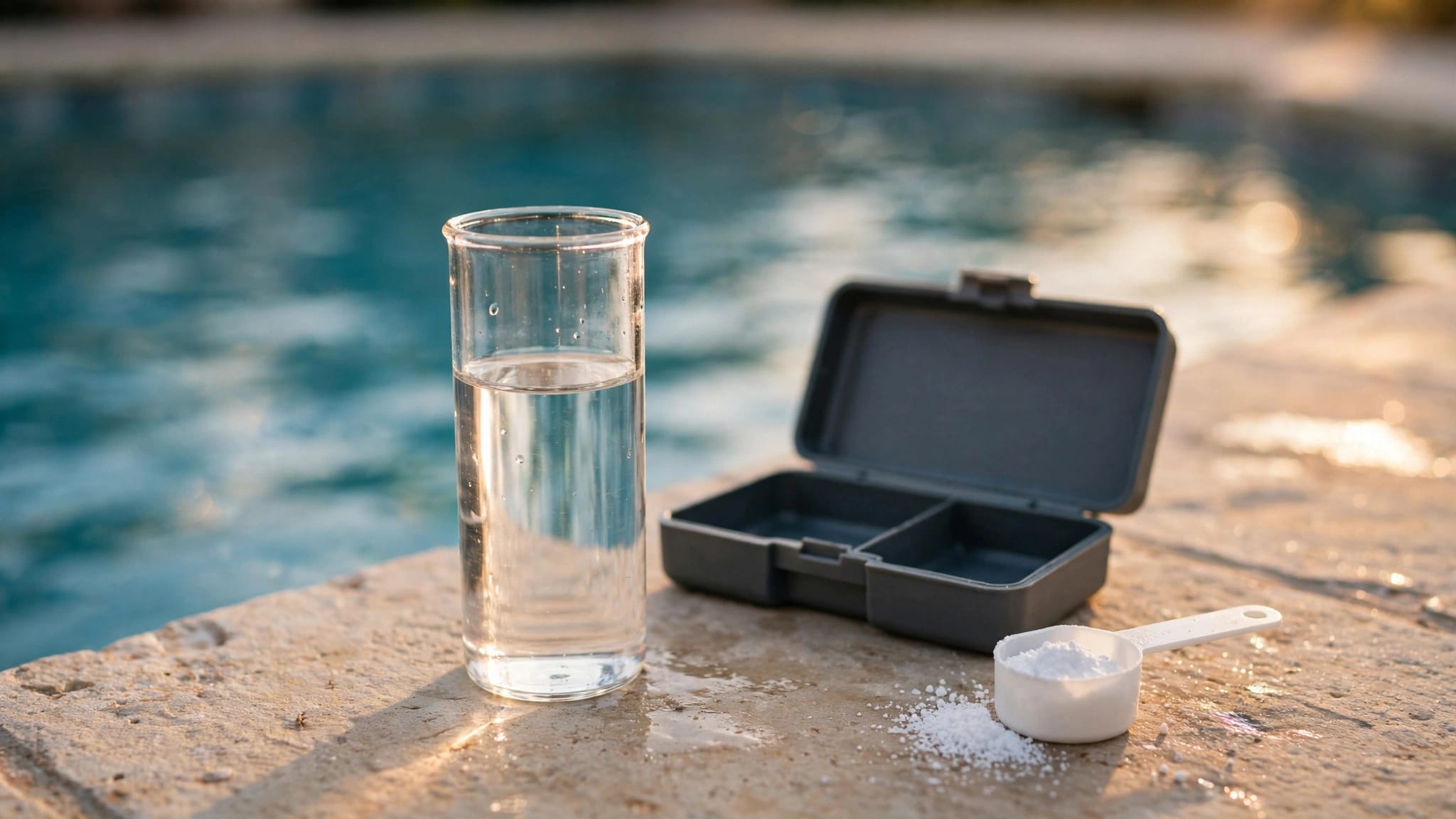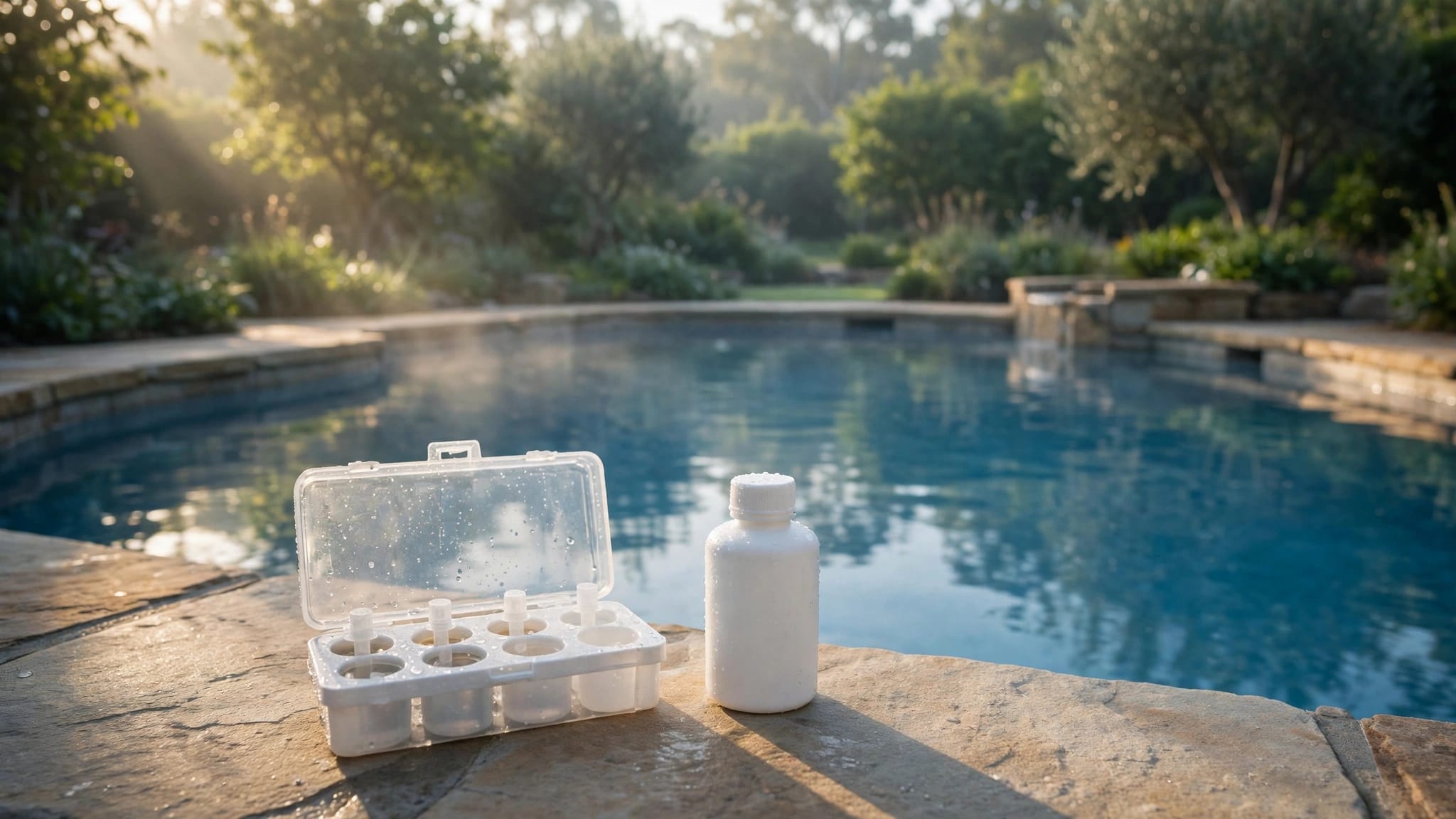
To raise pool calcium hardness with less risk of cloudy water, start with accurate testing and balanced pH and alkalinity. Then use a pool-rated hardness increaser, following its application directions and making measured additions.
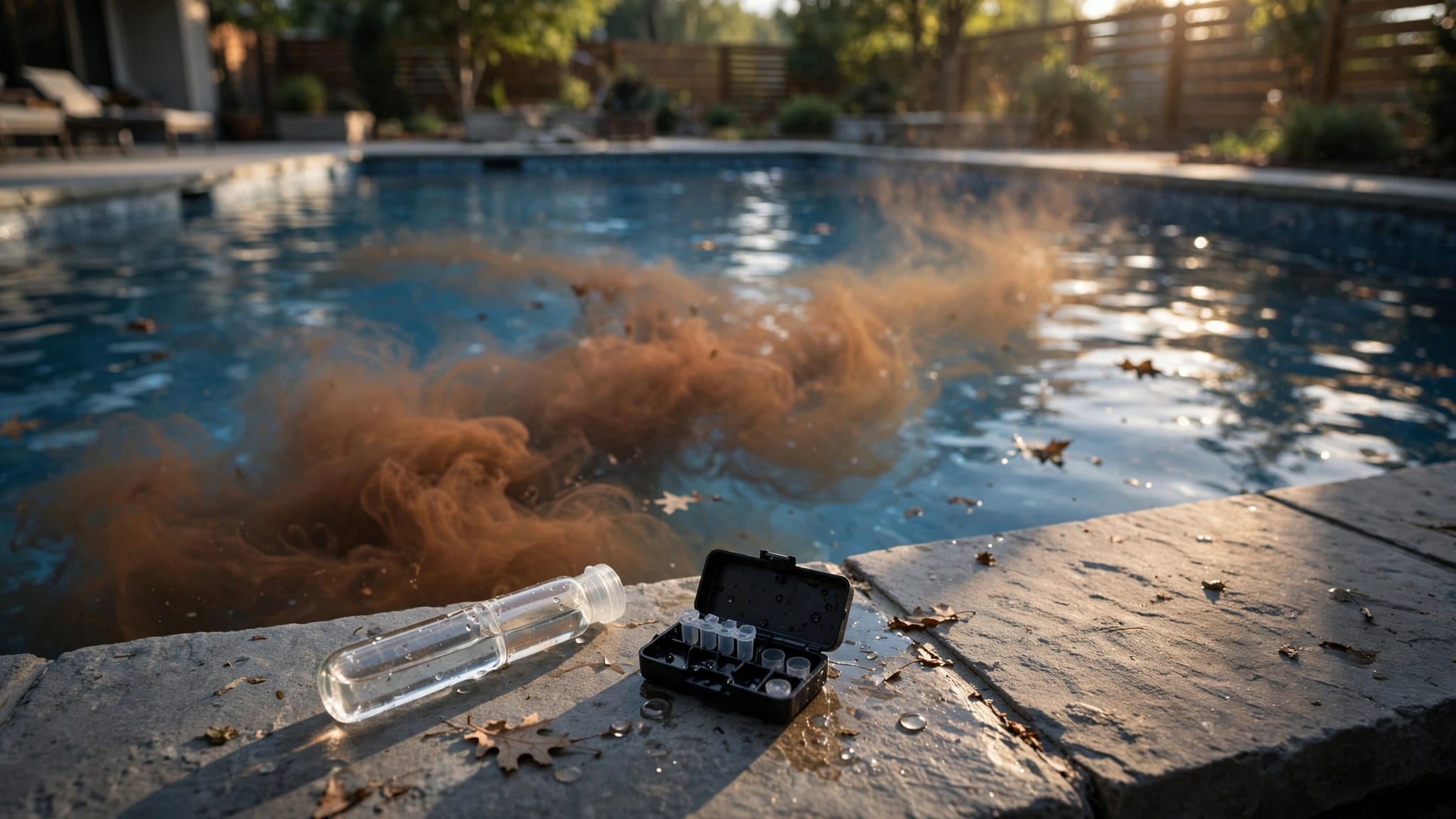
Cloudiness can develop when calcium precipitates out of solution, especially in water with elevated pH or alkalinity. Adding extra product before the first treatment has mixed can also lead to an overshoot.
The goal is balanced water , rather than the highest acceptable hardness reading. Begin with a calcium-specific test before opening the chemical container.
Key Takeaways
- Test calcium hardness separately from total hardness, and choose a target appropriate for your pool finish and equipment.
- Base treatment on actual pool volume and the product label, rather than a generic dosage found online.
- Circulate and retest between additions. If cloudiness develops, stop dosing and investigate the water balance and filtration.
Test Calcium Hardness Before Adding Anything
Collect a representative water sample
Run the circulation system before collecting your sample. Take water about elbow-deep, away from return jets, skimmers, chemical feeders, and recently treated areas.
Use a clean container without detergent residue. Surface water or a sample taken beside a return may not represent the entire pool.
Our guide to testing pool water at home covers sample collection and routine testing practices. Record calcium hardness alongside pH, total alkalinity, and sanitizer so you can interpret the readings together.
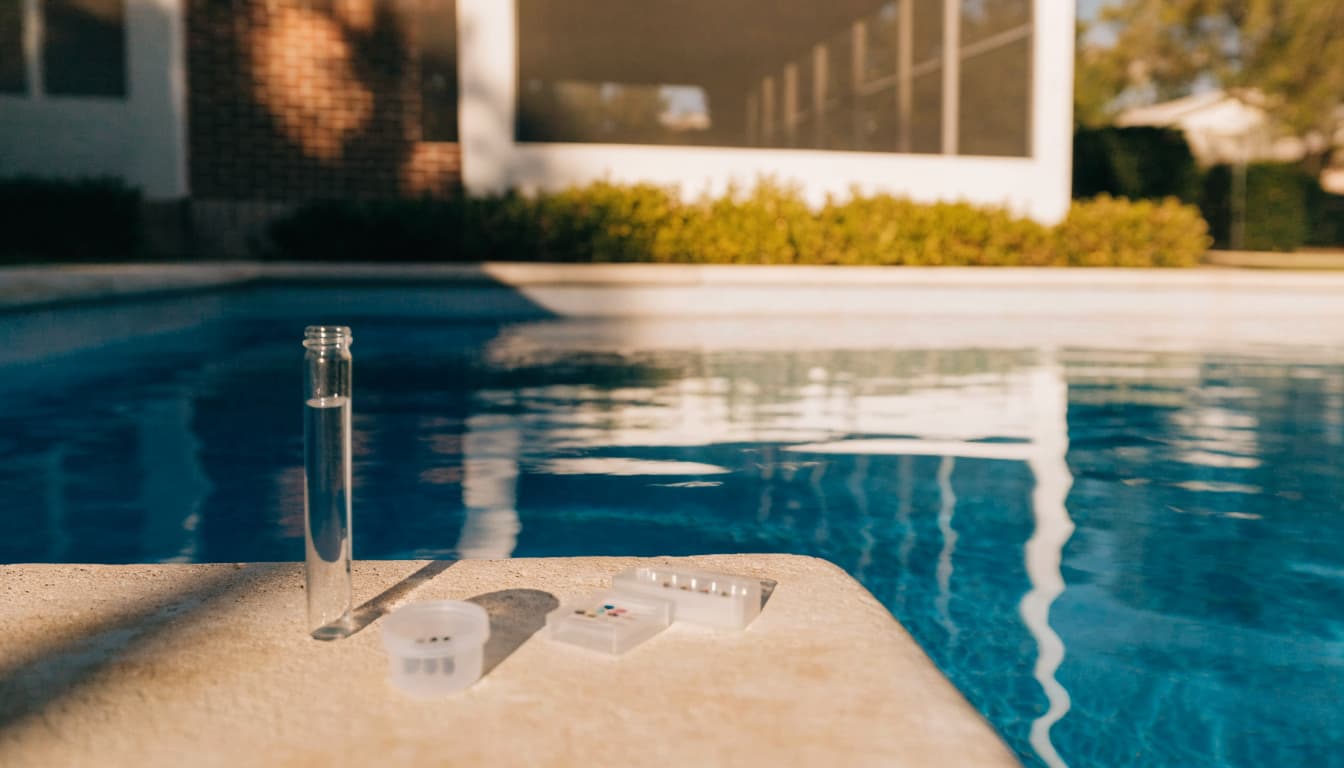
Use a calcium-specific test
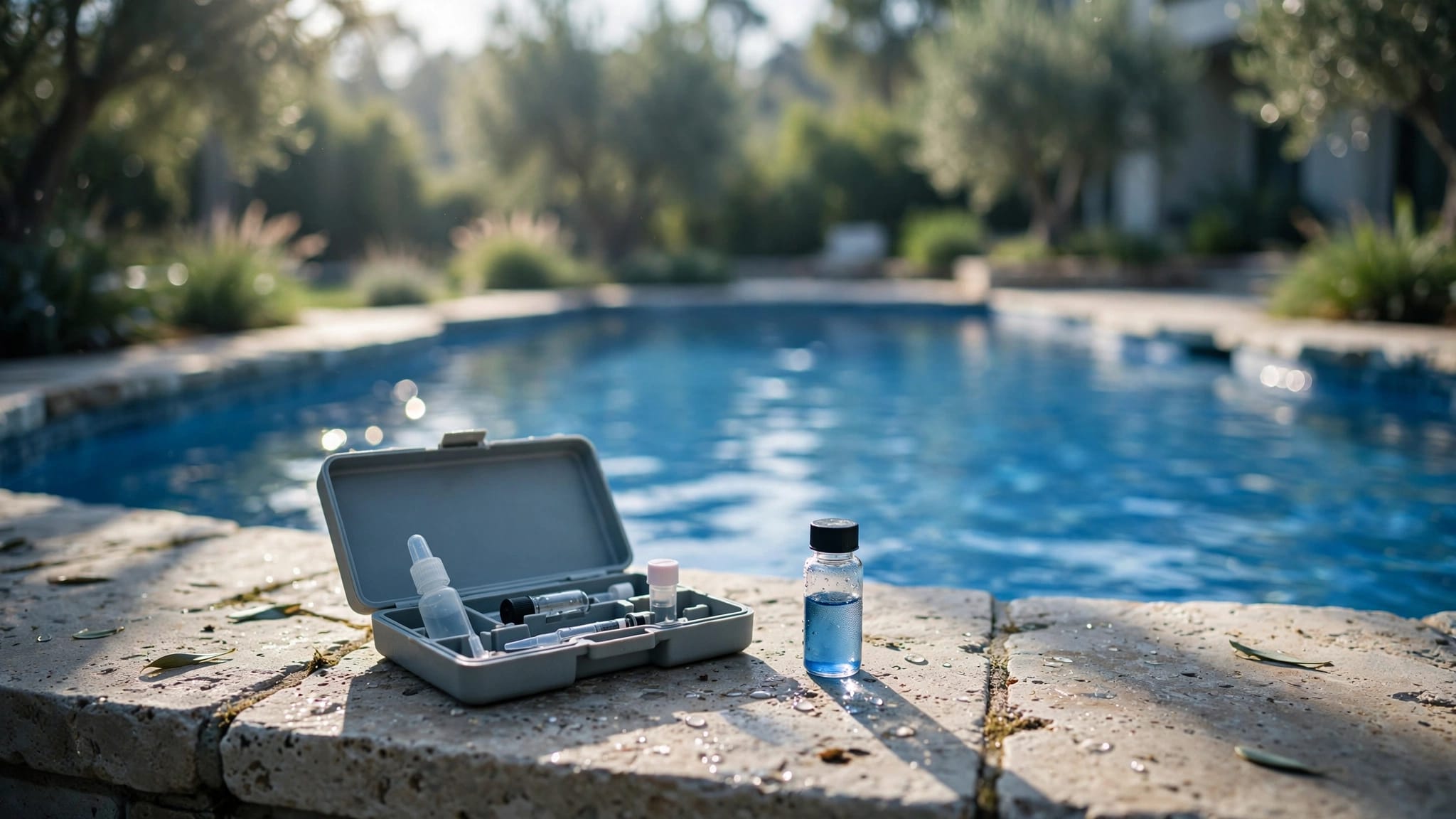
A drop-based calcium hardness kit provides a defined endpoint for measuring dissolved calcium. Follow its sample size, reagent sequence, and mixing directions exactly.
Count the titrant drops until the stated endpoint appears, then use the kit's conversion instructions. Different kits can use different procedures, so don't transfer directions between them.
Also distinguish calcium hardness from total hardness. Total hardness includes magnesium, which makes it a different measurement. Repeat an unexpected result with a fresh sample before treating the pool.
Balance the Water Before Raising Calcium
Correct pH and alkalinity separately
Elevated pH makes calcium carbonate precipitation more likely. High alkalinity can increase that risk, especially in warm pool water.
Bring alkalinity and pH into their appropriate operating ranges before raising hardness. Make each correction separately, allow circulation, and retest before starting another treatment.
Our pH and alkalinity balancing guide explains how these measurements interact. Avoid adding calcium increaser near a recent addition of pH increaser, alkalinity increaser, or another chemical. Concentrated chemicals can create unfavorable conditions even when the overall readings look reasonable.
Consider the finish and saturation balance
Low calcium can contribute to aggressive water that damages cement-based finishes. However, the appropriate hardness target depends on the finish, equipment, and complete water balance.
New plaster and recently resurfaced pools may have startup instructions that differ from routine maintenance. Those instructions take priority over a general treatment routine.
A saturation index evaluates calcium hardness together with pH, alkalinity, temperature, and dissolved solids. This helps explain why the same hardness reading can behave differently in two pools. Saltwater systems still need this balance because salt chlorination doesn't remove calcium.
Match the Treatment to Pool Volume and the Label
Establish the pool's actual water volume
Use the gallon figure in your construction records when available. Otherwise, estimate volume from the pool's dimensions and shape.
For a rectangular pool, volume depends on length, width, and average depth. A simple average of shallow and deep depths works best with a relatively even floor slope.
Freeform outlines, tanning ledges, benches, and connected spas make estimates more complicated. Don't treat the pool's maximum depth as its average depth. An inflated gallon estimate can lead you to add more chemical than the water needs.
Use the directions for that exact product
Calcium chloride is a common ingredient in pool hardness increasers. However, formulations differ, so one product's instructions don't automatically apply to another container.
Find your pool volume and the required hardness increase in the label's treatment directions. Match both factors to the applicable dosage guidance, and keep units consistent. Pounds and ounces aren't interchangeable, and a household scoop doesn't establish chemical weight.
Use a suitable scale when the label specifies treatment by weight. Keep the total planned treatment separate from each staged addition so you don't accidentally repeat the full treatment.
Choose a pool-rated product rather than an ice-melting product with uncertain additives. Also, don't substitute salt or baking soda, which change different parts of pool chemistry.
Add Calcium Chloride in Controlled Stages
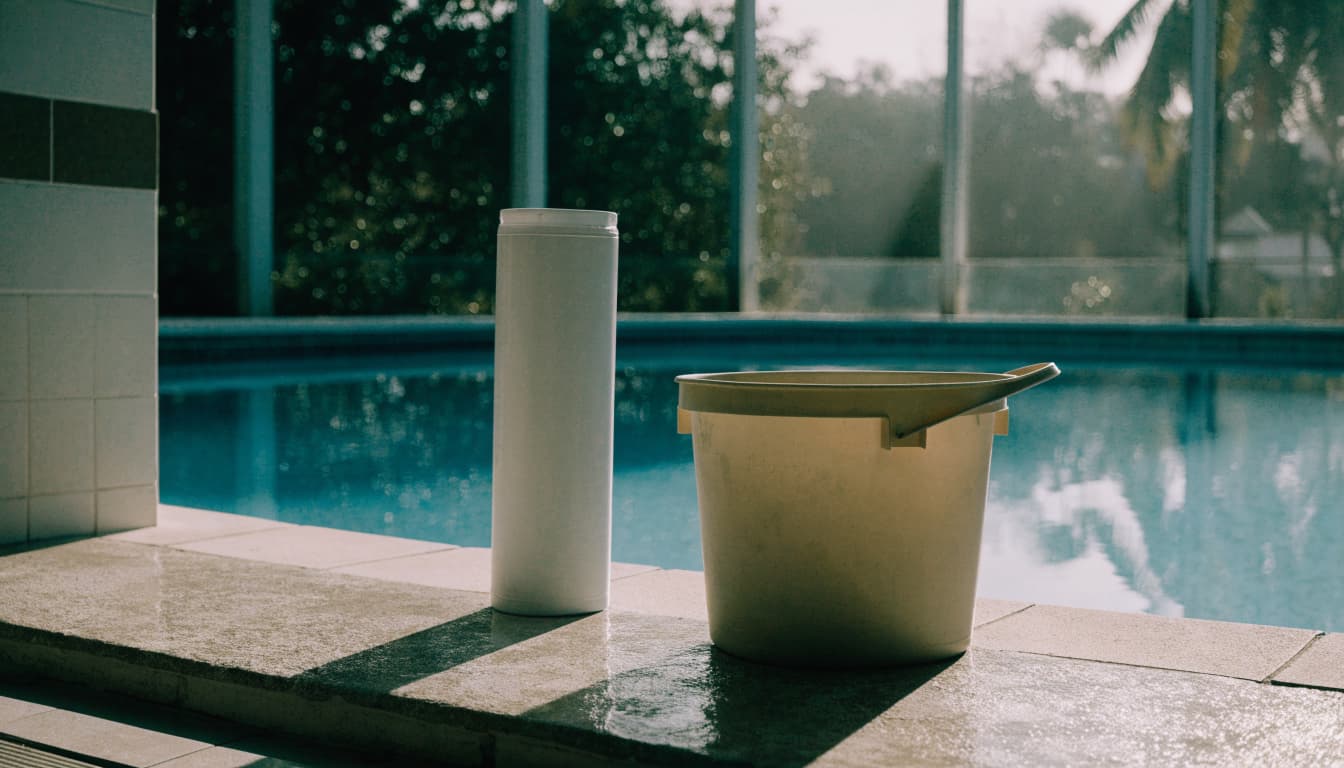
Staging gives you opportunities to measure the response before adding the remaining product. It doesn't guarantee clear water.
- Prepare for safe handling. Wear chemical-resistant gloves, eye protection, and closed-toe shoes. Keep children and pets away, and avoid breathing dust. Use clean, dedicated measuring equipment.
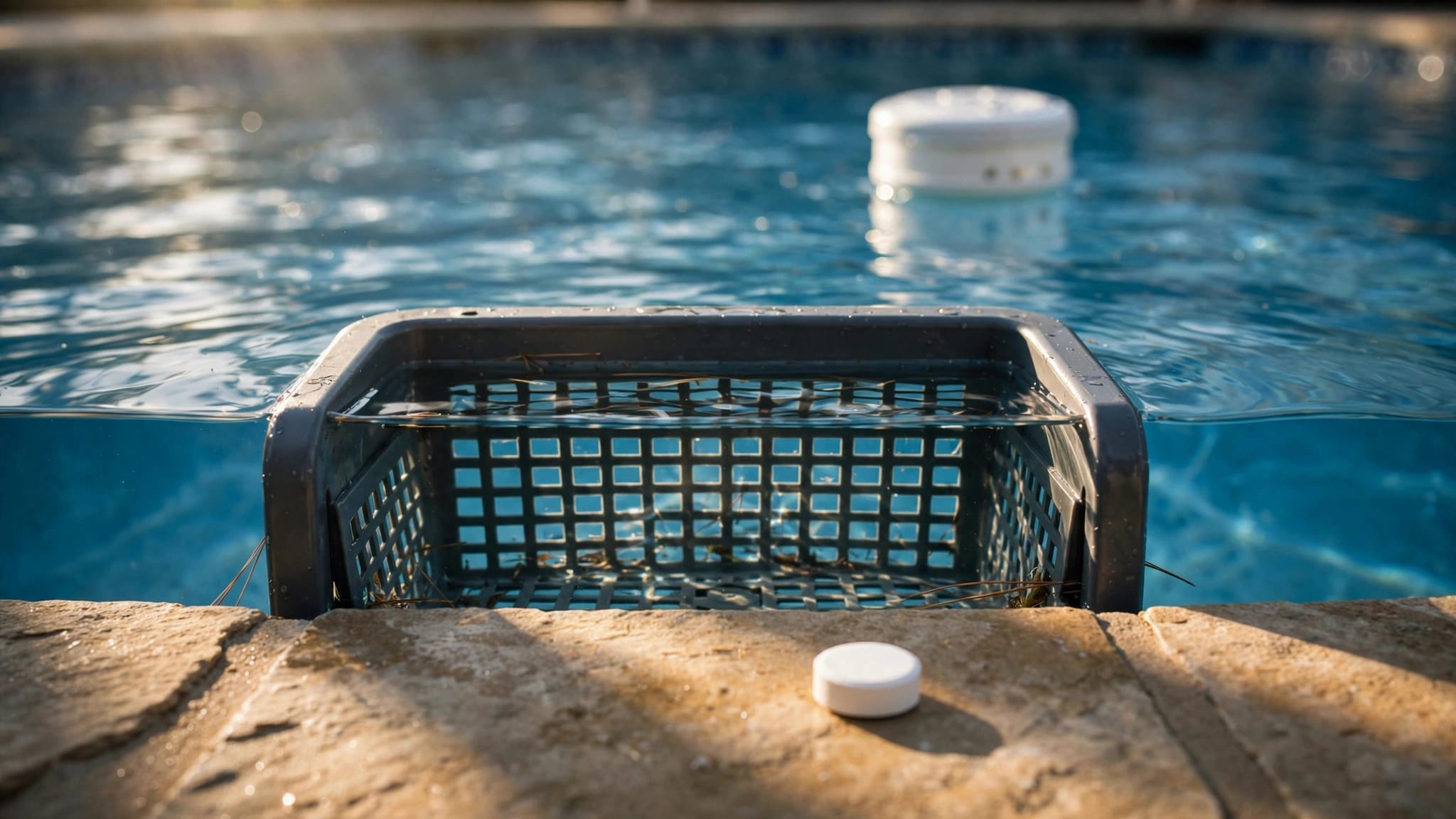
- Establish circulation. Run the pump with the filtration system operating normally. Empty baskets and address weak flow before dosing. Our explanation of skimmers and return jet circulation describes how water moves through the pool.
- Follow the specified application method. Some labels direct broadcasting; others provide dissolving instructions. Predissolve only when the label permits it. Calcium chloride releases heat when dissolving, so use cool water and add chemical to water, never water onto chemical.
- Apply a measured portion. Where the label permits staged treatment, divide the planned addition into smaller portions. Distribute each portion as directed rather than dumping it into one spot. Never mix it with another chemical or pour it into the skimmer unless expressly directed.
- Circulate, sample, and reassess. Allow the product to dissolve and disperse according to its directions. Then collect a fresh sample away from the application area. Use the new result to decide whether another portion is necessary.
Brush settled material only with a finish-compatible brush and according to the application instructions. Don't leave undissolved piles sitting on the pool floor.
If the Pool Turns Cloudy, Stop and Diagnose
Retest before adding another treatment
Stop adding calcium increaser when a persistent haze appears. Test calcium hardness, pH, alkalinity, and free chlorine before deciding what comes next.
Calcium carbonate particles can cloud water when the balance favors precipitation. However, algae, fine debris, and filtration problems can produce similar appearances. Cloudiness alone doesn't identify the cause.
If pH is elevated, make a separate, label-directed correction after the previous treatment has dispersed. Don't pour acid onto calcium granules, into a chemical bucket, or directly into a concentrated treatment area.
Acid can change the conditions that encourage calcium deposits, but it doesn't remove dissolved calcium from the pool.
Avoid immediately adding clarifier, flocculant, or extra shock. Each product has a particular purpose, and unnecessary treatments can complicate the diagnosis.
Keep filtration working and protect swimmers
Continue circulation and filtration if the equipment is operating safely. Watch return flow and filter pressure, and clean or backwash according to the filter's instructions.
Cartridge, sand, and DE filters need different maintenance procedures. Our pool filter backwashing guidance explains why backwashing isn't appropriate for every system.
Keep swimmers out when cloudiness prevents a clear view of the bottom and drain covers. Reopen only after the water is clear, testing supports safe swimming, and the product's reentry requirements are satisfied.
If cloudiness persists despite balanced readings and normal filtration, a qualified pool professional can investigate the underlying cause.
Watch for Deposits and Finish Problems
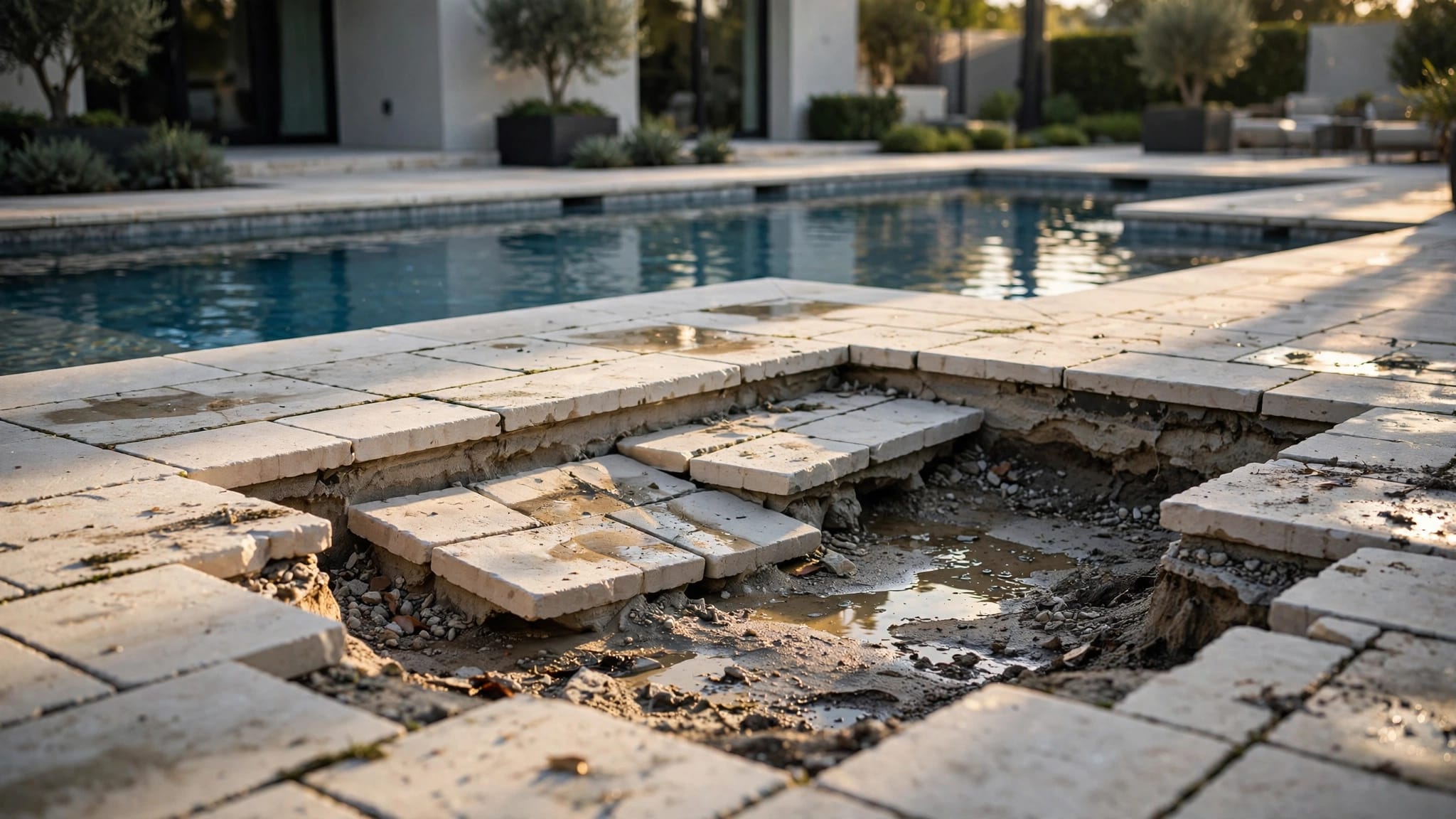
Clear water doesn't rule out mineral buildup. After treatment, inspect the waterline, steps, spillways, and salt cell area for new white deposits.
Rough deposits need a different response than suspended cloudiness. Our guide to removing pool calcium scale explains why cleaning methods must match the deposit and surface. Avoid aggressive scraping or random acid treatments that could damage the finish.
Keep a record of readings, chemical additions, rainfall, and replacement water. In Cape Coral, evaporation leaves minerals behind, while repeated top-offs can change the mineral balance.
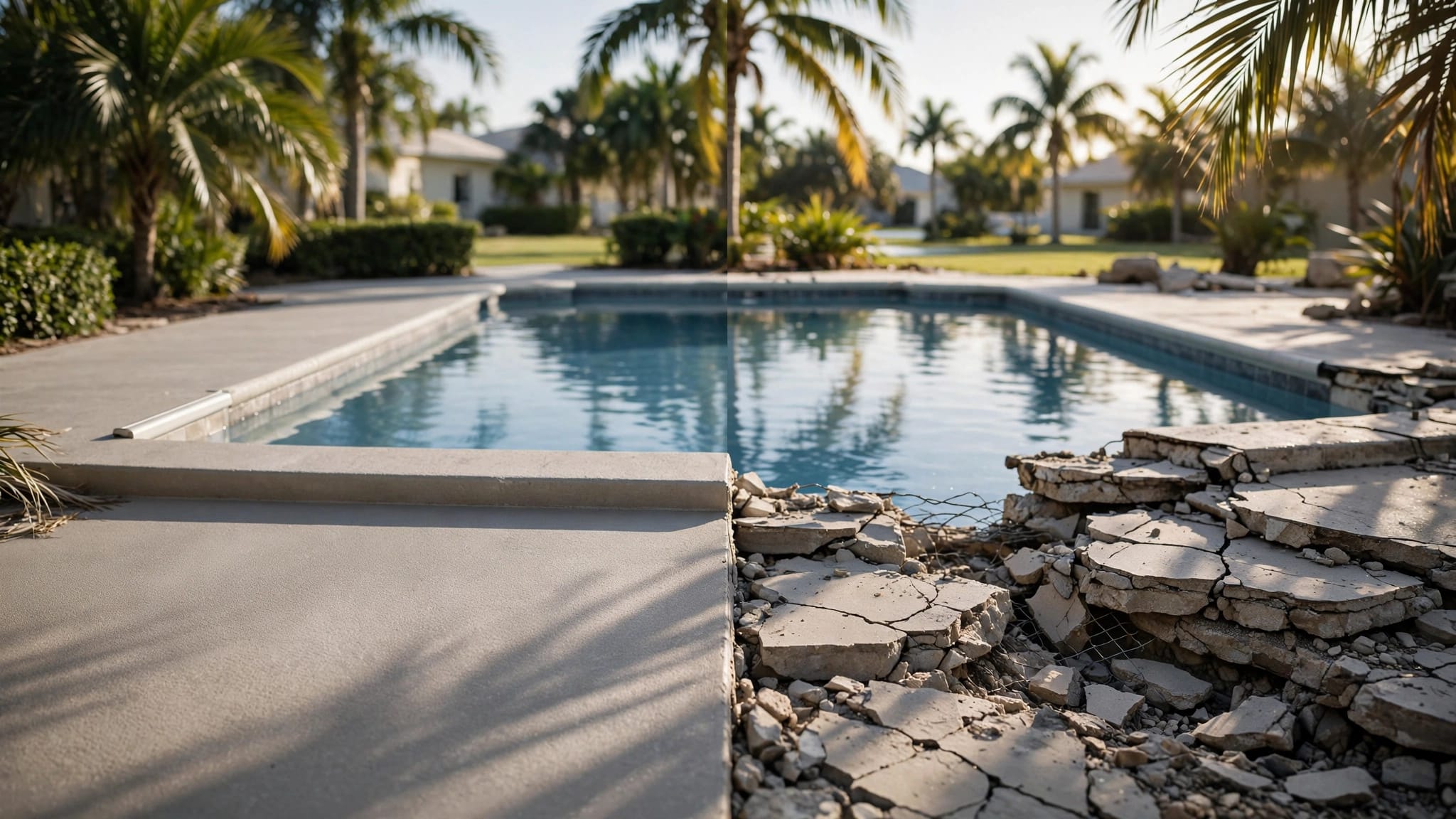
Persistent roughness, cracks, or worn plaster can also indicate a surface problem. We offer pool renovations and resurfacing when chemistry adjustments can't address the damage. You can Get a Free Estimate for an on-site consultation about restoring a worn pool interior.
Frequently Asked Questions
Does every pool need calcium increaser?
No. Add it only when testing shows calcium hardness is below the appropriate target for your pool. Hard fill water and repeated top-offs may already supply enough calcium.
Appearance isn't a reliable guide. Clear water can still have unsuitable hardness, while cloudy water may have a completely different cause.
Should I add the remaining treatment if the reading is still low?
Only after the previous addition has dissolved, dispersed, and met the label's retesting conditions. Then base the next addition on the updated reading rather than automatically using everything originally planned.
If samples from different areas produce conflicting results, allow further mixing before making another chemical change.
What if I accidentally add too much?
Stop adding calcium and assess the complete water balance. Acid doesn't lower the amount of dissolved calcium.
Substantial excess may require professionally planned dilution or another suitable treatment. Don't drain a Florida pool without professional direction because groundwater pressure can damage an emptied shell.
Keep the Adjustment Measured and Test-Led
Raising pool calcium hardness works best when accurate testing guides each addition. Match the treatment to your pool volume, keep pH and alkalinity balanced, and allow thorough mixing before retesting.
Stop when the readings support your target , even if product remains in the container. If haze appears, pause treatment and diagnose it before adding anything else. That measured routine helps protect both water clarity and the pool finish.