A pool build in Cape Coral starts below the surface, and that's where the real challenge begins. The ground here often holds a lot of water, so a pool project has to be planned around wet soil, shifting pressure, and drainage that can change by the day.
That matters whether you're building your first pool or replacing an older one. High water table pool construction calls for a different approach than work in drier areas, and the wrong plan can lead to delays, cracked surfaces, or a pool that never settles right.
The good news is that Cape Coral soil is manageable when the build is designed for local conditions. The sections below explain what changes, what to watch for, and why experience matters so much here.
Why Cape Coral soil changes the job
Cape Coral sits in a part of Southwest Florida where water can stay close to the surface. After rain, or even during dry stretches, the ground can still stay saturated. That means the soil around a pool site may feel firm on top while holding water underneath.
For a pool builder, that changes almost every step. Excavation has to account for soil that can slump back into the hole. The shell has to be designed to handle pressure from both inside and outside. Drainage plans also matter more because standing water can push against the structure long after the crew leaves.
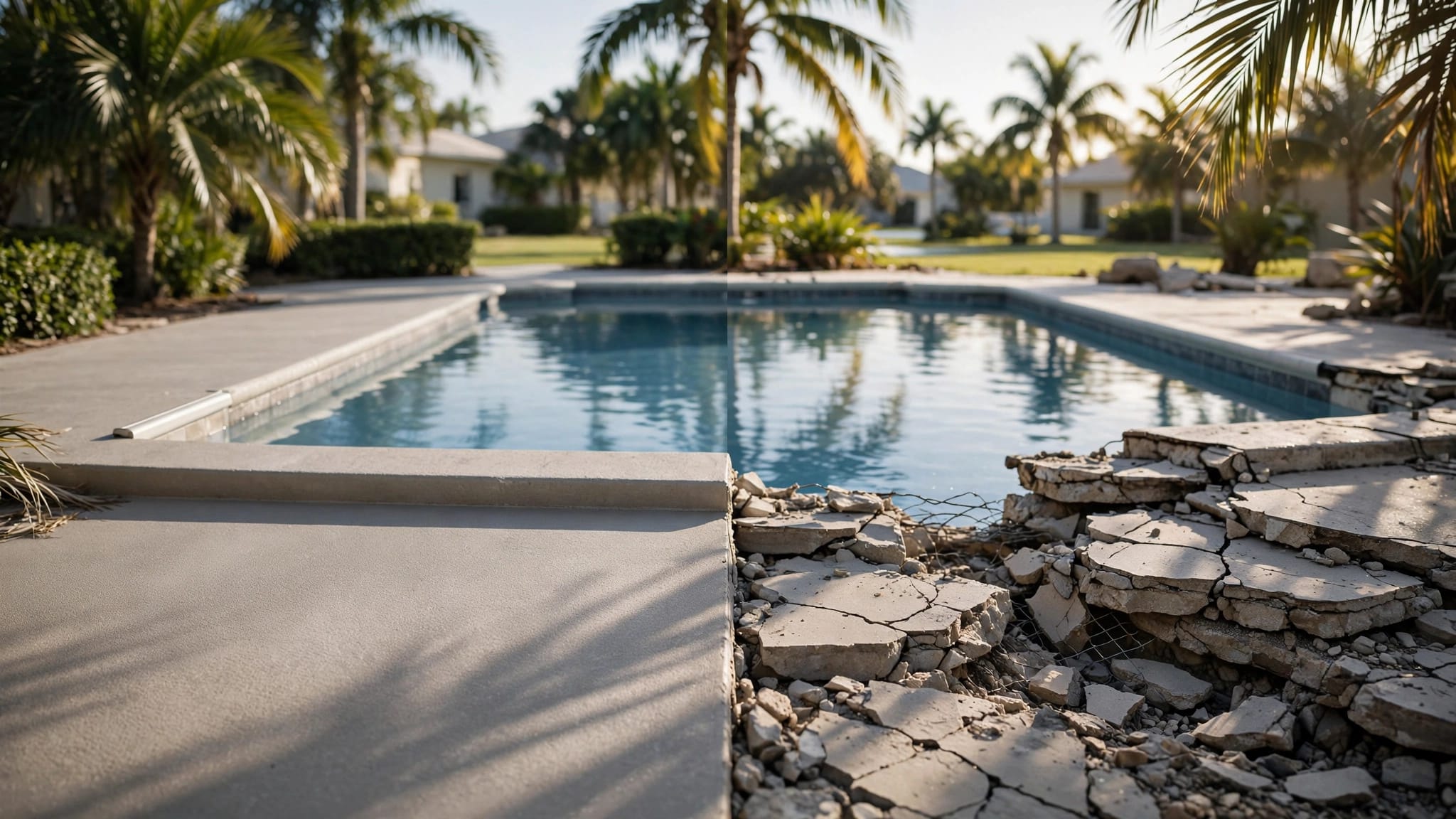
Hydrostatic pressure is one of the biggest concerns. That pressure builds when groundwater presses upward against the pool shell. If the shell is not built and drained the right way, it can shift, crack, or even try to lift when the pool is empty.
In Cape Coral, the ground is part of the pool system, whether you see it or not.
That is why local soil conditions are never just a background detail. They shape the whole project, from the first dig to the final finish.
What saturated soil does to excavation and dewatering
Excavation is where a high water table makes itself known fast. A normal dig can turn into a wet pit if groundwater rises into the hole. Sand can cave in, water can seep through the walls, and the shape of the excavation can change before the crew is ready.
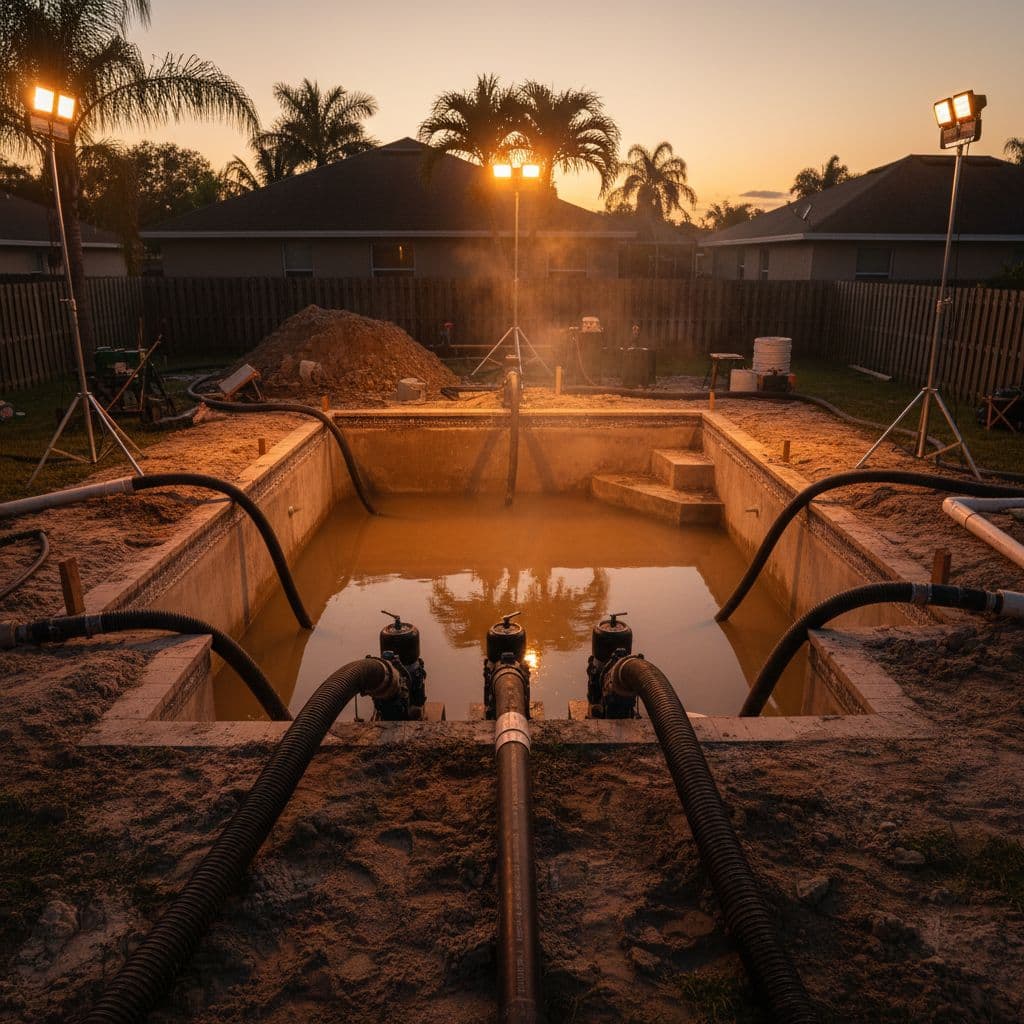
That is why dewatering is such a big part of high water table pool construction . Pumps may be needed to keep water out of the work zone while the shell, plumbing, and structural base are installed. In some cases, the builder also needs temporary drainage trenches or well points to move water away from the excavation.
The timing matters too. A site that looks dry in the morning can change after an afternoon storm. Because of that, crews often have to work in a tighter sequence and keep the site under closer watch.
Here are a few ways saturated soil affects the job:
- The hole may need more support to keep walls from sloughing off.
- Water removal can add time before concrete or shotcrete work begins.
- Heavy equipment may leave deeper ruts or disturb the grade.
- Plumbing trenches can fill with water before they are backfilled.
A careful builder plans for those problems before the first shovel hits the ground. That saves time, and it helps protect the pool's base.
How builders protect shell stability underground
A pool shell needs to stay stable for years, not just pass inspection. In wet ground, that means the structure has to resist more than the weight of the water inside the pool. It also has to resist pressure from the saturated soil around it.
That is why shell thickness, steel layout, and concrete application matter so much. The shell needs enough strength to stay in place when the soil shifts or gets soft. The base beneath it also has to be prepared so the shell doesn't settle unevenly.
A builder who understands custom new pool construction services will look at the site as a system, not just a hole in the yard. That includes the subgrade, drainage points, plumbing routes, and the shape of the pool itself.
Design also plays a role. In some Cape Coral yards, a builder may recommend features that reduce strain on the structure. A deeper shell, for example, may need more planning than a shallow one. A pool with strong bench lines or a more compact footprint can also be easier to manage in challenging soil.
The goal is simple. The pool should stay level, hold its shape, and handle the push and pull of water over time. If the shell is treated like an afterthought, the ground will eventually remind you.
Design choices that work better in wet ground
Good design makes a pool easier to build and easier to live with. In a high water table area, the best choices are often the ones that give the structure more support and give water fewer places to cause trouble.
Drainage features are a big part of that. A pool may need a hydrostatic relief system so pressure can be released if groundwater rises. Properly planned deck drainage also helps move rainwater away from the pool area, so the soil around it does not stay soaked longer than needed.
Shape matters too. Simpler lines can reduce stress points. That doesn't mean every pool has to be plain. It means curves, steps, tanning ledges, and raised features need to be planned with the site in mind.
Equipment placement can also help. A pad located in a drier, better-drained spot is easier to maintain. Plumbing routes should avoid areas that trap water. Even the finish materials around the pool can matter, since poor drainage can shorten the life of decking and coping.
For homeowners, this is where design and function meet. A pool should fit the yard, but it should also fit the ground under the yard. When those two pieces work together, the pool feels solid from day one.
Why local experience matters in Cape Coral
A pool builder who works in Cape Coral every week sees patterns that out-of-town crews may miss. They know which yards drain slowly, how storm seasons affect schedules, and what kinds of soil conditions show up in different neighborhoods.
That experience changes the build. It affects how the excavation is staged, how long dewatering may take, and which structural details get extra attention. It also helps when a project runs into a surprise, because in this area, surprises are common.
A homeowner should look for a builder who can explain the job in plain language. If the conversation stays vague, that is a warning sign. A solid contractor should be able to talk about groundwater, shell support, drainage, and the steps they use to keep the project on track. If you're comparing contractors, tips for choosing a Cape Coral pool builder can help you ask better questions before work starts.

Local experience also helps after the build is done. If the site was graded well, drained well, and reinforced correctly, the pool is less likely to fight the environment around it. That matters in Southwest Florida, where heavy rain, sandy soil, and high groundwater can test a pool year after year.
For homeowners planning a new build, it also makes sense to talk with a contractor early. A free estimate can help identify site concerns before design decisions are locked in.
Conclusion
Cape Coral's high water table changes pool construction at every stage. It affects the dig, the drainage, the shell, and the long-term strength of the finished pool.
When the build is planned for wet soil, the pool can handle local conditions with far fewer problems. That is the difference between a project that looks good on paper and one that stays solid in the ground.
A well-built pool in Cape Coral starts with one simple idea, the soil matters as much as the water you see on top.