Missing grout at your pool's waterline can look like a small cosmetic problem, especially when most tiles still look good. But repairing pool waterline tile grout starts with determining whether the damage stops at the joints or extends behind the tile.
The most important distinction is the condition beneath the surface : loose tile, damaged coping, and a worn interior can change the repair scope. Start with the pattern of damage before choosing between localized grout work, tile replacement, or a broader renovation.
Recognizing Failed Pool Waterline Tile Grout
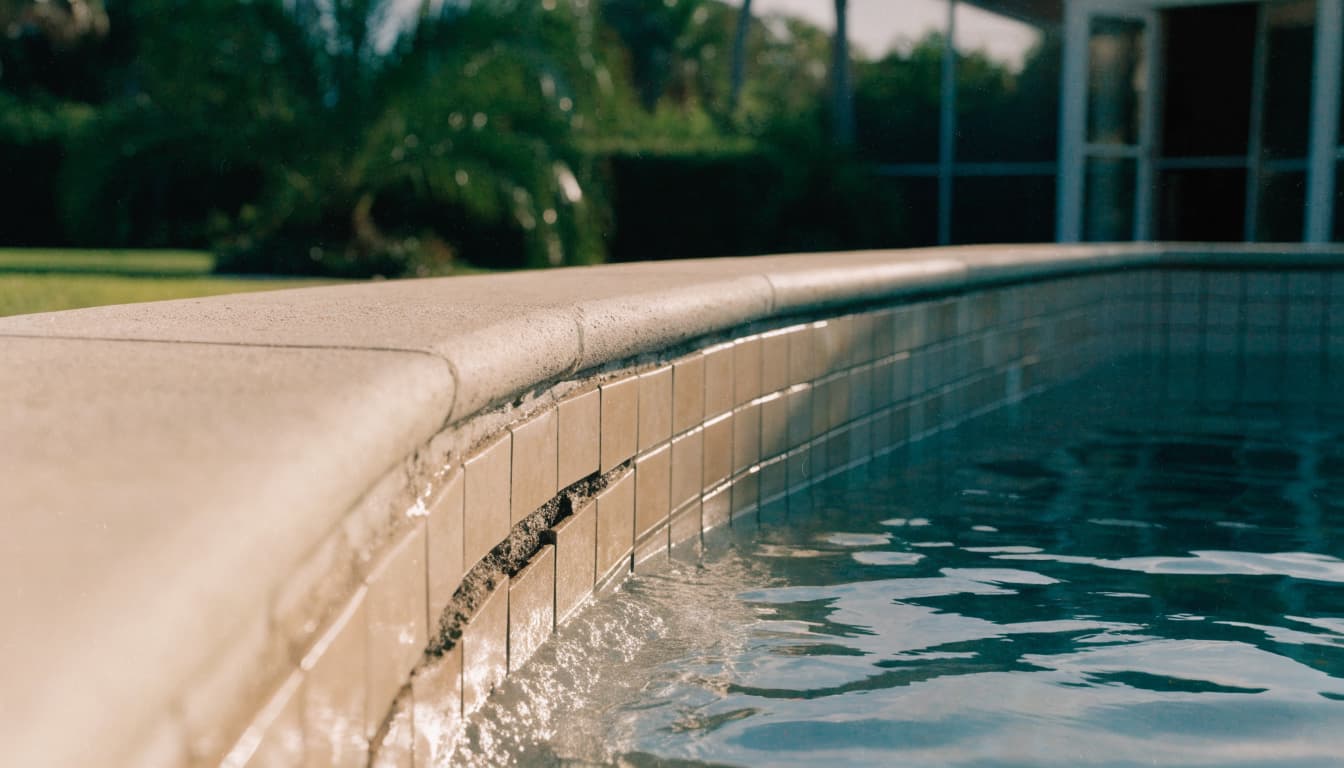
Grout should form consistent joints between the tiles. Missing sections, open cracks, and noticeably uneven joints deserve attention, but discoloration alone doesn't establish that the grout has failed.
Look at the joints and the surrounding tile
A few empty joints create a different repair question than a damaged band extending around the pool. Notice whether the problem affects one corner, the area around a skimmer, or several separate sections.
Also look for chipped tile edges and pieces that sit unevenly beside their neighbors. These details help distinguish missing grout from damage involving the tile itself.
Take a wide photo showing the affected area, then close-ups showing individual joints. Include nearby coping and the pool interior so the damage has context. Photos also provide a useful record if an opening changes before the inspection.
Separate appearance problems from physical damage
A stained joint may still be intact. Likewise, white deposits can sit over grout and tile without revealing the condition underneath.
Missing material, visible separation, and loose pieces deserve more attention than color changes alone. Don't pull at a questionable tile or chip away surrounding grout to investigate.
Around skimmers, steps, and spa edges, look closely at alignment and joint consistency. Our pool completion inspection guide describes the finished details that should look even and clean.
Understanding the Failure Before Choosing a Repair
The visible defect identifies where attention is needed. It doesn't always identify the source or show how much material needs repair.
A useful assessment separates the grout's condition from the condition of the tile, its supporting surface, and adjacent pool features.
Determine whether the damage is isolated
An inspection should establish whether the affected tiles remain secure and whether nearby joints show similar deterioration. That distinction matters because joint work and tile replacement involve different scopes.
The assessment should also document the defect's location and extent. A short damaged section beneath a skimmer shouldn't automatically become a recommendation to replace the entire waterline.
However, a sound-looking tile face doesn't reveal everything behind it. When pieces are already loose, evaluating the supporting area becomes part of planning the work.
Give recurring or connected damage more attention
A repair that opens again deserves a fresh evaluation. Repeated surface patching can obscure the original defect without explaining why it keeps returning.
Similarly, a crack continuing through tile and into coping or the surrounding deck calls for a broader inspection. The connected pattern matters more than any single chipped piece.
These signs don't establish a structural problem by themselves. They do justify an assessment beyond the visible grout. Rapidly widening openings, displaced sections, major water loss, or unstable deck areas require prompt professional attention.
Repair Options: Regrouting, Resetting, or Replacing Tile
The appropriate scope depends on how much of the installation remains sound. Localized damage and widespread deterioration shouldn't receive the same repair plan.

Localized grout work
Regrouting is an option to evaluate when the defect is confined to joints and the surrounding tile remains secure. The proposal should describe the affected area and the preparation included.
Appearance matters, too. New joints beside older grout may show a color difference, even when the work is neat. A localized repair therefore needs a realistic plan for both its boundaries and its finished appearance.
Grout work addresses the joint material. It doesn't replace broken tile or restore the attachment of a loose piece. Those conditions belong in the repair scope rather than beneath a fresh-looking surface.
Tile resetting or replacement
Loose or broken tiles introduce additional work. Depending on their condition, the plan may include resetting usable pieces or replacing damaged sections.
Replacement also raises a matching question. Existing tile may no longer be available, and a close substitute can remain noticeable beside the original material. Extending replacement across a defined section may provide a more consistent appearance than scattered patches.
Here are the main distinctions:
| Repair scope | Condition it addresses | Scope consideration |
|---|---|---|
| Localized regrouting | Missing or damaged joints | Condition of adjacent tile |
| Tile resetting | Loose, usable pieces | Supporting surface and attachment |
| Partial tile replacement | Damaged sections | Matching and repair boundaries |
| Full waterline replacement | Widespread tile deterioration | Coordination with surrounding finishes |
The repair boundary should follow the condition of the installation, with appearance considered alongside the necessary preparation.
When Cleaning Won't Solve the Problem
Waterline deposits can make intact grout look rough or worn. However, cleaning and repair perform different jobs: cleaning removes buildup, while repair addresses damaged material.
Heavy scale can also conceal missing joints or chipped edges. That makes aggressive cleaning a poor starting point when tile is already loose or grout has disappeared.
Our guidance on removing calcium scale safely identifies loose tile and missing grout as reasons to stop DIY cleaning and arrange an evaluation. Large deposits or buildup bonded to an aging surface may require more than routine maintenance.
Removing the white crust can improve visibility, but it won't replace missing grout or secure loose tile.
Avoid wire brushes, abrasive household cleaners, and forceful scraping around damaged areas. Those methods can scratch surfaces and remove material that helps show the defect's extent.
Cleaning may still belong in the project when the underlying surface is sound. The decision should follow the condition beneath the deposit, rather than the deposit's color or thickness alone.
When Waterline Repairs Belong in a Larger Renovation
A damaged grout joint doesn't automatically justify resurfacing the pool. However, tile work sometimes coincides with an interior finish that is rough, pitted, flaking, or visibly deteriorated.
Treat those conditions as separate parts of the assessment. Waterline tile, coping, and the interior finish have different repair needs, even though they meet along the pool's edge.
For example, replacing a worn tile band while retaining a healthy interior may be a reasonable project boundary. Meanwhile, widespread interior deterioration adds another scope of work. Cleaning alone doesn't rebuild a worn finish.
The finished appearance also deserves planning. A new waterline can highlight an older interior or worn coping, so material choices should account for everything that will remain.
Our pool renovation and resurfacing services include interior refinishing and broader updates. When several areas need attention, planning them together allows the project to address their meeting points and avoid an unnecessarily patched appearance.
Keep necessary repairs separate from optional improvements. Restoring damaged tile is a different decision from changing its color, updating lighting, or refreshing the deck. A clear scope lets you prioritize the work without treating every visible imperfection as urgent.
Preparation and Curing Affect the Project Timeline
The work extends beyond the day new grout appears between the tiles. Preparation, material installation, cleanup, and curing all belong in the project schedule.
During a tile renovation, crews remove affected material and clean the bond area before installing replacement pieces. Curves, corners, and spa edges require careful fitting, so equal lengths of waterline don't always require equal amounts of work.
In Cape Coral, afternoon storms, strong sunlight, and high humidity can slow outdoor work. A weather-related delay may reflect the conditions needed for installation rather than a problem with the project.
Our guide to pool tile and coping installation describes these practical scheduling considerations.
Curing remains part of the repair , even after the surface looks finished. Mortar, grout, and sealers need the required curing period before exposure to water, cleaning, or traffic.
Don't drain the pool to get a closer look at damaged tile. Drainage decisions require professional judgment, particularly when the pool also shows significant cracks, unusual water loss, or displaced surfaces. An inspection can establish the repair scope without turning a visual concern into an unnecessary draining project.
What a Clear Grout Repair Estimate Should Include
A useful estimate defines the work rather than listing a single charge for "tile repair." It should connect the proposed scope to the observed defect and distinguish necessary repairs from optional upgrades.
For pool waterline tile grout work, the written proposal should describe:
- The affected area and whether the scope includes grout work, tile resetting, or replacement.
- Preparation, removal of damaged material, and any supporting-surface repairs included.
- Materials, cleanup, and the curing restrictions that apply before normal use resumes.
If the inspection identifies other problems, separate those costs. Shell repair, leak work, resurfacing, coping, deck repairs, equipment, electrical work, and enclosure repairs shouldn't disappear inside an unexplained renovation total.
This separation makes competing proposals easier to compare. A lower total may describe a smaller repair area or omit preparation that another proposal includes. The difference should be visible in the written scope.
The assessment should also explain whether the defect affects safety or operation and whether additional testing belongs in the plan. That information helps establish priorities before work starts.
We offer free on-site estimates in Cape Coral. An on-site consultation provides a practical starting point for identifying the affected areas and planning the appropriate renovation scope.
Repair the Waterline With a Clear Scope
Missing grout deserves attention, but the repair decision depends on what remains sound around and behind it. A defined repair boundary keeps localized joint work separate from tile replacement or broader renovation.
The goal is a secure, consistent waterline with preparation and curing included in the plan. A small-looking defect should receive a proportionate repair, while connected or recurring damage deserves a wider assessment before another patch covers it.