A strong pool smell can mean chlorine has reacted with contaminants, rather than that you've added too much sanitizer. To check for combined chlorine, measure free and total chlorine, then subtract free chlorine from total chlorine.
Florida's warm water, frequent swimming, and storm debris make testing before treatment especially important. Clear water alone can't tell you whether your pool needs more sanitizer or a different correction.
Start with reliable readings, then choose a label-directed treatment and retest before anyone swims.
Key Takeaways
- Calculate combined chlorine by subtracting free chlorine from total chlorine.
- Use a DPD-based test kit for troubleshooting, and confirm unexpected results before adding chemicals.
- Remove contamination, check circulation, and follow the treatment label rather than guessing a shock dose.
- Keep swimmers out during treatment, never mix chemicals, and retest before reopening the pool.
What Combined Chlorine Tells You
Free, combined, and total chlorine describe different parts of your pool's chlorine reading. Confusing them can lead to unnecessary treatment or inadequate sanitation.
These distinctions matter when interpreting your results:
| Reading | What it means |
|---|---|
| Free chlorine (FC) | Chlorine available to sanitize the water. |
| Combined chlorine (CC) | Chlorine that has reacted with contaminants, including nitrogen-containing material, to form chloramines. |
| Total chlorine (TC) | Free chlorine plus combined chlorine. |
Combined chlorine = total chlorine minus free chlorine.
For example, 2.0 ppm total chlorine minus 1.6 ppm free chlorine equals 0.4 ppm combined chlorine. The Florida Department of Health's pool technician manual uses this example.
Chloramines can contribute to unpleasant odors and irritation. However, smell or burning eyes alone don't establish the cause. Poor pH balance and other water-quality problems can also affect comfort.
The CDC Model Aquatic Health Code identifies 0.4 ppm as an action concentration for combined chlorine. That's public aquatic-facility guidance, not a confirmed legal maximum for Florida residential pools. Use it as a reason to investigate a repeated reading, alongside your product instructions and water conditions.
How to Test Combined Chlorine Reliably
Collect a Representative Water Sample
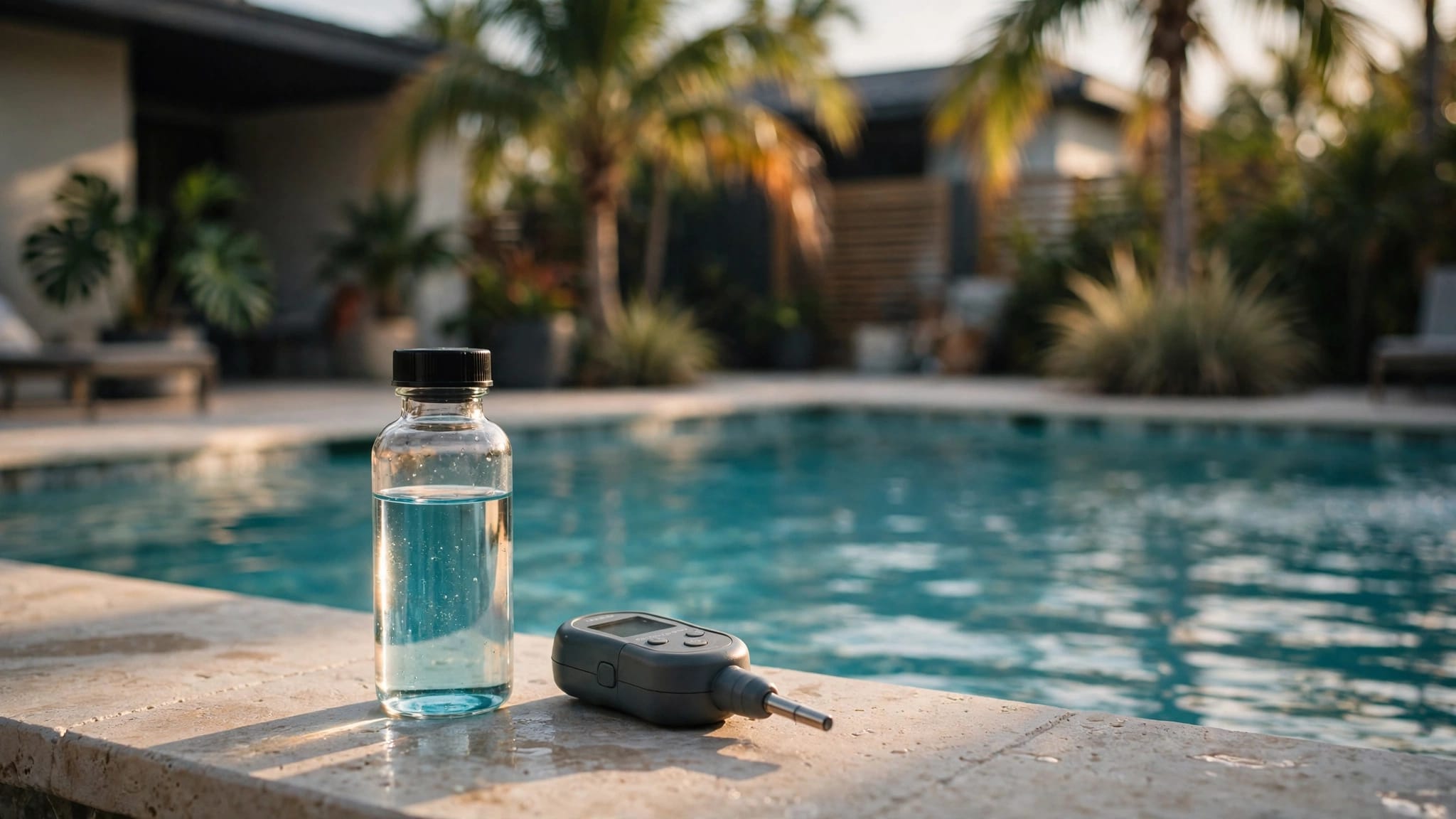
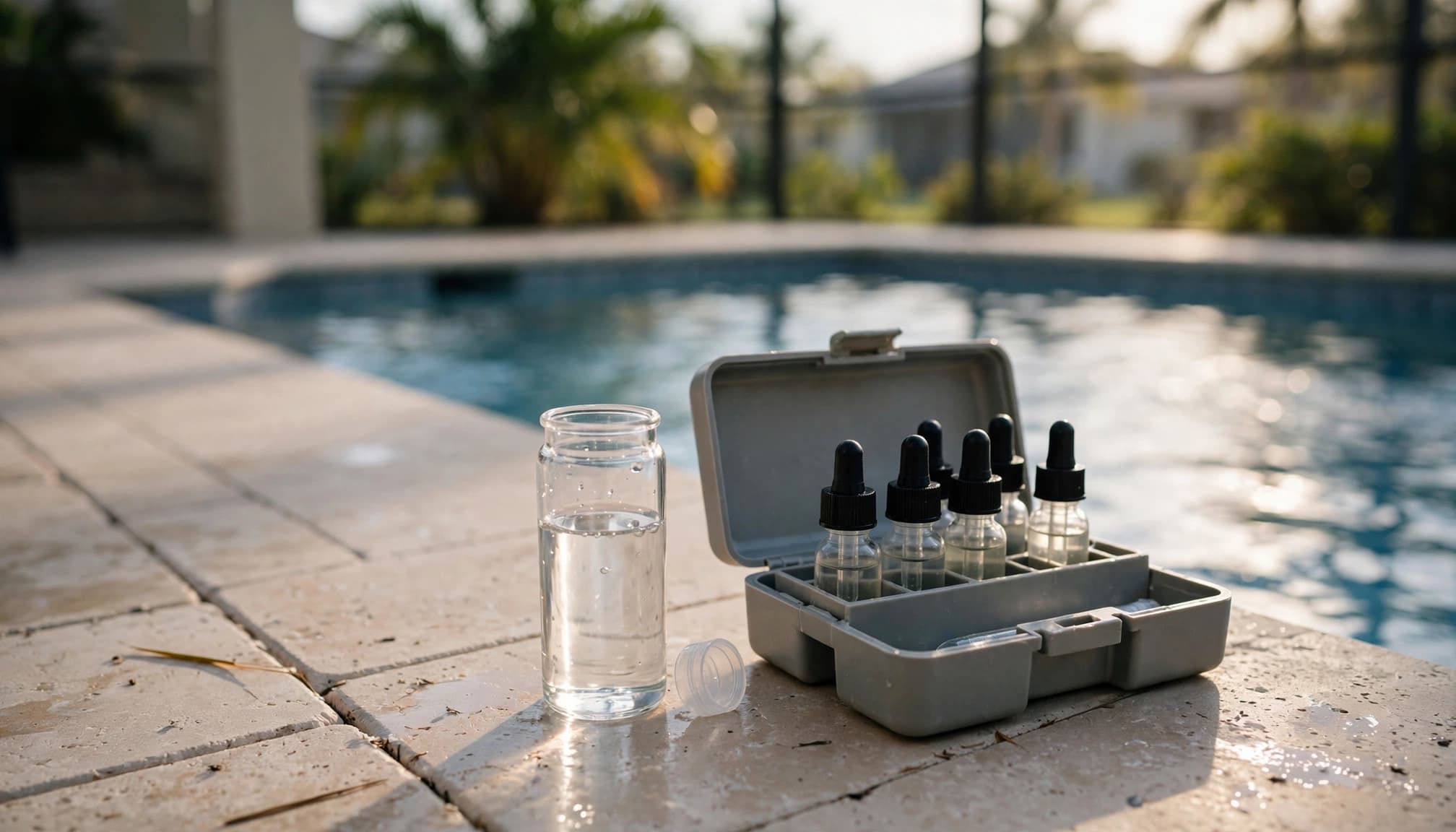
Use a clean container and collect water below the surface, roughly elbow-deep. Stay away from return jets, skimmers, chemical feeders, and places where you recently added chemicals.
Test promptly because storage and sunlight can change the sample. For color-comparison tests, use the lighting conditions specified by the kit.
Also record pH and cyanuric acid, often called stabilizer. When problems persist, include total alkalinity and calcium hardness in a broader water analysis. These supporting readings help explain why sanitation or balance isn't holding steady.
Measure Free and Total Chlorine Correctly
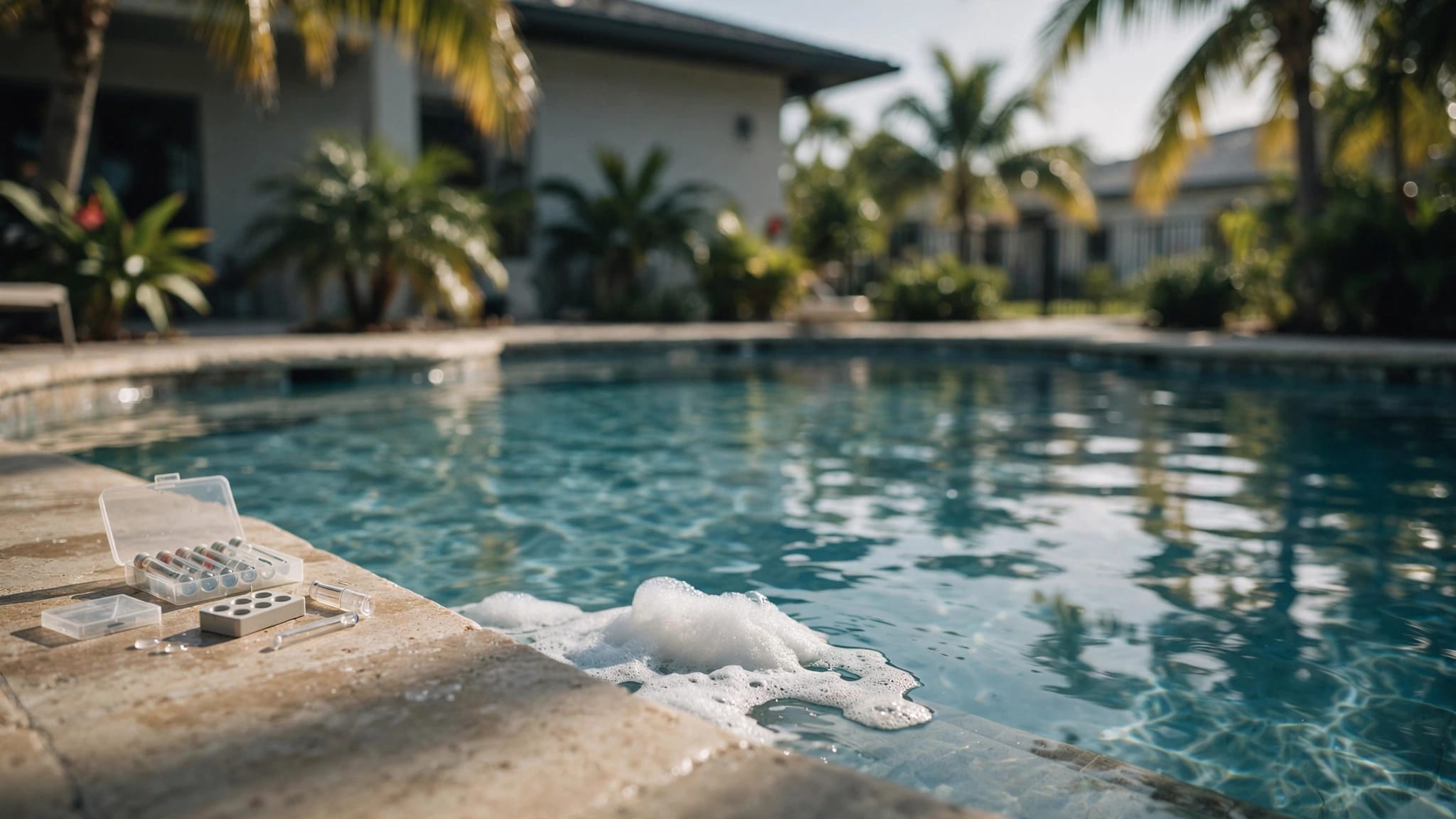
The CDC recommends DPD test kits for the most accurate home-pool chlorine and pH results. Test strips are convenient, but less accurate when you're trying to resolve a small difference between two readings.
Choose a kit that distinguishes free and total chlorine. Follow its fill lines, reagent amounts, mixing method, and reading times exactly. Then subtract FC from TC using the same units.
Some FAS-DPD drop-count kits measure free and combined chlorine through separate stages. Follow that kit's sequence rather than assuming every kit works identically.
Write down the result and treatment history. If total chlorine appears lower than free chlorine, repeat the test; that combination points to testing uncertainty.
Testing Pitfalls That Can Change Your Decision
High Chlorine Can Produce a False Low Reading
A zero result immediately after a substantial chlorine treatment deserves caution. According to the CDC, chlorine above 10 ppm can bleach out a DPD test and produce a falsely low or zero result.
A zero chlorine reading after treatment can reflect test interference. Confirm it before adding another dose.
Check the kit's measurement range and high-chlorine instructions. Don't improvise sample dilution unless the manufacturer provides a procedure.
Elevated chlorine can also interfere with some pH tests. Therefore, a surprising pH result during treatment may need confirmation before you add acid or a pH increaser.
Reagents, Timing, and Other Products Matter
Florida heat can damage test supplies stored in a garage, vehicle, or outdoor equipment cabinet. Check expiration dates and storage instructions, and keep reagent bottles closed.
Read each test at the specified time. Delayed readings or uneven drops can distort the difference you're calculating.
Also tell a pool professional if you've recently used nonchlorine shock containing potassium monopersulfate. It can interfere with some DPD combined-chlorine tests. Your kit may require an interference-removal reagent or another manufacturer-approved method.
Repeat any result that would trigger a major chemical adjustment. A fresh sample is usually cheaper than an unnecessary treatment.
Safe Ways to Lower Combined Chlorine
Remove Contaminants and Check the Equipment
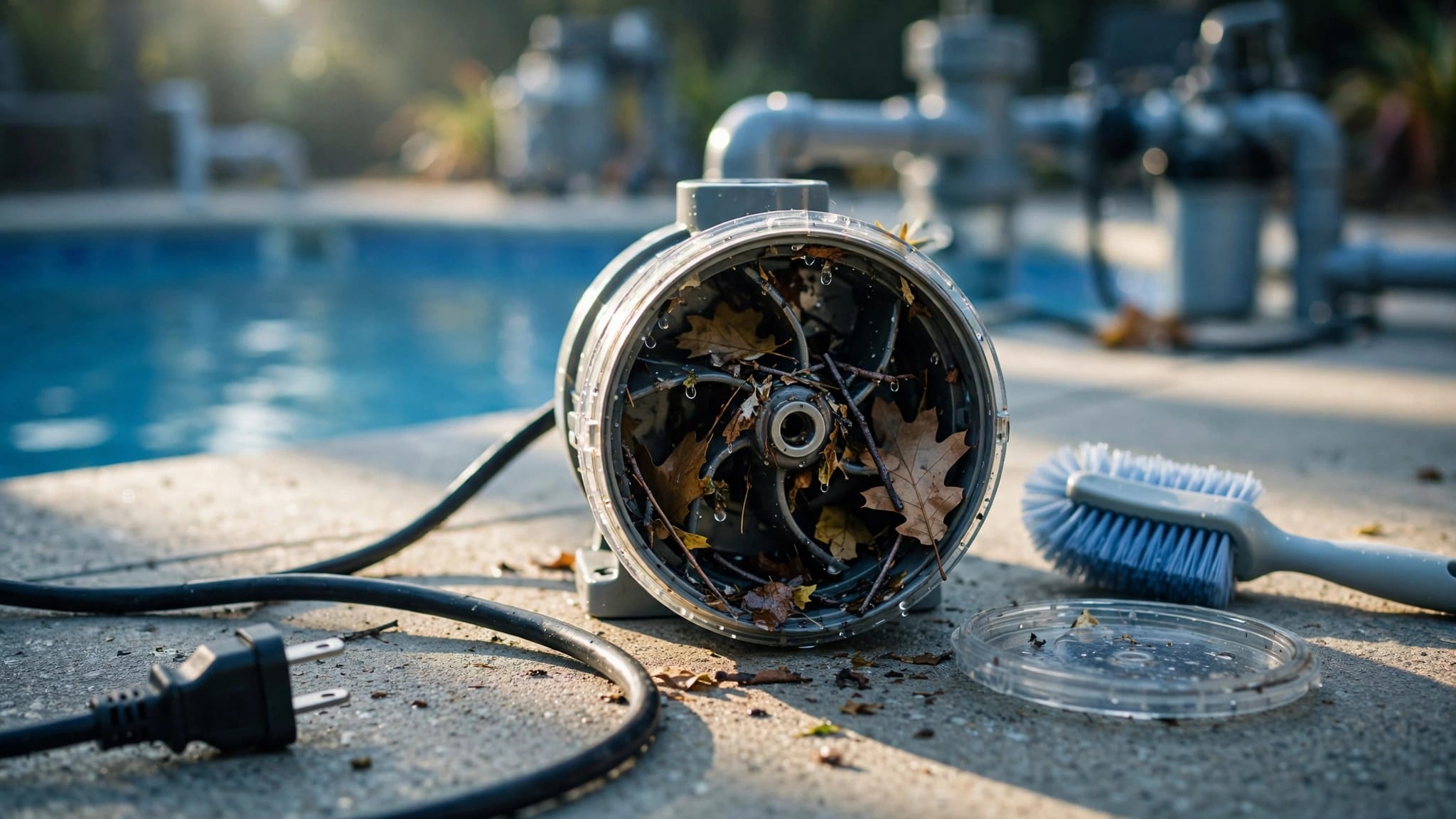
First, skim leaves, empty baskets, brush the pool, and remove settled debris. Check pump operation, return flow, and filter condition. Clean or backwash the filter according to its manufacturer's instructions.
These actions reduce the material consuming chlorine, although filtration alone doesn't reliably remove dissolved chloramines.
Next, review pH and stabilizer. CDC home-pool guidance recommends pH between 7.0 and 7.8. It also recommends at least 1 ppm free chlorine, or at least 2 ppm when using cyanuric acid or stabilized chlorine.
Those are minimum sanitizer concentrations, not universal operating targets. Your stabilizer level, sanitizer label, and equipment instructions may call for higher free chlorine.
Use Label-Directed Oxidation, Not a Guessed Dose
Confirmed chloramines may require an oxidation treatment, commonly chlorine treatment intended to reach breakpoint chlorination. This process destroys chloramines and addresses chlorine demand.
Technical guidance often describes approximately ten times the measured combined-chlorine concentration as a breakpoint rule of thumb. However, that figure isn't a universal product dose or a guaranteed treatment endpoint.
The required treatment depends on pool volume, current chemistry, contamination, and product strength. Follow the specific label or have a qualified pool professional calculate the treatment.
Wear label-required protective equipment and keep children and pets away. Never mix chlorine with acid, other chlorine products, or any other pool chemical. Don't combine products in a bucket or feeder.
Also, only pre-dissolve a product if its label directs you to do so. Follow label instructions for application, circulation, and separation between different chemical additions.
Retest Before Adding More or Allowing Swimming
After treatment, let the water circulate for the time specified by the product and testing instructions. Then measure free chlorine, total chlorine or combined chlorine, and pH again.
If chloramines remain elevated, confirm the result before repeating treatment. Check for test interference, overlooked debris, poor circulation, or continuing contamination. Adding more product without identifying the problem can create excessive chlorine without resolving the cause.
The CDC recommends testing home-pool chlorine and pH at least twice daily, and more often during heavy use. During recovery, follow treatment-specific monitoring instructions as well.
Keep swimmers out until the product's waiting period has passed and measured chemistry meets its swimming requirements. The water should also be clear enough to see the pool bottom and steps.
Appearance doesn't replace a test result. Likewise, a low chloramine reading doesn't make swimming appropriate if free chlorine or pH remains outside the required range.
Prevent Repeat Problems in Florida Weather
Showering before swimming reduces sweat and personal-care residues entering the water. Encourage bathroom breaks, and keep animals out of the pool. These habits reduce the contaminants that can form chloramines.
After a Cape Coral storm, remove debris promptly and inspect circulation before changing chemical doses. Rain can alter water balance, while windblown organic material adds chlorine demand.
A screened enclosure helps limit larger debris, although it doesn't eliminate contaminants or replace testing. If damaged screening lets leaves and insects enter regularly, review pool screen enclosure options alongside your cleaning routine.
Saltwater pools need the same chlorine checks because their generators produce chlorine on-site. A generator's output percentage doesn't show the actual sanitizer concentration in the water.
Keep a simple log of readings, storms, swimming activity, and chemical additions. Comparing these entries helps distinguish recurring demand from one unusual test.
When to Get Local Help
Ask a pool professional for help when confirmed readings stay elevated, chlorine repeatedly disappears, or home tests conflict. Bring your treatment history and explain which sanitizer system you use.
For local supplies, Pinch A Penny Pool Patio Spa in Cape Coral is at 1616 Cape Coral Pkwy W. Call first to confirm whether that location tests water samples.
Persistent chemistry problems also warrant an equipment inspection. Back Bay Pools' pool renovations and resurfacing services include equipment replacements, but resurfacing itself isn't a chloramine treatment.
If you're planning a pool, maintenance requirements belong in the design discussion. The guide to gunite pool construction in Cape Coral covers ongoing care alongside construction considerations.
For a renovation, equipment upgrade, or enclosure project, Get a Free Estimate to schedule an on-site consultation.
Frequently Asked Questions
Does a Strong Chlorine Smell Mean Free Chlorine Is Too High?
A strong odor can come from chloramines, but smell can't determine chlorine concentration. Measure free and total chlorine, calculate the difference, and check pH. Don't reduce sanitizer based on odor alone, because free chlorine could already be too low.
Will Running the Pump Longer Remove Chloramines?
Circulation helps distribute treatment and move debris through the filter. However, longer pump operation alone doesn't reliably destroy dissolved chloramines. Correct poor flow, remove contamination, and use a treatment supported by confirmed readings and product instructions.
Can a Saltwater Pool Develop Combined Chlorine?
Yes. Chlorine produced by a salt generator can react with contaminants just like manually added chlorine. Test the water rather than relying on the generator display. If readings remain poor, investigate water balance, cell operation, and circulation before changing output repeatedly.
A Clear Test Result Comes Before Treatment
A strong smell is a reason to investigate, not a dosing instruction. Reliable testing separates available sanitizer from chloramines and gives you a sound basis for treatment.
Remove contaminants, follow product labels, and make retesting part of every correction. That final check helps protect swimmers while keeping unnecessary chemicals out of your Florida pool.