White bubbles collecting along your pool's edge can make otherwise clear water look neglected. Foamy pool water calls for testing first , because its appearance alone doesn't tell you what needs correction.
For Cape Coral homeowners, storms, frequent swimming, and fresh-water top-offs can complicate troubleshooting. Adding another product without checking the water can create a second problem.
Start by separating persistent foam from ordinary bubbles, then review your water readings and circulation.
What Foamy Pool Water Looks Like
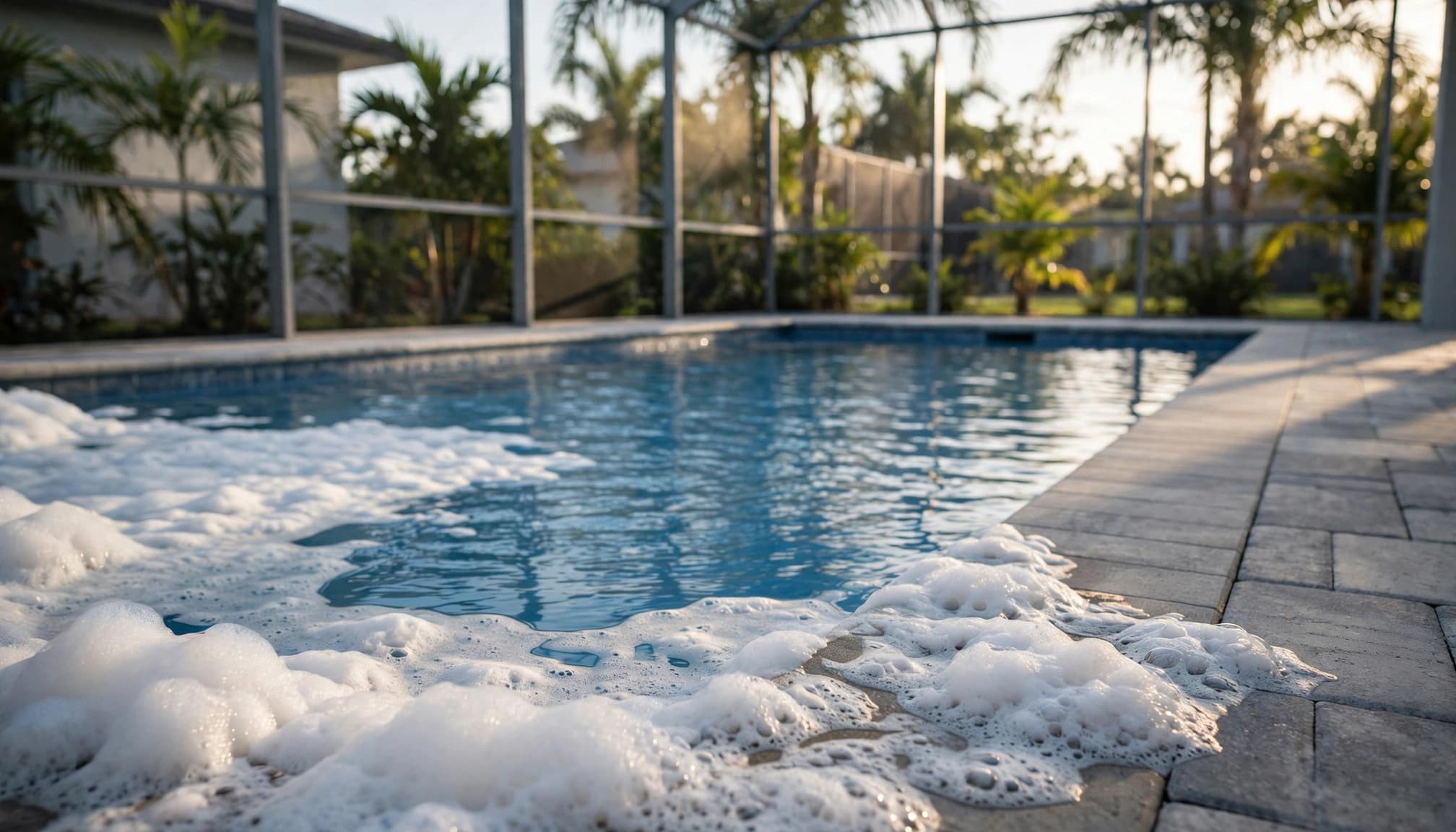
Foam consists of bubbles held within thin films of water. Air enters through splashing, jets, and other water movement, but the bubbles' behavior helps you decide what to investigate.
Brief bubbles versus persistent patches
Bubbles near a waterfall or spa spillover may disappear quickly as they move away from the turbulence. Persistent foam stays together longer, often gathering along the waterline or drifting across the surface.
Observe the pool while its normal circulation runs. If you can safely switch off a decorative water feature without changing essential circulation, note whether the patch shrinks.
That observation helps locate where air enters the water. However, it doesn't identify everything affecting how long the bubbles last.
Surface foam versus air at the returns
A stream of bubbles emerging directly from a return jet deserves an equipment check, especially if the pump also loses prime. Surface foam that collects elsewhere needs a broader water-quality review.
Take photos showing both the patch and its location. Also record whether it appears continuously or only during particular equipment settings.
These details help a pool professional distinguish a circulation symptom from a persistent surface-water problem without relying on a description such as "the water looks bubbly."
Review What Changed Before the Foam Appeared
A maintenance timeline gives you more useful information than another guessed chemical addition. Begin with the last day the pool looked normal, then work forward.
Record recent product use
Write down every pool product added recently, including its name, application date, and amount. Keep the container or a clear photograph of its directions.
Include products added by a service company, not just those you applied yourself. Also note any deck cleaning, equipment cleaning, or other work near the water.
A change in appearance after an application is useful information, but timing alone doesn't establish the cause. Ask your pool professional to review the product instructions alongside your test results before recommending a response.
Note swimming, weather, and water additions
Record recent pool parties, heavy rainfall, extended hot weather, and substantial top-offs. These events affect the conditions under which your pool operates.
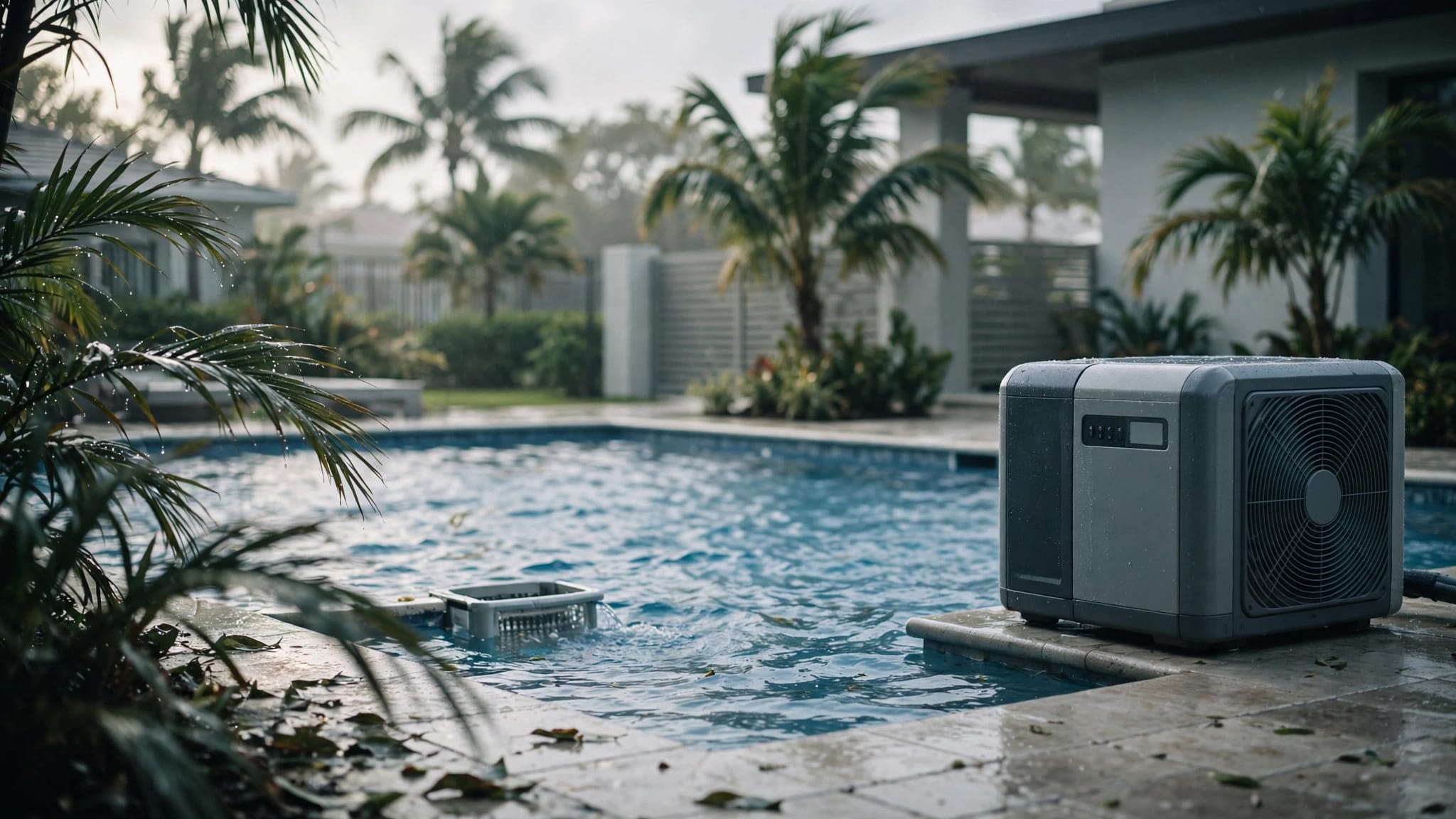
Cape Coral's afternoon storms can introduce debris and dilute some water constituents. Meanwhile, evaporation removes water but leaves dissolved minerals behind.
Repeated additions of mineral-rich fill water can gradually change the balance. Because these changes may occur together, a complete test is more useful than checking pH alone.
For a newly filled or resurfaced pool, also keep the startup instructions available. Its finish may require a different monitoring routine from an established pool.
Test the Water Before Adding Anything
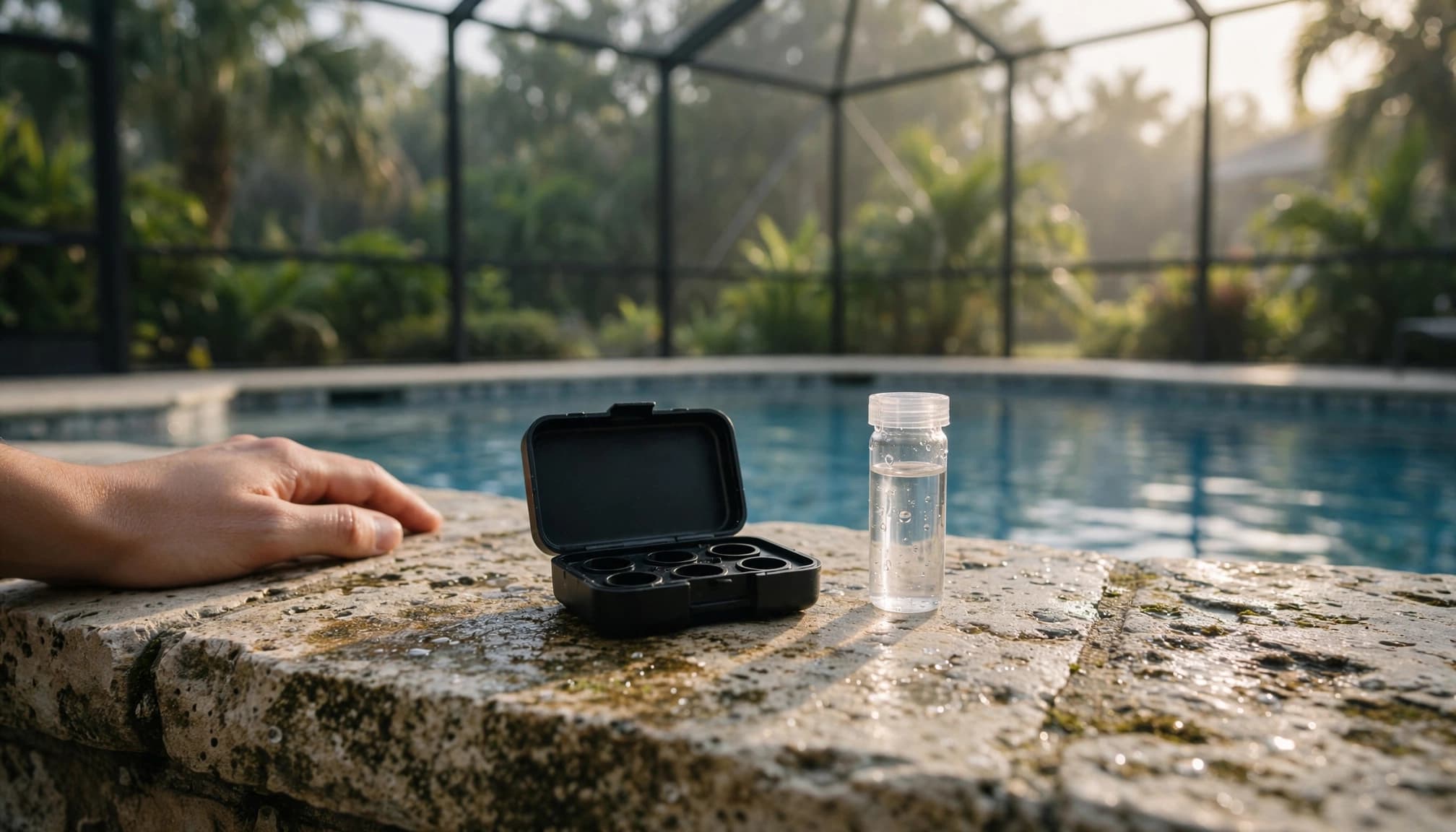
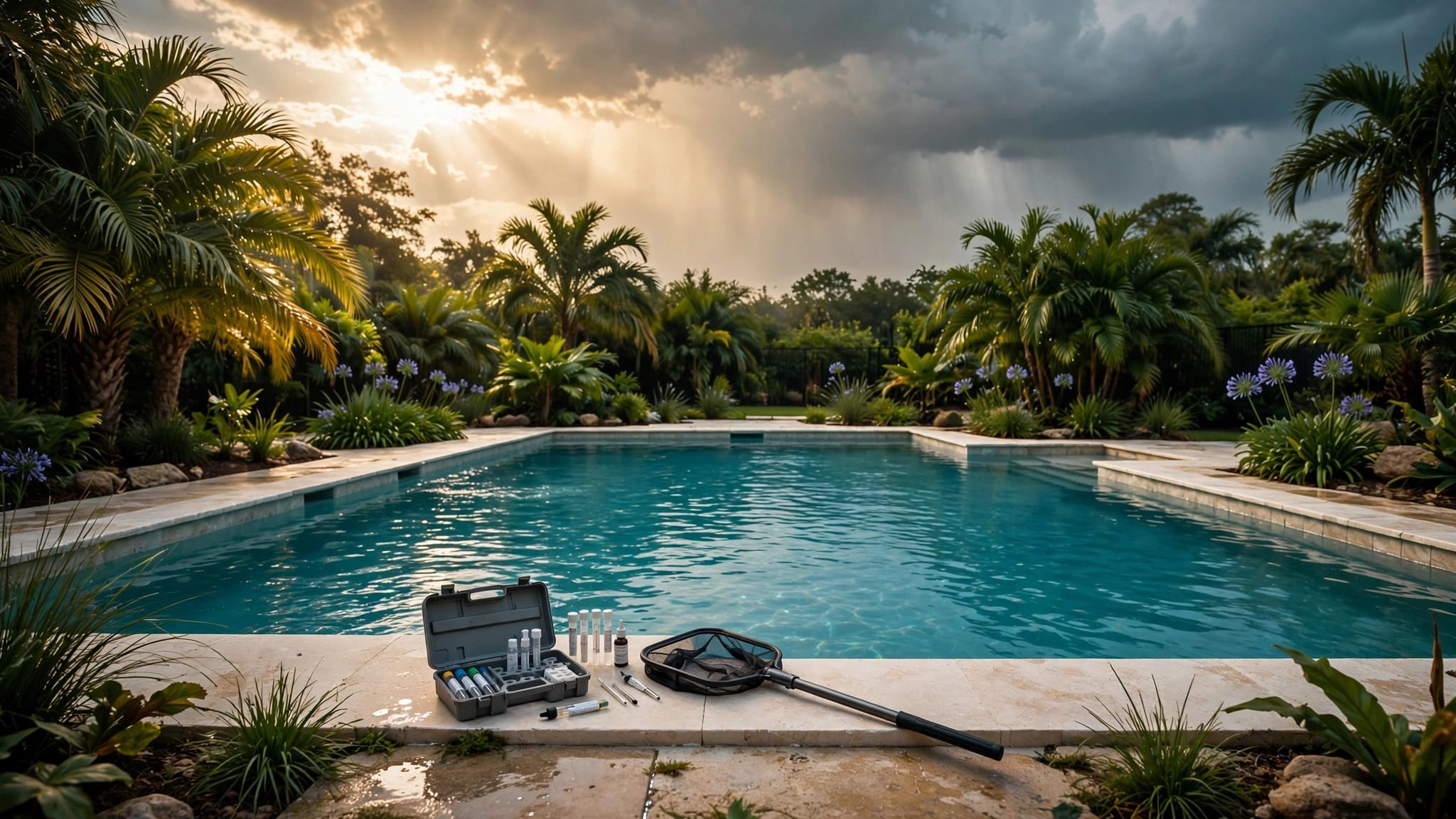
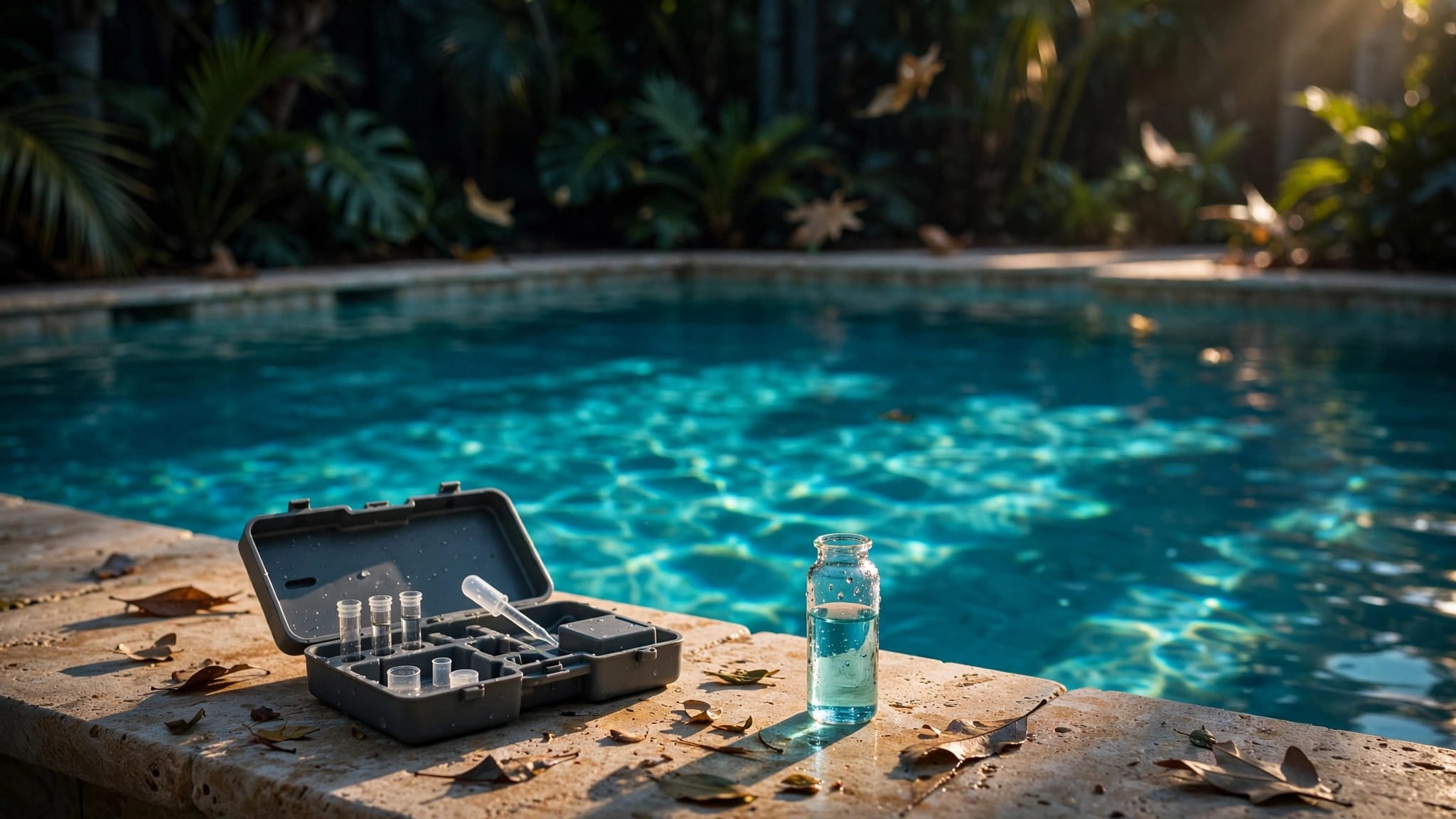
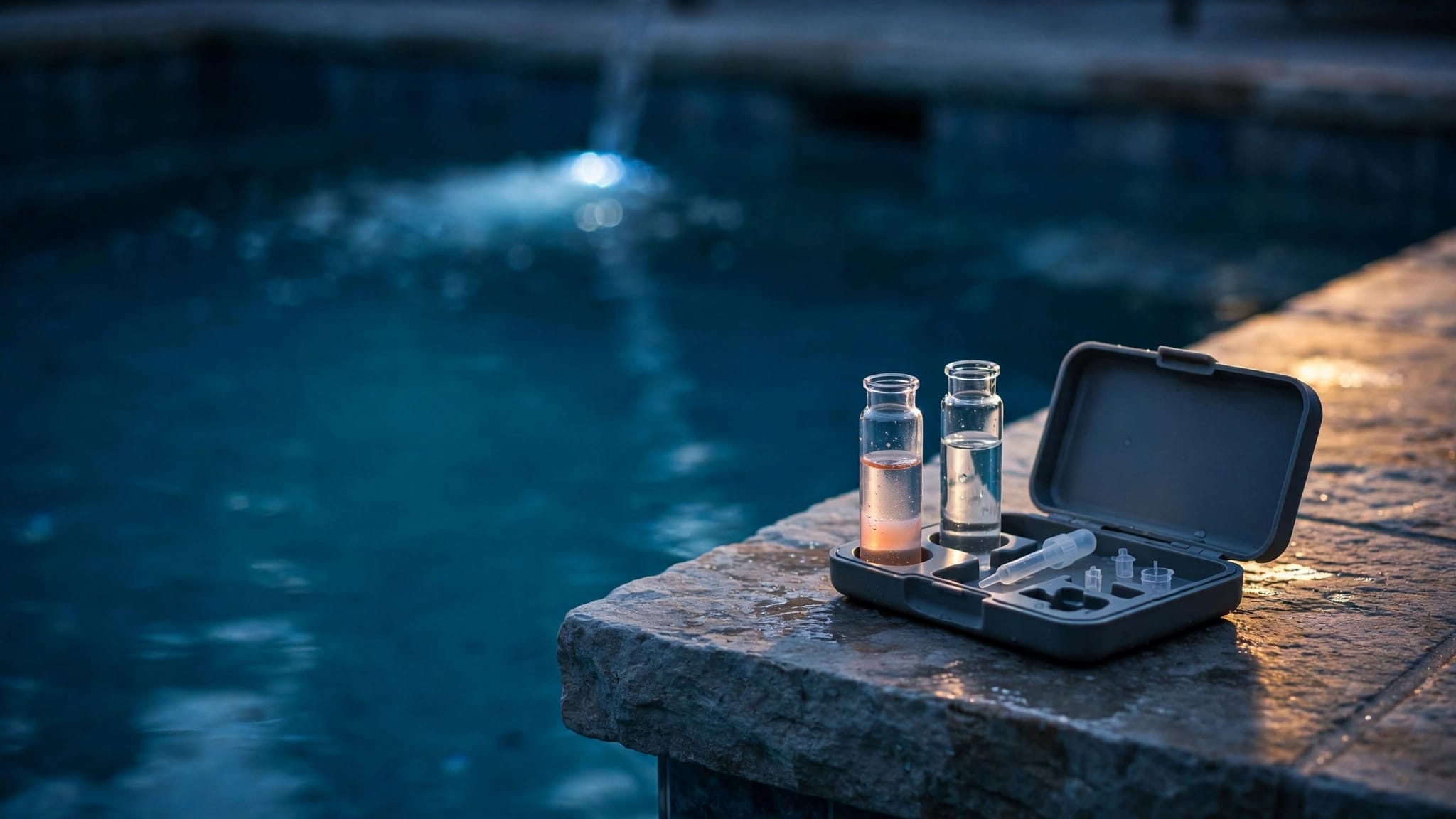
Use a reliable liquid kit or take a fresh sample to a pool professional. Testing protects swimmers and equipment, although standard chemistry readings don't identify every possible water contaminant.
Collect a representative sample
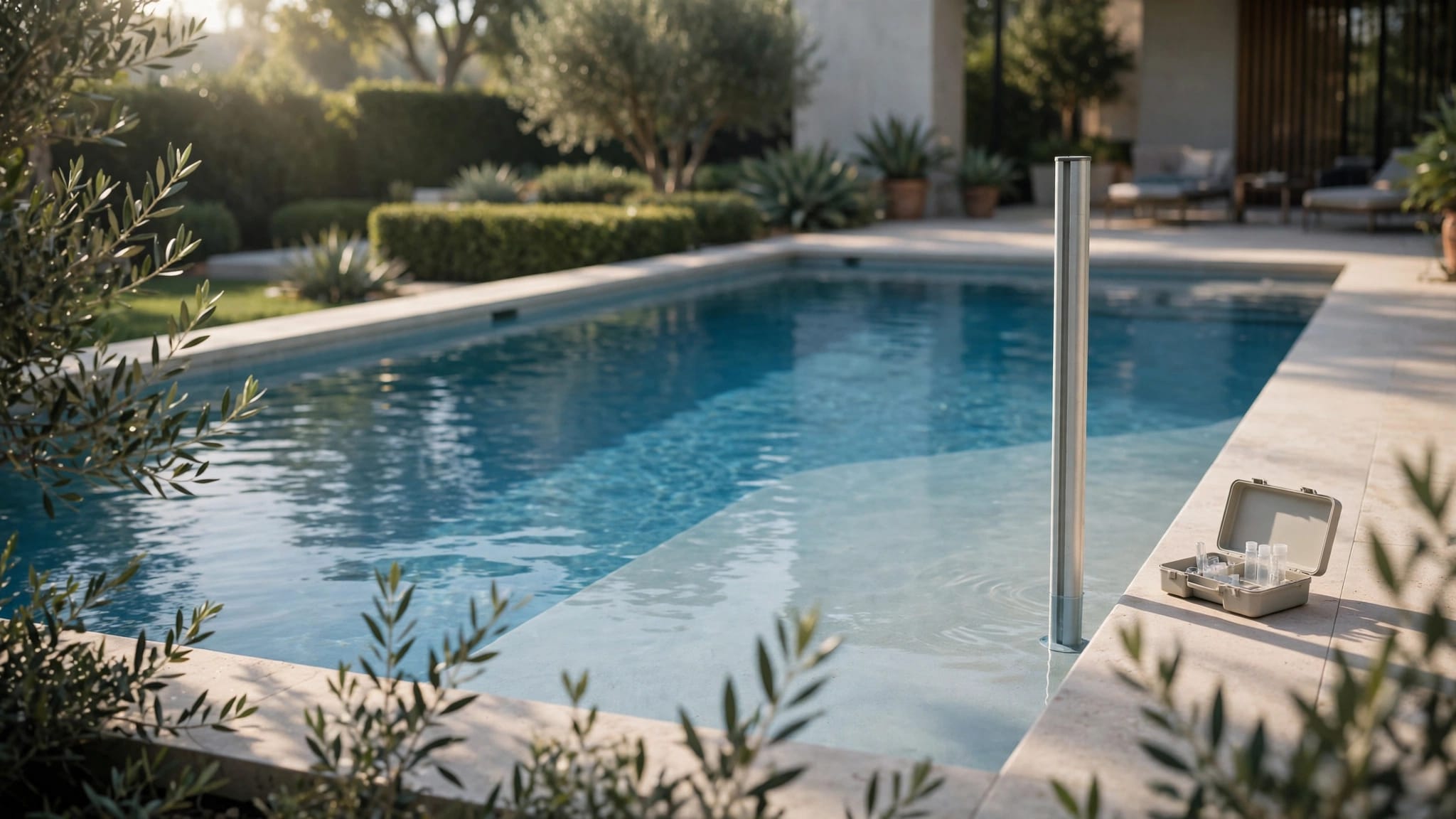
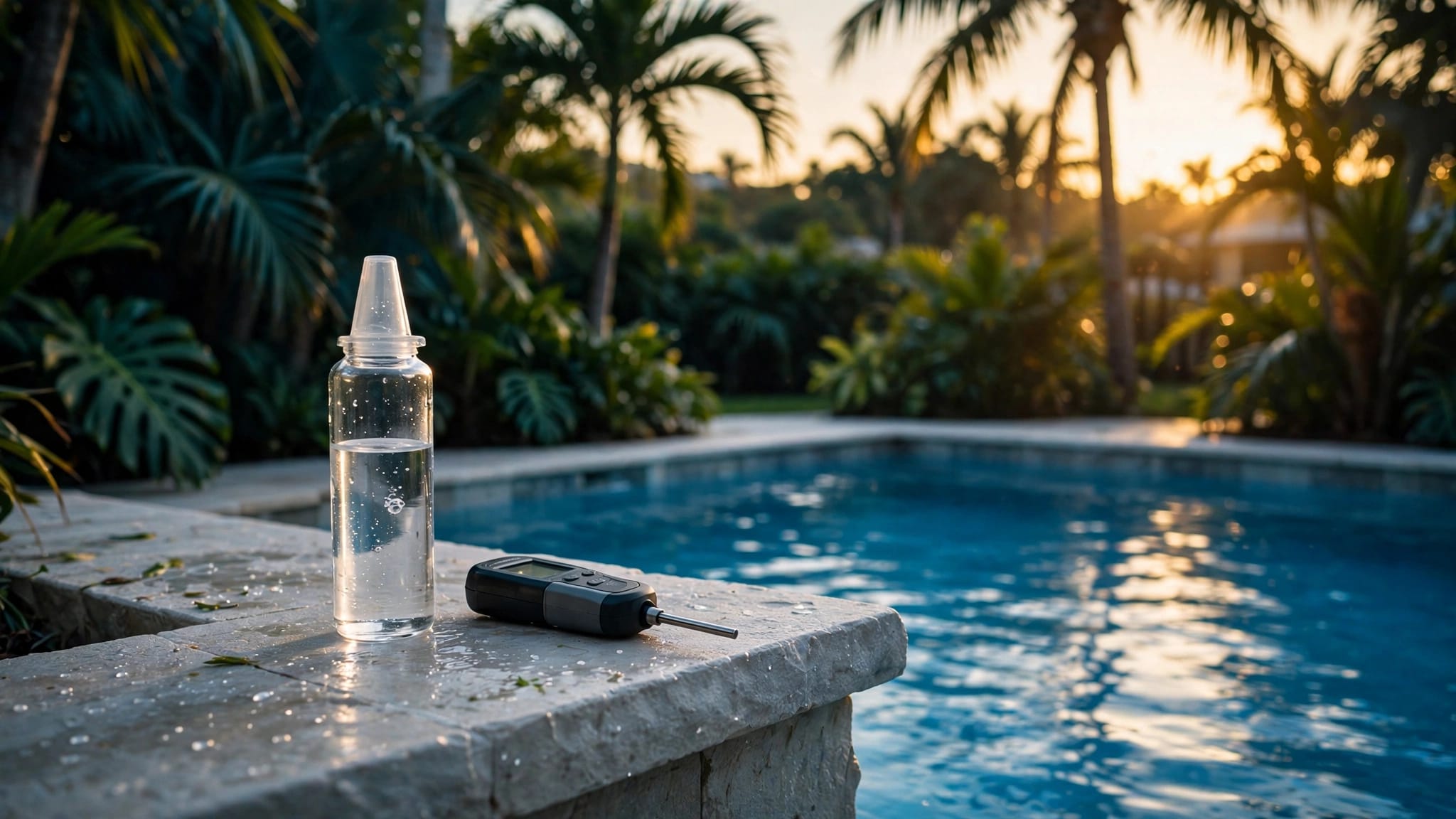
Collect water away from skimmers, return jets, and chemical feeders. Reach roughly elbow-deep with a clean sample container, then follow your test kit's instructions.
Check free chlorine, total chlorine, pH, total alkalinity, calcium hardness, and cyanuric acid, also called stabilizer. Record the results rather than relying on memory.
If different test methods disagree, request a professional test before making large adjustments. Back Bay Pools' guidance on maintaining an inground gunite pool also emphasizes monitoring chemistry to protect the pool and its equipment.
Compare readings with your system's requirements
These are common reference ranges for many plaster pools.
| Water reading | Common reference range |
|---|---|
| pH | 7.2 to 7.8 |
| Total alkalinity | 80 to 120 ppm |
| Calcium hardness | 200 to 400 ppm |
Your finish and equipment manufacturer's requirements take priority, especially for specialty finishes and saltwater systems. An out-of-range reading needs attention, but it doesn't establish why bubbles persist.
For sanitation, the CDC recommends at least 1 ppm free chlorine in pools, or at least 2 ppm when using cyanuric acid or stabilized chlorine products. It recommends pH between 7.0 and 7.8.
A salt chlorine generator produces sanitizer; it doesn't balance alkalinity, calcium hardness, or every other part of the water.
Check Circulation and Equipment for Visible Problems
Water readings and equipment observations belong together. Poor flow can complicate maintenance, while air at the returns may point toward a circulation issue that needs separate attention.
Check water level, baskets, and filter condition
Confirm that the water reaches the normal operating level recommended for your skimmer. Then empty the skimmer and pump baskets according to the equipment instructions.
Inspect filter pressure against the system's usual clean-filter reading. A change from that baseline is more useful than comparing your gauge with another homeowner's pool.
Follow the manufacturer's cleaning procedure when the filter needs service. Also check whether the return jets have their usual flow, including around steps and benches.
Don't change unfamiliar valve positions while experimenting. Incorrect settings can interfere with flow or equipment operation.
Watch for pump-related warning signs
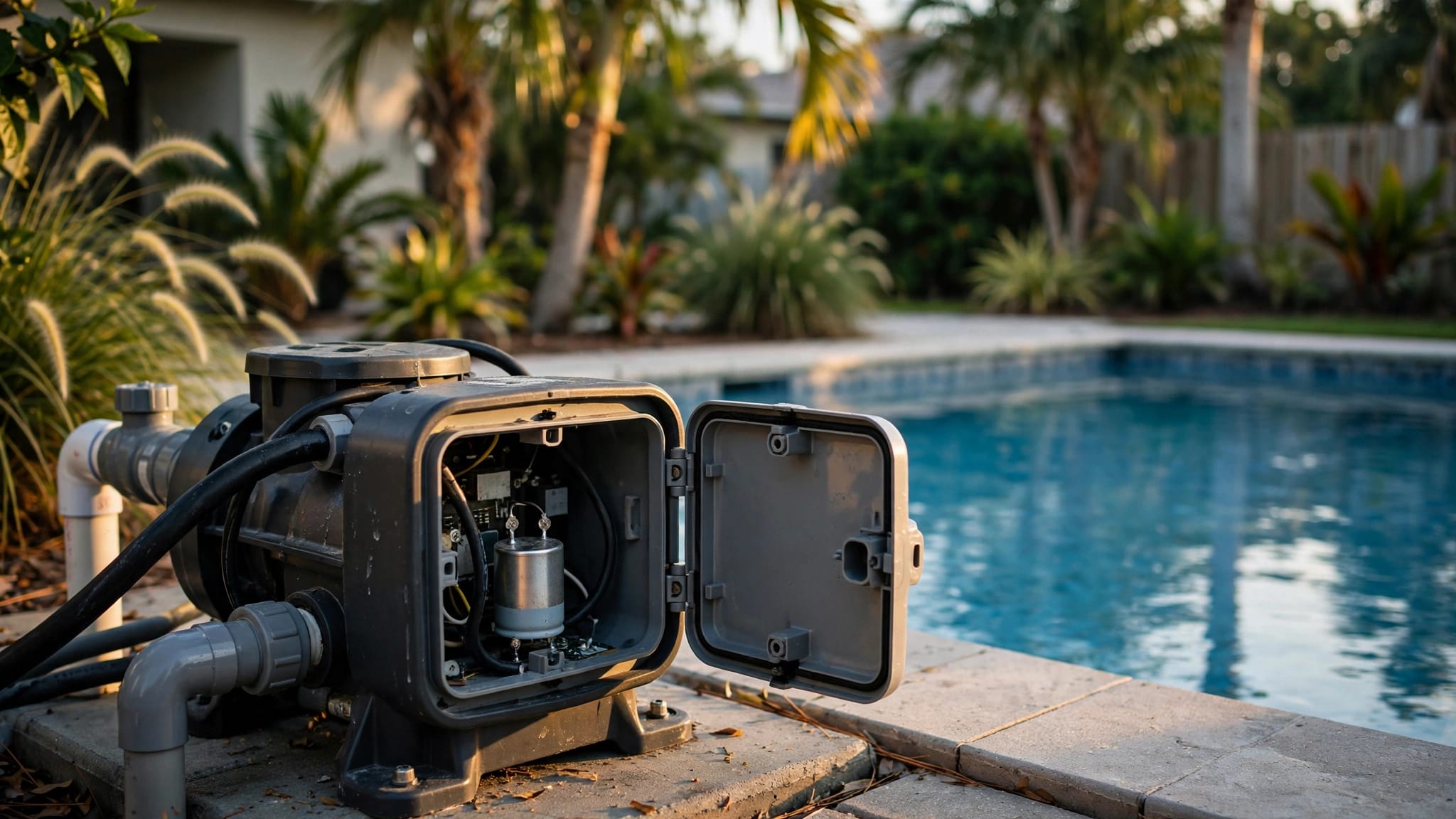
Look through the clear pump lid for persistent air, and listen for unusual strain. Repeated loss of prime, weak returns, or bubbles at multiple jets justify a professional equipment assessment.
You can visually inspect the lid for cracks or a poor fit. However, shut off the pump before opening its strainer housing, and follow its safety instructions.
Never loosen a pressurized filter or reach into suction openings. If the pump won't stay primed or appears to run without adequate water, stop it according to the manufacturer's directions and arrange service.
How to Respond Without Creating Another Problem
The next step depends on verified findings, not the foam's color or thickness. A useful response combines observation, routine cleaning, and professional interpretation when needed.
- Document the starting condition. Photograph the surface, record your water readings, and list recent products and weather events. Include any unusual pump behavior.
- Address routine maintenance needs. Remove visible leaves and floating debris, clear baskets, and maintain the filter according to its instructions. This supports circulation without introducing another product.
- Have the readings reviewed. Compare them with your finish and equipment requirements. If a correction is necessary, get guidance based on the test results and your pool's actual volume.
- Keep chemical changes separate. Follow the applicable product directions, including circulation, protective equipment, and swimming restrictions. Never mix pool chemicals or combine guessed additions.
- Reassess under the same operating conditions. Compare the surface after normal circulation with your original photos. If foam persists despite acceptable readings, bring the maintenance record to a pool professional.
A normal pH reading doesn't explain persistent foam or establish that all other water conditions are acceptable.
Don't use disappearance of the bubbles as your only measure of success. Sanitizer, water balance, clarity, and normal equipment operation still need verification.
Similarly, don't drain the pool simply because foam remains. Inground pools require careful evaluation before draining, including consideration of groundwater conditions.
Foam alone doesn't establish whether swimming is safe. Check sanitizer and pH, confirm adequate visibility, and follow treatment-label restrictions. If contamination is suspected or water conditions remain uncertain, keep swimmers out until a professional evaluates the pool.
Build a Cape Coral Maintenance Routine
Consistent records make recurring problems easier to investigate. They also help distinguish a one-time event from a pattern associated with weather, water additions, or equipment operation.
Check pH and sanitizer at least twice weekly during normal use. Increase testing after heavy rain, major water additions, unusually hot weather, or heavy swimming activity.
Test calcium hardness and alkalinity on an appropriate schedule for your water source and pool system. Because evaporation leaves minerals behind, repeated top-offs deserve attention even when the water remains clear.
Keep a simple log containing test results, product additions, filter service, and unusual conditions. You don't need a complicated spreadsheet; dated entries in a notebook work.
For broader upkeep, Back Bay Pools' Cape Coral pool maintenance guidance discusses chemistry checks, filter cleaning, and equipment inspections.
Screen enclosures reduce leaves and insects, but wind-driven rain and fine debris can still reach the water. Inspect the pool after storms rather than assuming the enclosure kept everything out.
During deck or enclosure cleaning, keep cleaning runoff out of the pool and follow the cleaning product's directions. Also brush and clean the waterline with tools approved for your finish.
Finally, check spillways and fountains for unusual deposits or altered flow. Their frequent wetting and drying can leave mineral residue that needs its own assessment.
Know When Foam and Surface Damage Need Separate Evaluations
Foamy pool water alone isn't a reason to resurface a pool. Persistent bubbles, damaged finishes, and structural problems require different assessments.
If you also notice rough plaster, flaking material, lasting stains, or visible cracks, document those conditions separately. A water-quality review can accompany a surface inspection without assuming they share one cause.
High pH can encourage calcium deposits, while aggressive water can etch plaster. However, correcting water balance doesn't repair an already damaged finish.
Back Bay Pools' explanation of factors affecting pool finish lifespan covers how heat, rainfall, fill water, and chemistry affect surfaces over time.
For homeowners planning a renovation, ask the contractor to review circulation as well as the interior finish. Equipment problems shouldn't disappear from the scope simply because the surface is receiving attention.
Back Bay Pools, LLC provides pool interior refinishing and renovation services in Cape Coral. Those projects address confirmed surface and renovation needs, rather than treating foam as evidence that a new finish is necessary.
Start With Evidence, Then Correct the Confirmed Problem
Persistent foam deserves a closer look, but its appearance doesn't identify a single cause. Testing and a maintenance timeline give you a sound starting point.
Check normal circulation, document recent changes, and base any correction on verified readings and product instructions. If the problem continues, a pool professional can review the water and equipment together.
The goal is stable, properly maintained water, not simply a surface that looks clear for a few hours.