A puddle beneath your pool pump can be easy to dismiss after a Cape Coral rainstorm. But if water returns whenever the pump runs, a closer look is in order. A pool pump seal leak can begin as a small drip beneath the motor and leave nearby equipment wet. The useful first step is to find where the water starts, without opening or touching the pump.
How to Recognize a Pool Pump Seal Leak
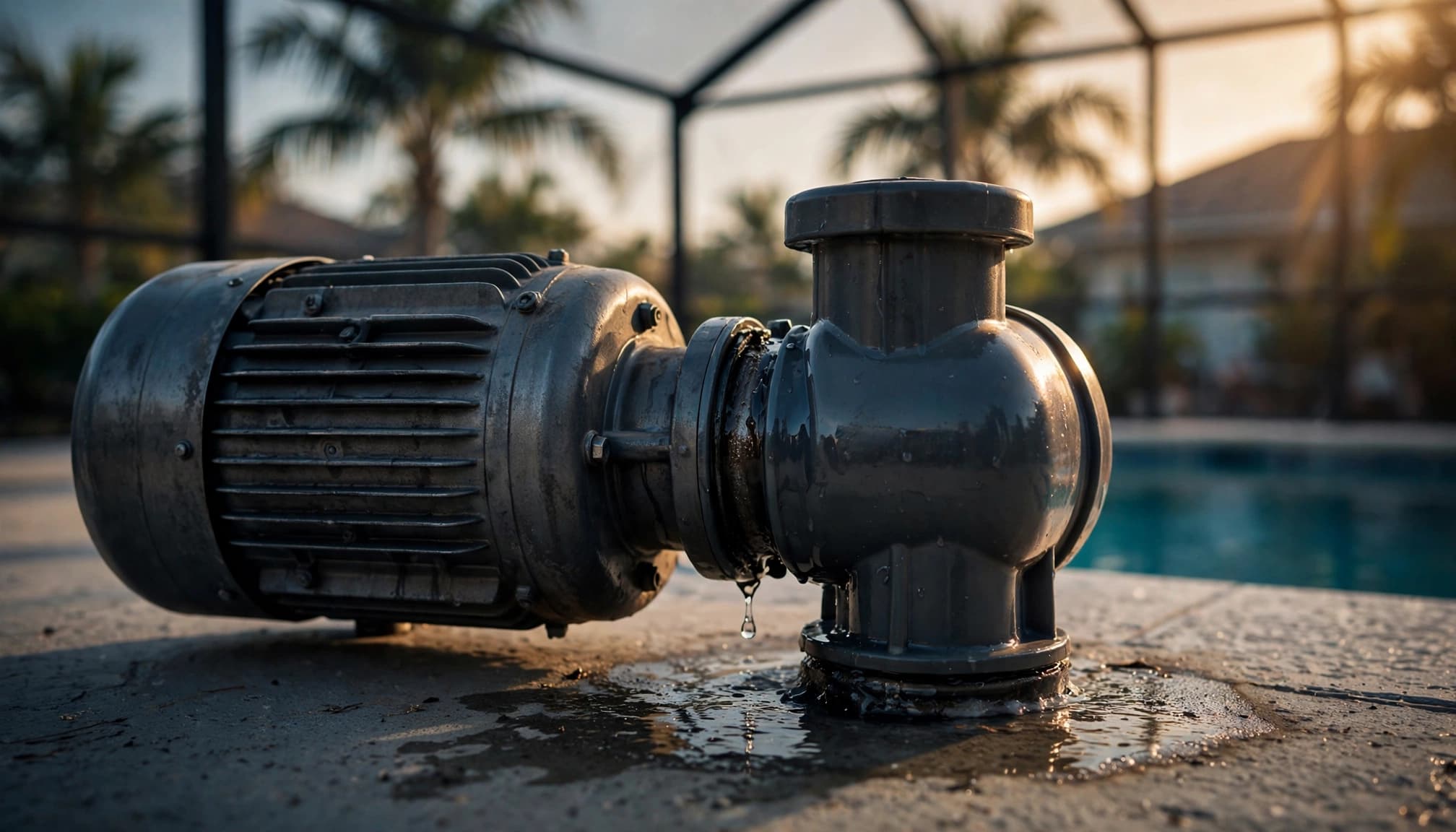
The mechanical seal sits where the motor shaft passes into the water-filled pump assembly. It helps keep pool water out of the motor. When it fails, water may escape near that junction and drip onto the equipment pad.
Look beneath the motor and pump junction
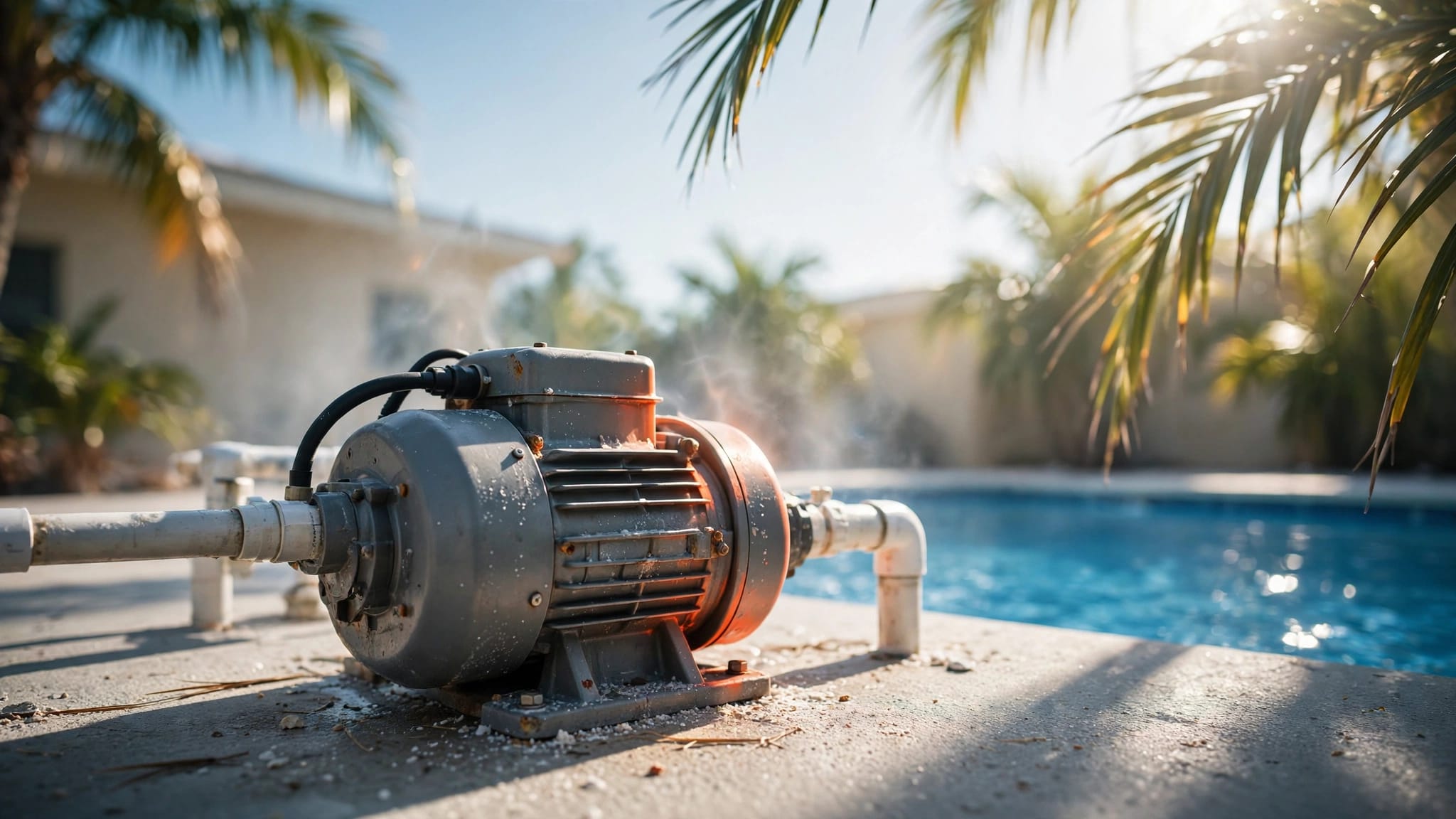
Water dripping from beneath the motor or the area where the motor meets the pump housing is a possible seal-leak sign . The drip may leave a wet patch directly below that connection. If you notice it during a dry spell, make a note of where the moisture first appears.
Location matters more than puddle size. Water can travel along the underside of equipment before falling, so a wet spot on the concrete doesn't identify the failed part by itself.
Notice what happens when the pump runs
A drip that appears while the pump operates and stops after shutdown deserves attention. You might also see dried mineral residue or corrosion near a spot that has stayed wet. Those observations help a pool professional inspect the right area, but they don't confirm the seal has failed.
Don't wait for a large puddle. A small, repeated drip near the motor is enough reason to arrange an assessment.
Is the Water Coming From a Seal or Nearby Plumbing?
A pump pad has several places where water can escape. Before assuming you have a pool pump seal leak, look at the plumbing and pump housing from a safe distance. The highest visible wet point may offer a better clue than the puddle below.
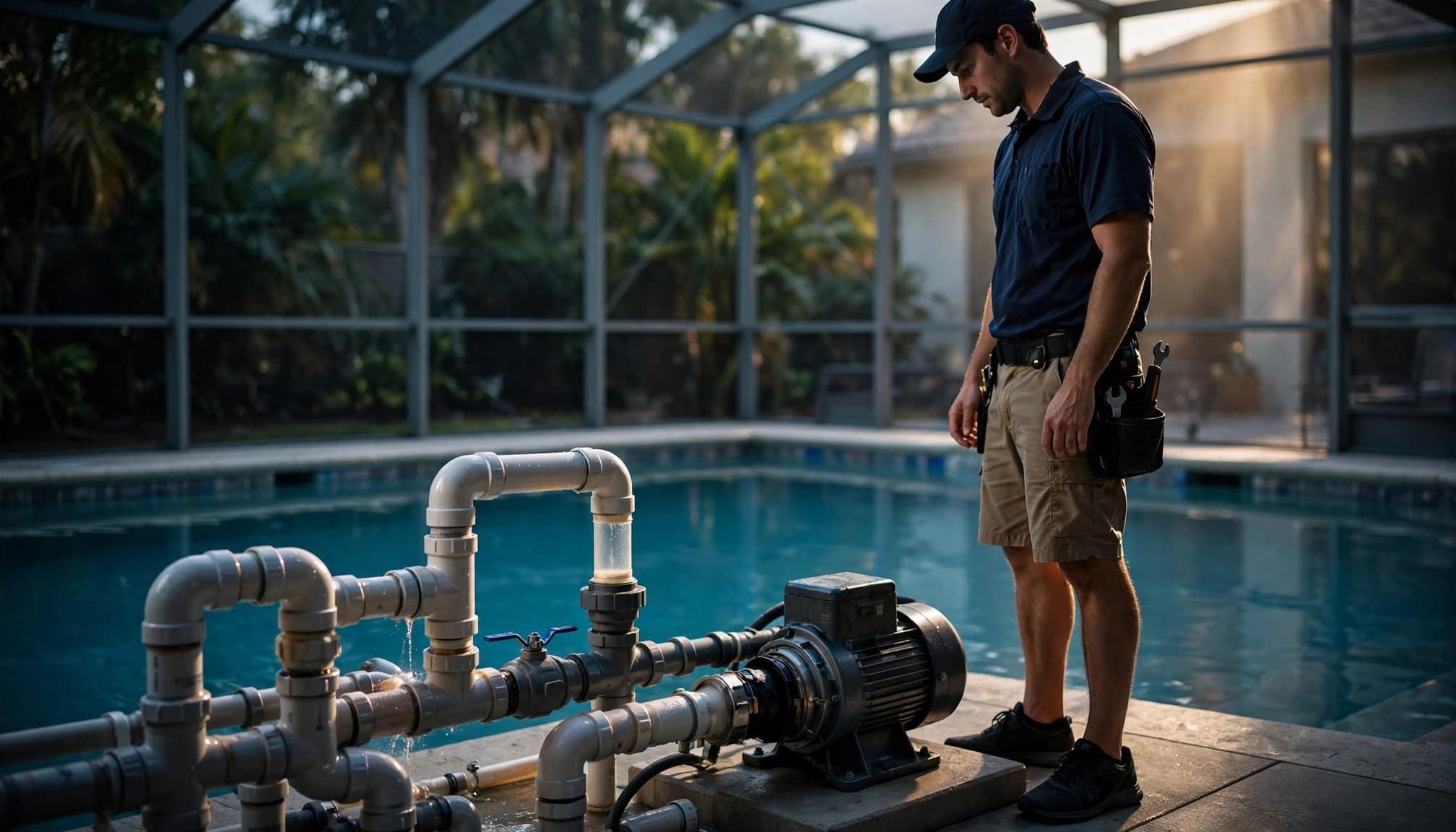
Check the visible areas separately
These locations can produce similar-looking puddles:
| Where moisture appears | Possible source to have checked |
|---|---|
| Beneath the motor-to-pump junction | Mechanical seal or another component in that area |
| Around a pipe connection | Plumbing fitting or joint |
| At the pump lid or its edge | Lid seal or lid seating |
| Near a drain plug or pump housing | Plug seal or housing |
The table narrows the questions to ask; it isn't a diagnosis. For example, a pipe joint above the motor can drip onto the motor and make the seal area look wet.
Keep priming problems in perspective
If the pump loses prime after every shutoff, tell the professional inspecting it. A check valve or an air leak elsewhere in the system may be involved. Loss of prime alone doesn't establish that the mechanical seal is leaking.
Likewise, a pump can have more than one problem. Ask for the source of the water to be identified before approving a seal replacement.
What Causes a Pool Pump Seal to Fail?
A mechanical seal depends on properly fitted sealing surfaces around a rotating shaft. Wear or damage can let water pass through. However, the cause behind that damage matters when deciding what to repair.
Wear and damage to sealing surfaces
Seals wear with use, and a seal can also leak if its surfaces become damaged. If a professional finds a failed seal, they should inspect the parts around it rather than assume the seal is the only concern.
Water escaping toward the motor calls for particular care. A replacement seal won't resolve damage already present in the motor, shaft, or pump housing. The person assessing the pump needs to check whether those parts remain sound.
Conditions that can complicate the repair
A pump that has run without adequate water flow, a damaged impeller area, or an improperly installed seal may need more than a new part. Those are possibilities for a technician to investigate, not conclusions to draw from a puddle.
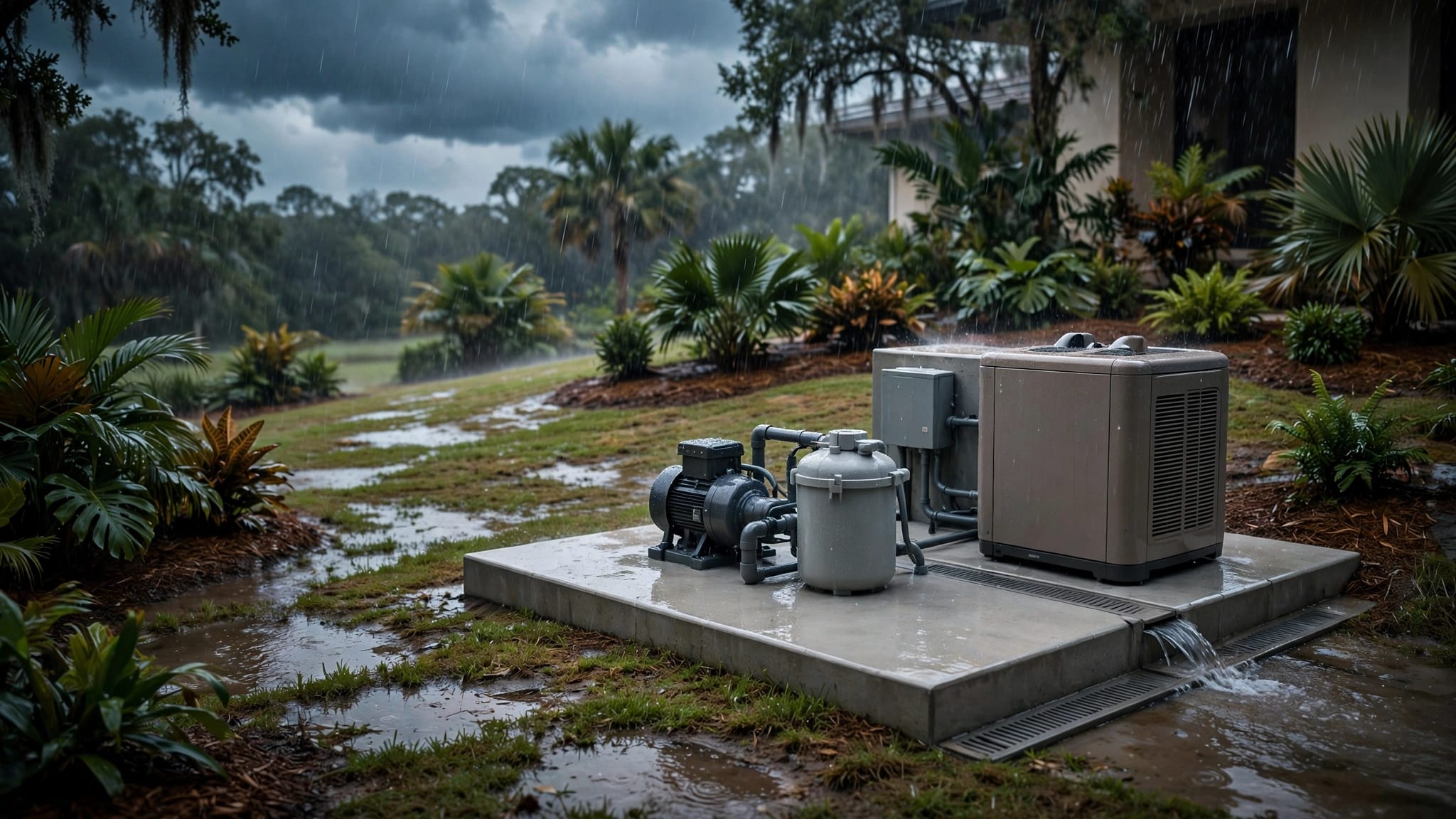
In Cape Coral, rain adds another layer of uncertainty. Let the equipment pad dry after a storm before comparing wet areas, but don't restart or handle equipment that may have an electrical problem. A leak that reappears on a dry day is useful information to report.
Which Repair Signs Should You Take Seriously?
Any recurring drip near the motor deserves a prompt inspection. The need becomes more urgent when water is reaching electrical components or the pump isn't operating normally.
Recurring drips and changing performance
Note whether the drip is getting steadier, spreading across the pad, or leaving more residue. Also report unusual motor noise, repeated shutdowns, or difficulty keeping the pump running. These signs don't all point to a failed seal, but together they give a professional a fuller picture.
A visible leak also changes how you plan pool care. If the pump can't run safely, filtration and circulation may be interrupted. Ask a qualified professional how to manage the pool while the equipment is out of service.
Water near electrical equipment
Shut off power before inspecting the equipment. If water is near the motor, wiring, control box, or an outlet, keep clear and use a dry, accessible breaker or disconnect only if you can do so safely. Don't step into pooled water to reach a switch.
If the breaker or disconnect isn't safely accessible, stay back and contact a qualified professional. Leave electrical panels and motor covers closed.
A drip beneath the motor is a reason to stop and inspect, not a reason to reach beneath a running pump.
What Can You Safely Do Before Calling a Professional?
You don't need to take the pump apart to give a technician useful information. A brief visual record can help locate an intermittent leak, especially when rain has recently soaked the pad.
- Turn off the pump at its breaker or disconnect before approaching it, provided the switch is safely accessible.
- From dry ground, note where you first saw water and whether nearby pipe joints, the lid, or the pump housing also look wet. Don't touch or open equipment.
- Take a photo from a safe position and note when the drip appeared, such as during a dry day or while the pump was running.
If you already know the pump's make and model, pass that information along. Don't reach under the motor for a label or remove a cover to find it. Likewise, don't try to tighten fittings beside wet electrical equipment or repeatedly restart a pump to watch the drip.
For an onsite conversation about equipment concerns and a broader pool project, Get a Free Estimate from Back Bay Pools. Describe the leak when you contact the team so they can advise on the appropriate next step.
When Should the Seal Be Repaired or the Pump Replaced?
A qualified pool professional should identify the source before recommending either option. If the mechanical seal has failed and the surrounding pump parts are in good condition, replacing the seal may be appropriate. That work requires the correct part and an inspection of the mating surfaces.
When a seal repair may make sense
Ask the professional to explain what they found at the motor-to-pump junction. A sound motor and pump housing make a targeted repair more practical than a full replacement. The professional should also check for damage that could cause a new seal to leak again.
Don't choose a seal by appearance alone. The correct replacement depends on the pump model, and incorrect installation can create another leak.
When replacement deserves consideration
If water has damaged the motor, the housing is cracked, or several pump components need work, compare a repair quote with a replacement quote. Age, parts availability, and the condition of the whole unit belong in that decision. A small drip by itself doesn't mean you need a new pump.
For homeowners already planning updates, equipment decisions can fit into a larger pool renovation and resurfacing project. Back Bay Pools includes pool equipment upgrades among its renovation options. A renovation estimate can address those plans, while a qualified equipment professional confirms what the leaking pump needs.
Keep the Equipment Pad Easier to Check
A tidy, accessible equipment pad makes a new drip easier to spot. Clear leaves and stored items away from the pump area, and look at the pad during routine pool care. After heavy rain, wait for surfaces to dry before deciding whether moisture is returning.
Listen for changes in how the pump sounds and notice whether water remains around fittings after a dry day. If the pump loses prime after shutdown, mention that separately. Backflow through a check valve or an air leak may need its own assessment.
These habits are helpful whether your pool is an older backyard fixture or part of a planned remodel. When equipment concerns come up alongside changes to a deck or pool finish, keep the decisions distinct: identify the active leak first, then plan upgrades around a clear picture of the system's condition.
Key Takeaways for Cape Coral Homeowners
- Water dripping beneath the motor-to-pump junction can indicate a failing mechanical seal, but it doesn't prove one has failed.
- A wet pipe fitting, pump lid, drain plug, or housing may put water on the same equipment pad.
- Shut off power before inspecting. Stay clear of pooled water and closed electrical components.
- Have a qualified pool professional identify the leak and assess nearby damage before choosing repair or replacement.
Frequently Asked Questions
Can I keep running a pump with a small seal-area drip?
A small drip can worsen, and water near a motor raises a safety concern. Shut off the equipment safely and arrange an assessment rather than treating the drip as harmless. If you aren't sure where the water starts, don't restart the pump to test a guess.
Does a puddle under the motor always mean the seal is bad?
No. Water from a pipe connection or another pump component can run along the housing before it falls. A professional should trace the source and inspect the pump before replacing parts.
Will replacing the seal fix a pump that loses prime?
Only if a professional confirms that the seal is involved in that problem. Loss of prime after shutoff can point to a check valve or an air leak elsewhere. Report both symptoms, but don't assume they share a cause.
Conclusion
That puddle beneath your Cape Coral pump is worth investigating, even if it's small. Where the water begins matters more than where it collects. Shut off power safely, record what you can see without touching the equipment, and let a qualified professional confirm the source before deciding between a seal repair and a new pump.