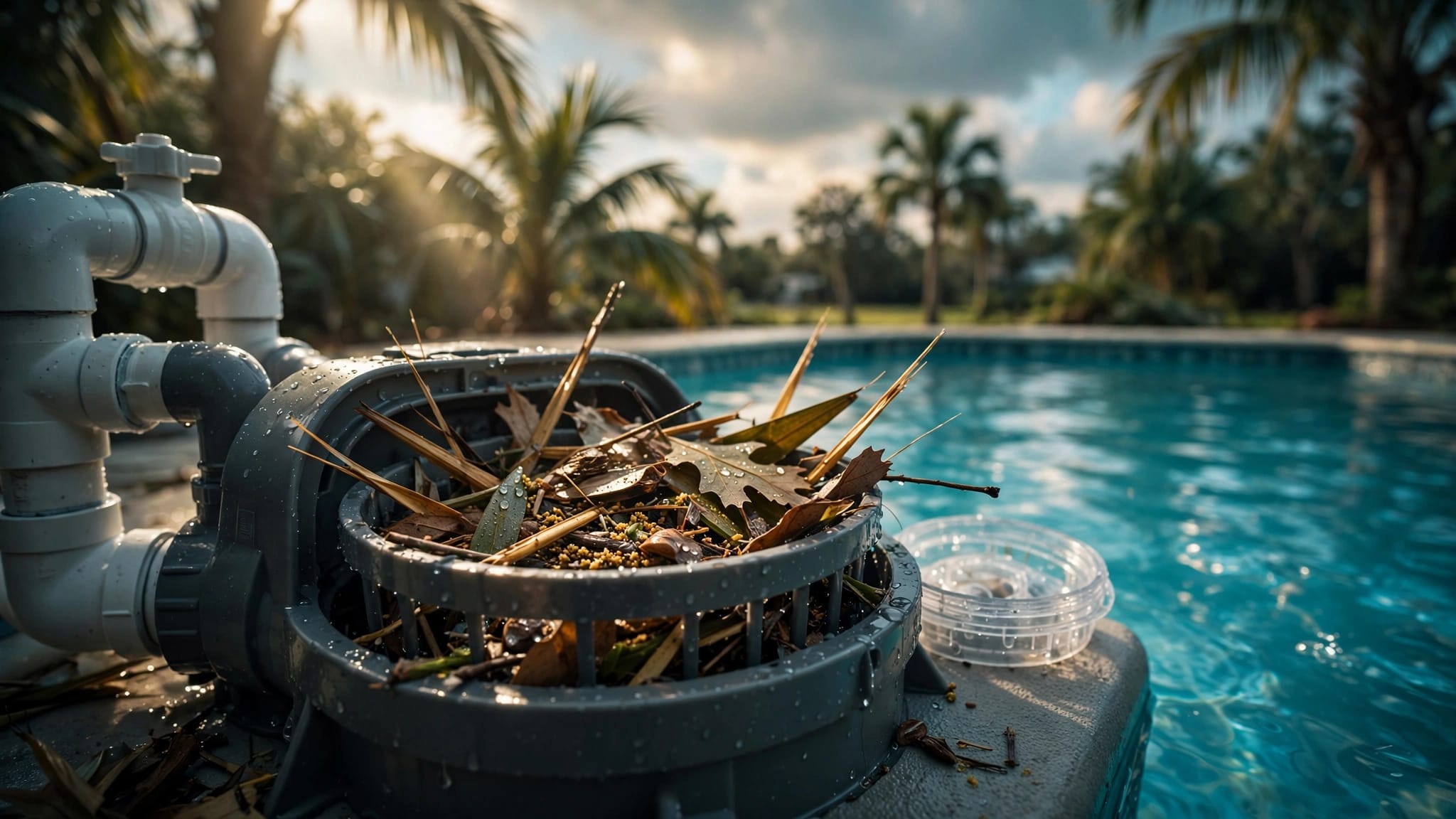
A hiss at the filter can be normal after you restart your pool pump. The harder question is whether the air will clear or keep coming back. Your pool filter air valve lets trapped air escape, but opening it won't fix a leak that keeps feeding air into the system.
The safe rule is simple: follow your filter's instructions, stay clear of the discharge, and close the valve once water flows steadily. If air returns, look beyond the valve before running the pump again.
Key Takeaways
- Open the air-relief valve when your filter's instructions call for venting, commonly during startup after filter service or a loss of prime.
- Close it when the discharge changes to a steady flow of water, following the procedure for your model.
- Stand to the side of the valve and keep your face and body clear of the outlet.
- Air that returns repeatedly may point to low pool water, a suction-side air leak, or a pump that isn't staying primed.
- Never open the filter tank or loosen its clamp or closure while the tank is pressurized.
What the Pool Filter Air Valve Does
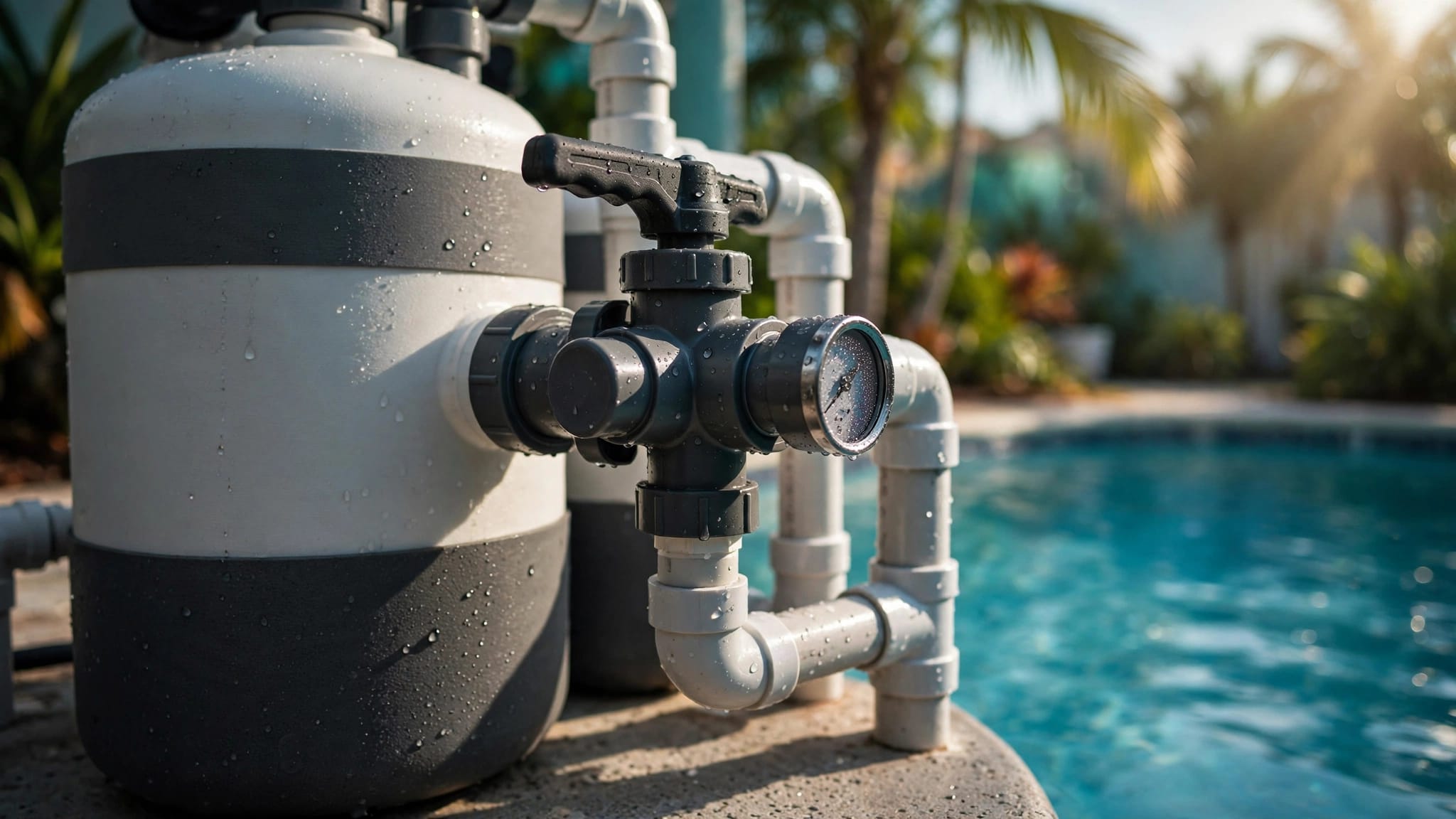
The manual air-relief valve is a small fitting, often near the top of a filter tank and its pressure gauge. Because air rises, it can collect high in the tank after the system has been opened or the pump has pulled in air. Venting gives that pocket a way out as water fills the filter.
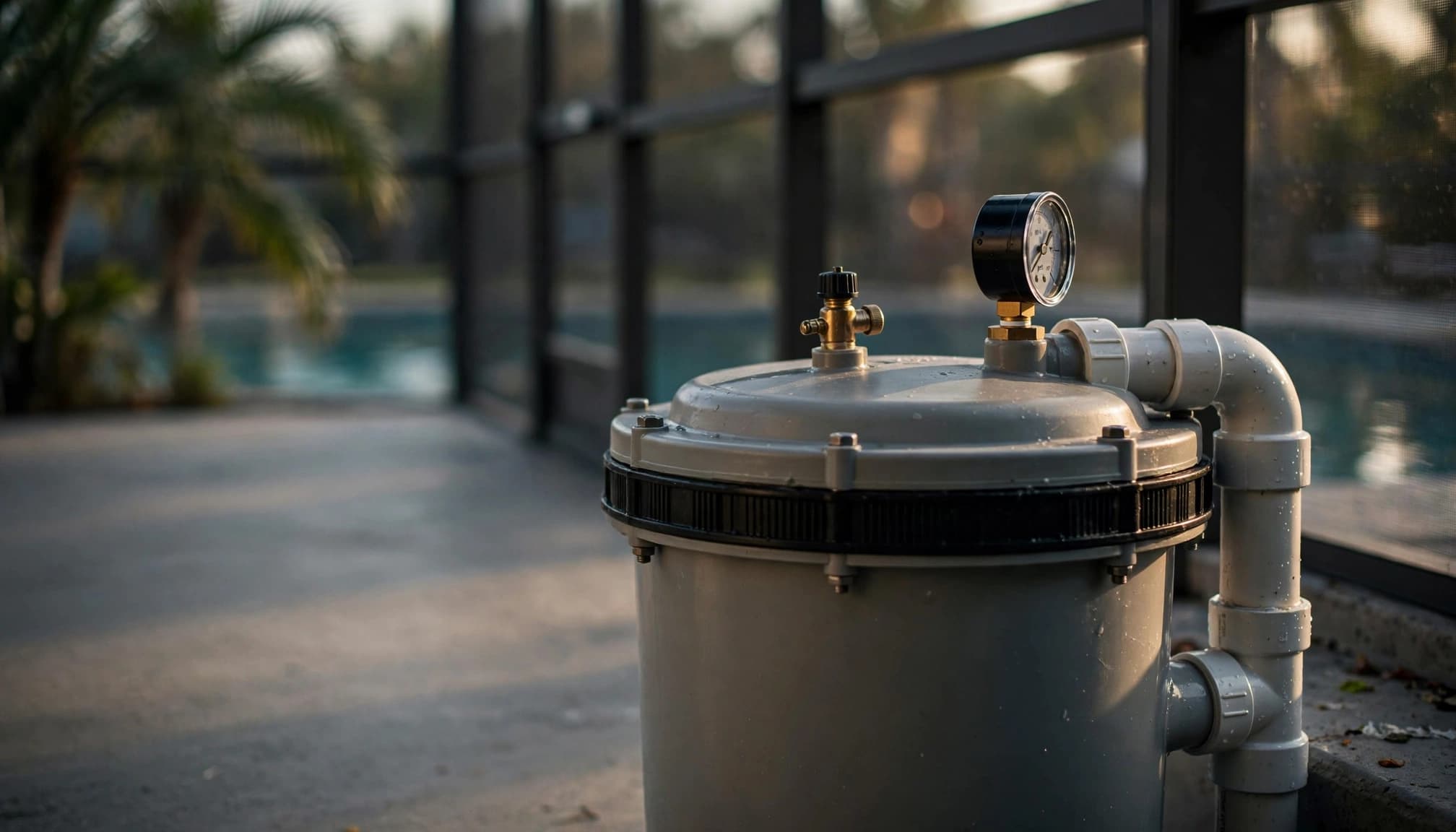
Your equipment may look different. The valve's location, design, and operating sequence depend on the filter manufacturer. Some systems also have automatic air-relief features. Find the model information and read its instructions before turning an unfamiliar fitting.
The air-relief valve has a different job from a multiport valve. A multiport selects filter functions such as filtering or backwashing on systems equipped for them. Don't move a multiport handle while the pump runs, and don't mistake it for the small fitting used to vent air.
When to Open the Pool Filter Air Valve
You generally use the valve when air has a reason to collect in the filter. A routine restart after opening the filter, cleaning a cartridge, or servicing plumbing is a common example. A pump that has lost prime may also leave air in the system.
After filter service or a restart
Before startup, confirm that the filter tank is fully assembled, its closure is secured according to the manual, and the system valves are in their normal positions. Then follow the filter maker's venting sequence. On filters that call for manual air purging, air may hiss or water may sputter briefly before the discharge becomes steady.
Close the relief valve as the manual directs once a continuous stream of water appears. Don't leave it open as a way to compensate for a circulation problem.
When air appears during normal operation
A few bubbles after startup can clear. Repeated bubbles at the pool returns, a pump basket that won't stay full, or a valve that releases substantial air every time you check it deserves attention.
You don't need to open the valve on a fixed weekly schedule if the system runs normally. The better question is whether air is accumulating and, if it is, why.
How to Bleed Air From a Pool Filter Safely
Read the instructions for your exact filter first. They determine when the pump should be running during venting, how the valve opens, and when to close it. Never force a stiff valve or improvise with a damaged one.
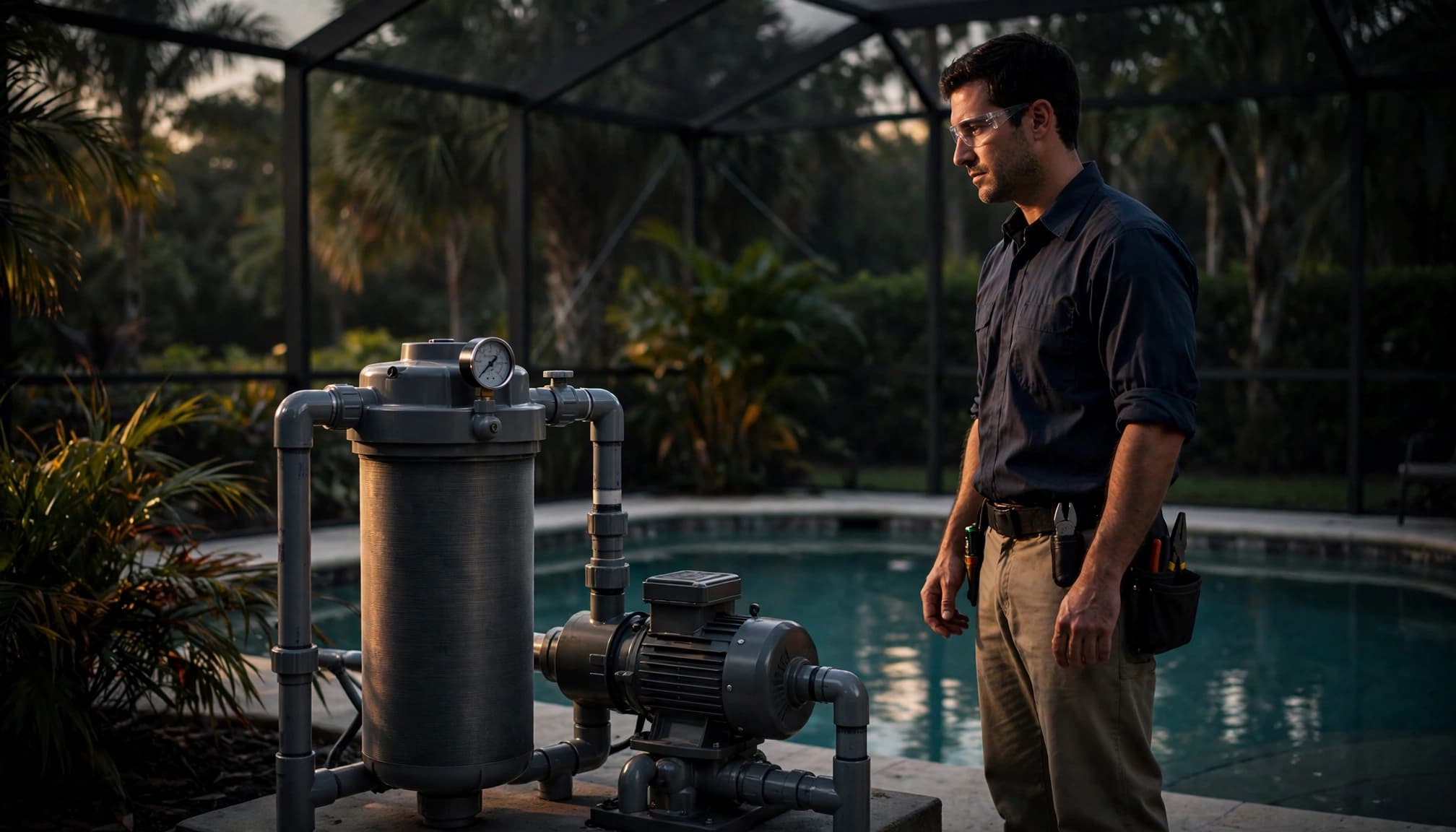
Prepare the equipment and your position
Check that the pool has enough water to supply the skimmer and that the pump isn't running dry. Look for visible cracks, leaks, or a loose filter closure before starting. If you see damage, leave the equipment off and arrange an inspection.
Stand beside the filter rather than over the relief fitting. Keep your face, hands, and body out of the discharge path. Air and water can leave the opening suddenly, so watch the outlet from a safe position.
Vent, then close when water runs steadily
Use only the opening method specified in your filter manual. As the system starts or runs according to that procedure, the outlet may first release air or sputtering water. Once the flow becomes steady, close the valve as directed. Check that the outlet stops leaking.
Stay nearby long enough to confirm that return flow is steady and the pressure gauge settles. If the discharge doesn't stabilize, the pump loses prime, or the tank makes unusual sounds, turn off the pump and get help.
A steady stream of water tells you the trapped air has cleared for now. Air that soon returns points to a problem elsewhere in the system.
Normal Purging Versus a Persistent Air Problem
The difference is what happens after you close the valve. A filter opened for cleaning can hold air on its next startup. If the air clears and circulation stays steady, that purge did its job.
Signs the air has cleared
The pump basket stays filled as expected for your system, water returns steadily to the pool, and the gauge holds near its usual operating reading. Brief startup bubbles fade rather than continuing through the return jets.
Note the pressure after a clean filter has run normally. That reading gives you a useful comparison later, especially if your pool has a variable-speed pump.
Signs to stop and investigate
Air isn't a routine purge if the relief valve keeps hissing on later checks or the pump repeatedly loses prime. Other warning signs include persistent return-jet bubbles, a large air pocket under the pump lid, weak flow, or a strained pump sound.
Turn off a pump that is losing water flow or running dry. Repeatedly venting the filter won't repair the condition bringing air into it.
Where Repeated Filter Air Can Come From
Start with observations you can make without opening a pressurized tank. Air often enters before the pump, on the suction side of the plumbing. That means a filter can release air even when the filter itself has no visible defect.
Check water level and visible suction points
Keep the pool water at the level recommended for your skimmer. If the level drops too low, the skimmer can draw air along with water. Watch for a skimmer that gulps air as the pump runs.
With the pump off and secured against an automatic restart before any hands-on work, check accessible baskets and the pump lid. Debris can restrict flow, while a poorly seated lid or damaged lid O-ring may let air in. Follow the pump manufacturer's instructions before opening or reseating parts.
Consider valves, fittings, and pump operation
Confirm that suction valves are in their intended circulation positions. A valve that restricts the pump's water supply can contribute to poor priming. On an automated pool or a pool with a connected spa, valve positions may change during a scheduled cycle.
Visible leaks or bubbles around equipment fittings also warrant a closer look. If simple checks don't explain the air, a pool professional can inspect the pump, seals, and plumbing. Don't assume that replacing the relief valve will solve a suction-side problem.
What the Pressure Gauge Can and Can't Tell You
The gauge helps you spot changes, but there isn't one normal pressure number for every pool. Filter type, plumbing, and pump speed affect the reading. Compare today's pressure with the clean-filter reading taken at the same pump speed .
A rising reading with weaker return flow may point to a dirty filter or restricted return path. A low reading alongside pump-basket air or lost prime suggests checking the water supply to the pump. Neither reading identifies a faulty air valve by itself. Back Bay Pools' pool equipment and maintenance FAQs also discuss choosing an energy-efficient pump and filtering system for a pool.
If you plan to open the filter for service, turn off the pump and prevent an automatic restart. Follow the manufacturer's pressure-release procedure, then verify that the gauge reads zero. Never loosen the tank closure while it is pressurized. If the gauge won't return to zero or appears stuck, stop and call a pool professional rather than relying on it to judge whether the tank is safe to open.
Plan Equipment Access During a Pool Project
An accessible equipment pad makes routine checks easier. When planning a new pool, ask where the filter gauge and air-relief valve will sit. You should be able to see the gauge and reach the valve without leaning over the tank or standing in the discharge path.
Back Bay Pools lists filters and pool pumps among the equipment options for its new pool construction projects. If you're updating an existing pool, its renovation and resurfacing services can include equipment such as filters and salt systems. Keep the operating manuals after installation so the correct venting and service procedures stay with the equipment.
For a Cape Coral pool installation or renovation that includes an equipment update, Get a Free Estimate to discuss the project on-site.
Frequently Asked Questions
Should the air-relief valve stay open while the pump runs?
Follow your filter's startup instructions. When the procedure calls for manual venting, the valve is open only long enough to release trapped air. Close it as directed when water flows steadily. Leaving it open can waste water and won't resolve a continuing air leak.
Is a brief hiss from the valve normal?
Yes, a brief hiss can be normal when air has collected after service or a restart. Sputtering may follow before the water stream steadies. Frequent hissing after the system has been running normally is different: check for recurring air and poor pump priming.
Can I open the filter lid after bleeding the air?
Bleeding during startup doesn't make a running filter safe to open. Before any tank service, turn off the pump, prevent it from restarting, and follow the manufacturer's full pressure-release instructions. Confirm the gauge reads zero. Never remove or loosen the lid, clamp, or band while the tank is pressurized.
Why do bubbles keep returning to the pool?
Low water at the skimmer, a pump-lid seal that isn't seated correctly, restricted suction flow, or an air leak in suction-side plumbing can cause recurring bubbles. If the pump struggles to stay primed or basic checks don't help, stop running it and have the system inspected.
Conclusion
That first hiss after a restart may be ordinary trapped air. The useful test is whether it clears, water flows steadily, and the system stays that way.
Use the pool filter air valve according to its manufacturer's instructions, and treat returning air as a circulation issue to investigate. Above all, keep clear of the discharge and never loosen a pressurized filter tank .