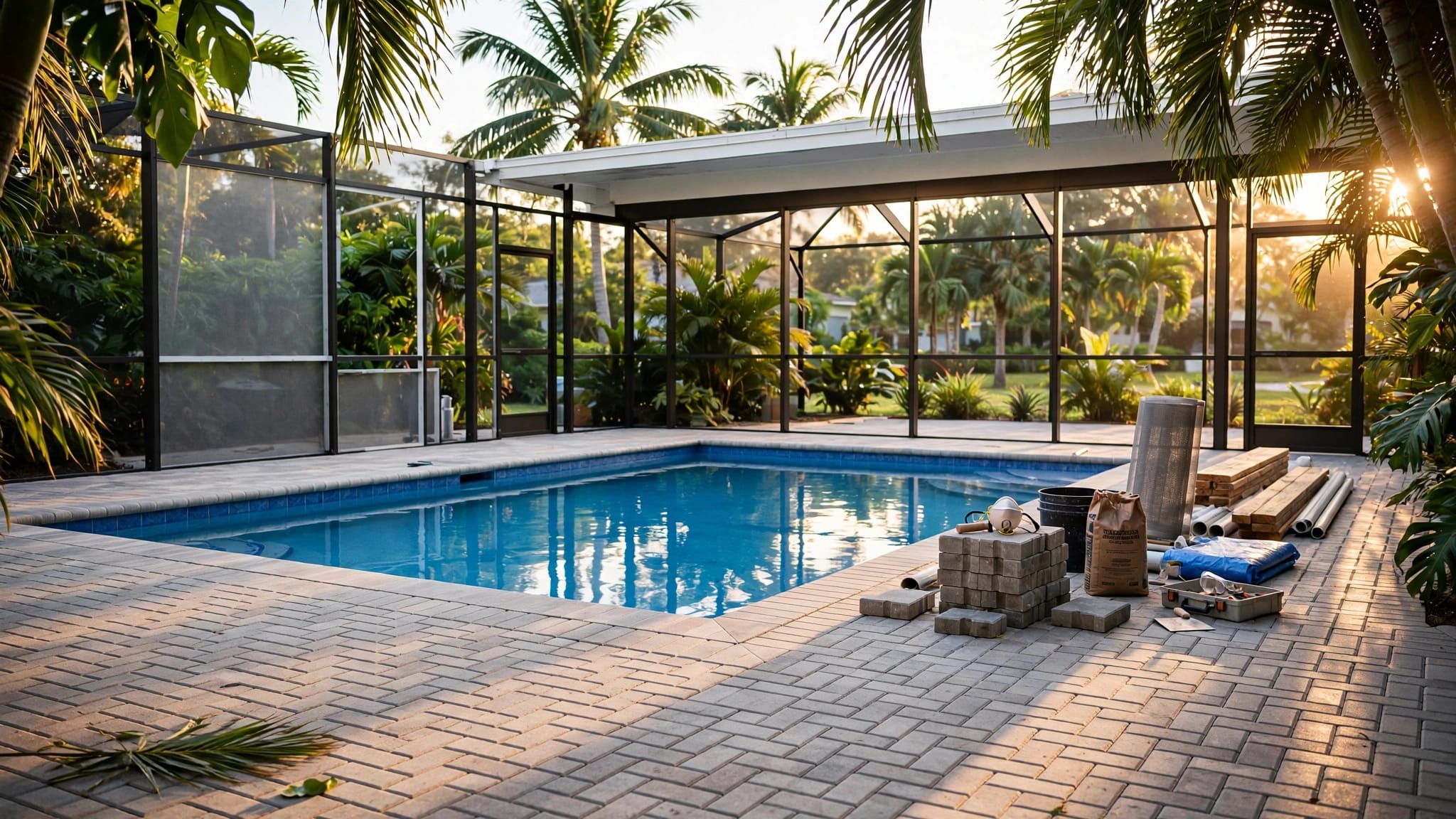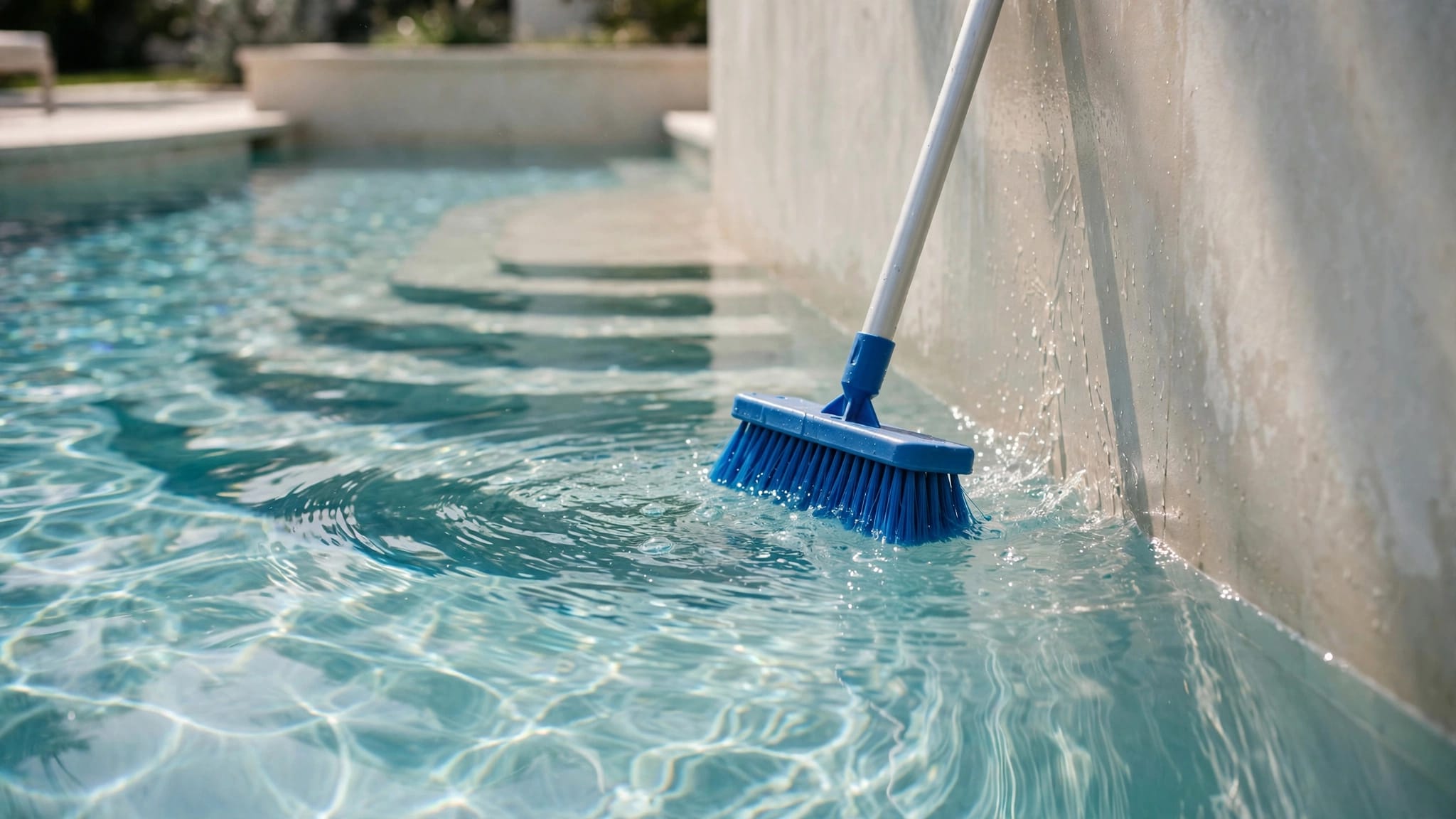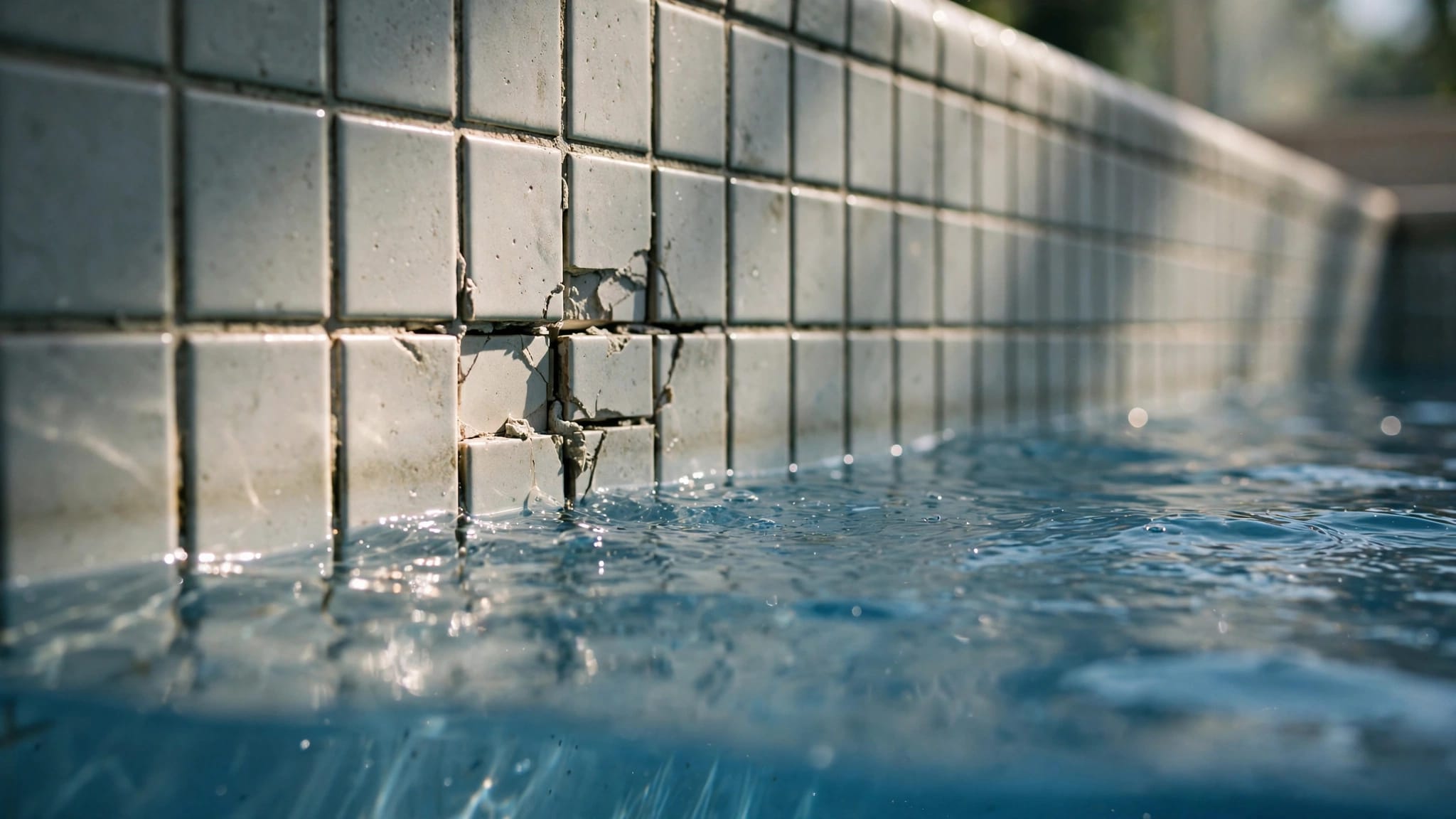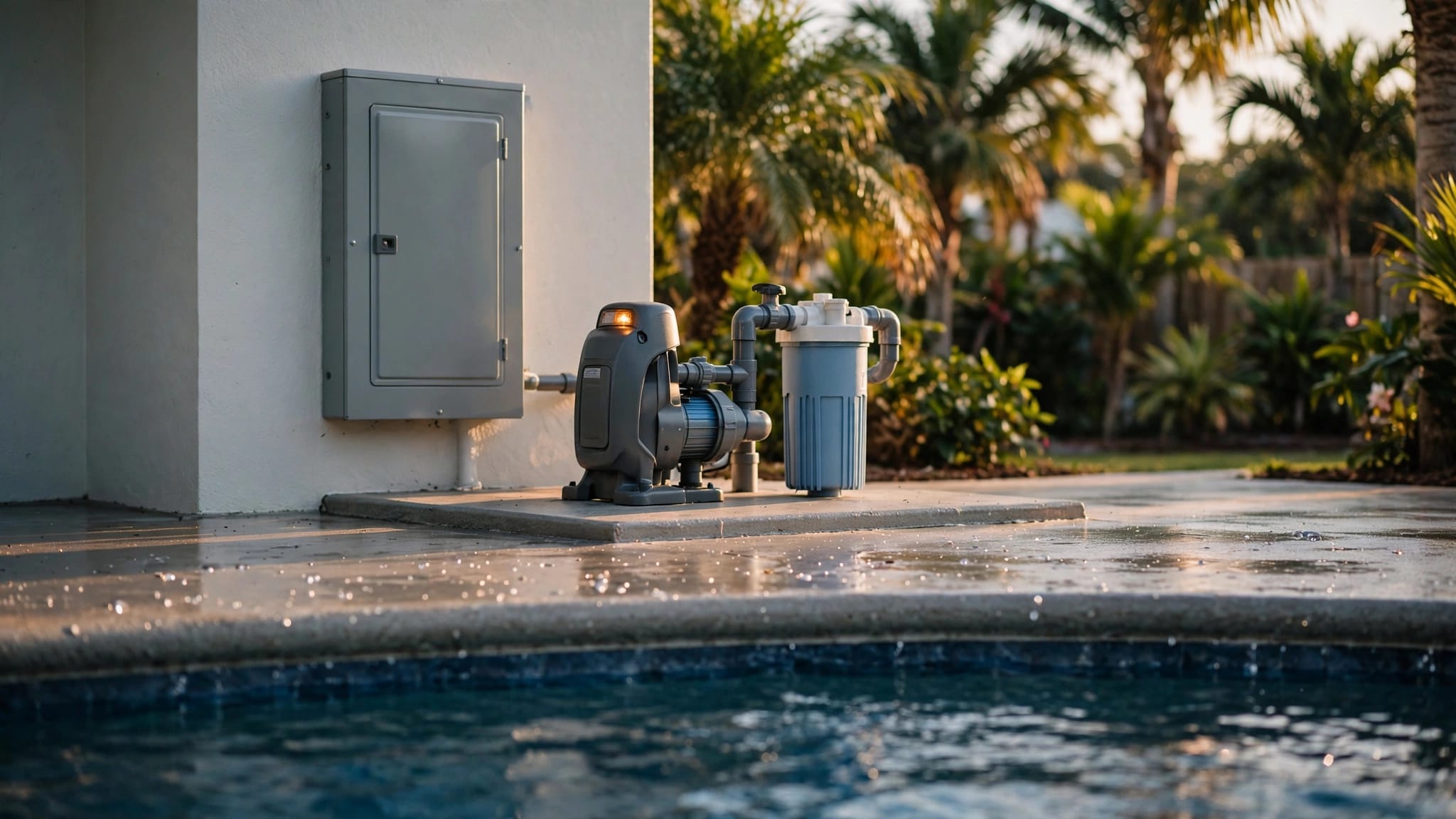
Rust-colored marks on a pool surface may come from iron, but color alone can't confirm the cause. Effective pool iron stain removal starts with a close look at the stain, a water test, and a treatment that suits the pool's finish.
Cape Coral pools face changing conditions after heavy rain, water top-offs, and seasonal use. A careful diagnosis can prevent unnecessary chemicals from damaging the finish or masking the real problem.
How to recognize a suspected iron stain
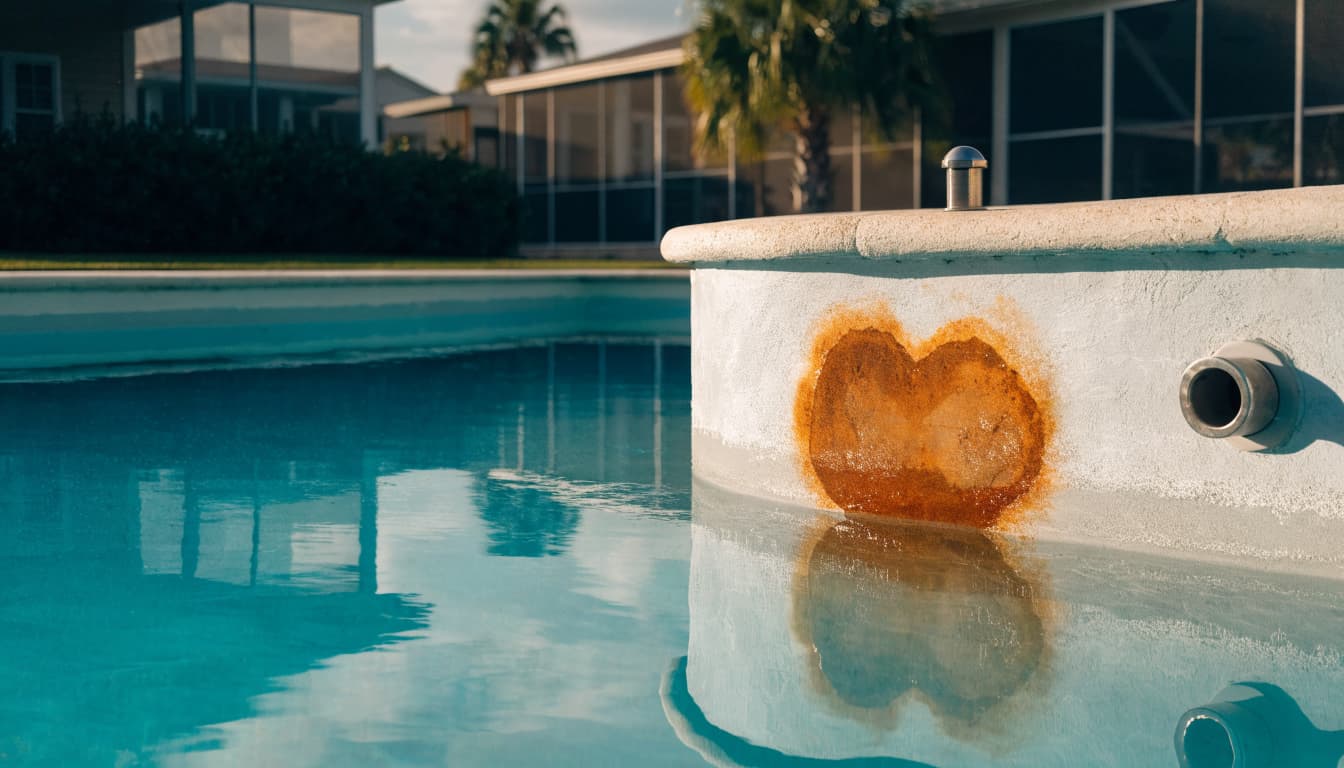
Iron can leave yellow, orange, or reddish-brown marks on a pool's walls, floor, steps, or around fittings. A stain may appear after adding replacement water, filling a new pool, or making a chemical adjustment. Those events are useful clues, but they don't prove iron is responsible.
Look at the stain's location and texture
Note whether discoloration is concentrated near a return, along the waterline, or in a patch on the floor. Also check whether the surface feels smooth or rough. A stain that remains in place after gentle brushing differs from loose debris, though brushing alone can't identify the material causing it.
Avoid scraping the mark with a hard tool. Scraping may scratch the finish and make a small blemish harder to assess.
Track what happened before it appeared
Write down when you first noticed the stain and what changed beforehand. A recent refill, storm, equipment repair, or chemical addition can help narrow the possibilities. If the pool's water source changes between municipal, well, or delivered water, note that too.
A clear pool can still have metal staining. Water clarity tells you little about dissolved minerals, so use test results and the surface condition rather than appearance alone.
Tell iron stains apart from other common pool marks
Pool discoloration can come from metals, algae, scale, leaves, pollen, and water chemistry. These causes can look similar, especially when a stain has been on the surface for some time.
Compare color, texture, and behavior
Iron often appears yellow, orange, or brown. Copper can create blue-green discoloration, while manganese may contribute brown or dark marks. These colors overlap with stains from organic debris, and lighting or finish color can make them harder to interpret.
Algae may brush away or smear, and it can feel slick. A metal stain tends to stay fixed, but that clue isn't conclusive. Calcium deposits are often pale and rough, while leaves or pollen can leave colored patches where material rested against the surface.
Don't diagnose by color alone
Check whether the mark lifts with gentle brushing, whether it feels raised or rough, and whether it sits in a spot where debris collects. Then compare those clues with water-test results. A pool professional can help distinguish a metal stain from scale, algae, or a finish problem when the evidence is mixed.
Treating every brown or green mark with algaecide can waste product and complicate diagnosis. Some algaecides and specialty treatments contain copper or other metals, so review ingredients before using them.
Test the water before choosing a treatment
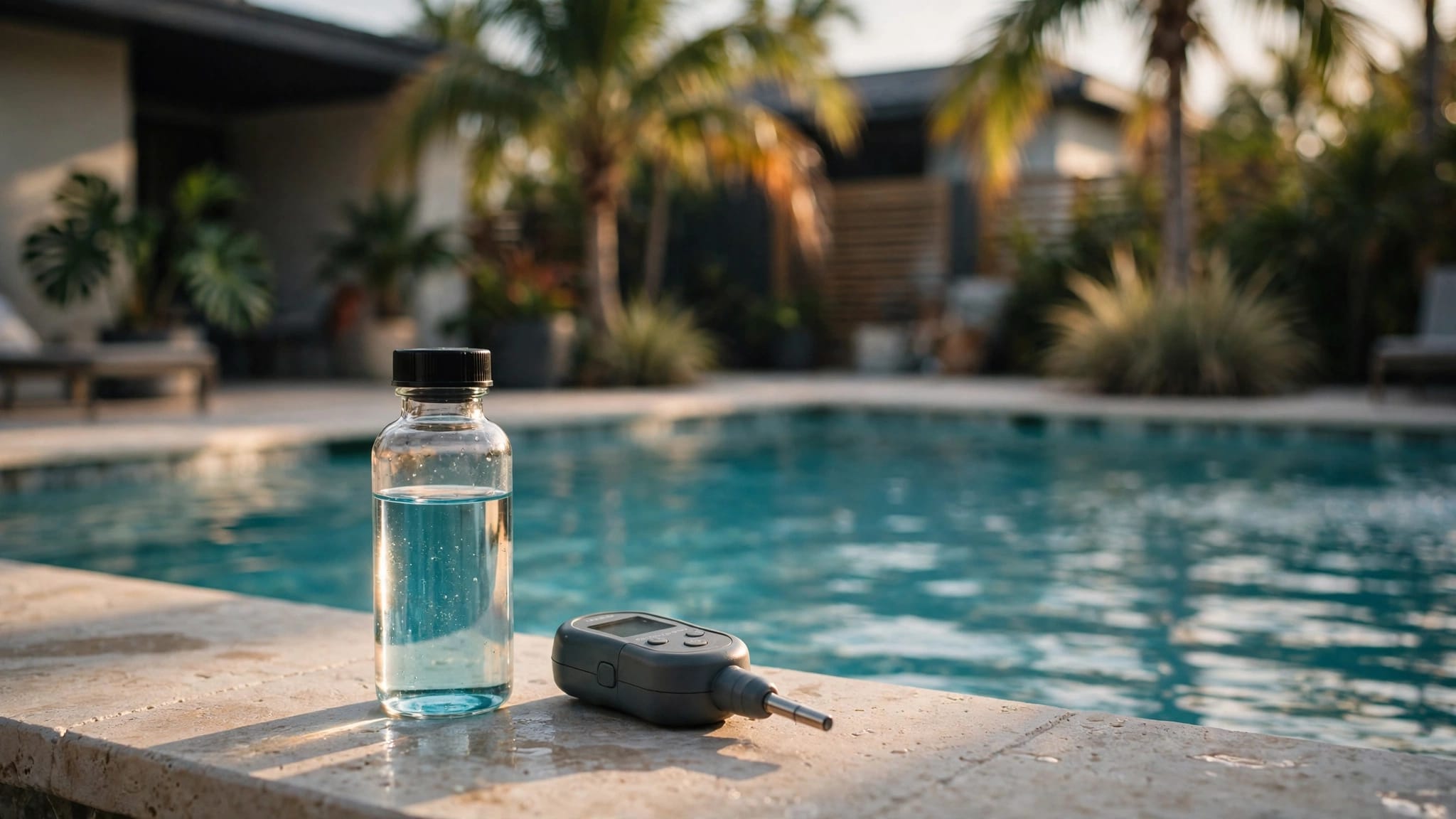
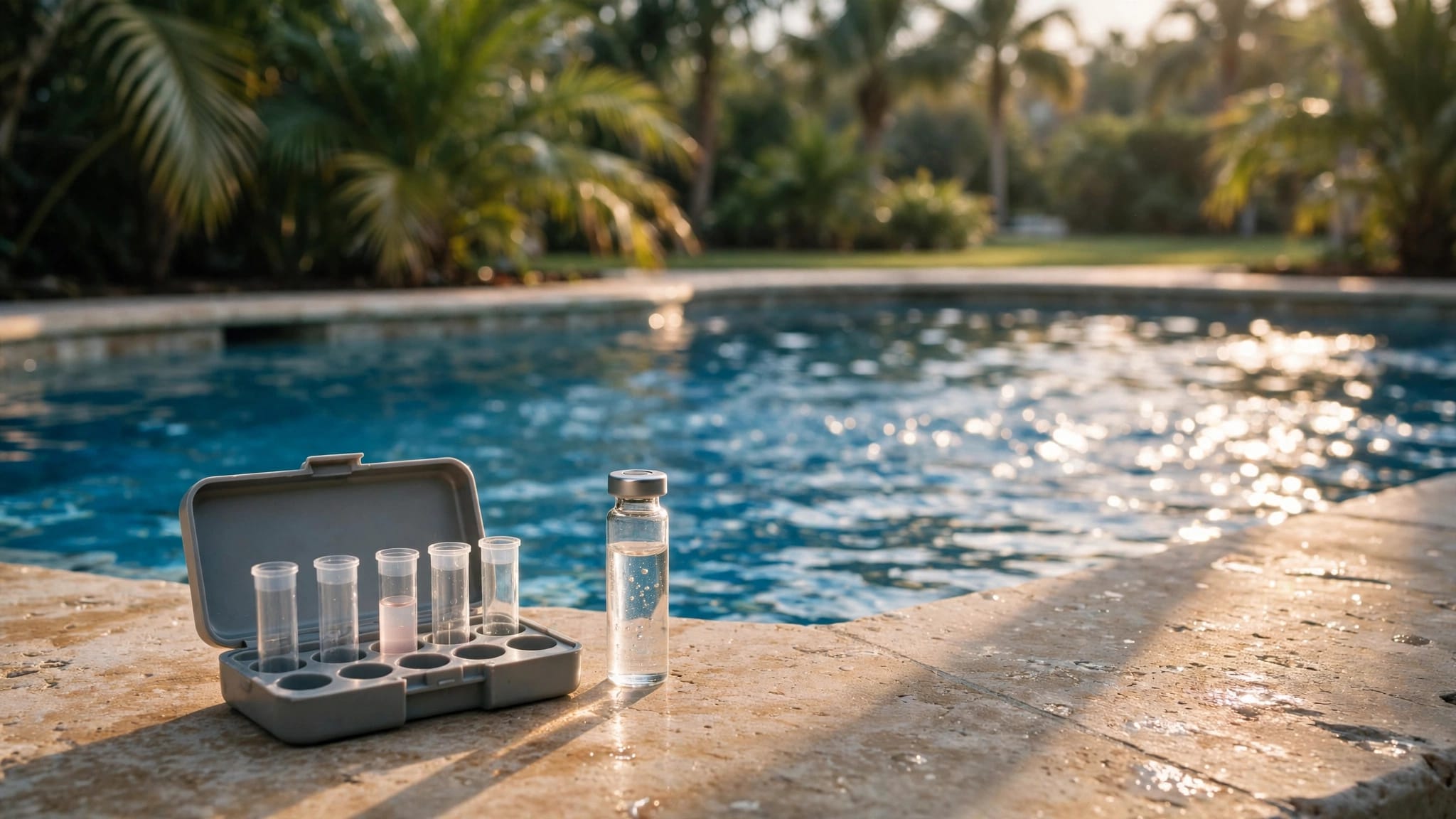
Water chemistry affects how minerals behave and how well the pool finish holds up. Test pH, alkalinity, calcium hardness, and sanitizer, following the test kit's directions. If metal staining is suspected, arrange a test that addresses metals rather than relying on a routine sanitizer reading.
Review recent water and maintenance changes
Record recent top-offs, rainfall, equipment work, and product additions alongside the test results. Heavy rain can change pH and alkalinity, while replacement water may introduce metals or alter hardness. This record can help explain why a stain appeared or returned.
If the pool was recently filled or topped off from an unfamiliar source, test that source when possible. A hose-end prefilter rated for the minerals of concern may reduce some contaminants before they enter the pool.
Check circulation and filtration
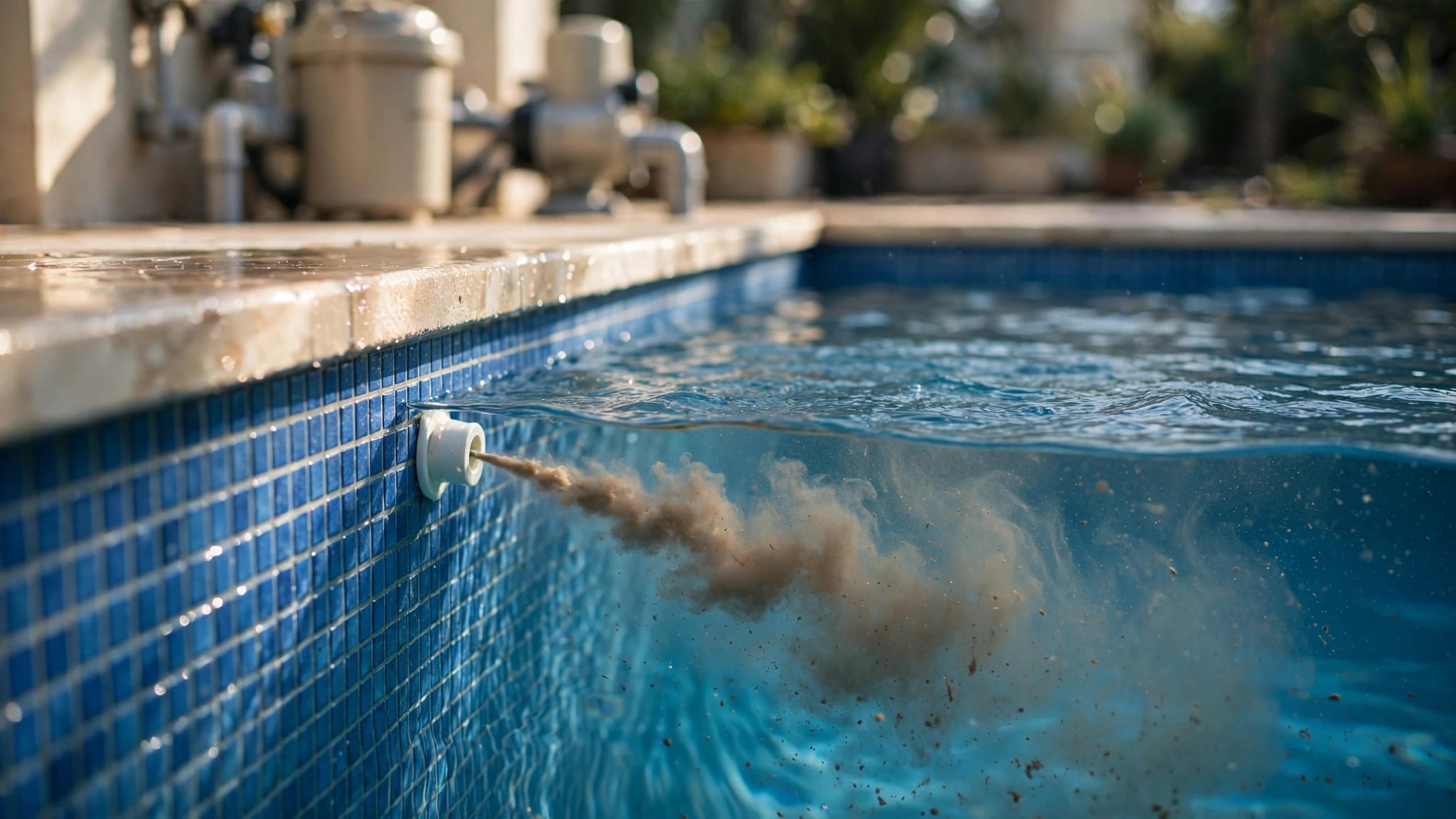
Look at return flow, pump and skimmer baskets, filter condition, and the pressure gauge. Aim return jets to move water through corners, steps, benches, and shallow areas. Clean or backwash the filter as its manufacturer directs.
Good filtration removes suspended material, but it won't capture every dissolved metal. A metal sequestrant can keep dissolved metals suspended, but it doesn't remove them permanently. Follow the product's instructions and maintenance schedule.
A careful plan for pool iron stain removal
Once testing supports a metal stain, select a treatment labeled for that purpose and compatible with the pool surface. Plaster, quartz, pebble, and tile can respond differently to aggressive products, so don't assume one method fits every finish.
Treat a small area first
Read the entire product label before applying anything. Test the product on a small, inconspicuous area and watch for changes in color or texture. If the finish looks damaged or the stain worsens, stop and get professional advice.
Use only the amount and application method the label specifies. Keep the pump and filter operating as directed, and don't add a second stain product to speed up the result. If the treatment calls for a sequestrant, follow its instructions; it may help keep metals suspended but won't remove them from the water permanently.
Protect people and the pool surface
Wear the protective equipment listed on the product label, keep children and pets away, and keep swimmers out during treatment. Store products in their original containers in a cool, dry place.
Never mix pool chemicals. Don't combine products in a bucket, feeder, or pool, and don't mix chlorine with acids. Add products separately and only as their labels direct. An incompatible combination can create heat, fire, or toxic gas.
Prevent recurring stains in Cape Coral
Prevention depends on controlling what enters the pool and keeping water moving across the whole surface. Local water chemistry can vary by source and season, so test after a refill, heavy rain, or a noticeable change in the water.
Manage replacement water and weather
Top-offs and new fills can introduce iron, copper, manganese, or other minerals. If a stain appears soon after adding water, pause before adding more products. Test the water and consider a prefilter rated for the contaminants you need to reduce.
After a storm, remove debris, restore circulation, and test the water before making adjustments. A screened enclosure helps keep out leaves and insects, but wind-driven rain and fine debris can still reach the pool.
Keep chemistry and circulation steady
Test pH and alkalinity together, and track calcium hardness and sanitizer as well. High pH can encourage metals to leave solution and calcium to form scale. Low pH can make water aggressive toward the finish and equipment. Make changes based on test results, then allow water to circulate before testing again.
Brush the pool regularly, remove debris, and maintain the filter according to equipment instructions. These habits help prevent settled material and stagnant areas from contributing to discoloration.
When a stain may point to a surface problem
A mark that keeps returning despite balanced water, proper filtration, brushing, and control of replacement water may involve the finish itself. Rough plaster, worn aggregate, cracks, damaged tile, or porous areas can hold discoloration more readily.
Persistent stains don't automatically mean the pool needs resurfacing. However, widespread discoloration combined with roughness, pitting, flaking, or cracks deserves an inspection. See the signs it's time to resurface your Cape Coral pool if you're also noticing finish wear.
Acid washing removes a thin layer of the existing finish; resurfacing replaces a worn interior. They address different conditions, and neither corrects the water source or chemistry that caused a stain. Read more about pool resurfacing versus acid washing before considering surface work.
If the stain or finish is uncertain, avoid random acid treatments or high-sanitizer corrections. Back Bay Pools, LLC provides pool renovation and resurfacing services in Cape Coral, and you can Get a Free Estimate for an on-site evaluation.
FAQ
Can iron stains appear when the pool water looks clear?
Yes. Clear water doesn't rule out dissolved metals or stains on the finish. Test the water and assess the surface instead of using clarity as the only sign.
Will a filter remove iron from pool water?
A filter can remove suspended particles, but it may not remove dissolved metals. A sequestrant can keep metals suspended, but it doesn't permanently remove them. Follow product directions and address the source of the metals.
Should I use acid to remove a suspected iron stain?
Don't apply acid based only on the stain's color. Acid washing removes a thin layer of the finish and can damage the pool or nearby materials if handled incorrectly. Ask a pool professional to assess the stain and surface first.
Keep the cause in view
A rust-colored mark is a reason to investigate, not a diagnosis. Test the water, consider recent refills and weather, and choose a surface-safe treatment only when the evidence supports it.
When a stain returns or the finish feels rough, professional assessment can help separate a water problem from surface wear. That distinction protects the pool from treatments that may do more harm than good.