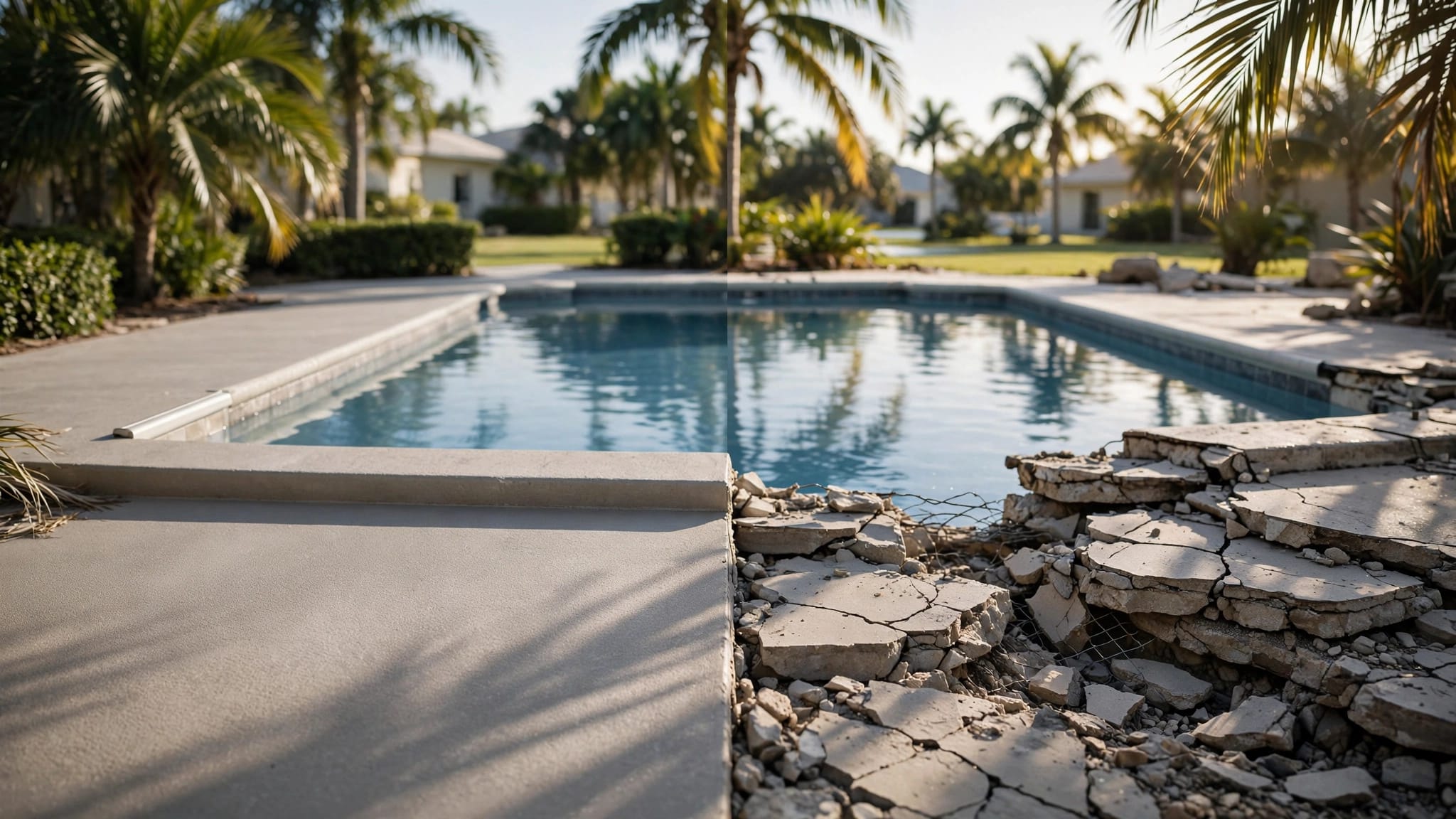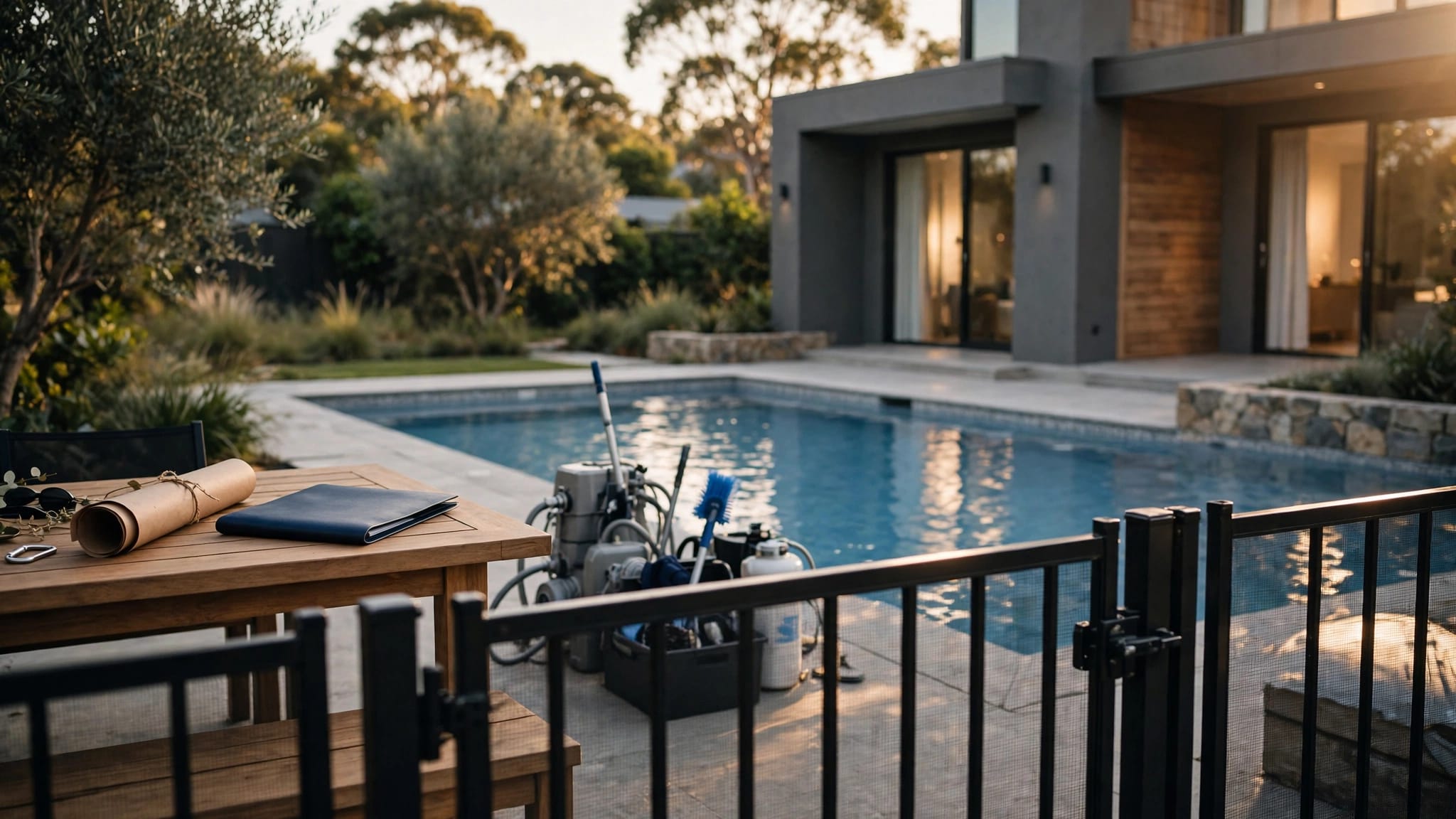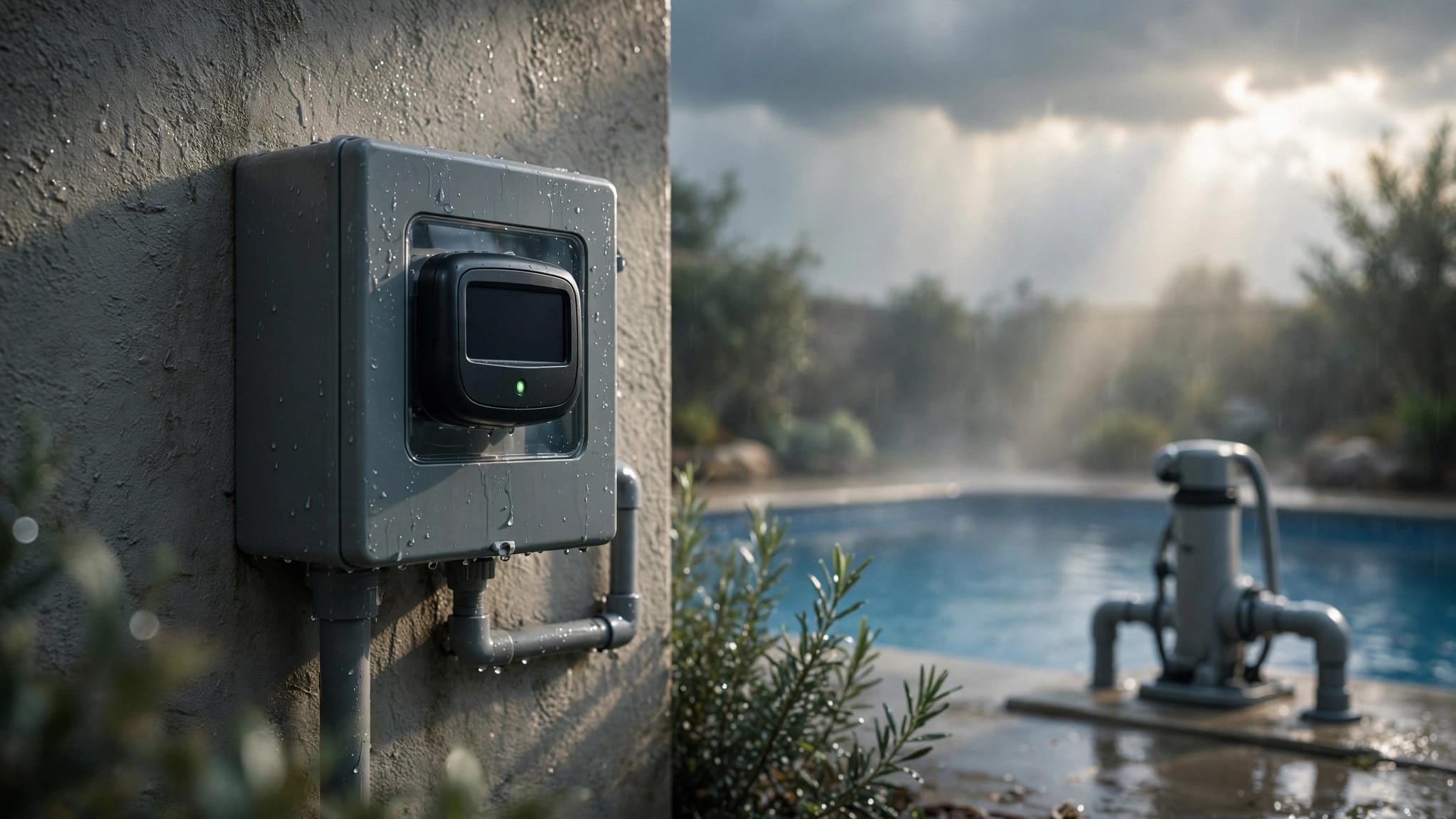
Cape Coral weather can turn a pool deck into a shallow lake fast. One hard rain, and water starts pooling where people walk, lounge, and carry wet towels.
That matters because standing water can stain pavers, make the deck slippery, and push runoff into places that are hard to fix later. Whether you need Cape Coral pool deck drains depends on the lot, the slope, the deck shape, and how water moves across the property.
Why Cape Coral pools face drainage pressure
Southwest Florida gets heavy rain, and many local lots are fairly flat. That mix gives water fewer places to go, so it often lingers near the pool instead of running away from it.
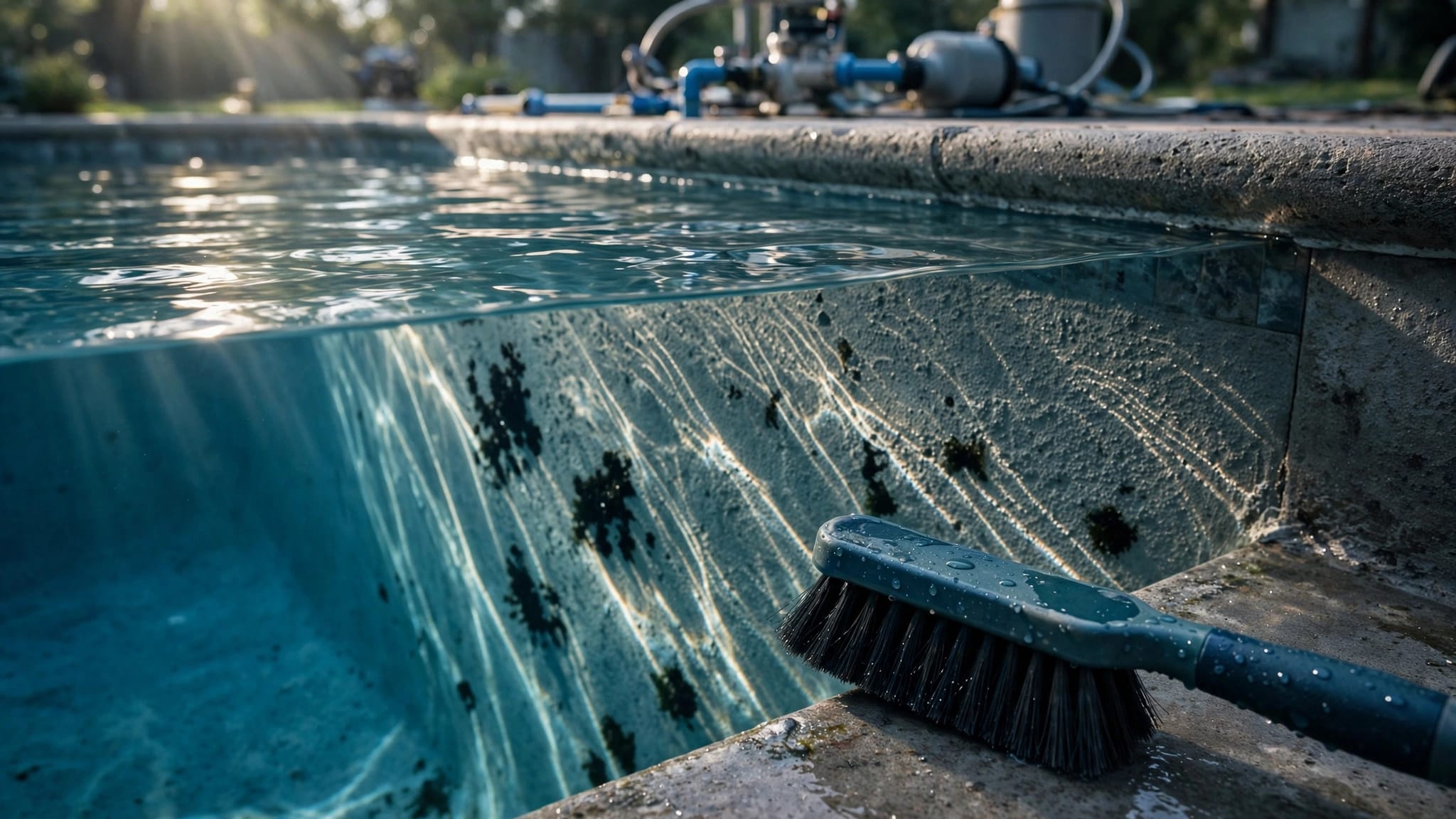
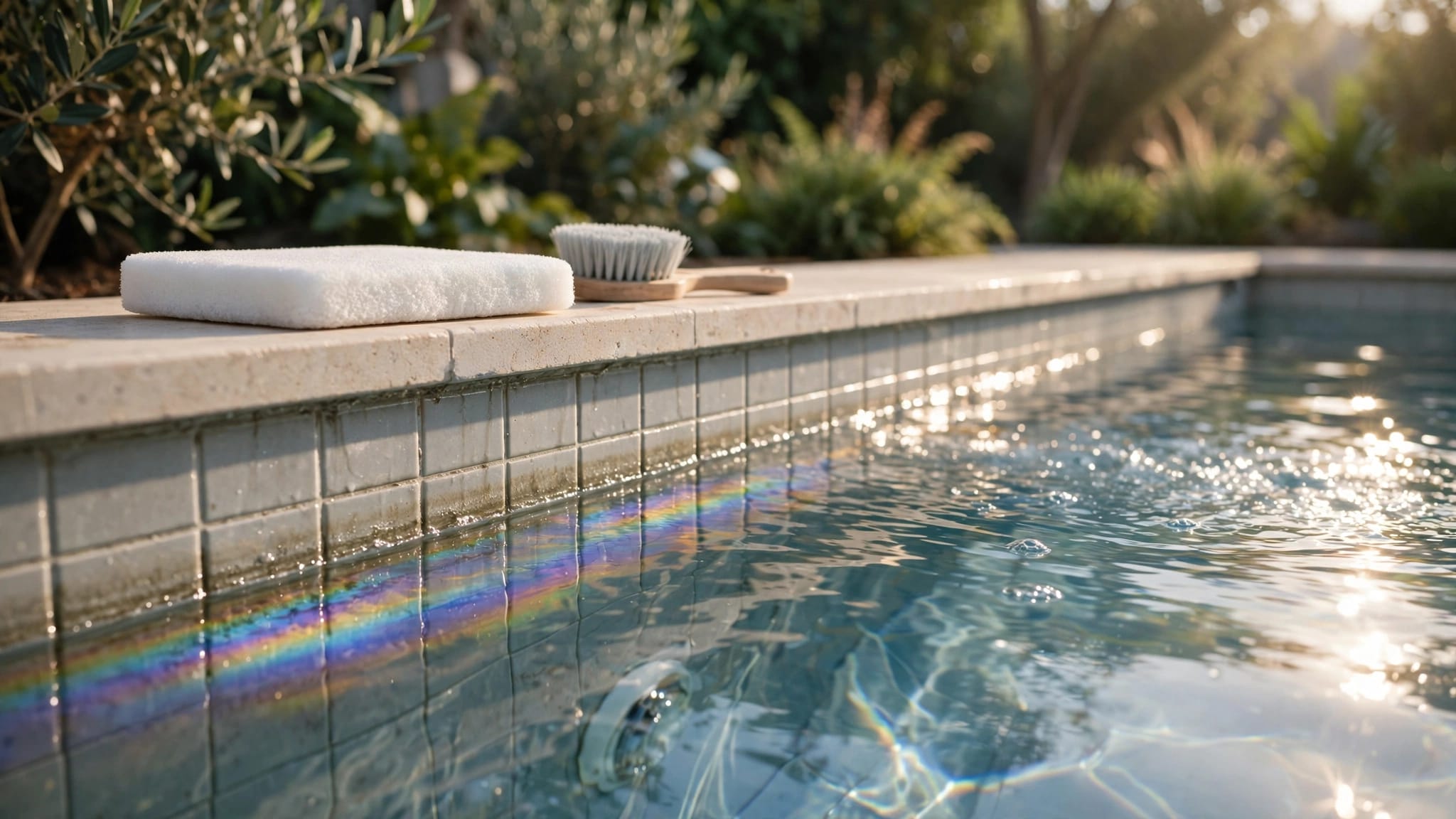
Deck material also plays a role. Pavers, concrete, and stone all react differently to water, but none of them like repeated puddling. Over time, trapped water can wash out joint sand, leave mineral marks, and create soft spots around the edges.
A drain plan also matters near screen enclosures and lanais. If runoff keeps collecting at the same edge, it can leave stains, erode base material, or cause small shifts that get worse with time.
If water keeps finding the same low spot, the deck usually needs more than a quick patch.
When deck drains make sense around the pool
Deck drains make the most sense when slope alone cannot move water away cleanly. That happens on many remodels, especially when the original grading was rushed or changed over time.
A closer look is smart if you notice any of these signs:
- Water sits in the same area after a normal rain.
- The deck slopes toward the house, lanai, or enclosure.
- Pavers lose sand near the edges or around drain lines.
- Splash-out from swimmers adds to an already wet spot.
- A downspout or yard drain sends water back toward the pool area.
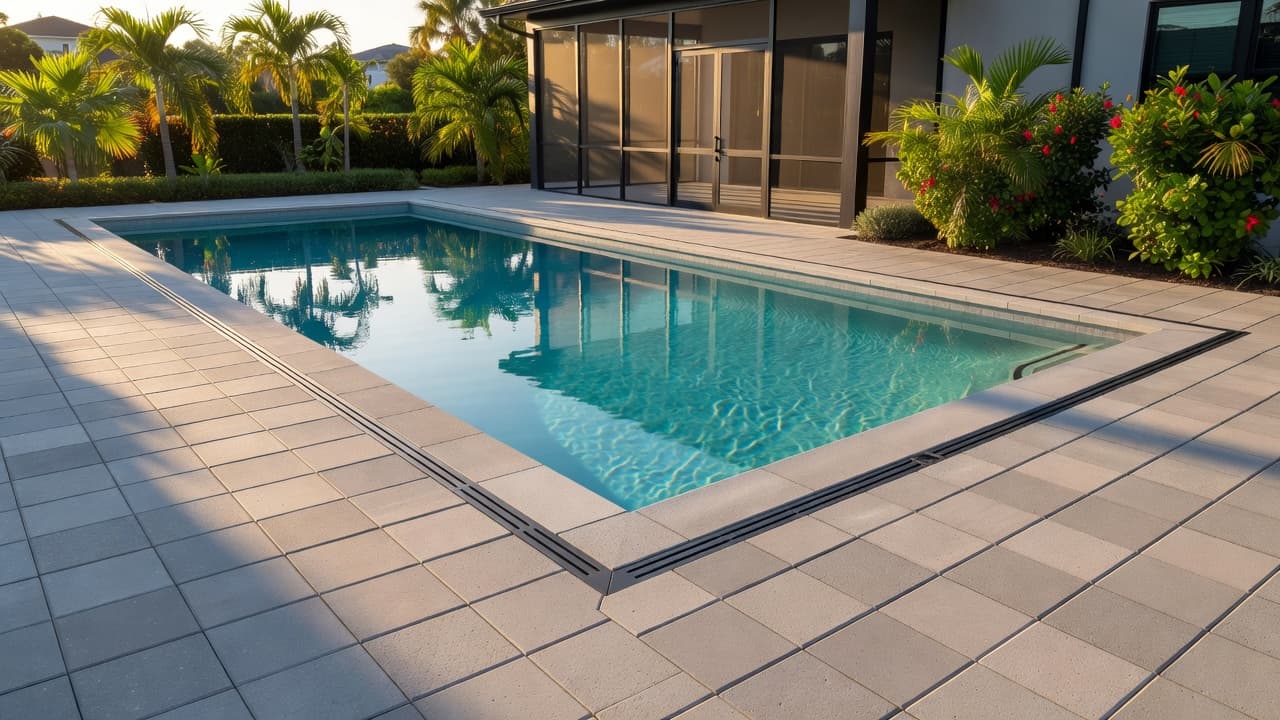
Sometimes the issue is small and local. A single low corner may need a spot drain. In other cases, the whole deck needs better slope plus a drain line to carry water out faster.
That is why a one-size-fits-all answer does not work well. A deck can look level to the eye and still hold water in the wrong place after a storm. Even a small grade change can make a big difference.
The drain options that work best
Different setups solve different problems. The right choice depends on where the water starts collecting and how fast it needs to move.
| Drain option | Best for | Watch for |
|---|---|---|
| Channel drain | Long deck runs and wide wet areas | Needs regular cleaning and a clear outlet |
| Spot drain | One low point or a small puddle area | Won't fix a deck with poor overall grading |
| Slope only | Simple decks with a clean runoff path | Small errors can leave puddles behind |
Many pool projects use a mix of slope and drains. That approach often works better than trying to force one feature to do all the work. It also gives water more than one path out, which helps during a summer downpour.
If your yard keeps water after rain, deck drains may need to tie into a larger drainage plan. In some homes, the deck is fine, but the yard outside the cage needs help too. A drain that ends in the wrong place only moves the problem a few feet away.
What your contractor should review before the layout is set
The best time to think about drainage is before the deck is built or resurfaced. Once concrete is poured or pavers are set, fixing water flow gets harder and more expensive.
A good site review should cover these points:
- How the lot slopes after rain.
- Where water leaves the deck.
- Whether the deck meets a house wall, screen enclosure, or patio edge.
- How the finish material handles runoff.
- Where existing drains, swales, or downspouts already send water.
That review matters during renovations too. If you are updating an old pool, resurfacing the deck, or replacing pavers, drainage should be part of the plan, not an afterthought. It is much easier to correct grading before new surfaces go in.
For new builds, drainage should be built into the design from day one. A well-planned layout gives the pool, deck, and yard a better chance of working together. If you are in that stage, custom in-ground pool construction should include drainage choices early, not after the hardscape is already set.
If you are unsure whether your deck needs drains, a site visit can clear it up fast. Get a Free Estimate and have the grading, deck design, and drainage path looked at before the work starts.
Conclusion
A Cape Coral pool does not always need deck drains, but many decks benefit from them. The real issue is how your lot handles water after a storm and whether the deck has a clean path for runoff.
When drainage is planned early, the deck stays drier, pavers last longer, and slippery puddles are less of a problem. That is the kind of detail that makes a pool area easier to live with, long after the first storm rolls through.