Running your pump too little can leave a Florida pool cloudy, poorly chlorinated, and full of debris. Running it too long can increase energy use without improving water quality. For most residential pools, Florida pool pump runtime falls between 8 and 12 hours per day, but the right schedule depends on your pool's size, equipment, weather, and use.
Florida's heat, intense sunlight, frequent rain, and long swimming season place extra demands on pool water. A good schedule should circulate the entire pool at least once daily while giving the filter and sanitizer enough time to work. Start with the general range, then adjust it based on how your pool responds.
Key Takeaways
- Most Florida residential pools need about 8 to 12 hours of circulation each day.
- A variable-speed pump often saves energy when it runs longer at a lower speed.
- Pool size, flow rate, chlorine production, weather, and swimmer traffic affect the schedule.
- One complete water turnover is a useful baseline, but clear water and balanced chemistry matter more.
- After heavy rain, storms, or unusually high use, temporary extra circulation may be necessary.
How Long Should a Florida Pool Pump Run Each Day?
A typical Florida pool pump should run 8 to 12 hours daily during the swimming season. Many homeowners start at 10 hours, then check water clarity, chlorine levels, and filter pressure before making changes.
A smaller pool with a properly sized pump may circulate effectively in 6 to 8 hours. A larger pool, a pool with attached features, or one with a low-speed variable-speed setting may need 10 to 12 hours. Pools with salt chlorine generators often require enough daily runtime for the generator to produce the needed chlorine.
The pump doesn't need to run continuously unless your pool professional or equipment manufacturer recommends it. However, running it for only two or three hours usually doesn't provide enough circulation in Florida's climate.
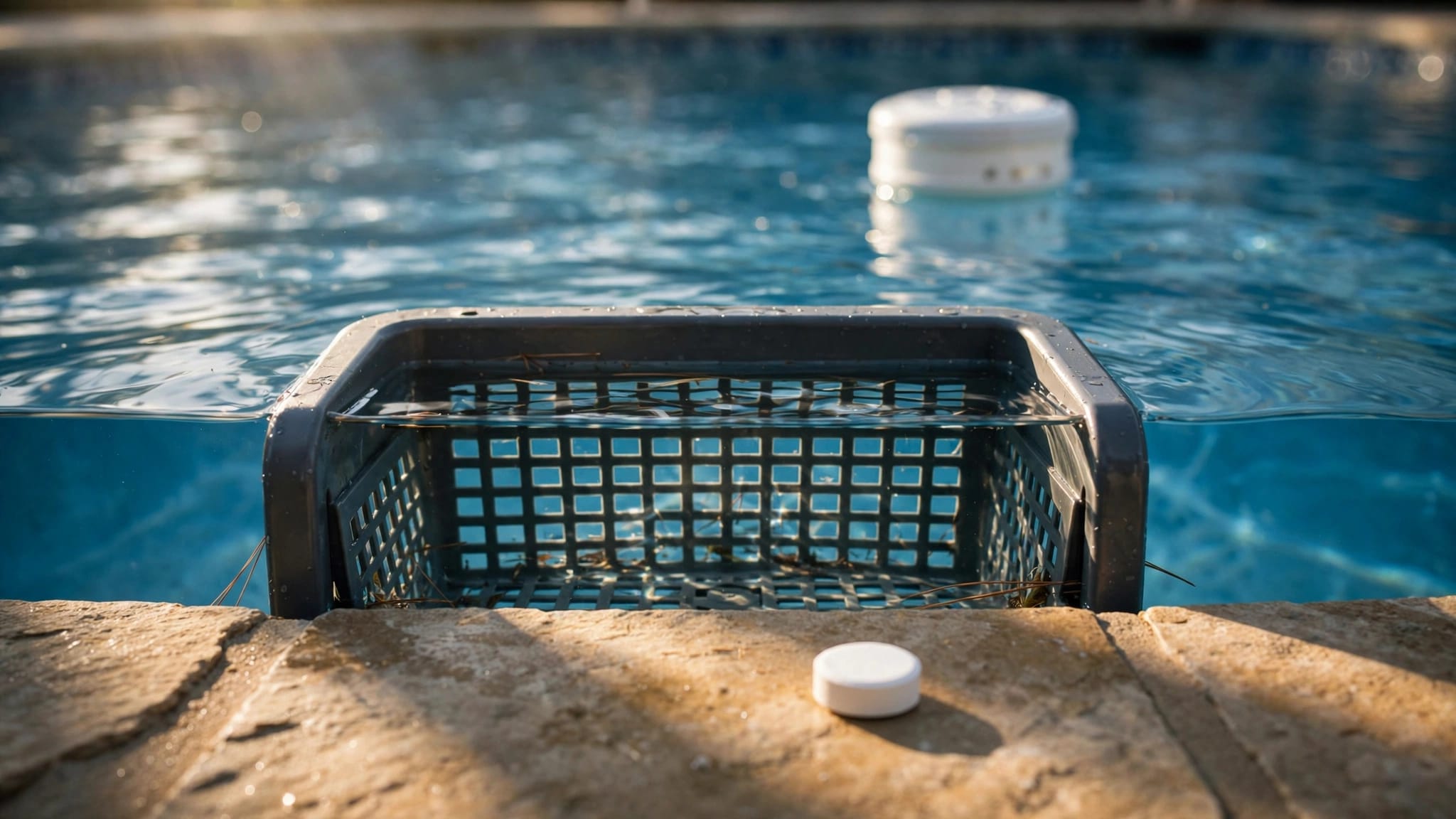
Your pump moves water through the skimmer, filter, heater, salt cell, and return jets. This process distributes chemicals and removes suspended particles. When circulation stops, debris settles, sanitizer becomes less evenly distributed, and areas with limited movement can develop water-quality problems.
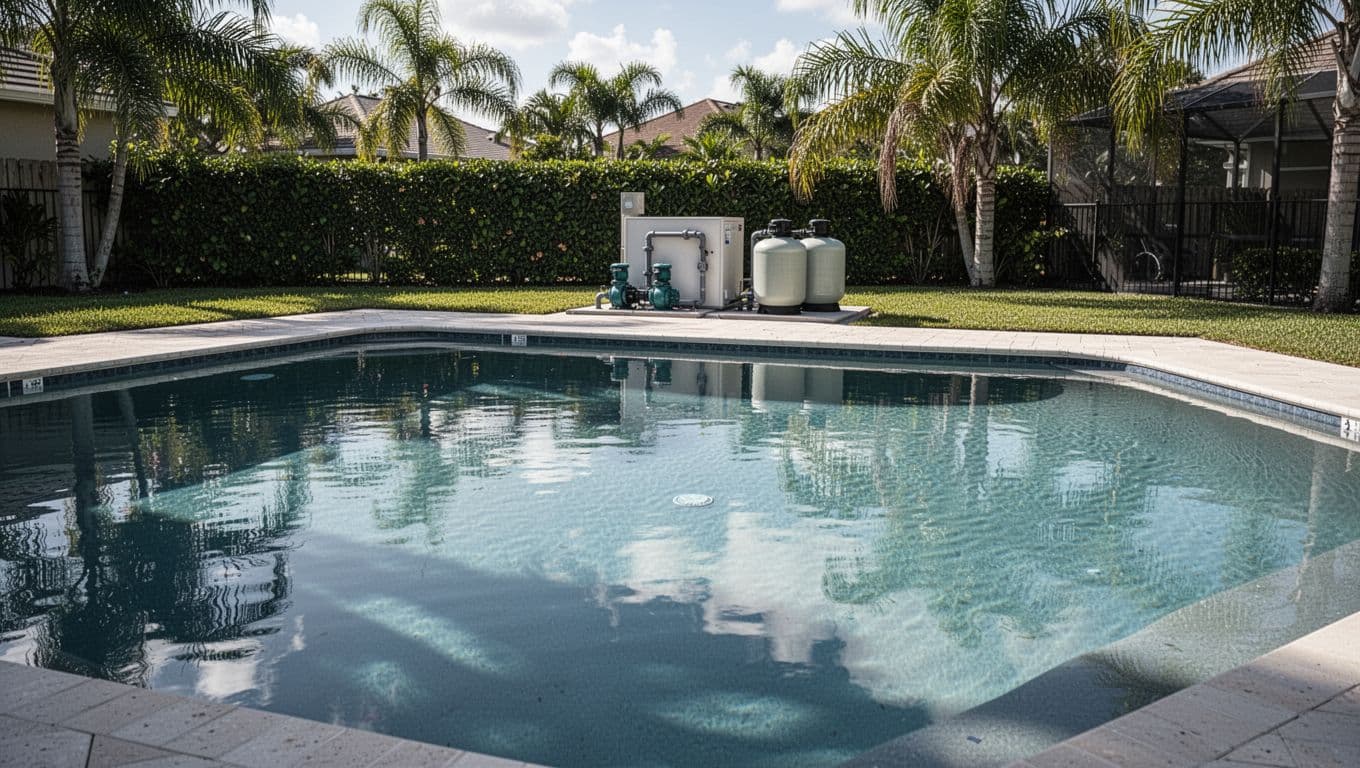
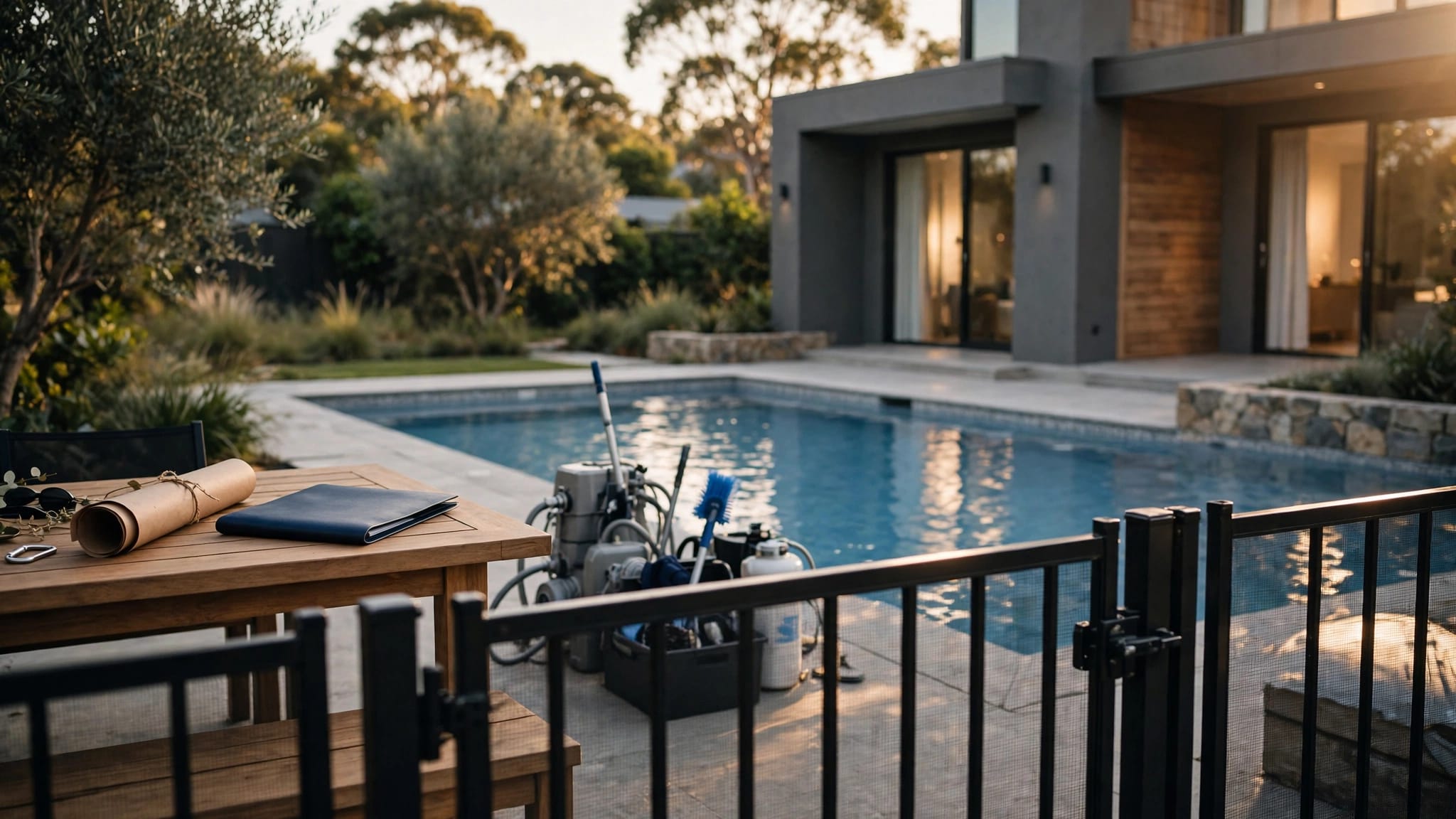
A screened enclosure can reduce leaves and insects, but it doesn't eliminate the need for daily circulation. Rainwater, pollen, dust, sunscreen, and swimmers still affect the water. If you're planning a new pool, custom swimming pool construction gives you the chance to match the pump, filter, plumbing, and pool size from the beginning.
What Affects Florida Pool Pump Runtime?
The correct schedule varies because every pool system handles water differently. Your neighbor may run a pump for eight hours while your pool needs ten or twelve.
Pool size and water volume
A larger pool contains more water, so the pump needs more time to circulate it. The pool's shape matters, too. Long, deep, or irregular pools may have areas that receive less movement from the return jets.
Pump speed and flow rate
A single-speed pump moves water at one fixed rate. A variable-speed pump can run faster when the pool needs strong circulation and slower for routine filtering. At a lower speed, the pump may need to run longer, but it often uses much less electricity.
The important number is the actual flow rate through your system, measured in gallons per minute. A pump's horsepower rating alone doesn't tell you how quickly it circulates water. Plumbing size, filter condition, valves, water features, and system resistance all affect flow.
Sunlight and water temperature
Florida's strong sun breaks down chlorine faster than shaded conditions. Warm water also creates a more favorable environment for algae growth when sanitizer levels fall too low. More daily circulation can help distribute freshly generated or added chlorine throughout the pool.
Rain and storms
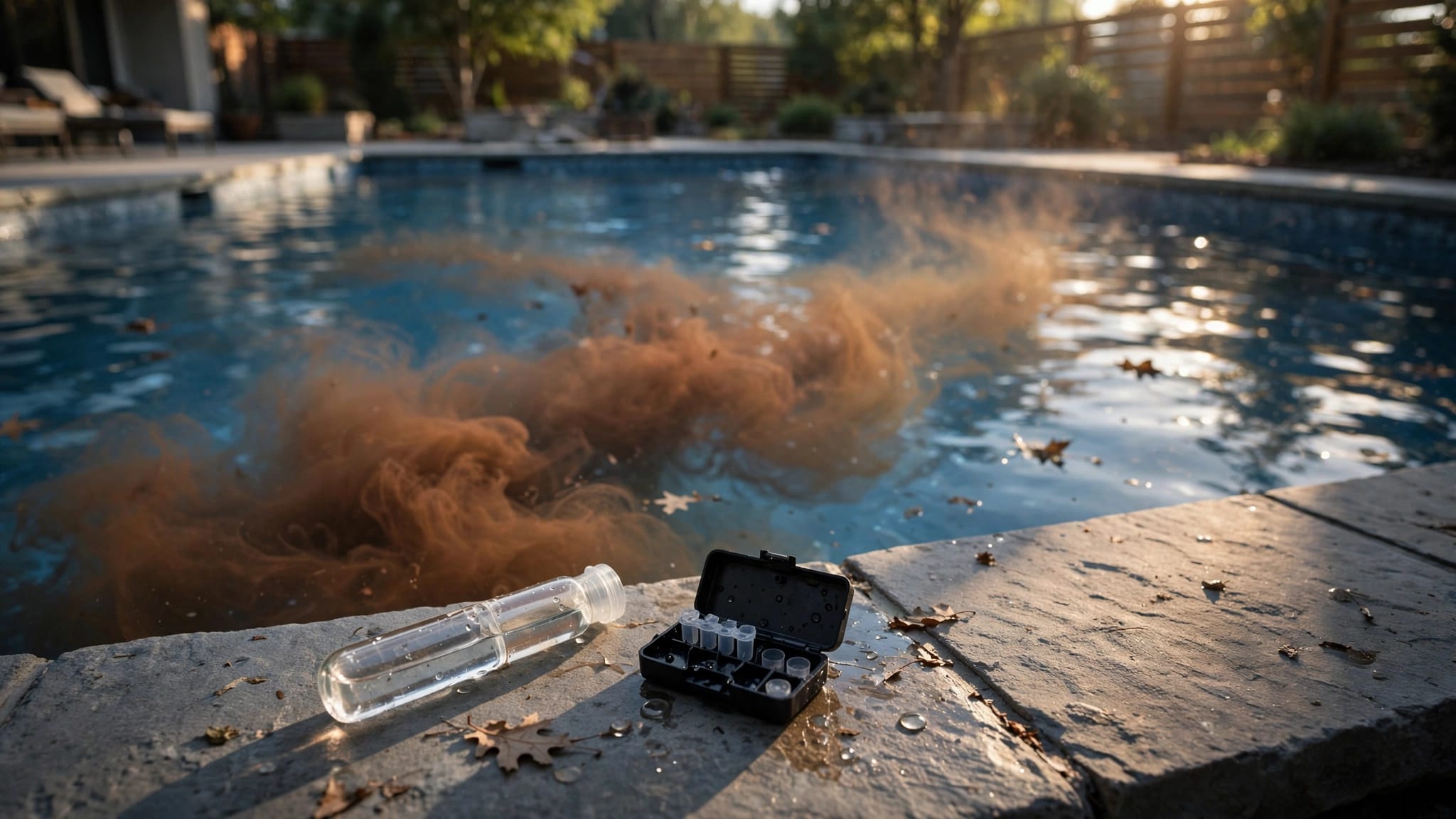
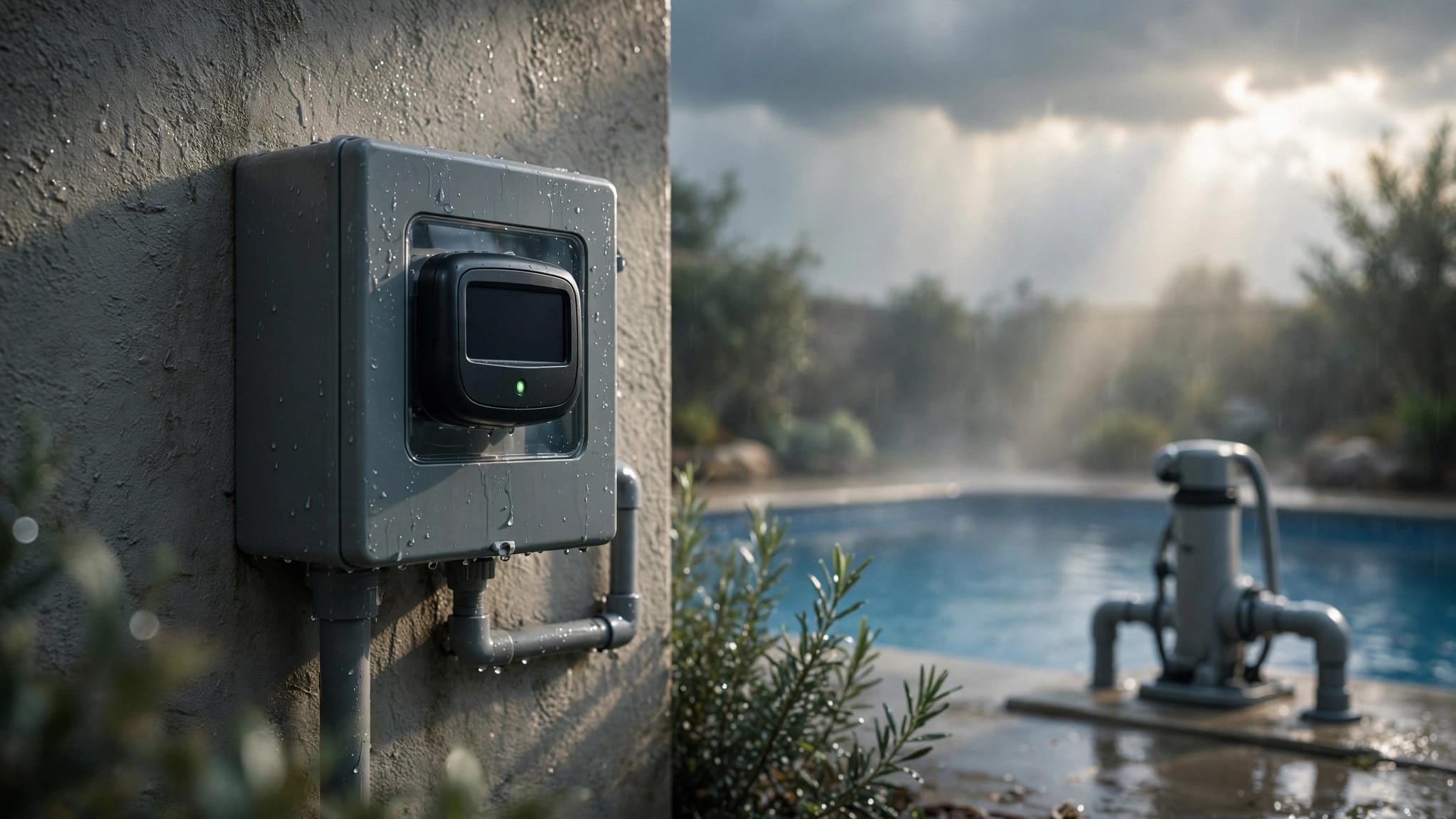
Heavy rain can dilute chemicals and introduce dirt, organic material, and contaminants. Wind can push leaves and debris into the pool, even when a screen enclosure is installed. After a major storm, you may need extra filtering and chemical testing until the water returns to normal.
Swimmer traffic
A pool used by several people every day receives more body oils, sweat, sunscreen, and debris. A lightly used pool may need less runtime than one that hosts regular family gatherings. Your schedule should reflect actual use rather than a fixed number copied from another pool.
Pool equipment and features
Heaters, waterfalls, deck jets, spas, and attached cleaning systems may require the pump to run at a higher speed for certain periods. A salt chlorine generator also depends on pump runtime because it produces chlorine only while water flows through the cell.
How to Calculate the Right Florida Pool Pump Runtime
A basic calculation starts with one complete water turnover. Turnover is the time required for the pump to move a volume of water equal to the pool's total gallons through the circulation system.
Use this formula:
Pool volume in gallons divided by flow rate in gallons per minute equals turnover time in minutes.
For example, a 15,000-gallon pool with an actual flow rate of 50 gallons per minute would need 300 minutes, or 5 hours, for one turnover. Running that system for 10 hours would provide roughly two turnovers under those conditions.
That calculation is useful, but it isn't a perfect measure of cleaning. A pool may need additional runtime because the filter captures particles gradually, the chlorine generator needs more operating time, or the pool receives heavy sunlight and use.
You can estimate pool volume with these common formulas:
- Rectangular pool : length x width x average depth x 7.5
- Round pool : diameter x diameter x average depth x 5.9
- Oval pool : length x width x average depth x 5.9
These formulas provide an estimate. A pool with multiple depths, a spa, or attached water features may require a more detailed calculation.
For the flow rate, check your equipment documentation or ask a pool professional to measure it. Don't assume the number printed on the pump is the actual flow through your pool. A dirty filter, partially closed valve, clogged skimmer basket, or undersized plumbing can reduce circulation.
A longer schedule cannot fully correct poor circulation caused by blocked suction, weak return flow, an undersized filter, or equipment that needs repair.
Should You Run the Pump During the Day or at Night?
Many Florida homeowners run their pump during the daytime because sunlight increases chlorine demand and swimming activity adds contaminants. If your pool has a salt chlorine generator, daytime operation may help produce chlorine while the pool receives the most sunlight.
Energy rates can also influence the schedule. If your utility offers time-of-use pricing, running some filtration during lower-cost hours may reduce operating expenses. Check your local electric plan before changing the timer.
A split schedule can work well. For example, you could run the pump for five hours in the morning and five hours in the afternoon or evening. This gives the pool regular circulation while avoiding one long idle period.
However, the best schedule depends on your equipment. Some systems need continuous flow while a heater, salt cell, or water feature operates. Follow the equipment manufacturer's requirements, and never run a pump dry.
For a single-speed pump, avoid frequent starts and stops unless the timer or system requires them. For a variable-speed pump, a longer low-speed cycle often provides efficient daily filtration, with a shorter high-speed period for skimming, heating, or water features.
How to Adjust the Schedule Through the Year
Florida pools usually need year-round maintenance, but the daily runtime can change with the season. During hot summer months, 10 to 12 hours may provide better results than an eight-hour schedule. Longer daylight, warm water, storms, and frequent swimming all increase demand.
In cooler winter weather, a pool may maintain good water quality with less circulation. Still, don't shut the system down for long periods unless a qualified professional gives you a safe winterizing plan. Florida freezes are uncommon in many areas, but cold snaps can still damage exposed plumbing and equipment.
Increase runtime temporarily when you notice:
- Cloudy water after a storm
- Heavy debris or pollen
- Several days of high pool use
- A chlorine level that falls despite proper chemical dosing
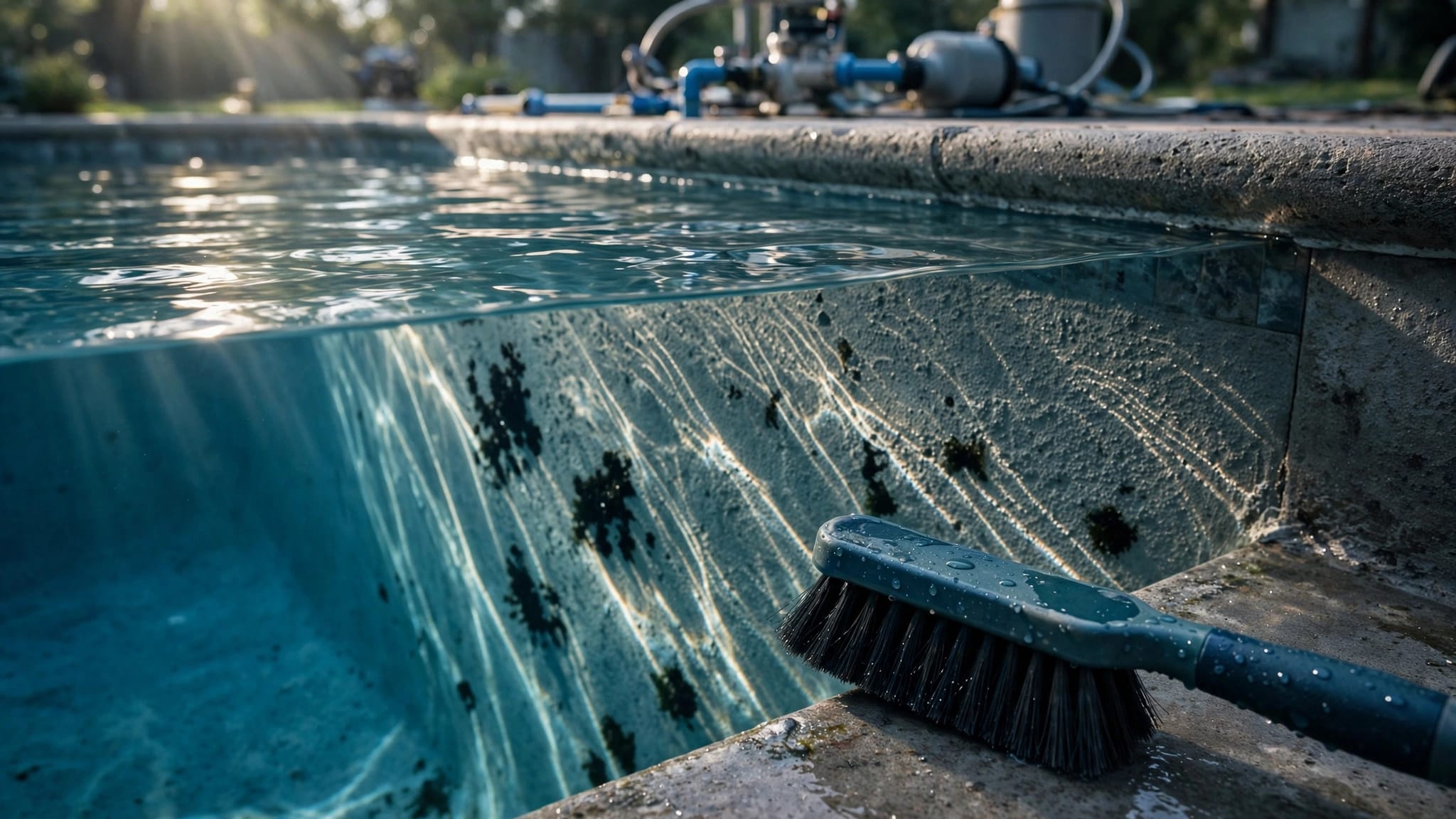
- Algae beginning to appear
- A recent pool opening, cleaning, or chemical treatment
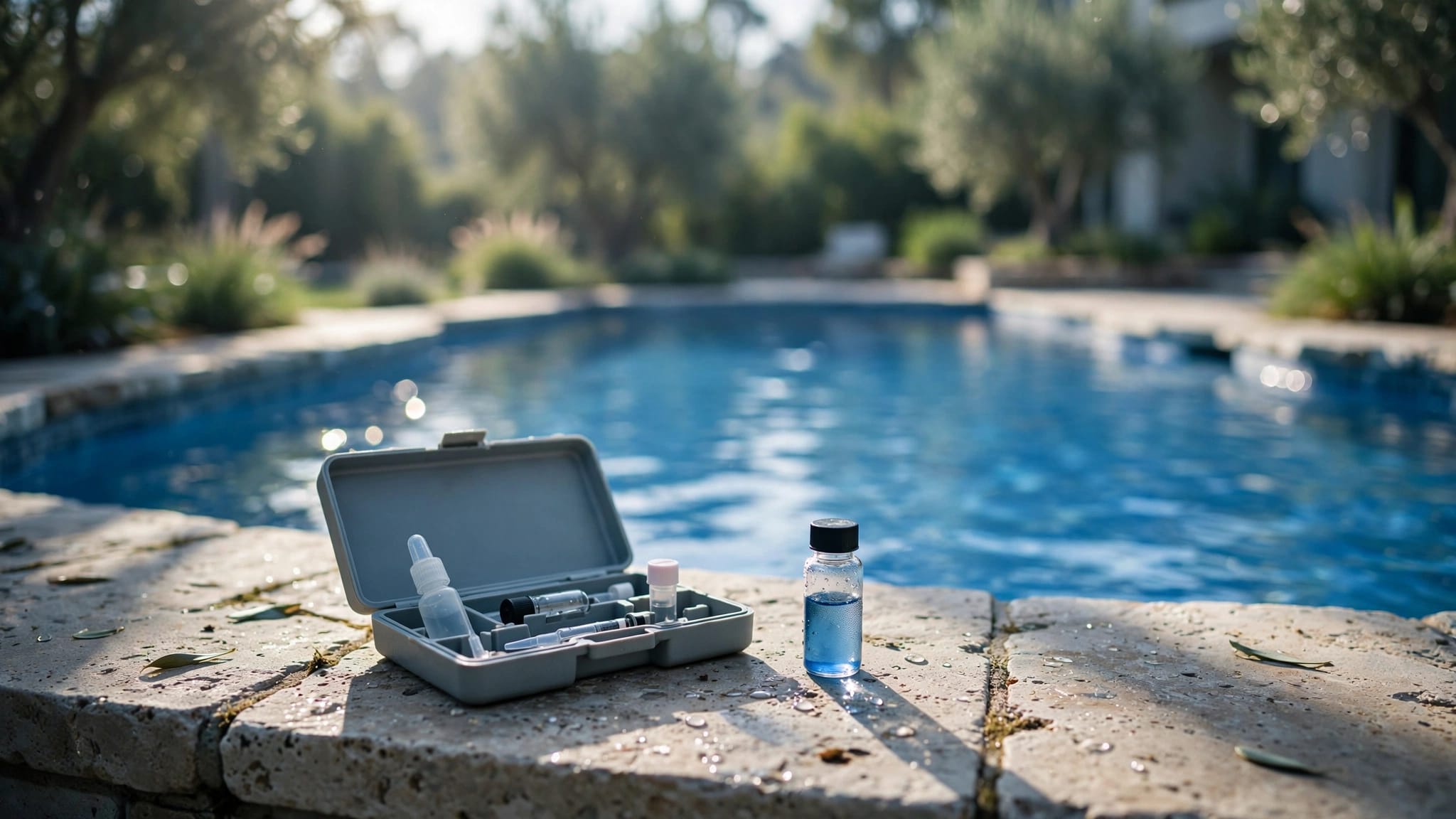
Test the water before making large changes. A longer pump schedule won't fix incorrect pH, low sanitizer, high stabilizer, or a filter that needs cleaning.
Signs Your Pump May Be Running Too Little or Too Long
Cloudy water, poor skimming, uneven chlorine readings, and debris collecting in corners can indicate inadequate circulation. Check the skimmer basket, pump basket, filter pressure, water level, and return jets before adding several hours to the timer.
If the pressure gauge reads higher than its clean starting pressure, the filter may be dirty. Cleaning or backwashing it according to the filter manufacturer's instructions can restore flow. A low water level can also cause the pump to draw air, which can damage the system.
High energy bills may indicate excessive runtime, a single-speed pump, a clogged filter, or a mechanical problem. A variable-speed pump may reduce energy use, but proper programming matters. Your pool professional can set the speeds and timing around filtration, heating, cleaning, and chlorination.
Pool renovations are also a good time to review aging equipment. If your filter, pump, plumbing, or automation system no longer matches the pool, pool renovations and resurfacing can include equipment replacements along with updates to the pool surface and deck.
A Practical Starting Schedule for Florida Homeowners
Start with 10 hours per day if you have a typical residential pool and no equipment restrictions. Run the pump at the manufacturer's recommended speed, then test the water and inspect the pool after several days.
If the water stays clear and balanced, keep the schedule. If debris remains suspended or chlorine levels fall, increase the runtime by one or two hours. If the pool remains clean while energy use seems high, ask whether a lower-speed setting or variable-speed pump could provide adequate turnover.
Keep records for a week when adjusting the timer. Note the pump schedule, water clarity, chlorine, pH, weather, and pool use. This information makes it easier to find a reliable Florida pool pump runtime instead of changing the timer at random.
For a new installation or equipment review in Cape Coral, Get a Free Estimate for an on-site consultation.
Conclusion
Most Florida pools need 8 to 12 hours of pump operation each day , with 10 hours serving as a practical starting point for many homes. The right Florida pool pump runtime depends on water volume, actual flow rate, chlorine demand, weather, equipment, and swimmer traffic.
Check your water and equipment regularly, then adjust the schedule in small steps. A pump that circulates efficiently for the right amount of time will keep the pool cleaner without wasting electricity.