A pool can support serious fitness, but the right design depends on how you plan to use it. A lap pool makes repeated lengths easy, while a traditional pool gives you more room for family time, water exercise, and relaxing.
The choice also affects your yard layout, screen enclosure, equipment, maintenance, and future renovation options. Before choosing a shape, compare the daily swimming experience with the rest of your backyard plans.
Key Takeaways
- A lap pool is the better fit for steady swimming, timed intervals, and repeatable workouts.
- A traditional pool offers more flexibility for families, water exercise, entertaining, and relaxation.
- Pool length, depth, access, and equipment matter more than shape alone.
- A custom design can combine fitness features with comfortable spaces for everyone else.
- Existing pools may gain better fitness use through resurfacing, lighting, equipment updates, or a renovation.
How Lap Pools and Traditional Pools Differ for Exercise
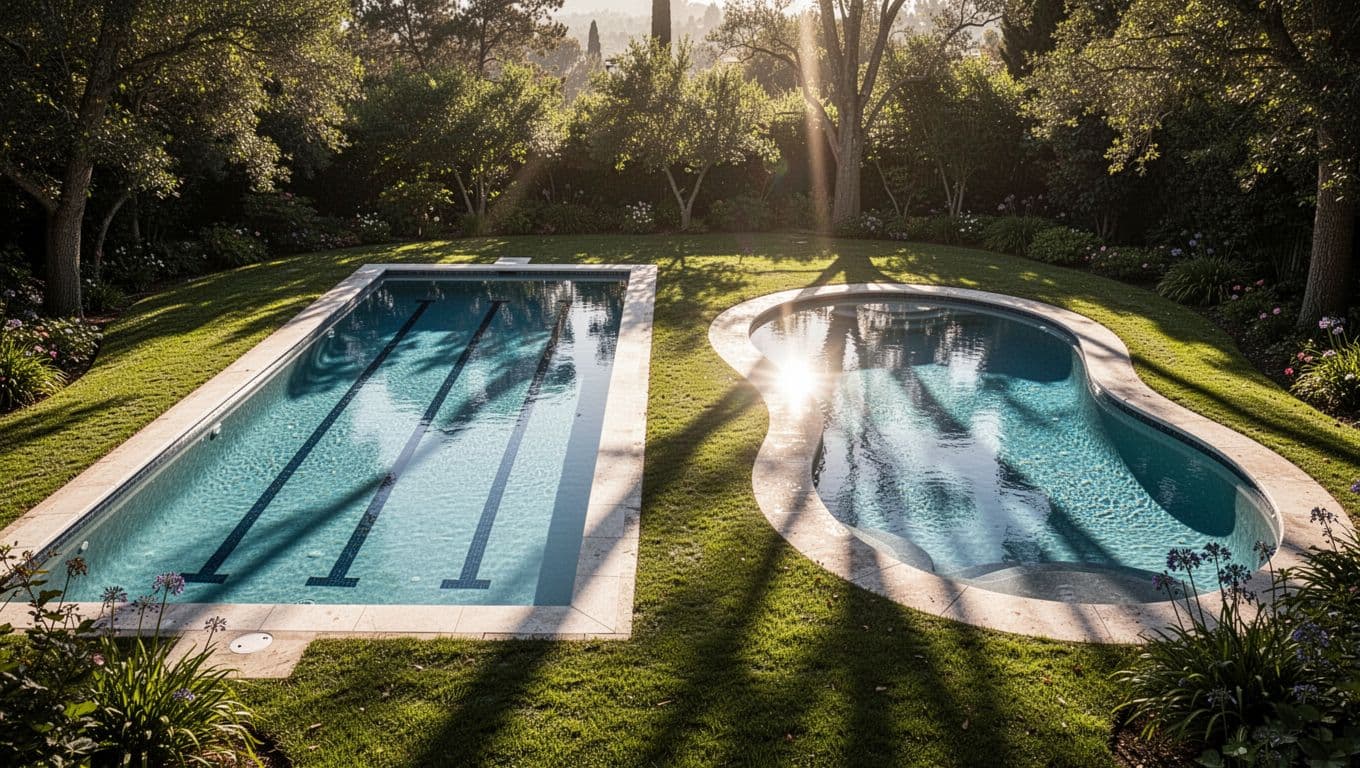
A lap pool is usually long, narrow, and rectangular. Its proportions create a clear swimming lane, so you can move continuously without changing direction around benches, steps, or curves. Many residential lap pools use a length that fits the property rather than a competition standard, so the exact size varies.
That shorter distance can still support an effective workout. You can swim repeated lengths, count laps, time intervals, or use a wall for push-offs. A consistent depth also makes the pool easier to use for drills and water resistance exercises.
Traditional pools usually have a wider footprint and a shape designed for several activities. They may include a shallow sun shelf, wide steps, benches, a deeper swimming area, or a freeform layout. These features make the pool inviting for family use, but they can interrupt a continuous swim.
| Fitness factor | Lap pool | Traditional pool |
|---|---|---|
| Continuous swimming | Strong fit for repeated lengths | Usually requires shorter lengths or turns |
| Interval training | Easy to measure and repeat | Possible, but less consistent |
| Water walking | Works well with suitable depth | Often offers more open space |
| Family recreation | Limited by its narrow layout | Better for groups and mixed activities |
| Lounge features | Usually fewer | Often includes shelves, benches, and broad steps |
| Yard footprint | Long and narrow | Wider, curved, or more flexible |
A traditional pool can still support fitness. You can swim short intervals, tread water, walk against resistance, or use aquatic equipment. However, swimmers who want a predictable distance may find the layout less convenient.
When a Lap Pool Makes More Sense
A lap pool suits homeowners who expect swimming to be a regular part of their routine. If you already swim several days each week, a dedicated lane can remove many common obstacles. You don't need to share a crowded public lane or drive to a fitness center before every workout.
The long shape also supports structure. You can build a session around warm-up lengths, faster intervals, recovery lengths, and a cool-down. A pace clock or waterproof fitness watch can help you track time, while the pool walls give you consistent points for turning.
A lap pool can work well for:
- Swimmers training for general conditioning or an event
- Homeowners who prefer low-impact cardiovascular exercise
- People who want water walking or resistance workouts
- Households with limited yard width but enough usable length
- Swimmers who value a clean, uncluttered pool interior
Depth deserves attention during the design process. A comfortable lap-swimming depth often differs from the depth needed for diving or other recreation. Uniform water depth may simplify workouts, but your builder should account for local codes, the pool's intended uses, and safe entry points.
You should also consider the pool's width. A very narrow design may feel restrictive, especially if two people plan to swim together. A wider lane can improve comfort, but it uses more space and may reduce room for decking or landscaping.
A lap pool doesn't have to look like a commercial facility. Tile accents, interior finishes, lighting, coping, and surrounding pavers can give it a residential appearance. For a new project, custom in-ground pool construction can balance the pool's training purpose with the style of your home.
Why a Traditional Pool Can Still Support Fitness Swims
A traditional pool is often the better choice when fitness matters, but it isn't the only priority. Families may want space for children, guests, floating, water games, and casual swimming. A broad pool offers more ways to use the backyard throughout the week.
The shape may limit long, uninterrupted laps, yet you can still create a useful workout. Swim short distances at a steady pace, turn carefully at the wall, or combine swimming with water walking and treading. Resistance gloves, aquatic dumbbells, kickboards, and pull buoys can add variety without changing the pool's footprint.
A traditional pool also supports different comfort levels. One person can exercise while another uses the steps or sun shelf. Children can stay in a shallow area while adults swim nearby. That shared use often matters more than having a formal lane.
For fitness, look for design details that keep the interior practical. Wide steps should stay clear of the primary swimming path. A bench can provide a place to rest between intervals. Open water in the main section gives you room for water jogging, resistance work, and stretching.
A rectangular traditional pool may offer a useful compromise. It can provide a recognizable swimming path while leaving space for steps, seating, or a shallow shelf along one end. Freeform pools offer a softer appearance, but their curves may make measured swimming harder.
Traditional pools also adapt well to entertaining. Deck space, shade, seating, and a screened enclosure can make the area comfortable when nobody is exercising. In Cape Coral, a well-planned enclosure can also help keep leaves and debris out of the pool while creating a more usable outdoor room.
Compare Space, Cost, and Maintenance Before You Build
Pool shape alone doesn't determine the project price. Excavation, access to the yard, soil conditions, interior finish, decking, plumbing, lighting, water features, equipment, and the screen enclosure all affect the final estimate.
A lap pool may use a smaller water surface, but its long footprint can create challenges on a tight lot. The design may require careful placement around the home, setbacks, utilities, and outdoor living areas. A traditional pool may fit a wider yard more naturally, although curves and added features can increase construction work.
Maintenance depends on volume, surface area, circulation, equipment, and the surrounding landscape. A smaller lap pool may require less water and fewer chemicals, but that isn't automatic. A long pool with substantial depth can hold more water than a shallow, compact traditional pool.
The pool's circulation system matters for both designs. Properly placed returns, a correctly sized pump, a suitable filter, and accessible equipment help keep water moving and make routine care more manageable. A heater or heat pump can extend comfortable swimming time, although operating costs depend on water temperature, weather, pool cover use, and energy rates.
Lighting deserves a place in the early plan. Underwater lights can improve visibility for early or evening workouts and add safety around steps. Automation may help manage schedules and water-care equipment, but it adds to the project budget and requires a clear plan for maintenance.
A screen enclosure affects the entire experience. Its height, roof style, door placement, and framing can influence how much sunlight reaches the pool and how easily you move around the deck. Discuss the enclosure with the pool designer instead of treating it as a separate decision.
A pool that looks perfect on paper can feel awkward if the lane, steps, equipment, and enclosure compete for the same space.
Renovating a Traditional Pool for Better Fitness Use
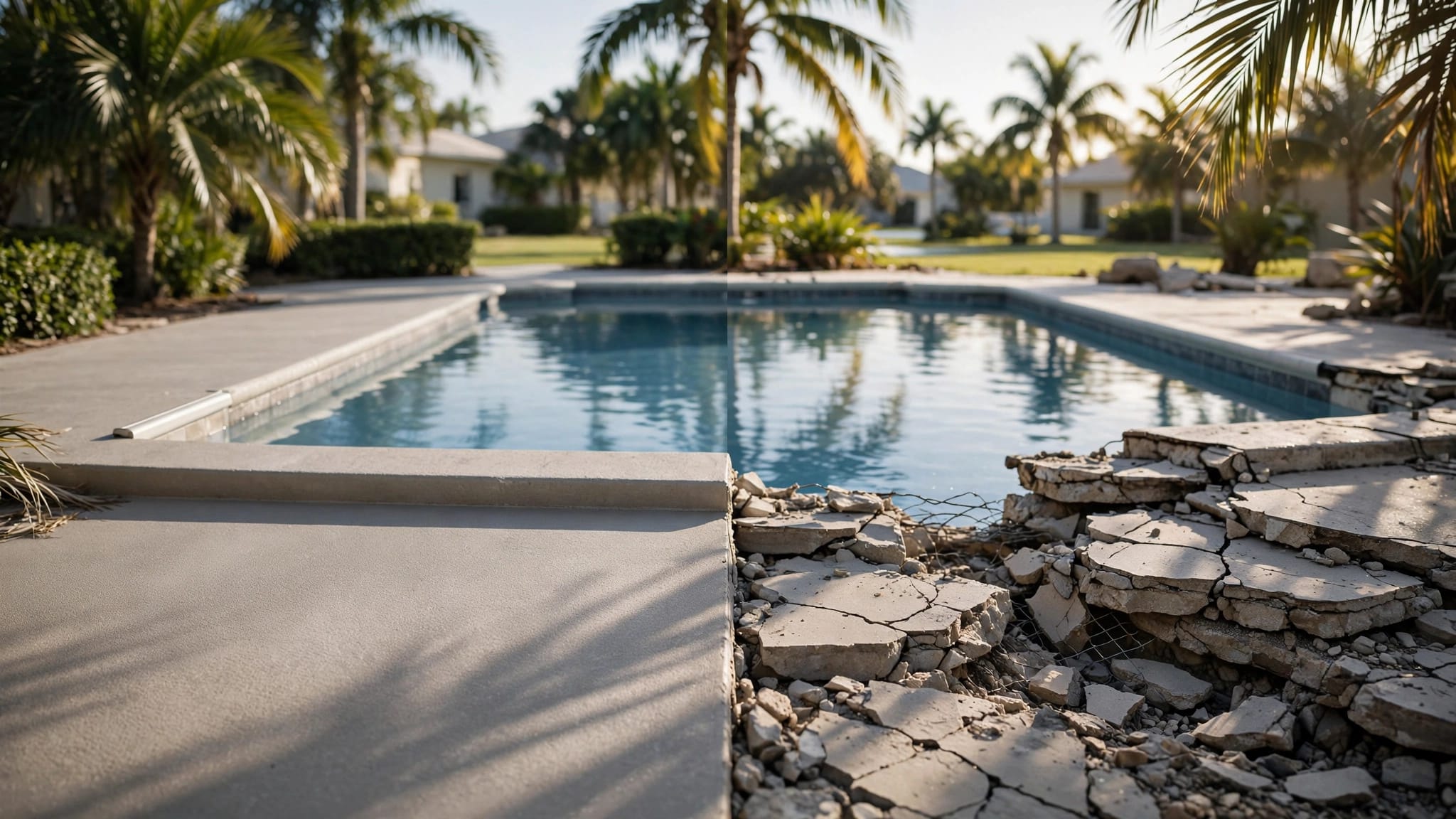
You don't always need a new lap pool to swim more often. An existing traditional pool may become more practical with a focused renovation. Start by identifying what interrupts your workouts. The issue may be poor lighting, uncomfortable surfaces, outdated equipment, crowded steps, or a finish that makes the pool feel neglected.
Resurfacing can improve the pool's interior appearance and create a smoother, cleaner surface. Deck updates may open more room around the water, while new lighting can make early-morning and evening workouts easier. Equipment replacement can address circulation, heating, or control problems.
A renovation may also add features that support exercise without removing the pool's family-friendly character. For example, a clear swimming area can remain open while existing seating or decorative features receive updates. A spa addition can support recovery and relaxation, although it requires space, plumbing, and equipment planning.
Homeowners considering these changes can review pool renovation and resurfacing services before deciding whether a complete rebuild is necessary. A professional assessment can identify which changes improve function and which features are better left alone.
For a new build, discuss your actual swimming habits during the design consultation. Explain how often you swim, whether you train alone, whether children will use the pool, and how much room you want for chairs or entertaining. Those answers will shape the right length, width, depth, entry, and equipment package.
Choosing the Right Pool for Your Household
Choose a lap pool when fitness swimming is the main reason for the project. Its predictable path supports regular workouts, and its shape can give a narrow yard a clear, purposeful layout. It may be the right option for a dedicated swimmer who values consistency over large social areas.
Choose a traditional pool when the backyard needs to serve several purposes. Its broader layout usually works better for families, guests, water play, lounging, and mixed-age use. You can still exercise in it, especially when the design includes open water, practical depth, and unobstructed access.
A few questions can clarify the decision:
- Will you swim continuous lengths at least a few times each week?
- Does anyone in the household need a shallow shelf, wide steps, or a bench?
- Will the pool host children, guests, or regular gatherings?
- Does your lot favor a long footprint or a wider shape?
- Do you want room for a large deck and screen enclosure?
- Would renovation solve the problems in your current pool?
If your answers point in different directions, consider a hybrid layout. A rectangular pool can provide a usable swim path while retaining a shallow shelf or bench. A swim-in-place current system is another option for a smaller pool, although it adds equipment and installation costs.
Before construction or renovation, request an on-site review of the yard, existing pool, access points, and enclosure. Get a Free Estimate to discuss a design that supports fitness without sacrificing the way your household uses the backyard.
Conclusion
The better choice in a lap pool vs. traditional pool comparison depends on your primary use. Lap pools make continuous swimming and interval training easier, while traditional pools provide more room for family activities, relaxation, and varied water exercise.
Shape is only one part of the decision. Pool length, depth, circulation, lighting, decking, screen enclosure, and future maintenance all affect how enjoyable the pool will be. Choose the design that makes your most common swim feel natural while still fitting the life you want around the water.