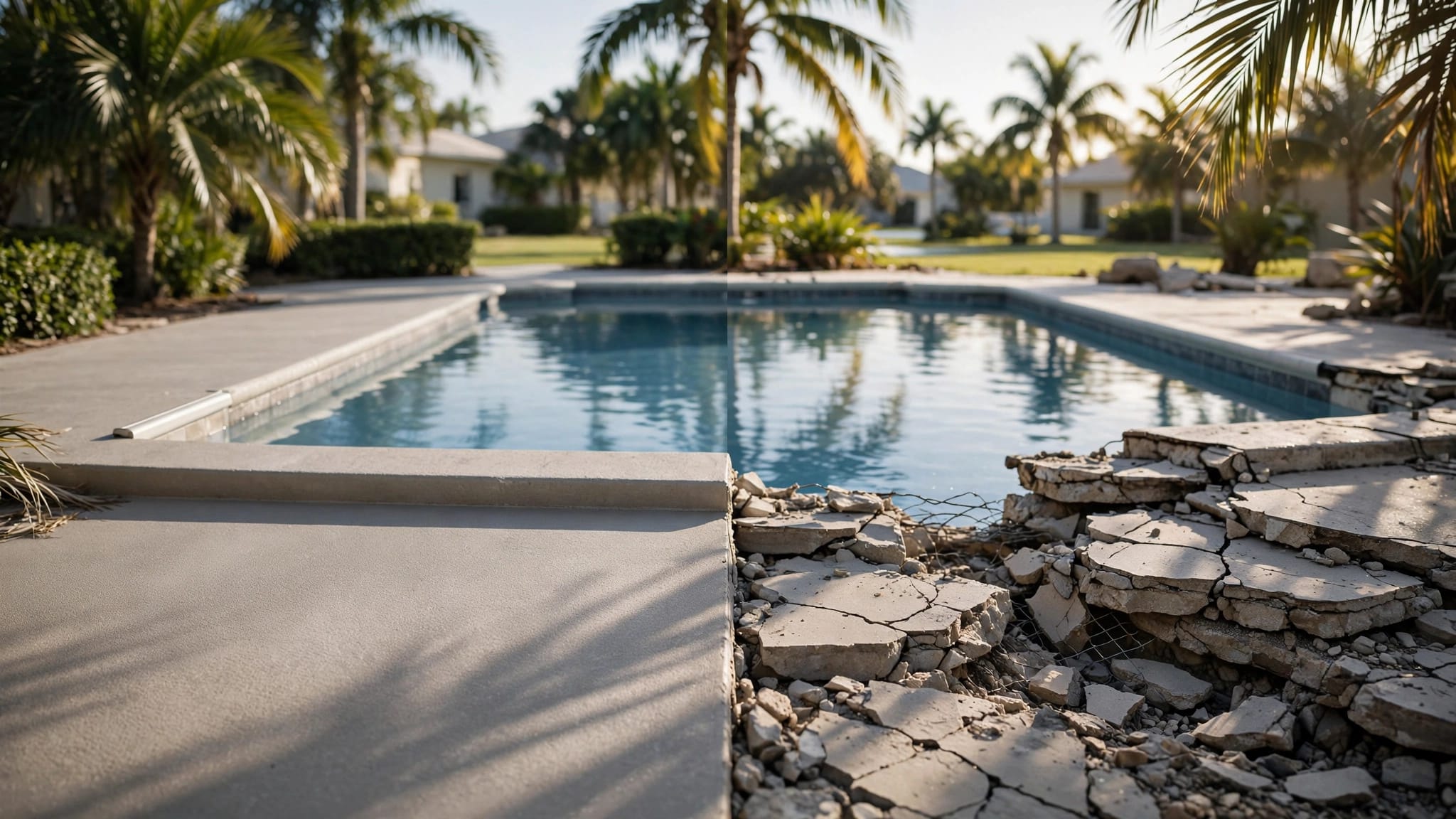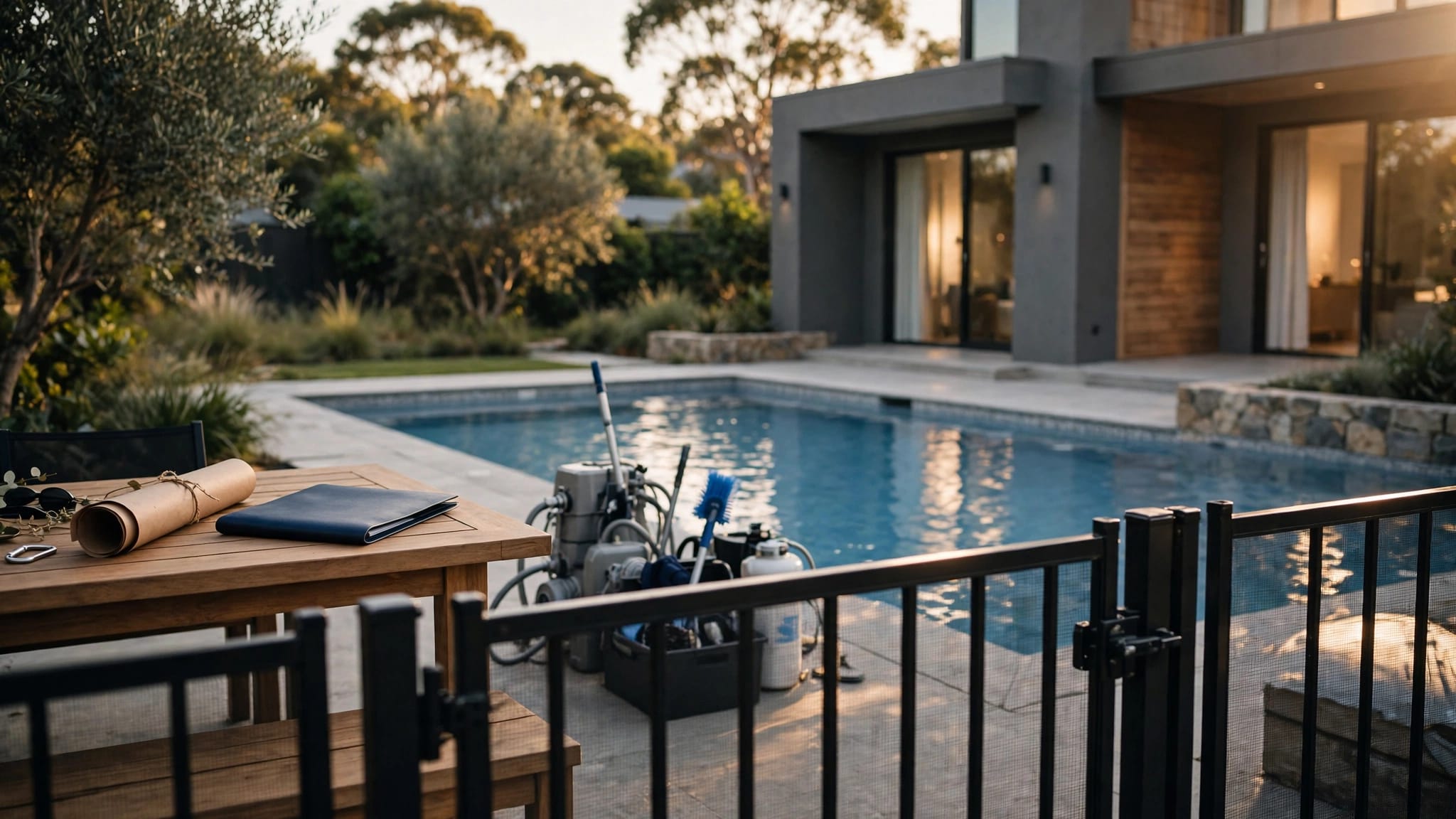
A pool can look perfect on paper and still feel cramped in real life. The difference often comes down to pool deck space .
In Cape Coral, that space has to do a lot. It needs to fit lounge chairs, foot traffic, screened enclosures, and the way you move between the house and the water. It also has to work with your lot size, your budget, and the way you plan to use the backyard.
The right answer is rarely a single number. It depends on how you live outside.
The best deck size starts with how you use the yard
A family that hosts weekend cookouts needs a different layout than a couple who wants a quiet place to float and read. A pool for young kids also needs more open circulation than a pool that's mostly for lap swimming.
That's why the first question is simple: what needs to happen on the deck?
If you want a few chairs and a clear path to the pool, you can keep things modest. If you want a full seating area, dining space, and room for people to pass without squeezing by, the deck has to grow. The pool itself matters too. A larger pool can take over a yard fast, which leaves less room for hardscape. A smaller pool can feel lost if the surrounding deck is too wide and empty.
Backyard shape plays a big role in Cape Coral. Narrow lots, canal lots, and homes with screen enclosures all change the usable footprint. A good plan makes the deck feel intentional, not squeezed in as an afterthought.
If your current pool no longer fits the way you use the yard, choosing between pool remodeling and resurfacing can help you decide whether the layout needs a simple refresh or a bigger change.
Common deck sizes that feel comfortable
A practical deck does not need to be oversized. It just needs enough room for movement, furniture, and a little breathing space.
Here's a simple way to think about it:
| Use | Comfortable space |
|---|---|
| Walking path | 3 to 4 feet wide |
| Main circulation area | 4 to 6 feet wide |
| Two loungers with side room | About 8 to 10 feet deep |
| Small seating group | About 10 x 10 to 12 x 12 feet |
| Dining table for four to six | About 12 x 12 to 14 x 16 feet |
| Grill or serving zone | 5 to 8 feet of clear room nearby |
These are practical comfort ranges, not hard rules. A space can work at the lower end if it stays simple. It can also feel tight at the higher end if furniture crowds the edges.
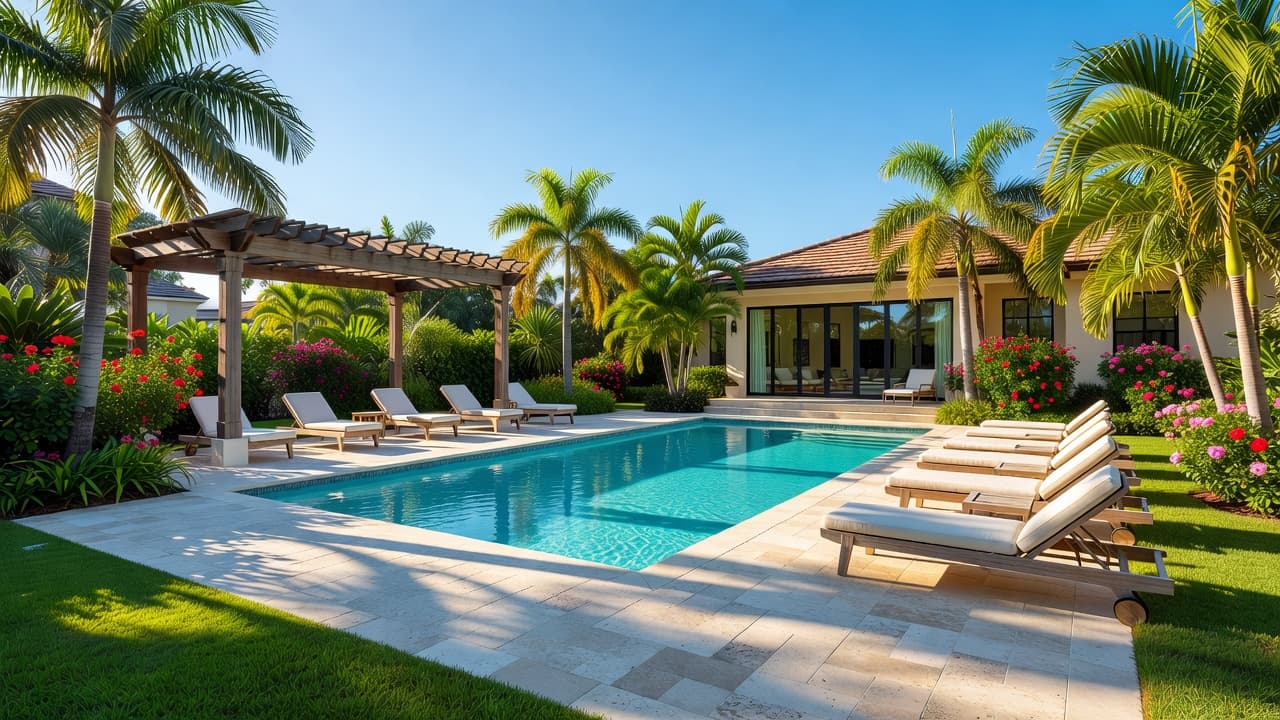
A good test is easy. If you can walk around the furniture without turning sideways, the deck is usually working. If every chair seems to block a path, the layout needs more thought.
Clear paths matter more than extra concrete.
Furniture changes the answer fast
The same deck can feel generous with one layout and crowded with another. That's because furniture takes more room than people expect.
Two lounge chairs need more than just the footprint of the chairs. You also need space to pull them back, step around them, and place a small table nearby. A dining set needs room for chairs to slide out, especially if people will be eating there often. Even a simple conversation set can eat up a surprising amount of deck area once you add side tables and walking space.
For many Cape Coral homeowners, the sweet spot is a mix of uses instead of one giant open slab. A pair of loungers near the sunniest edge, a small dining area closer to the house, and a clear walking lane to the pool can work better than one oversized open zone.
The layout matters even more if you have a screen enclosure. Door placement, corner posts, and traffic from the patio to the pool can all shrink usable space. If the deck is too narrow, furniture can block entry points and make the cage feel tighter than it should.
A compact yard can still feel comfortable if you keep the furniture plan simple. Built-in benches, fewer chairs, and a smaller dining set can leave the deck open for movement. On the other hand, if you want a full outdoor living area, the deck needs to be sized for that before the first stone is set.
Traffic flow keeps the deck from feeling cramped
A pool deck works best when people can move without weaving around chairs, planters, and wet footprints. That matters even more in Southwest Florida, where people go in and out of the pool all day.
Think about the routes your family actually uses. There may be a path from the back door to the pool steps. There may be a route from the grill to the table. There may be a wet path from the shallow end to the bathroom or outdoor shower. Each one needs room.
Main circulation should stay open and direct. If guests have to squeeze between a chaise lounge and a table just to cross the deck, the design is too tight. The same is true when the deck wraps around a spa or outdoor kitchen. Those features look great, but they need clearance to avoid a cluttered feel.
Older pools often need this kind of rethink during a remodel. A simple cosmetic update may not fix a deck that never felt right in the first place. In that case, the deck layout, coping, and surrounding hardscape may need to change together. That is where understanding your pool renovation options in Cape Coral becomes part of the planning process.
A smart layout gives each zone a job. One area handles walking. Another handles sitting. Another stays open for splash zone traffic. When those zones blur together, the deck starts to feel smaller than it really is.
Cape Coral lots ask for balance, not excess
Cape Coral backyards bring a few local factors into the conversation. Sun exposure is one of the biggest. Wide decks get hot fast, so more square footage is not always more comfort. Shade from a lanai or screen cage can make a smaller deck feel better than a huge open one.
Lot size matters too. Some yards have room for a broad, resort-style deck. Others need a tighter design that still leaves space for landscaping, privacy, and access. On canal-front properties, the view is part of the plan. A deck that stretches too far can crowd the sightline and make the yard feel closed in. In those yards, a cleaner, more efficient footprint often works better than a giant hardscape.
Drainage and maintenance also matter. More deck means more surface to clean and more space to manage after heavy rain. That does not mean you should go small by default. It means the design should match the way you want to live outside.
If you're comparing deck materials at the same time, surface choice can change how roomy the space feels. Lighter finishes can look more open. Some materials also stay more comfortable underfoot during hot afternoons. That is one reason homeowners spend time choosing finishes before finalizing the layout.
The right deck should feel like part of the yard, not a slab dropped into it.
A simple way to choose the right size
The easiest way to plan pool deck space is to start with use, then work outward.
First, decide how many people you want to host on a normal day. Next, place the furniture you actually want, not the furniture you wish fit. After that, mark the walking paths that need to stay open. Finally, compare the plan to your lot width, pool shape, and enclosure layout.
That order keeps the design grounded. It also stops the deck from becoming too big for the budget or too small for the furniture.
If you are planning a new pool or a remodel, it helps to walk the backyard with someone who can translate your daily habits into a real layout. A few feet in the right place can make a big difference. So can moving a chair zone, widening a path, or shrinking a dead corner that does not get used.
If you want help sorting out what fits your yard, Get a Free Estimate and compare a few layout ideas before you commit.
Conclusion
The right amount of deck space around a Cape Coral pool depends on how you live, not on a single fixed number. A good design gives you room to walk, sit, dine, and move around the pool without crowding the yard.
Start with your pool size, your furniture plan, and the shape of your lot. Then look at traffic flow, shade, and how much of the backyard you want to keep open. When those pieces work together, the deck feels comfortable instead of busy.
A well-planned pool deck space layout makes the whole backyard easier to use, and that usually matters more than adding a few extra feet.