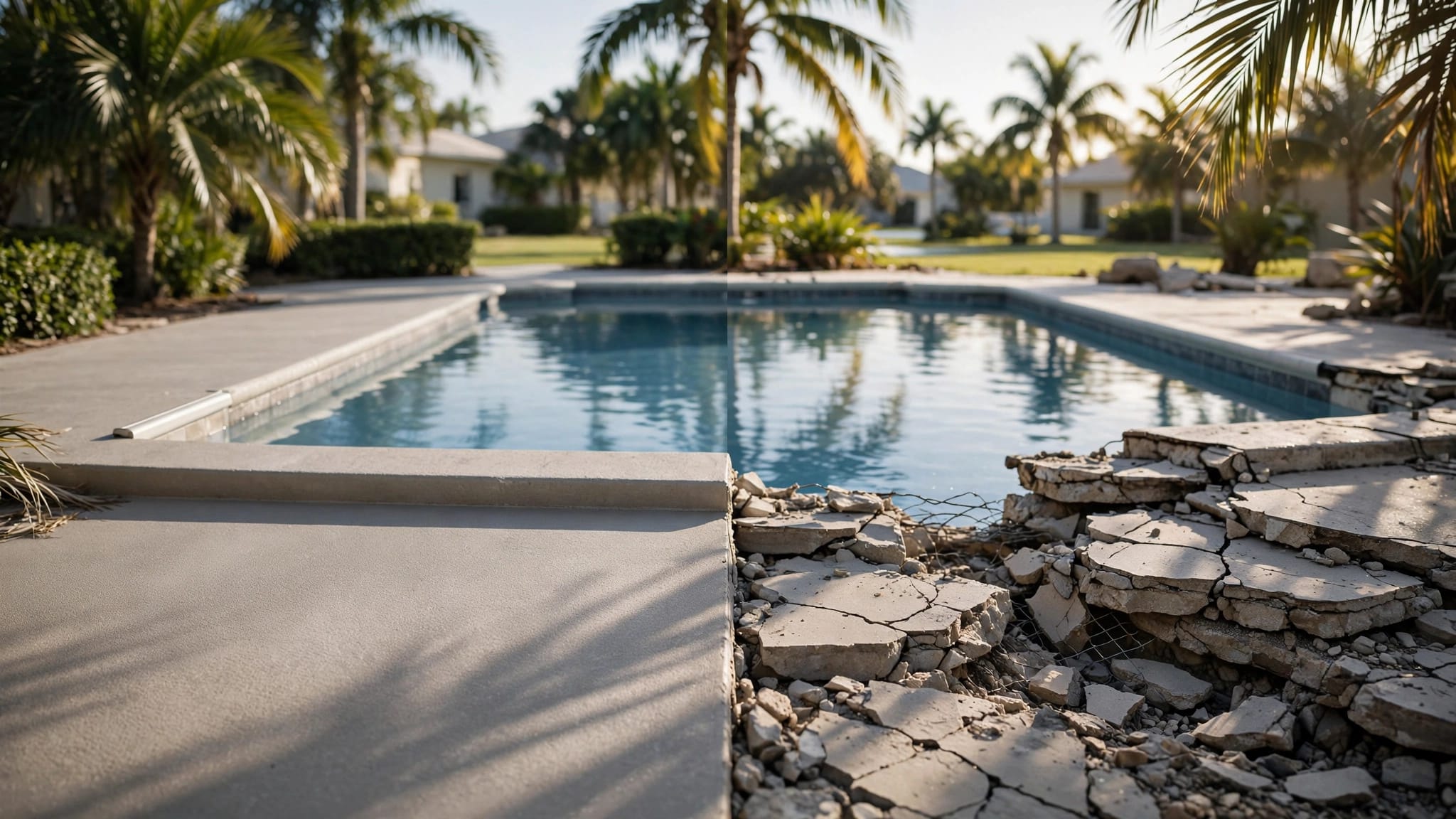
Getting a new pool in Cape Coral does not happen overnight. Most pool construction in Cape Coral takes about 10 to 16 weeks after the contract is signed, and the clock can run longer when permits, rain, or custom features slow things down.
If you are trying to plan around school breaks, holidays, or peak summer heat, a realistic schedule matters more than a sales pitch. The good news is that the process is predictable once you know where the delays usually start.
The usual pool construction timeline in Cape Coral
For a standard residential project, the build moves in phases. If you are comparing new pool construction services, the full picture matters more than a single promised finish date.
A simple project may move faster than the calendar suggests because some steps overlap. Still, the slowest step usually sets the pace.
| Phase | Typical time | What happens |
|---|---|---|
| Design and estimate | 1 to 2 weeks | Layout, features, and budget are set |
| Permitting and approvals | 2 to 6 weeks | Plans go through local review |
| Excavation and rough work | 3 to 7 days | Digging, steel, and plumbing begin |
| Shell and curing | 1 to 2 weeks | The pool structure is formed and cured |
| Tile, coping, and decking | 1 to 3 weeks | Finish surfaces and surrounding areas go in |
| Equipment, startup, and final inspection | 3 to 7 days | Pumps, water balance, and sign-off happen |
That range adds up to a realistic window, but it does not always look neat on a calendar. One inspection, one weather delay, or one design change can push the finish farther out.
What each phase looks like on the ground
The first stretch usually moves quickly when decisions are clear. A lot depends on how fast you settle the layout, shape, finish, and extras.
Design, pricing, and permits
This phase starts with the site visit and ends when the plans are ready for approval. If your yard is open and your choices are simple, this part can move fast. If you want a spa, special decking, water features, or a larger patio, the design can take longer.
Permitting is often where homeowners lose patience. The work may be ready to start, but the paper trail still has to clear. Cape Coral review times can vary, and that is normal. A clean submittal usually helps, but revisions can add days or weeks.
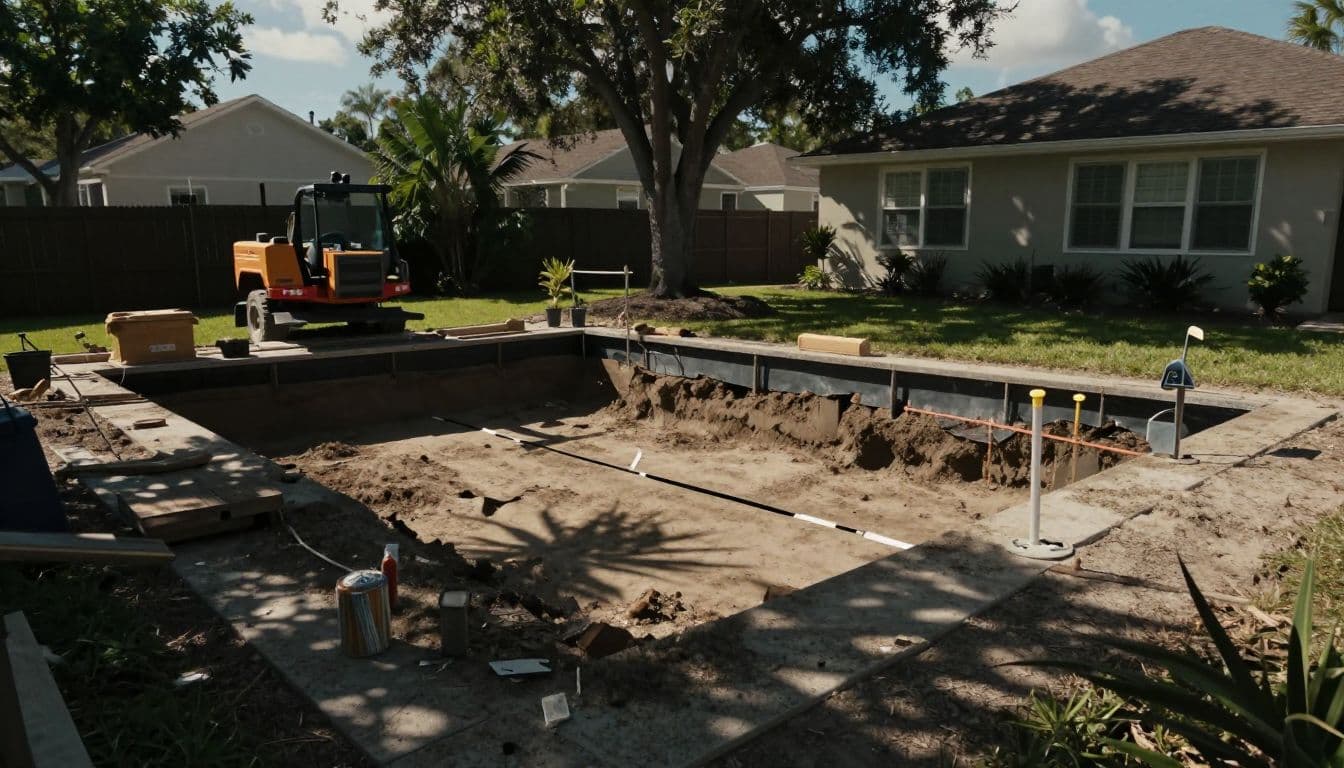
Excavation, shell work, and rough plumbing
Once permits are in hand, the visible progress starts. Excavation is often the quickest part of the job, although weather and soil conditions can slow it down. After that, crews install steel, plumbing, and electrical conduits before the shell goes in.
This part feels fast because the yard changes shape in a hurry. It also depends on coordination. If one trade runs late, the next trade waits.
Finishes, inspection, and startup
After the shell cures, the project starts to look like a pool. Tile, coping, decking, and equipment installation follow. Then comes startup, water balancing, and final inspection.
This is the stage where homeowners see the biggest difference between "almost done" and "ready to swim." A pool can look finished before it is fully usable. Water chemistry, equipment checks, and final approvals still matter.
A pool is not swim-ready the moment the surface looks complete. It is swim-ready when the structure, equipment, water, and inspection all line up.
Where Cape Coral projects usually lose time
Some delays are easy to predict. Others show up because Southwest Florida weather and jobsite conditions do not always follow a neat schedule.
- Permits and plan review can slow the start before a shovel hits the ground. If the plans need revisions, the wait gets longer.
- Rainy season weather can interrupt excavation, decking, and cleanup. Afternoon storms are part of life here, and heavy rain can stop a crew mid-day.
- Site conditions can change the plan. Soft ground, drainage issues, or a high water table may call for extra prep.
- Change orders add time. A new waterfall, a different tile, or a bigger patio sounds small until the schedule has to shift.
- Material lead times matter more than many people expect. Special finishes, lighting, and equipment can take time to arrive.
- Inspection scheduling can add a gap near the end. Even when the work is done, the project still needs the right approval at the right time.
- Screen enclosures or rescreens can extend the schedule if they are part of the same project. Framing, screening, and related permits may need their own timing.
Cape Coral homeowners often ask for the shortest possible timeline, but the real answer depends on the whole job. A straight-forward pool with standard finishes is easier to keep on track. A custom build with extra features takes more coordination.
The fastest projects usually have three things in common: clear choices, good weather windows, and no surprise changes. The slowest projects usually lose time in the cracks between those same three things.
How to keep your pool schedule realistic
A good timeline starts before the first permit is filed. If you know what you want, you can keep the job moving with fewer pauses.
First, settle the design early. Every late change, even a small one, can ripple through the rest of the build. A different tile line or a new equipment choice may seem minor, but crews often need to re-order or re-plan work.
Second, ask what can happen at the same time. Some pool jobs allow overlap between site prep, material ordering, and permit processing. That overlap matters because it can save days without cutting corners.
Third, think about the yard itself. Tight access, fencing, or landscaping can affect how equipment gets in and out. A clear path helps crews move faster, and fewer obstacles usually mean fewer delays.
Fourth, plan for season and scope together. A pool started in the rainy season may need more buffer time. A project that also includes decking, a cage, or a spa should not be treated like a simple shell-only job.
Finally, ask for a schedule that matches your actual project, not a generic estimate. A backyard in a new Cape Coral neighborhood does not behave the same as a lot with access issues or drainage concerns.
If you want a timeline based on your yard and your plans, Get a Free Estimate. A site visit gives you a much clearer picture than a rough guess over the phone.
Conclusion
Most Cape Coral homeowners should plan on about 10 to 16 weeks for a typical pool build after the contract is signed. Simple projects can finish sooner, while custom features, permit delays, and rainy weather can stretch the schedule.
The shortest steps are usually excavation and rough work. The longest waits often come from permits, inspections, and weather. If you understand those pressure points early, the process feels a lot less random.
A realistic timeline does not take the excitement out of building a pool. It just gives you a better way to plan for the day you finally step into the water.