A pool contract can look fixed on day one, then shift the moment the design changes or the yard reveals a surprise. In Cape Coral, pool change orders often appear when homeowners add features, revise finishes, or run into site conditions that were not clear at the start.
That does not mean the project is off track. It usually means the real job is now replacing the paper plan.
If you are planning a new build, a renovation, or enclosure work, the details below can help you see where the price moves usually come from.
What a pool change order really means
A change order is a written update to the original contract. It records a change in scope, a cost adjustment, or both. That change might be small, like a different tile choice, or large, like adding a spa or moving the pool layout.
The important part is clarity. A good change order should tell you what changed, why it changed, and how the new number was built. It should also show whether the change is optional, required, or tied to code, permits, or field conditions.
Pools are built in layers, so one change can touch several trades at once. A new bench can affect steel, plumbing, gunite, finish work, and deck layout. That is why a small update can feel bigger than it first looks.
If you want to see how those project pieces fit together, explore Back Bay Pools' pool services before you lock in your plan.
What usually pushes the price higher
Some change orders are simple add-ons. Others ripple through the entire job. The table below shows the most common triggers and why they cost more.
| Change order trigger | What it often means | Why the price rises |
|---|---|---|
| Added features | Spa, sunshelf, bench, or water feature | More excavation, plumbing, finish work, and equipment |
| Finish upgrades | Better tile, coping, pavers, or interior finish | Higher material cost and more labor |
| Excavation surprises | Rock, soft fill, drainage problems, or high water | Extra digging, hauling, dewatering, or redesign |
| Permit or code revisions | Plan edits, setback changes, or inspection fixes | Redraws, delays, and added labor |
| Enclosure or deck changes | Cage size, anchor points, or deck layout changes | Engineering, framing, paver cuts, and coordination |
The pattern is easy to miss. A single revision can affect several crews at once, and each crew adds time and cost.
Added features and finish upgrades
Homeowners often start with a basic shell and then decide to add a spa, a sunshelf, or a set of water features. Those choices change the structure and the plumbing, so the price moves fast.
Heaters, salt systems, LED lighting, and automation also change the bill. They add equipment, wiring, controls, and sometimes stronger electrical work. Even a clean upgrade can touch more parts of the job than expected.
Tile and coping upgrades do the same thing. A more detailed tile line or a thicker coping choice can change labor, material, and lead time. Paver changes can do it too, especially when the new design needs more cuts or a different pattern.
Cape Coral site surprises
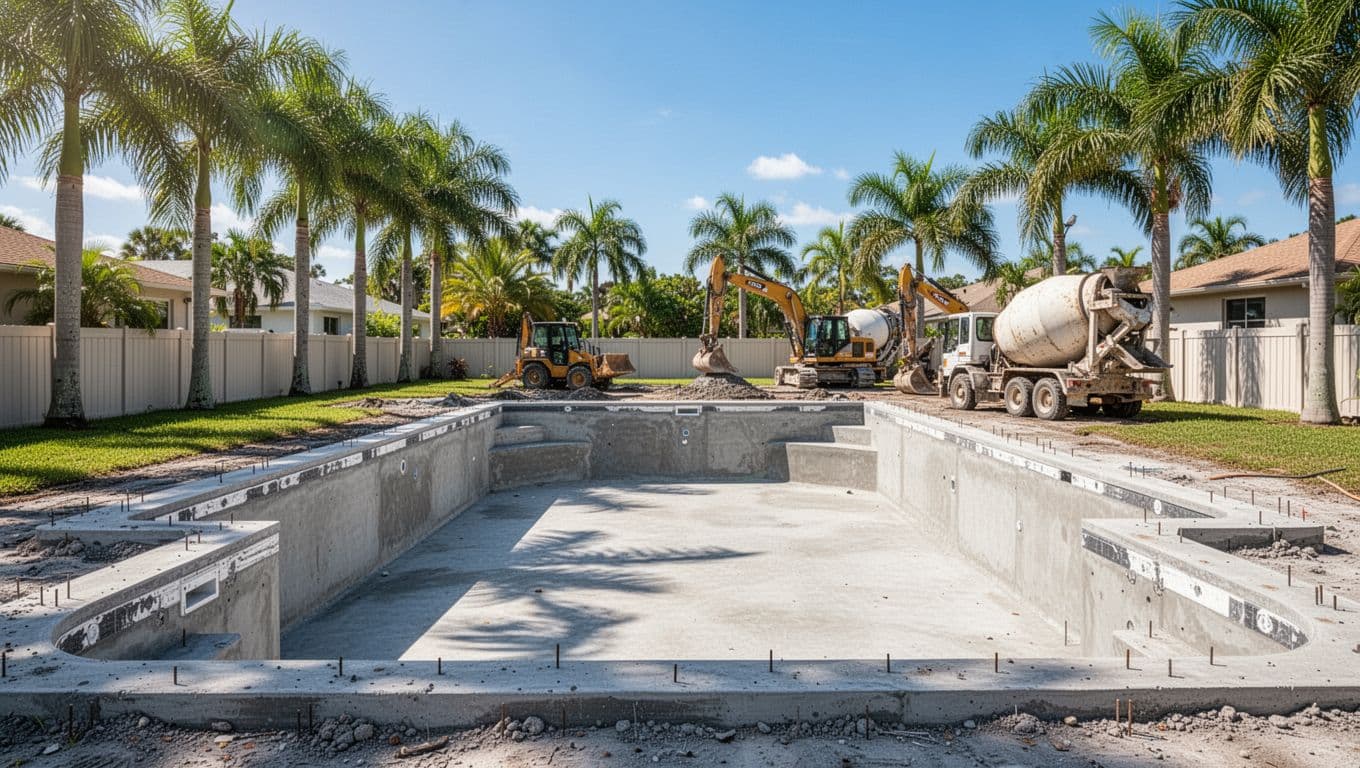
Cape Coral yards can hide a lot beneath the surface. A lot may look simple until the crew hits old fill, soft sand, a high water table, or a buried utility line. Access can matter too, since narrow side yards and tight gates slow down excavation and hauling.
That is why excavation change orders are common in Southwest Florida. If the crew needs more digging, extra haul-off, dewatering, or a small layout shift, the cost goes up quickly.
Schedule changes can add pressure as well. If weather delays inspections or pushes crews into a new window, the job may need extra labor or equipment time. A pool build is a chain, and one broken link can stretch the whole schedule.
Permit, code, and utility changes
Permit issues are another source of price changes. Sometimes the revised plan is minor. Other times, the builder has to adjust setbacks, drainage, plumbing routes, or equipment placement to meet local requirements.
Utility conflicts can be harder to spot. Irrigation lines, gas, sewer, power, and drainage runs do not always show up in the first walk-through. Once they appear in the field, the contractor may need to reroute them or change the layout.
That work is not wasted money. It is often what keeps the project moving and keeps the finished pool usable.
Screen enclosure and deck changes
Enclosure work can change the price in a hurry. A slight change in the pool layout may affect cage footers, column spacing, or the way the screen opens around the deck.
If the homeowner wants a taller cage, a different mesh, or a modified door location, the framing and anchoring can change too. Paver cuts, coping lines, and deck edges also have to match the new plan.
If your project includes a cage, it helps to review custom screen enclosures and rescreens early, before the pool layout gets too far along.
Change orders during renovation and rescreen work
Change orders are not only a new-build issue. They show up often in pool renovations, resurfacing jobs, and rescreens. Older pools tend to hide problems until the surface comes off or the enclosure gets opened up.
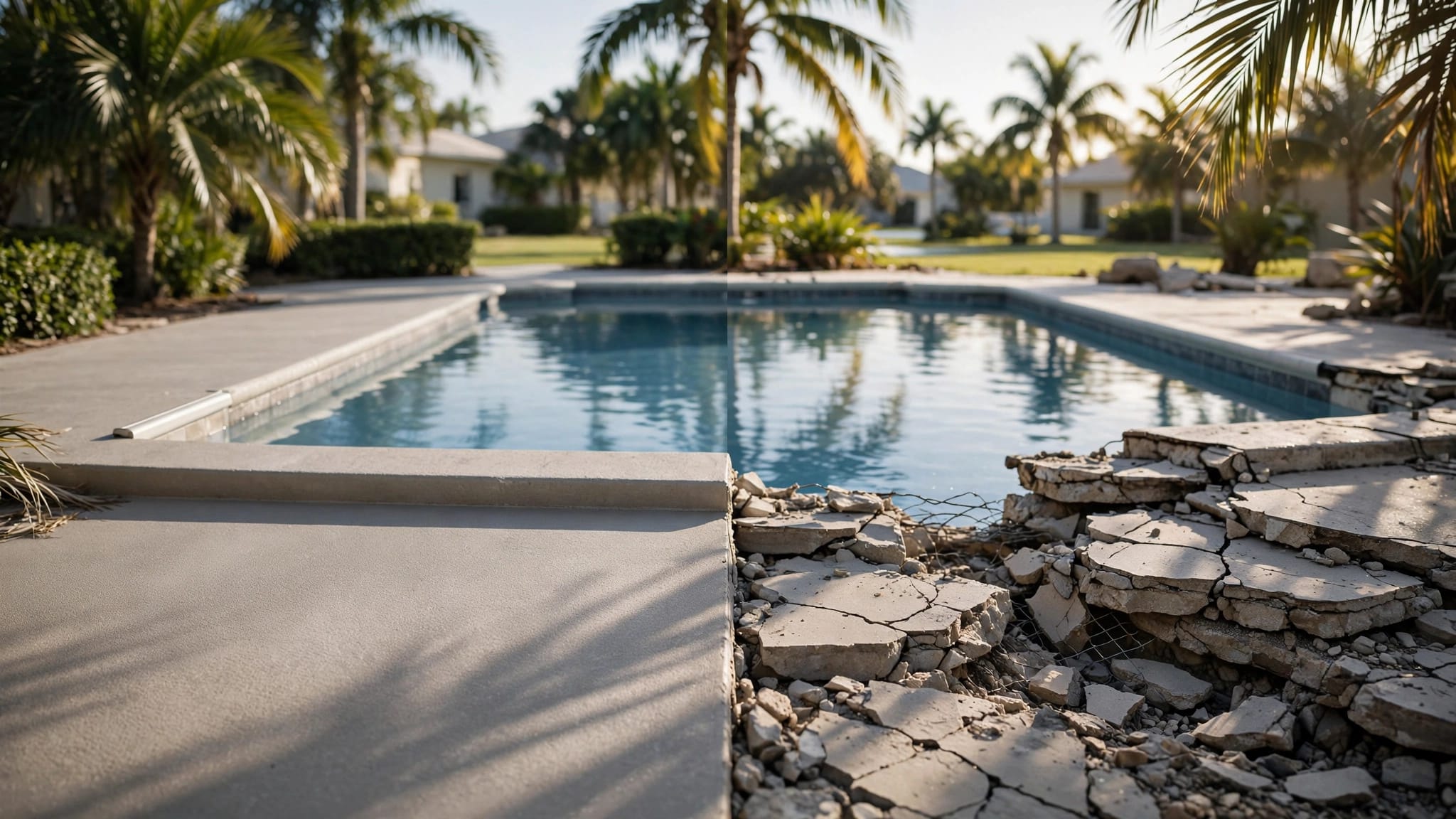
A resurfacing project may reveal cracked plaster, weak bond areas, or plumbing leaks. Tile and coping replacements can uncover broken edges or sections that were patched years ago. Deck work can show drainage issues or spots where the base has shifted.
Rescreen jobs can be just as unpredictable. Once the crew starts, they may find damaged framing, loose hardware, or sections that need more than a simple re-screen. At that point, the scope changes from a quick repair to a larger fix.
The cleanest way to handle these jobs is to treat the existing structure as part of the budget question. If the pool is older, leave room for hidden repairs. That way the project does not feel like a surprise every time something is opened up.
How to budget before you sign
A smart budget has a cushion. It does not need to be dramatic, but it should leave room for the kind of changes that happen in real yards.
The best time to talk about change orders is before the first shovel hits dirt. Ask how the builder handles upgrades, field surprises, and permit revisions. Ask which items are fixed-price and which items are allowances. Ask what needs a written sign-off before work continues.
If a change order does not explain the reason, the scope, and the price, pause before signing.
These questions help keep the conversation clear:
- What exactly changed from the original plan?
- Is this change required for code, safety, or permits?
- What part of the price is material, labor, or equipment?
- Does this change affect the schedule or inspection dates?
- Does it change the warranty or the final finish?
Also ask what can wait. Some upgrades make sense right away. Others can be added later without disrupting the base job. A spa, lighting package, or upgraded deck detail may be easy to plan now, but a purely cosmetic add-on might not belong in the first contract.
If you want help sorting the base scope from the extras, Get a Free Estimate and compare the plan before work starts.
Conclusion
Pool change orders are part of building in the real world. In Cape Coral, the biggest price jumps usually come from added features, site surprises, code fixes, and enclosure changes.
The more exact the scope is up front, the less room there is for stress later. When the contract, the yard, and the finish choices all match, the final price is easier to understand and much easier to manage.