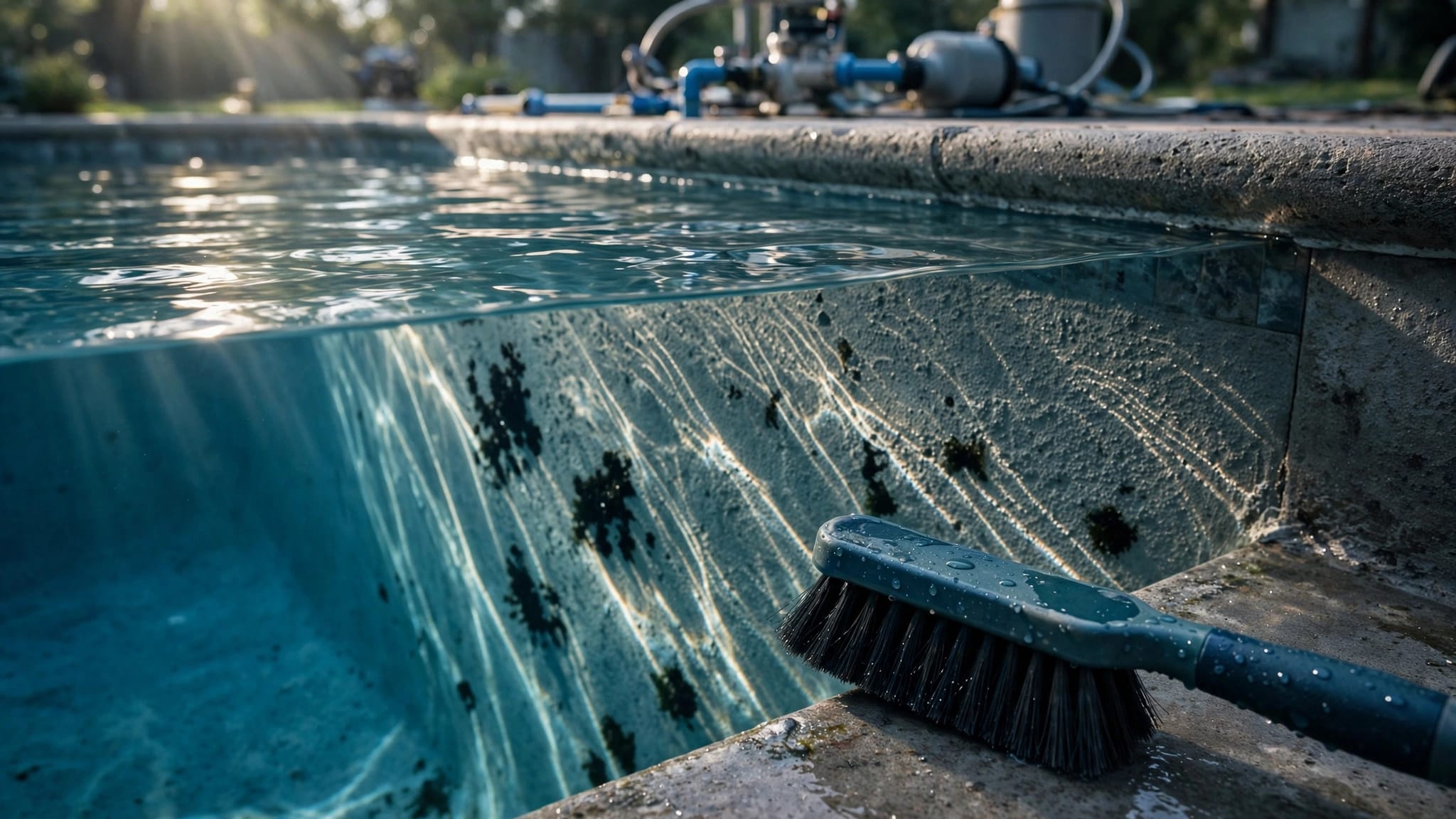
A pool crack can look minor while water moves behind the finish and weakens the shell. If you notice a growing split, falling water level, or deck movement, Cape Coral pool crack repair may need to happen before the damage spreads.
Surface wear is common in Florida pools, but structural cracks require a closer inspection. Knowing the difference can help you avoid wasted repairs, rising water bills, and a larger renovation later. Start by looking for these warning signs.
Key Takeaways
- Cracks that widen, return, or cross the pool shell may indicate structural movement.
- Water loss, wet soil, and sinking deck areas can point to a leak behind the finish.
- A straight crack through the wall or floor deserves faster attention than scattered surface crazing.
- Patching alone won't solve a structural problem if the shell or surrounding soil continues to move.
- A professional inspection can determine whether you need crack repair, resurfacing, or a larger pool renovation.
Cape Coral Pool Crack Repair: Surface Damage or Structural Trouble?
Not every crack means the concrete shell is failing. Pool finishes can develop small surface fissures as they age. Plaster, quartz, and other coatings may show fine lines caused by normal wear, chemical imbalance, heat, or movement in the finish itself.
These shallow cracks often look like thin spiderwebs. They may remain limited to the interior coating and won't always cause water loss. A professional can sometimes clean, fill, and refinish this type of damage without rebuilding the pool structure.
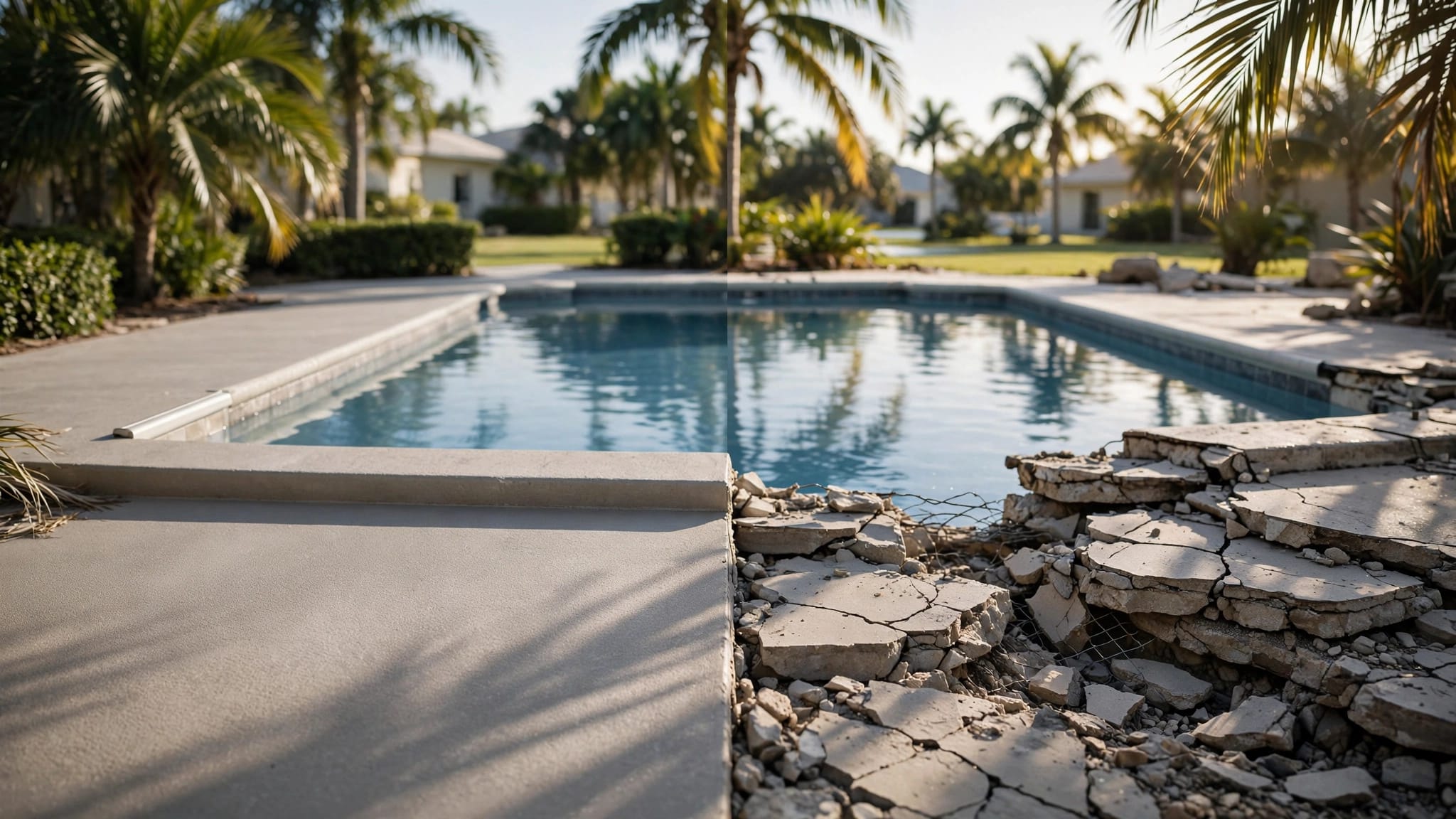
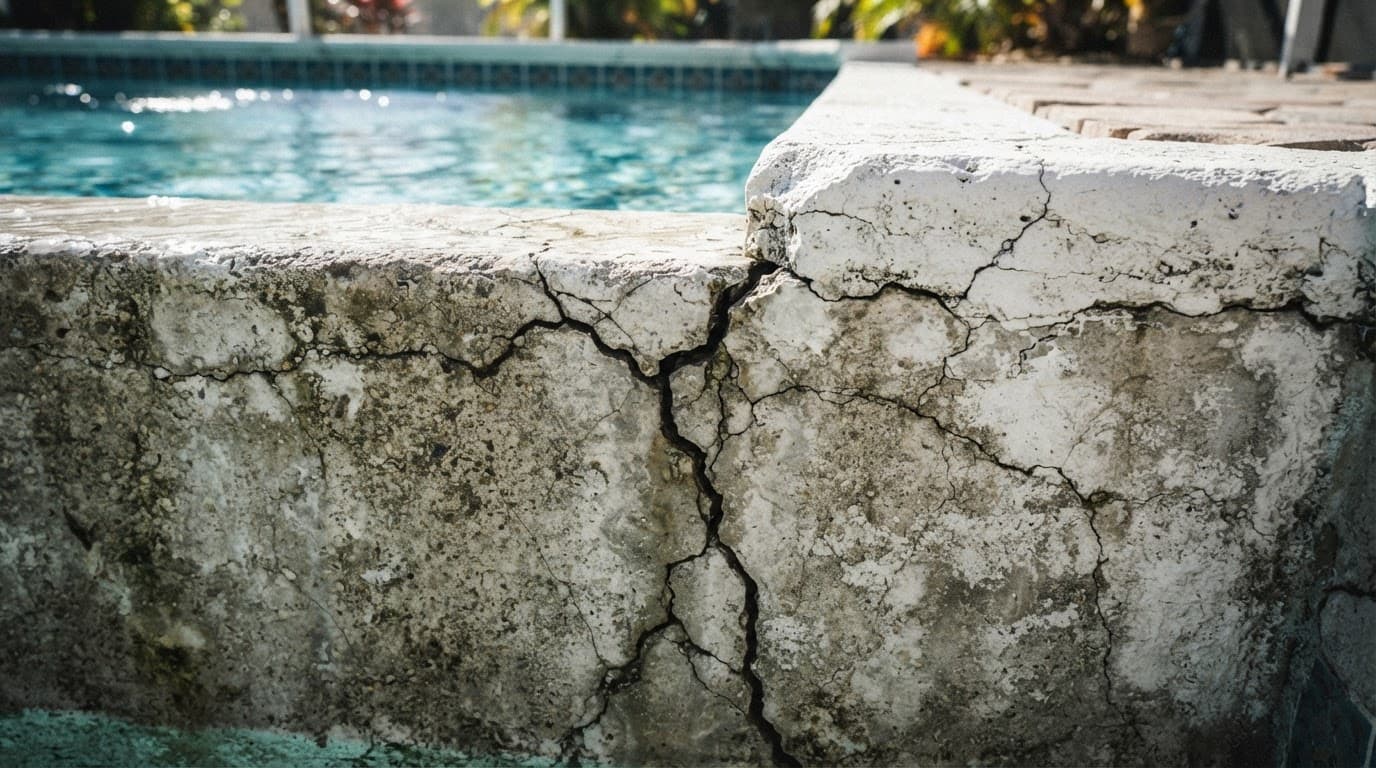
Structural cracks look different. They often appear as a single, continuous line across the pool floor, wall, steps, or bond beam. The crack may run vertically, horizontally, or diagonally. It can also cut through several materials, including the interior finish, tile line, coping, or surrounding deck.
The location matters, but so does the pattern. A crack that keeps returning after patching suggests movement below the surface. Soil settlement, pressure around the shell, drainage problems, and construction issues can all contribute to movement. Cape Coral properties also face intense sun, heavy rain, and storm conditions that place stress on outdoor structures.
Use a simple rule: a crack that changes deserves professional attention . Mark its ends with a pencil and record the date. Check it again after several weeks. Don't widen the crack yourself or rely on paint to hide it.
Water Loss Is a Major Warning Sign
A pool loses some water through evaporation, especially during hot Cape Coral weather. Splash-out, filter backwashing, and pool use can also lower the water level. However, a steady drop without an obvious cause may indicate a leak.
Structural cracks can allow water to pass through the pool shell and into the surrounding soil. The leak may be slow at first. You might notice that the autofill runs more often, the pump loses prime, or the water level drops below a certain point and stops.
That last pattern can provide a useful clue. If the water stops falling when it reaches the level of a wall crack, the crack may be connected to the leak. This doesn't prove the source, since plumbing leaks and fittings can cause similar symptoms. A professional leak test is still needed.
You may also see:
- Damp or unusually soft soil beside the pool
- Persistent puddles near the equipment pad or deck
- Erosion under pavers or concrete
- Higher water use without a change in pool habits
- Air bubbles returning through the pool jets
- Cracks that stay wet after the surrounding surface dries
Don't drain a pool with suspected structural damage without professional guidance. Water pressure inside the pool can help support the shell. Removing that pressure may expose weak areas to additional movement, particularly when groundwater conditions change.
A leak also carries more than water away. It can wash soil from beneath the deck or shell, leaving unsupported areas that settle and place additional stress on the pool.
Cracks That Reach the Deck, Coping, or Tile Line
Pool structures connect to several surrounding materials. When a crack crosses from the interior wall to the coping or deck, the issue may involve movement beyond the finish.
Watch for a line that continues through the waterline tile, coping stones, concrete deck, or expansion joint. A broken tile by itself may only need replacement. A matching crack in the pool shell and deck deserves a broader inspection.
Deck movement creates other clues. Sections may lift, sink, separate, or develop gaps near the pool edge. Pavers can become uneven, while concrete may crack in a line that follows the pool's shape. These conditions can occur when soil beneath the deck shifts or when water washes material away.
A crack near the bond beam is also important. The bond beam is the reinforced upper section of a concrete pool wall. It supports coping and helps tie the pool structure together. Damage in this area can affect tile, coping, deck surfaces, and the wall below.
The right repair depends on the cause. Filling the visible line may improve its appearance, but it won't correct settlement or pressure behind the shell. The contractor may need to inspect drainage, check the surrounding soil, evaluate the shell, and determine whether the deck and pool are moving together.
A crack that crosses several connected materials is rarely only a cosmetic finish problem.
Widening, Offset, or Reappearing Cracks
A stable hairline crack may remain unchanged for years. A widening crack tells a different story. Measure the opening with a ruler or crack gauge, then photograph it from the same angle over time.
Pay attention to offset. If one side of a crack sits higher or lower than the other, the surfaces have moved in relation to each other. This step or separation is more concerning than a flat line within the finish.
Reappearing repairs also matter. If a crack returns after patching, the repair material may have covered the symptom while movement continued underneath. Repeatedly applying filler can make the surface look better for a short period, but it doesn't identify the source.
Structural cracks often show related damage nearby. You might see chipped plaster, loose tile, separated coping, or a gap where the deck meets the pool. These signs don't establish the exact cause, yet they give a contractor more information during an inspection.
Keep the pool water balanced while you arrange an evaluation. Poor chemistry can damage plaster and metal components, but balanced water won't stop a moving shell. Avoid aggressive scrubbing or pressure washing around a damaged area, since those actions can remove finish material and make the crack harder to assess.
If you see exposed steel, a rapidly growing opening, major water loss, or a section of wall that appears displaced, arrange an inspection promptly. Keep people away from unstable deck areas and don't attempt to chip into the shell.
What a Professional Inspection Should Cover
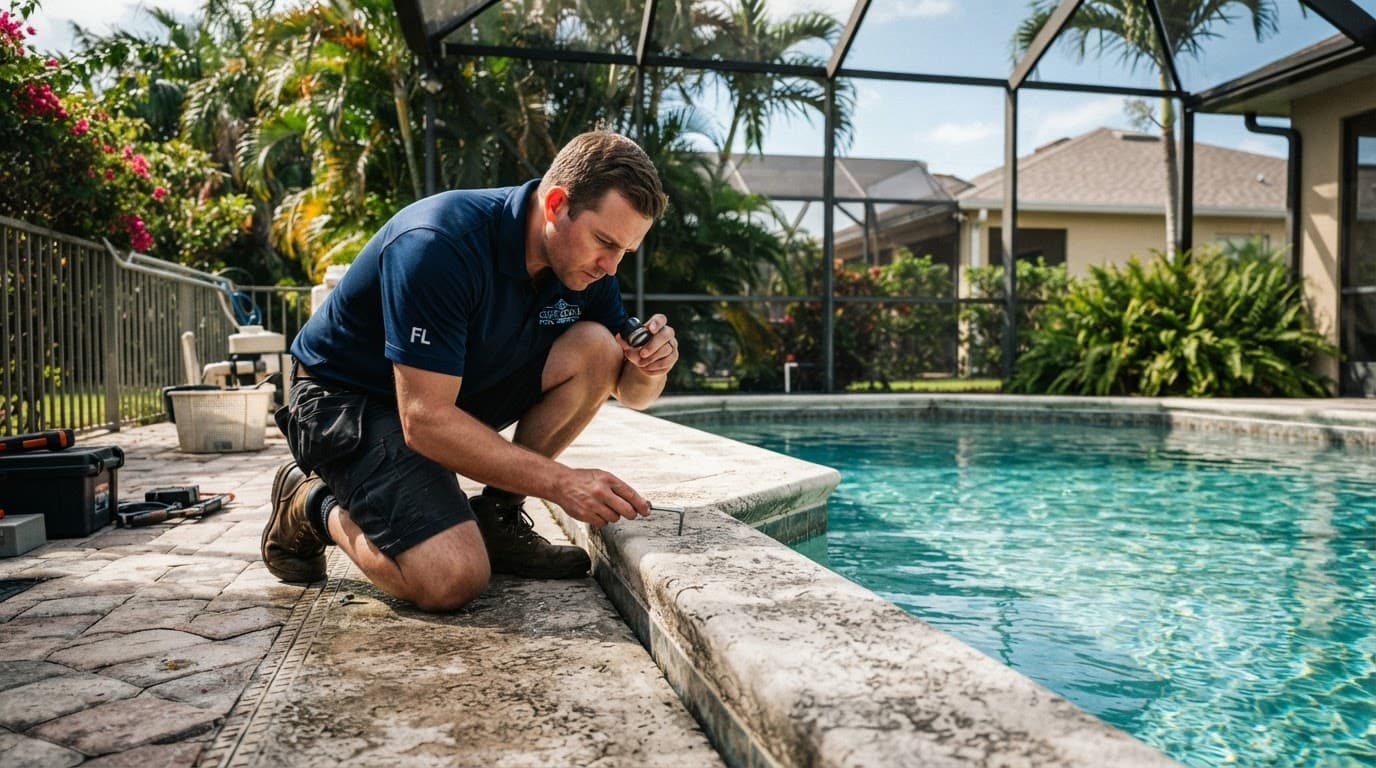
A qualified pool contractor should inspect more than the visible crack. The evaluation typically starts with the crack's location, length, width, direction, and surrounding damage. The contractor may also check the water level, pool shell, deck, coping, tile, equipment, and nearby soil.
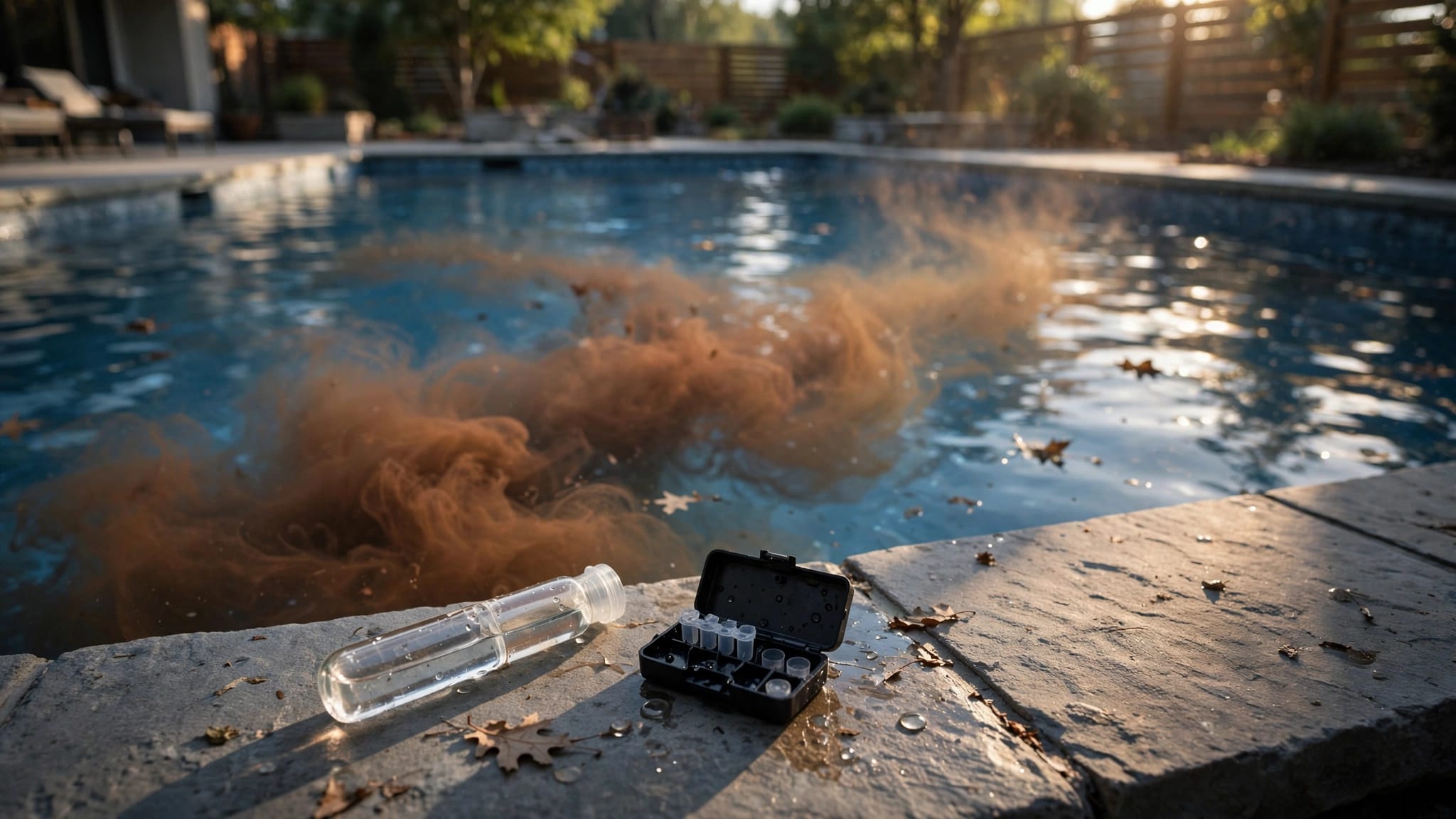
Leak testing can help separate a shell problem from a plumbing issue. The inspection may include dye testing around fittings and cracks, pressure testing of plumbing lines, or monitoring water loss under controlled conditions. The right method depends on the pool and the suspected leak path.
The contractor should explain whether the damage is:
- Limited to the interior finish
- Connected to a leak or plumbing failure
- Caused by deck or soil movement
- Affecting the concrete shell
- Large enough to require renovation or structural correction
Repair methods vary. A small finish crack may need cleaning, filling, and a matching surface repair. A structural repair may require opening the damaged area, treating exposed reinforcement, installing appropriate reinforcement or repair materials, sealing the crack, and restoring the interior finish. The exact procedure should follow the condition of the shell, not a one-size-fits-all patch.
If the surface has widespread cracks, rough texture, flaking, or stains, resurfacing may be part of the project. Back Bay Pools' guide to the differences between remodeling and resurfacing can help you understand when a finish repair differs from a larger pool update.
When Crack Repair Becomes a Pool Renovation
A structural crack doesn't always mean you need a completely new pool. Many repairs focus on the affected shell, deck, or finish. However, extensive movement or multiple connected problems can make a broader renovation more practical.
Consider the full condition of the pool. A shell with one isolated repair may need targeted work. A pool with widespread cracking, failing plaster, old tile, damaged coping, and outdated equipment may benefit from a coordinated renovation.
Combining related work can reduce the need to disturb finished areas more than once. For example, repairing the shell before resurfacing makes more sense than applying a new finish over unresolved movement. Replacing damaged coping may also be easier while the deck edge is already open.
Budget depends on pool size, access, crack location, repair depth, finish material, plumbing needs, and the amount of deck work. Surface resurfacing alone is a different project from structural repair. Ask for a written scope that separates shell repairs, leak work, resurfacing, tile, coping, and equipment.
For planning purposes, you can review current guidance on pool resurfacing cost in Cape Coral. A contractor still needs to inspect your pool before providing a reliable estimate, because visible cracks don't show the full extent of hidden damage.
If you notice a new crack, document it before cleaning or patching the area. Take clear photos, note water loss, and record whether the crack changes after rain or pool use. That information can help the contractor work faster and recommend the right repair.
Protect Your Pool by Acting Early
The safest approach to Cape Coral pool crack repair is to investigate changes before they become expensive disruptions. Fine surface lines may need maintenance, while spreading cracks, water loss, deck movement, and offset surfaces require a closer structural review.
Avoid filling a serious crack with a temporary product and assuming the problem is solved. A proper repair addresses the shell, leak path, soil movement, or finish failure behind the visible damage.
If your pool shows more than cosmetic wear, Get a Free Estimate for an onsite evaluation. Early information gives you more repair options and helps protect the backyard investment you've already made.