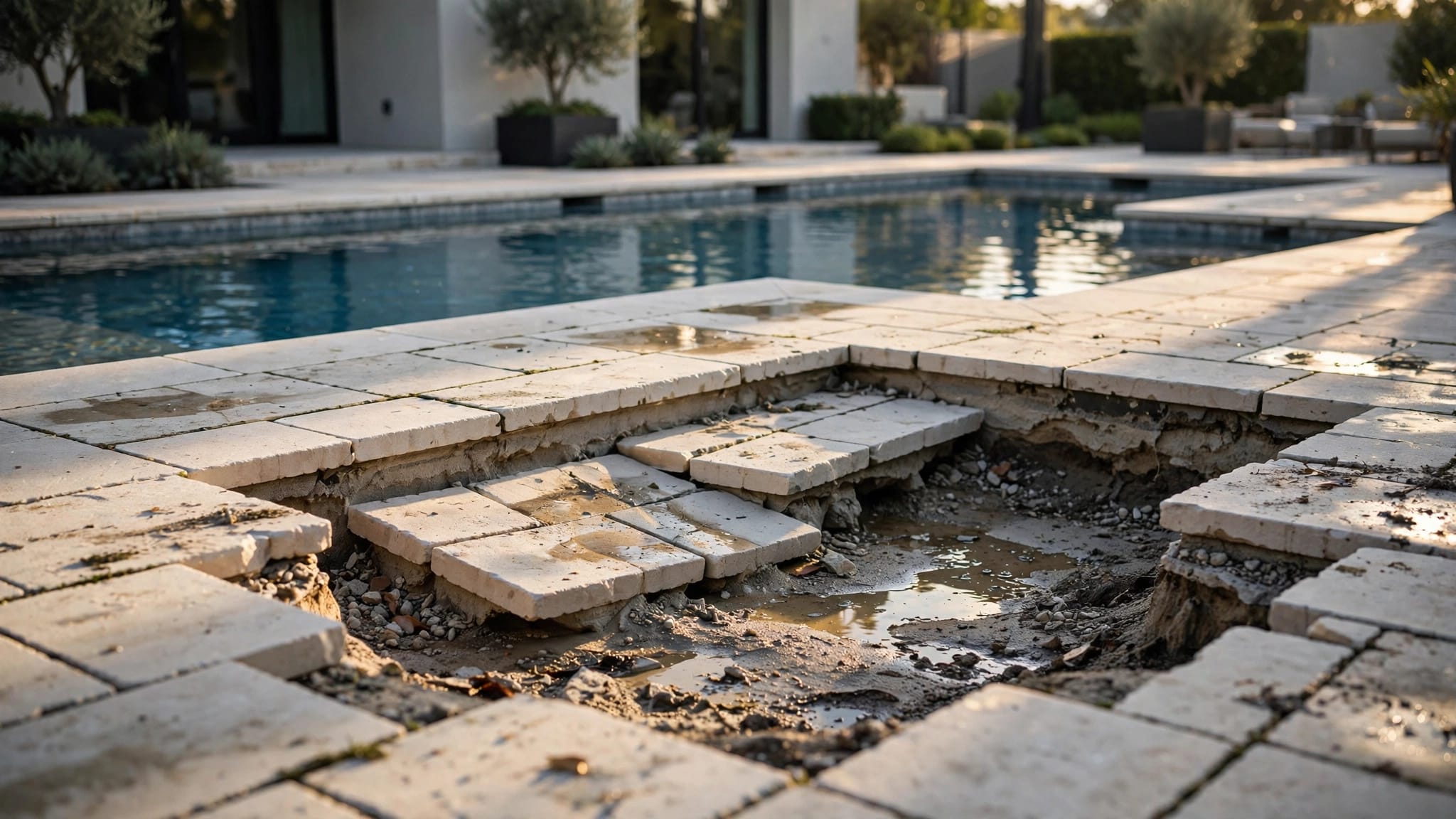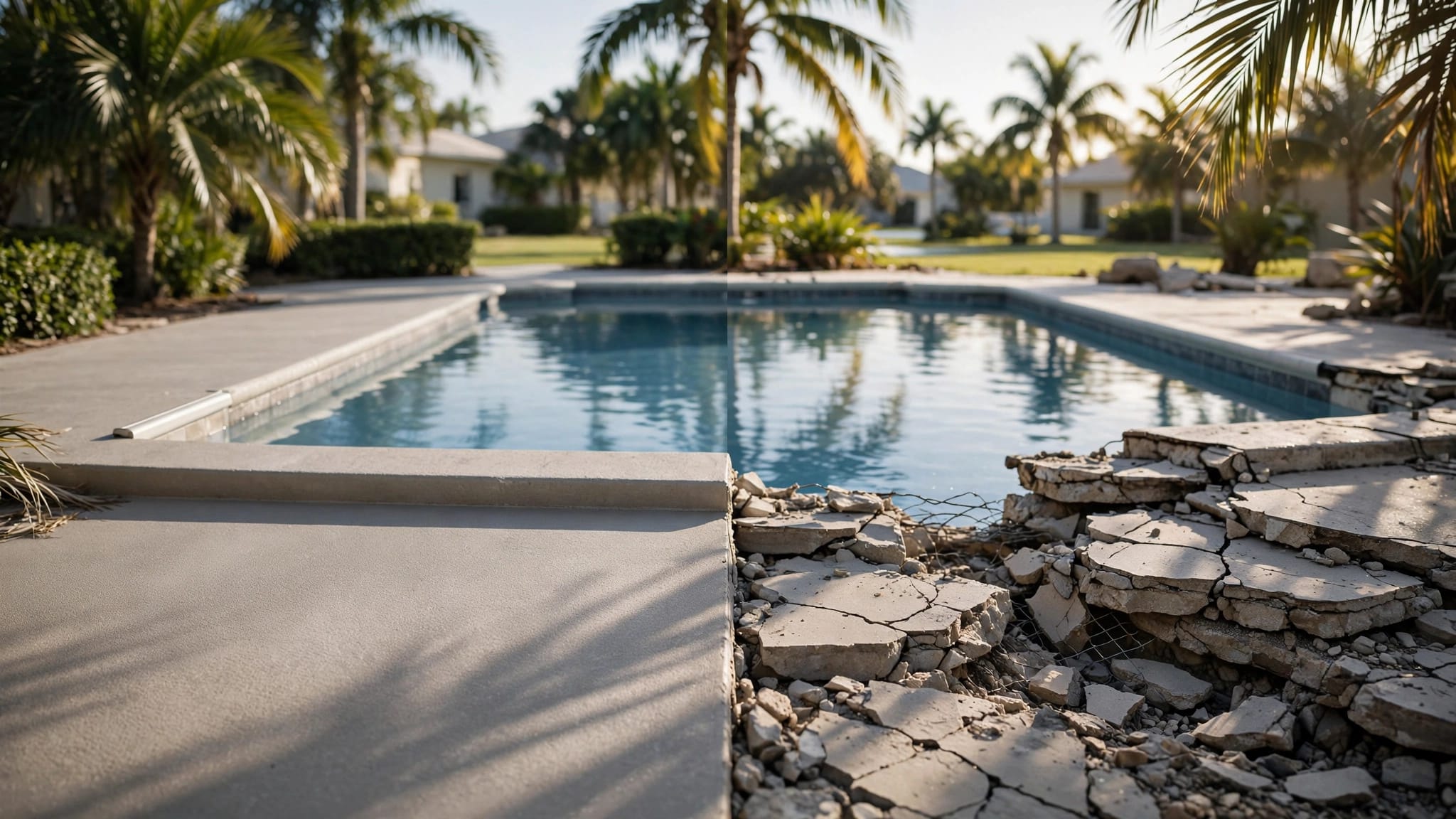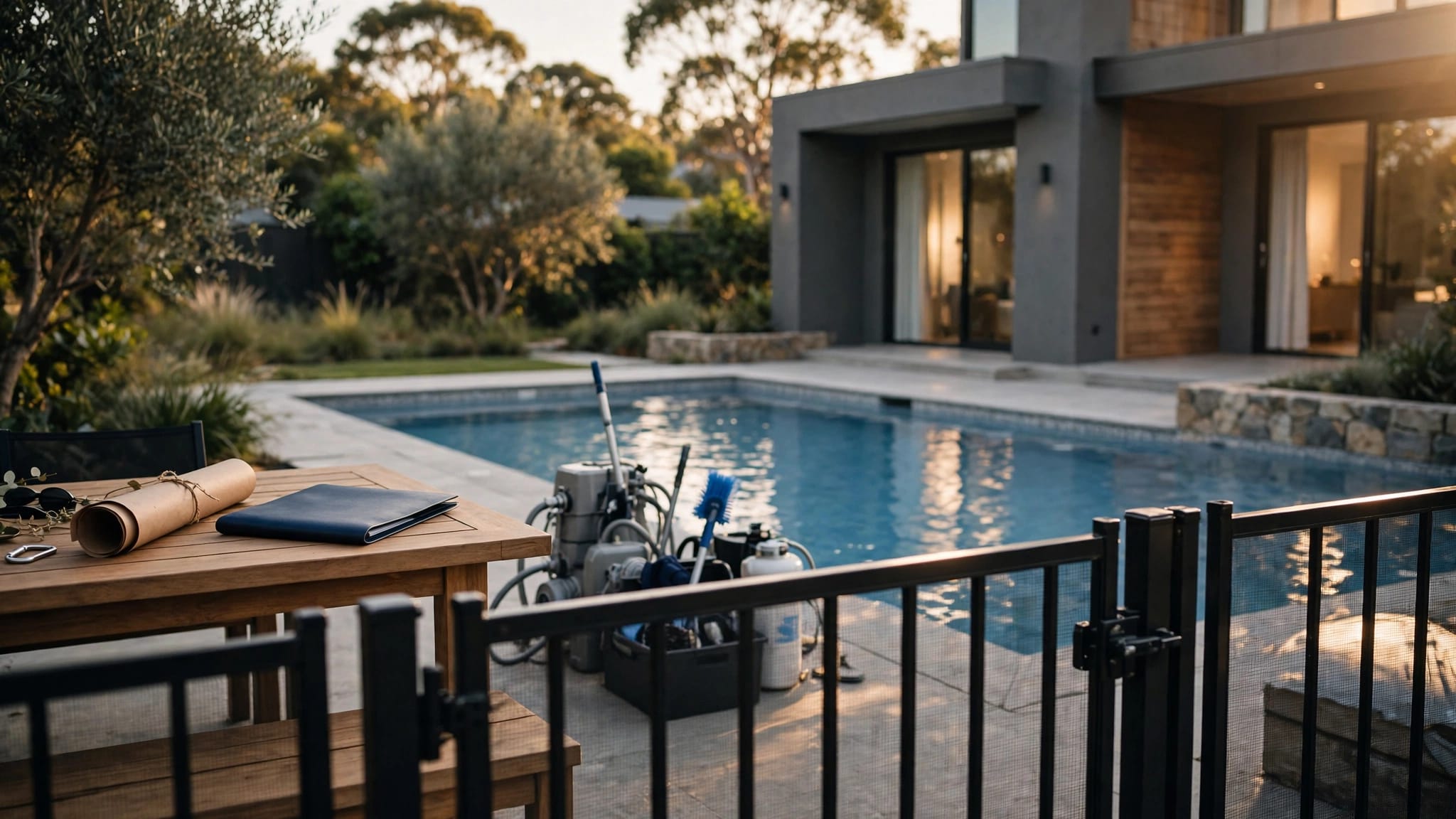
A pool project can look simple on paper until the backyard access gets tight. In Cape Coral, side yards, lanais, canal lots, and seawalls can all change how a crew moves equipment and materials.
That affects labor, cleanup, protection for existing surfaces, and sometimes the build schedule. If you are comparing bids for a new pool, a renovation, or screen work, pool access is one of the first details that can change the final number.
Why access changes the price of a pool project
Crews do not price a backyard only by pool size. They also price the path to the work zone. If equipment can reach the dig area with little friction, the job moves faster and usually costs less. If the crew has to work around fences, narrow gates, or finished patios, the same project takes more time and more hands.
The biggest cost shift usually comes from labor. A machine can move soil in minutes, while a small access path may turn that same work into a slower hand-haul job. That extra time adds up.
It also affects protection. Crews may need to shield pavers, preserve landscaping, or work around a screen enclosure. When the route is tight, every move has a little more risk.
When equipment cannot reach the backyard cleanly, every part of the job takes a longer path.
Here is a simple way to see the difference.
| Access situation | What happens on site | Cost pressure |
|---|---|---|
| Wide side access | Equipment reaches the backyard easily | Lower labor and faster cleanup |
| Narrow side yard | Smaller machines or hand hauling may be needed | Higher labor and more time |
| Canal-front lot with seawall | Staging space is limited and protection matters more | Higher prep and care costs |
| Screened lanai in the work path | Panels may need removal or careful protection | Added demo or re-screen work |
| Tight fenced lot | Material movement slows down | More setup and hauling time |
A short route, in other words, usually means a cleaner job. A cramped route means more effort before the first shovel of dirt even moves.
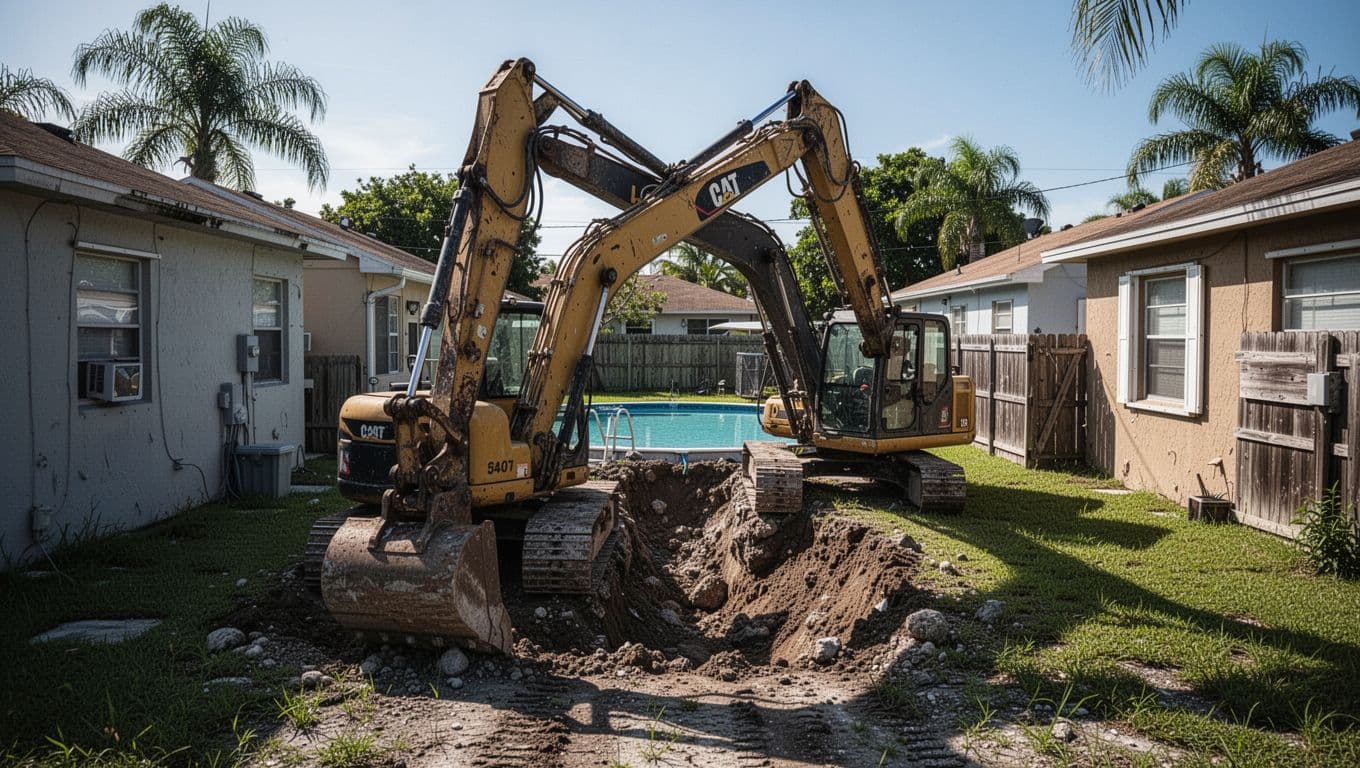
What contractors look for during a site visit
A good site visit tells the story before the first bid is written. If you are planning new pool construction services, this is where access starts to shape the real scope.
Contractors usually measure more than the backyard itself. They look at the route in, the route out, and the space needed to work without damaging what is already there.
Common things they check include:
- Gate width and side-yard clearance, because those numbers tell the crew what equipment can fit.
- Overhead wires, trees, and AC units, because they can block the movement path.
- Patio material and condition, because pavers, concrete, and finished decks need different protection.
- Existing screen enclosures, because a cage may need partial removal or careful workarounds.
- Where soil and debris can be staged, because the wrong pile in the wrong place slows everything down.
- How trucks, trailers, and small machines can reach the job, because a blocked driveway changes the plan.
Contractors also look at the shape of the project. A simple rectangular pool in an open yard is easier to stage than a custom shape tucked behind a narrow lanai. If the crew is building a shell, steel, or coping that needs room to move, access matters even more. Homeowners comparing inground gunite pool construction guidance often see that the shell itself is only part of the story. The work area around it has to function too.
The goal of a site visit is simple. It finds the bottlenecks before they become change orders.
Cape Coral property features that often raise costs
Cape Coral has a lot of properties with character, and that character can affect access in a big way. Some lot layouts are easy to work with. Others force the crew to plan around fixed site limits.
Tight side yards and fenced lots
Many Cape Coral homes have side yards that feel usable for daily life, but too tight for construction equipment. A fence, a hedge, or a narrow paver path can limit the route to the backyard.
When that happens, crews may need smaller machines, slower hauling, and more labor. The job can still get done well, but the process takes longer. Older neighborhoods often have this issue, especially when upgrades have added fencing, outdoor kitchens, or landscaping over time.
Screened lanais and pool cages
Screened lanais are common across Southwest Florida, and they can complicate access fast. If the pool area sits behind a cage, the crew may need to remove panels, protect framing, or work in a very tight opening.
That matters for more than new builds. It also comes up during pool renovations, resurfacing, and screen enclosure work. A pool cage can limit material delivery, block equipment, and add careful teardown or reassembly steps. In some cases, the enclosure protects the space. In others, it becomes part of the access problem.
Canal-front lots and seawalls
Waterfront lots look open, but they can be tricky for construction. A seawall creates a hard edge, and that edge often limits where heavy equipment can sit. The crew may have less room to stage materials, turn machines, or pile removed soil.
That extra care can raise costs. Crews have to think about protecting the seawall, avoiding turf damage near the edge, and keeping load weight away from vulnerable spots. On some canal-front properties, the backyard layout is beautiful but unforgiving.
Lot layout and utility placement
Corner lots, cul-de-sacs, and homes with narrow driveway access can all affect the route to the backyard. Utility meters, pool equipment pads, and easements can also cut into the usable work zone.
A yard may look open from the patio, yet still be awkward for construction. That is why measurements matter. The difference between a smooth job and a slow one is often a few feet of clearance.
How to keep access costs under control
You cannot change the shape of your lot, but you can make the project easier to price and easier to build. Clear information helps the contractor plan the right crew and the right equipment.
A few simple steps can make a difference:
- Trim back shrubs and trees near the access path before the estimate.
- Move patio furniture, planters, grills, and storage items out of the work zone.
- Show the contractor every gate, side path, and possible equipment route.
- Point out screen panels, lanai posts, AC units, and anything that cannot be moved.
- Ask whether the crew can work through the existing access or whether a temporary removal is smarter.
It also helps to share photos before the site visit. A few wide shots of the side yard, backyard, and any enclosure can save time and help the contractor arrive with the right expectations.
If your project includes more than one service, it can also help to discuss them together. A renovation, resurfacing, or enclosure project may use the same access route, so planning them in the same conversation keeps the scope clear.
When you are ready to compare options, Get a Free Estimate and ask how your property layout affects the build plan.
Conclusion
In Cape Coral, access is not a side detail. It shapes labor, protection, setup time, and the amount of care a crew needs to work safely around your home.
The easiest lots to reach usually have the cleanest budgets. Tight side yards, screened lanais, canal-front seawalls, and crowded site layouts tend to push costs higher because the work takes more time and more handling.
A good estimate starts with an honest look at the path into the backyard. The more clearly that path is measured, the more reliable the price will be.