Cloudy pool water can come from chemistry, debris, poor circulation, or a filter that needs attention. Adding more chemicals before identifying the cause may waste product and make the water harder to balance.
Start with observation, testing, and equipment checks. This sequence helps you separate a chemical issue from a circulation or filtration problem before you treat the pool.
Key Takeaways
- Look at the type of haze, recent weather, debris, and water movement before changing the water.
- Test a fresh sample away from skimmers, return jets, and chemical feeders.
- Check water level, baskets, pump operation, return flow, filter pressure, and filter condition.
- Never assume cloudy water means the pool needs more chlorine or immediate backwashing.
- Follow every product label, add only one chemical at a time, and never mix pool chemicals.
How to Diagnose Cloudy Pool Water by Observing the Pattern
The appearance of the water gives you clues, but it doesn't identify the cause by itself. Before opening a chemical container, inspect the pool and note what changed.
Look for recent triggers
Check whether the cloudiness appeared after heavy rain, strong winds, a pool party, fresh fill water, or an algae treatment. In Cape Coral and other parts of Florida, storms, pollen, dust, sunscreen, intense sunlight, and frequent swimming can change water conditions quickly.
Look at the pool floor and walls. Fine particles that settle on surfaces may point toward debris or weak circulation. A uniform haze throughout the water may relate to filtration or water balance. Green tint, visible growth, or a strong chlorine smell requires more careful testing and should keep swimmers out until the water is safe.
Also inspect the screen enclosure. A damaged screen can allow more leaves and insects into the pool, but replacing the screen won't correct poor water movement.
Watch the water move
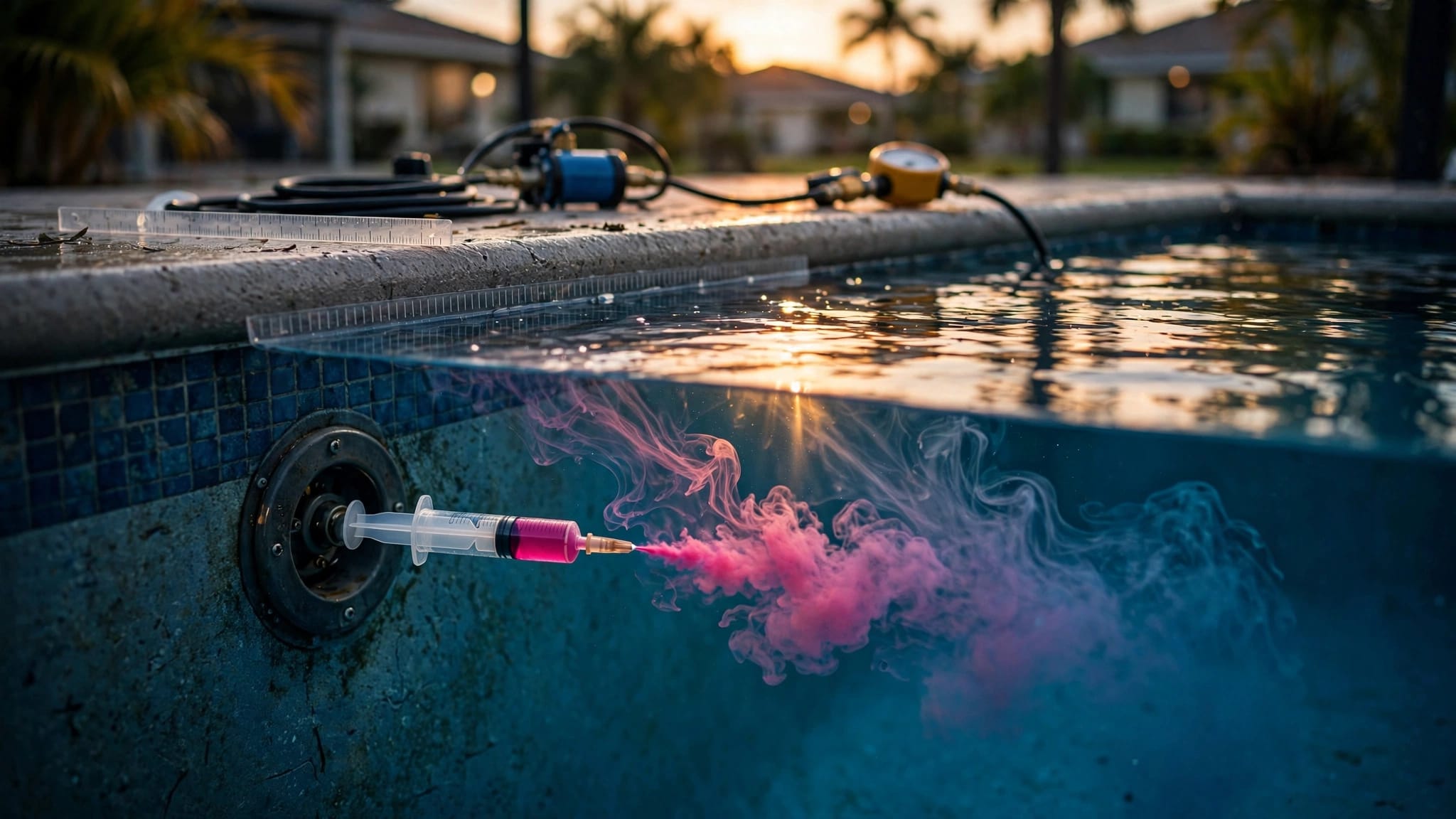
With the pump running, observe the return jets and skimmer. Strong, consistent return flow usually means the pump is moving water through the system. Weak or uneven flow may point to a clogged basket, low water level, air entering the system, a blocked line, a valve position, or a pump problem.
Water circulation moves pool water through the skimmer, filter, heater, salt cell, and returns. You can learn more about how pool skimmers improve water circulation before changing equipment settings.
Test the Water Before Adding Chemicals
Appearance alone can't tell you what the water needs. Testing first prevents wasted chemicals and reduces the risk of creating an unsafe combination.
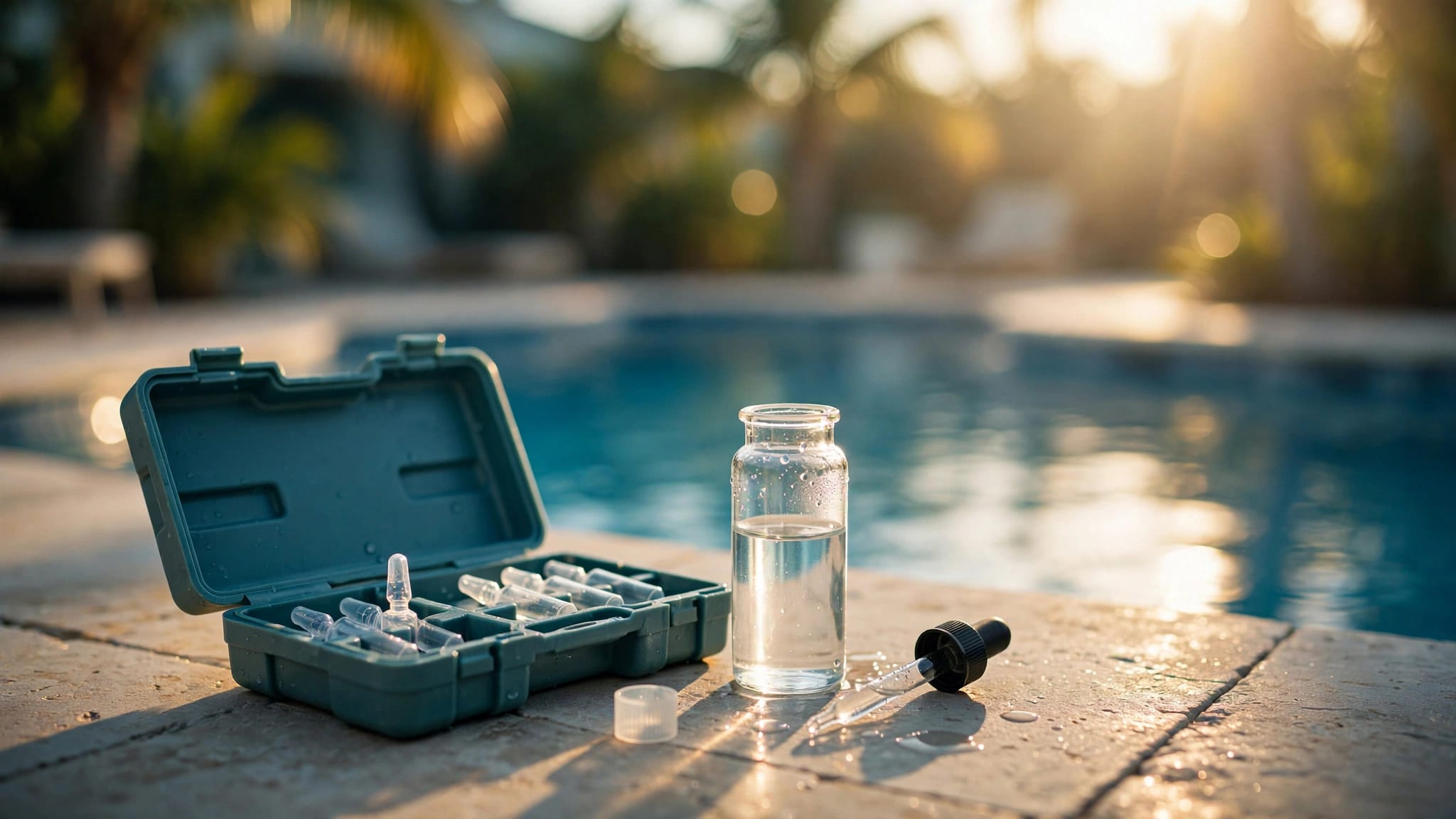
Use a reliable liquid test kit, a fresh test strip, or a professional water test. If a result would lead to a major chemical adjustment, repeat the test with a fresh sample or confirm it through a pool professional.
Collect a useful sample
Take water away from the skimmer, return jets, and chemical feeder. Reach about elbow depth, fill a clean container, and follow the kit's sampling instructions. Surface water or water taken beside a feeder may not represent the pool accurately.
Test free chlorine, total chlorine, pH, total alkalinity, calcium hardness, and cyanuric acid, also called stabilizer. Record the results and the date. A simple log can reveal patterns, such as pH rising repeatedly after storms or sanitizer dropping after heavy use.
For many residential pools, common starting ranges include:
| Reading | Common starting range | What it helps explain |
|---|---|---|
| pH | 7.2 to 7.6 | Swimmer comfort and chlorine performance |
| Free chlorine | 1 to 3 ppm | Available sanitizer |
| Total alkalinity | 80 to 120 ppm | pH stability |
| Cyanuric acid | 30 to 50 ppm | Sun protection for chlorine |
These ranges aren't universal instructions. The CDC recommends residential pool pH between 7.0 and 7.8, with at least 1 ppm free chlorine, or at least 2 ppm when cyanuric acid or stabilized chlorine products are used. Follow your product labels, sanitizer requirements, and equipment manufacturer's guidance.
Read the results together
Free chlorine shows how much active sanitizer remains. Total chlorine includes used-up chlorine compounds, so a wide gap between total and free chlorine can point to chloramines or a high contaminant load.
High pH can reduce chlorine performance and contribute to cloudiness or scale. Low pH can irritate swimmers and damage metal components. Total alkalinity helps control how quickly pH changes, so adjusting pH repeatedly without checking alkalinity can create a cycle of corrections.
If your test strip and liquid kit disagree sharply, don't guess. Check expiration dates, use dry hands, and retest with a fresh sample.
Check Circulation and Filtration
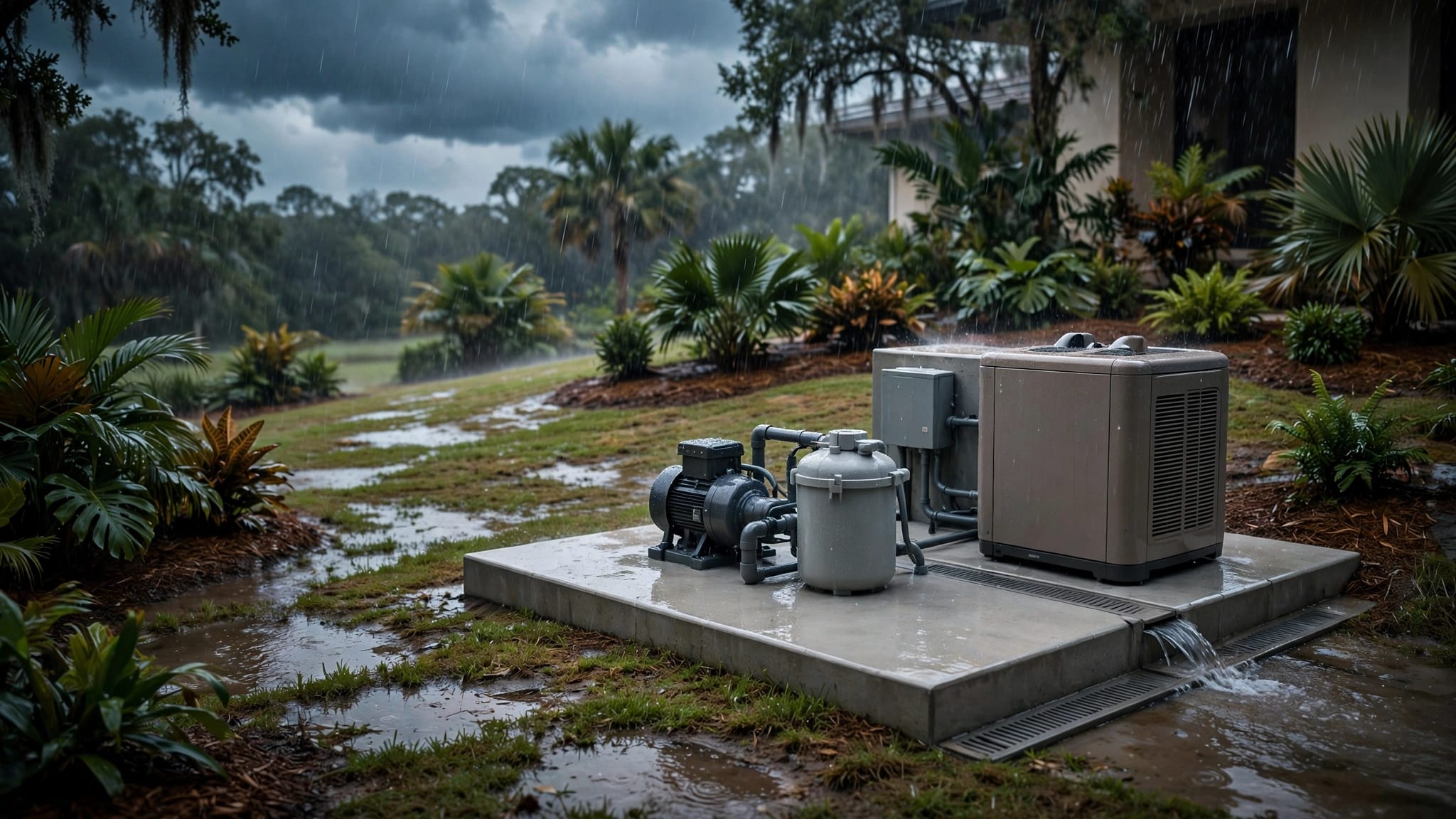
A pool can have reasonable test results and still stay cloudy when water isn't moving through the filter long enough. Start at the equipment pad before adding a clarifier, shock, or another chemical.
Inspect the simple points first
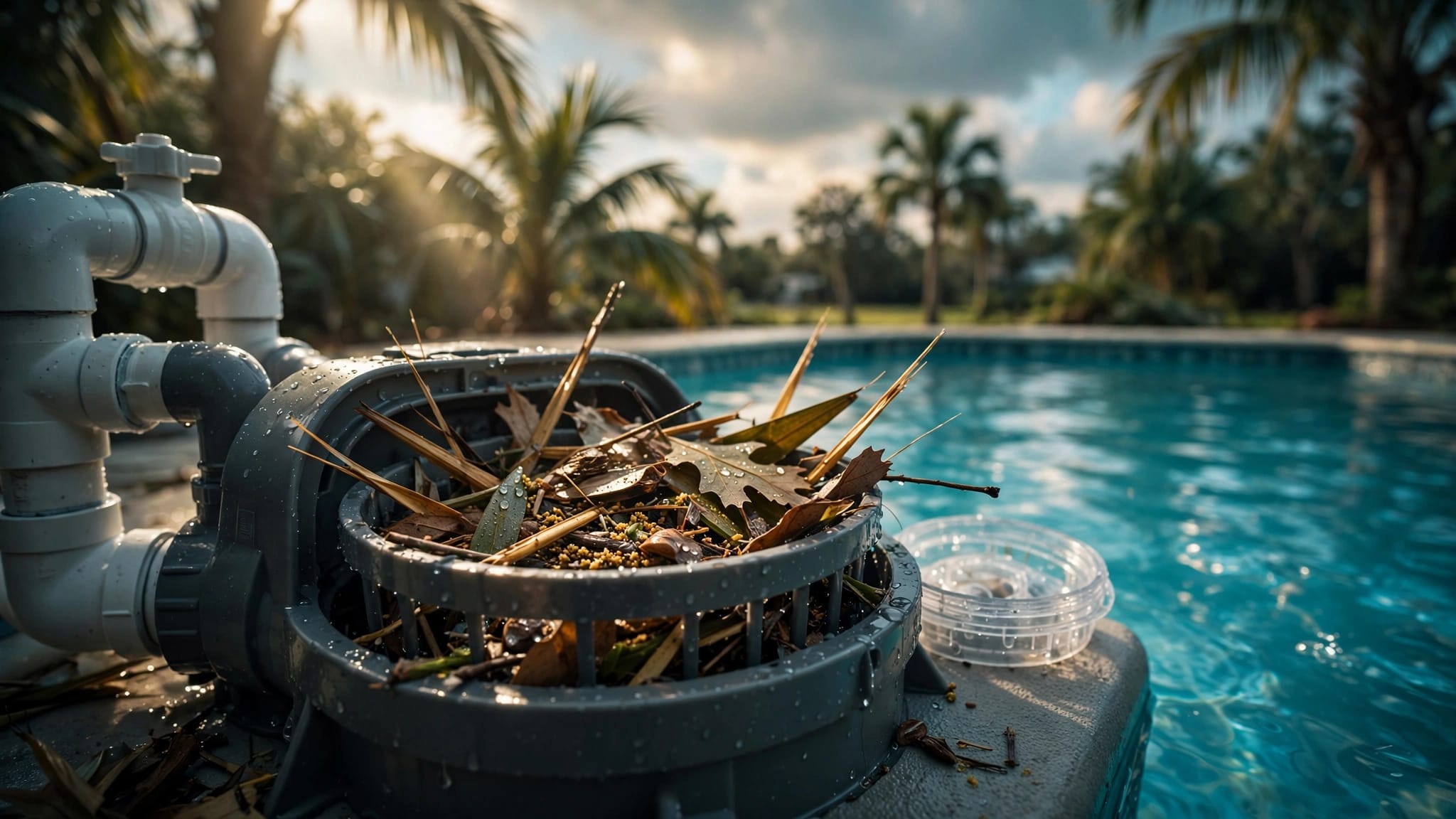
Check the water level. If it has fallen below the skimmer opening, the pump may draw air instead of water. Turn off the pump before opening the pump basket or filter housing, release pressure as directed, and inspect the skimmer and pump baskets for leaves, grass, and other debris.
Confirm that valves are in their normal operating positions. Look for air bubbles, unusual pump noise, leaks, or a return stream that feels weaker than usual. If the pump is on a timer or variable-speed schedule, confirm that it runs during the intended filtration period.
A daily pool circulation schedule should match the pool's size, equipment, weather, and use. Lower-speed operation can save energy, but the system still needs enough flow and turnover for effective filtration.
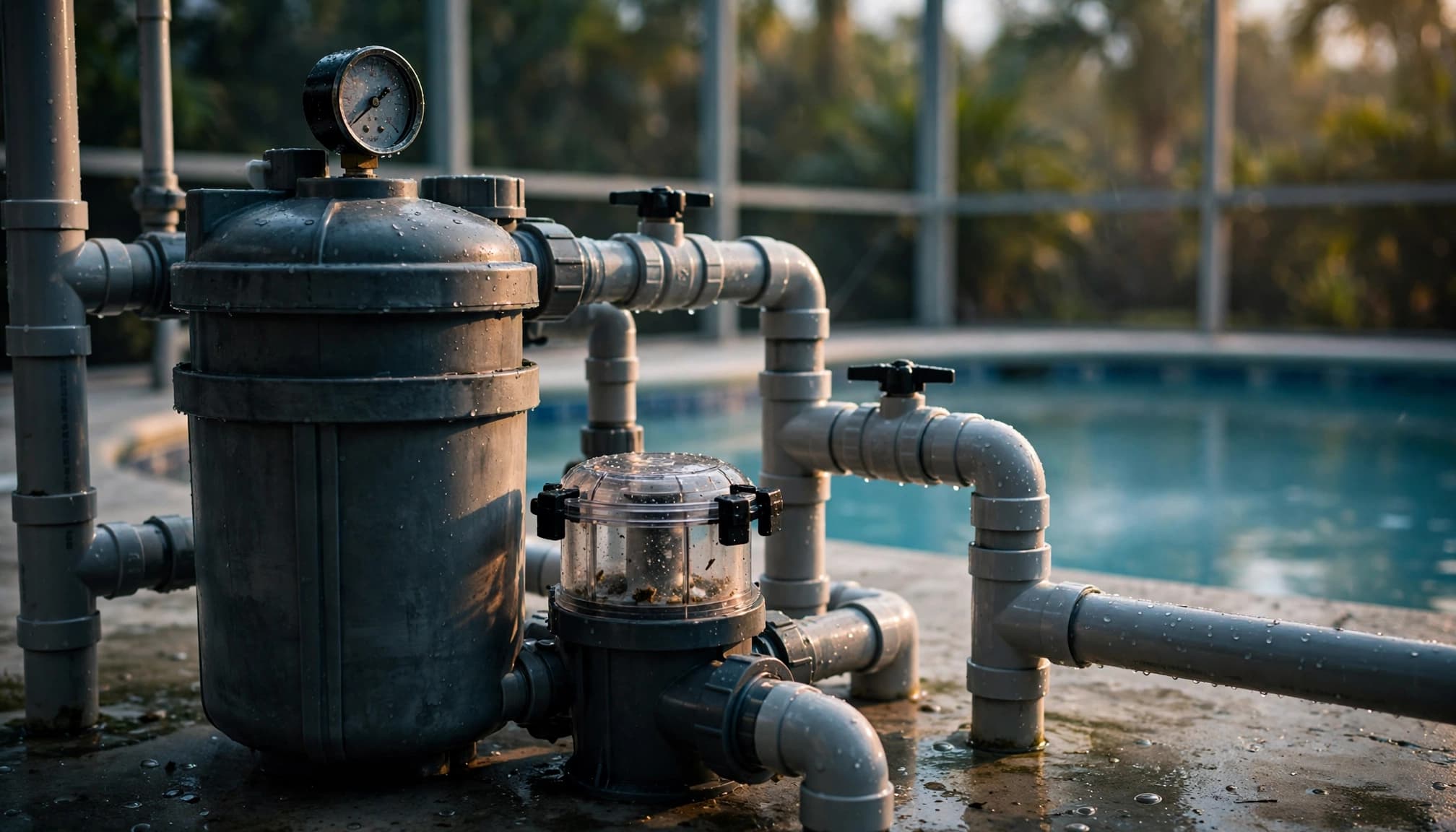
Use the pressure gauge as a clue
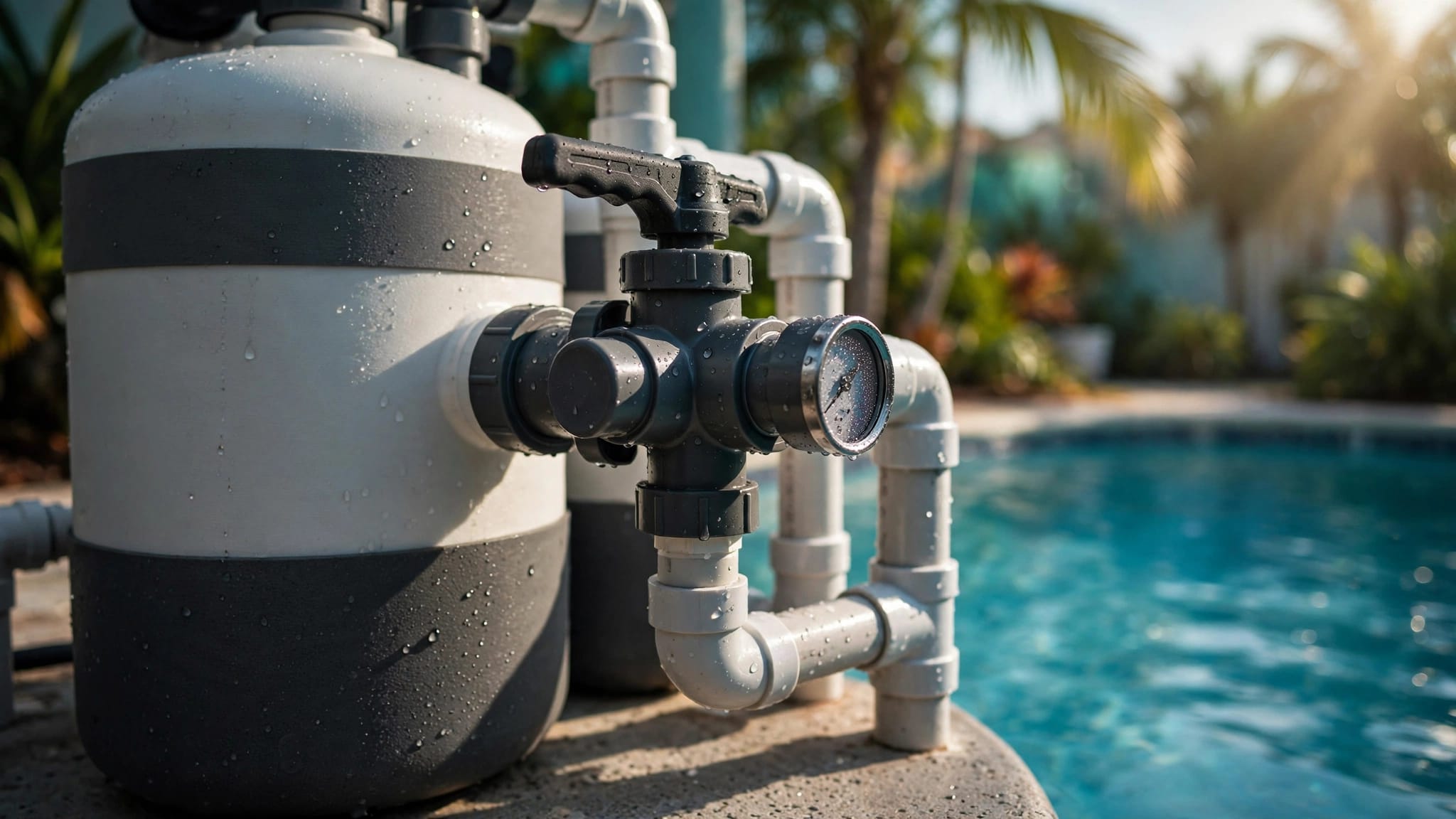
Write down the normal clean-filter pressure. A pressure increase can mean the filter has collected debris. Heavy rain, lawn debris, pollen, and algae cleanup can load a filter quickly.
Reduced return flow combined with rising pressure often supports a clogged or dirty filter diagnosis. Low pressure with cloudy water may point toward weak flow, a blocked suction line, an air leak, or another equipment issue.
Don't backwash only because the water looks cloudy. Test the water and inspect the baskets first. Follow the filter manufacturer's pressure guidance, because unnecessary backwashing wastes water and can make some sand or DE systems less effective.
Match the Symptoms to the Likely Cause
A short comparison can help you choose the next inspection instead of reaching for another product.
| What you observe | Possible direction |
|---|---|
| High pressure and weaker returns | Dirty filter, heavy debris load, or restricted flow |
| Low pressure and weak returns | Low water, air leak, blocked suction line, or pump issue |
| Normal pressure but persistent haze | Fine particles, chemistry imbalance, inadequate filtration time, or filter media concern |
| Cloudiness after rain or heavy use | Dilution, organic contamination, debris, or increased sanitizer demand |
| Cloudiness with green color | Possible algae or sanitation failure; keep swimmers out and test promptly |
These clues don't replace testing. They narrow the inspection so you can correct the underlying problem.
Clean or Backwash Only When the Evidence Supports It
Filter maintenance depends on the filter type and the condition shown by pressure and flow.
Cartridge filters
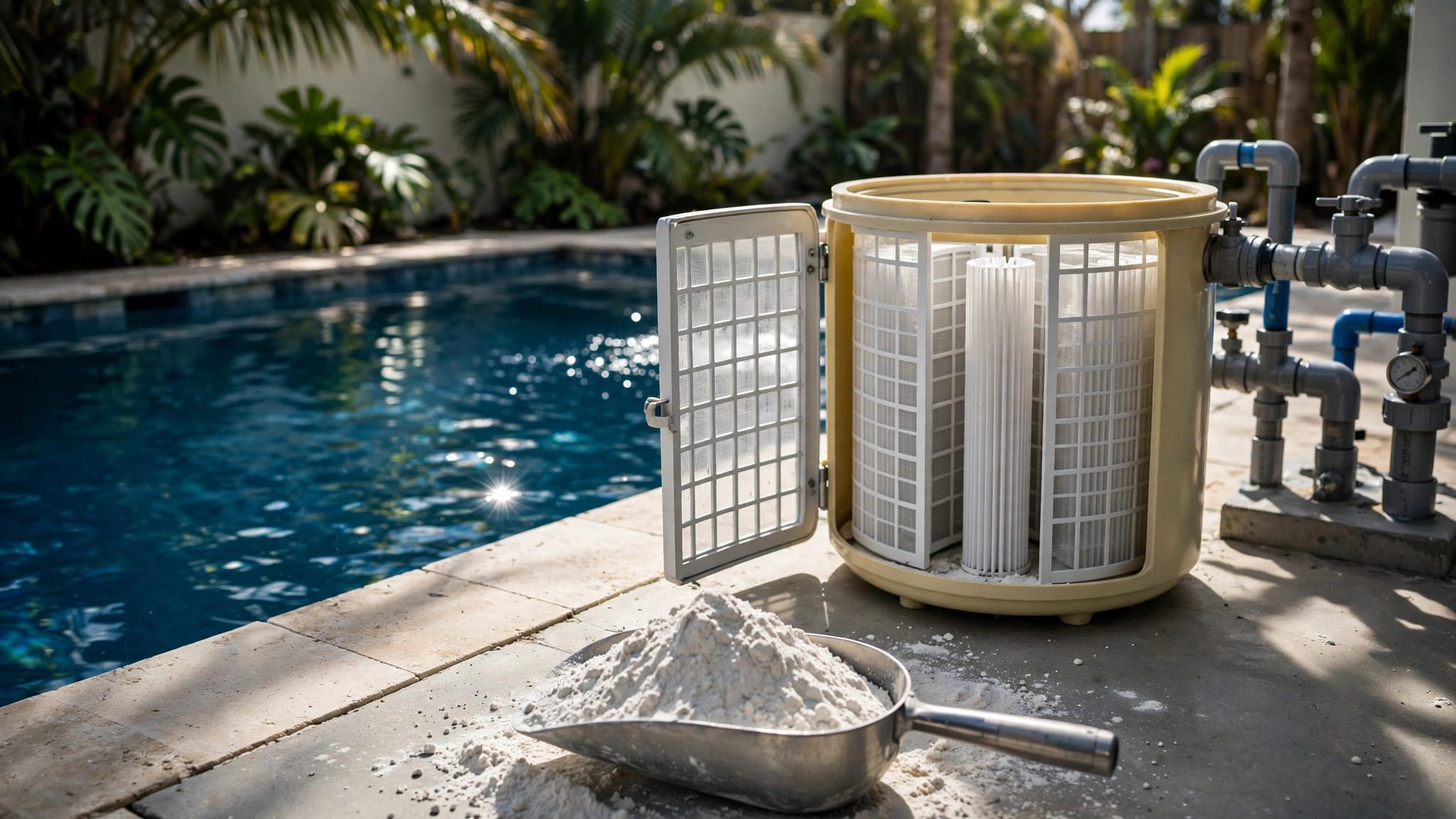
A dirty cartridge can raise pressure, strain the pump, and leave the pool cloudy. Shut down the pump, release all pressure, and follow the manufacturer's instructions before opening the housing. Never remove a pressurized filter lid.
Many Florida pools need a cartridge rinse every four to eight weeks, but debris load, storms, pollen, and pool use determine the real interval. Use safe cartridge filter cleaning steps rather than relying on a calendar alone.
Sand and DE filters
Sand and DE filters require different cleaning procedures. Follow the valve positions, pressure limits, and media instructions for your equipment. A DE filter can remove very fine particles, but it requires more hands-on maintenance than cartridge or sand filtration.
If pressure rises rapidly after cleaning, the filter may still have a flow restriction or the pool may be producing more debris than the system can handle. A technician can inspect the pump, plumbing, valves, and filter when the problem continues.
Use Chemicals Safely After Diagnosis
Once you understand the test results and equipment condition, make one measured adjustment at a time. Use the actual pool volume, current reading, and product label to determine any amount. A 10,000-gallon pool and a 20,000-gallon pool don't require the same treatment.
Never mix chemicals in a bucket, feeder, skimmer, or on the pool deck. Keep acid and chlorine products physically separated, use clean and dry tools, and follow the protective equipment listed on the label. Keep children and pets away from the work area.
Don't pour unused test reagents into the pool unless the instructions clearly permit it. Store chemicals in their original containers, away from heat, fertilizer, fuel, direct sun, and water leaks.
After treatment, allow the circulation system to operate as directed and retest before adding anything else. Keep swimmers out until the water is clear and the chemistry meets the sanitizer label and applicable safety guidance.
Cloudy Pool Water Decision Checklist
Use this sequence when the water looks hazy:
- Note when the cloudiness started and check for rain, debris, heavy swimming, or recent treatment.
- Check the water level, skimmer basket, pump basket, return flow, and pump sound.
- Take a clean sample away from skimmers and returns.
- Test free chlorine, total chlorine, pH, alkalinity, calcium hardness, and stabilizer.
- Compare pressure with the clean-filter baseline.
- Clean or backwash only according to the filter type and manufacturer instructions.
- Retest before making another chemical adjustment.
- Contact a pool professional if pressure, flow, or water balance remains abnormal.
A pool that stays cloudy after accurate testing and proper circulation may have aging equipment, a leak, damaged filter media, or a rough surface that holds contaminants. If the water problem began after a renovation or resurfacing project, follow the contractor's startup instructions instead of applying a generic treatment.
Frequently Asked Questions
Does cloudy pool water always mean low chlorine?
No. Low sanitizer is one possibility, but cloudy water can also come from fine debris, high pH, poor circulation, clogged baskets, a dirty filter, or heavy rain. Test the water and inspect the equipment before adding more chlorine.
Should I add clarifier right away?
Wait until you confirm that the water is circulating and the filter is operating correctly. A clarifier can't solve a blocked line, weak pump flow, low water level, or a filter that needs service. If the product is appropriate after diagnosis, follow its label exactly.
How often should I test a residential pool?
Test pH and free chlorine at least two or three times each week during normal use. Test more often after heavy rain, extreme heat, heavy swimming, fresh fill water, or a major chemical adjustment. Local Florida weather can change readings faster than expected.
When should I call a pool professional?
Call for help when the pump loses prime, pressure changes sharply, return flow stays weak, the water turns green, or repeated testing and filtration checks don't restore clarity. For homeowners considering equipment upgrades or a surface repair, Get a Free Estimate can connect you with a local pool contractor.
Conclusion
Cloudy pool water is a symptom, not a diagnosis. Observe the pattern, test a proper sample, inspect circulation, and use pressure and return flow to guide filter maintenance before adding more chemicals.
That order protects your water, equipment, and budget. When the pool remains cloudy after the basic checks, professional inspection can identify problems that chemicals can't fix.