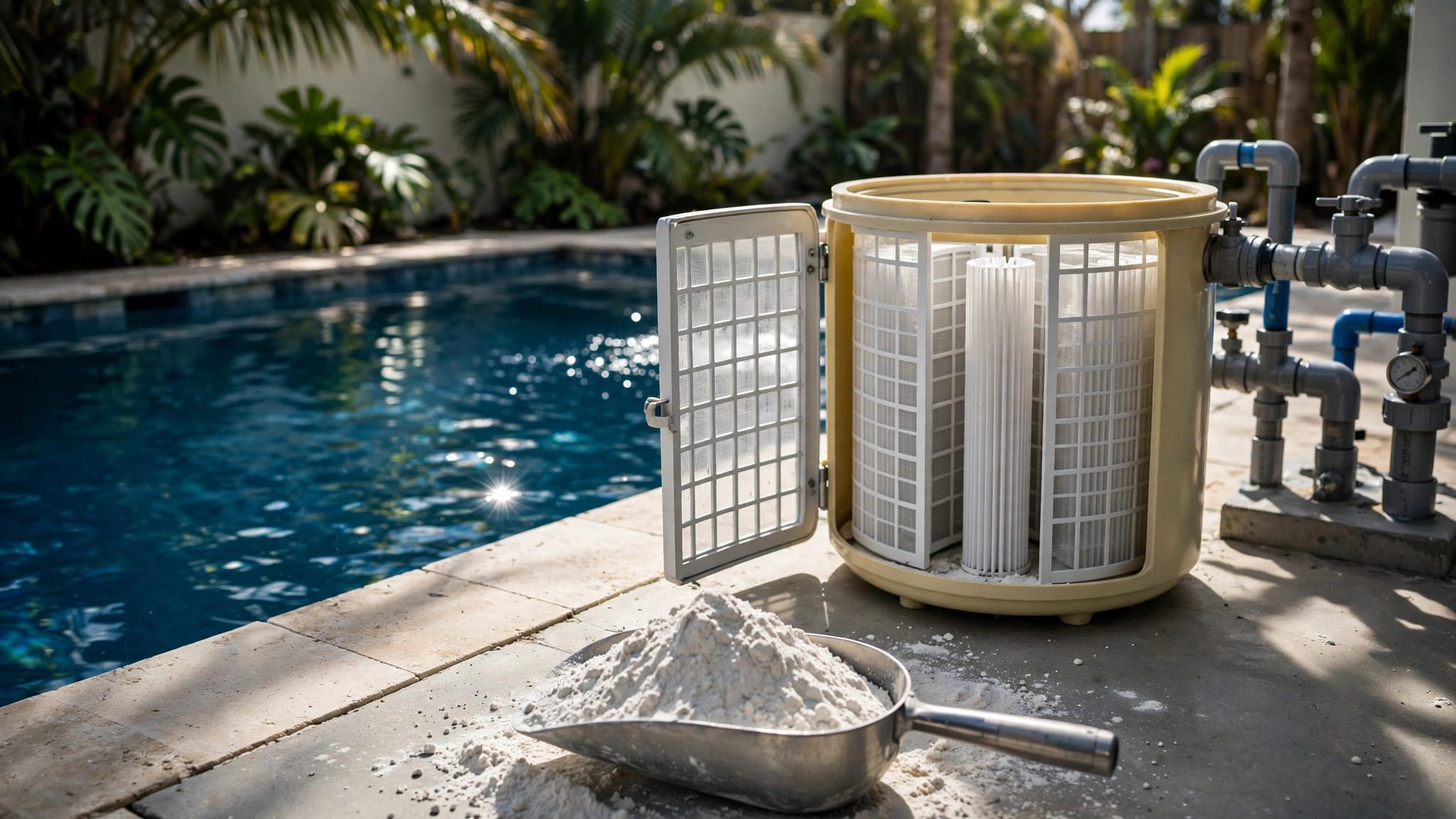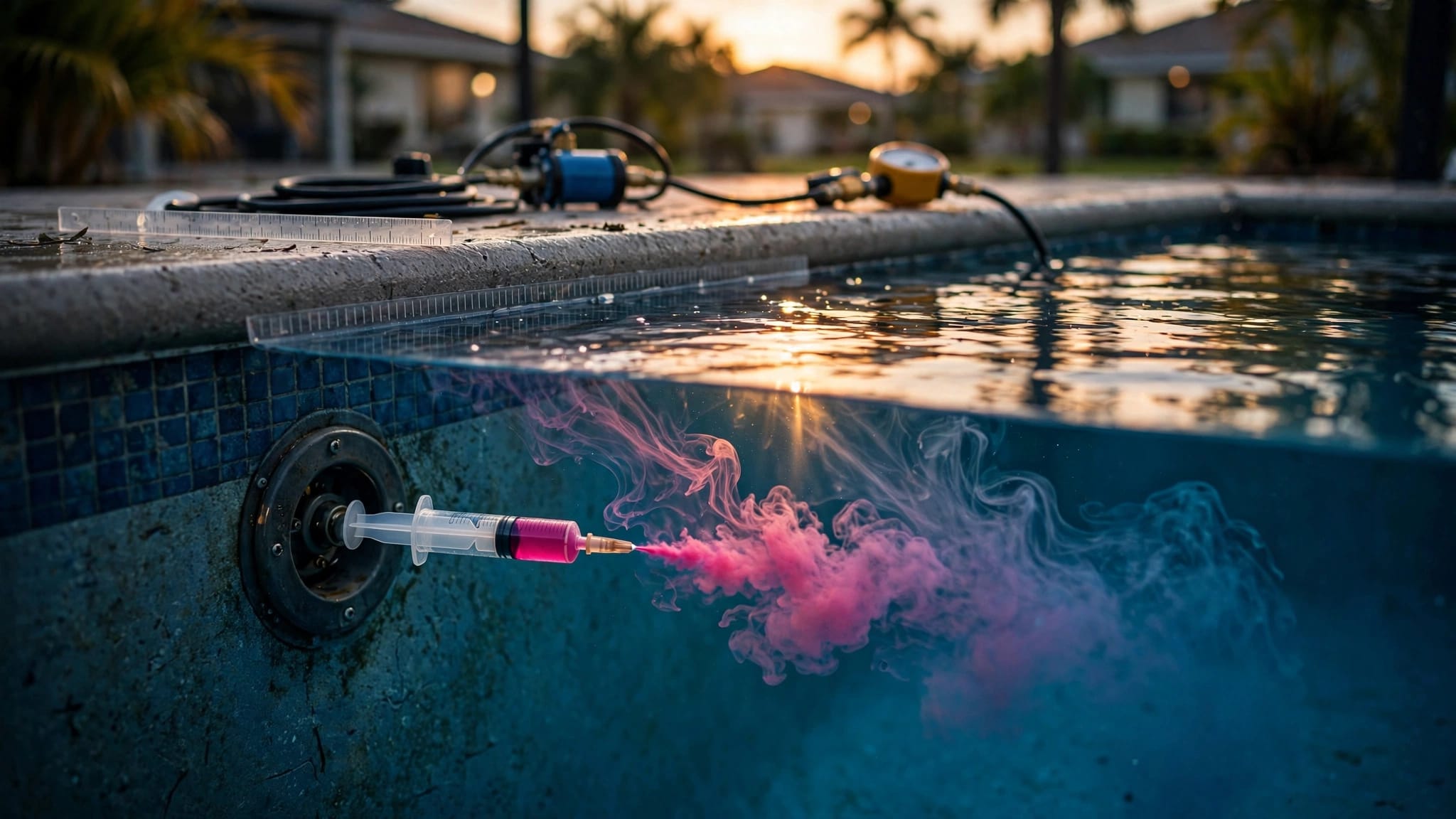
A full skimmer basket can restrict water flow, strain the pump, and make it harder to maintain a steady prime. Learning how to clean a pool skimmer basket safely helps protect circulation without turning a simple maintenance task into a dry-running pump problem.
The process starts with one rule: turn off the pump before removing the skimmer lid or basket . You also need to check the water level, inspect the basket and O-ring, and restart the system carefully. Use this sequence for routine cleaning, especially after storms, strong winds, or heavy yard work.
Why Pool Pump Prime Matters
A primed pump has water filling its strainer housing and moving continuously through the filter and return lines. The impeller depends on that water for cooling and circulation. If the pump runs with little or no water, the shaft seal and other internal parts can overheat.
A small air pocket may appear under the clear pump lid during startup. However, the basket should fill with water, the return jets should produce steady flow, and the pump should run without grinding, rattling, or persistent bubbles.
Common reasons prime gets interrupted
A dirty skimmer basket is only one possible cause. Low pool water can let the skimmer draw air, while a clogged pump basket, blocked impeller, loose pump lid, worn O-ring, or suction-side leak can also reduce flow.
In Cape Coral, evaporation, heat, wind, storm debris, and aging plumbing can make these problems more noticeable. A screen enclosure reduces larger debris, but it won't stop every leaf, palm strand, insect, or bit of pollen from entering the water.
Skimmer basket versus pump strainer basket
The pool skimmer basket sits inside the skimmer opening at the pool wall. It catches leaves and floating debris before water travels through the suction line.
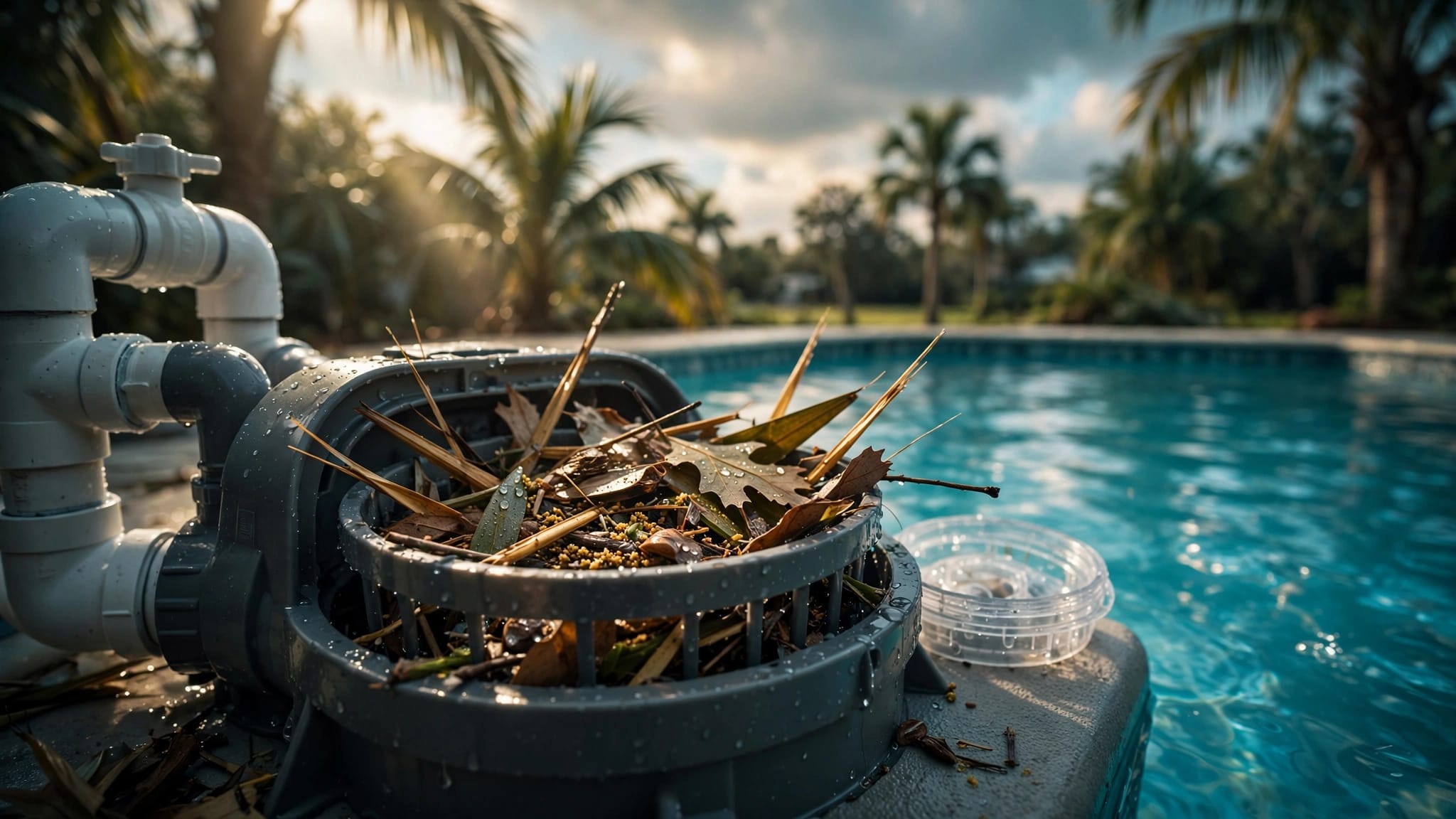
The pump strainer basket sits inside the clear housing at the equipment pad. It catches debris that passes through the skimmer basket. Cleaning one doesn't automatically clean the other, so check both when circulation seems weak.
How to Clean a Pool Skimmer Basket Safely
Before opening anything, make sure the pump is off. For the safest approach, switch off the pump at the breaker or disconnect, especially if you aren't certain which timer, automation setting, or switch controls it.
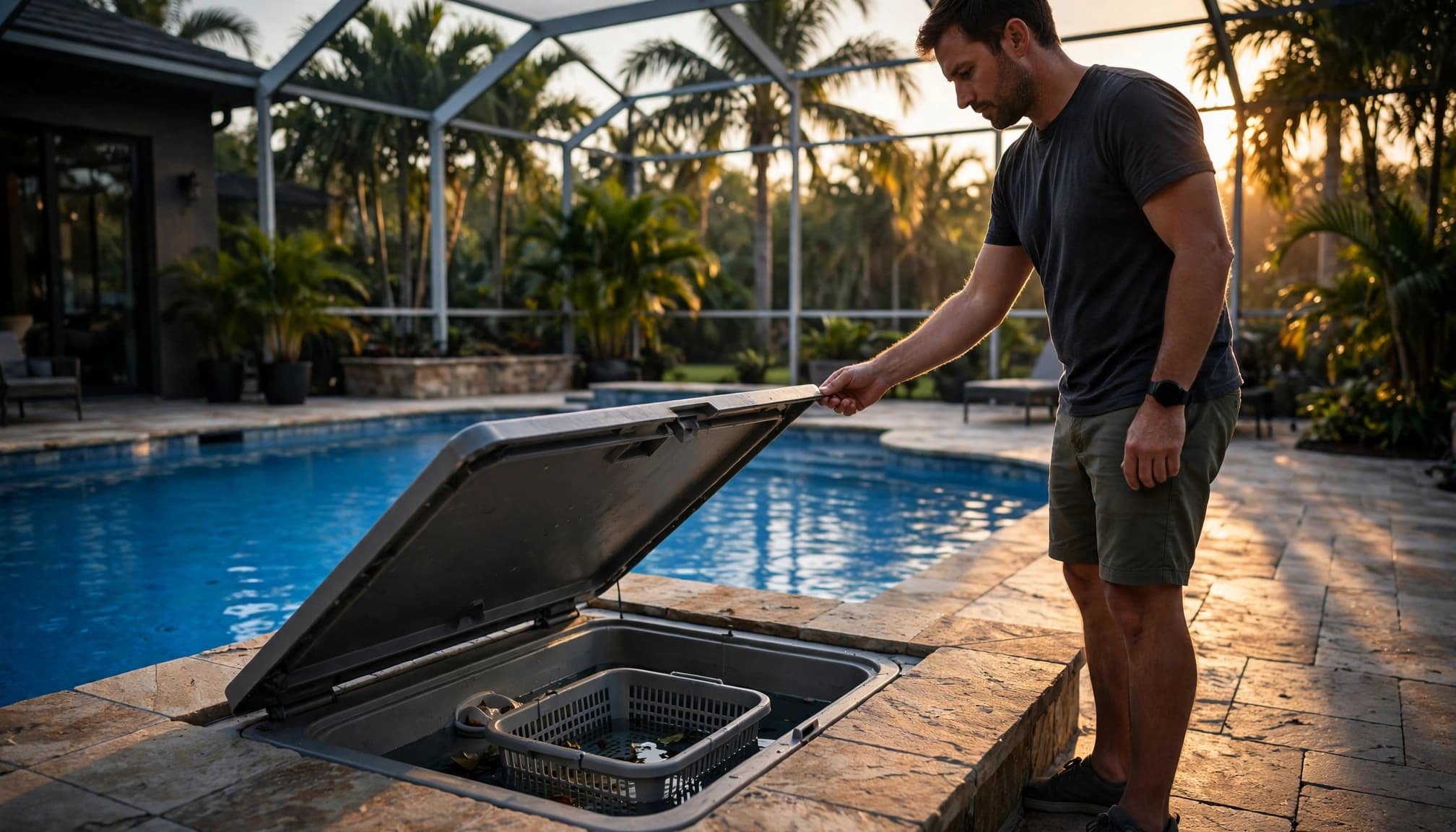
Shut off power and check the water level
Never remove the skimmer lid while the pump is operating. Suction can pull the basket down, expose you to moving water, or make the lid difficult to handle.
Before cleaning, look at the pool water. It should generally sit around the middle of the skimmer opening, unless your pool or equipment manufacturer specifies another range. If the level is too low, the skimmer may pull air into the plumbing when the pump restarts.
Keep children and pets away from the equipment area. Don't open a pressurized filter or work near pool wiring if you aren't sure the system is safe.
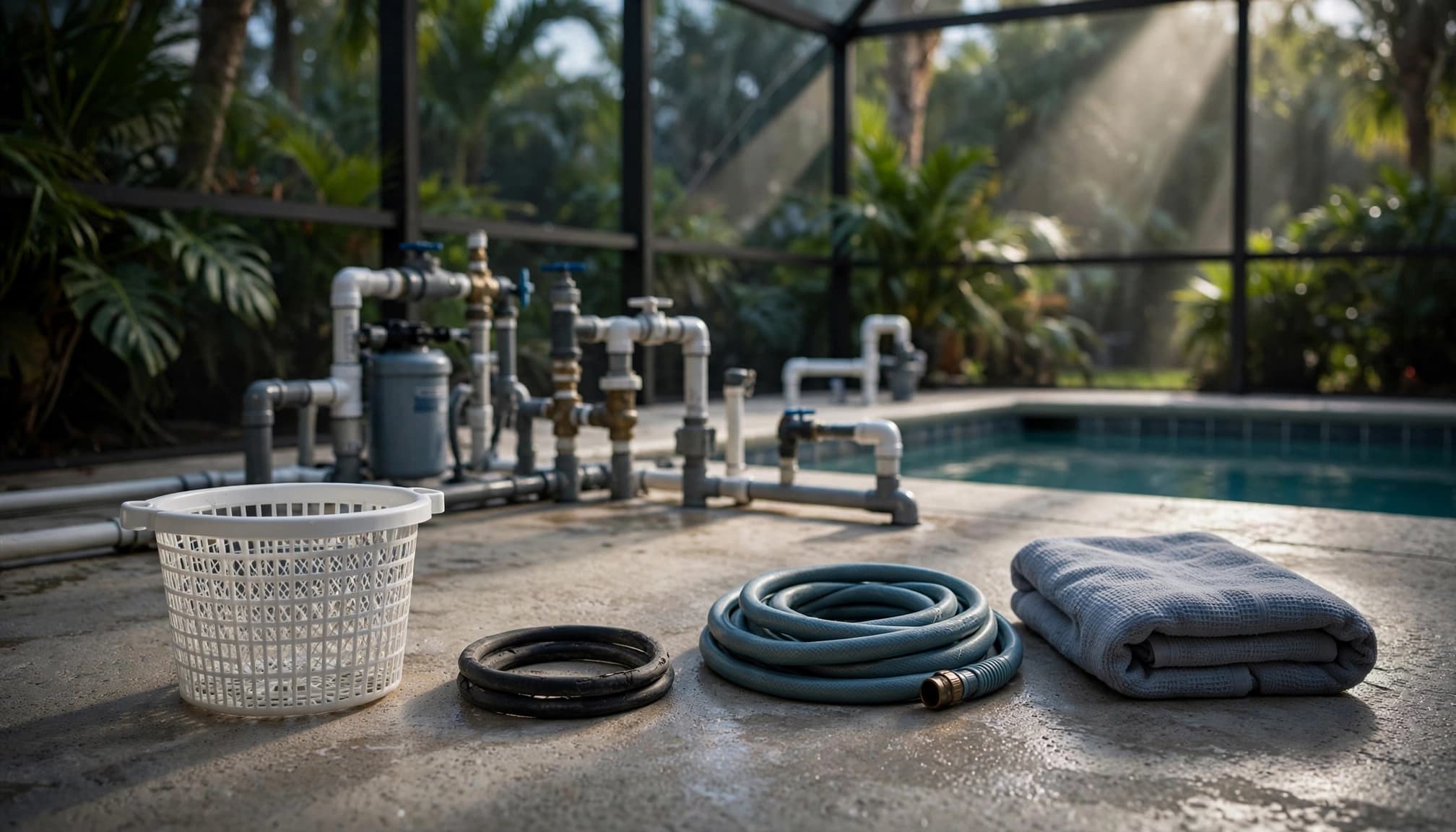
Gather simple cleaning supplies
For routine basket cleaning, you typically need a garden hose, a clean towel, and a suitable replacement basket or O-ring if inspection finds damage. Avoid forcing stuck parts or using tools that could crack the skimmer lid.
With the pump off, remove the lid and lift out the basket. Keep track of how it sits in the skimmer so you can replace it correctly. If the basket is full of wet leaves, empty it over a suitable area instead of pushing debris back into the pool.
Inspect and Rinse the Basket
Rinse the basket from the outside and inside with a garden hose. Direct the water through the slots so fine dirt, pollen, and small plant material leave the basket rather than settling back into it.
Don't use excessive force on an old plastic basket. Brittle plastic can crack when bent, and a damaged basket may allow debris to move toward the pump.
Look for cracks and distortion
Hold the basket under good light. Check the bottom, handle, rim, and side slots for cracks, splits, or warping. A basket that no longer sits flat may allow debris to bypass it.
Also inspect the skimmer throat and weir. The weir is the flap that helps floating debris move into the basket. If it is stuck, blocked, or damaged, surface cleaning may weaken even when the basket is empty.
A clean pool skimmer basket cannot correct a blocked suction line or a failed weir. If the basket fills unusually fast, find out what is bringing excess debris into the pool.
Replace the basket correctly
Set the clean basket back into its guides or seating area. It should sit securely without tilting. Don't restart the pump with the basket missing, because loose debris can move into the suction plumbing.
If the basket is cracked or badly deformed, replace it with a model that matches the skimmer. A basket that looks similar may not fit the opening or support the weir correctly.
Check the Pump Basket and O-Ring
Cleaning the skimmer basket is a good time to inspect the pump strainer basket. A clogged skimmer can leave the pump basket relatively clean, but small debris can still pass through a damaged or poorly fitted skimmer basket.
Inspect the clear pump lid and O-ring
With power still off, examine the pump lid for clouding, cracks, or a loose fit. Remove visible dirt from the lid and the sealing surface. Check the O-ring for flattening, cuts, dryness, or distortion.
If the O-ring looks dry, use only a lubricant approved for that pump and seal material. Avoid petroleum products, which can damage some pool equipment seals. If the ring is stretched or damaged, replace it with the correct part.
A weak seal can let air enter the suction side. You may then see bubbles under the lid, a fluctuating water level in the pump basket, or repeated loss of prime after shutdown.
Clean the pump strainer basket
If you open the pump housing, switch off power at the breaker first and follow the pump manufacturer's procedure. Never place your hands near the impeller while the equipment has power.
Remove the pump basket, rinse it thoroughly, and inspect it for cracks. Clear visible debris from the housing without reaching into areas you can't see safely. If palm fibers or fine leaves keep returning, the impeller or suction line may need professional inspection.
Restore Water Flow Without Running the Pump Dry
Before restarting, confirm that the cleaned skimmer basket is seated and the lid is secure. Also verify that the normal suction and return valves are open. Never operate the pump with every suction valve closed.
If the pump housing is empty or nearly empty, fill the pump basket area with clean water according to the equipment manual. Replace the lid firmly so the O-ring seals evenly. Do not start the pump while the system is empty and hope it will prime on its own.
Use the normal circulation setting
Return valves should remain in their normal operating positions for routine filtration. Don't change valve positions while the pump is running. If your system includes a multiport valve, use the manufacturer's instructions for the correct filter setting.
If your filter has an air-relief valve, open it carefully during startup only as the equipment instructions direct. Close it when water flows steadily from the valve. Never loosen a filter cover or other pressurized component.
Watch the pump and return jets
After startup, watch the clear pump lid for several minutes. The water level should stabilize, and the return jets should produce consistent flow. Listen for grinding, rattling, or a strained motor.
Turn the pump off if the basket continues filling with air, the water level keeps falling, the return flow stays weak, or the motor begins running dry. Repeating the priming process won't repair a cracked pipe, damaged seal, blocked impeller, failed valve, or other plumbing fault.
If the pump basket won't stay full, stop restarting it. Repeated dry-running can turn a simple flow issue into equipment damage.
Prevent Prime Loss After Cleaning
Regular basket care reduces the chance of restricted flow. Check the skimmer after windy weather, storms, landscaping work, and periods when the pool is used heavily. Empty it before debris packs tightly against the basket.
Keep the pool water at its normal operating level. When water falls too low, the skimmer can form a vortex and draw air. If the level drops unusually fast, investigate a possible leak instead of adding water repeatedly without finding the cause.
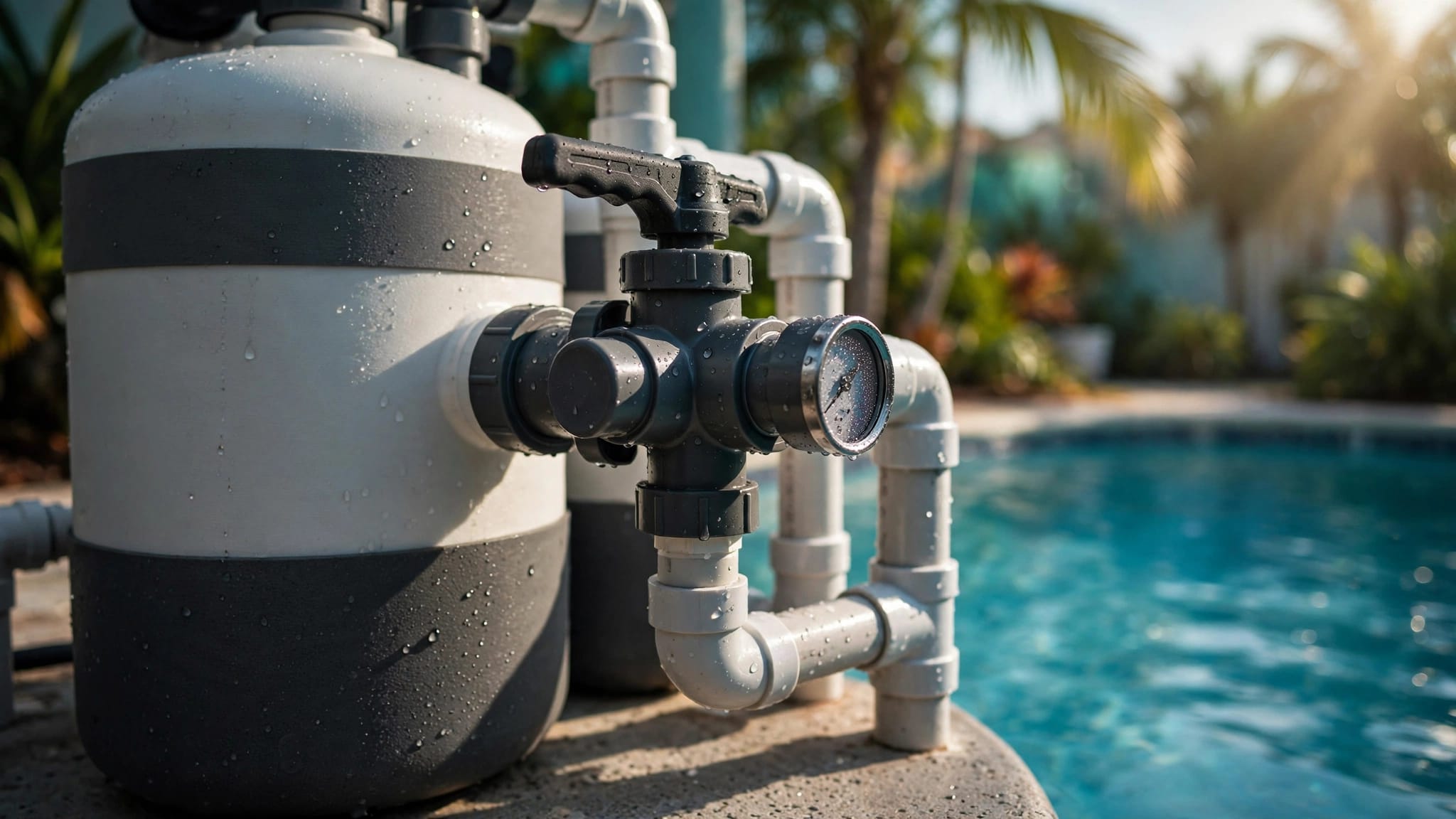
A clean filter also supports proper flow, but a dirty filter isn't always the first cause of lost prime. Compare the pressure gauge with your normal clean-filter reading. High pressure with weak returns often points toward filter or return-side restriction. Low pressure with air in the pump basket can point toward the suction side.
A screen enclosure can reduce leaves and larger debris. If damaged mesh is allowing excessive debris into the pool, review pool screen enclosures and rescreens as a separate improvement project.
When to Call a Pool Professional
Call for service if the pump repeatedly loses prime, runs dry, trips a breaker, or produces unusual noise. You should also stop and seek help if you find a cracked pump lid, damaged basket, leaking union, wet equipment pad, broken valve, or persistent air under the pump lid.
A professional can test the equipment pad and determine whether the problem involves the suction line, check valve, pump seal, filter, impeller, or plumbing layout. Prime loss can continue even after the skimmer basket is clean.
Older pools may need more than a replacement basket or O-ring. During pool renovations and resurfacing, homeowners can ask for an equipment and plumbing review as part of the larger project. A new surface won't correct an aging suction line or poorly placed valve unless that work is included.
For a Cape Coral pool with repeated circulation problems, Get a Free Estimate to arrange an on-site consultation with Back Bay Pools.
Key Takeaways
- Turn off the pump at the breaker before removing a skimmer lid or basket.
- Keep the water level around the middle of the skimmer opening unless your equipment instructions say otherwise.
- Rinse the basket and inspect it for cracks, distortion, and blocked slots.
- Check the pump strainer basket separately because the two baskets do different jobs.
- Examine the pump lid, O-ring, valves, and visible plumbing before restarting.
- Keep normal suction and return paths open during circulation.
- Fill an empty pump housing according to the manufacturer's priming instructions.
- Stop the pump if the basket stays full of air or return flow remains weak.
FAQ About Cleaning a Pool Skimmer Basket
Can I remove the skimmer basket while the pump is running?
No. Turn off the pump before removing the lid or basket. Powering down prevents suction at the opening and protects the pump from sudden changes in water flow.
Do I need to clean the pump basket too?
Check it whenever you clean the skimmer basket, especially after storms or heavy debris. The pump basket catches material that passes through the skimmer basket, so it may be full even when the skimmer looks clear.
How do I know whether the pump has regained prime?
The pump basket should remain mostly full of water, the return jets should show steady flow, and the motor should run smoothly. Persistent bubbles, a falling water level under the lid, weak returns, or unusual noise indicate a problem.
What if the pump loses prime after I clean the basket?
Turn it off instead of restarting it repeatedly. Check the water level, basket seating, pump lid, O-ring, valves, and visible fittings. If the basket still won't stay full, have the suction system tested.
Conclusion
A clean pool skimmer basket supports steady circulation, but safe cleaning requires more than removing leaves. Turn off the pump, check the water level, inspect the basket and seal, and restore flow only after the system is ready.
The strongest warning sign is a pump basket that won't stay full. Stop the pump before it runs dry, because finding the source of air or restricted flow is safer and less expensive than repeating the restart.