Building a pool near a retaining wall starts with understanding the wall, the soil it holds back, and how excavation may affect both. Before you settle on a pool shape, you need a site plan that accounts for the wall's structure, drainage, and construction access.
The visible wall is only part of the picture. Its footing, buried drainage, and surrounding soil can influence where your pool fits. Start with the site as a whole, then develop the pool design around it.
Start With a Survey and a Site Plan
A current property survey gives your pool contractor a starting point for the layout. It shows property lines and recorded easements, which may not follow the fence or the edge of your landscaping.
The proposed site plan should also show the retaining wall, changes in elevation, existing structures, utilities, and the intended pool area. Include the deck, equipment pad, and screen enclosure if they're part of your project. Each takes up space beyond the pool shell.
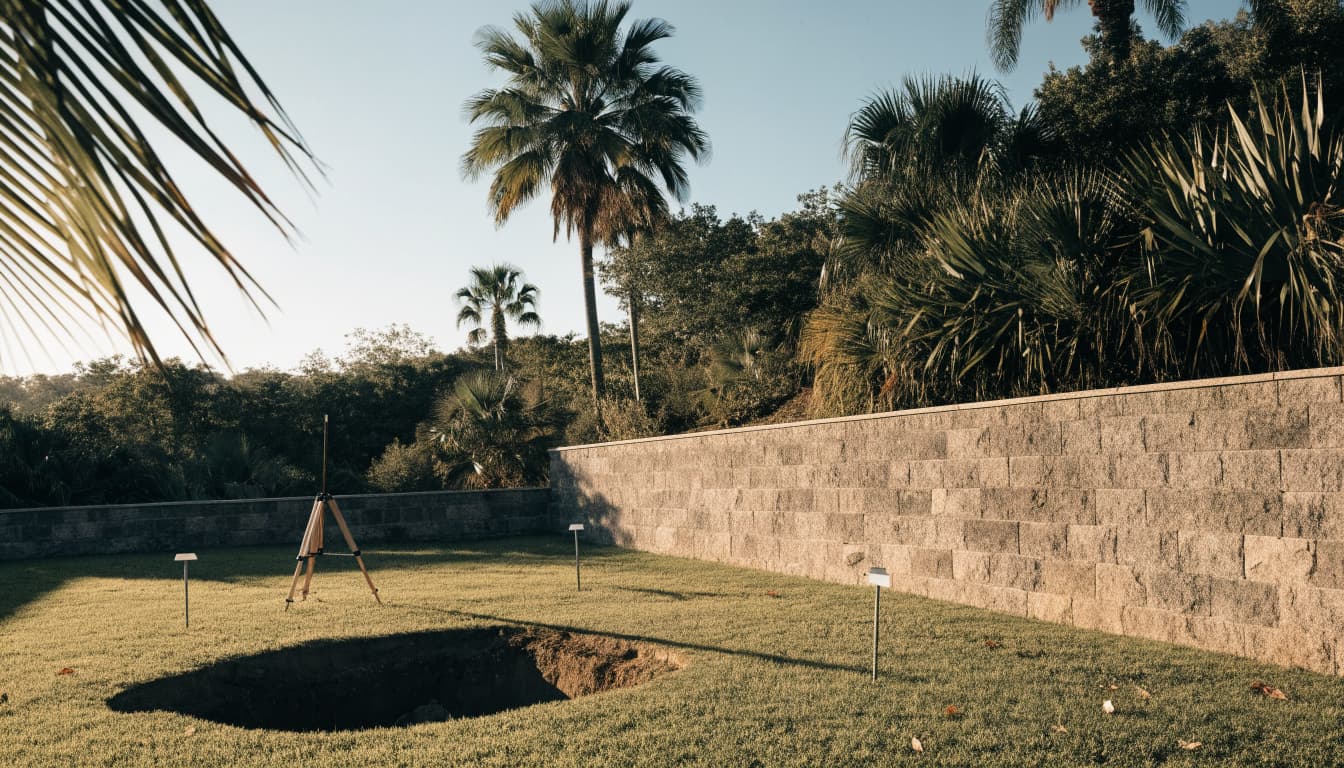
A wall may sit on your property, along a boundary, or near an easement. Its location can affect the available construction area, but a survey alone won't necessarily reveal the size or depth of its footing. Existing wall plans can help the project team understand what lies below grade.
Leave room for more than the finished pool. Crews need access for excavation, and you'll want space to service equipment and maintain the wall afterward. Our guide to pool setbacks and property lines explains how boundaries and other restrictions shape the layout.
Understand What the Retaining Wall Is Doing
A retaining wall holds back soil where one part of a property sits higher than another. Before planning a nearby pool, the project team needs to know which side holds the higher ground and how the proposed pool relates to it.
Look at the Wall's Condition
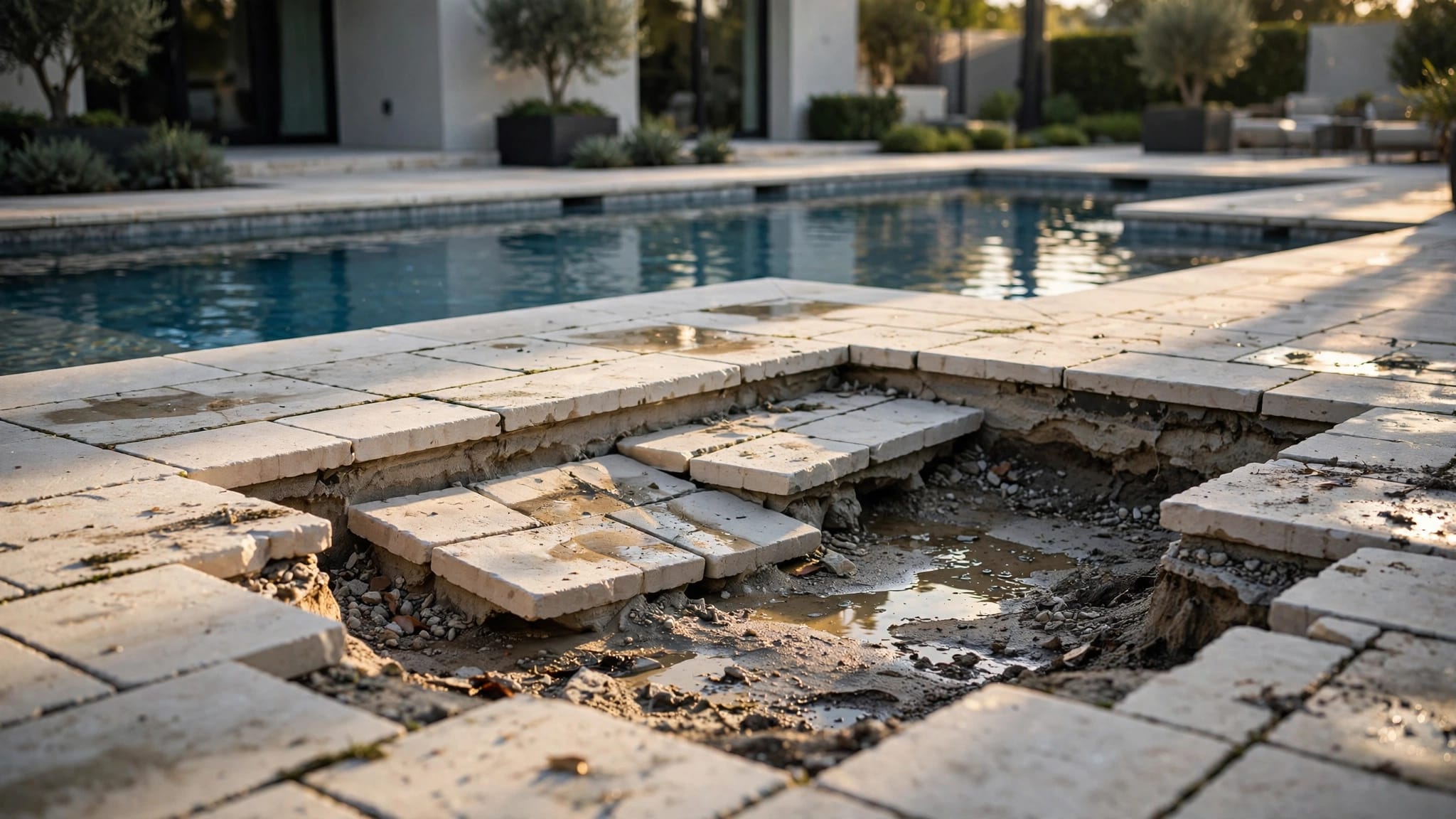
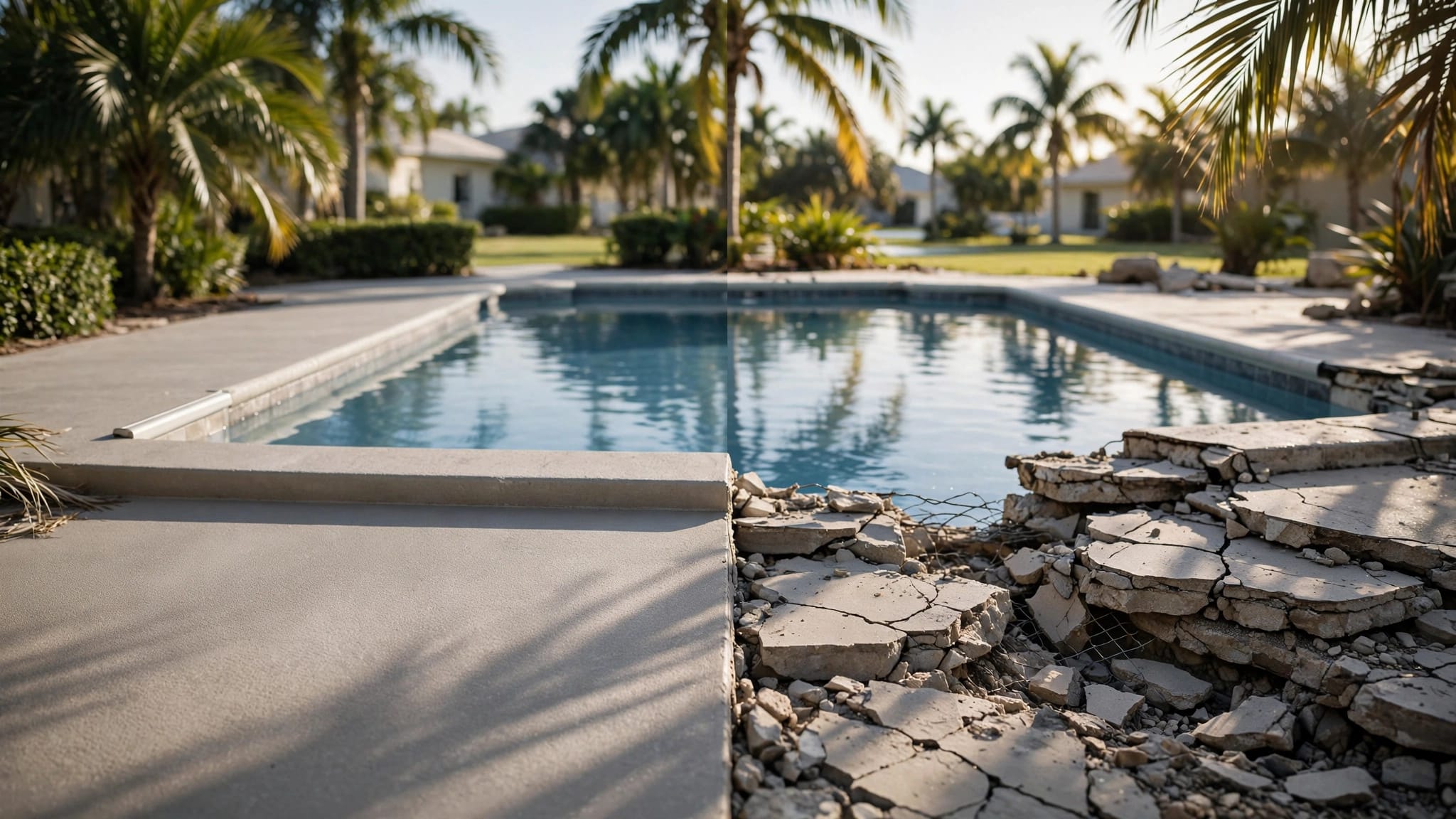
Cracks, leaning, bulging, displaced blocks, or soil washing out near the wall deserve attention before excavation. Water staining or persistent wet areas can also point to a drainage concern.
These signs don't automatically mean a wall is failing. They do mean a qualified professional should assess the condition before the pool plan depends on the wall remaining in place. Repair or replacement may need to come first.
If you have original drawings, permits, or repair records, share them with the contractor. They may identify the wall type and its buried components.
Consider the Higher and Lower Sides
A pool on the higher side of a wall may add to the loads acting near it. Excavation on the lower side can affect soil that helps support the wall or its footing.
The relationship depends on the site's elevations and construction details. A structural or geotechnical engineer can assess those conditions and recommend how the pool and wall should be coordinated. That review matters whether the wall already exists or is part of the new pool project.
Plan for Soil Support Before Excavation
The soil between and beneath the pool and wall affects both structures. Even a yard that looks level at the surface can contain fill, soft areas, or buried material that changes how the ground supports construction.
Decide Whether Soil Testing Is Needed
A pool close to a retaining wall is one situation where a geotechnical review may be useful. Other signs include known fill, previous settlement, or an old structure that was removed from the yard.
An engineer may recommend borings and a written report, or a more focused site visit and review of available information. The right scope depends on the property. Our article on soil testing before pool excavation covers conditions that can warrant a closer look.
Coordinate the Pool Shell and Wall Footing
The wall's footing may extend underground beyond the face you see. Meanwhile, the pool excavation must create space for the shell and construction work. Those areas can overlap in ways that aren't obvious in a surface sketch.
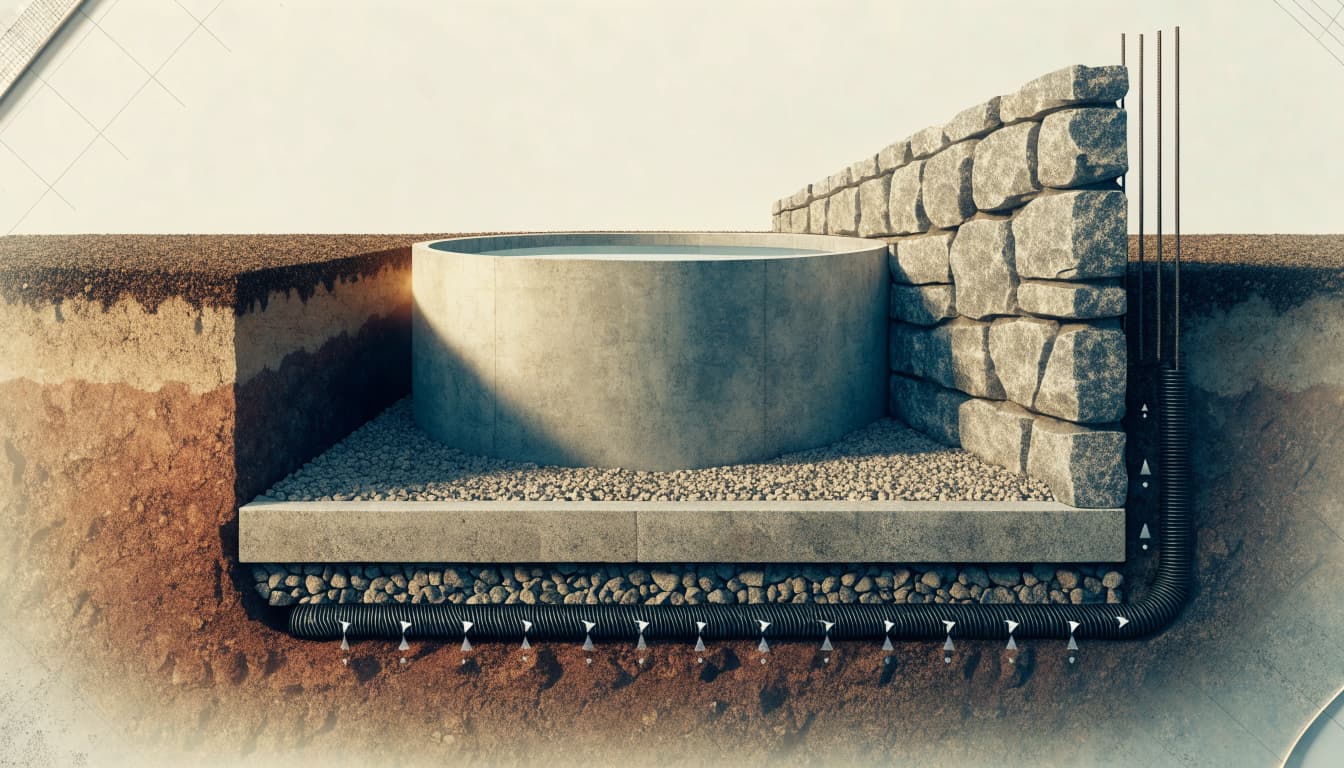
The pool contractor and engineer can use the available information to plan the layout and construction sequence. The illustration above shows the general relationship between a pool, wall, and buried components; it isn't a construction detail for a particular yard.
Space between the visible pool edge and wall face doesn't reveal how close the excavation will come to the wall footing.
Give Rainwater and Groundwater a Route
Drainage is a structural concern as well as a comfort issue. Water that collects behind a retaining wall can increase pressure on it, while runoff trapped beside a pool can leave the deck and surrounding soil wet.
Preserve the Wall's Drainage
A retaining wall may have a drainage system behind it or an outlet that carries water away. Pool construction, new fill, landscaping, or decking can interfere with that system if it isn't included in the plan.
The project team should account for existing drainage and decide how it will work with the new pool area. A wall drain also needs a suitable outlet. Covering one with a deck or blocking it with soil can create a problem that isn't visible until after construction.
Plan the Finished Grade
The finished deck and yard need a path for rainwater to leave without collecting against the wall, flowing toward the house, or creating a problem for a neighboring property. The plan should account for existing drainage easements and the site's overall slope.
Cape Coral properties may also have groundwater or flood-zone considerations that affect the project. Read more about pool construction in Cape Coral flood zones for the related effects on elevation and equipment placement.
Include the Wall in the Permit Plan
The pool shell isn't the only part of the project that may need review. A site plan can also include the retaining wall, deck, enclosure, equipment, grading, and safety barrier. Each feature needs to fit the property and the approved scope of work.
In Cape Coral, the pool permit and safety barrier permit are separate filings. A barrier plan may involve a fence, screen enclosure, gates, or other features that form the approved protection around the pool.
The contractor should coordinate the drawings with the survey and applicable local requirements before construction. If the wall needs alteration or replacement, that work may also affect the plans and approvals.
Waterfront properties can have another structure to consider: a seawall. It has a different job from a typical backyard retaining wall and may involve additional site conditions. Our guide to building a pool near a seawall covers those waterfront considerations.
If your neighborhood has an HOA, its approval process is separate from government permitting. Including the full project in the initial plan can help avoid redesigning the deck or enclosure after the pool location is set.
Plan Equipment Access and the Build Sequence
A pool can fit on a drawing and still be difficult to build. A retaining wall may limit where machinery can enter, where excavated soil can be placed, and how crews reach the far side of the pool.
Before work begins, the contractor needs a route through the property and a plan for protecting existing features. A narrow side yard may affect equipment choices, while fencing, landscaping, or portions of a patio may need temporary removal.
The construction sequence also matters. Depending on the design and the wall's condition, work on the wall may need to happen before pool excavation. The project team should establish how the wall and nearby ground will remain supported throughout the work.
Existing irrigation deserves attention as well. Sprinkler lines and valves can run through the same area needed for access or excavation. Planning irrigation around a new pool early gives you a clearer picture of what needs protection or relocation.
If excavation encounters groundwater, the contractor's site plan must address water management and discharge under applicable rules. Pumped water shouldn't be directed toward a neighbor or into a public system without appropriate approval.
Fit the Deck and Screen Enclosure Into the Layout
The pool may be the centerpiece, but the space around it determines how comfortably you can use and maintain it. A retaining wall can narrow the deck, affect enclosure placement, and make access to the back of the yard more difficult.
Leave Useful Space Beside the Pool
Consider where you'll walk, enter the water, and reach the wall for future maintenance. A narrow strip of deck may look sufficient on a plan but leave little room for daily use or repairs.
The finished elevations matter too. The deck needs to connect with doors and surrounding surfaces while allowing water to drain. Changing the pool location after those details are drawn can affect more than the pool itself.
Design the Enclosure Early
A screen enclosure adds posts, footings, doors, and a frame footprint to the project. Those elements need space of their own and may affect the location of the pool barrier.
Planning the enclosure alongside the pool helps the team coordinate its layout with the wall and deck. Even if you intend to add screening later, allowing for it early can prevent a pool design that leaves no practical place for the enclosure.
Include Renovation and Unexpected Work in the Scope
An existing pool near a retaining wall may need the same site review when a renovation changes the deck, drainage, or enclosure. Resurfacing alone is different from moving the pool edge or rebuilding the surrounding deck, so the scope determines what the project team needs to address.
Visible cracking or settlement near the wall deserves attention before it's covered by a new finish. A new surface can improve a pool's appearance, but it doesn't resolve an underlying structural or soil problem.
For new construction and renovations, the written estimate should describe what's included. Wall repair, soil evaluation, drainage changes, access preparation, and restoration of disturbed areas can all affect the scope when they apply.
Some conditions may remain hidden until work begins. A clear process for documenting changes helps you understand the added work and its cost before it proceeds.
Start With the Whole Backyard
A successful pool near a retaining wall depends on more than the space between two visible edges. The wall's condition, buried footing, soil, and drainage all belong in the plan before excavation starts.
At Back Bay Pools, we help Cape Coral homeowners plan new pools, renovations, and screen enclosures. Start with the site , and the pool design can follow the conditions of your yard.
Get a Free Estimate to schedule an on-site consultation.