To address pool tannin stains, start by removing the leaves, gently brushing away residue, and balancing the water. If discoloration remains, choose a targeted treatment suited to the stain and the pool's exposed finish.
Leaf-shaped marks can make a pool look worn even when its surface is sound. The key is to work gently and in stages , so cleaning doesn't damage the finish you're trying to protect.
Start by looking at where the marks appeared and what was sitting on the surface.
How to identify pool tannin stains
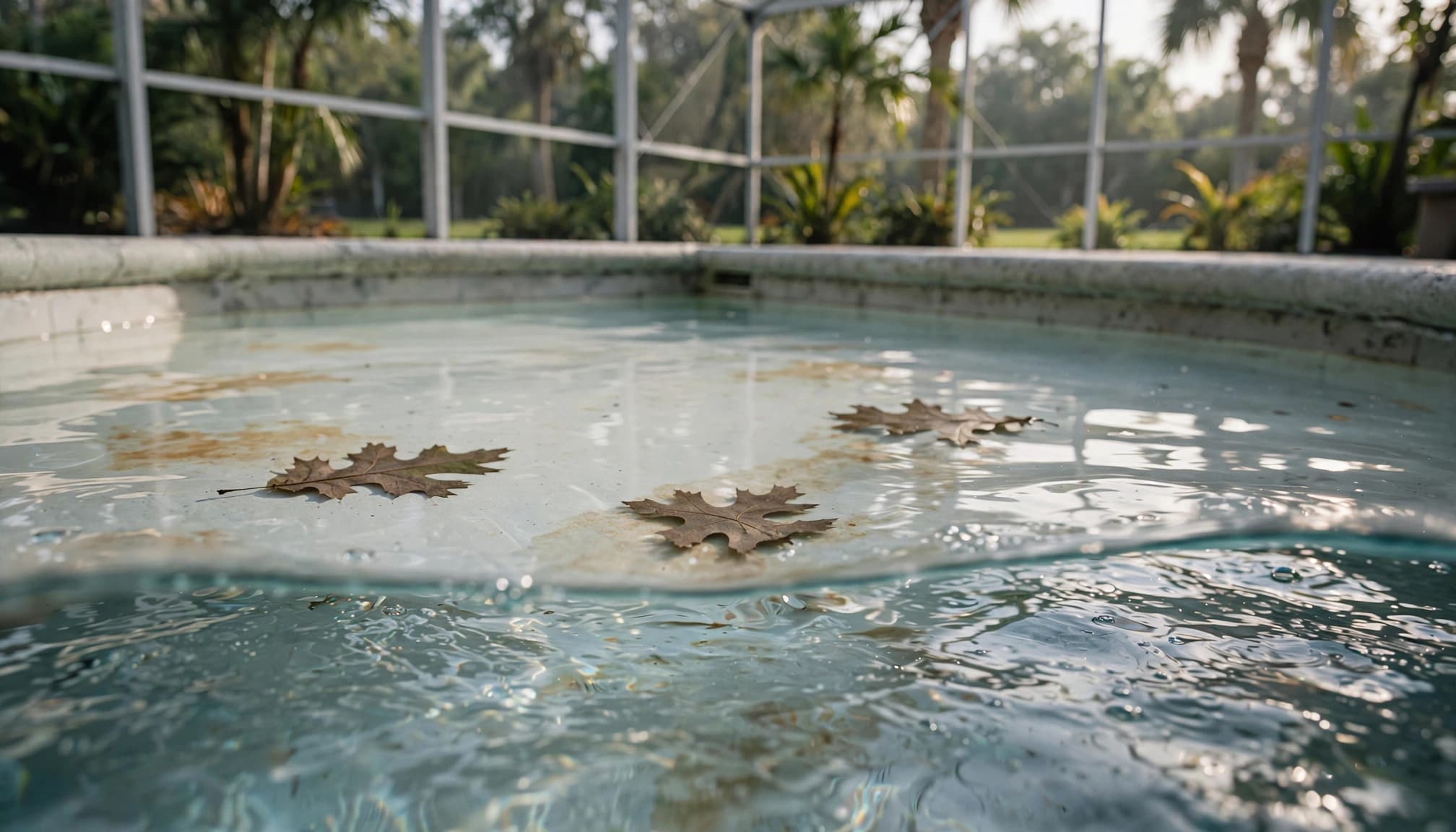
Leaves, berries, and other plant material can release tannins and leave brown or yellowish discoloration on a pool interior. A likely clue is a mark where a leaf rested on a step, bench, or section of the floor.
Look at the pattern and timing
A fresh mark beneath a pile of wet leaves points toward an organic stain. Individual leaf outlines or irregular patches in an area where debris collects are useful clues.
After removing the leaves, note whether the discoloration remains on the surface. Take a photo so you can compare its appearance after cleaning and water treatment. Lighting and water movement can make a mark look different at different times of day.
Rule out other possible causes
Color alone can't confirm that a stain came from leaves. Iron can leave rust-colored marks, while algae, other metals, and surface wear can also change how a pool looks.
Consider what happened before the marks appeared. Did leaves collect there, or did the discoloration appear after you added water? If the cause remains uncertain, a pool professional can assess the surface and water before you choose a stain treatment.
Remove leaves and debris first
Cleaning the pool floor gives you a clear view of the stains and keeps fresh plant material from leaving more marks.
Skim the surface and clear the bottom
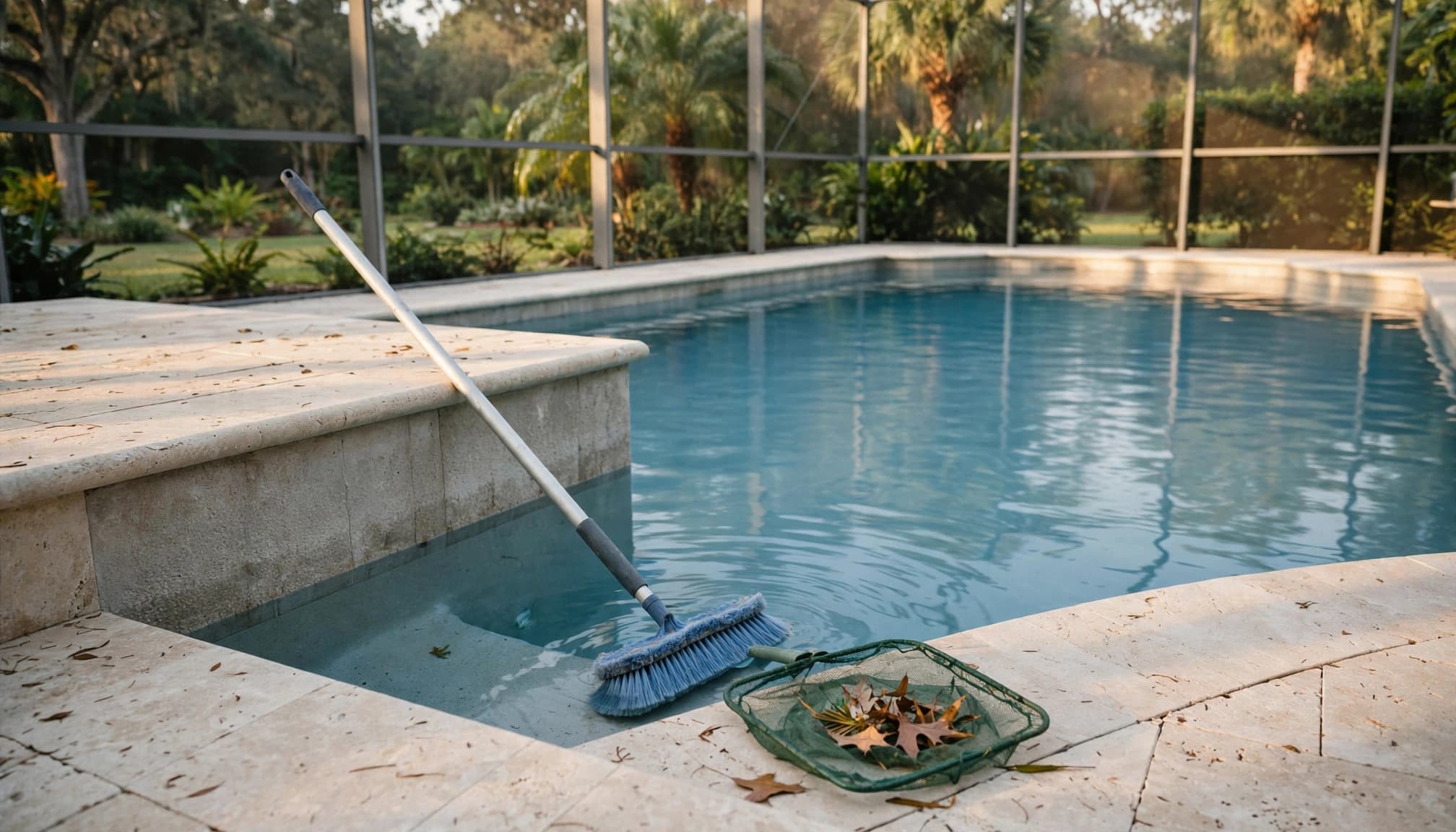
Use a leaf net to remove floating leaves, then collect debris from the floor, steps, and benches. Pay attention to corners and areas near drains where leaves may gather.
A pool vacuum can help with smaller material once you've removed larger piles. Empty the skimmer and pump baskets as needed so collected leaves don't restrict water flow. If a storm has filled the pool with debris, clear it in stages rather than forcing it all into the circulation system.
Give the filter time to work
Run the circulation system so loose particles can reach the filter. Clean or backwash the filter when appropriate for its type and condition.
Keep the water level high enough for the skimmer to operate properly. When the level falls too low, the pump may draw air instead of moving water effectively.
Clear water makes it easier to judge the pool interior. It also helps you see whether you're dealing with surface discoloration, remaining debris, or both.
Brush gently without wearing the finish
A gunite pool has a concrete shell, but the surface you touch is usually a finish applied over it. Plaster and exposed-aggregate finishes need care suited to that material.
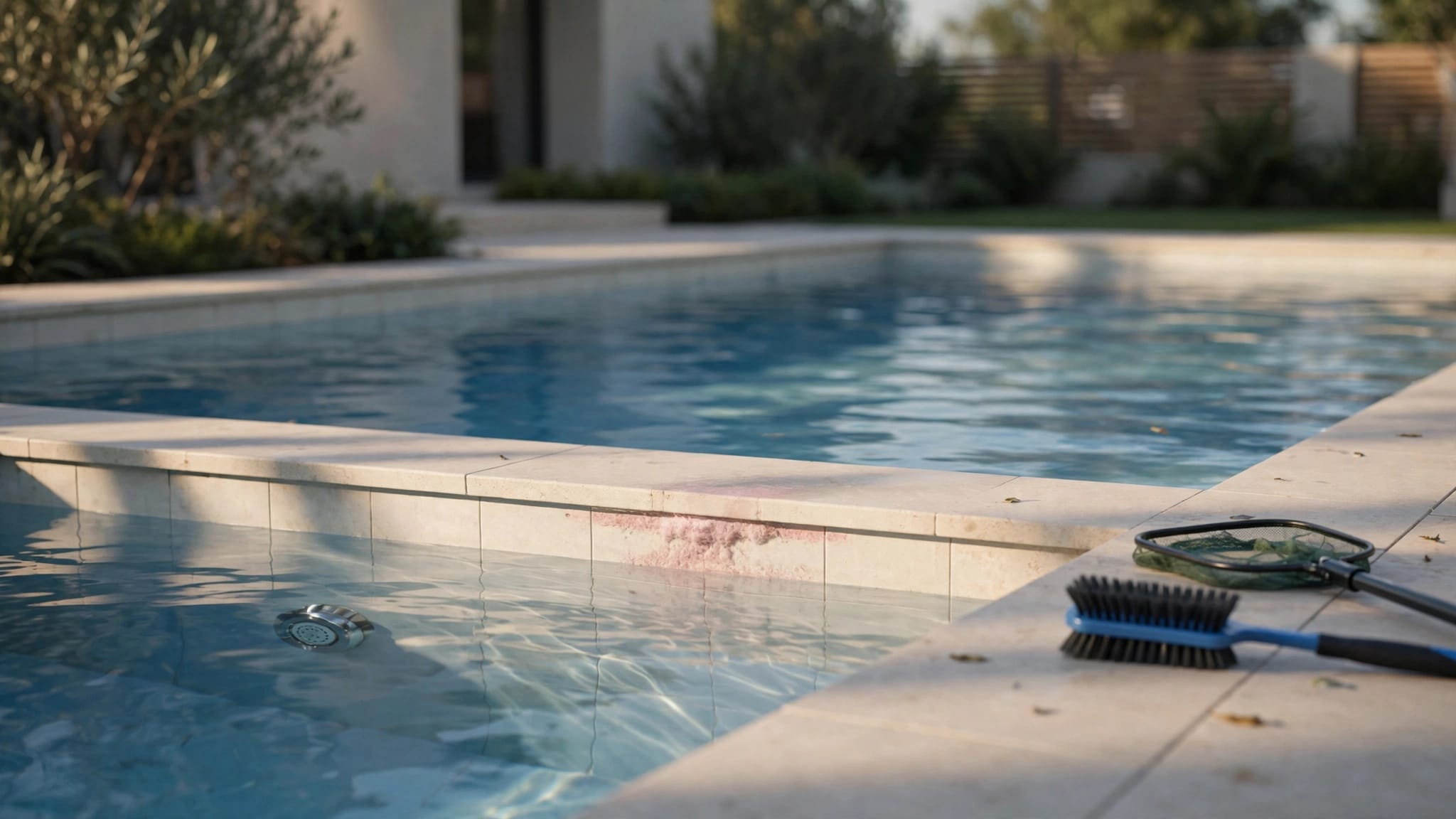
Use a soft nylon pool brush that matches the finish's care instructions. Work over the walls, steps, benches, and floor with light, even pressure. Brushing can loosen residue and keep new debris from settling, but an established stain may remain after the surface is clean.
Avoid pressing harder when a mark doesn't shift. Wire brushes, abrasive pads, and aggressive scraping can scratch a finish or disturb decorative aggregate. On a colored interior, an overworked spot may look different from the surrounding surface.
If the surface is newly installed or resurfaced, follow its startup and brushing instructions. Those directions may differ from your normal maintenance routine. Stop brushing and have the surface assessed if you notice flaking, exposed aggregate where it doesn't belong, or rough material coming loose.
Balance the water before targeted treatment
Water chemistry affects the finish, the equipment, and how minerals behave in the pool. It also gives you a more reliable starting point when you're deciding what to do about a stain.
Test pH and alkalinity together
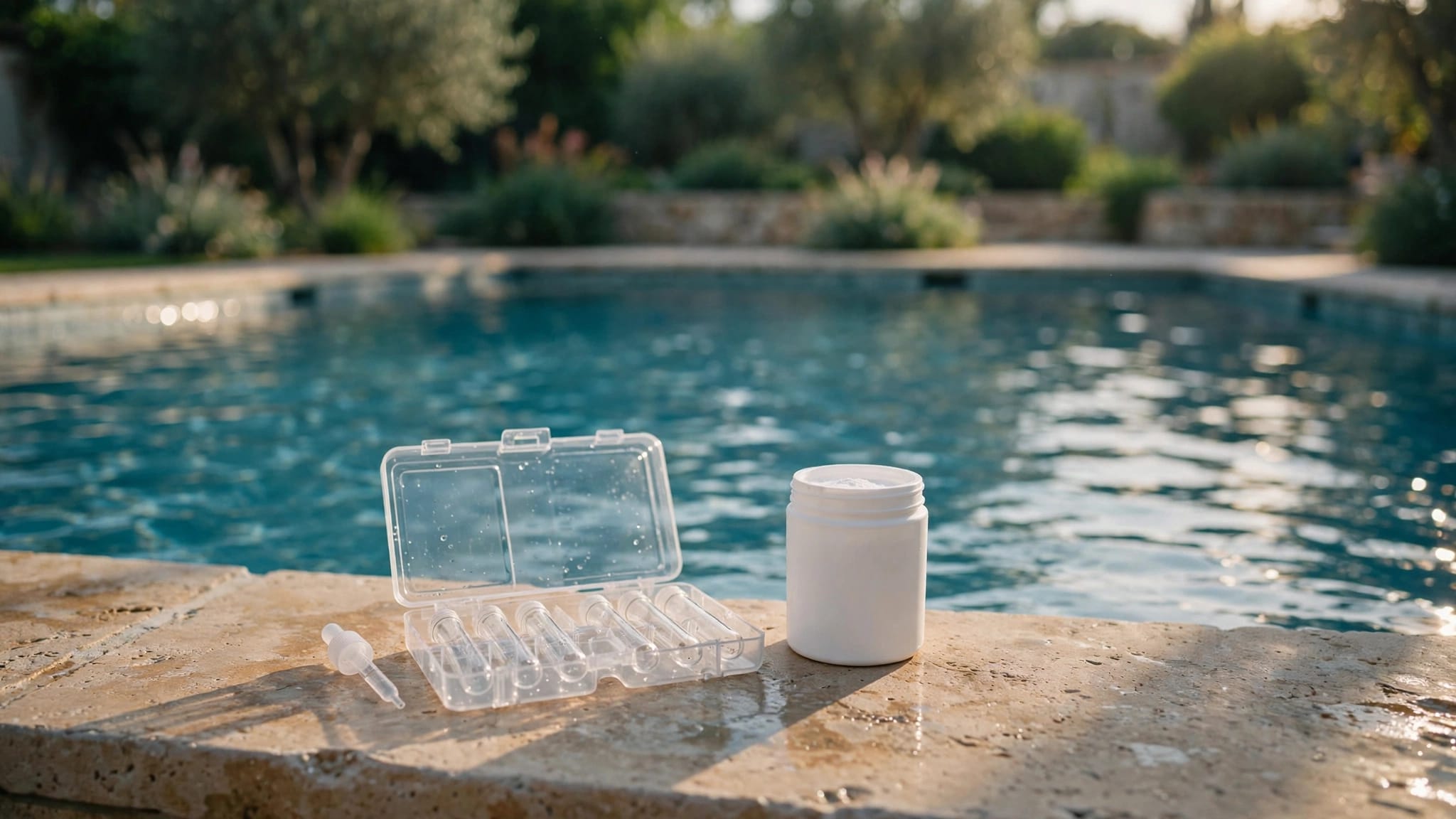
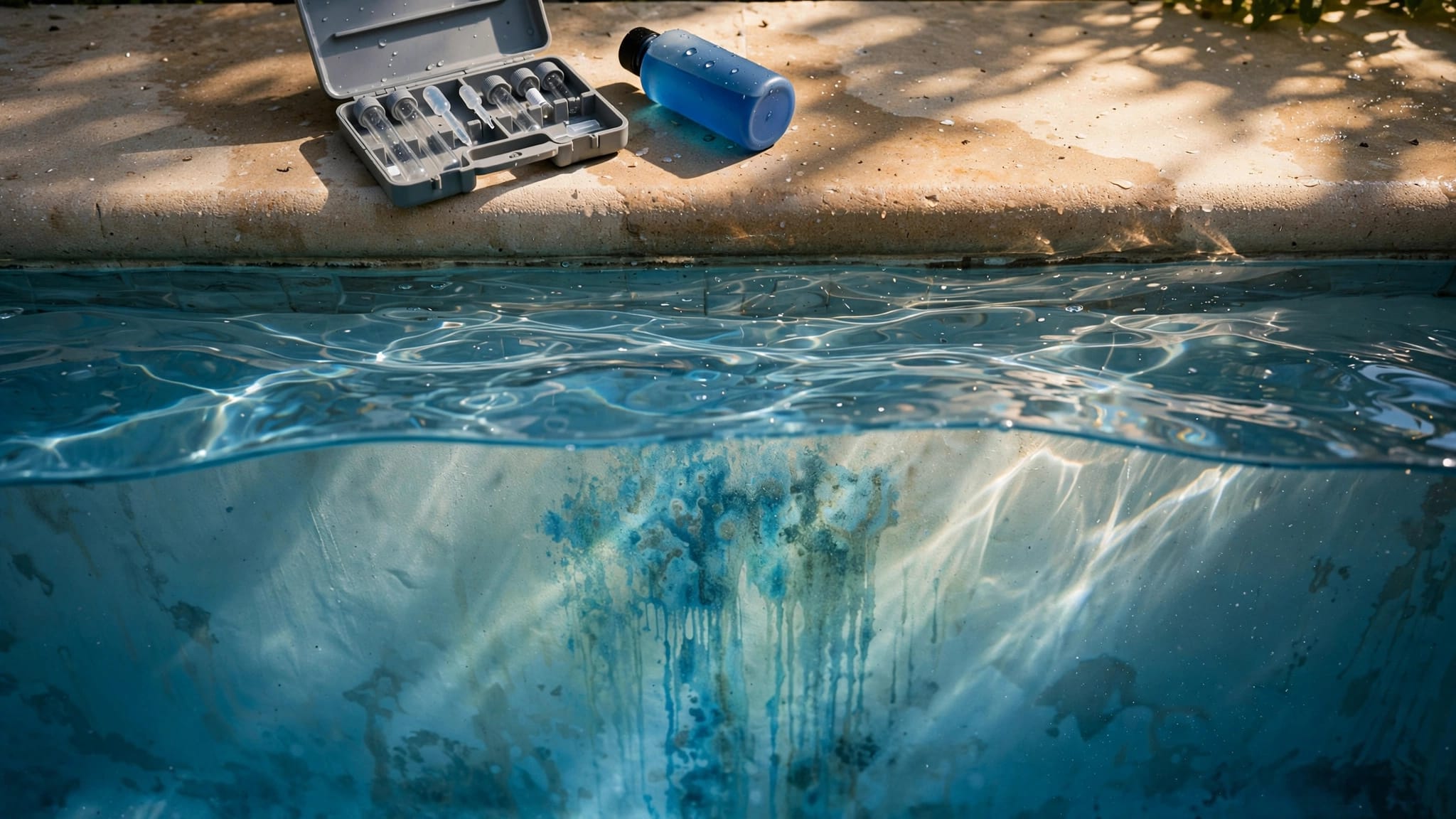
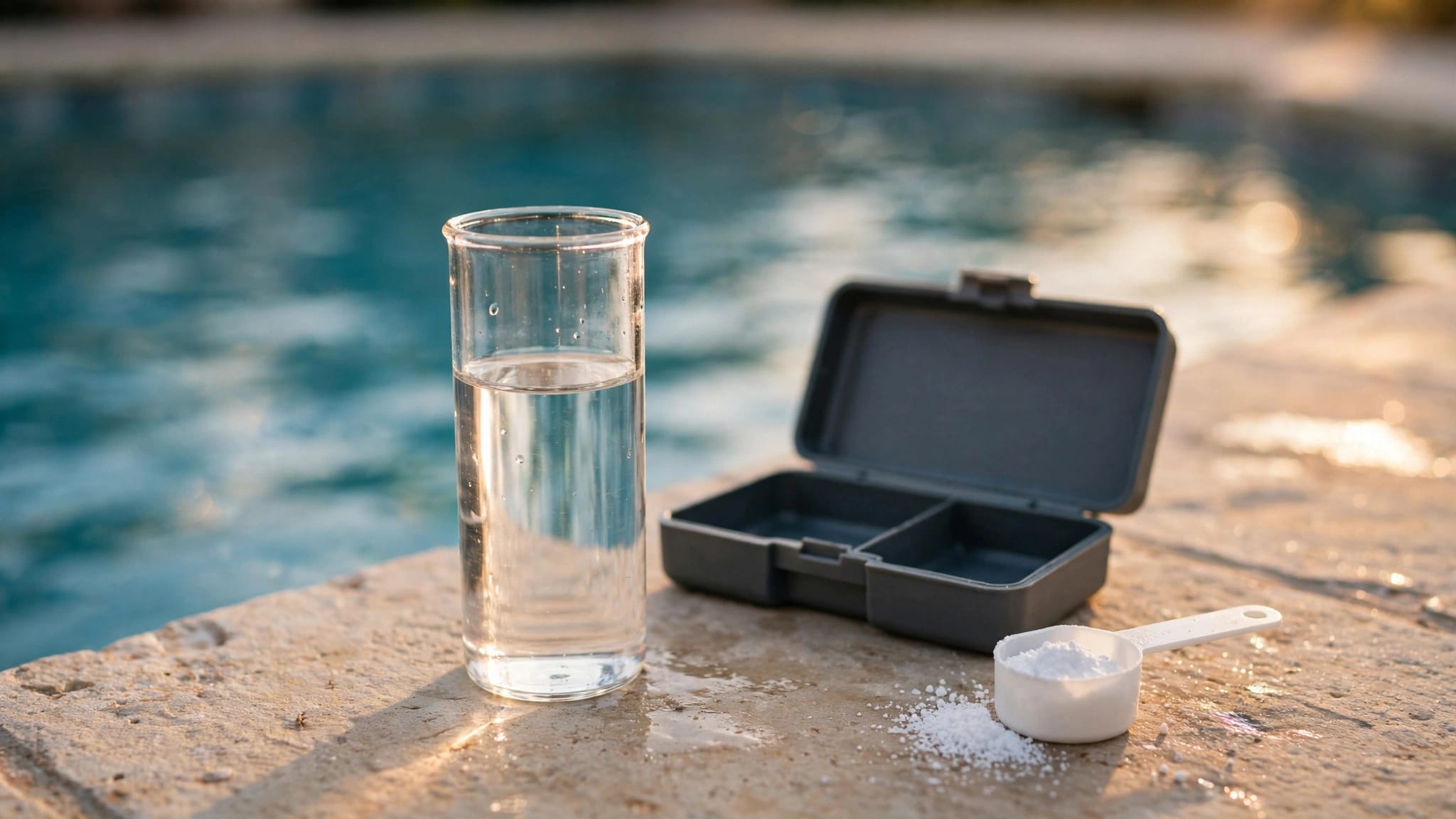
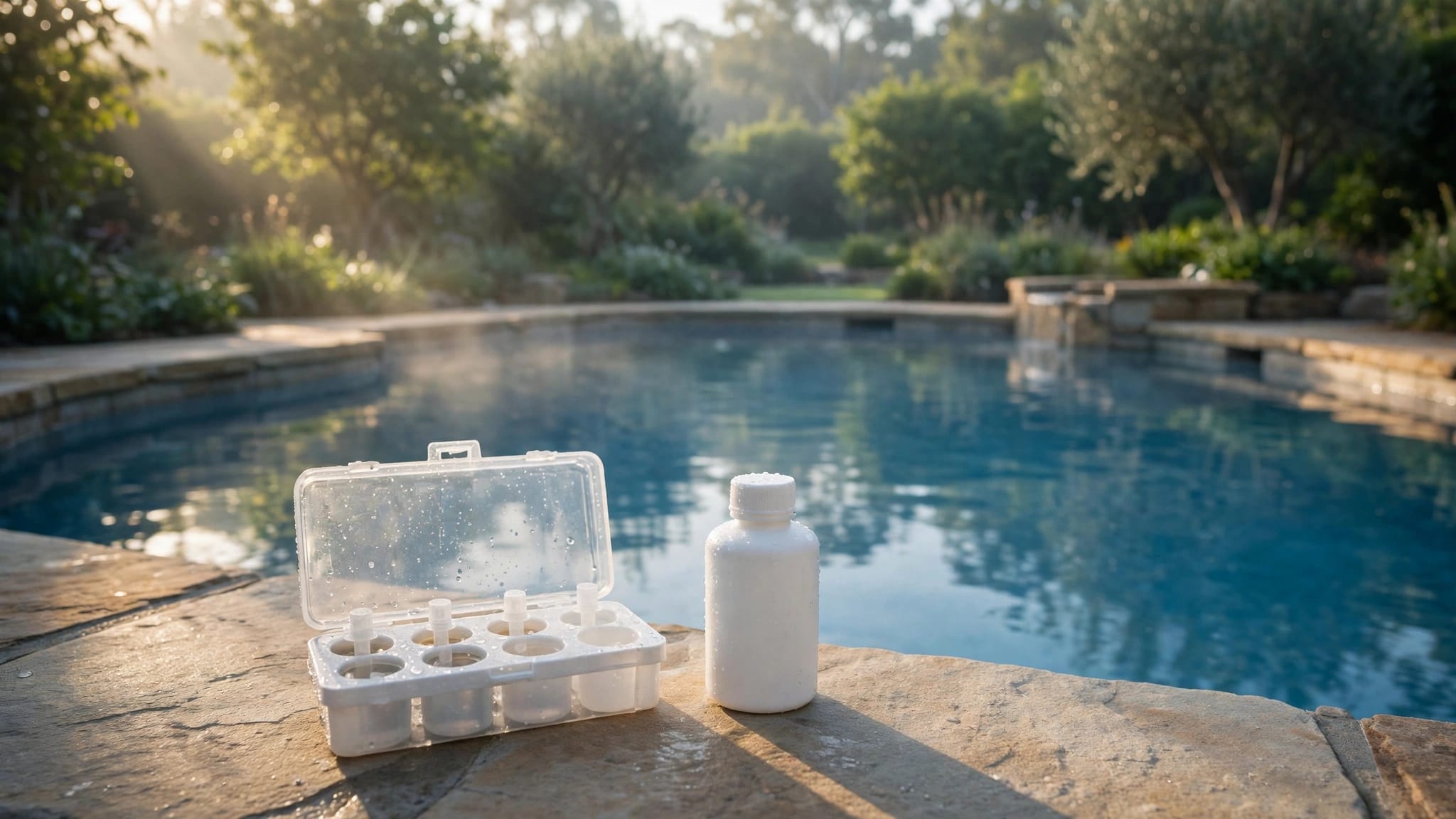
Use a pool water test kit and follow its instructions for pH and total alkalinity. Alkalinity helps buffer changes in pH, so adjusting one without considering the other can make the water harder to manage.
Low pH can make water corrosive over time. High pH can contribute to scale and cause dissolved metals to come out of solution. Make adjustments according to the test results and product directions, then let the water circulate before testing again.
Include calcium and sanitizer
Test calcium hardness and sanitizer as part of your routine. Water that's out of balance can contribute to scaling, staining, or wear on the finish. A properly maintained sanitizer also helps control organic contaminants in the water.
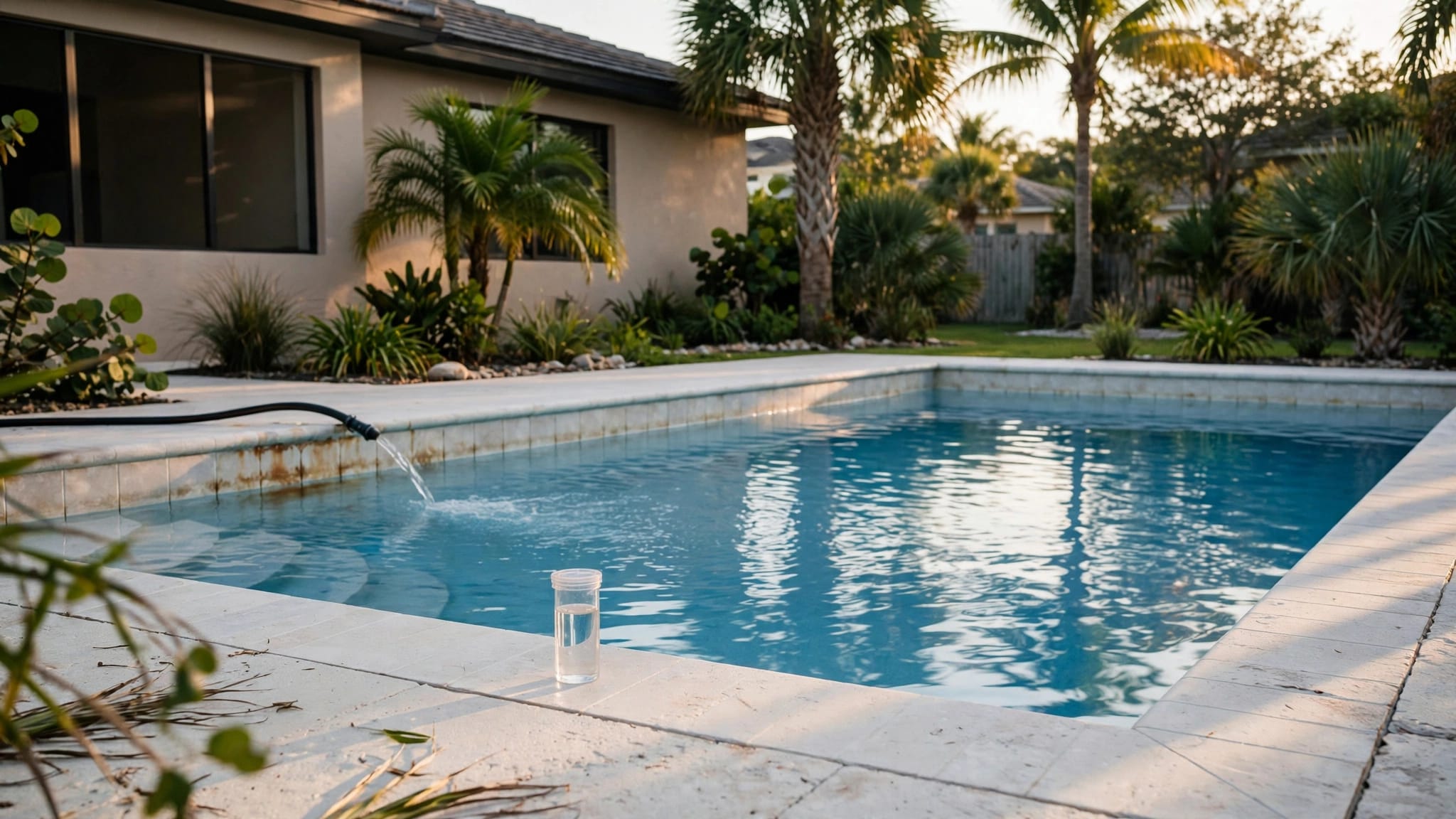
Rain and added water can change pool chemistry, especially in Southwest Florida. Test after significant changes as well as during routine maintenance. If stains appeared after a refill, testing the source water for metals can provide another useful clue.
For a newly resurfaced pool, follow the contractor's startup instructions rather than applying a general maintenance routine. The finish needs the care specified for that material as it cures.
Choose a targeted stain treatment carefully
Once debris is gone and the water is balanced, compare the stain with your earlier photo. If it has faded, continue routine care and observe it. If it remains, a product labeled for organic pool stains may be an option.
Choose a treatment that lists your pool's exposed finish as a suitable surface. Follow its label for preparation, application, circulation, and when the pool can be used again. Use one treatment at a time so you can judge the result and avoid introducing incompatible products.
Don't add several stain removers together or mix pool chemicals in a container. Wear the protective equipment on the label, and keep products in their original containers away from children and pets.
If the mark could be metal staining, avoid treating it as tannin based on color alone. The wrong approach can complicate water chemistry without addressing the cause. A professional assessment is a better next step when the stain's source or the finish's condition is unclear.
A stain that remains after debris removal and gentle cleaning doesn't automatically mean the pool needs resurfacing.
Some discoloration takes more than routine cleaning to address. A targeted treatment is worth considering before a more aggressive surface procedure, provided it's appropriate for the finish and the likely cause.
Protect the surface from aggressive cleaning
Avoid pouring concentrated chemicals directly onto a stained area or letting undissolved product sit against the finish. Localized exposure can discolor or damage the surface. Always use pool products according to their directions.
Don't drain a gunite pool for a do-it-yourself cleaning project. An empty pool can be exposed to groundwater pressure, and draining also introduces risks to the finish and equipment. This is especially important in areas with a high water table.
Acid washing is another job for a pool professional. It removes a layer of the finish, and an already thin or worn surface may not be a good candidate. Acid can also damage nearby grout, coping, landscaping, and equipment if handled incorrectly.
A more aggressive treatment should follow an assessment of the stain and the surface, not become the first response to a few leaf marks.
Keep future leaf stains from forming
The simplest prevention step is to keep plant material from resting on the finish. Skim floating debris and remove leaves from the floor promptly, particularly after windy weather or heavy rain.
Brush the pool regularly with a finish-safe brush, including the steps and benches where debris can settle. Keep baskets clear and maintain the filter so water can circulate through the system.
A screened enclosure can reduce the leaves and insects entering your pool. It won't keep out every piece of fine debris, and wind-driven rain can still reach the water. If an existing screen has tears or gaps, a rescreen can help reduce the debris that gets through.
Water testing remains part of prevention, even with an enclosure. Rain, refill water, and pool use all affect chemistry. Regular testing helps you make smaller adjustments before an imbalance contributes to scale, staining, or finish wear.
Also look around the pool for recurring sources of debris. Leaves collecting on a nearby deck can blow into the water later, so clearing the deck after yard work or a storm can save another round of pool cleaning.
Know when cleaning isn't enough
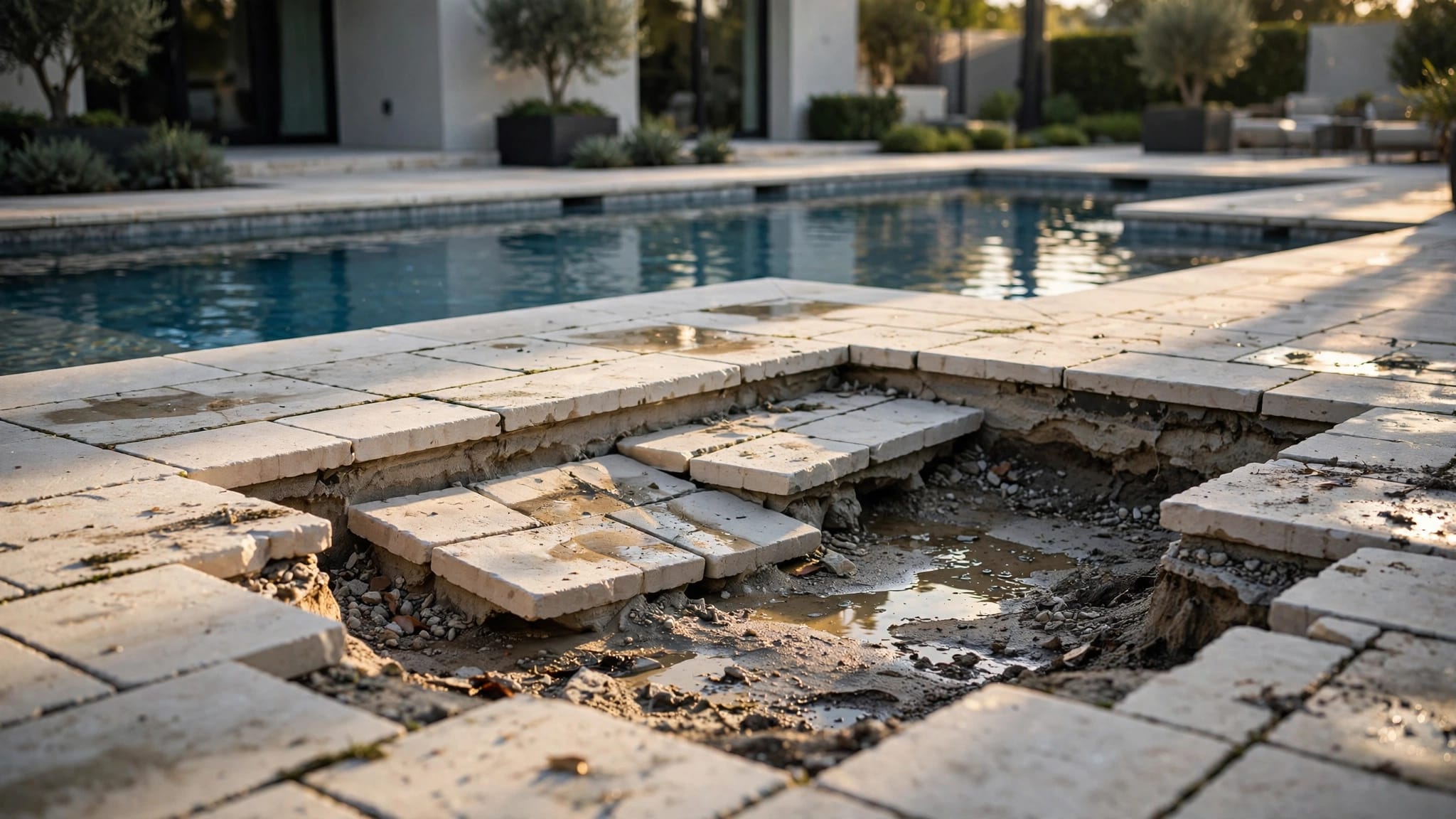
A stubborn mark doesn't necessarily indicate a failing finish. However, widespread roughness, pitting, flaking, or exposed material deserves a closer look. Those conditions may need a different solution from a sound surface with isolated discoloration.
Cleaning and acid washing
A professional may recommend acid washing for certain stains on a finish that's otherwise in good condition. The procedure can improve the appearance of a surface, but it doesn't replace material that has worn away or repair widespread pitting.
Our guide to pool resurfacing vs. acid washing explains how the two approaches differ and why the condition beneath the stains matters.
Resurfacing a worn interior
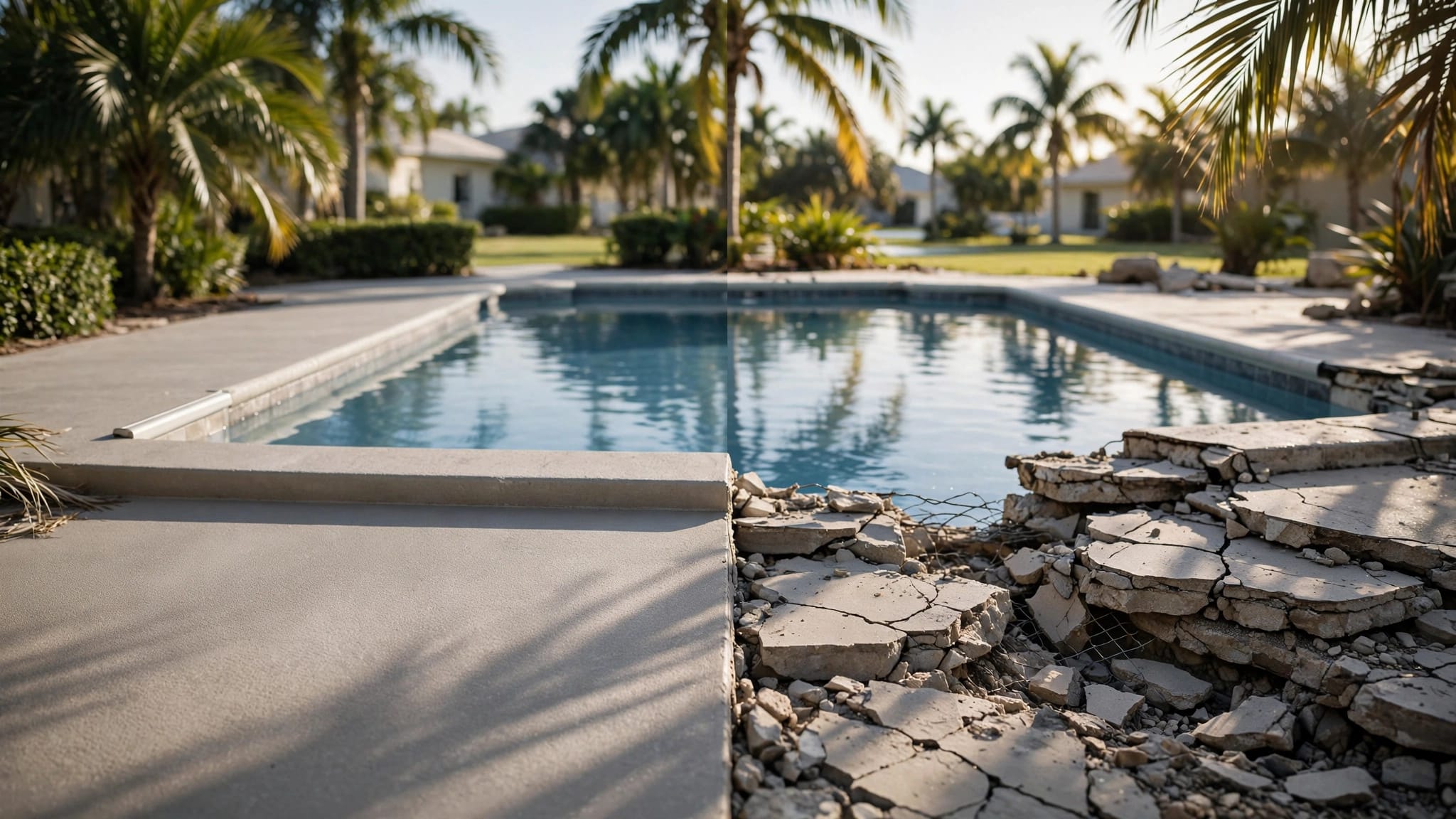
Resurfacing replaces the pool's interior finish. It may be worth considering when discoloration comes with widespread wear, rather than treating the marks alone.
At Back Bay Pools, we offer pool renovation and resurfacing services for Cape Coral homeowners. If you're concerned about the condition of your pool interior, Get a Free Estimate to schedule an on-site consultation.
Keep the finish in good condition
Leaf stains are easier to manage when you remove debris promptly and start with gentle cleaning. Balanced water and a treatment suited to the finish give you a safer path for marks that remain.
Focus on the condition of the surface , too. A sound finish with a few stains may need targeted care, while a rough or deteriorating interior deserves a professional assessment.