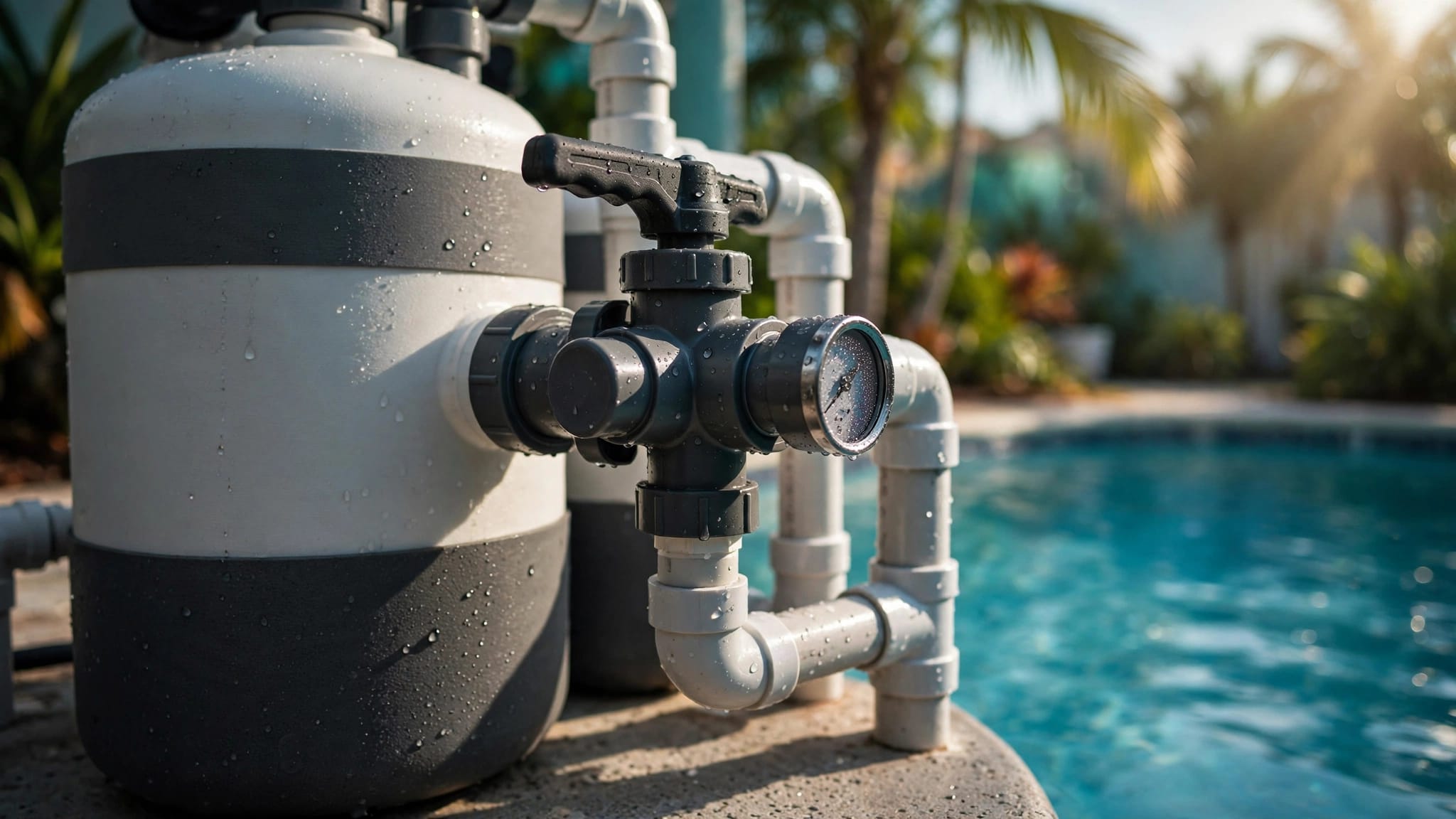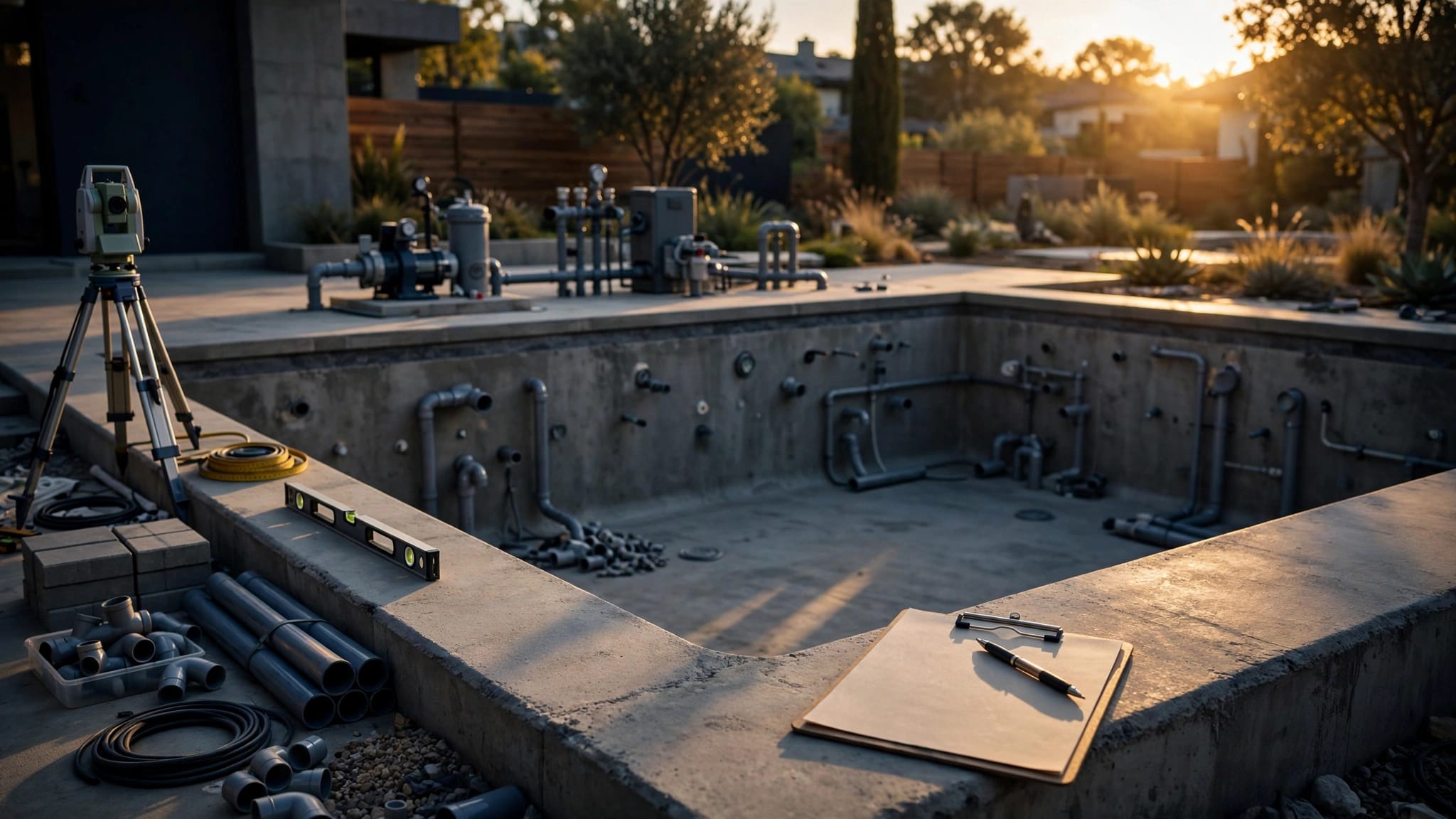
A salt cell can look dirty even when it only needs a quick rinse. The safest way to clean a salt cell is to remove loose debris first, inspect the plates, and use acid only when heavy calcium scale remains.
Too much acid, forceful scraping, or pressure washing can damage the cell's coating and shorten its service life. Before you start, check the manufacturer's instructions because cell designs, cleaning caps, and approved solutions vary by brand.
Know When Your Salt Cell Needs Cleaning
A salt cell uses electrically charged plates to convert dissolved salt into chlorine. During that process, calcium can collect on the plates, especially when pool chemistry is out of balance. A thin, chalky film is common, but thick crust can reduce chlorine production and trigger a low-flow or clean-cell warning.
The cell doesn't need cleaning on a fixed schedule. Inspect it when your manufacturer recommends, after correcting a water chemistry problem, or when you notice signs such as:
- Reduced chlorine production despite proper salt levels and pump operation.
- A warning light or error message related to the cell.
- Visible calcium scale between the plates.
- Flaking deposits or debris inside the cell.
- A chlorine reading that stays low after other causes have been checked.
Light scale may come off with a careful rinse. Heavy buildup needs more attention, but acid should never be the first step.
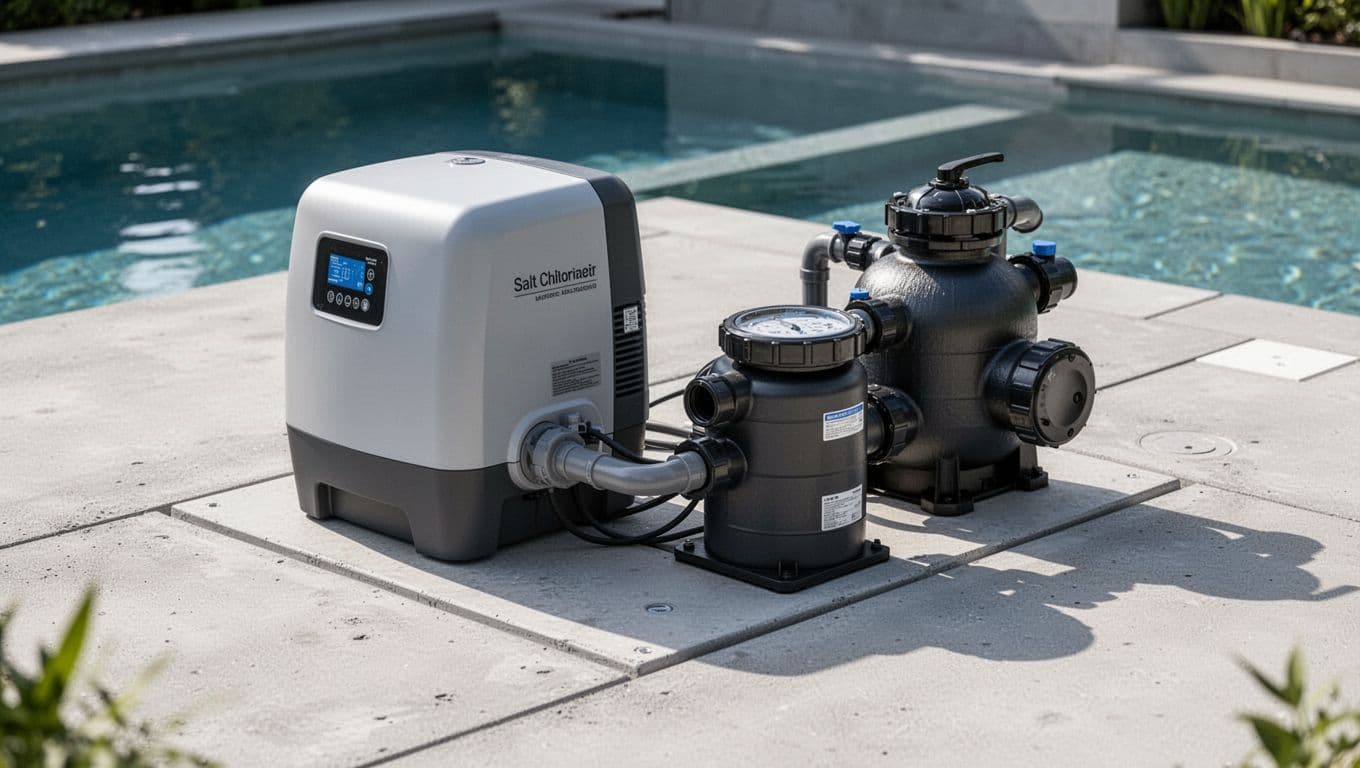
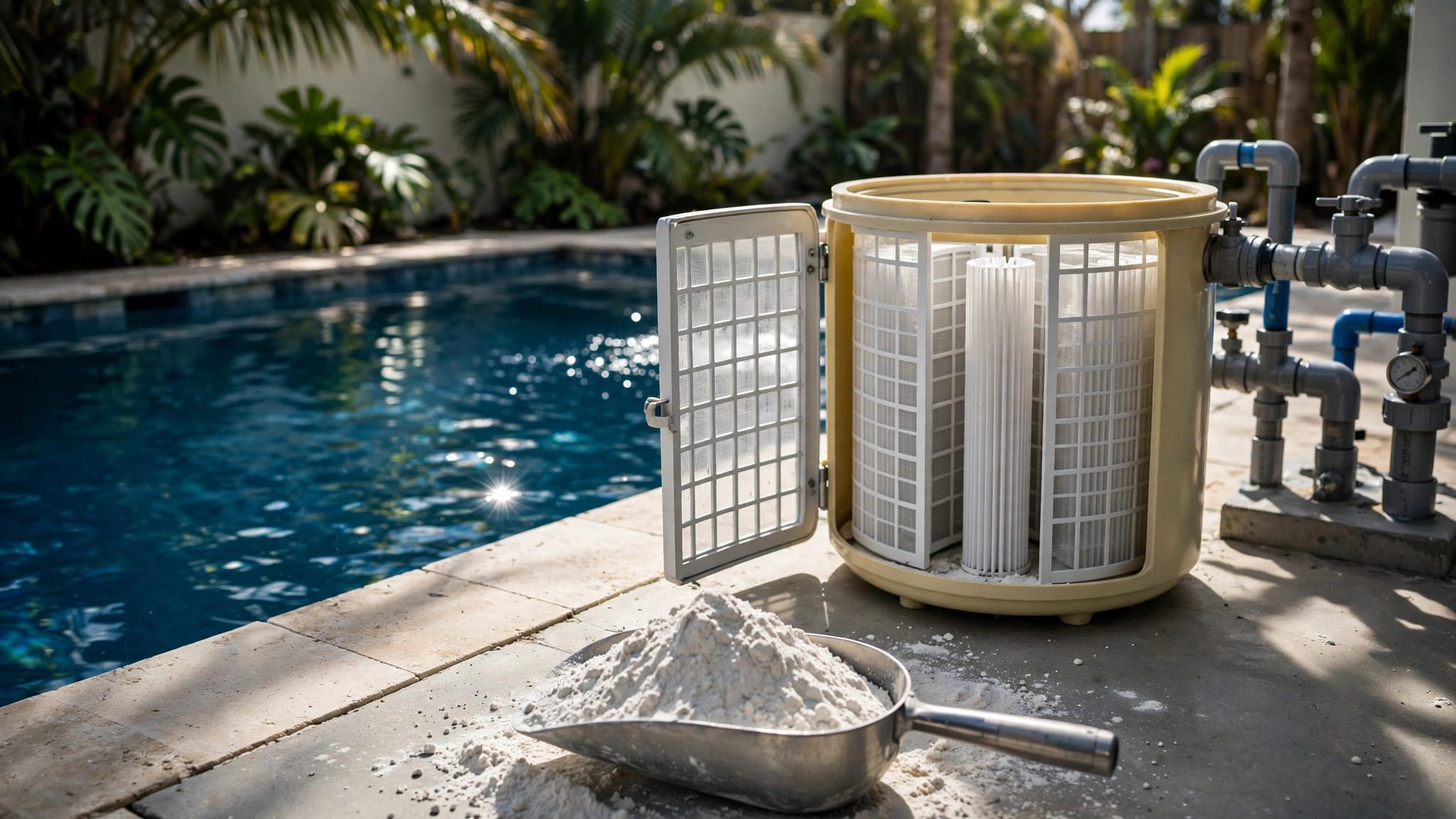
A clean salt chlorinator cell should have open passages and plates free of thick calcium deposits.
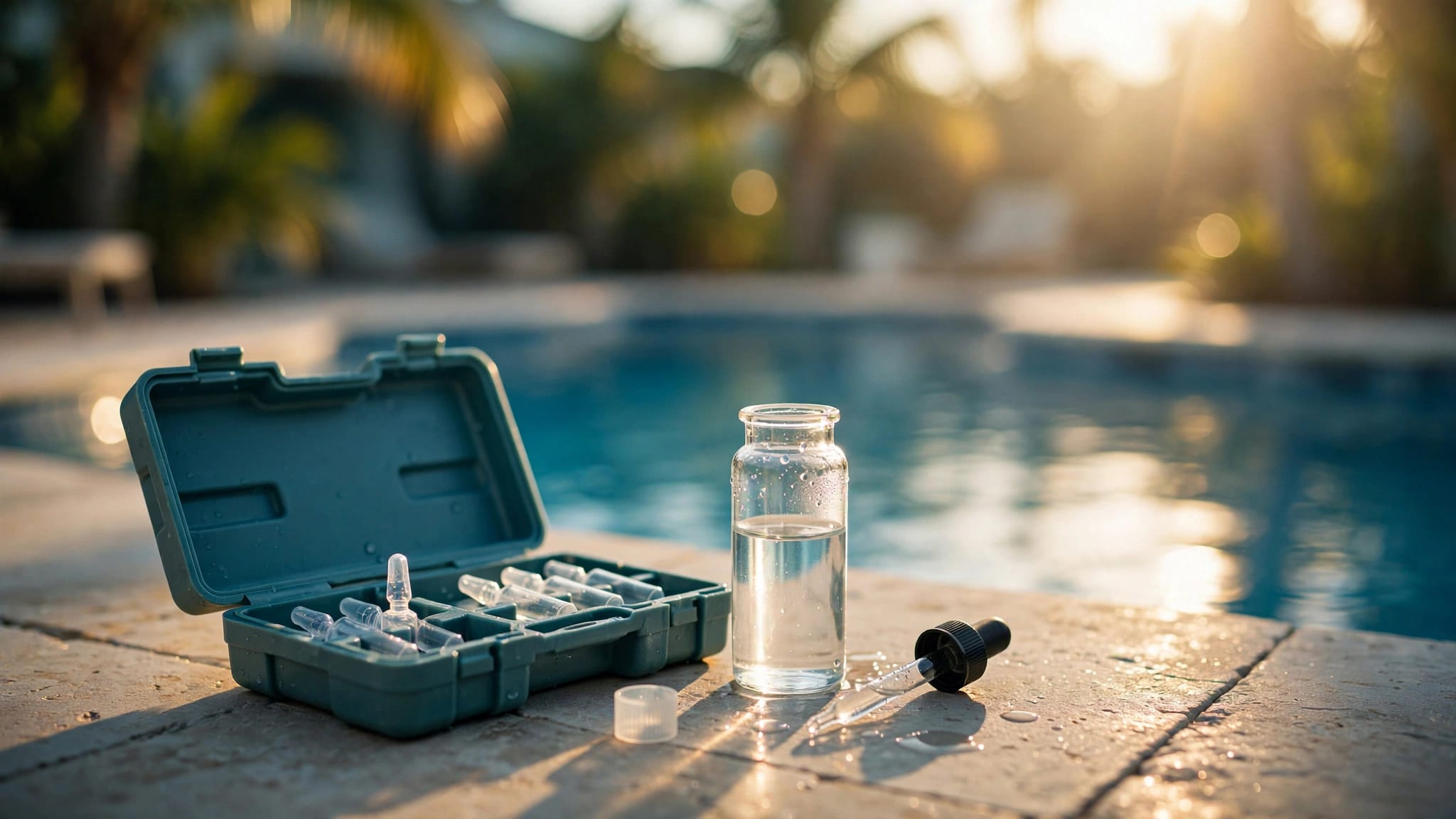
Before removing the cell, test the pool water. High pH, high total alkalinity, or high calcium hardness can encourage scale to return. A clean cell won't solve the underlying problem if the water remains unbalanced.
What You Need Before You Clean a Salt Cell
Gather the right supplies before opening the plumbing. You typically need the following:
- The cell manufacturer's cleaning cap or approved cleaning stand.
- A garden hose with a normal spray nozzle.
- Protective gloves and eye protection.
- A plastic inspection tool or soft nylon brush, if the manual allows it.
- The manufacturer-approved acid and dilution instructions, only if heavy scale requires an acid wash.
- A clean towel for the cell connectors and O-rings.
Avoid metal screwdrivers, knives, wire brushes, and other hard tools. The plates inside a salt cell have a specialized coating. Scratching or bending them can reduce chlorine output, even if the cell looks clean afterward.
Turn off the pool pump and shut off power to the salt system at its controller or breaker. Don't rely only on the display being off. If the cell sits below the waterline, close the appropriate valves before loosening the unions. Open the plumbing carefully and let trapped water drain into a bucket or onto the equipment pad.
Never pull the cell out by its cable. Support the housing with one hand while disconnecting the unions according to the manufacturer's instructions. Keep the power connectors dry, and take a photo before disconnecting anything if you aren't sure how the wires are positioned.
Safety warning: Pool acid can cause severe burns and release irritating fumes. Wear chemical-resistant gloves and eye protection, work outside in good ventilation, and follow the product label. Never mix acid with chlorine products or other cleaners.
Step-by-Step: How to Clean a Salt Cell Safely
The cleaning process should be gentle. Let water and the approved cleaning solution do the work instead of force.
- Remove the cell and inspect it under good light. Look through the housing and check whether the buildup is loose film or a hard layer covering the plates. Also inspect the housing for cracks, damaged threads, and worn O-rings.
- Rinse the cell with a garden hose. Hold the cell so water can flow through the opening. Use moderate pressure to flush out sand, leaves, and loose calcium. A regular hose is enough for most debris.
- Stop if the plates look clear. If the rinse removes the visible material and the passages are open, reinstalling the cell is safer than using acid. Unnecessary cleaning exposes the cell coating to wear without improving performance.
- Use a soft plastic or nylon tool only when permitted. A soft brush can loosen deposits near the housing opening. Don't force anything between the plates, and don't twist or pry against them. If the buildup won't rinse away, move to the manufacturer's acid-wash procedure instead of scraping harder.
- Prepare an approved acid wash only for heavy scale. Use the exact acid type, water-to-acid dilution, contact time, and cleaning cap listed in the manual. Some manufacturers prohibit acid cleaning for certain cell models, while others provide a specific procedure. If your instructions don't approve the method, contact the manufacturer or a qualified pool technician.
- Keep the acid contact brief and controlled. Fill only as directed, keep the solution contained, and never leave the cell soaking longer than the stated time. Excessive acid exposure can attack the plate coating and may damage the cell housing.
- Rinse the cell thoroughly. Flush all acid residue away with plenty of fresh water. Rinse the cleaning cap separately, and dispose of the used solution according to the product label and local requirements. Never pour leftover acid into the pool.
- Inspect the cell again before installation. The plates should look open and free of thick scale. Don't worry if a small amount of discoloration remains. The goal is to restore water flow, not polish the plates.
- Reinstall the cell without overtightening. Check the O-rings for grit, flattening, or cracks. Seat them correctly, hand-tighten the unions, reconnect the cable, open the valves, and check for leaks before restoring power.
- Run the system and verify operation. Turn on the pump first, confirm steady water flow, and then activate the salt system. Check for error lights, leaks, and normal chlorine production during the next testing cycle.
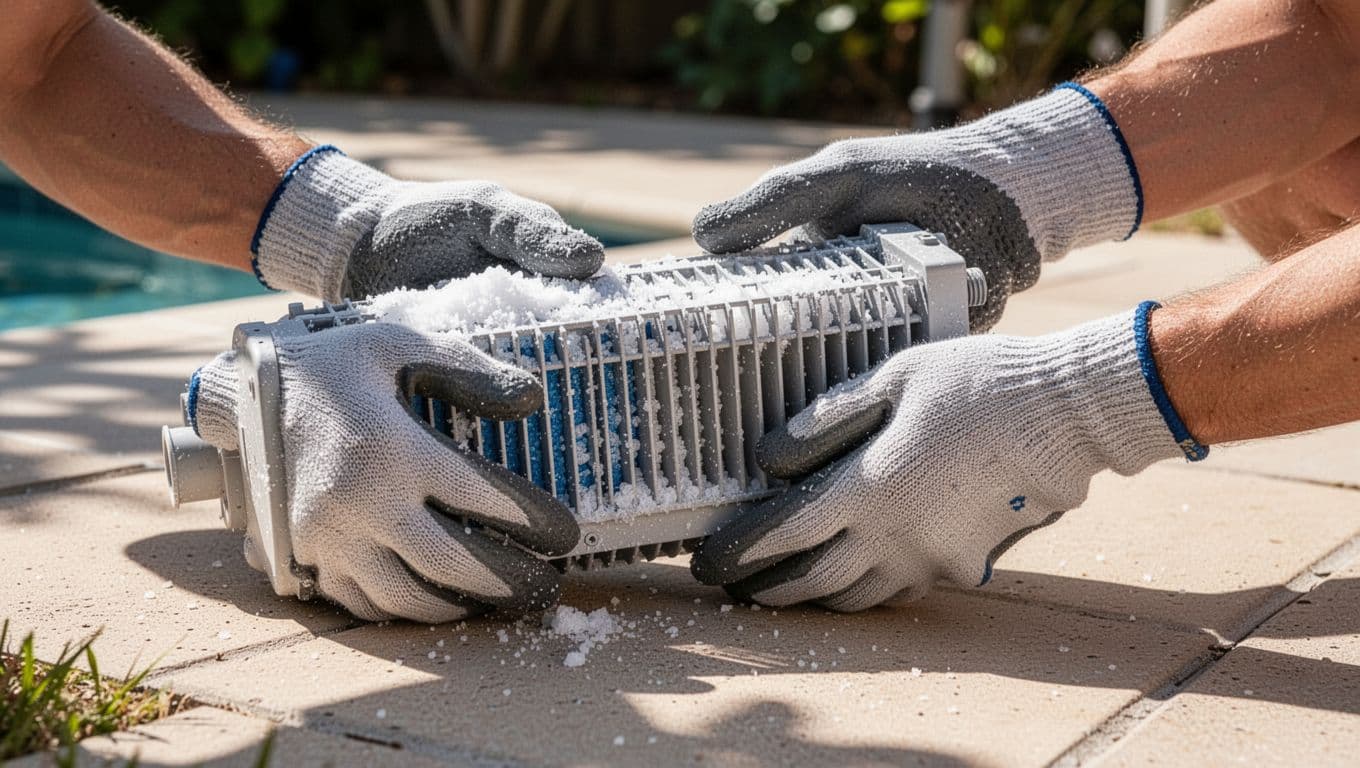
Careful inspection helps you decide whether a rinse is enough or an approved acid wash is necessary.
Why Aggressive Cleaning Shortens Cell Life
Salt cells are consumable components. Their plates gradually wear as they produce chlorine, and rough maintenance can speed up that wear.
Excessive acid exposure is one of the most common mistakes. Acid dissolves calcium, but it can also weaken the coating on the plates. Repeated acid washes, long soaking times, or stronger-than-approved mixtures may leave the cell looking clean while reducing its remaining life.
Metal tools create another problem. A screwdriver or wire brush can scratch the plates and damage the coating in places that are hard to see. Those scratches can affect chlorine production and give scale more surfaces to attach to later.
Pressure washing is also too aggressive for a salt cell. The force can damage the internal plates, seals, wiring connections, or plastic housing. A garden hose provides enough flow for loose material and creates less risk.
Unnecessary cleaning causes wear as well. If the cell has no meaningful scale, leave it alone. A rinse during a visual inspection is reasonable, but a chemical wash should match a real buildup problem.
A salt cell should be cleaned to remove obstructive scale, not to make every plate look factory-new.
If chlorine output remains low after a proper cleaning, check water temperature, salt concentration, stabilizer, pump run time, and overall water balance. A worn cell may need replacement, and cleaning won't restore a depleted coating.
Prevent Calcium Scale Before It Returns
Proper water chemistry reduces the need to clean a salt cell. Test pH and free chlorine regularly, then follow the salt system manufacturer's recommended ranges. Saltwater pools still need routine testing because the generator produces chlorine, but it doesn't balance every part of the water.
High pH makes calcium more likely to form on the cell plates. Keep pH within the range recommended for your system, and avoid allowing it to remain high for long periods. Calcium hardness also matters, especially when fill water contains significant minerals.
Pool owners in Cape Coral and other parts of Florida may also deal with warm water, frequent evaporation, and mineral-rich additions of fresh water. Evaporation leaves minerals behind, while repeated top-offs can gradually change the water balance. Test after major water additions and correct problems before scale becomes thick.
Run the pump for the schedule recommended by your equipment manufacturer. Poor circulation can leave deposits and make the salt system report a flow problem. Keep the filter clean as well, since a dirty filter can reduce flow through the cell.
Follow the cell's self-cleaning or reverse-polarity settings if the system has them. These features can reduce routine scale, but they don't replace water testing or remove every hard deposit.
For homeowners comparing equipment during a renovation or new pool construction, ask how the proposed salt system is maintained, where the cell will be installed, and how easily it can be removed. Good equipment access makes future inspection safer and faster.
When to Call a Pool Professional
Stop the cleaning process if the cell housing is cracked, the unions won't loosen, the cable connection is damaged, or the plates appear bent. A leak around the cell can expose electrical components and damage nearby equipment.
Professional help also makes sense when heavy scale returns soon after cleaning. That pattern often points to ongoing water chemistry problems, poor flow, an aging cell, or a sensor issue. Replacing a cell without finding the cause can lead to another failure.
A technician can test chlorine output, inspect the plumbing, confirm the salt reading, and identify whether the cell needs cleaning or replacement. If the equipment pad is difficult to access or the system has been modified, avoid forcing parts that may not match the original installation.
Back Bay Pools works with homeowners on pool installations, renovations, resurfacing, and screen enclosures. If your salt system is part of a larger pool project, you can Get a Free Estimate for an onsite consultation.
Conclusion
The safest way to clean a salt cell is to start with inspection and a gentle hose rinse. Use a manufacturer-approved acid wash only for heavy calcium buildup, and follow the stated dilution and contact time without improvising.
Avoid metal tools, pressure washing, long acid soaks, and cleaning a cell that doesn't need it. Balanced water chemistry and good circulation protect the cell between inspections, helping your salt system produce chlorine without unnecessary wear.