That narrow line around a swimming pool can determine whether a concrete deck moves safely or starts breaking at the edges. When the sealant dries out, pulls away, or disappears, water can reach the material below and leave the surrounding concrete exposed to movement.
Pool deck expansion joints are designed to absorb small shifts between separate concrete surfaces. Replacing them at the right time protects the deck, coping, and pool edge before a worn joint becomes a larger repair. Start by learning what these joints do and how to spot failure.
Why pool deck expansion joints matter
Concrete expands in hot weather and contracts as temperatures change. Pool decks also respond to moisture, soil movement, and the weight of nearby structures. A joint gives those surfaces room to move without pushing directly against each other.
You may find a joint between the pool coping and the deck, between separate sections of concrete, or beside a fixed structure. Each area needs a flexible separation rather than a rigid patch that locks the surfaces together.
What the joint is designed to do
A properly built joint usually includes compressible filler and a flexible sealant at the surface. The filler occupies the deeper part of the gap, while the sealant stretches and compresses as the concrete shifts.
This setup helps reduce pressure along the pool perimeter. It also limits the amount of rainwater and cleaning water that can enter beneath the deck. The joint won't stop every concrete crack, but it gives the slab a planned location for movement.
When the joint fails, nearby concrete takes more stress. Edges can chip, slabs may push against the coping, and cracks can spread outward. Filling the gap with mortar, grout, or rigid concrete often hides the problem for a short time without allowing the movement the joint needs.
A new pool deck should receive correctly placed joints during construction. If you're planning a pool installation or deck replacement, discuss joint locations before concrete work begins. Layout decisions are harder to correct after the slab has cured.
Signs Your Pool Deck Expansion Joints Need Replacement
A joint can look minor while the surrounding concrete continues to deteriorate. Inspect the deck when it's dry, then look closely along the pool edge and at every visible separation between slabs.
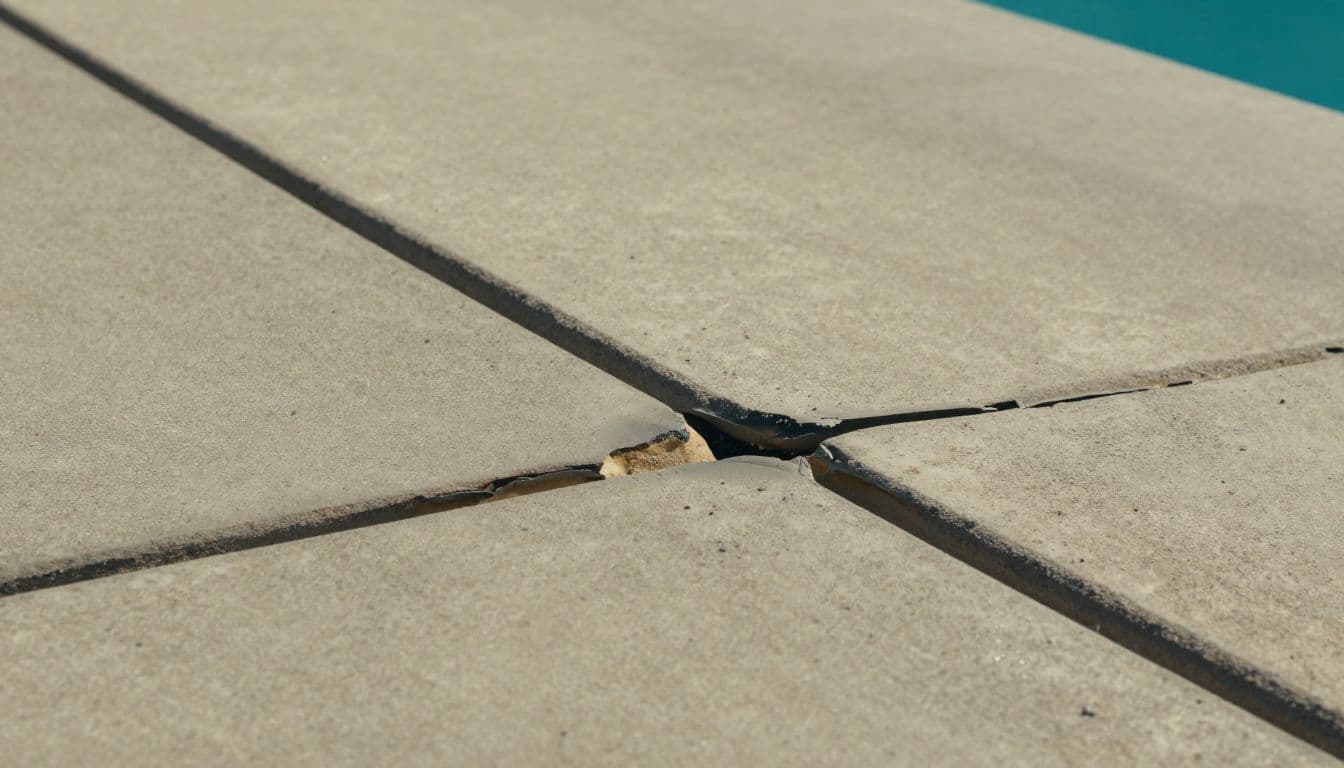
Common warning signs include:
- The sealant has shrunk, cracked, split, or pulled away from one side of the joint.
- The material feels hard and brittle instead of flexible.
- Backer material or foam filler is visible inside the gap.
- Dirt, leaves, weeds, or standing water collect in the opening.
- Concrete edges have chipped, flaked, or broken away beside the joint.
- Cracks extend from the joint into the deck or run along the coping.
- One slab sits higher than the other, creating an uneven walking surface.
- A previous repair has become loose or has separated from the concrete.
A joint that has lost its seal can allow water below the slab. In some cases, that water contributes to erosion or softening of the supporting base. The deck may then settle, shift, or crack as people walk across it and weather conditions change.
A gap is not always a failed joint
Some open space is normal. A clean, even joint with intact flexible sealant may be doing its job. The concern begins when the sealant no longer bonds to the concrete or the filler no longer supports the opening.
An open joint can be healthy. A joint packed with rigid material can create more pressure than an open, flexible gap.
Not every line in a pool deck is an expansion joint. Saw-cut control joints guide shrinkage cracks within a slab, while expansion or isolation joints separate surfaces that need to move independently. A contractor should identify the joint type before removing material or applying a repair product.
A quick visual inspection can show obvious failure, but it won't reveal every problem below the surface. If the deck has settlement, widespread cracking, or damaged coping, the joint should be assessed as part of the entire pool area.
What causes pool deck joint sealant to fail in Florida?
Florida pool decks face conditions that can shorten the life of exterior joint materials. Strong sunlight and ultraviolet exposure dry out some sealants. Heat causes repeated expansion, while cooler nights and seasonal changes cause contraction.
Heavy rain adds another source of stress. Water can sit in low areas, enter gaps, and wash fine soil away from the slab's supporting base. High humidity doesn't directly destroy every sealant, but it can make poor drainage and trapped moisture more damaging.
Pool chemicals may also affect materials that aren't rated for the location. Chlorinated water, saltwater splash, cleaners, and repeated pressure washing can wear down an unsuitable product. Near the coast, salt-laden air adds another exposure to metal and concrete surfaces.
Installation mistakes create problems before age becomes the main factor. Sealant may fail when the joint wasn't cleaned properly, when the concrete was damp, or when the product bonded to three sides instead of two. A correctly sized backer rod helps control sealant depth and limits unwanted three-sided adhesion.
Deck resurfacing can add another complication. An overlay or decorative coating may cover the top of an existing joint, reduce its working depth, or leave the joint sealed with a material that cannot stretch. A new surface doesn't fix a failed separation underneath.
The pool's age matters, but it isn't the only consideration. A relatively new joint can fail early after poor preparation, incorrect product selection, or movement caused by settlement. An older joint may still work if its sealant remains flexible and well bonded.
How are pool deck expansion joints replaced?
Replacement starts with an inspection, not a new bead of caulk. The contractor needs to determine whether the problem affects only the sealant or also involves cracked concrete, loose coping, settlement, drainage, or damage beneath the slab.
A focused joint replacement may be appropriate when the concrete remains stable and the damage is limited to the filler and sealant. Larger deck repairs or resurfacing may make more sense when the joint is one part of widespread deterioration.
A typical replacement process includes these steps:
- The contractor identifies the joint and checks whether adjoining slabs move independently.
- Old sealant, loose filler, dirt, and failed repair material are removed without damaging the concrete edges.
- The joint sides are cleaned and allowed to dry. Crumbling edges may need repair before new sealant can bond.
- A properly sized backer rod is installed when the joint design calls for one. Product instructions determine the correct sealant depth and width.
- An exterior sealant rated for concrete and the pool-deck environment is applied and tooled to form a neat, flexible surface.
- The repair cures for the period required by the product manufacturer before foot traffic, washing, or pool-area use resumes.
Household caulk, mortar, epoxy, and rigid crack filler are poor substitutes for a flexible joint system. They may look smooth after installation, but they can split when the concrete moves. The wrong product can also stain the deck or release from damp concrete.
Homeowners should also avoid cutting into the joint without knowing what lies beneath it. Utility lines, pool plumbing, electrical bonding, and the pool shell can be close to deck work. A professional can select removal tools and materials that match the construction.
After the repair, keep debris out of the joint and address standing water nearby. Good drainage reduces repeated exposure, while routine deck cleaning makes future changes easier to see.
When replacement belongs in a larger pool renovation
Joint work often fits naturally into a pool renovation or resurfacing project. If the deck receives a new finish, the contractor can expose the existing joint, repair damaged edges, and reinstall a flexible separation before applying the final surface.
This timing matters because a new coating can make an old joint harder to access. Coordinating both repairs avoids paying for a finished surface that later needs to be cut open.
New pool construction also gives homeowners the best opportunity to plan joint locations. The pool deck, coping, steps, drains, screen enclosure footings, and other fixed elements should be reviewed together. A contractor can account for transitions between materials instead of treating each area as a separate patch.
The deck material affects the repair details. Concrete, brick pavers, and travertine don't move or connect in the same way, so the joint design should match the chosen surface. Back Bay Pools discusses concrete decking, pavers, and travertine in its swimming pool FAQs, which can help homeowners compare common pool-deck options.
A rescreening project usually doesn't replace expansion joints. However, work around screen enclosure posts can expose cracks, settlement, or damaged concrete near the footings. Repairing those areas may require coordination between the enclosure contractor and the pool-deck contractor.
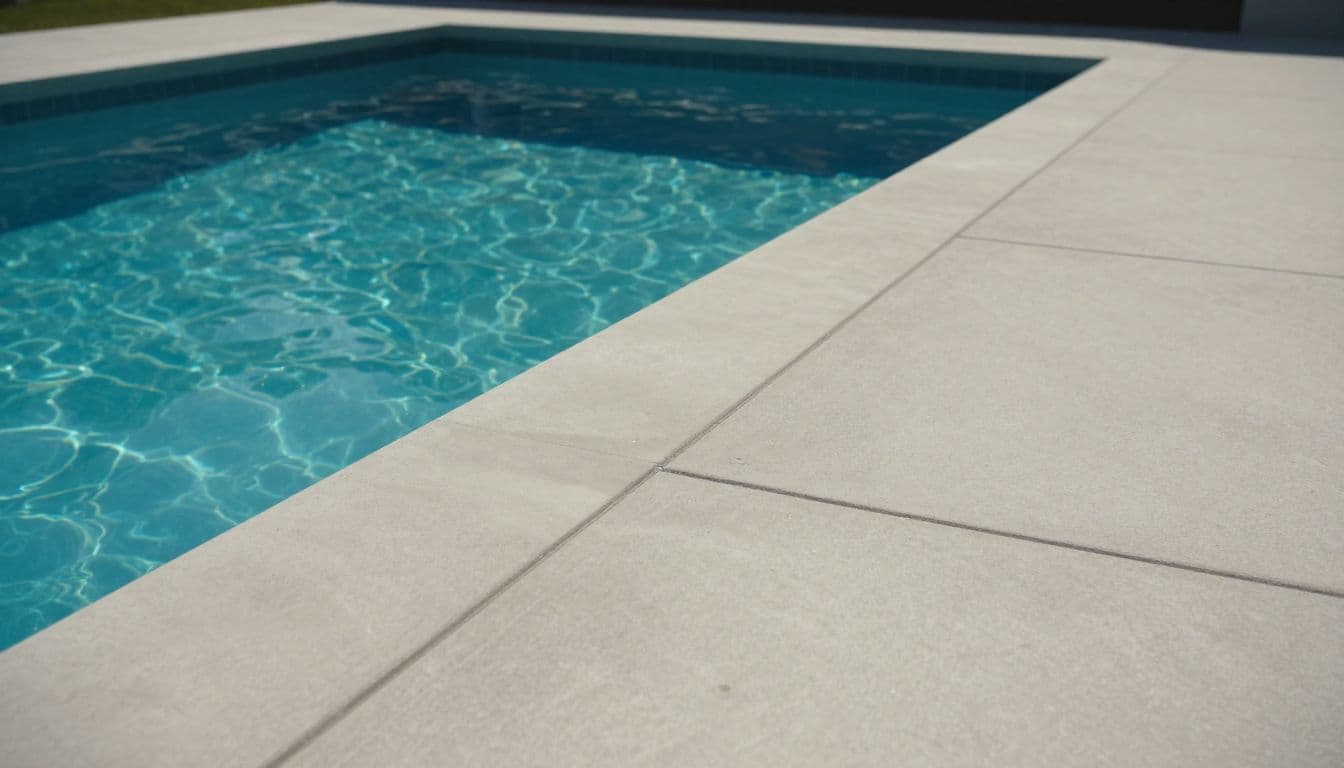
If you're seeing failed sealant, broken concrete, or uneven areas around the pool, Get a Free Estimate for an on-site evaluation before the damage spreads. A contractor can determine whether you need joint replacement, localized concrete repair, resurfacing, or a broader renovation.
Keep the joint working before the deck breaks
Pool deck expansion joints need replacement when their sealant loses flexibility, separates from the concrete, or leaves the underlying filler exposed. Cracks, chipped edges, standing water, and uneven slabs add evidence that the surrounding deck needs attention.
The repair is more than filling a visible gap. It requires identifying the joint, removing failed material, preparing sound concrete, installing the correct filler, and applying a sealant that can handle outdoor pool conditions.
That narrow line may be easy to overlook, but it has a practical job. Keeping it flexible helps the pool and deck move without forcing stress into the concrete edges.