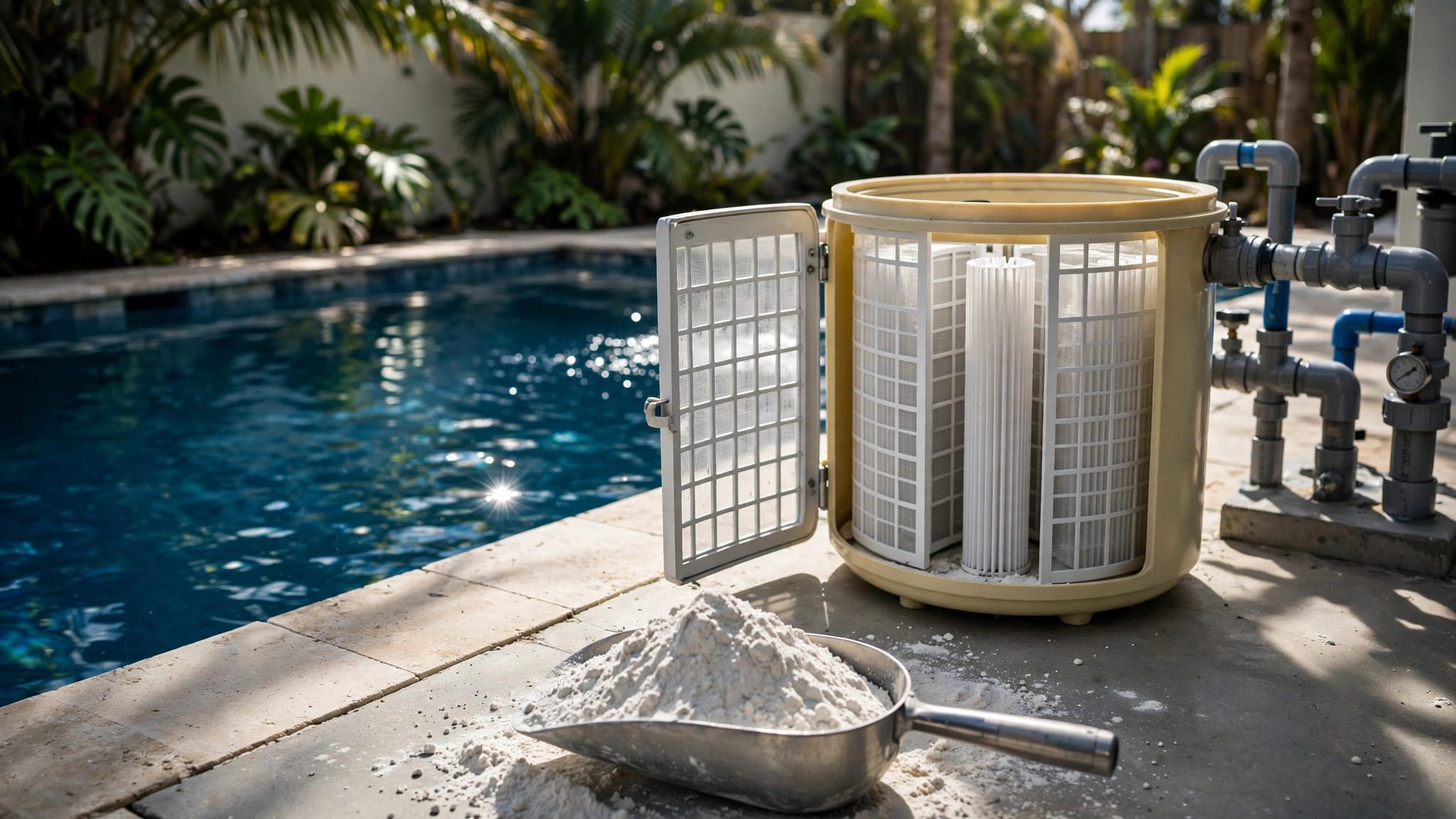
Pool equipment noise can turn a relaxing Cape Coral backyard into a constant source of irritation. A steady hum may be normal, but grinding, screeching, rattling, or loud cavitation usually points to a problem that deserves attention.
Your pool pump, filter, plumbing, equipment pad, and surrounding surfaces all affect how sound travels. With the right inspection and a few careful changes, you can reduce the noise without blocking ventilation or making future maintenance harder.
Why Pool Equipment Noise Can Sound Worse in Cape Coral Backyards
Cape Coral homes often have concrete pool decks, stucco walls, screen enclosures, and neighboring homes close to the same outdoor living space. These hard surfaces can reflect sound instead of absorbing it. A pump that seems tolerable near the equipment pad may sound much louder beside a lanai or bedroom window.
The equipment's location also matters. A pump installed against a wall, fence, or enclosure frame can transfer vibration into that structure. Loose plumbing may vibrate against the wall and create a sharp buzzing or rattling sound that makes the motor seem worse than it is.
Normal equipment usually produces a consistent, low motor hum or soft mechanical whir. You may also hear water moving through the filter, a brief relay click, or a short change in pitch when an automated system changes pump speed. These sounds should remain fairly steady during normal operation.
A sudden change deserves more attention. Grinding can indicate worn bearings or another motor problem. Screeching may come from a failing motor component. Rattling often points to loose hardware, plumbing, or debris. A rough roar with bubbles around the pump basket can indicate cavitation , which happens when the pump doesn't receive water properly.
How to Reduce Pool Equipment Noise in Cape Coral
The best fix depends on where the sound starts. Before replacing equipment, identify whether the motor, pump housing, plumbing, or equipment pad creates the noise.
Start with a simple sound check
Listen to the system while standing near the pump, then move several feet away. Pay attention to whether the sound gets louder beside a wall, screen frame, or window. This helps separate equipment noise from vibration that travels through nearby materials.
If your system has multiple pump speeds, compare the sound at each setting. A variable-speed pump should generally run with a lower, softer tone at reduced speed. A sudden harsh sound at one speed can reveal a hydraulic or mechanical issue.
Use this homeowner-friendly check before calling for service:
- Turn the system off using its normal controls, then listen for any remaining dripping, rattling, or fan movement.
- Check whether the pump lid, strainer basket lid, and visible valves feel loose, but don't open electrical compartments.
- Look for plumbing that touches a wall, fence, screen frame, or other rigid surface.
- Inspect the equipment pad for cracks, rocking, standing water, or signs that the pump has shifted.
- Note when the sound occurs, such as at startup, during high speed, after cleaning the filter, or throughout the entire cycle.
- Record a short video from several locations so a technician can hear the change.
Don't place your hand near moving parts or reach into the pump while it's operating. If the motor smells hot, trips a breaker, produces smoke, or makes a severe metallic sound, shut the system down and arrange professional service.
Reduce vibration at the equipment pad
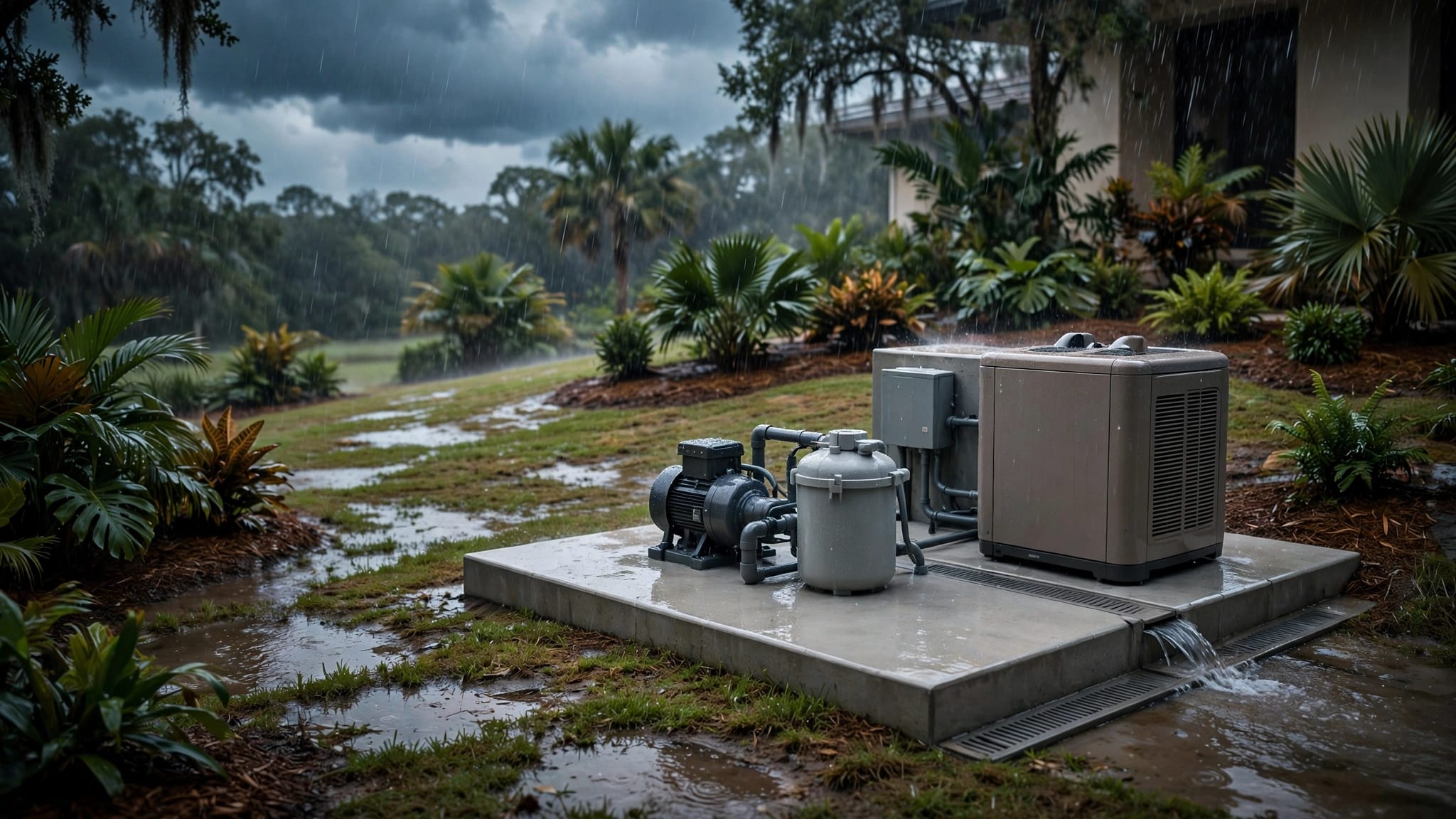
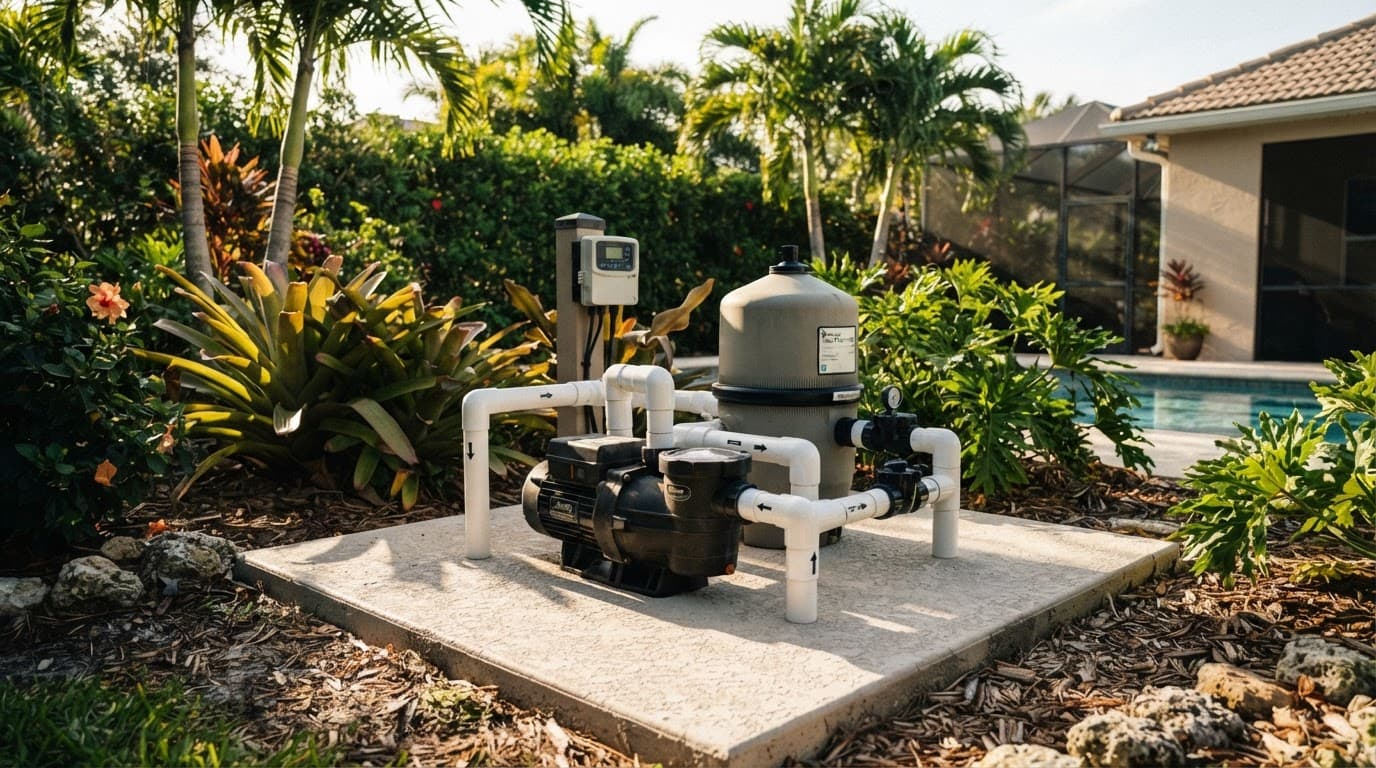
A level, stable pad gives the motor a firm base. If the pump rocks or the pad has settled, vibration can increase. A technician may be able to level the equipment, replace damaged supports, or install manufacturer-compatible vibration isolation pads.
The plumbing should also have enough support to prevent strain on the pump connections. Rigid pipe that presses against masonry can act like a speaker, carrying vibration into the wall. Proper supports and small clearance gaps can reduce that transfer.
Never solve the problem by building a sealed box around the pump. Motors need airflow to release heat, and technicians need safe access to the lid, filter, valves, wiring, and drain points. A tight enclosure can create overheating, complicate repairs, and introduce a new safety concern.
If a sound barrier is appropriate, it should be planned around clearances, airflow, drainage, and maintenance access. An open, professionally designed screen or landscape feature may be safer than an improvised cabinet placed directly around the equipment.
Correct water-flow problems
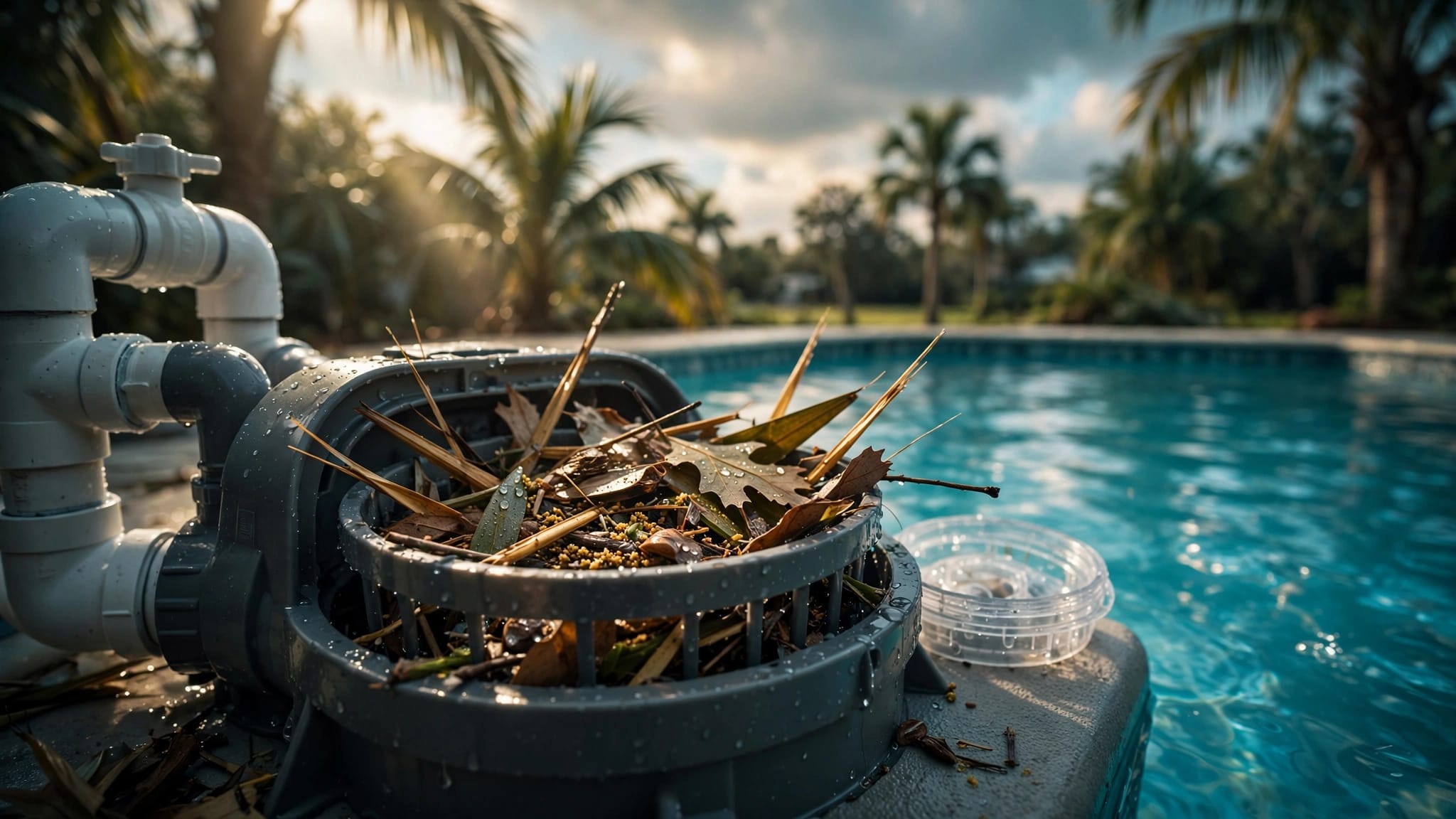
Many loud pool systems have a flow problem rather than a bad motor. A clogged skimmer basket, dirty pump basket, blocked suction line, low water level, or restricted valve can starve the pump. The resulting cavitation may sound like gravel moving inside the housing.
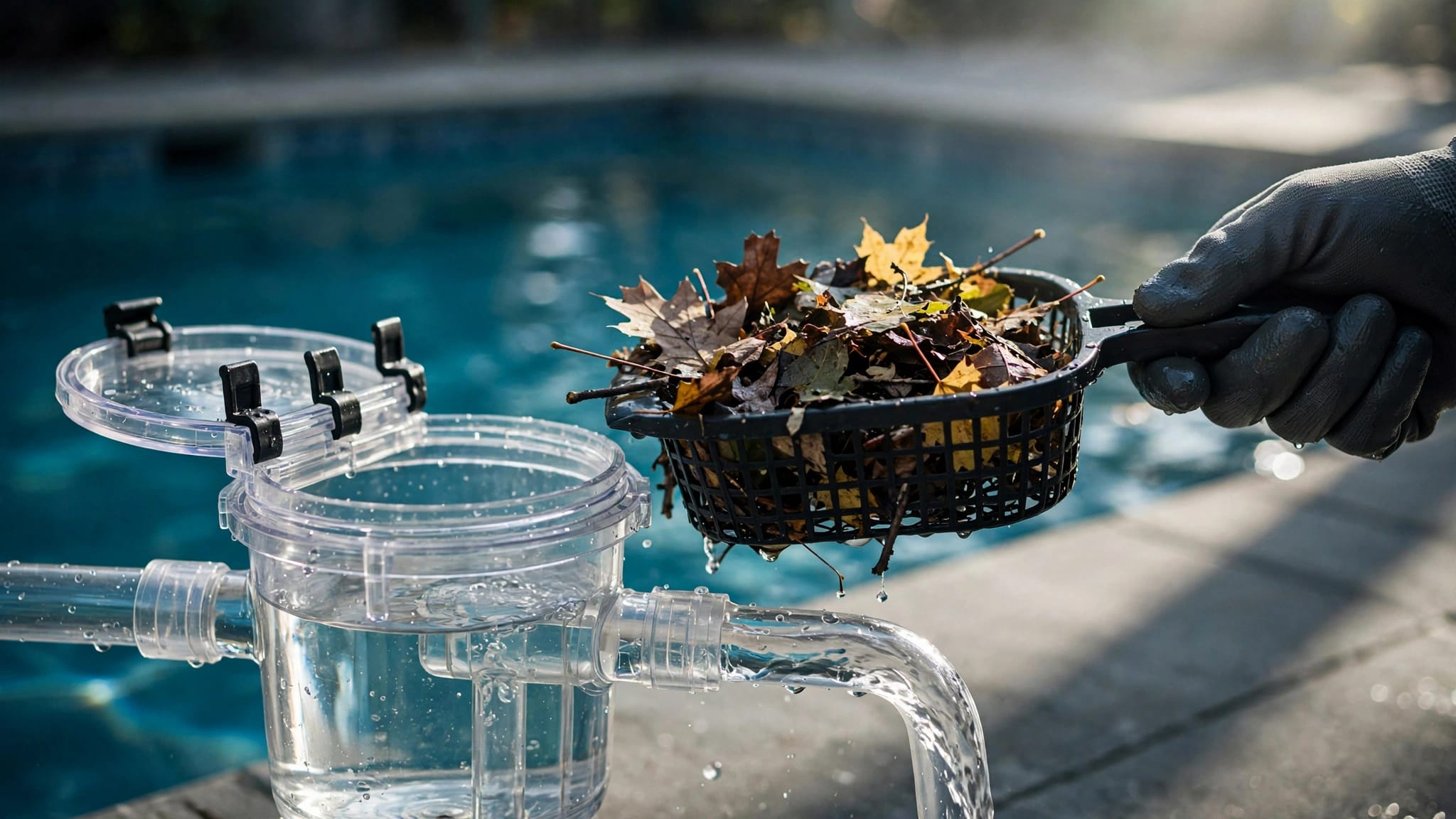
Start with the easy checks. Keep the pool water at the recommended level for your skimmer, empty the pump and skimmer baskets, and confirm that valves are in their normal operating positions. If the filter is dirty, clean it according to the filter manufacturer's instructions.
Air entering the suction side can also create noise. Watch the pump basket through the clear lid if your equipment allows it. A small amount of air may appear at startup, but persistent bubbles, a fluctuating water level in the basket, or a rough sucking sound can point to a suction-side leak.
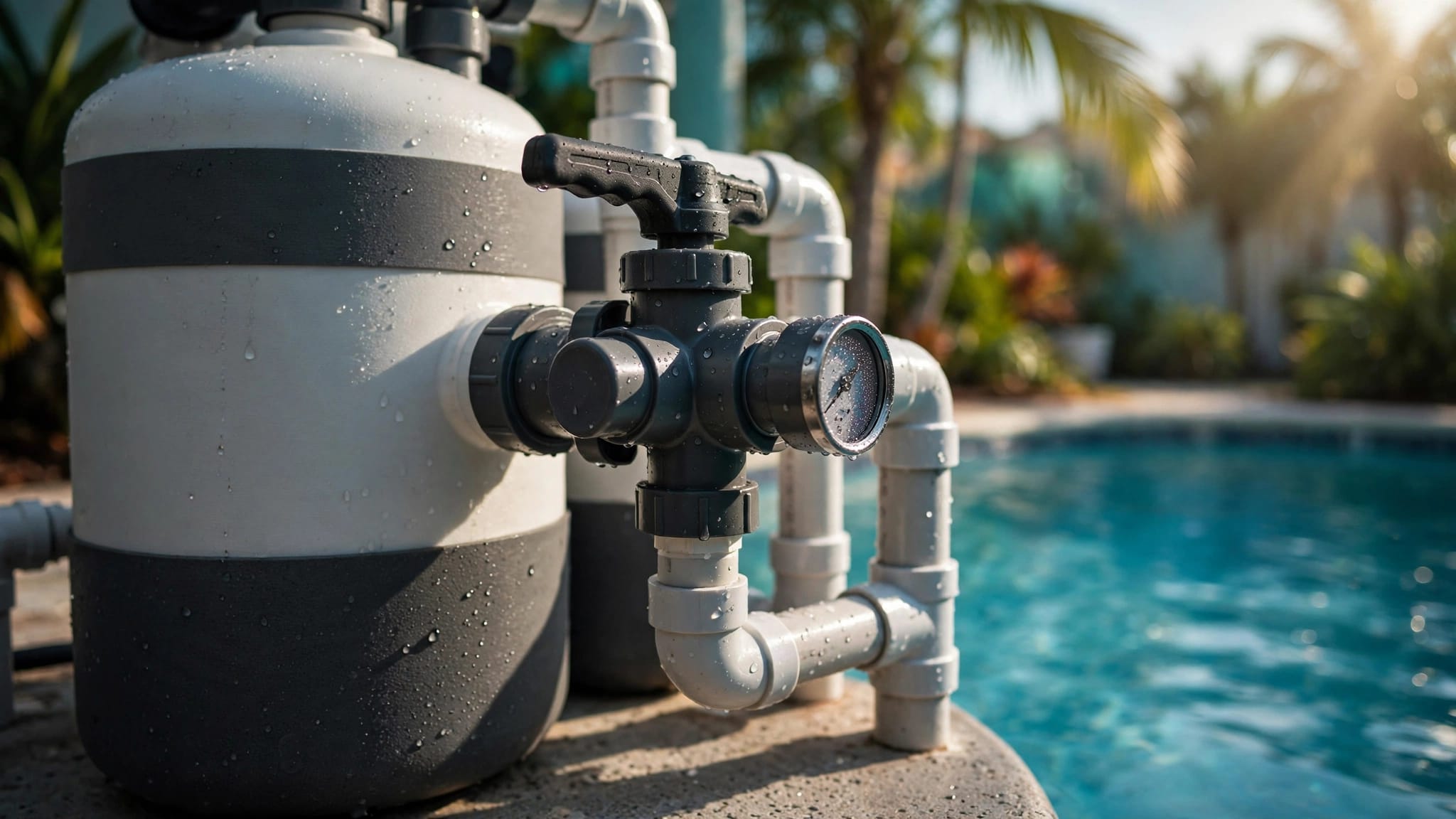
Avoid guessing based on one filter pressure reading. Record the pressure when the system operates normally, then compare future readings with that baseline. A major change, poor return flow, or repeated loss of prime calls for a trained inspection.
Consider Pump Upgrades and Better Equipment Placement
Older single-speed pumps often run at one high speed whenever they're on. That can produce more sound than necessary, especially during routine filtration. A variable-speed pump can operate at lower speeds for ordinary circulation and increase speed only when the pool requires it, such as during cleaning or certain water features.
The right pump still depends on the pool's size, plumbing, filter, cleaner, water features, and electrical setup. An oversized pump can create unnecessary pressure and noise. A professional should match the equipment to the hydraulic needs rather than choosing a replacement by horsepower alone.
During a new pool installation, renovation, or resurfacing project, equipment placement deserves the same attention as the deck and finish. A pad farther from living areas may improve comfort, but the location must still allow easy access for service. Long or poorly planned plumbing runs can create their own flow restrictions, so distance alone isn't a complete solution.
Homeowners planning a broader upgrade can review our pool services to see how equipment concerns may fit within new construction, renovation, or screen enclosure work.
Use Screen Enclosures Without Trapping Heat
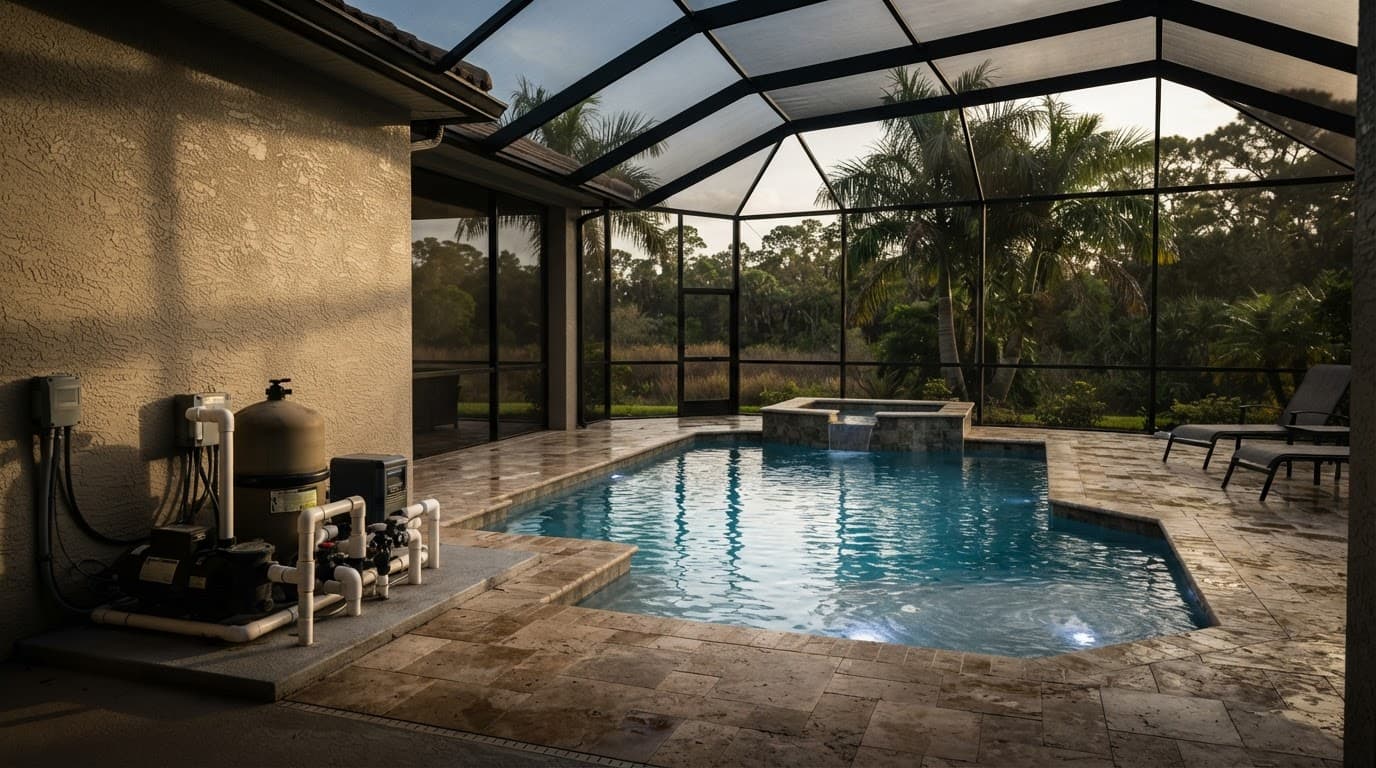
A screened lanai can make a pool area more comfortable, but it isn't a substitute for acoustic equipment design. Screen mesh may soften the direct path of sound in some locations, yet the enclosure's metal frame and nearby walls can still carry or reflect vibration.
Keep the pump area open enough for ventilation and service. Don't hang dense materials over the motor, block intake or exhaust areas, or push furniture and storage against the equipment. Salt air, moisture, leaves, and insects already challenge outdoor equipment, so any added barrier should resist corrosion and allow drainage.
Landscaping can improve the feel of the area when it stays clear of the motor and controls. Plants shouldn't block airflow, touch hot components, conceal leaks, or prevent a technician from removing the pump lid and filter.
For an existing pool, a screen repair or enclosure update may be a good time to review the equipment layout. A renovation can also address the pad, plumbing supports, and pump selection without treating each source of noise as a separate project. Homeowners considering a broader update can explore pool renovations and resurfacing before deciding which changes belong together.
Know When Pool Equipment Noise Needs Professional Attention
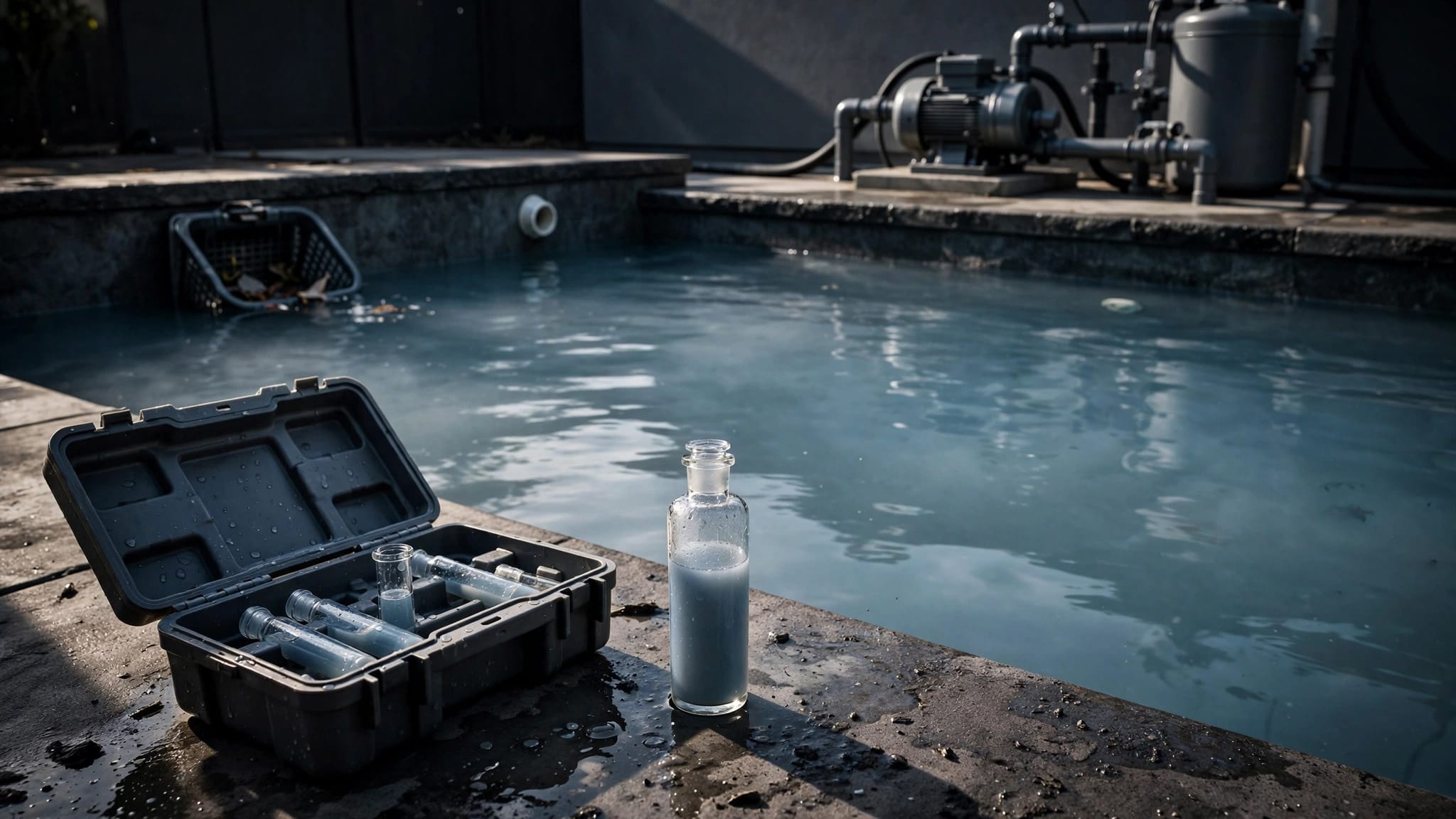
Some sounds are easy to trace. Others require pressure tests, electrical testing, pump inspection, or a closer look at the plumbing. Schedule service when noise continues after you clean the baskets and confirm the water level.
Call a pool professional promptly if you notice:
- Grinding that follows the motor's speed.
- A high-pitched screech during startup or operation.
- Rattling that continues after you check visible lids and loose items.
- Loud cavitation, crackling, or a pump basket that won't stay full.
- A sudden change in pitch, volume, vibration, or water flow.
- Repeated loss of prime, air bubbles, leaks, or a pump that shuts off.
- A hot motor housing, burning odor, tripped breaker, or electrical warning.
A technician can determine whether the problem involves bearings, seals, impellers, suction restrictions, plumbing supports, or electrical components. Replacing a pump before checking the hydraulic system may leave the original noise in place.
Before the appointment, share the video, the time of day, the pump speed, recent filter cleaning, and any recent work near the pool. That information can shorten the diagnostic process. If the equipment sits beside a bedroom, lanai, or property line, mention that location so the repair plan considers sound travel as well as mechanical performance.
For a site-specific equipment review during a pool project or renovation, you can Get a Free Estimate from Back Bay Pools.
Conclusion
Reducing pool equipment noise starts with finding the source. A steady hum may be normal, but grinding, screeching, rattling, cavitation, and sudden changes should never be ignored.
Keep baskets and filters clean, correct water-flow problems, support the plumbing, and maintain airflow around the motor. When equipment needs replacement or relocation, careful planning during construction or renovation can create a quieter backyard without sacrificing safe access or dependable maintenance.