A pool contractor's license number is easy to print on an estimate, but checking whether it is valid takes only a few extra minutes. A Florida pool contractor license search can show whether the contractor is active, properly classified, and connected to the business hiring you.
Insurance requires a separate check. The state license database doesn't prove that a contractor's liability or workers' compensation policy is current. Before signing a contract, verify the license, confirm the business identity, and contact the insurance provider directly.
Why a Florida pool contractor license matters
Pool construction, renovation, resurfacing, and related work involve excavation, structural materials, plumbing, electrical connections, and permits. A properly licensed contractor has met Florida's requirements for the work covered by that license. Licensing also gives you a state record to review before money changes hands.
Florida's Department of Business and Professional Regulation, commonly called DBPR, maintains the state's contractor license records. For pool work, the record often lists a Certified Pool/Spa Contractor , with a license number that begins with CPC. A certified license generally allows work throughout Florida, subject to the project's local requirements.
You may also see a Registered Pool/Spa Contractor record. Registered licenses can be limited to the local jurisdiction where the registration was issued. Ask the contractor whether the license covers the address where your pool project will take place.
The license must also match the person and company involved. A business might advertise under a trade name while the license belongs to an individual qualifying contractor. That arrangement can be valid, but the DBPR record should connect the qualifier to the business listed on your proposal.
Your project may include several kinds of work. A pool contractor license doesn't automatically confirm that the same company handles electrical work, gas lines, decking, landscaping, or screen enclosure construction. Ask who will perform each part and which company will appear on the permit.
For a pool renovation or resurfacing project, confirm who handles structural repairs, plumbing changes, tile, coping, and surface preparation. For a screen enclosure or rescreen, ask which license and permit cover that portion of the job.
How to verify a Florida pool contractor license online
Use the official DBPR license search through MyFloridaLicense.com . Search by the contractor's license number, personal name, or business name. A careful search uses more than one method because a business name alone may not identify the qualifying individual.
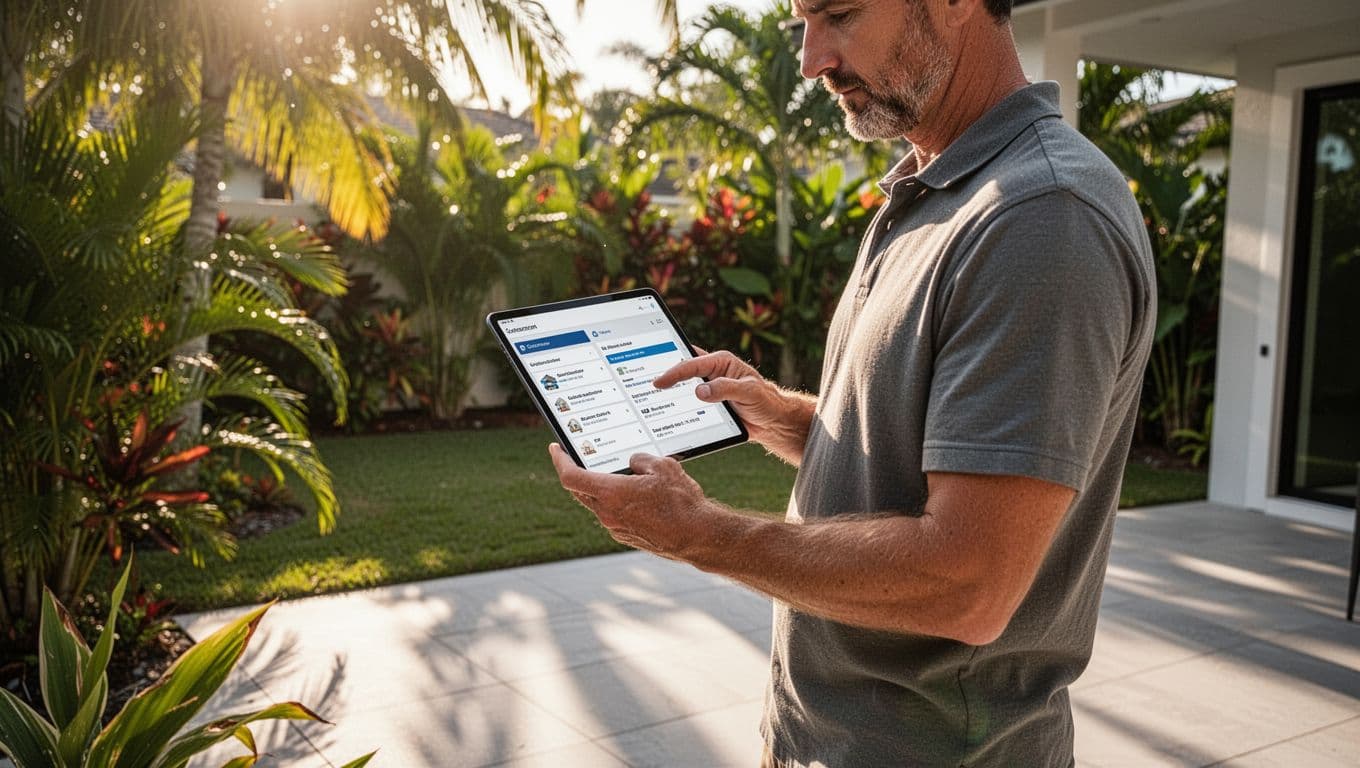
Check these details in the record:
- The license type matches the work. Look for Certified Pool/Spa Contractor or another classification that clearly covers the proposed project. If the contractor provides a CPC number, enter the number exactly as provided.
- The status is current and active. Treat statuses such as inactive, suspended, revoked, delinquent, or null and void as a reason to stop and ask questions.
- The name matches the contractor you plan to hire. Compare the DBPR record with the estimate, contract, website, truck lettering, and business card. Small differences can indicate separate legal entities.
- The expiration date covers your project. A license that expires soon deserves another check before construction begins. Ask the contractor for updated information if the record changes.
- The qualifier is connected to the business. Search the contractor's individual name after searching the company. DBPR guidance recommends checking both records when you search by business name.
- The record shows no unresolved discipline that concerns you. Review disciplinary information and ask for an explanation of any suspension, complaint, or enforcement action.
Save a copy of the search result with the date you checked it. The record can change between the estimate and the start of construction. If the information remains unclear, contact the DBPR Customer Contact Center at 850-487-1395 or use the DBPR Mobile app.
A contractor who gives you a license number should expect you to verify it. Refusal, pressure, or vague answers are reasons to pause the project.
How to verify pool contractor insurance in Florida
A current Florida pool contractor license doesn't prove current insurance. DBPR's license record isn't a live certificate of insurance, so request separate proof for the contractor and any subcontractors.
Ask for a current Certificate of Insurance, often called a COI. The document should show the contractor's legal business name, insurance company, policy number, effective date, expiration date, and coverage limits. Review the certificate against the name on your contract.
General liability coverage can address claims involving bodily injury or property damage, subject to the policy terms. Ask the contractor or insurance agent to identify the limits for each category, including the per-occurrence and aggregate limits. Don't rely on a certificate that only says "coverage provided" without meaningful policy details.
A certificate of insurance is evidence of coverage at a point in time. It isn't proof that a policy will stay active throughout your project.
Contact the insurance agency or carrier directly. Use contact information you find independently through the insurer or agency's official business records, rather than relying only on a phone number printed on a forwarded PDF. Ask whether the policy is active, whether the named business matches your contract, and whether the stated coverage applies to pool construction or the specific work being performed.
Workers' compensation needs its own review. Ask whether the contractor carries workers' compensation coverage or has a valid exemption. Florida employers in the construction industry may face workers' compensation requirements when they have employees, so the answer should match the company's actual workforce.
You can compare the contractor's legal name with Florida Division of Workers' Compensation proof-of-coverage resources. If the contractor claims an exemption, ask for the exemption information and verify it through the state's official system.
Subcontractors deserve the same review. A pool project may involve separate companies for electrical work, screen framing, concrete, plumbing, or gas. Request each company's certificate and workers' compensation information before that company enters your property.
Your insurance agent can also review the limits and explain whether additional insured status makes sense for your project. That decision depends on the policy and contract, so get advice before asking for a specific endorsement.
Compare the license with the contract and permit
A license search is only useful when the contract identifies the same legal business. Search Florida's Division of Corporations, known as Sunbiz, for the company name shown on the estimate. Confirm that the business exists, check its status, and compare its address with the contract.
A trade name may differ from the corporation's legal name. If so, ask the contractor to show how the names connect. Your contract should identify the legal entity receiving payment, the license holder, the scope of work, the payment schedule, and the person responsible for permits.
Permit records provide another useful comparison. Ask which contractor will pull the permit for the pool, renovation, or enclosure. Then confirm the permit information with the local building department. In Cape Coral, local rules can affect site plans, property setbacks, flood-zone documentation, pool construction, and screen enclosures.
If you plan to build a pool and enclosure together, review the Cape Coral pool and cage building process and ask whether one contractor or separate companies will handle each permit.
The permit applicant, license holder, contract name, and insurance certificate should tell the same story. When those names differ, get a clear written explanation before signing.
Red flags when checking a pool contractor
Pause the project and investigate further if you see any of these warning signs:
- The DBPR record doesn't show an active license or the classification doesn't cover the planned work.
- The contractor gives you a business name but won't identify the qualifying individual.
- The license belongs to a different company than the one named in the contract.
- The certificate of insurance has expired, lists another business, or provides no way to verify coverage.
- The insurer or agency can't confirm the policy.
- The contractor refuses to provide workers' compensation information or a verifiable exemption.
- The company asks you to make payment to a person or business that isn't named in the contract.
- The contractor pressures you to skip permits or start before the records are verified.
A low estimate doesn't offset unclear credentials. Compare the full scope, permit responsibility, payment schedule, warranty terms, and insurance information before comparing prices.
A license check protects the project before it starts
Verifying a Florida pool contractor license takes less time than reviewing a pool design, yet it can prevent costly confusion later. Search the contractor and business through official Florida records, then confirm the license type, status, qualifier, and disciplinary history.
Insurance requires a direct conversation with the carrier or agent. Match the COI to the contract, verify workers' compensation or exemption information, and request proof for subcontractors.
Once those records line up, you can compare project plans with greater confidence. If you're ready to discuss a new pool, renovation, resurfacing project, or enclosure, you can Get a Free Estimate for an on-site consultation.