Cape Coral backyards deal with more than sunshine and pool days. Tiny gnats, mosquitoes, salt air, and long humid afternoons all put pressure on your screen enclosure.
If your pool sits near a canal, preserve, or any water, the wrong mesh can turn a relaxing evening into a swatting contest. A pool screen comparison between no-see-um and standard mesh comes down to more than price. It also affects airflow, view, upkeep, and how comfortable your backyard feels after sunset.
Both screen types work well in Southwest Florida. The better choice depends on your lot, your budget, and how much bug protection you expect.
How the two screen types feel day to day
Most homeowners hear "screen" and think it means one simple product. It doesn't. The weave density changes how the enclosure performs, and that difference shows up fast in Cape Coral weather.
Standard pool screen usually has a wider weave. It gives you a lighter look, more breeze, and a clearer view. No-see-um mesh uses a tighter weave, so it blocks much smaller insects. That tighter weave also changes how much air and light move through the enclosure.
A side-by-side look makes the trade-offs easier to see.
| Feature | Standard Pool Screen | No-See-Um Screen |
|---|---|---|
| Bug protection | Good for larger insects | Better for tiny biting insects |
| Airflow | More breeze | Slightly less breeze |
| View | More open and clear | A little softer and denser |
| Upfront cost | Usually lower | Usually higher |
| Cleaning | Easier to rinse | Can hold more dust and pollen |
| Best fit | Lower bug pressure, wider views | Water-adjacent lots, evening use |
The takeaway is simple. Standard screen feels lighter and more open, while no-see-um screen gives you stronger insect control. The "best" option depends on what bothers you most.
Why Cape Coral weather changes the answer
Cape Coral isn't a generic pool market. Humidity stays high, and tiny insects show up fast when the air gets still. Mosquitoes are part of the problem, but they aren't the only one. Gnats and sand fleas can be worse because they slip through looser mesh more easily.
Homes near canals, ponds, mangroves, or marshy edges often feel the difference first. Those yards get more insect pressure, especially at dawn and dusk. If you spend time on the lanai after sunset, no-see-um mesh can make the pool area feel much more usable.
Salt air also matters. It won't decide the mesh type for you, but it does affect the whole enclosure over time. Frames, fasteners, and screen material all need to hold up in a coastal setting. Sun exposure works on everything too, so the screen choice should match the rest of the enclosure design.
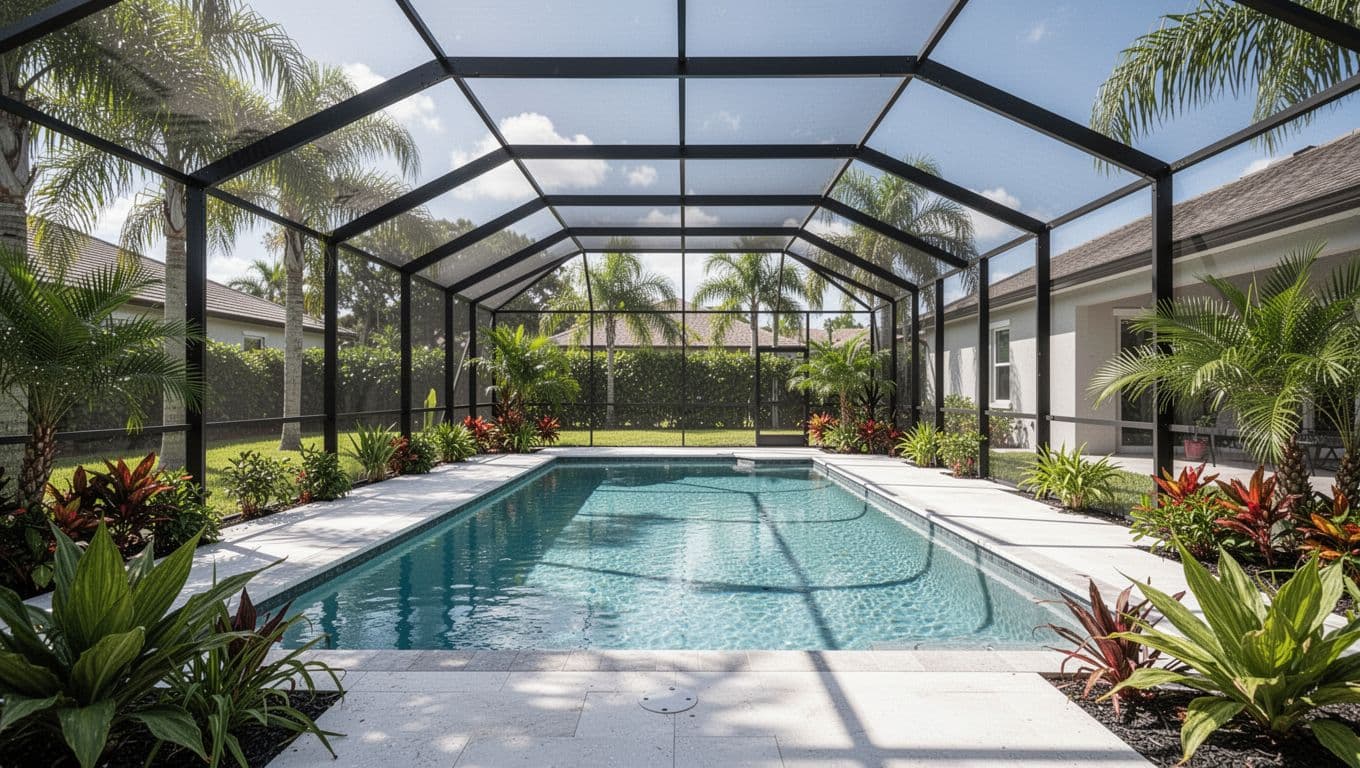
If you're still weighing the value of enclosing a pool here, the benefits of pool screen enclosures in Cape Coral go beyond bug control. They also cut down on debris, help with privacy, and make the pool easier to enjoy year-round.
In other words, local conditions push many homeowners toward tighter mesh. Still, standard screen remains a solid choice when bug pressure is lighter and the open feel matters more.
Visibility, airflow, and comfort around the pool
This is where many homeowners make their final call. A pool cage should protect the space, but it should still feel like part of the backyard.
Standard screen usually wins on openness. It gives you a cleaner view of the yard, better airflow, and a more airy feel on hot days. If your pool area gets good movement from the breeze, that can make a real difference.
No-see-um mesh gives up a little of that openness. The view is still good, but the tighter weave is easier to notice, especially when the sun hits it at an angle. Some homeowners don't mind that at all. Others notice it every time they look across the pool.
If you use your pool mostly in the evening, bug control matters more than an ultra-open view.
That trade-off becomes more obvious near water. A screened lanai that feels perfect in the afternoon can feel less enjoyable once the bugs come out. On the other hand, if you like clear sightlines to the canal, the standard mesh may be the better fit.
Airflow matters too. A denser screen can hold a little more heat in still weather. That doesn't make the space uncomfortable by itself, but it can change how the enclosure feels on windless summer days. Good design helps, yet the mesh still plays a role.
Cost, cleaning, and long-term upkeep
Price often gets attention first, and that's fair. No-see-um mesh usually costs more than standard screen because the material is denser and installation can take a bit more care. For some homeowners, the extra cost is easy to justify. For others, it pushes the project out of reach.
That said, price alone doesn't tell the whole story. If tiny insects are making your pool area hard to use, the lower-cost option can end up feeling expensive in the long run. You may save money upfront, but still avoid the space at dusk.
Cleaning is another factor. Standard screen is easier to hose off and often looks more open after a rinse. No-see-um mesh can catch more dust and pollen, so it may need a little more attention during dry spells. That isn't a deal-breaker, but it is part of real ownership.
If your enclosure needs more than a mesh swap, screen enclosure options and rescreens can help you compare materials before you commit. That's useful when the frame is aging, the hardware shows corrosion, or the old screen has been patched more than once.
For Cape Coral homes, the smartest approach is to look at the whole enclosure, not just the mesh. A screen that fits the climate, the frame, and your habits will hold up better and feel better to live with.
Which screen fits your yard and budget?
A few simple rules help narrow it down fast.
- Choose standard screen if you want the widest view, the most airflow, and your yard gets only light insect pressure.
- Choose no-see-um screen if you live near canals, ponds, mangroves, or other water features where tiny bugs show up often.
- Choose no-see-um screen if you use your pool area after sunset and want stronger protection without constant bug spray.
- Choose standard screen if budget matters most and the insect problem is more annoying than severe.
Your daily routine matters as much as your location. Some homeowners care most about a clear view of the water. Others care more about eating dinner outside without getting bitten. The right answer is the one that matches how you use the space.
If you're comparing options for your own pool cage, Get a Free Estimate and ask for an onsite look at your view, wind exposure, and insect pressure.
Conclusion
Cape Coral homes need pool screens that work with the local environment, not against it. Standard screen gives you a lighter, more open feel. No-see-um mesh gives you stronger protection when tiny biting insects are the main problem.
For homes near canals or water, no-see-um often makes the most sense. For bigger views, better airflow, and a tighter budget, standard screen can be the better fit. The right choice is the one that keeps the bugs out without making your backyard feel shut in.