The spa you choose can change how a new pool feels before anyone gets in the water. A raised spa vs flush spa decision affects the look, the budget, the build, and the way the space works at night.
A raised spa adds height and drama. A flush spa keeps the whole backyard calm and level. If you're planning a new pool, the right choice depends on your lot, your house style, and how you want the spa to feel every day.
Raised Spa vs Flush Spa at a Glance
Start with the biggest differences before you get lost in finish samples and tile swatches.
| Factor | Raised Spa | Flush Spa |
|---|---|---|
| Visual style | Strong focal point with height and shadow | Smooth, low-profile, blends into the deck |
| Budget | Usually higher because of extra structure and finish work | Often simpler if the deck and shell share one level |
| Site grading | Helpful when the yard has elevation changes | Best when the patio, pool, and spa sit on one plane |
| Coping and edges | Creates a bold frame around the spa | Coping can feel continuous and subtle |
| Waterline visibility | Easy to see, which adds contrast | Less obvious, so the spa blends more |
| Seating feel | More enclosed and defined | Open, easy to step into from the deck |
| Heating | Often warms faster because it usually holds less water | Can lose heat a bit faster if it sits in open air |
| Best fit | Statement designs and resort-style backyards | Clean, modern, and quiet layouts |
If you want the spa to read as a feature, the raised option usually wins. If you want it to blend into the pool, the flush version feels softer and more unified.
A raised spa asks for attention. A flush spa asks for restraint.
Why a Raised Spa Changes the Backyard Feel
A raised spa gives the backyard a clear focal point. The extra height pulls the eye in and separates the spa from the pool in a way you can see from the lanai, the kitchen window, or under a screen enclosure.
That separation can help when the yard has a slope or the patio sits at a different level than the pool. Instead of forcing the whole design to flatten out, the spa can use the change in grade and turn it into part of the plan. In a custom build, that often makes the whole space feel more intentional.
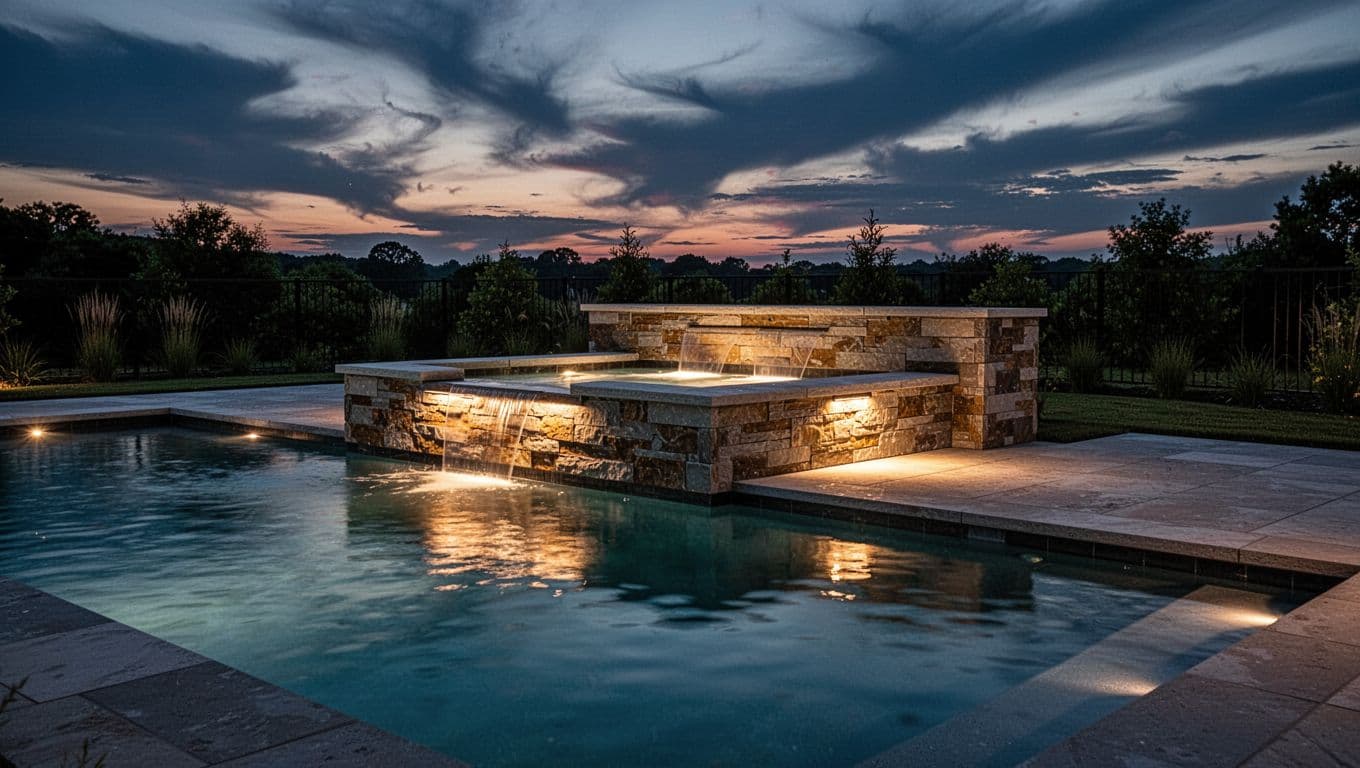
Raised spas also give you more room for a stronger finish. Wider coping, stacked stone, or tile bands stand out better when the spa has height. The edge becomes part frame, part feature, which is why this style often appears in custom gunite pool design ideas where the spa is meant to be seen from across the yard.
There's a practical side too. A raised spa often feels warmer faster because it usually holds less water. A spillover adds sound and movement, which many homeowners like on a quiet evening. Still, the tradeoff is real. You're building more structure, finishing more surfaces, and asking the spa to take center stage.
If you want the spa to feel like a destination, raised is a strong choice. If you want it to disappear into the background, it may feel too bold.
Why a Flush Spa Feels More Integrated
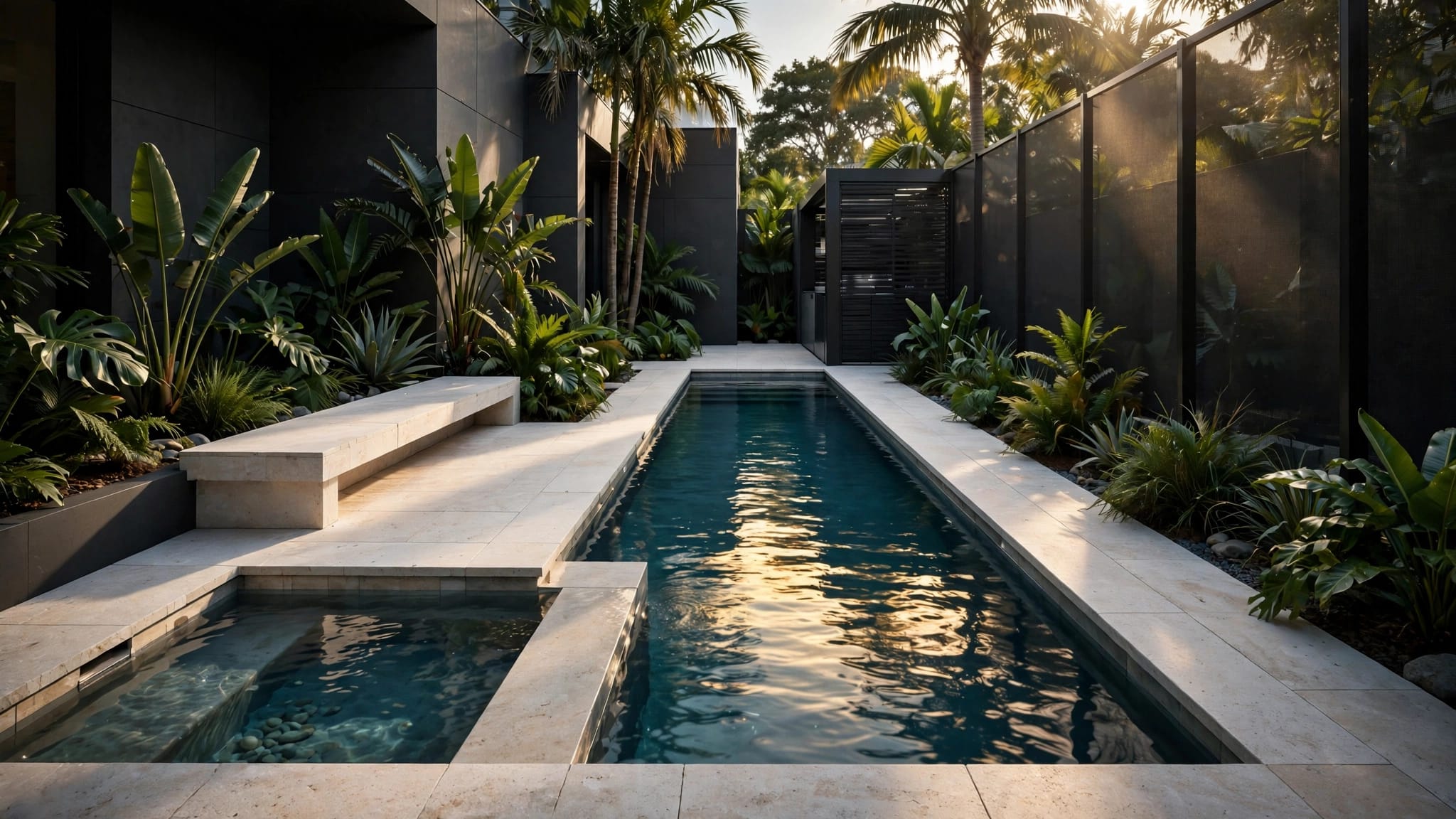
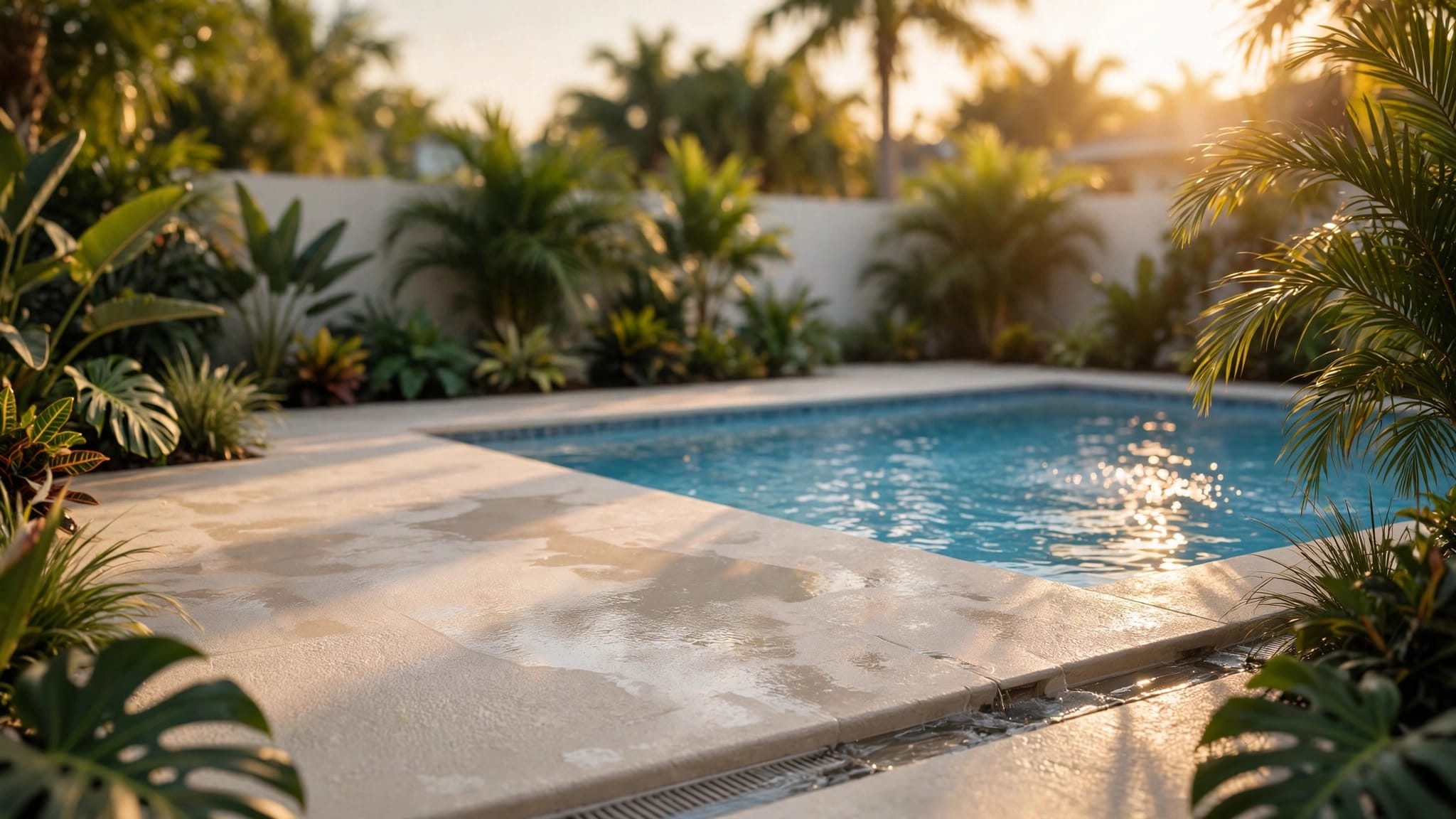
A flush spa sits level with the deck and pool, so the backyard reads as one surface. That low profile feels calm, especially in homes with straight roof lines, modern furniture, or a simple patio layout.
The waterline is less obvious, and the coping can run in a clean band around both the pool and the spa. That makes the whole design feel quieter. It also helps a smaller yard feel bigger, because the eye doesn't stop at a tall spa wall.
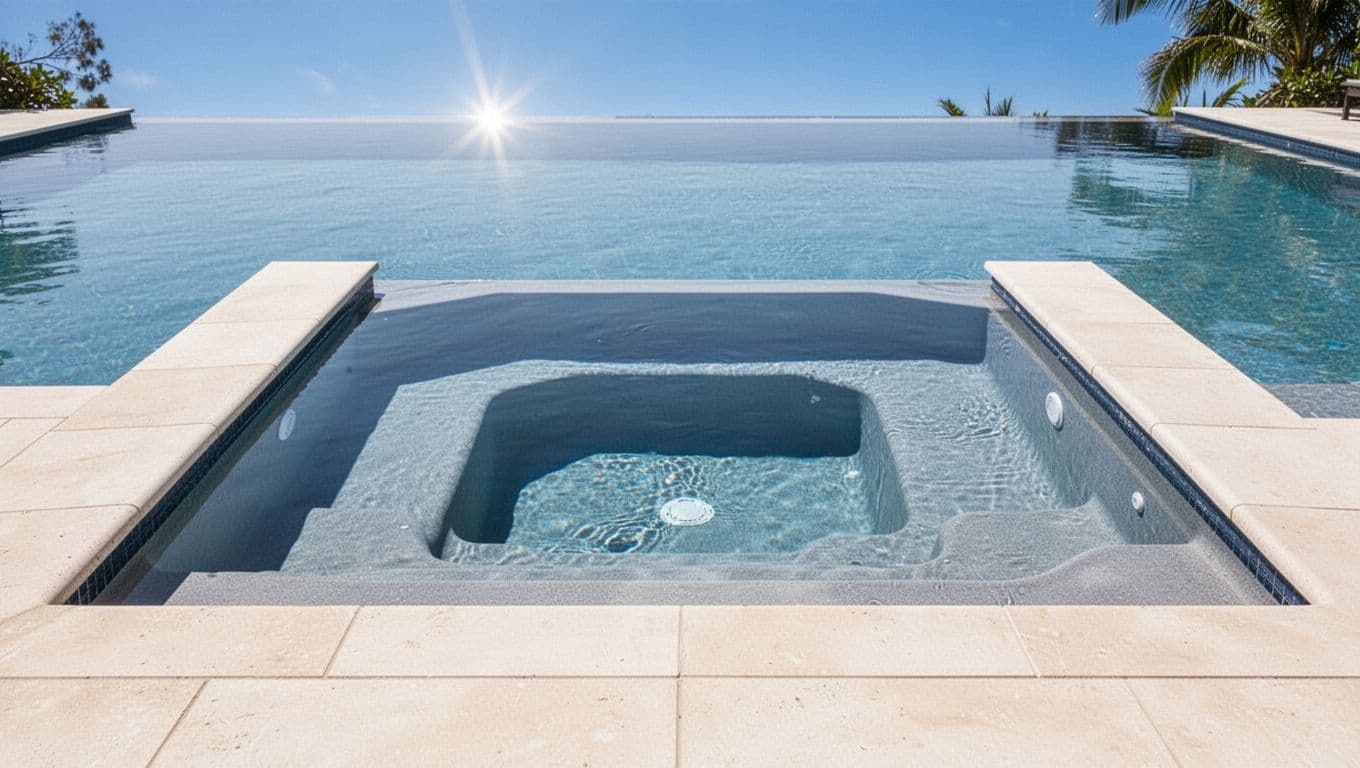
A flush spa works well when the pool deck, patio, and lanai already line up. It also fits nicely when you want the spa to feel like part of the water feature instead of a separate object. In many new builds, that smooth transition is the whole point.
The tradeoff is that flush spas are less dramatic. You lose the strong visual break and often the classic spillover effect. So the rest of the design has to carry more weight. Lighting, tile color, coping choice, and plant placement matter more because the spa itself is subtle.
If you want a spa that feels easy on the eye and easy on the feet, flush is hard to beat. If you want a bold nighttime focal point, it may feel too quiet.
The Design Details That Should Drive the Choice
The right answer usually shows up when you line up the practical details. Budget, elevation, coping, and daily use tell you more than a mood board does.
Budget and build complexity
Raised spas usually cost more because the builder is creating vertical structure, extra finish surfaces, and more detailed plumbing and waterproofing work. That extra framing also means more labor at the coping line and around the tile band.
Flush spas can be simpler when the pool shell, spa shell, and deck already sit at one level. Even so, the grading around them still needs care. A clean flush build depends on good drainage and tight layout work.
If cost is part of the decision, bring it into the conversation early. Get a Free Estimate before the design gets too far along, so the spa style is priced with the pool instead of added later.
Elevation, coping, and deck flow
Elevation changes are where raised spas often shine. They can turn a slope into a feature and create a clear border between spa, pool, and deck. That makes the backyard feel layered, which works well when you want the spa to stand apart.
Flush spas are better when you want the coping to feel continuous. The transition from deck to water stays smooth, and the whole space reads as one level plane. That kind of flow fits homes with clean lines and simple outdoor furniture.
If you're still sorting out the overall shape, choosing between freeform and geometric pool shapes is a useful next step. Curves usually pair better with a softer spa form, while straight lines tend to support a more structured look.
Seating, heating, and daily use
Raised spas often feel more enclosed. That can make the space feel private and tucked in, which many homeowners like on cooler nights. The higher wall also gives the spa its own identity, so it feels like a separate room within the backyard.
Flush spas feel easier to enter from the deck. That matters if you want a layout that works for guests of different ages or if you simply like an open, relaxed feel. The experience is less formal and more connected to the rest of the pool area.
Heating is another factor. Smaller water volume often warms faster, so a raised spa can feel ready sooner. A flush spa may lose heat a little faster if it sits in open air or catches more wind. Still, heater size, cover use, and exposure matter more than the style alone.
How the Spa Choice Shapes the Whole Pool Aesthetic
A spa is never just a spa in a new pool design. It changes the balance of the whole yard.
A raised spa adds contrast. It gives the pool a strong focal point and can make a large backyard feel more composed. A flush spa adds calm. It lets the water, deck, and coping blend together so the space feels wider and less busy.
That is why the home itself matters. A raised spa can look right with a home that has bold trim, a layered roofline, or a more resort-style backyard. A flush spa tends to fit homes that lean modern, simple, or coastal. The best choice is the one that supports the architecture instead of fighting it.
The site matters too. If the yard has grade changes, a raised spa can solve a problem and become a design feature. If the space is already flat and open, a flush spa can keep the composition clean.
Conclusion
The best spa choice comes down to what you want the backyard to say. A raised spa gives you height, contrast, and a clear focal point. A flush spa gives you a smoother, quieter look that blends into the pool.
If your new pool needs more structure and a strong nighttime presence, raised usually fits. If you want a clean surface, easy deck flow, and a softer visual line, flush often feels right.
The smartest choice is the one that fits your lot, your house, and the way you plan to use the space. When those three line up, the spa looks right from the first day and still feels right years later.