A new pool changes how your whole backyard works. If the space is messy or crowded when the crew arrives, the project starts with delays and avoidable damage.
That matters even more in Cape Coral, where backyards often include irrigation, tropical plants, screen areas, and tight access points. A little prep now makes pool construction in Cape Coral smoother, cleaner, and easier on everyone involved.
The best part is that most of the prep is simple. You can do it yourself before the first truck rolls up.
Clear the yard and open a clean access path
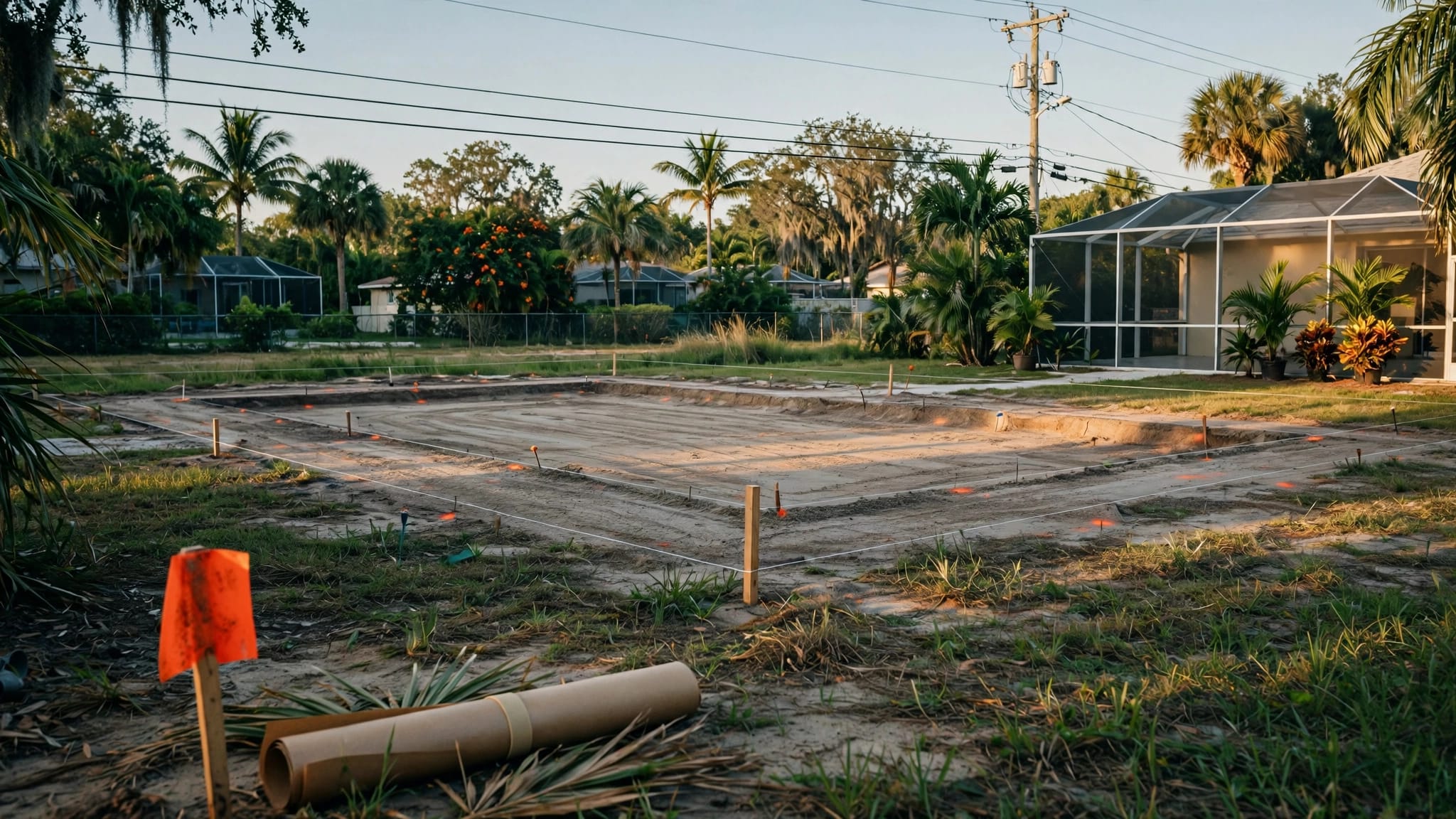
Start with the obvious jobs first. Remove anything that sits in the build zone or blocks the way to it.
That means patio furniture, grills, planters, toys, outdoor storage bins, decorative pieces, and anything else crews would have to move around. If you have a narrow gate or side yard, measure it before construction day. Trucks and equipment need room to pass, and a tight path can slow down the job fast.
Also, think about where workers will walk from the driveway to the backyard. A clear path helps protect your lawn, keeps tools out of the way, and cuts down on accidental damage to hardscape or landscaping.
If you want a simple starting point, walk the route yourself and ask, "Could a wheelbarrow, hose, or small machine move through here without trouble?" If the answer is no, clear more space.
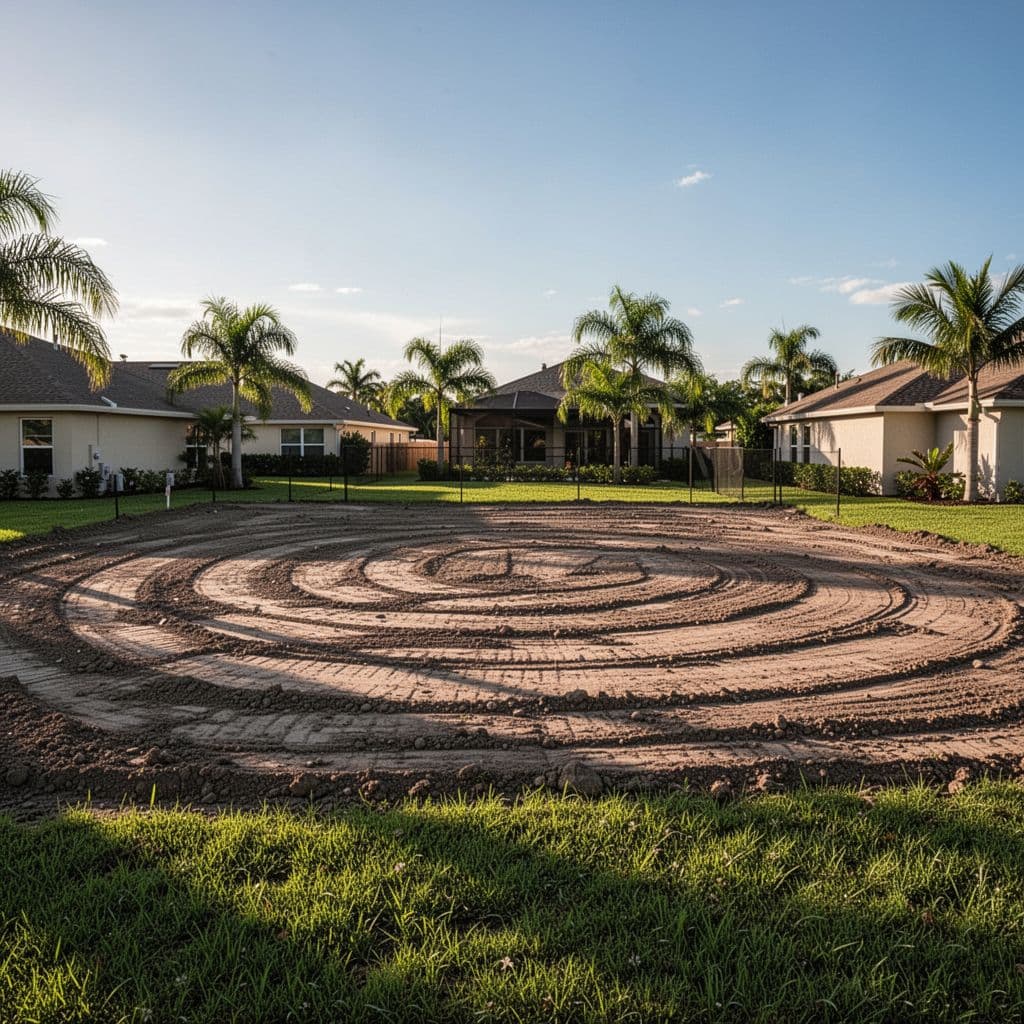
A clean work zone gives the crew a better first day and helps you spot problems before digging begins.
Map out sprinklers, utilities, and drainage
Before anyone starts digging, review everything underground or close to the surface. Sprinkler lines, valve boxes, low-voltage lighting, cable runs, and drainage points can all affect the build.
If your yard holds water after rain, point that out early. Cape Coral storms can leave soft spots and muddy tracks, so it helps to know where the wet areas are before the equipment arrives.
The best way to handle this is with a quick walk-through with your builder. If you're still comparing ideas or timing, preparing for your Cape Coral pool estimate is a good place to start because it helps you think through the yard before the project begins.
Here's a simple way to review the site:
| Item | Why it matters | What you should do |
|---|---|---|
| Sprinkler heads and valves | They can get broken during excavation | Mark them and tell your builder where they are |
| Buried utility runs | Crews need to avoid them while working | Point out any known lines or service areas |
| Drainage low spots | They affect where water collects after rain | Show the builder where the yard stays wet |
| Outdoor lighting and wiring | These can be damaged by heavy equipment | Identify the fixtures and control boxes |
A short site review can save time later. It also gives your builder a clearer picture of what needs protection before the first shovel hits the ground.
The best prep work is the kind that keeps the crew from stopping to move something you could have handled the day before.
Protect plants and outdoor features you want to keep
Cape Coral yards often have plants people care about, especially palms, hedges, flowering beds, and potted tropicals. If something should stay, mark it now.
Small planters are easy to move. Larger shrubs, trees, or built-in landscape features need a plan. Some plants may need temporary fencing or a protective barrier. Others may need to be transplanted before work starts. Talk about those details early so there are no surprises once the heavy equipment arrives.
It also helps to think beyond plants. Landscape lighting, decorative edging, birdbaths, fence sections, pet areas, and even a favorite paver walkway can be in the way. If you want to keep them, show your builder where they are and ask what should come out first.
A quick rule works well here. If you would be upset to see it chipped, buried, or covered in dust, move it or protect it before construction begins. That small step saves time and prevents a lot of frustration.
If your backyard has a screen enclosure or a future enclosure planned, keep that area in the conversation too. The more your builder knows about what stays, the cleaner the finished layout will be.
Prepare for noise, dust, and delivery traffic
Pool work is not quiet. There will be digging, compacting, cutting, hauling, and regular deliveries. Some days feel busy from morning until afternoon.
That means your home routine may need a small reset. Close windows near the work zone. Move vehicles if the driveway will be used by trucks. Keep pets indoors or in a safe area away from the site. If you work from home, plan ahead for louder parts of the project.
Dust is another issue people underestimate. A dry Cape Coral day can carry it farther than expected, and a little wind can move it across patios, screens, and furniture. Cover what you want to keep clean, and put away cushions or fabrics before the first workday.
This is also the time to think about neighbors. A quick heads-up about noise or truck traffic can prevent tension later. Most people are more patient when they know what is coming.
If you want a better sense of how long the active build phase may last, the local gunite pool construction timeline can help you plan around the mess and the movement.
Coordinate the build details with your contractor
Once the yard is cleared, the next step is a good walk-through with your builder. This is where small details get settled before they turn into delays.
Talk about where crews will park, where materials will be staged, and where debris will go. Ask what needs to stay open each day. If the pool, equipment pad, or enclosure area shares space with a side yard or tight corner, make that clear early.
This is also the right time to confirm any special access needs. A locked gate, a narrow side yard, a fragile planter, or a buried line can all change how the crew works. Good communication now keeps the job moving later.
If you're comparing options or want to see how a finished project is handled, new pool construction shows what a full build process looks like from the start. It can help you picture how your own yard will be used once construction begins.
If you want to get the planning conversation started, Get a Free Estimate and schedule an onsite visit before you move too much around. That visit often makes the rest of the prep easier.
Use this final pre-build checklist
Before the crew shows up, run through one last check. Keep it simple and practical.
- Remove patio furniture, grills, toys, and storage items from the work area.
- Clear a path from the driveway or gate to the backyard.
- Mark sprinkler heads, valves, lighting, and any known utility features.
- Protect or move plants, pots, and garden items you want to keep.
- Cover outdoor furniture and items that could pick up dust.
- Tell neighbors about delivery days and louder work.
- Keep children and pets away from the site once work starts.
- Save a few photos of your yard in case you want to compare the before-and-after changes later.
That list does not take long, but it makes a real difference. It helps the crew get started faster and keeps your property better protected.
Conclusion
A smooth pool project starts before the first hole is dug. When you clear the access path, protect what matters, and talk through utilities and yard details ahead of time, the whole job feels more organized.
That's the real value of good prep for pool construction in Cape Coral . You spend a little time now, and you avoid a lot of confusion once equipment arrives.