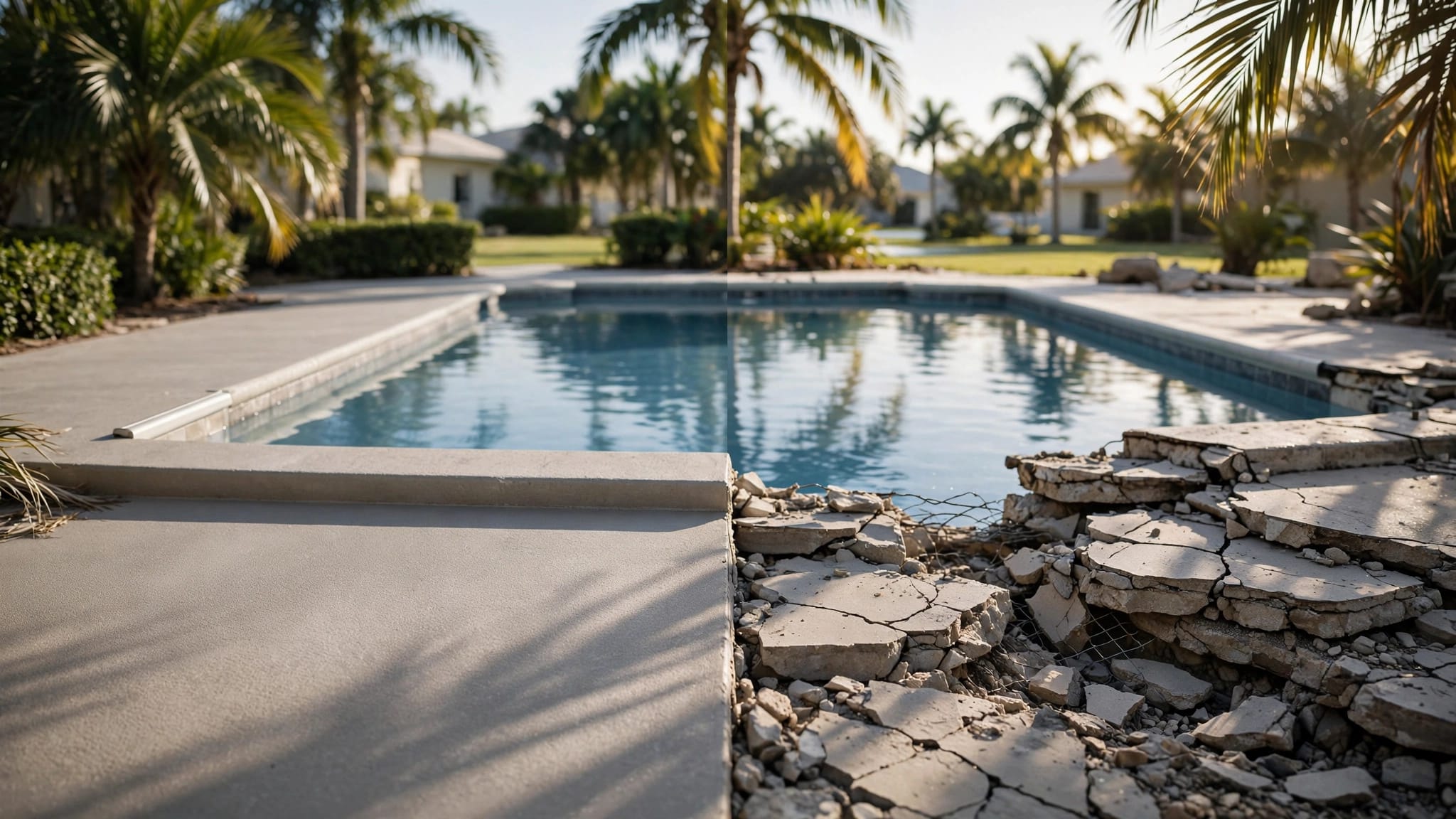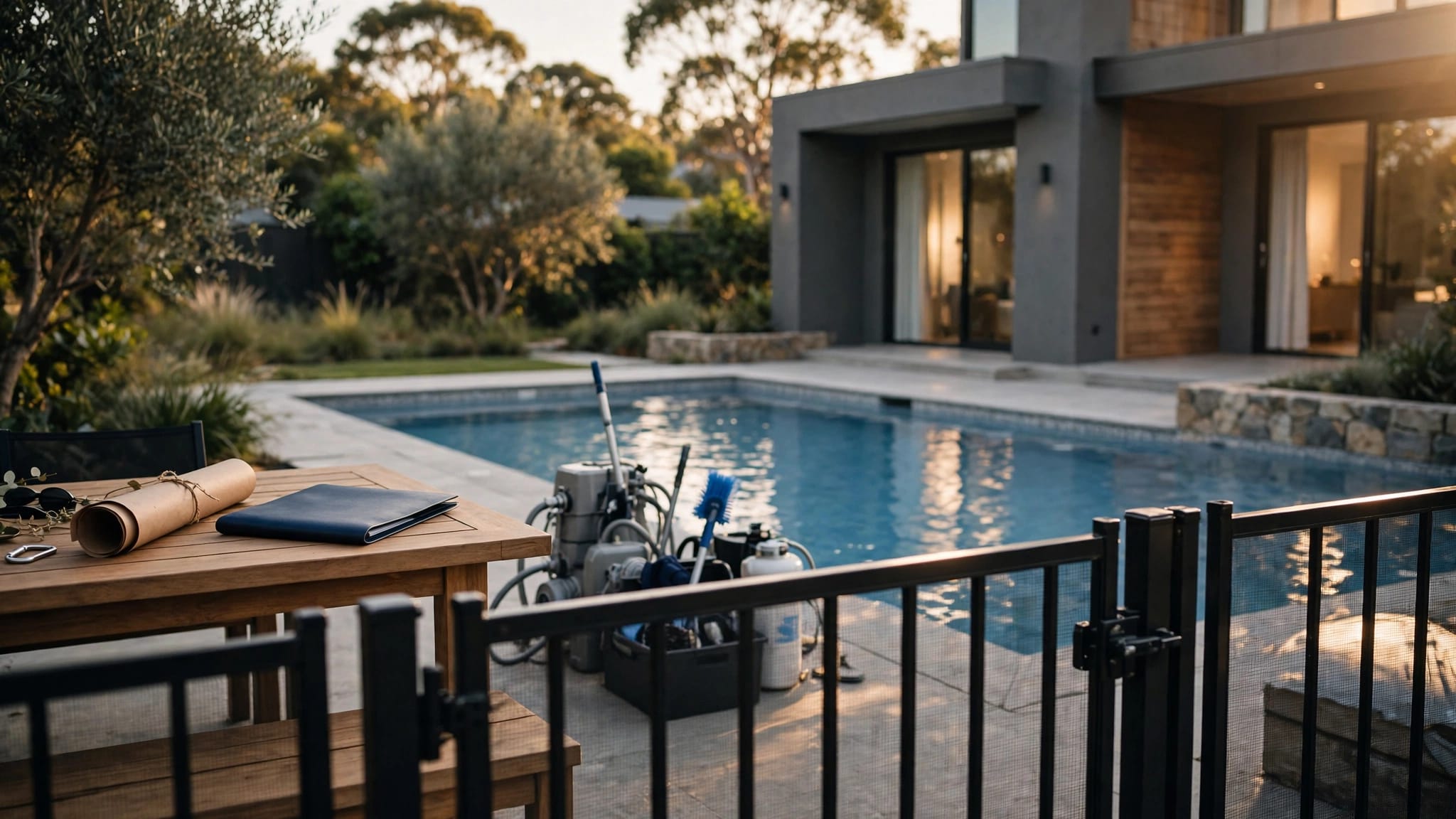
A pool can often sit closer to your house than people expect, but the real limit usually comes from your lot lines , not the back wall of the home. In Cape Coral, that means the answer depends on the survey, the zoning district, and which part of the project you are measuring.
For a new in-ground pool, a small layout mistake can slow down permits fast. The cape coral pool setback is one of the first things to check, because the pool shell, decking, screen enclosure, and equipment pad may all affect the final layout in different ways.
What the Cape Coral pool setback really controls
For many single-family homes in Cape Coral, the common rear setback for a pool or screened cage is 10 feet from the rear property line . The house itself is often set farther back, around 20 feet from the rear lot line . On many lots, that leaves a workable space between the home and the pool.
That said, there is no single one-size-fits-all answer. The lot shape, zoning district, and whether the property is on a corner or waterfront can change the layout. The setback is also measured from the property line , not from the curb, sidewalk, or the edge of the grass.
Here is a simple way to think about the parts of the project:
| Project part | What usually matters | Why it changes the layout |
|---|---|---|
| Pool shell | Outer edge of the structure | This is the core footprint |
| Water edge | Inside edge of the finished pool | Water does not set the code line, but the shell does |
| Decking | Patio or coping around the pool | It can push the usable footprint farther out |
| Screen enclosure | Outer frame of the cage | It may need the same or a different setback than the pool |
| Equipment pad | Pumps, filters, heater, and controls | It needs service space and a good location |
A pool plan can look fine until the cage or deck is added. Then the design suddenly runs out of room. That is why the first sketch should always start with the survey, not the tile sample.
Why the distance matters before you build
Setbacks protect more than a code checklist. They help the pool fit the lot without creating future headaches. If a pool sits too tight to the house or property line, repairs get harder, drainage can become messy, and access for maintenance becomes awkward.
A narrow gap can also affect the way the yard feels. You want enough room for movement, cleaning, and safety, not a backyard that feels boxed in. In a place like Cape Coral, where many homeowners also want a screen enclosure, the extra space matters even more.
The survey controls the layout. A wide-looking yard can still hide easements or other limits that cut into pool space.
The house-to-pool distance is also tied to practical use. A pool that fits the code on paper can still be a poor fit if it leaves no room for a lanai, a grill area, or a repair path around the equipment.
How the pool shell, deck, cage, and equipment pad affect the layout
The pool shell is the base footprint, but it is rarely the whole story. Once you add the coping and decking, the project grows outward. That matters because most homeowners are not only building a pool, they are shaping the whole backyard around it.
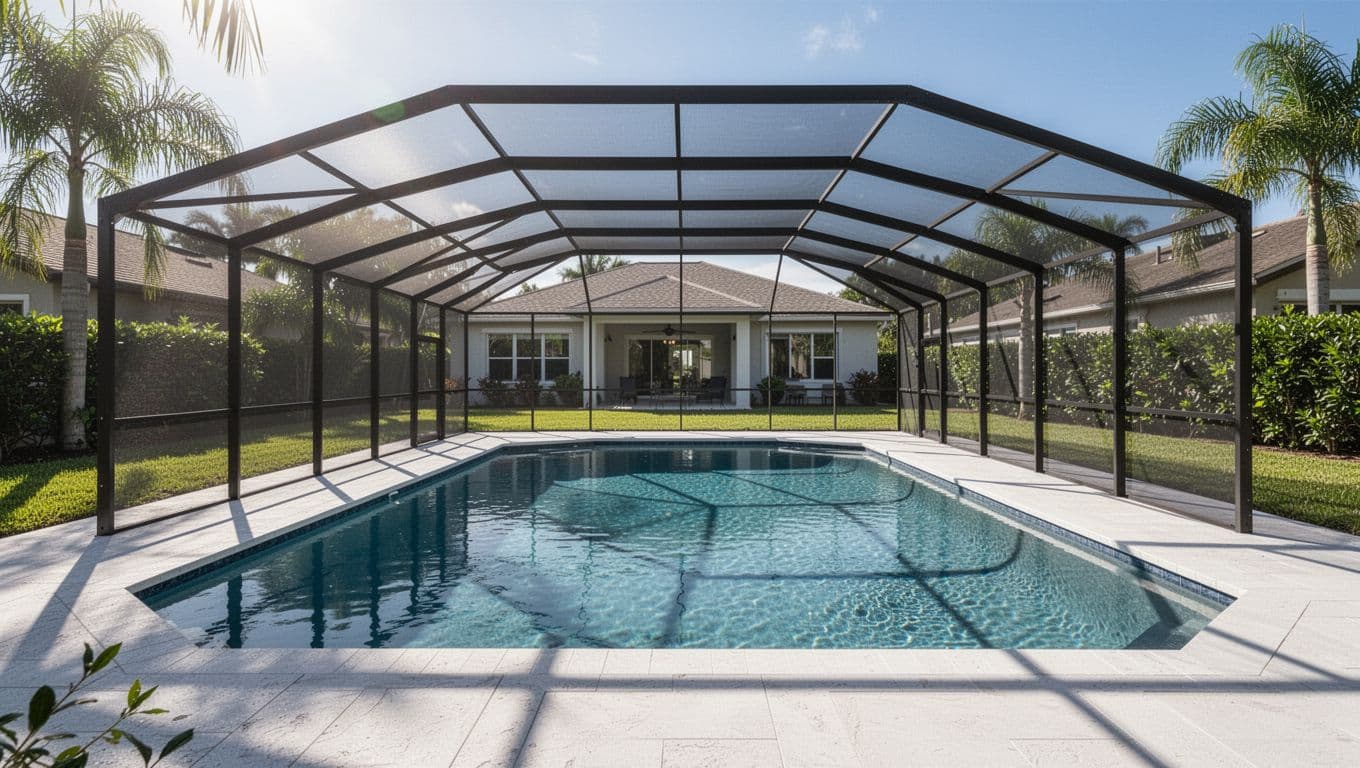
Pool shell and water edge
The shell is the actual structure of the pool. That is the part that gets measured for placement, not the water line alone. A pool can hold water comfortably within the lot, but the shell still has to stay inside the required boundaries.
Decking and patio space
Decking often surprises people. A pool may fit, but the surrounding patio can eat up the last few feet of yard. If you want chairs, space to walk, or room for a table, the deck becomes part of the setback conversation.
Screen enclosure
A screen enclosure is more than a visual feature. In many projects, the cage becomes the outer edge of the whole pool area. That means it can be the piece that decides whether the design passes or needs to be adjusted.
This matters for both new builds and rescreens. A rescreen keeps the same footprint, but a new enclosure or frame change can bring the layout back into review. When that happens, the cage footprint should be checked against the survey again.
Equipment pad
The equipment pad needs its own space, and it should be easy to reach. Filters, pumps, and heaters need service access, and the location should make sense for sound, drainage, and long-term use. Even if the pool shell fits, a poorly placed equipment pad can create a bad layout later.
If you're planning a new build, custom in-ground pool construction should start with the full site plan, not just the pool shape.
What can change the answer on your lot
Two Cape Coral lots can look almost the same and still have different setback limits. That is why a neighbor's pool design is not a safe guide for your home. The survey and permit review matter more than what works next door.
A few common factors can tighten the available space:
- Corner lots can have more than one street-facing side, which changes the usable yard.
- Waterfront lots may have extra setbacks or design limits near canals or easements.
- Drainage easements can cut through a yard even when the grass looks open.
- Existing additions like lanais or patios can reduce the room between the house and the pool.
- Fence lines do not replace property lines, so a fence can mislead homeowners about where the real boundary sits.
A lot may also have utility access points, grading issues, or drainage paths that affect where the pool can go. The best layouts work with those features instead of fighting them.
What to confirm before you finalize the design
Before you sign off on a pool plan, check the details that can change the final permit. A few extra minutes here can save weeks later.
Start with these items:
- A current property survey with the lot lines and easements marked.
- The planned size of the shell, decking, and enclosure .
- The location of the equipment pad and how easy it will be to service.
- Whether the project includes a screen enclosure now or later .
- The permit rules that apply to your exact zoning and lot type.
It also helps to mark the design directly on the survey, not just on a rough sketch. That way you can see how much room is left between the pool and the house, and whether the cage or patio pushes past the line.
If you're ready to compare layout options, ask for an onsite review before the design gets locked in. Get a Free Estimate and have the lot checked against the pool plan before permit drawings move forward.
Conclusion
So, how close can a pool be to your house in Cape Coral? On many single-family lots, the real issue is not a fixed house-to-pool distance. It is how the pool, deck, cage, and equipment fit within the lot setbacks and easements.
The safest path is simple. Use the survey, measure the full project footprint, and confirm the permit rules for your exact lot before you build. That is the difference between a backyard plan that looks good on paper and one that works in real life.