Most Cape Coral homeowners don't need the biggest pool on the block. They need the pool that fits the yard, the cage, and the way they actually live outside.
That makes cape coral pool size less about maxing out square footage and more about balance. You want enough water for swimming, but you also need room for loungers, grilling, and safe movement around the deck. Start there, and the right layout comes into focus.
How to choose the right Cape Coral pool size
A pool can look great on a plan and still feel oversized once the deck and enclosure go in. Recent 2026 local data shows many Cape Coral backyard pools land around 14 by 28 to 16 by 32 feet. That range tends to work because it supports daily use without swallowing the whole yard.
Before you settle on dimensions, think about use first. A quiet pool for two has different needs than a family pool with a sun shelf, shallow play area, and party seating. Also check lot width, home setbacks, lanai depth, and where enclosure doors will go.
This quick comparison helps narrow it down:
| Pool size | Typical dimensions | Best fit for | What to protect around it |
|---|---|---|---|
| Small | 10x16 to 12x24 | Cooling off, lounging, compact yards | A walk path, 2 to 4 loungers, small dining area |
| Medium | 14x28 to 20x30 | Family use, light exercise, entertaining | Lounge zone, modest outdoor kitchen, open deck |
| Large | 20x40 to 30x50 | Laps, big gatherings, resort-style yards | Wide decking, full kitchen, fire feature, larger cage |
For many homes, medium is the sweet spot. It gives you real swim space and still leaves room for outdoor living. In other words, the pool should anchor the backyard, not take it over.
Think of it like furniture in a living room. If one piece eats all the floor space, the whole room feels tight. A well-sized pool should feel the same way, comfortable, useful, and easy to move around.
Small, medium, and large pool layouts that work in Cape Coral
Small pool layouts for tighter backyards
If your lot is compact, a 12 by 24 or 10 by 16 pool often works better than a wide freeform shape. Straight lines usually waste less space, so you keep more deck for chairs and traffic flow. On smaller pools, place the sun shelf at one end or along the house side so it doesn't steal the main swim area.
Try to keep a comfortable walking path around the busiest edges. Near steps, doors, and seating, 3 to 4 feet of clear deck often feels right for daily use. Small pools make sense when the goal is relaxation, easy upkeep, and keeping lawn or patio space.
Medium pool layouts for everyday living
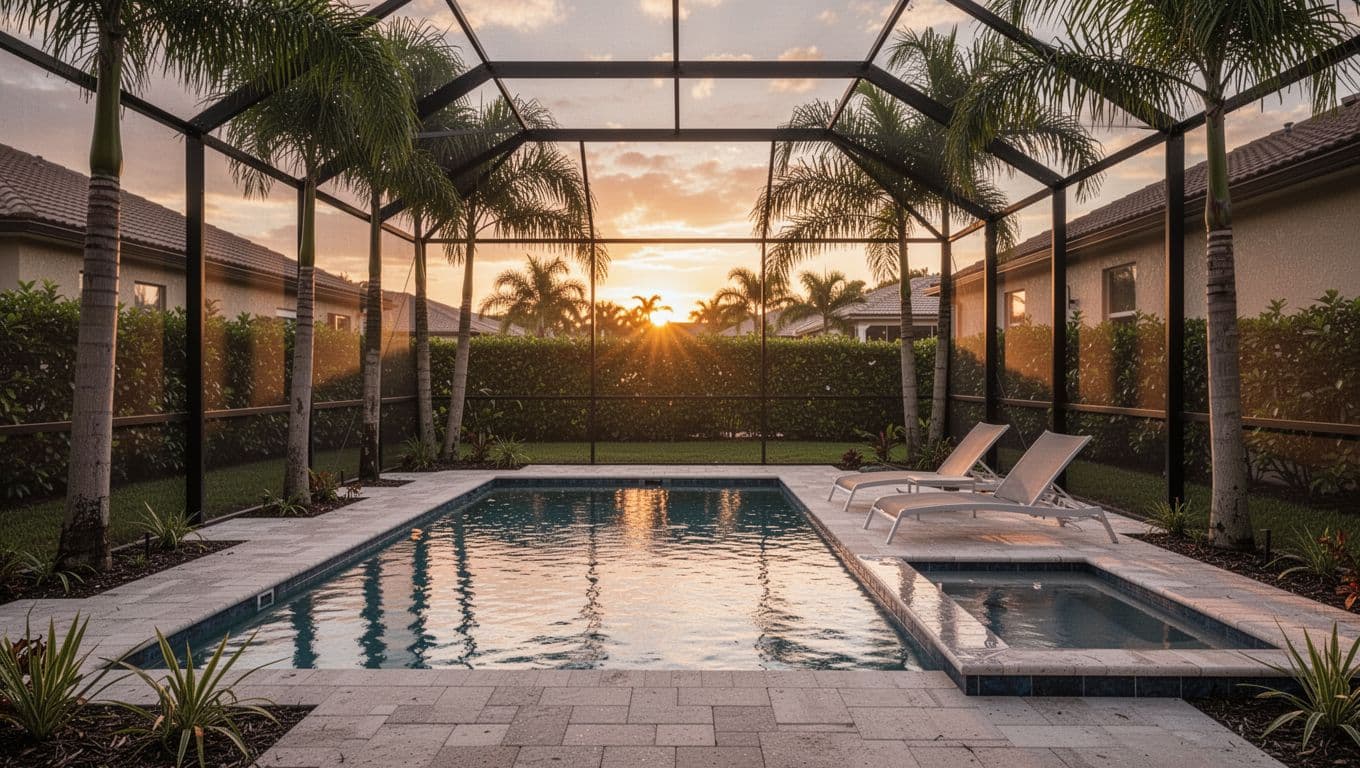
A 14 by 30, 15 by 30, or 16 by 32 pool fits many Florida backyards well. It gives kids room to play, adults room to float, and enough deck for a spa, table set, or small outdoor kitchen. This is also the range that works well with a screen enclosure without making the backyard feel boxed in.
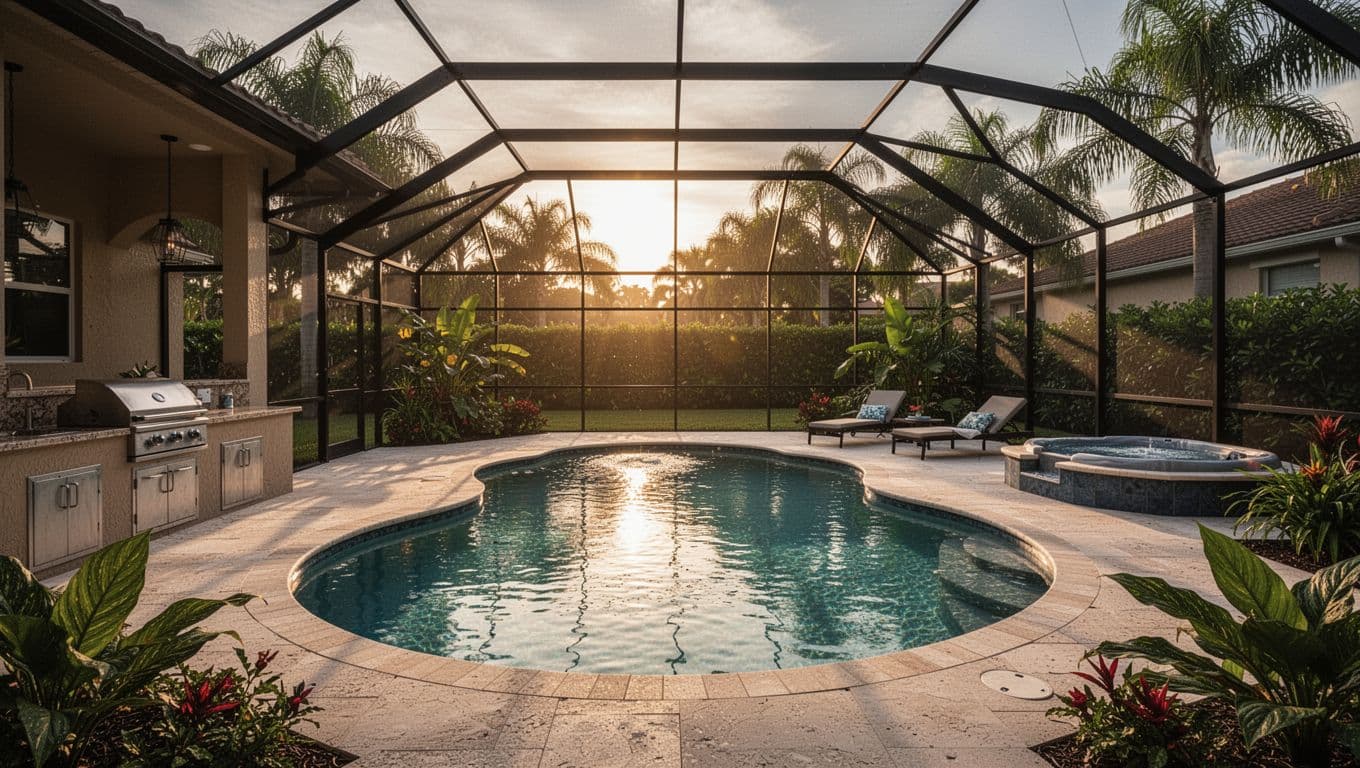
Geometric pools usually make planning easier on narrower lots. Freeform shapes can look softer in tropical settings, especially with palms and curved planting beds. If you want more ideas for shapes and features, take a look at custom gunite pool designs for Cape Coral backyards.
Large pool layouts for resort-style yards
A 20 by 40 pool or larger creates a big visual impact, but it also changes the entire yard plan. Larger pools need more decking, a bigger enclosure footprint, and wider furniture zones if you want the space to feel open. They work best on larger lots or when you're willing to give up more lawn.
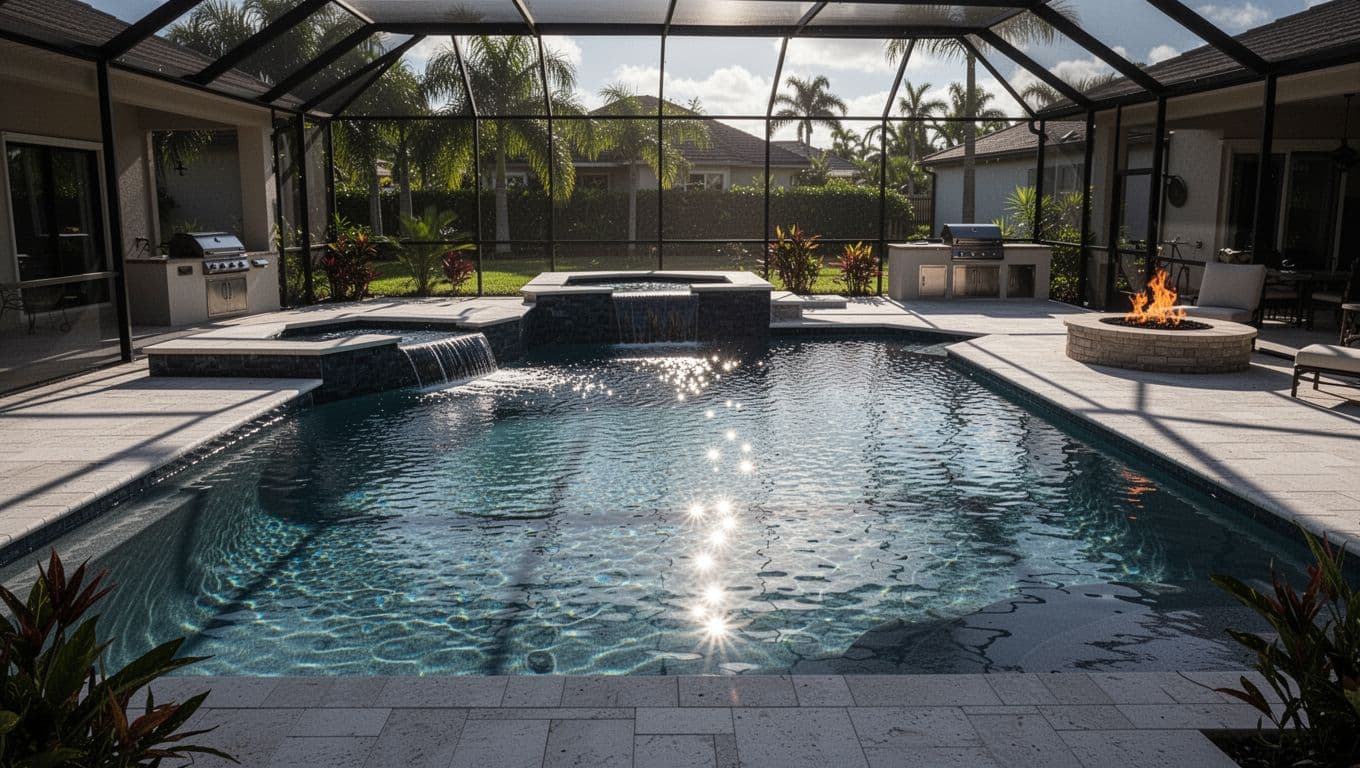
Large layouts make sense when entertaining is the main goal or when lap swimming matters. Still, bigger isn't always better. Once you add loungers, planters, a dining area, and cage doors, a slightly smaller pool often feels better in real life.
The space around the pool matters as much as the water
Deck space disappears fast. A couple of chaise lounges, a dining table, and an outdoor kitchen can eat up more room than most homeowners expect. That's why pool size and backyard function should be planned together.
The best pool plans leave room to walk, sit, cook, and still enjoy the water.
Sun shelves are a common space trade-off. They're useful, especially for kids and lounging, but they take up prime square footage. On a small pool, a compact shelf makes more sense than a full-width ledge. On a medium pool, a shelf across one end usually works without hurting swim space too much.
Then there's the cage. A screen enclosure isn't only overhead coverage. It affects posts, doors, traffic lanes, and sightlines. If you're updating an older backyard, pool renovations and resurfacing can be a smart time to rethink the shelf, steps, and deck flow.
Safe walking clearance matters, too. Leave open deck near entry steps, around the shallow end, and beside seating areas so people aren't squeezing past chairs or wet edges. That extra breathing room is often what makes a backyard feel calm instead of cramped.
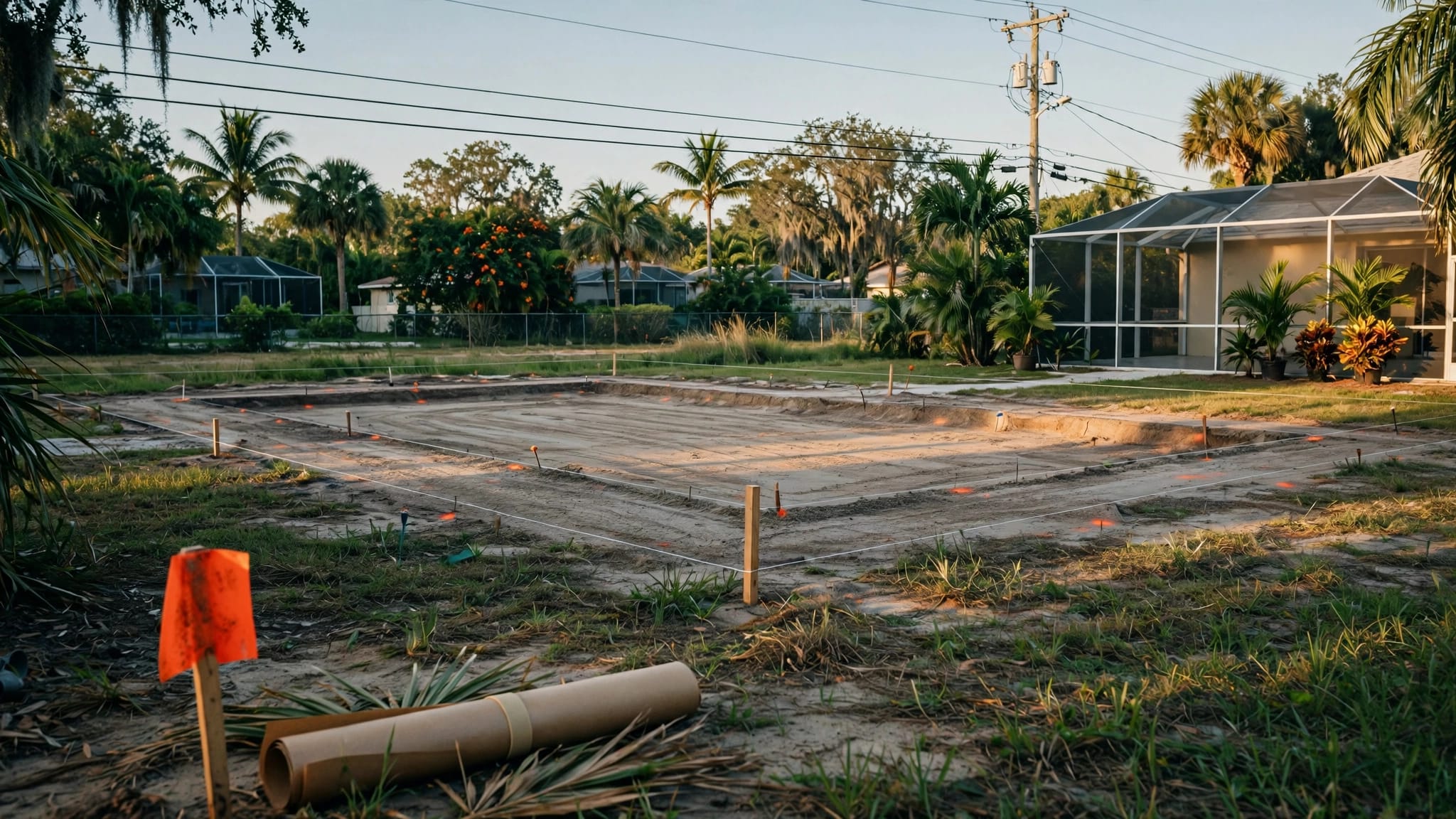
Confirm lot limits before you lock the design
Before final design decisions, confirm setbacks, easements, drainage, utilities, and permit steps for your exact property. Current local guidance shows pool permits are required in Cape Coral, and setbacks often vary by lot and zoning. Many homes see distances in the 5 to 10 foot range from property lines, but that is not universal.
Waterfront lots can add another layer, especially if you want to keep canal views with a clear-view enclosure. Because every site is different, measured planning beats guesswork. If you're ready to map options on your property, explore new pool construction services or Get a Free Estimate for an onsite consultation.
The best pool size feels balanced
The right cape coral pool size isn't the biggest shape that fits on paper. It's the one that matches how you use the yard, then leaves room for lounging, cooking, shade, and easy movement.
A balanced plan usually beats a maxed-out one. When the water, deck, and enclosure all work together, the whole backyard feels better.