After pool resurfacing, expect several days before the pool can be refilled and potentially up to 28 days before you can swim, depending on the finish and startup instructions. To swim safely, wait until the contractor says the surface has cured and the water is ready.
The calendar alone doesn't determine swim time. Brushing and balanced water during startup help the new finish cure properly, so follow your contractor's instructions.
Key takeaways
- Refill time and swim time are separate milestones.
- Plaster, quartz, and pebble finishes may have different startup requirements.
- Brushing and water balancing are part of the curing process, not optional upkeep.
- Follow the resurfacing contractor's specific directions before swimming.
Why the resurfacing schedule isn't the swim schedule
The work ends before curing does
A resurfacing crew may finish applying the new material days before the pool is ready for swimmers. The finish needs time to cure, and the pool must be refilled and started up according to the material's requirements.
The project schedule also depends on the pool and the work involved. Our pool resurfacing estimates and timelines note that most jobs take five to seven days, while complex tile work can extend the project to 10 days. Those figures describe the work, not a guaranteed first swim date.
Refill and full swimming are different milestones
One of our resurfacing guides says the finish needs several days to cure before the pool can be refilled. A separate timeline gives 28 days before full swims. These are different stages, so don't treat the pool's refill date as permission to use it.
The practical answer is to plan for a wait that may extend beyond the construction work. Your contractor's startup instructions determine when swimming is appropriate for your pool.
What to expect with plaster, quartz, and pebble
Each finish has its own startup instructions
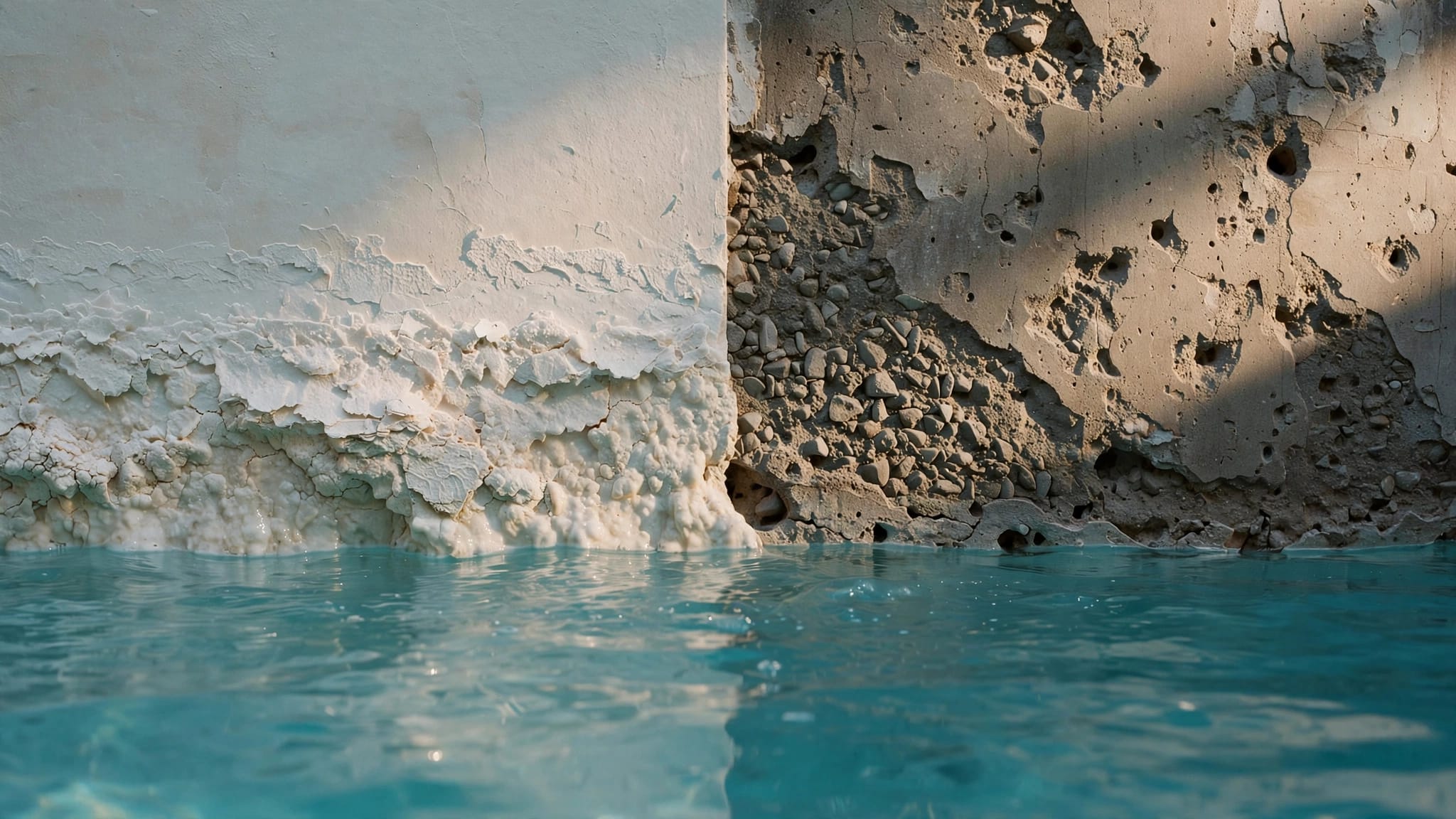
Plaster, quartz, and pebble are common pool interior finishes, but they don't all have an identical startup schedule. Product requirements and the contractor's water-balancing process affect how long the pool should remain closed.
As a planning range, expect several days before refill and allow up to 28 days before full swimming. That range helps set expectations, but it isn't a specific promise for every material. Our page on pool resurfacing signs and process describes the finish options and the need for curing before refill.
Your contractor's instructions set the actual date
Ask for the startup plan before work begins, including when the pool will be filled, how often it needs brushing, and what water monitoring is required. Then follow the instructions for your chosen finish rather than relying on a neighbor's timeline or a general estimate.
If your project includes interior refinishing along with other upgrades, review our professional pool resurfacing services to see what the work can include.
Why startup requires brushing and water balancing
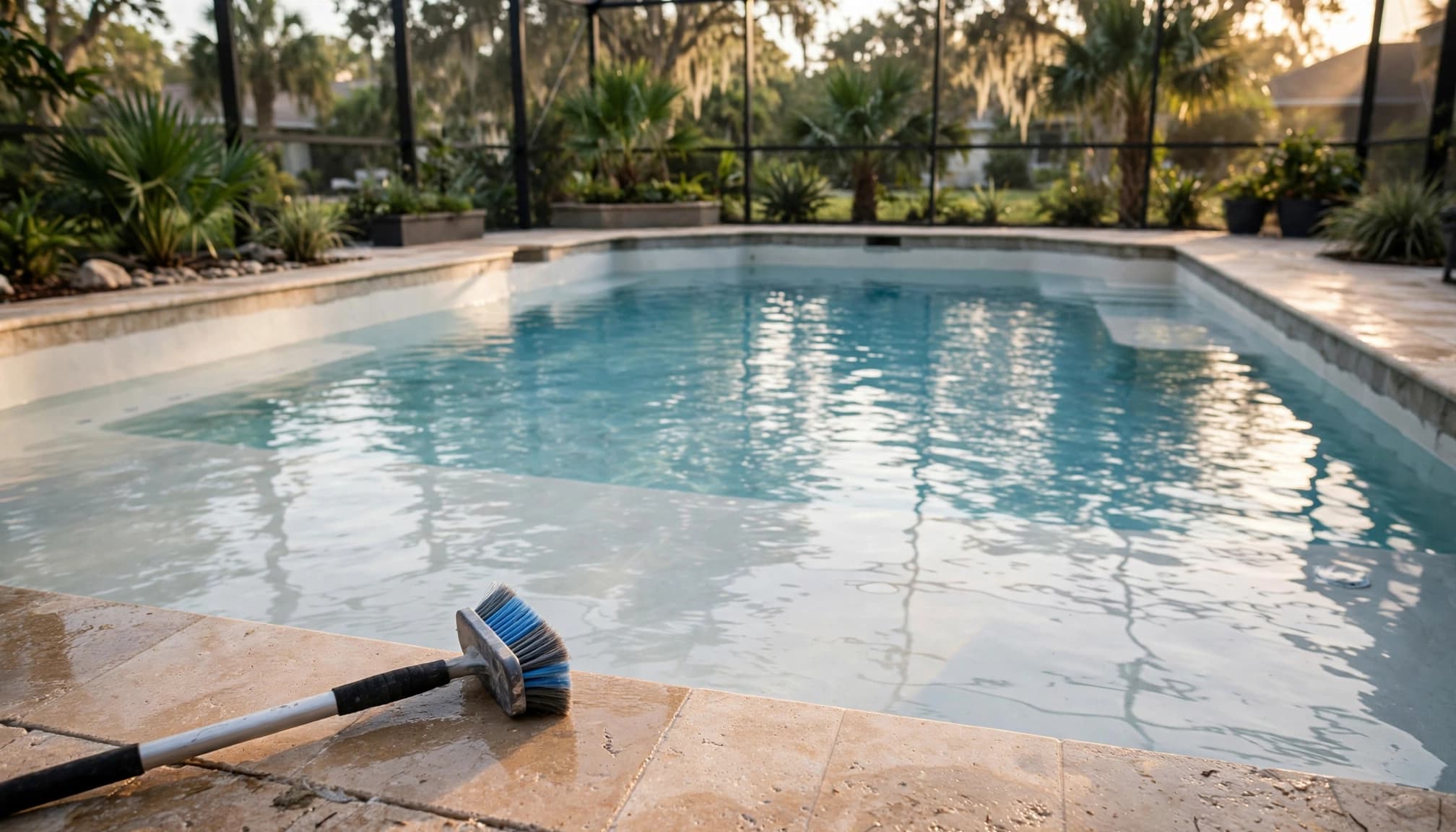
Brushing helps the new surface cure evenly
During startup, brushing helps manage material residue and supports an even cure across the pool interior. The correct brush and schedule depend on the finish, so use the method your contractor specifies. Skipping this step can interfere with how evenly the surface cures.
Water chemistry needs close attention
Newly filled water can change as it interacts with the finish. Monitoring and adjusting the chemistry during startup helps protect the surface while it cures. The contractor's plan should explain what to monitor and when to make adjustments. Don't add chemicals or start swimming based only on clear-looking water.
How to tell when the pool is ready
Wait for your contractor's specific approval, including any required startup period and water-balancing steps. A pool can look inviting while the finish is still curing or the chemistry needs adjustment. Clear water alone doesn't tell you whether the surface and water are ready.
If the pool is part of a planned renovation, schedule around the full startup period, not only the days the crew is on site. For a project consultation and estimate, Get a Free Estimate.
FAQ
Can I swim as soon as the pool is refilled?
No. Refilling is one step in the process, not the same as swim clearance. The finish may still be curing, and the water may need continued brushing and chemistry adjustments.
Is one week always enough?
No. A week may cover some project timelines, but it doesn't guarantee a safe swim date. The finish material and startup process matter, so follow the contractor's instructions for your pool.
Conclusion
Pool resurfacing has two timelines: the construction work and the time needed for curing and startup. Plan for several days before refill and potentially up to 28 days before full swimming, but let the finish requirements and contractor's directions set the date.