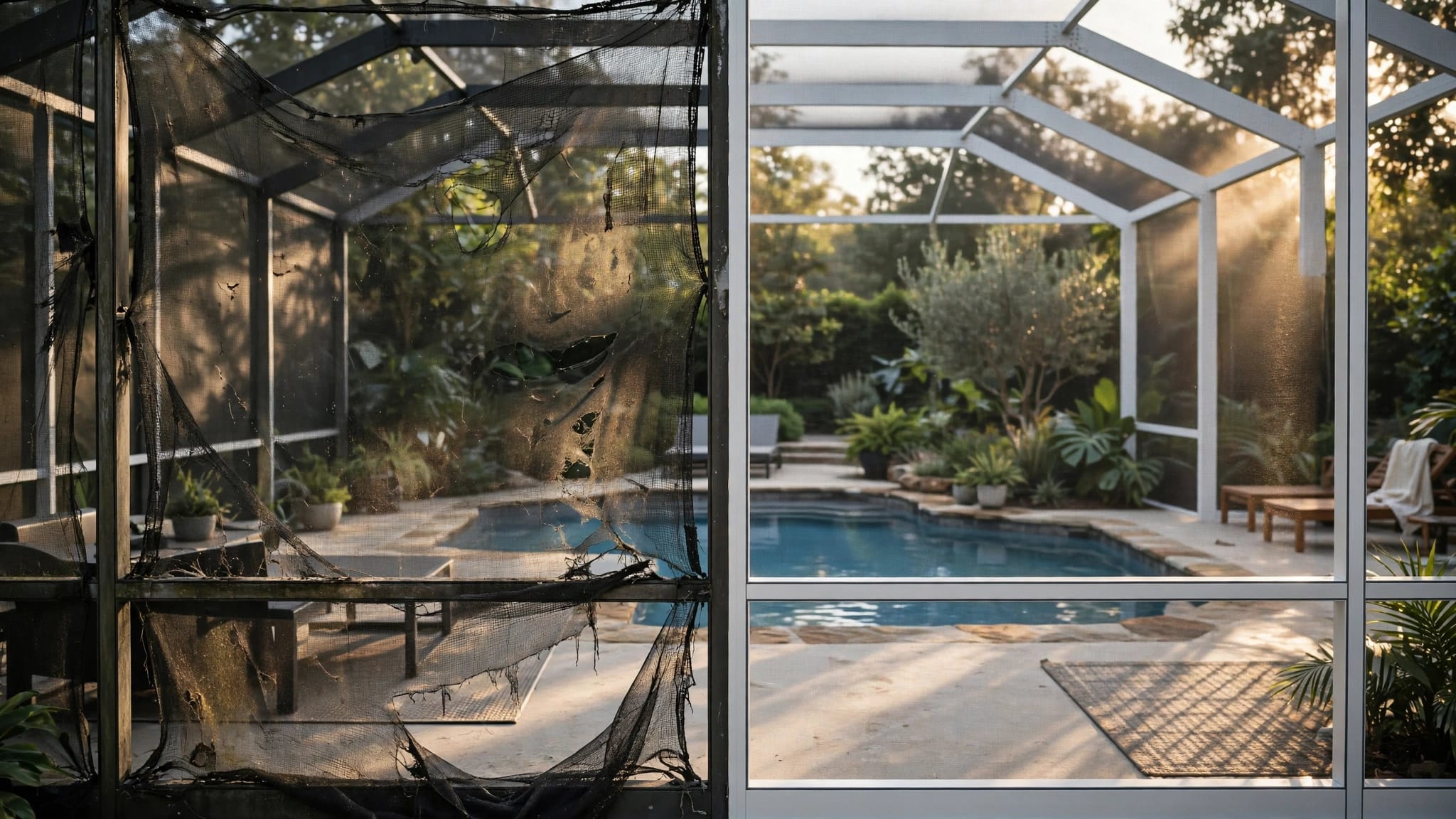
Pool cage screen spline can pull loose when the fit is wrong, the channel is damaged, or the mesh can't hold tension. Pushing it back into place won't last if the underlying problem remains.
The right repair depends on the condition of the whole panel , including its frame. An isolated loose edge may need limited work, while brittle mesh or a damaged groove calls for a different approach. Start by identifying what has stopped holding securely.
Key Takeaways
- Incorrect spline size, hardened spline, damaged channels, and uneven installation tension can all contribute to loose edges.
- Screen that tears or sags repeatedly often needs panel replacement rather than another round of reseating.
- Corroded grooves, bent framing, loose connections, or sticking doors can point to repairs beyond the mesh.
- Widespread screen deterioration favors a full rescreen when the existing frame remains sound.
Why Pool Cage Screen Spline Loses Its Grip
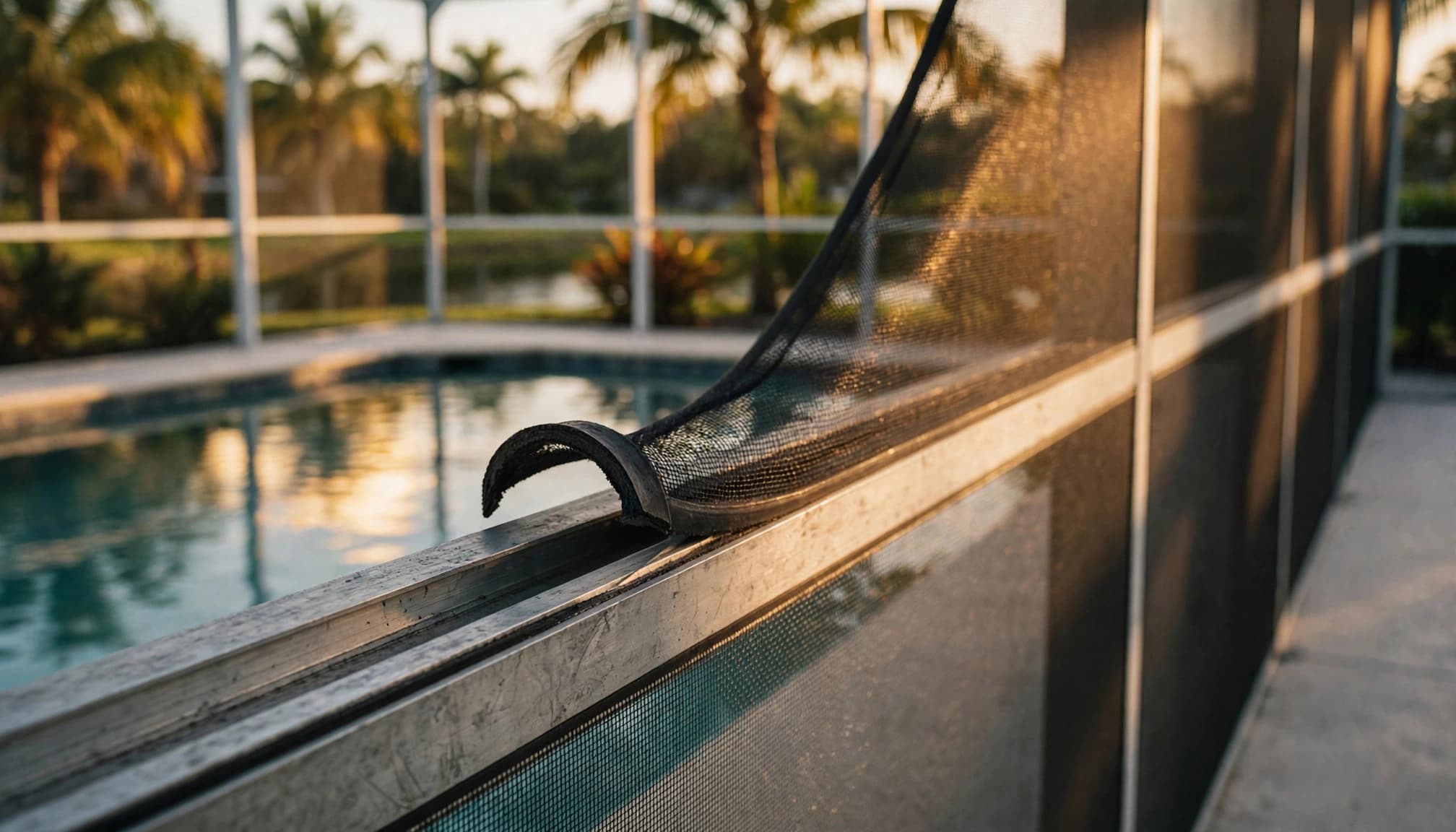
Spline secures the screen inside a groove in the aluminum frame. The spline, channel, and mesh must work together, so a failure at the edge doesn't automatically mean the spline alone is defective.
Incorrect fit or deteriorated spline
Spline needs to suit the frame channel and the screen it holds. An undersized spline may lack enough grip. An oversized replacement can be difficult to seat correctly, so choosing something larger isn't a reliable repair strategy.
Age matters, too. Spline that has hardened, shrunk, or become damaged may no longer retain the panel properly. Reusing that same piece can bring the loose edge back, even when the groove itself remains serviceable.
Uneven tension or weakened mesh
Excessive installation tension puts added stress on the panel's perimeter. Uneven tension can also leave one section carrying more load than neighboring edges.
Meanwhile, aging mesh can become brittle or tear beside the retained edge. Southwest Florida's strong sun contributes to that deterioration. If the screen fabric is failing, securing the spline more tightly won't restore the material's strength.
A worn or damaged channel creates another problem: the groove may no longer provide a secure seat. That requires attention before new screen goes in.
Troubleshoot the Panel Before Choosing a Repair
Inspect only areas you can safely see from solid ground. Leave overhead panels and difficult-to-reach sections to a screen enclosure professional. Keep clear of sagging roof sections or visibly shifted framing.
Follow this sequence to separate an isolated attachment problem from broader deterioration:
- Map the loose areas. Note whether one corner has released, an entire edge is loose, or several panels have similar problems. Also note whether the issue appeared after a storm or followed earlier repairs.
- Look at the screen beside the spline. An intact edge suggests a different repair than fabric that has split, frayed, or pulled apart. Sagging elsewhere in the panel also matters.
- Inspect the exposed channel. Where the groove is already visible, look for debris, corrosion, cracks, or distorted edges. Compare its shape with an undamaged section without forcing anything into it.
- Examine the surrounding enclosure. Look for bent rails, loose joints, damaged fasteners, and doors that drag or fail to latch. Those clues can change the repair scope.
For a fit assessment, consider the spline, groove, and mesh together. Appearance alone can't reliably distinguish an incorrect spline size from a damaged channel.
Our guide to pool cage repair warning signs covers the wider symptoms that can accompany a loose screen edge.
When a Limited Spline Repair Makes Sense
A localized repair makes sense when the screen remains flexible, its perimeter is intact, and the frame channel can still hold securely. Most surrounding panels should also be in good condition.
Reseating an otherwise healthy edge
A short, isolated release may be repairable without replacing the whole panel. However, the repair still needs to address the reason it released.
The work should leave the edge evenly retained and the screen smooth, without excessive strain. Cleaning the groove and correcting uneven tension may be part of that scope. Simply concealing the loose section doesn't establish that the attachment is sound.
Replacing deteriorated spline
When the mesh and channel remain usable but the spline has hardened or shrunk, replacement may solve the attachment problem. The replacement needs to fit the existing channel and screen combination.
Repeated release changes the decision. If the same edge comes loose again, reassess the channel and mesh rather than continuing the same repair.
Our guidance on planning a pool enclosure rescreen explains why the frame and attachment channels matter when choosing the scope.
When Replacing the Screen Panel Works Better
A panel replacement addresses failing fabric as well as its attachment. That's often more effective than repeatedly securing an edge that can no longer support normal screen tension.
Replace mesh with a failing perimeter
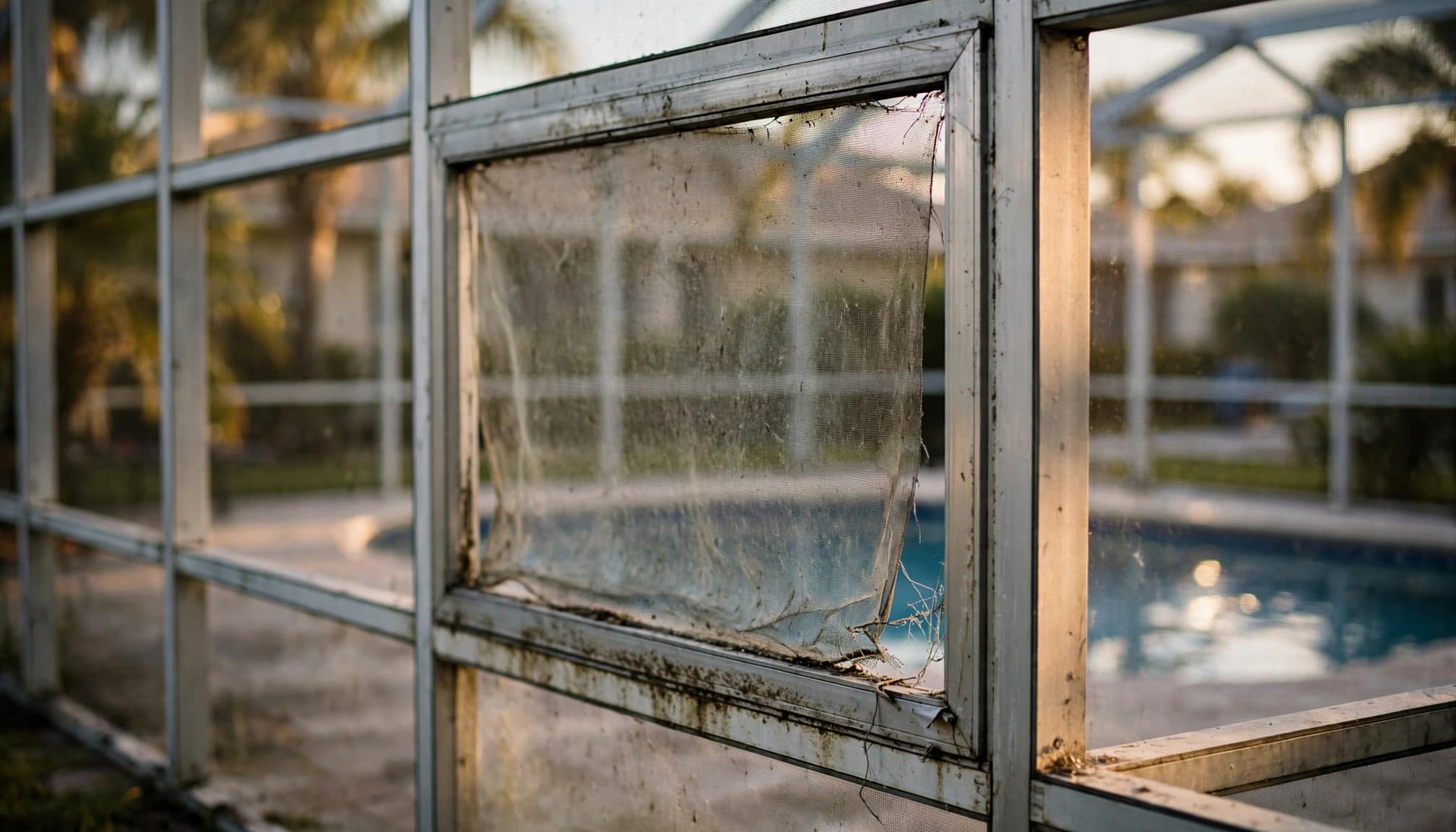
A torn or frayed perimeter leaves less usable fabric for retention. Brittle mesh may also split again beside a newly secured edge.
Repeated sagging, reopening tears, or fabric separating near the groove all favor panel replacement. A small hole away from an otherwise sound perimeter presents a different situation and may allow a limited repair.
The important distinction is whether the fabric itself can still function. New spline can't restore strength to deteriorated mesh.
Consider a full rescreen when deterioration spreads
One damaged panel doesn't automatically justify replacing every screen. If nearby panels remain flexible and intact, a targeted replacement may be enough.
However, several brittle or tearing panels suggest the enclosure's mesh has aged broadly. Fading combined with widespread deterioration strengthens the case for a full rescreen.
A rescreen retains a suitable frame while replacing the screen material. That approach avoids treating each newly failed panel as a separate, unrelated problem.
When the Channel or Frame Needs Repair First
A sound attachment depends on a serviceable groove and stable framing. Installing fresh screen before addressing damage can leave the original retention problem unresolved.
Recognize channel damage
Corrosion, cracked edges, or a distorted groove can interfere with spline retention. A dirty groove and a physically damaged groove require different responses: cleaning removes deposits, but it doesn't replace missing or weakened aluminum.
A larger spline can't restore the shape or strength of a damaged channel.
Localized damage may allow a targeted frame-section repair or replacement. The appropriate scope depends on the condition of the affected member and its connections.
Our explanation of salt-related pool cage frame damage covers why coastal exposure can complicate screen replacement.
Look beyond the loose panel
Bent members, loose anchors, cracked framing, and substantial corrosion call for a broader assessment. Deep pitting or weakened base connections can make the work more extensive than a rescreen.
Doors provide another useful clue. Dragging, sticking, or unreliable latching can accompany hardware problems or shifted framing. Replacing adjacent mesh won't correct those conditions.
Include doors and latches in the repair scope when they aren't working reliably. A screen enclosure doesn't automatically satisfy every pool-barrier requirement simply because its mesh is intact.
Protect the Repaired Edge Without Overstressing It
Gentle cleaning helps remove the salt, dirt, and residue that collect around enclosure components. Use fresh water and mild soap rather than aggressive cleaning that strains weakened fabric.
Keep branches away from the screen and remove leaves before they remain wet against the frame. Also address sprinkler overspray and areas where moisture collects near lower rails.
During routine care, watch for fresh gaps around the perimeter, new sagging, and changes in door operation. Stop cleaning an area if the mesh begins pulling away or tearing.
Our advice on cleaning pool cage screens safely explains how to maintain the enclosure without adding stress to its panels.
Cleaning supports maintenance, but it can't repair brittle fabric or a damaged spline channel.
Frequently Asked Questions
Why does the same spline edge keep coming loose?
Repeated release means the original problem may remain. Possible causes include unsuitable spline fit, deteriorated spline, uneven tension, weakened mesh, or channel damage. The location alone doesn't identify the cause, so consider the entire edge and surrounding frame.
Can I keep the frame when replacing the screens?
Yes, when the frame is stable and its channels can securely retain replacement screens. Bent or corroded sections, loose connections, and damaged grooves may need repair first. A rescreen replaces mesh while preserving a suitable enclosure structure.
Does loose spline always mean the entire cage needs rescreening?
No. A localized problem can justify a limited repair or one replacement panel. A full rescreen makes more sense when several panels show brittle fabric, recurring tears, or widespread deterioration. Frame condition remains a separate part of that decision.
Choose the Repair That Addresses the Cause
A lasting repair starts with the failed component . Healthy mesh and a sound groove may support limited spline work. Brittle fabric needs replacement, while damaged channels or framing need attention before rescreening.
We offer screen enclosures and rescreens in Cape Coral. If loose edges keep returning or several panels are deteriorating, Get a Free Estimate to schedule an on-site consultation and discuss the appropriate scope.