Yes, a gunite pool remodel can change an existing pool's shape, including its steps, shallow areas, and sometimes its outer perimeter. The practical options depend on the existing shell , available space, and surrounding construction.
Adding a bench involves different work than enlarging the pool or turning curves into straight walls. Start by separating changes inside the existing footprint from changes that extend beyond it.
Key Takeaways
- Benches, revised steps, and sun shelves can change how you use the pool without expanding its outer boundary.
- Enlarging the pool or substantially changing its outline involves broader structural and site planning.
- Plumbing, decking, groundwater, and enclosure supports can affect both the design and the construction scope.
The goal is a layout that improves everyday use without sacrificing too much swimming space or creating problems around the pool.
Which Pool Shape Changes Are Practical?
Gunite allows custom layouts, but an existing pool comes with established dimensions and structural limits. Some changes fit within those limits; others require substantial reconstruction.
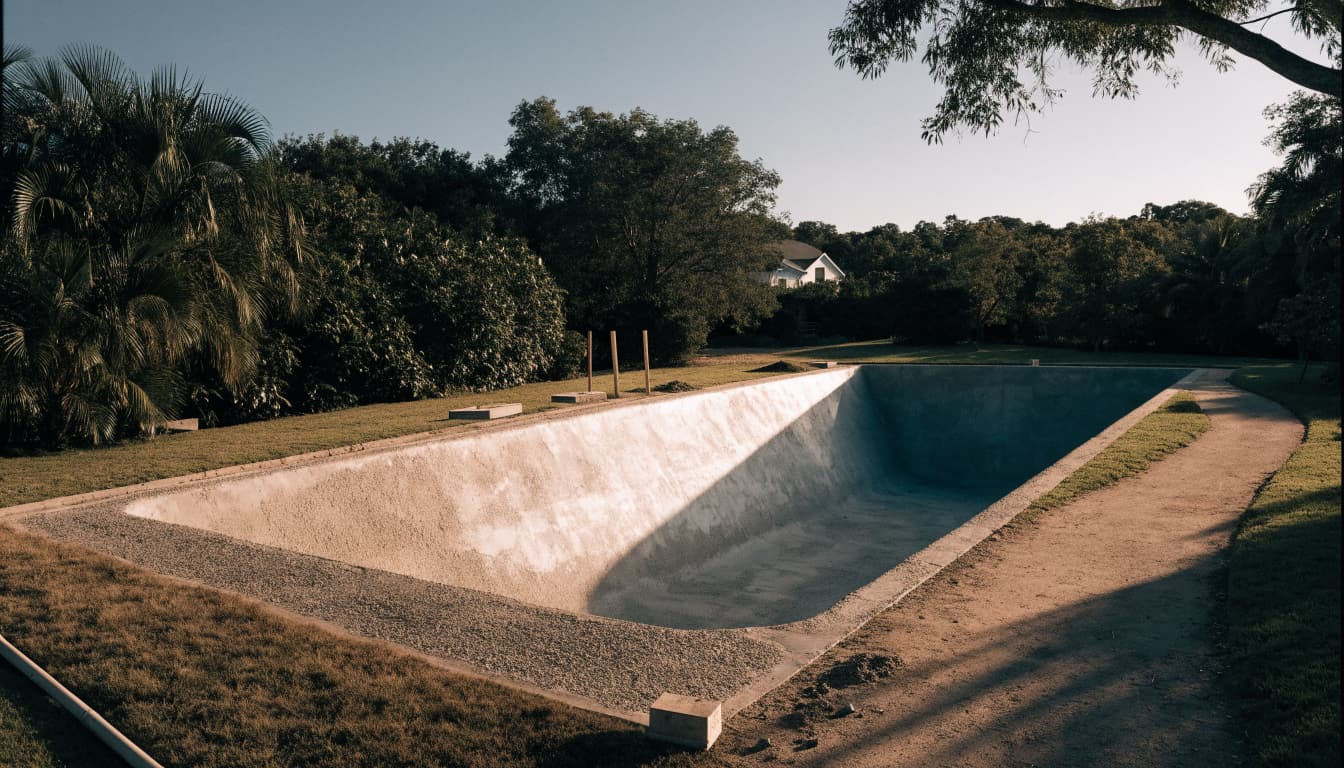
Conceptual view of a pool shell with a revised shallow area.
Adding shelves, benches, or different steps
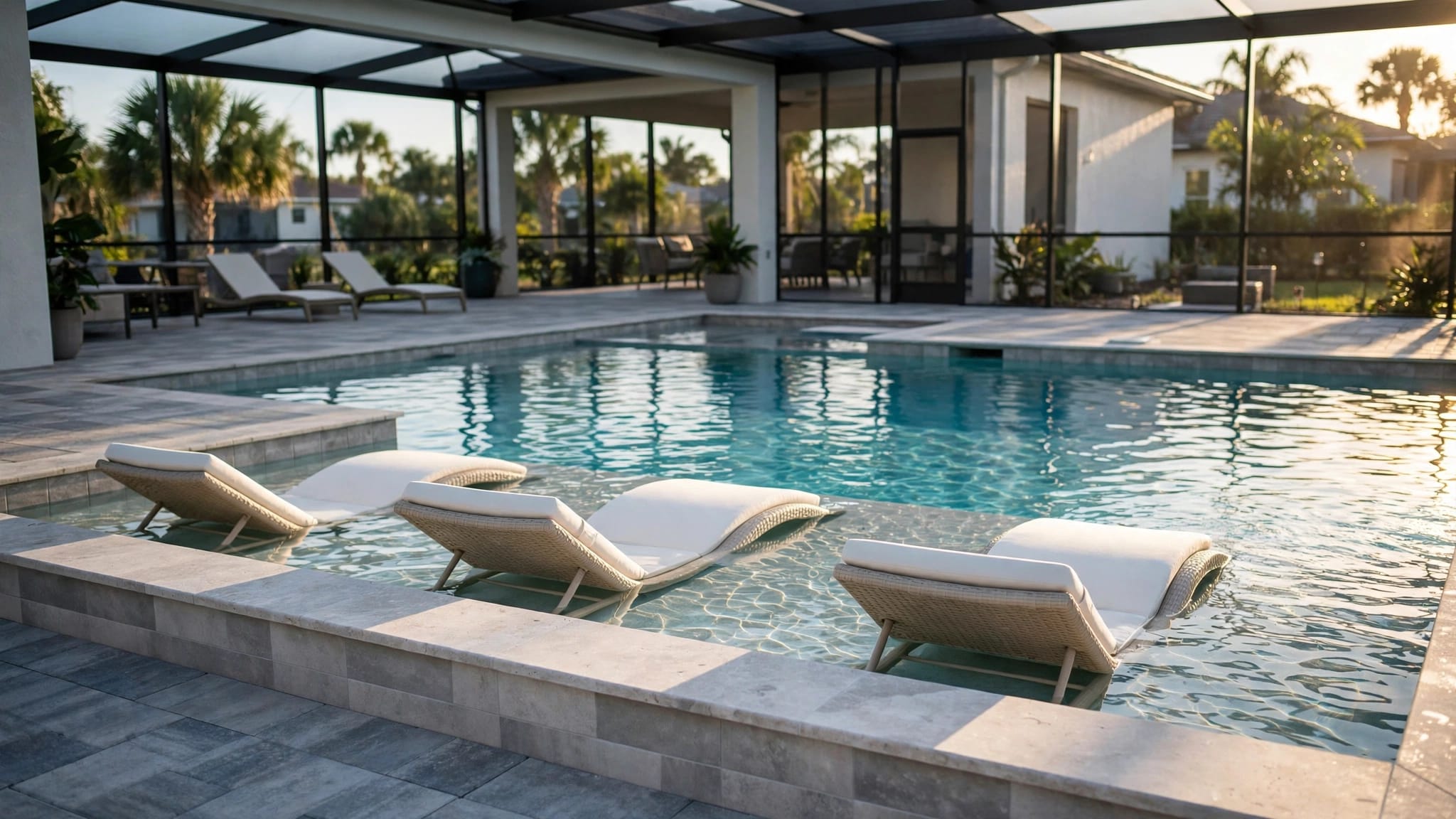
A sun shelf, built-in bench, or revised entry can improve a pool without enlarging its footprint. These additions still affect the interior layout and may involve structural work.
Placement matters. Side steps can preserve a rectangular pool's open swimming path, while corner steps may fit a curved basin better. A bench along a short wall can provide seating without interrupting the full swimming length.
However, every addition occupies water space. A large shelf may leave a compact pool with less room for swimming and active play.
Changing the outside outline
Enlarging one end, reducing a rounded section, or changing a freeform outline toward a more geometric layout may be possible.
These changes reach beyond interior features. Moving the water's edge can affect the shell, coping, deck, underground lines, and nearby structures.
A beach entry also needs enough room for its gradual transition. It generally occupies more length than a compact shelf. A proposed shape should fit the property and preserve the activities you want the pool to support.
Reshaping Requires More Than a New Finish
A worn-looking pool doesn't always need a different shape. First, distinguish a finish problem from a layout problem.
Resurfacing keeps the basic geometry
Resurfacing renews the interior finish while retaining the pool's basic shape. It can address worn surfaces, but it doesn't move walls or create a substantially different basin.
New waterline tile, coping, and deck finishes can also change the appearance without reshaping the shell. Our comparison of pool remodeling and resurfacing explains that distinction.
If your dimensions and entry already work well, keeping the shell's layout can avoid unnecessary construction.
Structural changes involve the existing shell
Gunite pools have concrete shells supported by steel reinforcement. Our guide to how gunite pools are built covers that construction.
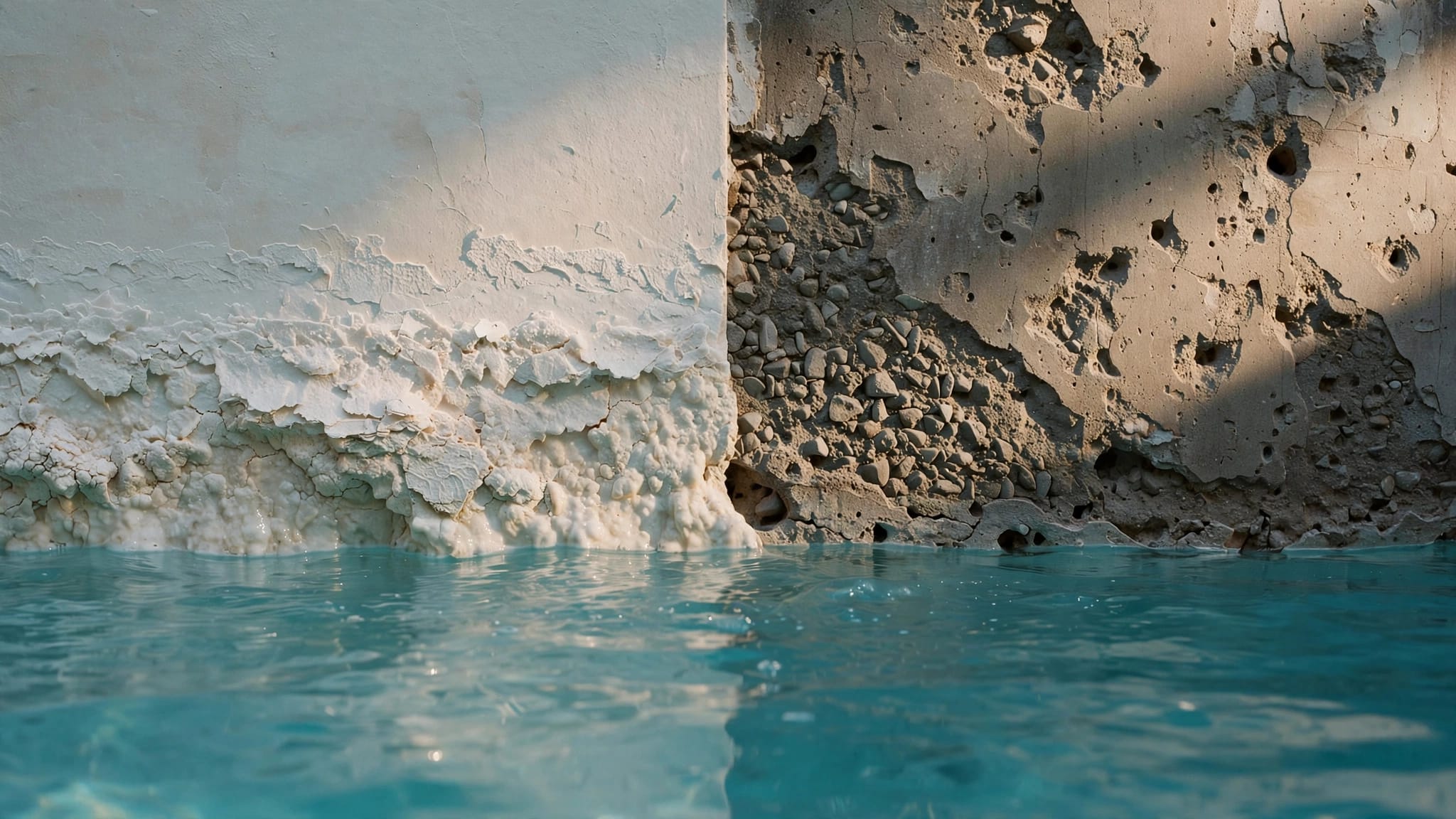
Changing the shell requires a design that considers the retained structure and proposed work together. Cracks, leaks, or movement also need evaluation before a new finish covers the interior.
A new interior finish won't correct an unresolved structural problem beneath it.
The shell's condition can determine whether preserving and modifying it makes sense compared with a more extensive rebuild.
Plumbing and Equipment Can Change the Scope
A shape change can move the places where water enters and leaves the pool. That affects more than the appearance of the finished basin.
New features can require different pipe routes
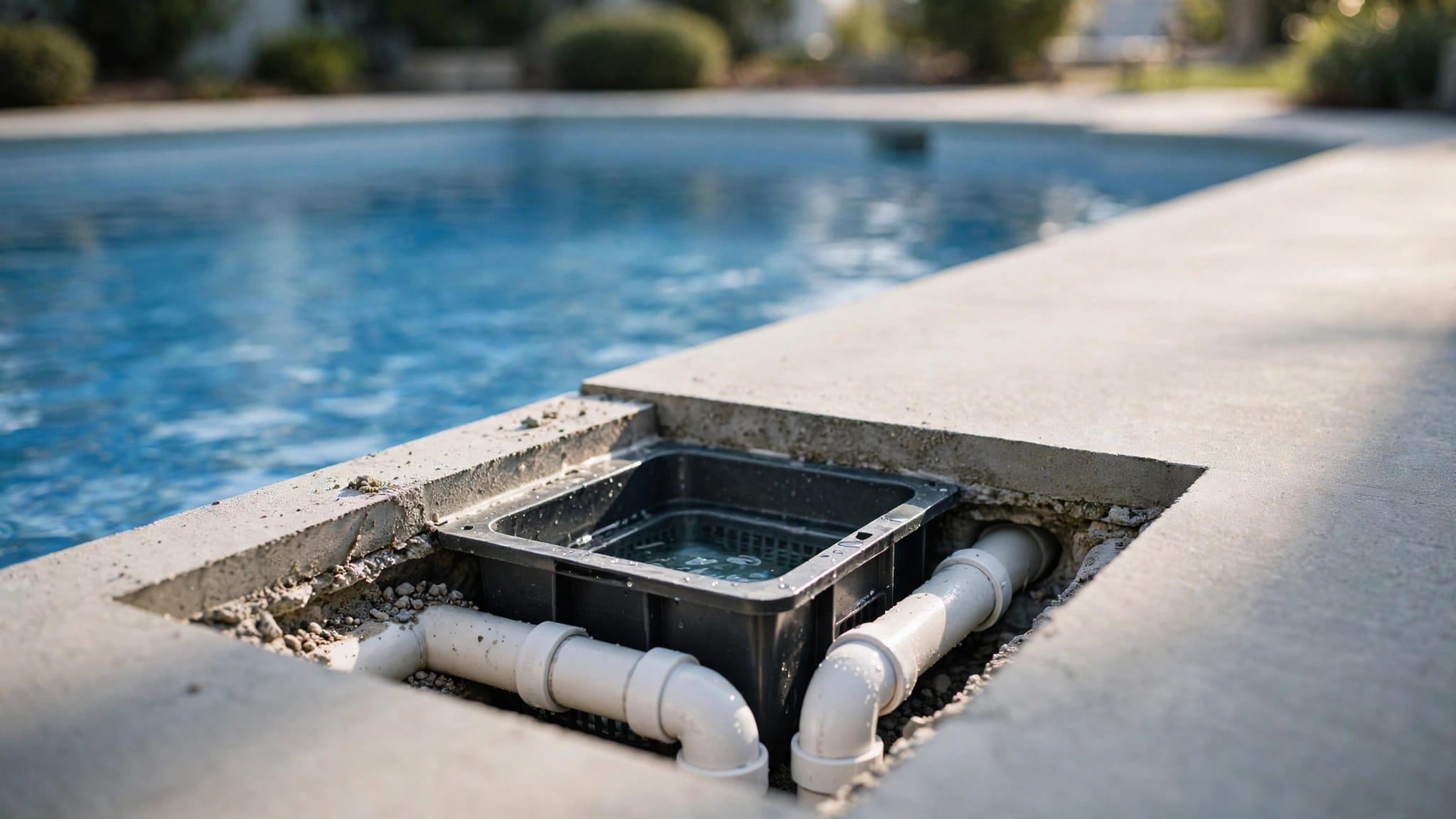
Relocating steps, adding a shelf, or building a spa may affect return jets, suction connections, and underground plumbing.
The plan should identify existing lines, proposed connections, valves, and equipment locations. Coordinating plumbing changes with deck removal can reduce the need to disturb finished surfaces later.
Before backfill conceals affected lines, pressure testing helps identify leaks while repairs remain accessible. Test records and photographs also provide useful documentation of the completed plumbing.
Equipment should match the revised design
An existing pump and filter may remain suitable, but a larger pool, spa, heater, or water feature can change hydraulic demand.
Pool volume, pipe length, fittings, and equipment requirements all influence water flow. Equipment selection should follow those needs rather than an assumption that a larger pump solves every problem.
The equipment pad also needs service access and protection from standing water. Planning these details alongside the layout helps avoid an attractive pool with awkward or difficult-to-maintain equipment connections.
Decking, Enclosures, and Soil Set Important Limits
The pool's new outline has to work with everything around it. In Cape Coral, that can include a screened lanai, limited equipment access, and groundwater concerns.
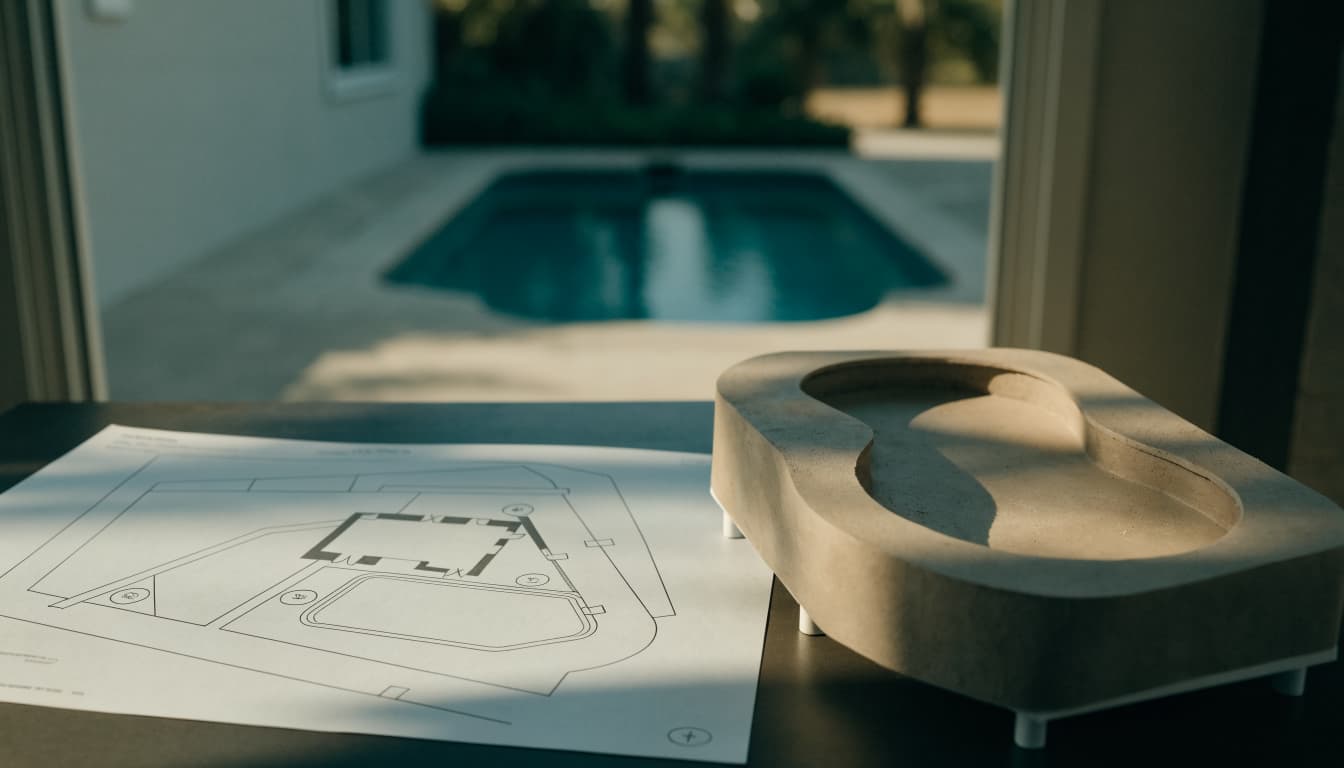
A conceptual model shows the relationship between the proposed pool and surrounding space.
Deck edges and enclosure supports need coordination
Changing the perimeter affects where the coping meets the deck. Nearby decking may need reconstruction to accommodate the new edge, drainage, and walking space.
Our guide to pool deck resurfacing versus replacement explains why a surface coating can't solve every layout or support problem.
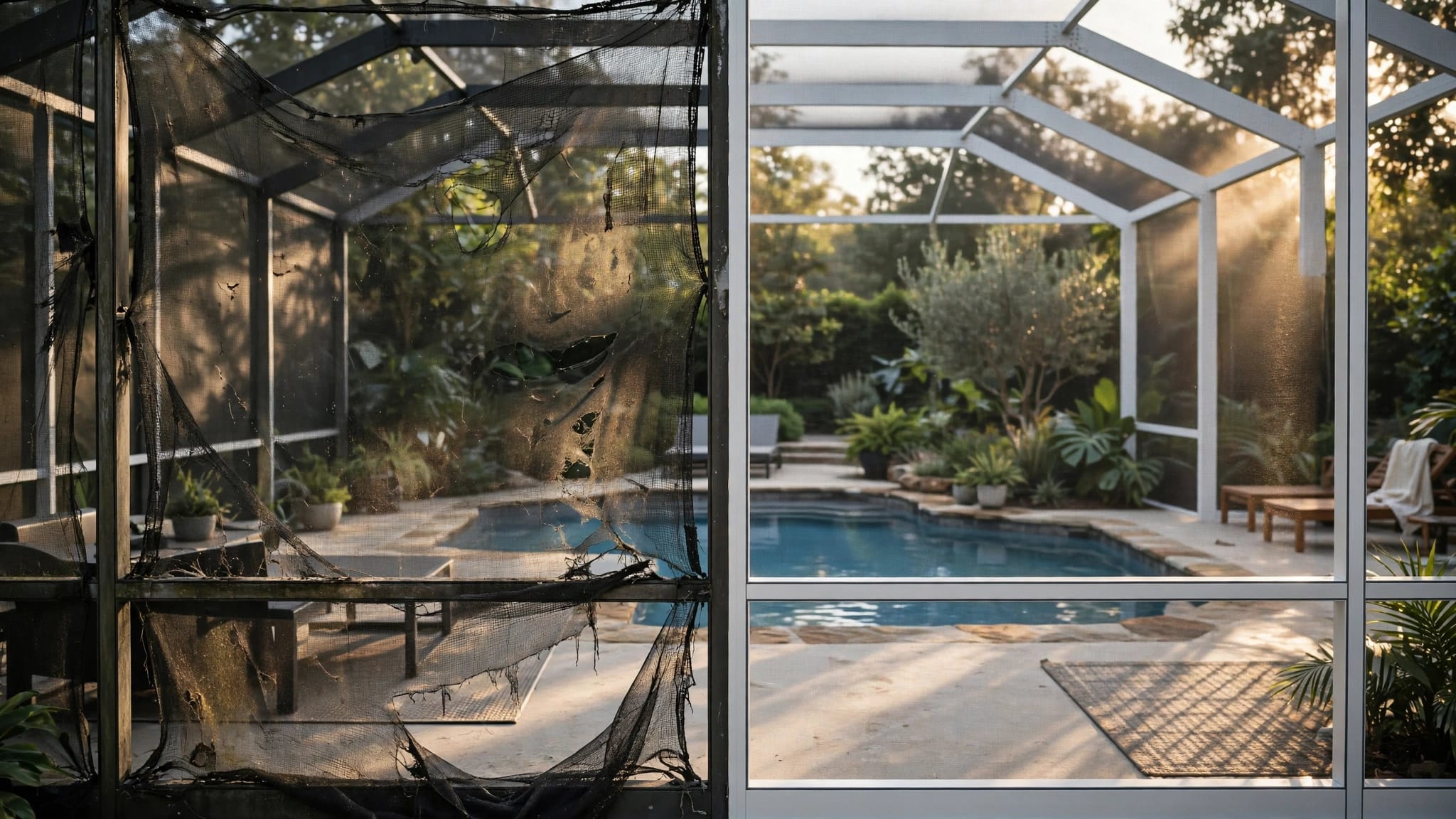
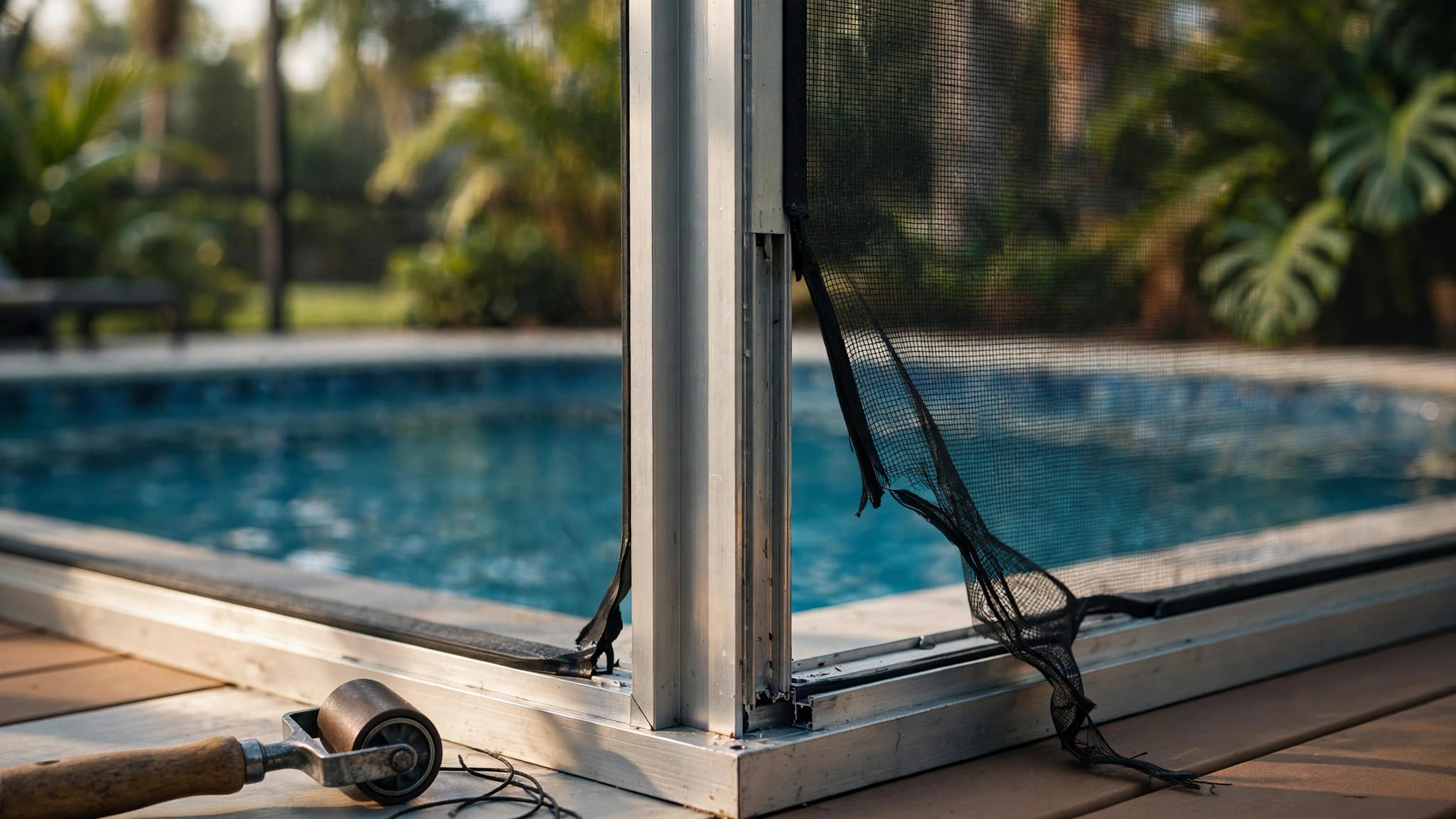
Screen enclosure posts and footings also occupy fixed locations. A revised pool must preserve appropriate access around those supports and through enclosure doors. Irrigation lines and landscape lighting can add further conflicts near excavation areas.
Soil and water conditions affect feasibility
Settlement, washed-out soil, buried debris, or poorly supported decking can complicate a proposed expansion. Persistent cracking deserves attention before reconstruction covers the evidence.
High groundwater can affect excavation and construction planning. Never drain a pool yourself for remodeling , because groundwater pressure can damage or lift an empty shell.
Where site conditions raise concerns, structural or geotechnical assessment can help establish an appropriate design. Finished grading must also direct runoff without creating drainage problems at the house, equipment pad, or neighboring property.
How a Shape-Changing Pool Remodel Comes Together
The work should follow one coordinated plan rather than a series of separate upgrades. Our pool renovation planning guide covers related decisions across the pool area.
- Assess the existing pool and property. The initial review considers shell condition, dimensions, plumbing, equipment, access, drainage, and surrounding structures. Existing plans and survey information help establish the site's constraints.
- Develop the revised layout. The design identifies the proposed shape, entry, seating, and remaining swimming area. It also shows how the water's edge relates to decking and enclosure supports.
- Define the construction scope. Structural design, plumbing changes, equipment needs, and applicable approvals belong in the plan before physical work begins. The written scope should distinguish retained components from replacements.
- Complete coordinated construction. Structural work and affected systems proceed together, with testing and inspections incorporated at the appropriate stages. Concealed problems may require changes to the original scope.
- Finish and restart the pool. Tile, coping, interior finishes, and affected deck areas follow the construction sequence. Refilling, startup, and equipment adjustments prepare the remodeled pool for use.
The completed layout should deliver the intended improvement while keeping the pool and surrounding space practical to maintain.
What Drives the Cost and Timeline?
A gunite pool remodel has several connected work areas. The amount of change matters more than the name of the feature.
Cost follows the full construction scope
A shelf inside the existing footprint has different cost drivers than an extension involving new excavation and deck reconstruction.
Structural work, plumbing relocation, equipment changes, finish selections, and enclosure modifications all contribute. Access matters too: restricted gates and limited staging space can complicate material delivery and debris removal.
Soil handling and restoration also belong in the budget. Excavated material, damaged irrigation, and disturbed landscaping can add work beyond the pool itself.
A clear estimate separates planned construction from allowances for concealed conditions.
Scheduling depends on more than pool size
Design development, approvals, construction access, material availability, and inspections influence the schedule. Weather and groundwater can also affect when crews can complete certain phases.
Concrete curing and finish startup requirements remain part of the sequence even when the visible construction appears nearly complete.
Existing conditions introduce another variable. Damage hidden beneath finishes or decking may become apparent only after work begins.
Finalizing the layout and coordinating related upgrades early reduces avoidable revisions once construction is underway.
Frequently Asked Questions About Pool Shape Changes
Can I make my existing pool smaller?
Reducing the usable water area may be possible, but it still requires a structural plan. The design must account for the retained shell, proposed construction, and circulation.
Adding a bench or shelf can also reduce open swimming space without changing the outer perimeter. That may meet your goal if you want more lounging space rather than additional deck area.
Can I turn a curved pool into a rectangle?
A more rectangular layout may be possible, but the result depends on the existing shell and available space.
The proposed straight edges may fall inside or outside the existing boundary. Those two approaches affect different parts of the pool and surrounding site. Extensive changes can approach the scope of rebuilding, so the design should justify how much of the existing pool remains.
Choose a Shape That Improves Everyday Use
Changing a gunite pool's shape can create a better entry, more useful seating, or a layout that fits your backyard. The strongest plan balances those improvements with the existing structure and the systems around it.
Our pool renovation services include interior refinishing and related updates. Get a Free Estimate to schedule an on-site consultation and discuss how your existing pool could better support the way you use it.